Poodle Spay vs Neuter: Best Age by Variety, Science, and What Breeders Won’t Always Tell You
Quick Answer: The poodle spay vs neuter decision isn’t just about stopping reproduction—it’s a medically timed choice. For Toy Poodles, 6–12 months is widely recommended. Miniature Poodles benefit most between 12–18 months, while Standard Poodles should wait until 18–24 months, after growth plates close, to protect joint health. Spay (ovariohysterectomy) and neuter (orchiectomy) carry different risk-benefit profiles that owners must weigh carefully.
If you type “Poodle spay vs neuter” into a search bar, you’re likely facing two parallel questions: which procedure is right, and when is the safest, healthiest moment to do it. The answer has shifted dramatically in the last decade. Gone is the blanket advice to fix every dog at six months. Modern veterinary science—especially large-scale studies from the University of California, Davis—has revealed that a Standard Poodle neutered too early faces a significantly higher risk of joint disorders and certain cancers. Meanwhile, a Toy Poodle left intact well into adulthood may face a higher mammary tumor risk. This guide untangles the nuance for each poodle variety so you can walk into your vet’s office with confidence, not confusion.
🎀 Spay (Female)
Removal of ovaries and usually uterus. Eliminates heat cycles, pyometra risk, and greatly reduces mammary cancer if done before first heat.
⚕️ Neuter (Male)
Removal of testicles. Eliminates testicular cancer, reduces prostate issues, and can curb roaming—but won’t fix deep-rooted behavioral problems alone.
⏳ Timing by Variety
Toys: 6–12 months. Miniatures: 12–18 months. Standards: 18–24 months. These windows balance orthopedic protection and cancer prevention.
What Does “Poodle Spay vs Neuter” Mean in Practice?
The phrase “poodle spay vs neuter” bundles two distinct surgeries that owners often conflate. Spaying a female poodle typically involves an ovariohysterectomy—removing both ovaries and the uterus—though some vets now offer ovary-sparing spays that leave the ovaries intact to preserve hormone production. Neutering a male is an orchiectomy: removal of both testicles. The decision is not just a gender difference; it’s a lifetime hormonal shift that affects metabolism, bone density, cancer susceptibility, and even coat texture in poodles.
Poodle owners sometimes ask, “Can I just do a vasectomy or tubal ligation?” These are available but rarely performed, so finding a skilled vet is harder. Most still opt for traditional sterilization, but with a far more thoughtful timeline than the 20th-century standard.
Why the Best Age for Poodle Spay & Neuter Varies by Variety
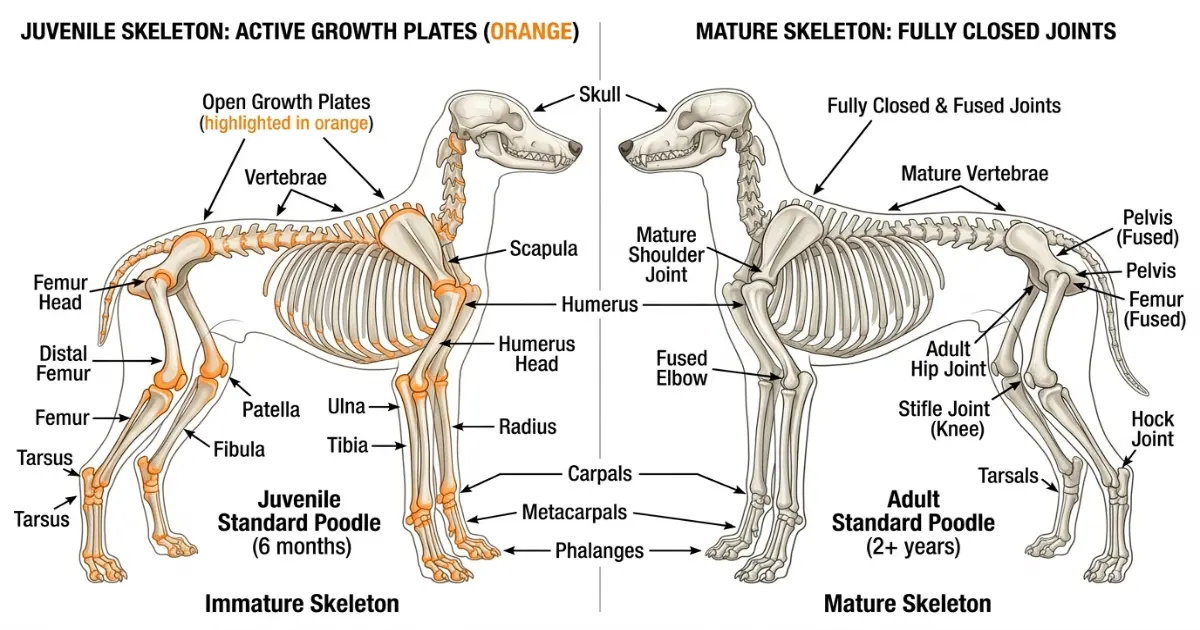
Poodles come in three distinct sizes, and those sizes dictate when growth plates seal. Toy Poodles finish skeletal growth around 10–12 months, Miniatures around 12–14 months, and Standards between 18–24 months. The sex hormones—estrogen and testosterone—play a critical role in signaling growth plates to close at the right time. Remove those hormones too early, and the long bones may grow slightly longer and the joints may develop with less stability, setting the stage for hip dysplasia, cranial cruciate ligament tears, and elbow dysplasia, especially in larger, faster-growing Standards.
A landmark 2020 study by Hart et al. examined over 35 dog breeds and found that Standard Poodles neutered before 6 months had a significantly increased incidence of joint disorders compared to those left intact or neutered after 2 years. Toy Poodles, by contrast, showed no statistically significant increase in joint disorders regardless of spay/neuter age, likely because their joints bear far less mechanical stress. Miniature Poodles fall in the middle—delaying until at least 12 months offers some protective benefit without a large jump in cancer risk.
| Poodle Variety | Recommended Spay Age (Female) | Recommended Neuter Age (Male) | Key Concern |
|---|---|---|---|
| Toy | 6–12 months (before first heat ideal) | 6–12 months | Mammary tumor prevention vs anesthesia risk in tiny pups |
| Miniature | 12–18 months | 12–18 months | Balancing joint health and cancer risk |
| Standard | 18–24 months | 18–24 months | Joint disorder prevention; higher risk of hemangiosarcoma requires discussion |
The Science Behind Sex Hormones and Poodle Joint Health
When a poodle is spayed or neutered before physical maturity, the absence of gonadal hormones delays the closure of growth plates, leading to a slightly taller, lankier frame with altered joint biomechanics. In a Standard Poodle—who already carries a deep chest and angular hindquarters—this subtle change can tip the balance toward hip dysplasia and cranial cruciate ligament tears. One UC Davis analysis found that male Standard Poodles neutered before 1 year had a nearly threefold increase in joint disorders.
This doesn’t mean you must leave your Standard intact forever. Waiting until 18–24 months allows the joints to mature under full hormonal guidance. For female Standards, even allowing one carefully managed heat cycle can provide protective hormonal exposure. That said, each heat cycle does increase the lifetime mammary tumor risk slightly, so it’s a delicate calculus.
Cancer Risks and the Spay/Neuter Decision
Here’s where the story gets more complex. Spaying a female before her first heat drops the risk of mammary tumors to near zero—a huge benefit for Toys and Miniatures, where mammary cancer is one of the most common malignancies. However, spaying at any age appears to increase the risk of hemangiosarcoma, a highly aggressive cancer of blood vessel walls, and osteosarcoma in some large breeds. In Standard Poodles, the lifetime risk of hemangiosarcoma is already elevated compared to many other breeds, so removing hormonal protection may tilt the scale unfavorably. This is why many poodle-savvy vets now suggest waiting until 18–24 months for Standards, when the joint-protective window has passed, then spaying, even if the mammary tumor risk rises marginally from that one or two heat cycles.
For males, neutering eliminates the testicular cancer risk entirely and reduces benign prostatic hyperplasia and perineal hernias. But neutered males of any breed have a slightly higher incidence of prostate cancer (the aggressive kind) and certain sarcomas. Standard Poodle males neutered early show a higher rate of lymphosarcoma in some datasets. For Toy and Miniature males, the overall cancer risk shift is small enough that veterinary consensus still supports neutering in the 6–18 month range.
Behavior Changes: What Spaying and Neutering Does (and Doesn’t) Fix for Poodles
Many people search “poodle spay vs neuter” hoping the surgery will transform a hyperactive, marking, or reactive dog into a calmer companion. Reality is more nuanced. Neutering can reduce urine marking in the house, and it often lessens the driven, compulsive roaming in search of a mate. Spaying eliminates the frantic pacing and irritability that some females show during heat cycles, as well as the bloody discharge. But the core temperament—intelligence, biddability, alertness—remains untouched. A dog that is fearful or anxious before surgery will still be fearful afterward; in some cases, removing gonadal hormones can actually increase fear-based aggression, especially if the dog was timid to begin with.
Poodles are deeply sensitive and environmental. If your male Standard poodle is marking indoors obsessively, a combination of neutering and targeted behavior modification brings the best results. If your female Toy poodle is confident and sociable, spaying won’t dampen her spark. But if she’s already shy, consider consulting a veterinary behaviorist before scheduling. Hormones play a role, but the poodle brain wins.
Spay vs Neuter Surgery: Procedure Differences and Recovery
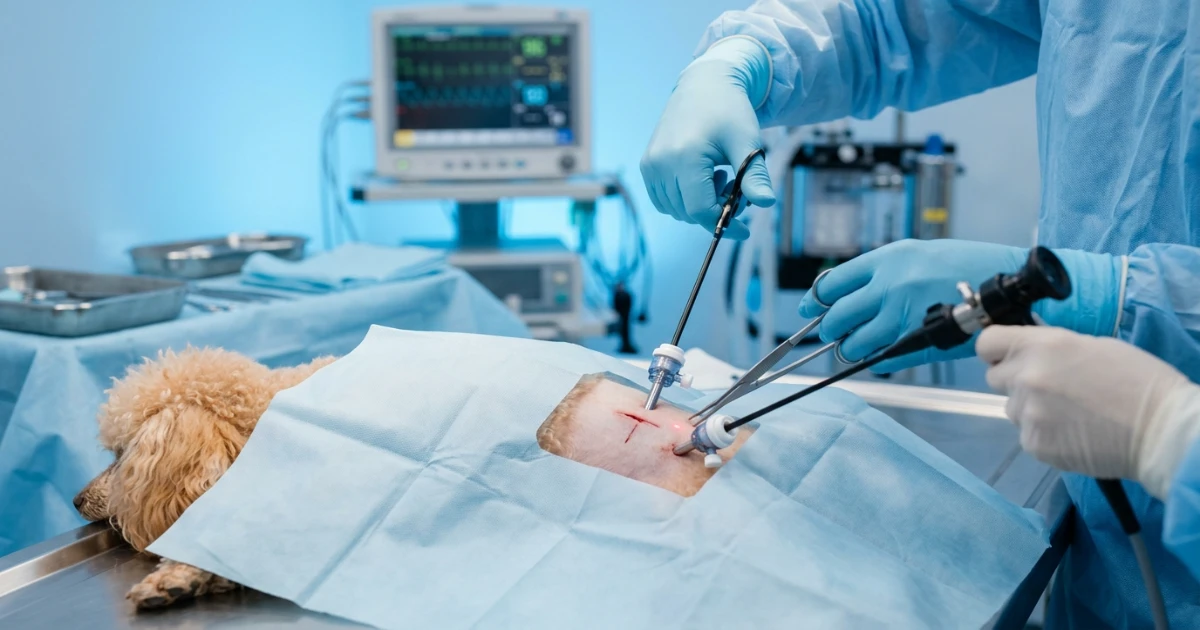
Spay surgery is more invasive because the uterus and ovaries lie inside the abdominal cavity. A traditional spay involves a midline incision; recovery usually spans 10–14 days of restricted activity. Laparoscopic spay (ovariectomy) uses tiny incisions and a camera, dramatically reducing pain and recovery time—often just 5–7 days—but costs more.
Neuter surgery is external, with a small incision at the base of the scrotum. Recovery is generally 7–10 days, and complications like scrotal swelling or infection are uncommon if post-op care is followed. For both surgeries, poodles must not jump, run, or climb stairs for the first week. Toys and Miniatures can be easily carried; Standards require a calm environment and on-leash potty breaks only.
How Breeders and Rescue Contracts Influence Timing
If you bought from a breeder, your contract probably mandates spay/neuter by a certain age. Some breeders insist on 6 months regardless of variety—an outdated stance that can harm Standard Poodle joints. Others now specify 18–24 months for Standards, acknowledging the science. Talk to your breeder openly; many are willing to amend the timeline if you provide a letter from your veterinarian citing current research.
Rescue poodles and shelter adoptions are almost always sterilized before placement, sometimes as young as 8 weeks. This pediatric spay/neuter is done out of necessity to combat overpopulation, and for Toy and Miniature poodles, the long-term health impact is relatively small. For Standard Poodles adopted from a shelter neutered at 2 months, talk to your vet about joint-supportive nutrition, glucosamine supplementation, and controlled exercise throughout growth to mitigate the increased orthopedic risk.
2026 Price Guide: What Spaying or Neutering a Poodle Costs
Cost Ranges in the US (2026)
| Procedure | Toy Poodle | Miniature Poodle | Standard Poodle |
|---|---|---|---|
| Traditional Spay (private vet) | $300–$650 | $400–$800 | $600–$1,200 |
| Laparoscopic Spay | $800–$1,400 | $900–$1,500 | $1,200–$2,000 |
| Traditional Neuter | $200–$450 | $300–$550 | $450–$900 |
| Low-Cost Clinic Neuter | $70–$150 | $90–$175 | $130–$250 |
| Pre-Anesthetic Bloodwork | +$85–$160 (strongly recommended) | ||
Costs vary by region. Laparoscopic spay offers faster recovery and less post-op pain but comes at a premium. Pre-anesthetic bloodwork is non-negotiable for poodles of any size, as it screens for hidden liver or kidney issues.
Pro Tips for Making the Best Decision for Your Poodle
- Get a breed-experienced vet. Not all vets keep up with poodle-specific research. Ask: “What’s your current recommendation for a Standard Poodle neuter age, and what studies are you basing it on?”
- Consider a pre-op hormone panel. For females, running a blood progesterone or estrogen test before spay can help decide where she is in her cycle—operating during a heat or false pregnancy increases bleeding risk.
- Plan recovery like a poodle parent. Teach a “settle” cue beforehand. Prepare lick mats, frozen Kongs, and puzzle toys to keep that intelligent brain busy without physical activity.
- Don’t skip the weight conversation. Sterilization slows metabolism. Adjust calories down by about 10–15% starting a few weeks post-surgery, and monitor body condition closely.
- If you show or breed, discuss alternatives. Ovary-sparing spay and vasectomy exist. They’re not for everyone, but they preserve hormones while preventing pregnancy.

FAQs About Poodle Spay vs Neuter
- What is the safest age to spay a Toy Poodle?
- Most vets agree 6–12 months is safest. Doing it before the first heat (usually around 6–8 months) gives the maximum mammary tumor protection while avoiding the increased anesthesia risk in extremely tiny puppies. If your female has already had a heat, waiting 8–12 weeks post-cycle reduces surgical bleeding.
- Can neutering a Standard Poodle too early cause hip dysplasia?
- Yes, the evidence strongly points that way. Neutering a male Standard Poodle before 12–18 months removes testosterone before growth plates close, increasing the odds of hip dysplasia and ACL tears. Delaying until 18–24 months lets the skeleton mature normally.
- Will my male poodle stop marking in the house after neutering?
- It often reduces marking frequency, especially if done before the habit becomes deeply ingrained (under 2 years). But if marking has been practiced for years, neutering alone won’t extinguish it—you’ll need environmental management and positive reinforcement training to redirect.
- Is laparoscopic spay worth the extra cost for a Miniature Poodle?
- For many poodles, absolutely. Laparoscopic spay means smaller incisions, less tissue trauma, and a recovery that’s often half the time of traditional surgery. Miniatures are active and agile; a quicker return to normal reduces the stress of keeping them calm for two weeks.
- Does spaying change a poodle’s coat texture?
- In rare cases, the coat may become slightly softer or fuzzier, often called “spay coat,” but this is far more common in breeds like Irish Setters than in poodles. Most poodle owners notice no change. Proper grooming and nutrition maintain the crisp, curly texture.
- Should I wait until my Standard Poodle has one litter before spaying?
- No medical benefit comes from allowing a litter. The old myth that a female “needs” a litter for health is false. If your priority is joint and cancer balance, living through one or two heat cycles without breeding is a safer strategy than pregnancy, which carries its own risks.
- Are there non-surgical sterilization options for poodles?
- Currently, there is no commercially available chemical sterilant for dogs in the US that offers permanent, safe sterility without surgery. Research is ongoing, but for now, surgical sterilization remains the standard. Vasectomy and ovary-sparing spay are surgical but preserve natural hormones.
Your Poodle, Your Decision, Informed by Science
Poodle spay vs neuter isn’t a race; it’s a strategic, scientifically nuanced call. Toy Poodles usually do best spayed or neutered between 6–12 months. Miniature Poodles hit the sweet spot around 12–18 months. Standard Poodles benefit profoundly from waiting until 18–24 months, allowing their joints to mature under full hormonal protection before weighing the cancer risk trade-offs. Recovery care, behavioral expectations, and post-op calorie adjustments all matter just as much as the surgical date.
Above all, treat the decision like the deeply personal medical choice it is. Work with a veterinarian who understands poodle variety research, and don’t let outdated norms or breeder pressure rush you into a timeline that doesn’t serve your dog’s long-term health. When you get the timing and procedure right, you gift your poodle a healthier, more comfortable life—and that’s what every PoodleGuru reader wants.