Poodle Yeast Infection: Skin & Ear Treatment Guide
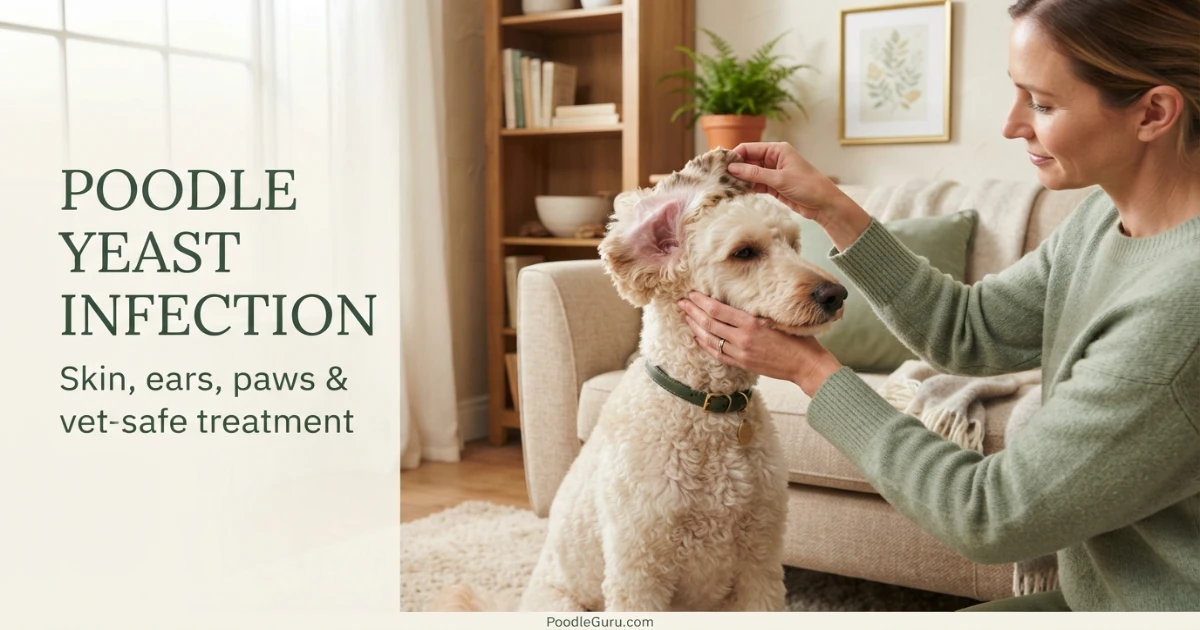
That musty smell, nonstop ear scratching, and reddish-brown debris between paw pads can be early clues of a poodle yeast infection. Here’s how to recognize the signs, understand why poodles are prone to ear and skin flare-ups, work with your veterinarian on safe treatment, and build a grooming routine that helps reduce repeat infections.
Quick Answer
A poodle yeast infection is an overgrowth of Malassezia yeast on the skin or in the ears, causing itching, odor, redness, greasy skin, and brown or waxy debris. In poodles, the ears, paws, armpits, groin, and skin folds are especially vulnerable because dense curls and drop ears can trap moisture. A veterinarian should confirm the problem with an ear exam or cytology before treatment. Care may include medicated shampoos, ear drops, wipes, mousses, or oral antifungals, plus careful drying and allergy control to help reduce recurrence.
What Is a Poodle Yeast Infection?
A poodle yeast infection is a fungal skin or ear condition caused by an overgrowth of Malassezia pachydermatis, a yeast that normally lives on canine skin in small numbers. For poodle owners, this means a sudden flare-up of itching, odor, and greasy debris — usually triggered when the skin’s natural defenses are disrupted by moisture, allergies, or an underlying health issue. The most important thing to understand is that yeast thrives in warm, humid environments, and a poodle’s thick, curly coat can turn a minor damp spot into a full-blown infection surprisingly fast.
Yeast isn’t contagious to humans or other pets in this form, but it’s deeply uncomfortable for your dog. Left unaddressed, chronic yeast infections can lead to thickened, elephant-like skin (lichenification) and secondary bacterial infections. Veterinary guidance points to a two-part approach: confirming and treating the yeast overgrowth with appropriate medication, while also addressing moisture, allergies, or other underlying problems that allowed it to multiply.
Quick Facts at a Glance
Primary Cause
Moisture trapped against the skin, often combined with allergies or a weakened skin barrier, triggers yeast overgrowth.
Tell-Tale Sign
A strong musty, “corn chip” or yeasty odor — it’s often the first thing owners notice before visible symptoms appear.
Most Affected Areas
Ears, paw folds, armpits, groin, and any skin creases. Poodles with skin allergies are at even higher risk.
Treatment Approach
Medicated shampoos, topical creams, ear drops, or oral antifungals — always under veterinary supervision.
Prevention Helps
Thorough drying after baths, careful ear care, and consistent grooming can help reduce repeat moisture-driven flare-ups.
When It’s Serious
If the skin becomes raw, bleeding, or if your poodle is in visible pain, see a vet immediately.
Why Poodles Are So Prone to Yeast Infections
Poodles didn’t draw the short straw on skin health, but their signature coat comes with built-in moisture traps. Understanding these breed-specific factors helps you work with your dog’s biology, not against it.
Dense, Curly Coat Structure
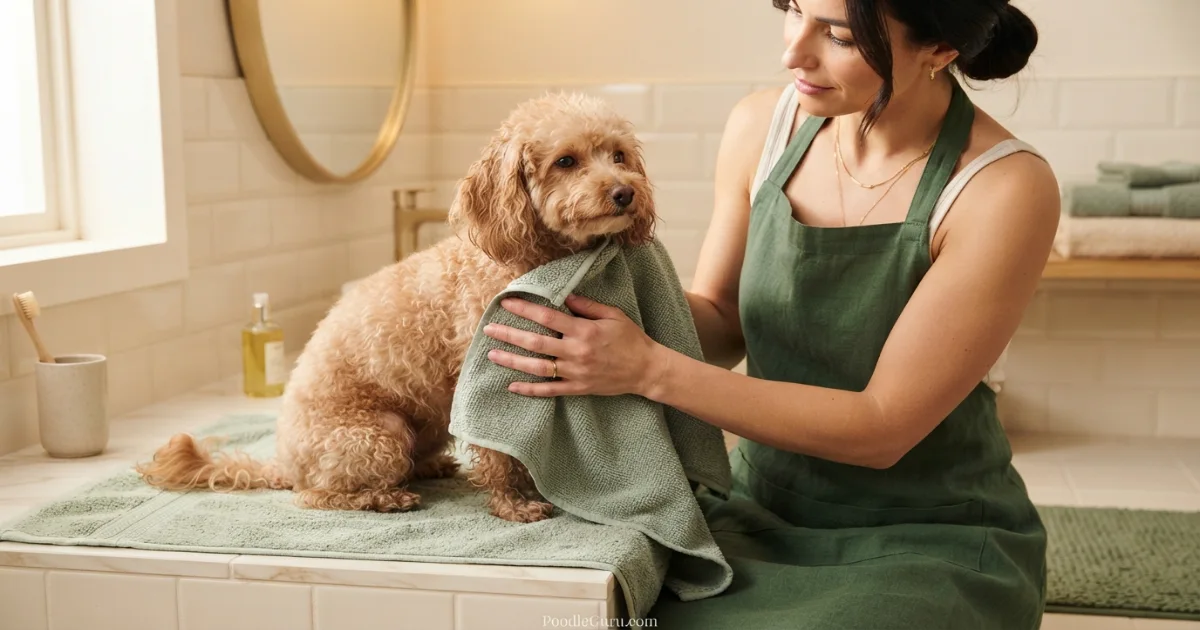
Poodle hair is more like wool than fur — it’s tightly curled and grows continuously. This dense coat holds humidity close to the skin, especially if the dog isn’t dried completely after a swim, bath, or even a walk in the rain. Professional groomers often point out that many owners towel-dry only the surface, leaving the undercoat damp for hours. That’s an open invitation for yeast.
Drop Ears and Airflow
All three poodle sizes — Toy, Miniature, and Standard — have drop ears that hang down, limiting airflow into the ear canal. Combine that with hair growing inside the ear, and you’ve got a dark, warm, humid chamber. Yeast colonization here is incredibly common. In fact, ear infections are often the first place a poodle owner encounters yeast.
Allergies as a Trigger
Poodles can be affected by allergic skin disease, including reactions to environmental triggers such as pollen, dust mites, or mold. When allergies inflame the skin, the barrier weakens, and the normal yeast population can overgrow. A poodle that’s constantly licking its paws or rubbing its face may be dealing with an underlying allergy that’s fueling a secondary yeast infection. Treating only the yeast without addressing the allergy is like bailing water without plugging the leak.
Recognizing Yeast Infection Symptoms in Poodles
Symptoms split fairly neatly between skin and ears, though a poodle can have both at once. The earlier you catch them, the easier treatment will be.
Skin Yeast Infection Signs
- Musty, sour, or “corn chip” odor — often most noticeable on paws, neck folds, or belly.
- Greasy, reddish-brown or black waxy buildup on the skin, especially between paw pads and in armpits.
- Intense itching and licking — poodles may lick their paws raw or rub their faces against furniture.
- Redness and inflammation in skin folds, sometimes with a sticky discharge.
- Thickened, darker skin (lichenification) in chronic cases — the skin takes on an elephant-like texture.
Ear Yeast Infection Signs
- Dark brown or yellowish waxy debris inside the ear canal.
- Head shaking and ear scratching — often worse at night.
- Red, swollen ear flaps that may feel hot to the touch.
- Foul odor from the ears — different from the mild, clean smell of healthy ears.
- Pain when the ear is touched — your poodle may yelp or pull away.
Yeast Infection vs. Other Skin Issues: How to Tell the Difference
Not every itchy, smelly skin problem is yeast. Mistaking a bacterial infection or allergies for yeast can lead to the wrong home treatment and a much longer recovery. Use this comparison to sharpen your observations — but always let your vet make the final call.
| Condition | Odor | Appearance | Typical Locations | Itch Intensity | Response to Antibiotics |
|---|---|---|---|---|---|
| Yeast Infection | Musty, corn chip, sour | Greasy, reddish-brown waxy buildup; thickened skin in chronic cases | Ears, paws, armpits, groin, skin folds | Severe, constant | None (may worsen) |
| Bacterial Infection | Often foul, putrid | Pus-filled bumps, crusts, oozing sores, circular patches | Anywhere; often follows a wound or hot spot | Moderate to severe | Improves if correct antibiotic used |
| Allergic Dermatitis | Usually none, unless secondary infection | Redness, hives, hair loss, skin may be dry or weepy | Belly, face, paws, inner thighs | Moderate, seasonal or food-related pattern | No direct effect |
| Seborrhea | Greasy, rancid fat smell | Flaky, scaly skin with yellowish greasy scales; may be dry or oily | Back, flanks, ears | Mild to moderate | No effect |
This table is a guide, not a diagnostic tool. Many dogs have overlapping conditions — a yeast infection can coexist with bacterial infection or allergy — so a vet visit is essential for accurate identification.
How Vets Diagnose Yeast Infections in Poodles
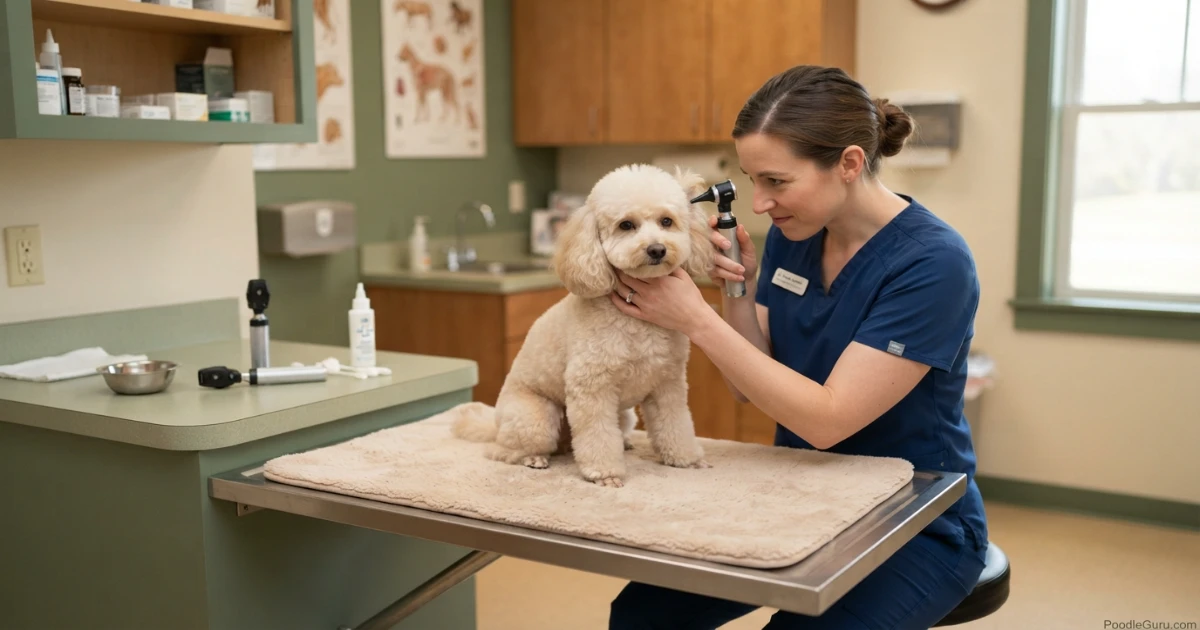
Your vet will typically start with a physical exam and an otoscope look into the ears. For skin, they’ll take a sample — either a piece of clear tape pressed to the skin (tape cytology) or a gentle skin scraping — and examine it under a microscope. Yeast organisms are instantly recognizable: they look like little peanut-shaped cells. For ears, a swab sample is similarly checked. In recurrent or severe cases, your vet may recommend a culture or even blood work to rule out underlying hormonal disorders like hypothyroidism or Cushing’s disease, which can suppress the immune system and invite yeast overgrowth.
VCA Animal Hospitals explains yeast dermatitis in dogs and why a microscopic exam is the most reliable way to confirm an overgrowth.
Treatment Options: What to Expect
Yeast doesn’t pack up and leave on its own. Treatment is tailored to the severity and location of the infection, and it almost always involves a combination of medicated products and environmental changes.
Topical Treatments
For localized skin yeast, prescription shampoos containing chlorhexidine and miconazole or ketoconazole are first-line. The key is contact time — the shampoo must sit on the skin for 5–10 minutes before rinsing. Sprays, wipes, and mousses with similar antifungal ingredients help between baths. Your vet will show you how to apply them safely, especially around the face.
Ear Medications
Medicated ear drops containing antifungals (often combined with a steroid to reduce inflammation and an antibiotic to cover secondary bacteria) are prescribed for ear yeast infections. In some cases, a thorough in-clinic ear flush is needed first to remove heavy debris so the medication can reach the ear canal lining. Never insert cotton swabs deep into a poodle’s ear — you risk pushing debris further in or damaging the eardrum.
Oral Antifungals
For severe or widespread infections that don’t respond to topicals, oral medications like ketoconazole or fluconazole may be prescribed. These require close veterinary monitoring because they can affect the liver. Blood work before and during treatment is standard.
The PoodleGuru Yeast Management & Prevention Framework
At PoodleGuru, we built this four-step framework around the specific ways poodles encounter moisture and allergens. Use it as your ongoing prevention routine, not just a post-infection fix.
Dry Thoroughly, Every Time
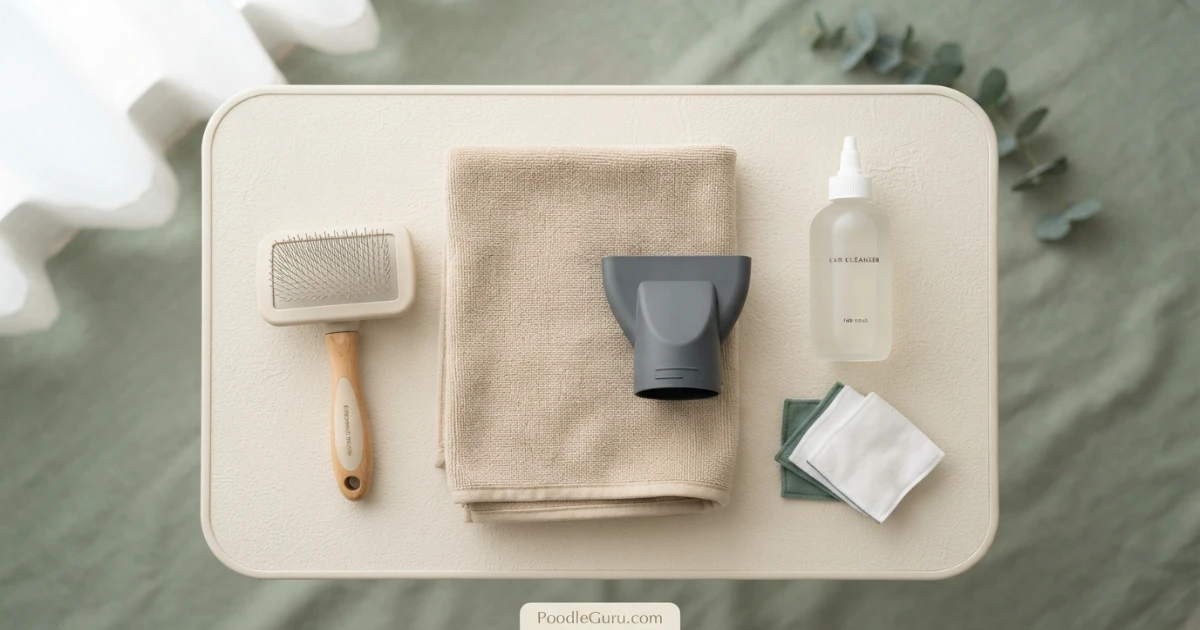
After a bath, swim, or walk in heavy rain, dry your poodle down to the skin — not just the surface curls. Use a high-velocity dryer on a cool setting or a microfiber towel, paying extra attention to armpits, groin, and between paw pads. Dampness left in these areas for even a few hours can trigger yeast regrowth.
Outcome: You remove the moisture yeast requires to multiply, breaking the cycle before it starts.
Ear Hygiene Without Overcleaning
Clean your poodle’s ears only as often as your veterinarian or groomer recommends, using a dog-safe ear cleanser when needed. After bathing or swimming, make sure the ear flap and outer canal area are dry. If ear hair blocks airflow or traps debris, ask your groomer or vet how to manage it safely.
Outcome: Ears stay cleaner, drier, and less irritated without stripping the ear canal’s natural barrier.
Manage Underlying Allergies
If your poodle has seasonal itching, recurrent paw licking, or repeated ear infections, talk to your vet about allergy management. This might include a novel protein diet trial, antihistamines, or allergy immunotherapy. Treating the allergy reduces skin inflammation and removes the trigger that lets yeast overgrow.
Outcome: You stop the root cause, not just the symptom — cutting recurrence dramatically.
Grooming and Skin Inspections
Maintain a consistent grooming schedule — every 3–6 weeks, depending on coat length. A shorter sanitary trim and clipped paw pads reduce moisture traps. During each groom, inspect the skin for early signs of redness or greasy buildup. Catching a tiny yeast spot early means a medicated wipe might be all you need, instead of a full-blown course of antifungals.
Outcome: Proactive monitoring catches infections at the microscopic stage, saving your poodle discomfort and you money.
Common Owner Mistakes That Make Yeast Worse
| Mistake | Why It’s Harmful | Better Approach |
|---|---|---|
| Skipping the blow-dry after a bath | Moisture trapped in the dense undercoat creates ideal yeast conditions within hours. | Use a high-velocity dryer on cool until the skin is completely dry; this is non-negotiable for poodles. |
| Using human antifungal creams | Many contain zinc oxide or other ingredients toxic to dogs if ingested; canine skin pH differs. | Only use vet-prescribed or vet-recommended products specifically for dogs. |
| Overcleaning ears | Excessive cleaning can irritate the canal and disturb the ear’s normal barrier, especially if the wrong solution is used. | Follow your vet’s cleaning schedule and use a dog-safe ear solution; many poodles do not need daily cleaning. |
| Assuming “natural” remedies will cure it | Coconut oil, apple cider vinegar, and yogurt do not kill Malassezia at safe concentrations and can worsen irritation. | See your vet for a diagnosis and a safe antifungal plan before applying any home remedy. |
| Stopping treatment when symptoms fade | Yeast may still be present at microscopic levels, leading to rapid rebound. | Complete the full prescribed course of medication, even if your poodle seems better. |
When to Call the Vet (and When It’s Urgent)
Schedule a Vet Visit If:
- You notice a persistent musty odor from your poodle’s skin or ears.
- Your dog is shaking their head frequently or scratching ears nonstop.
- There’s visible redness, greasy brown buildup, or ear discharge.
- Skin folds look inflamed, sticky, or discolored.
- Symptoms persist, worsen, or return after gentle drying and routine cleaning.
Seek Emergency Care If:
- Your poodle is crying out in pain, holding their head tilted, or has lost balance (possible deep ear infection).
- Skin is raw, bleeding, or covered in pustules.
- Your dog is lethargic, refusing food, feverish, or acting very unwell — these signs may indicate a more serious illness or painful infection.
For a closer look at how yeast overgrowth happens in dogs and the microscopic confirmation process, PetMD offers a detailed overview of canine yeast infections including common misdiagnoses.
Owner Action Plan: What to Do Today
If You Suspect a Yeast Infection Right Now:
- Book a vet appointment — don’t wait. Early treatment means fewer meds and faster relief.
- Gently clean visible debris with a soft, damp cloth. Don’t dig into ears.
- Dry any damp areas — use a cool blow-dryer on paws and armpits if needed.
- Prevent licking — an Elizabethan collar or protective bodysuit can stop your poodle from making the skin raw overnight.
- Write down when symptoms started, what you’ve noticed, and any recent changes (new food, walks in tall grass, baths) to share with your vet.
Frequently Asked Questions About Poodle Yeast Infections
What does a yeast infection smell like on a poodle?
A poodle yeast infection produces a distinctive musty, sour, or “corn chip” odor. This smell is often strongest around the ears, paws, and skin folds. If you notice this scent even after a bath, it’s a strong indicator that yeast overgrowth is present and a vet visit is needed.
Can I treat my poodle’s yeast infection at home?
Mild yeast issues may improve with thorough drying and vet-approved ear cleansers, but active infections require prescription antifungal medication. Home remedies like apple cider vinegar, coconut oil, or yogurt are not reliable treatments and can worsen irritation, especially on raw skin or inside ears. Always consult your vet for a proper treatment plan.
How long does it take for a poodle yeast infection to clear up?
With prescription treatment, mild ear or skin yeast infections often show improvement within a few days and resolve within 1–2 weeks. More chronic or widespread infections may take 3–4 weeks of consistent treatment, and underlying allergies must be managed to prevent recurrence.
Why does my poodle keep getting yeast infections in their ears?
Recurring ear yeast infections in poodles are usually linked to a combination of drop-ear anatomy, trapped moisture, and an underlying allergy. If infections return frequently, your vet may recommend allergy testing, a diet trial, or more frequent ear maintenance to break the cycle.
Is a poodle yeast infection contagious to humans or other dogs?
No. Malassezia yeast is species-adapted and does not spread from dogs to humans or between dogs under normal circumstances. However, the intense itching can make your poodle miserable, so treatment is still urgent for their comfort.
What should I feed my poodle to prevent yeast infections?
There is no single “anti-yeast” diet proven to cure yeast infections. If your poodle has a food allergy, a veterinarian-guided elimination diet or therapeutic diet may reduce allergic skin inflammation and the secondary yeast problems that follow.
Can grooming alone stop a yeast infection?
Grooming — especially thorough drying and ear cleaning — is critical for prevention and can support recovery, but an active infection requires medical treatment. Once the yeast is under control, a consistent grooming routine is your best long-term defense against recurrence.
Key Takeaways: Managing Poodle Yeast Infections for Good
Yeast infections are among the most frustrating skin issues poodle owners face — but repeat flare-ups are often easier to reduce once you understand the moisture-yeast connection. The solution isn’t a single miracle product; it’s a consistent, poodle-aware routine.
- A poodle yeast infection is a fungal overgrowth of Malassezia yeast, causing musty odor, intense itching, and greasy brown discharge on skin or in ears.
- Poodles are especially susceptible because of their dense, moisture-trapping coat, drop ears, and predisposition to allergies — all factors that create a yeast-friendly environment.
- Treatment always requires a veterinary diagnosis; prescription medicated shampoos, ear drops, or oral antifungals clear the infection, while home care (drying, ear cleaning) prevents recurrence.
- The PoodleGuru Yeast Management Framework — dry thoroughly, use vet-guided ear care, manage allergies, and inspect skin during grooming — helps reduce the conditions that allow repeat outbreaks.
- Common owner mistakes like skipping the blow-dry, using human creams, or stopping treatment early prolong suffering and increase vet costs.
- If your poodle has recurrent yeast infections, prioritize a vet workup for underlying allergies or hormonal imbalances — treating the root cause is the only way to truly stop the cycle.
For a complete guide to drying, sanitary trims, and coat care that keeps yeast at bay, see our Complete Poodle Grooming Guide. If your poodle is showing symptoms described here, schedule a vet visit today — early intervention is everything.