How Often Should You Bathe a Poodle?
A Coat-Smart Guide That Works in Real Life
Poodles break almost every bathing rule that works for other breeds. Their hair grows continuously, lacks the coarse guard hairs of shedding dogs, and traps oil differently. Getting the rhythm right protects skin, preserves texture, and prevents the grooming battles you dread. This guide answers how often should you bathe a poodle without guesswork — and without stripping what makes that coat special.
Quick Answer
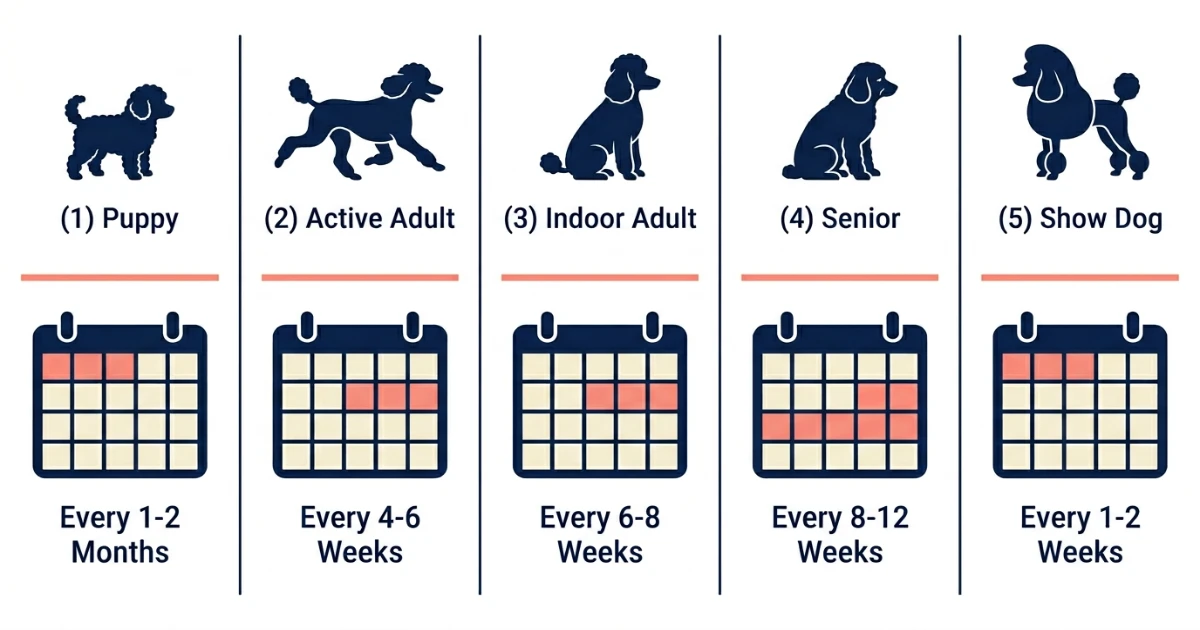
Most healthy adult Poodles do best with a bath every 3 to 4 weeks. Show dogs and pets with active outdoor lives often need baths every 1 to 2 weeks using ultra-mild, breed-appropriate products. Puppies, seniors, and dogs with skin conditions may need adjusted schedules. Overbathing strips the natural oils that give the Poodle coat its luster and weather resistance — underbathing lets sebum build up, attracts dirt, and leads to matting. The sweet spot lives between those two extremes, and it changes with your dog’s real life.
If you’ve ever stared at your Poodle wondering whether today is bath day or if you’re about to make a grooming mistake you’ll regret for weeks, you’re in exactly the right place. Poodle coats aren’t fur in the traditional sense — they’re a single-layer, continuously growing hair coat that behaves more like human hair than like a Labrador’s double coat. That fundamental difference is why the question how often should you bathe a poodle produces such wildly different answers across the internet, and why owners often bounce between “not enough” and “way too much” before finding their rhythm.
At PoodleGuru, we talk to breeders, professional groomers, veterinary dermatologists, and thousands of owners. What emerges is a clear, customizable framework — not one rigid number. In the next few minutes, you’ll understand exactly when to reach for the shampoo, when to wait, and how to turn bath time into a bonding ritual that actually improves coat health instead of damaging it.
Ideal Rhythm
Every 21–28 days for most non-show adult Poodles. This aligns with the skin’s natural renewal cycle and keeps oil levels balanced.
Top Reason to Adjust
Lifestyle — a puddle-loving Standard needs more frequent bathing than a toy Poodle who lives on laps and pillows.
One Non-Negotiable
Never bathe a matted Poodle. Water tightens mats against the skin, causing pain and skin damage. Brush thoroughly first.
In This Guide
- Why the Poodle Coat Changes Everything
- The Real Answer – How Often Should You Bathe a Poodle
- Expert Insight: The Overbathing Trap
- Factors That Shift Your Bath Schedule
- Signs Your Poodle Needs a Bath
- How to Bathe a Poodle the Right Way
- Common Bathing Mistakes That Hurt Poodles
- What Buyers and First-Time Owners Often Get Wrong
- Bathing Puppies, Adults, Seniors & Size Differences
- Between Baths – Maintenance Essentials
- FAQs
- Final Summary
Why the Poodle Coat Changes Everything
Most dog breeds have fur that sheds and replaces itself in a cycle designed to thin out for summer or thicken for winter. Poodles have hair — a single-layer, low-shedding coat that grows continually, much like the hair on a human head. This coat structure means dead hair stays trapped in the curl instead of falling to the floor, and the skin’s sebum (natural oil) travels down the hair shaft much more slowly. The result? A Poodle’s skin can feel greasy before the coat looks dirty, or the coat can look dusty while the skin is still in good shape. You’re not just washing the surface; you’re managing a delicate oil ecosystem.
Because sebum doesn’t spread easily through dense curls, many owners misinterpret a dry-looking coat as a clean coat. In reality, that dryness often signals that oils aren’t being distributed — and overbathing makes it worse. Brushing between baths is the real hero here. Regular line brushing moves those oils from root to tip, which stretches the time between baths and keeps the coat in better condition. Understanding this biology is the first step to answering how often should you bathe a poodle with confidence instead of confusion.
How Often Should You Bathe a Poodle? The Real Answer
There is no single universal number, but there is a highly reliable range. The consensus among experienced groomers and veterinary dermatologists lands here:
| Poodle Category | Recommended Bath Frequency | Notes |
|---|---|---|
| Pet Adult (Indoor Lifestyle) | Every 3–4 weeks | Perfect baseline; maintain with weekly brushing. |
| Active Outdoor / Working | Every 1–2 weeks | Use ultra-mild shampoo; always condition. |
| Show / Competition | Every 5–10 days | Frequent bathing with high-end products; coat is usually banded or wrapped. |
| Puppy (8–16 weeks) | Once, then only as needed | Focus on gentle handling, not frequency. Avoid stripping puppy coat oils. |
| Senior / Low Mobility | Every 4–6 weeks | Use warm water, non-slip mats, and consider professional grooming if bathing is stressful. |
| Poodles with Skin Conditions | Vet-directed schedule | Medicated baths may be needed weekly; always follow professional guidance. |
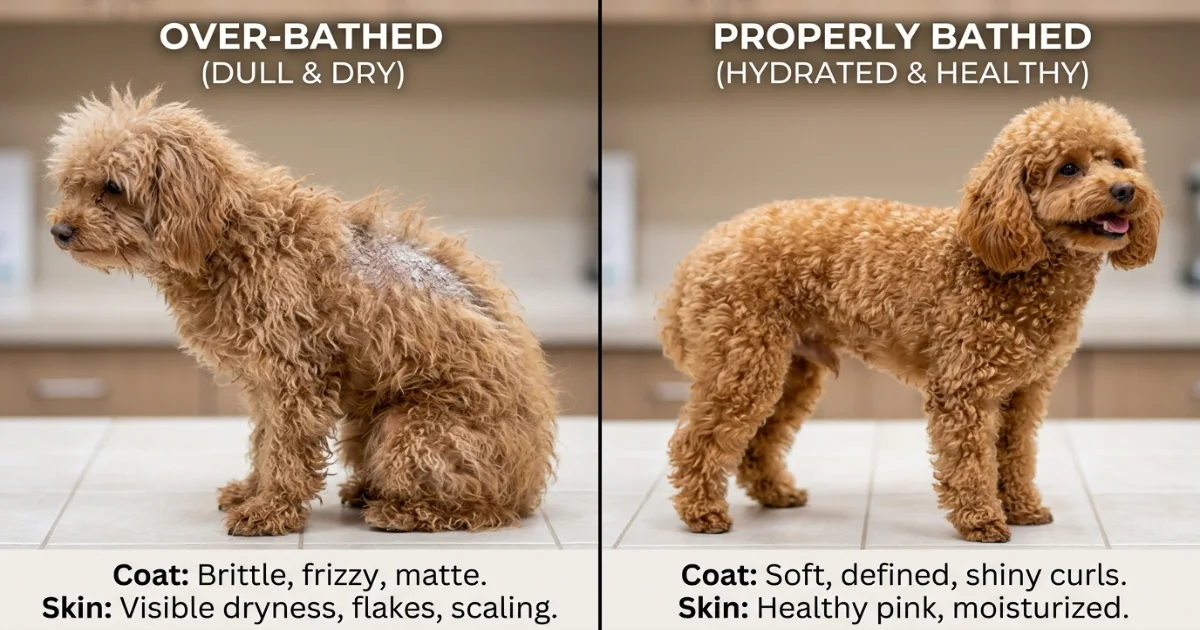
What surprises most new owners is that how often should you bathe a poodle often needs to be dialed back, not up. A clean-smelling, freshly bathed dog is satisfying, but the Poodle’s skin barrier needs those natural oils to stay resilient. If your dog’s skin looks flaky or the coat feels brittle, the most common culprit is bathing too frequently — not too little.
🐩 Expert Insight: The Overbathing Trap
Many well-meaning owners wash their Poodle weekly because they want that “just groomed” look. Within a few months, the coat becomes dull, the skin turns dry, and suddenly the dog is scratching. Overbathing strips the acid mantle — the protective film of oils and good bacteria on the skin. In Poodles, this can trigger a cycle of irritation that actually increases odor, leading the owner to bathe even more. If you suspect you’re in this cycle, pause bathing for 5–6 weeks, focus on daily brushing, and watch the coat bounce back. Most Poodles need less washing than you think, not more.
Factors That Shift Your Poodle’s Bath Schedule
Your dog’s calendar isn’t the only thing that determines how often you should bathe a poodle. These real-world variables matter just as much — and sometimes more — than the number of weeks since the last bath.
Coat Length & Style
A short sporting clip collects less debris and can go longer between baths. A full continental or long coat traps dirt and needs more frequent attention.
Allergies & Skin Sensitivity
If your Poodle has environmental allergies, your veterinarian may recommend frequent bathing with a soothing, hypoallergenic shampoo to remove pollen from the coat.
Weather & Season
Mud season and humid summers often demand more baths. In dry winter air, scale back and use a humidifier indoors to support skin health.
Swimming & Water Play
Chlorine, salt, and lake water all dry out the coat. Rinse thoroughly after every swim; a full bath may be needed if the dog smells or feels gritty.
Health Status
Hormonal imbalances like hypothyroidism can change oil production. Always rule out medical causes if your Poodle suddenly becomes greasy or smelly between baths.
Age & Activity Level
Puppies need gentle, infrequent introduction to water. High-energy adult Poodles who romp through fields might need a rinse every week, while calm seniors rarely need frequent full baths.
Signs Your Poodle Needs a Bath
Instead of watching the calendar alone, learn to read your Poodle. These five signals tell you it’s time to fill the tub — no math required.
Poodle Smell
A healthy Poodle shouldn’t smell strongly. If you catch a musty, yeasty, or “doggy” odor even after brushing, it’s bath time. Foul odor around the ears or mouth needs separate attention.
Greasy or Stringy Coat
Run your fingers through the coat down to the skin. If it feels waxy or the curls clump into stringy strands, sebum has built up and needs washing away.
Visible Dirt or Dander
White or light-colored Poodles show dirt quickly. If brushing doesn’t remove the dinginess, a bath is the next step.
Increased Scratching
If your Poodle starts scratching more than usual without fleas or obvious allergy triggers, accumulated oils and environmental debris may be the culprit.
Matting Near the Skin
Mats often form when shed hair and oil compact together. A properly brushed coat that still mats quickly is often overdue for a bath.
How to Bathe a Poodle the Right Way
Bathing technique matters just as much as frequency. A rushed, incorrect bath can create the very problems you’re trying to prevent. This method — refined by show breeders and professional groomers — protects the coat, calms the dog, and leaves a Poodle truly clean.
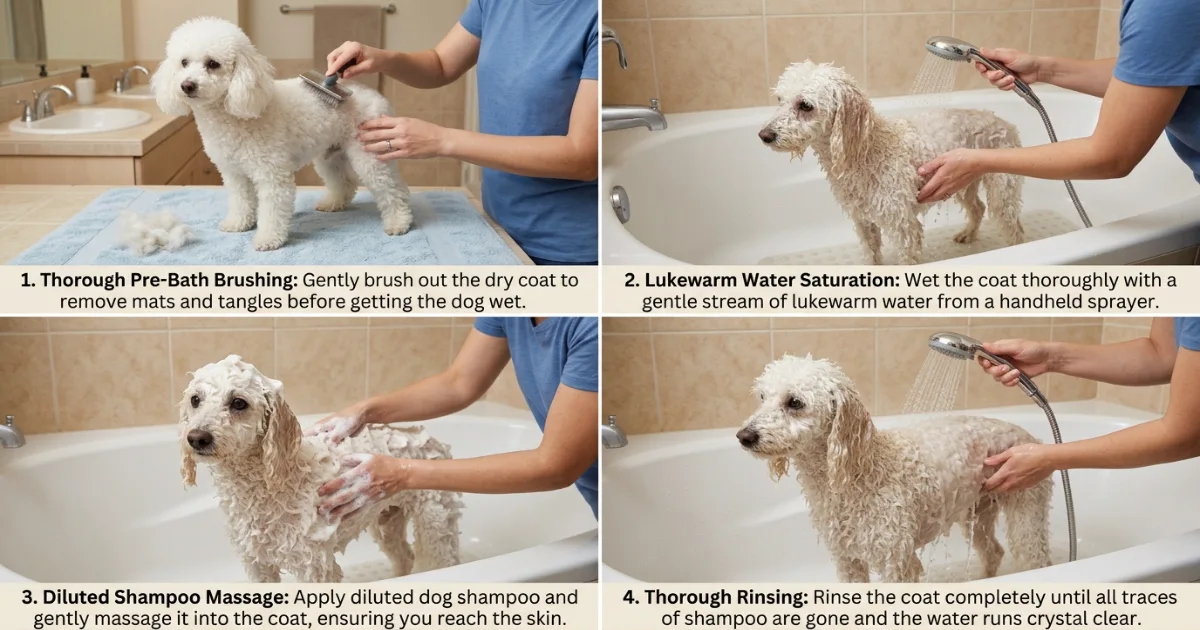
Pre-Bath Brushing
Thoroughly line-brush your Poodle to remove all tangles and loose hair. Water tightens mats into painful knots. If you find stubborn tangles, use a detangling spray and a slicker brush before turning on the water.
Lukewarm Water & Full Saturation
Use a handheld sprayer on low pressure. The water should feel comfortably warm, not hot. Soak the coat completely to the skin — a Poodle’s dense coat repels water at first, so take your time.
Diluted, Poodle-Safe Shampoo
Never apply concentrated shampoo directly. Mix with water in a squeeze bottle. Use a soap-free, pH-balanced shampoo formulated for dogs. Work it gently from the neck down — save the face for last with a damp cloth.
Rinse Until the Water Runs Clear
Shampoo residue is one of the biggest causes of post-bath itchiness. Rinse longer than you think you need to. Feel the coat — if it’s still slick, keep rinsing.
Conditioner (Not Optional)
A light, leave-in or rinse-out conditioner helps close the hair cuticle and restores moisture. Focus on the ends and any dry areas. This step makes a dramatic difference in reducing tangles for weeks.
Towel Dry, Then Blow Dry
Gently press — don’t rub — with a microfiber towel. Then use a high-velocity dog dryer (or a human dryer on low heat) to dry completely. Leaving the coat to air dry encourages curl tightness that leads to matting.
Common Bathing Mistakes That Hurt Poodles
Even well-intentioned owners make these errors. Spotting them early saves your Poodle’s skin and your sanity.
Using Human Shampoo
Human skin is more acidic. Human products disrupt the canine pH barrier, causing dryness, irritation, and increased susceptibility to infection. Always use dog-specific shampoo.
Skipping the Blow Dry
Air-drying leaves curls tight and damp at the roots, a perfect environment for hot spots and matting. A thorough blow dry stretches the coat and keeps it smoother longer.
Bathing a Matted Coat
This is the cardinal sin. Water turns loose tangles into rock-hard mats against the skin. If you find mats, learn how to safely remove them before the bath.
Not Protecting the Ears
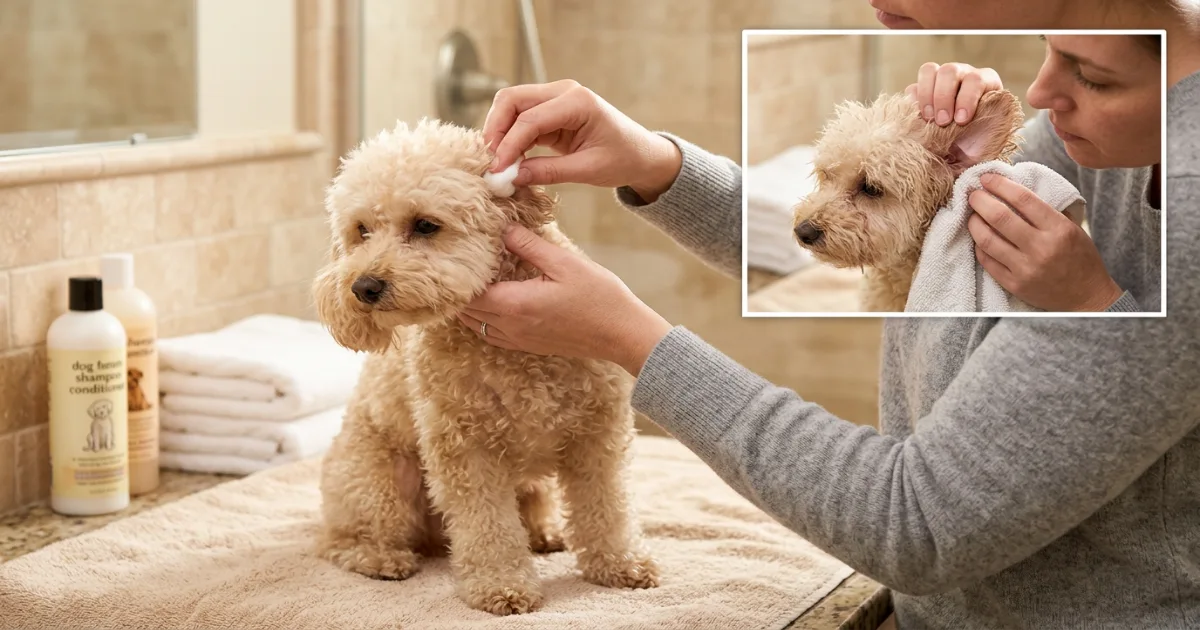
Water in the ear canal leads to painful infections. Place cotton balls gently in the ears before bathing, and dry the ear flap and canal opening thoroughly afterward.
Bathing Too Close Together
If you wash before the natural oil balance restores, you create a cycle of depletion. Stretch the schedule and lean on brushing to keep the coat fresh.
What Buyers and First-Time Owners Often Get Wrong
Many people bring home a Poodle assuming it will be a “wash and wear” breed because it doesn’t shed. The reality hits hard: the non-shedding coat demands more maintenance, not less. New owners frequently misinterpret how often should you bathe a poodle as a static number they can set and forget, but the coat is alive — it changes with seasons, diet, health, and age.
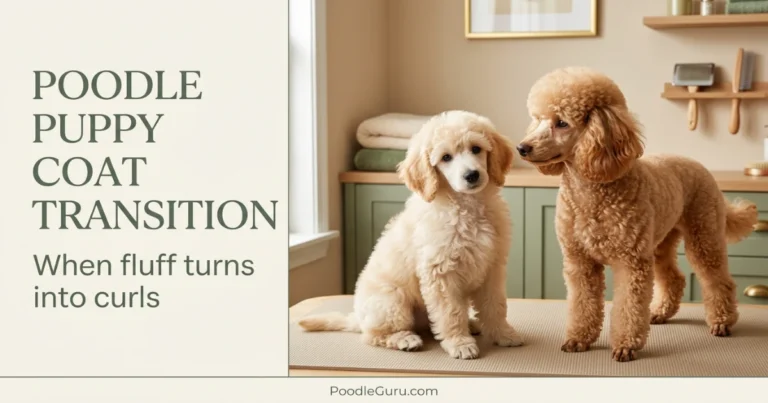
Another common mistake: thinking that more baths equal better hygiene. Poodle puppies especially benefit from very limited bathing while their coat transitions from soft puppy fluff to adult curls. Frequent washing during this phase can leave the adult coat coarser and harder to manage. Buyers also often overlook that the Poodle size — toy, miniature, or standard — affects how fast oils accumulate, simply because of the surface area difference. A toy Poodle’s tiny body doesn’t get as dirty as a Standard who rolls in the yard.
The biggest myth? That a smelly Poodle always means they need a bath. Odor can come from ears, teeth, or anal glands — issues that bathing won’t fix. A truly well-cared-for Poodle shouldn’t have a strong odor at all. If the smell returns just days after a bath, investigate root causes, not just the shampoo.
Bathing Puppies, Adults, Seniors & Size Differences
| Life Stage / Size | Bathing Approach | Special Considerations |
|---|---|---|
| Puppy (under 6 months) | Minimal — 1 bath early for positive association, then only when soiled. | Use tearless puppy shampoo; keep sessions under 10 minutes; reward heavily. |
| Adult Toy Poodle | Every 3–4 weeks is usually sufficient. | Small size makes home bathing easy; use a kitchen sink with a non-slip mat. |
| Adult Miniature Poodle | Every 3–4 weeks; active dogs may need every 2–3 weeks. | Manageable at home; invest in a grooming arm and a good dryer. |
| Adult Standard Poodle | Every 3–4 weeks, with 1–2 week intervals for very active outdoor dogs. | Bathing a large Poodle is physically demanding; many owners use professional groomers for thorough baths. |
| Senior Poodle (any size) | Every 4–6 weeks; prioritize comfort over frequency. | Use warm towels, a gentle dryer, and consider a professional who can handle arthritic dogs safely. |
Between Baths – Maintenance Essentials
What you do between baths is what truly dictates how long you can wait until the next one. A well-maintained coat can stretch a 3-week bath to 5 weeks without odor or discomfort. A neglected coat will cry for water within 10 days.
🐩 Pro Ritual: The 3-Day Reset
Every three days, spend 10 minutes line-brushing. This single habit distributes oils, removes dirt, prevents mats, and lets you check for skin issues. It’s the most powerful lever you have to keep your Poodle fresh and your bath schedule relaxed.
Other between-bath tools that owners love: diluted leave-in conditioner sprays, gentle dog-safe grooming wipes for paws and sanitary areas, and cornstarch-based dry shampoos for emergency touch-ups. But remember — dry shampoo never replaces a real bath; it simply buys you a day or two when needed. For owners who want deeper coat wisdom, our Complete Poodle Grooming Guide covers everything from brush types to professional clip maintenance.
Frequently Asked Questions
Can I bathe my Poodle every week?
You can, but it’s rarely necessary and often counterproductive. Weekly bathing with a gentle, breed-appropriate conditioner can work for show dogs or highly active outdoor Poodles, but for most pets it leads to dry, irritated skin. If you must bathe weekly, use a super-mild, soap-free shampoo and always condition.
How often should I bathe a Poodle puppy?
As infrequently as possible while still teaching them that bath time is safe. One gentle introduction bath around 10–12 weeks is plenty. Then bathe only when the puppy gets truly dirty. Overbathing a puppy disrupts the developing coat and can make them fearful.
What happens if I bathe my Poodle too often?
The skin’s protective acid mantle gets stripped away, leading to dryness, flaking, itchiness, and even secondary infections. The coat may lose its natural shine and feel brittle. Dialing back to a 3–4 week schedule usually reverses the damage within a month.
Is it okay to let my Poodle air dry?
It’s not recommended as a routine practice. Air drying leaves the coat damp at the roots, which can cause skin irritation, hot spots, and tight matting. Blow drying while brushing stretches the hair and keeps it smooth. If you must air dry, keep your Poodle in a warm, well-ventilated space and brush every 20 minutes until completely dry.
How do I keep my Poodle smelling fresh between baths?
Regular brushing is your strongest tool — it removes debris and distributes oils that can turn rancid. Use dog-safe grooming wipes on paws and sanitary areas, and consider a light cornstarch-based dry shampoo. Always check ears and teeth, as those are common hidden sources of odor.
Does my Poodle’s haircut style affect how often I should bathe them?
Yes. Shorter clips like the kennel or sporting cut expose less coat to the environment and can go longer between baths. Longer styles — especially the continental or puppy clip — trap more debris and may need more frequent washing. Always brush thoroughly before bathing regardless of length.
Can I use baby shampoo on my Poodle?
While baby shampoo is milder than adult human shampoo, it’s still formulated for human skin pH, which is more acidic than a dog’s. Occasional use in an emergency is unlikely to cause harm, but for regular bathing choose a pH-balanced dog shampoo. For Poodles with sensitive skin, an oatmeal-based or hypoallergenic dog formula is far safer.
Why does my Poodle still smell after a bath?
Persistent odor right after a bath often points to an underlying issue: ear infection, dental disease, anal gland problems, or a skin yeast overgrowth. If the smell is musty or sour despite thorough cleaning, schedule a vet check. Shampoo alone can’t fix medical causes of odor.
Final Summary
For the vast majority of Poodles, a bath every 3 to 4 weeks hits the sweet spot between hygiene and coat health. Adjust upward slightly for mud-loving adventurers; dial it back for couch-loving toys. Always read your dog, not just the calendar. The goal isn’t a sterile, stripped coat — it’s a balanced, comfortable Poodle whose skin and hair work in harmony. Pair that rhythm with diligent brushing, the right products, and a gentle drying routine, and you’ll have a dog that feels as good as it looks.
Remember: how often should you bathe a poodle is a question with a range, not a single rule. Use the framework in this guide, listen to your dog’s skin and coat, and you’ll never feel uncertain about bath day again.