Why Does My Poodle Howl? Understanding Vocal Poodles
That long, mournful sound can be startling — especially at 3 a.m. Here is what Poodle howling usually means, what is normal, and how to manage it calmly without damaging your bond.

Quick Answer: Why Poodle Howling Happens
Poodle howling can happen because of communication, loneliness, excitement, attention-seeking, response to sirens or music, or discomfort. It is not automatically a behavior problem. It becomes concerning when it is excessive, starts suddenly, happens every time your Poodle is left alone, or appears with distress signs such as pacing, drooling, chewing, hiding, or appetite changes. The best solution is to identify the trigger, meet the underlying need, and reward calm quiet behavior instead of punishing the sound.
What Is Poodle Howling?
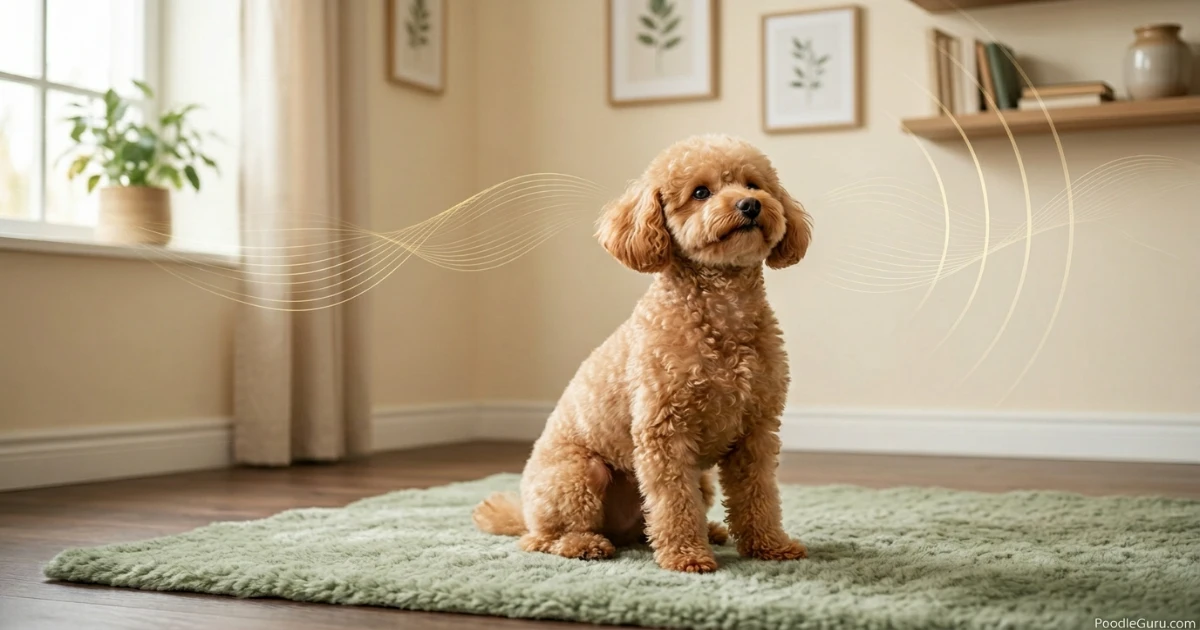
Poodle howling is a vocalization behavior where a Poodle produces a long, sustained, musical sound. It may happen in response to another dog, a siren, music, your voice, excitement, being left alone, or physical discomfort. For owners, the important question is not only “How do I stop it?” but “What is my Poodle trying to communicate?”
Unlike barking, which is short and often alert-based, howling carries longer notes that travel farther. Dogs retain this ancestral communication pattern, but modern Poodle howling is often shaped by routine, attachment, learning history, and environment. Because Poodles are intelligent, sensitive, and highly people-focused, they can also learn very quickly when howling gets attention.
Quick Facts About Poodle Howling
It Is a Normal Dog Behavior
All Poodle sizes — Toy, Miniature, and Standard — may howl. A short howl in response to sound or excitement does not mean your dog is “bad” or poorly trained.
Not Every Poodle Howls Often
Some Poodles are naturally quiet while others are more vocal. Personality, early socialization, home routine, and owner response all influence vocal habits.
Alone-Time Howling Needs Attention
If howling happens mainly when your Poodle is alone and appears with pacing, drooling, scratching, or destruction, separation anxiety may be involved.

7 Reasons Poodles Howl
Poodle howling is rarely random. Most cases can be traced to one of these common triggers. Once you know the reason, you can choose the right response instead of guessing.
1. Communication with You or Other Dogs
Poodles are socially aware dogs. They may howl to announce themselves, respond to a neighbor’s dog, or “join in” when you speak in an excited or high-pitched voice. In multi-dog homes, one howl can set off a group response because dogs often mirror each other’s vocal energy.
2. Separation Anxiety and Loneliness
This is the trigger owners should take most seriously. A Poodle with separation anxiety may howl soon after you leave, especially if the behavior appears with pacing, drooling, escape attempts, indoor accidents, or destructive chewing. The ASPCA guidance on separation anxiety lists vocalization as a common sign and recommends structured behavior work rather than punishment.
3. Attention-Seeking
Smart dogs learn patterns quickly. If your Poodle howls and you immediately rush over, make eye contact, talk, or scold, the behavior may be reinforced. This type of howling often stops the moment you engage and starts again when you walk away.
4. Response to High-Pitched Sounds
Sirens, musical instruments, TV jingles, squeaky toys, or even a kettle can trigger howling. This is usually sound-response behavior rather than panic. The AKC Poodle breed profile describes Poodles as alert and highly responsive, which can show up as vocal reactions to unusual sounds.
5. Excitement and Greeting
Some Poodles release a short, happy howl when you come home, pick up the leash, or start a favorite game. This is usually brief and comes with relaxed body language, wagging, play bows, or zoomies.
6. Boredom and Under-Stimulation
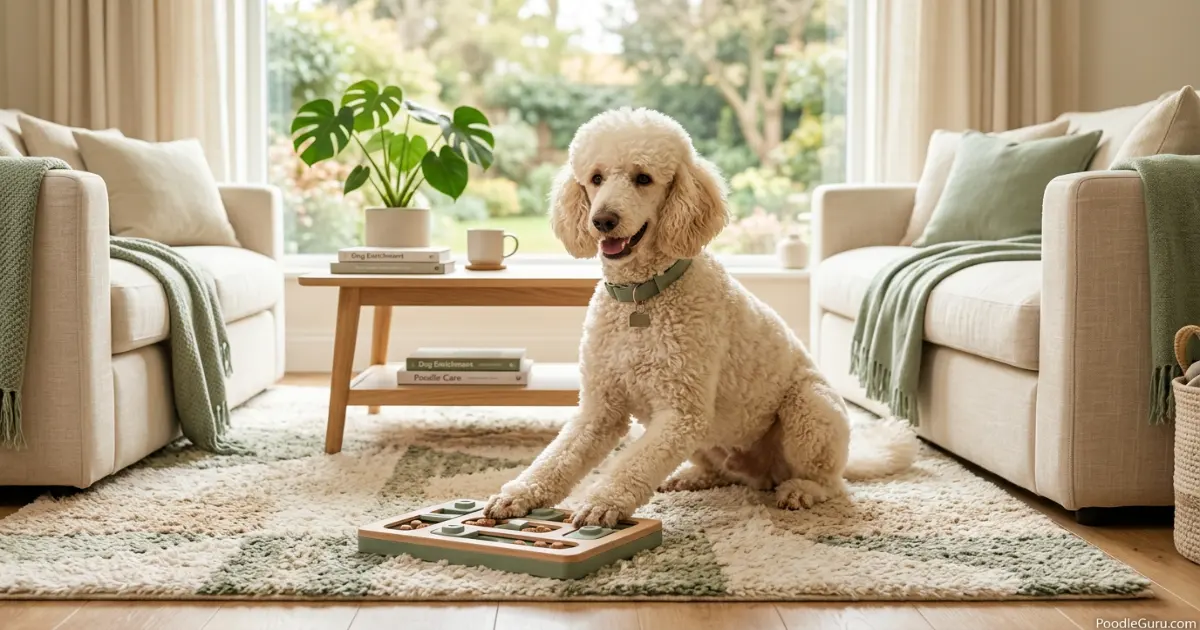
Poodles need mental work as much as physical movement. A bored Poodle may howl because the day is too quiet, too repetitive, or lacks problem-solving activities. Puzzle toys, scent games, short training sessions, and structured walks can reduce this kind of vocalization.
7. Pain, Discomfort, or Medical Changes
Sudden, unusual, or intense howling can signal pain or discomfort. Possible causes include dental pain, ear problems, injury, digestive discomfort, or age-related cognitive changes. If your normally quiet Poodle starts howling with no clear trigger, or shows appetite changes, hiding, limping, sensitivity to touch, or restlessness, contact your veterinarian.
Howling vs. Barking vs. Whining: A Poodle Vocalization Guide
Poodles have a rich vocal range. Knowing the difference helps you respond properly and avoid accidentally reinforcing the wrong sound.
| Vocalization | Sound Character | Common Poodle Triggers | Likely Message | Best Owner Response |
|---|---|---|---|---|
| Howling | Long, melodic, sustained | Loneliness, sirens, music, other dogs, separation distress | “I am here,” “I hear that,” or “I am alone” | Assess the trigger, avoid punishment, and address anxiety if present |
| Barking | Short, sharp, repetitive | Doorbell, strangers, excitement, demands, alerting | “Notice this,” “I want that,” or “Something changed” | Teach a calm “quiet” cue, redirect, and reward calm behavior |
| Whining | High-pitched, nasal, plaintive | Anticipation, frustration, mild anxiety, discomfort, pain | “I want,” “I am uncomfortable,” or “I need help” | Check for needs or pain, then reward calm waiting instead of demanding |
This table is a general guide. Individual Poodles may combine vocalizations or develop unique patterns based on routine and learning history.
The PoodleGuru Vocalization Type Checker
Use this simple checker to understand the emotional state behind your Poodle’s howling. The type matters because each one needs a different solution.
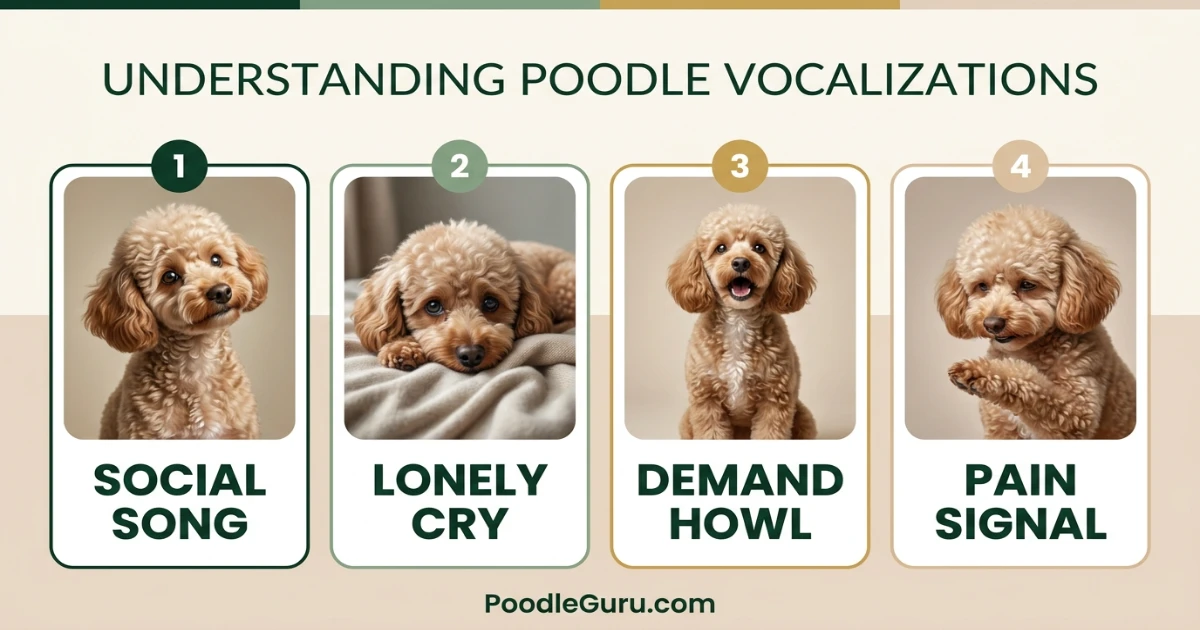
Type 1: Social Song
Triggered by sirens, music, or other dogs. Your Poodle is calm otherwise and settles when the sound ends. No major intervention is needed unless it becomes disruptive.
Type 2: Lonely Cry
Occurs mainly when left alone and may appear with pacing, drooling, scratching, or house soiling. This may be separation anxiety and needs a gradual plan.
Type 3: Demand Howl
Directed at the owner and stops when attention, food, play, or access is given. It is often reinforced accidentally, so reward quiet moments instead.
Type 4: Pain Signal
Starts suddenly, sounds different, or appears with appetite changes, hiding, limping, or sensitivity. Contact your veterinarian for guidance.
How to Manage and Reduce Excessive Poodle Howling
If your Poodle howling is frequent, disruptive, or linked to anxiety, use a calm step-by-step plan. Poodles usually respond best to predictable routines, positive reinforcement, and gentle training rather than harsh corrections.
Rule Out Medical Causes First
Schedule a vet check if the howling is new, intense, or paired with pain signs, appetite changes, restlessness, ear discomfort, dental sensitivity, or behavior changes.
Identify the Exact Trigger
Keep a simple 5–7 day log. Note the time, what happened right before the howl, how long it lasted, and what made it stop. Most patterns become clearer within a week.
For Demand Howling, Remove the Reward
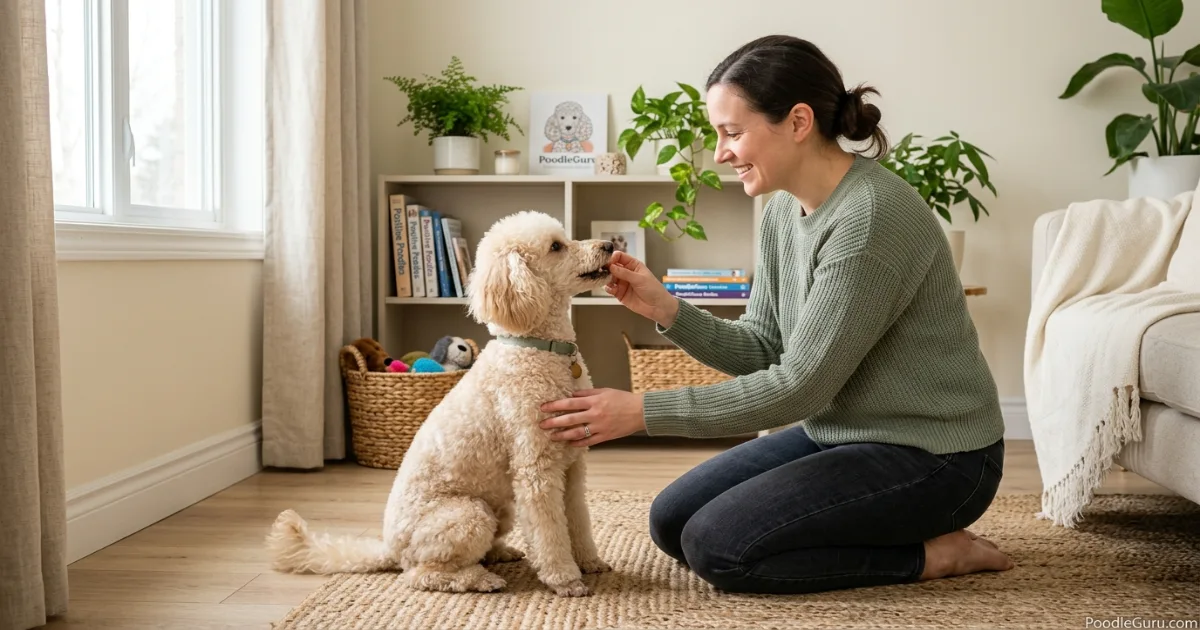
Turn away calmly. Do not talk, touch, stare, or scold. When your Poodle is quiet for a few seconds, calmly reward with attention, a cue, or a treat. This teaches that quiet behavior works.
For Separation Anxiety, Use Gradual Desensitization
Practice very short departures and return before howling begins. Slowly increase the time only when your Poodle stays relaxed. Severe cases should be supported by a certified separation anxiety trainer or veterinary behavior professional.
Add Mental Enrichment Before Alone Time
A sniff walk, puzzle toy, food scatter, or short training session before you leave can reduce boredom and nervous energy. Poodles need brain work, not just exercise.
Teach a Gentle “Quiet” Cue
Wait for a natural pause, say “quiet” in a calm voice, and reward immediately. Practice when your Poodle is only mildly vocal first. Never yell, because yelling can sound like joining the noise.
Owner Mistakes That Make Poodle Howling Worse
Well-meaning owners often strengthen the behavior by accident. Avoid these common mistakes if you want quieter, calmer progress.
Punishing the Howl
Yelling, spray bottles, shock collars, or harsh corrections may increase anxiety. With sensitive Poodles, punishment can damage trust and make vocal behavior more stressful.
Rushing Over Every Time
If every howl brings instant attention, your Poodle may learn that howling is the fastest way to summon you. Even scolding can count as attention.
Calling Anxiety “Drama”
True separation anxiety is not stubbornness. It is distress. Delaying a proper plan can make the problem harder to solve later.
When to Call a Professional
Red Flags That Need Expert Help
Most Poodle howling is manageable at home, but these signs deserve support from your veterinarian, a certified trainer, or a veterinary behavior professional:
- Howling that starts suddenly in a previously quiet adult or senior Poodle
- Howling with self-injury, extreme drooling, panic, escape attempts, or destruction
- Howling with appetite changes, limping, hiding, guarding, or sensitivity to touch
- Howling that continues despite exercise, enrichment, routine changes, and calm training
- You feel overwhelmed or unsure how to respond safely
For separation anxiety, a CSAT, certified force-free trainer, veterinary behaviorist, or veterinarian can help you build a safe plan tailored to your dog.
Realistic Expectations for Poodle Owners
Not every Poodle will be silent, and that is okay. Some are naturally more vocal than others. The real goal is not to erase normal communication. The goal is to reduce distress-driven howling, prevent attention-seeking habits, and help your Poodle feel secure enough to settle.
Frequently Asked Questions About Poodle Howling
Is howling a sign of pain in Poodles?
It can be. Sudden, uncharacteristic howling without an obvious trigger — especially with appetite changes, hiding, limping, restlessness, or sensitivity to touch — should be discussed with a veterinarian.
Why does my Poodle howl at sirens?
Sirens and similar high-pitched sounds can trigger an instinctive vocal response. Your Poodle may be “answering” the sound. If the howling stops when the sound ends, it is usually normal.
Do all Poodles howl?
No. Some Poodles rarely howl, while others are naturally more vocal. Personality, routine, socialization, anxiety level, and owner response can all influence the behavior.
Can I train my Poodle to stop howling completely?
You can reduce excessive howling, but expecting zero howling may be unrealistic. The goal is to reduce distress-driven or attention-seeking howling while allowing normal dog communication.
Why does my Poodle howl when I leave?
This may point to separation distress, especially if it starts soon after you leave and appears with pacing, drooling, scratching, accidents, or destruction. Gradual desensitization and professional guidance may be needed.
Is howling more common in Toy, Miniature, or Standard Poodles?
All three sizes can howl. There is no reliable rule that one size always howls more. Individual temperament, confidence, attachment style, daily activity, and environment matter more.
Should I use an anti-bark collar for Poodle howling?
No. Anti-bark collars may suppress the sound without solving the cause. For a sensitive breed like the Poodle, punishment-based tools can increase stress and damage trust. Positive reinforcement and trigger management are safer choices.
Key Takeaways: Poodle Howling
Poodle howling is easier to understand once you connect the sound to the trigger. Remember these points before choosing a response:
- Poodle howling is normal canine communication, but excessive or sudden howling deserves closer attention.
- Common triggers include sound response, social communication, excitement, attention-seeking, boredom, separation anxiety, and discomfort.
- Use the PoodleGuru Vocalization Type Checker — Social Song, Lonely Cry, Demand Howl, and Pain Signal — to identify the likely cause.
- Separation-anxiety howling needs gradual desensitization and may require professional support.
- Demand howling often continues because it gets rewarded accidentally; reward quiet instead.
- Sudden howling with pain signs, appetite changes, hiding, limping, or restlessness should be discussed with your veterinarian.
- A mentally enriched Poodle with a predictable routine is less likely to howl from boredom, frustration, or nervous energy.