Signs a Senior Poodle Is in Pain: 15 Warning Signs
The signs a senior Poodle is in pain are often quiet: stiffness after rest, hesitation before stairs, new sensitivity during grooming, restless sleep, or less interest in family routines. Learning to notice patterns early helps you give your veterinarian clearer information and protect your Poodle’s comfort.
Quick Answer: How Can You Tell If a Senior Poodle Is in Pain?
Common warning signs include stiffness when rising, reluctance to jump or climb stairs, a changed gait, repeated licking of one area, panting at rest without heat or exercise, difficulty settling, reduced appetite, withdrawal, irritability, and sensitivity during ordinary petting or grooming. One sign does not identify the cause, but a sudden, severe, persistent, or worsening change should prompt veterinary advice. Do not press painful areas, test joint range of motion, or give over-the-counter human medication.
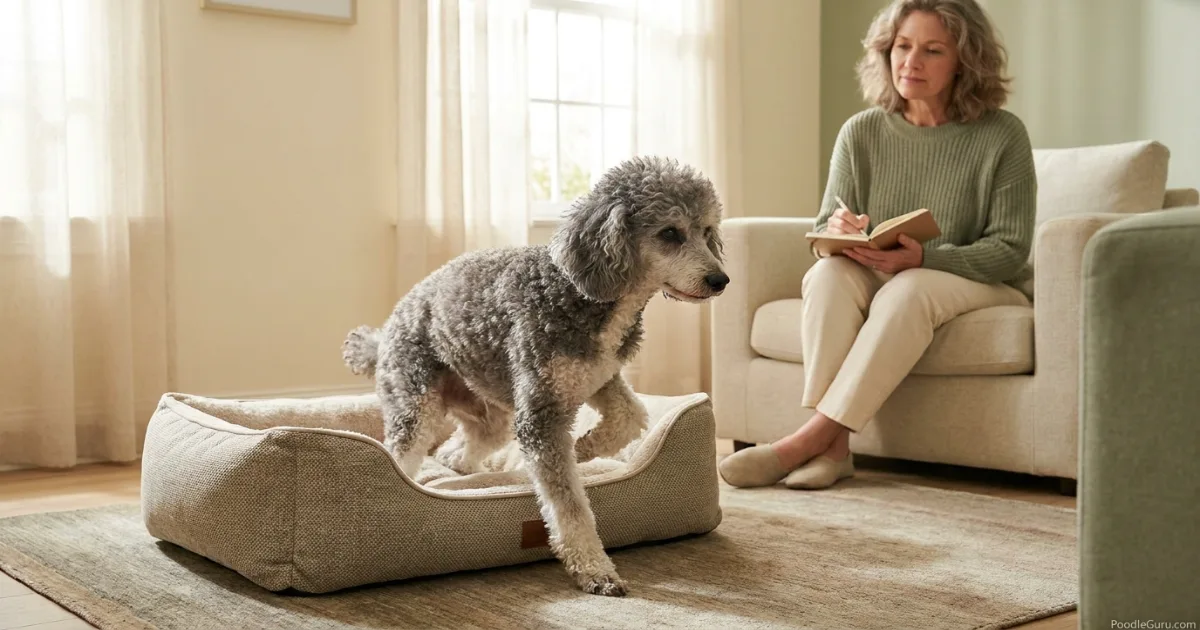
15 Signs a Senior Poodle May Be in Pain
Pain can change movement, sleep, appetite, social behavior, breathing, and grooming tolerance. Look for a new pattern rather than relying on one isolated moment.
Movement Changes
- Stiffness after sleeping or resting.
- Hesitation before stairs, furniture, or the car.
- Limping, shortened steps, head bobbing, or “bunny hopping.”
- Slipping more often or avoiding smooth floors.
- Difficulty squatting, posturing, or getting comfortable.
Behavior Changes
- Withdrawal from family or hiding.
- New irritability, growling, or startle reactions.
- Less interest in walks, toys, food, or affection.
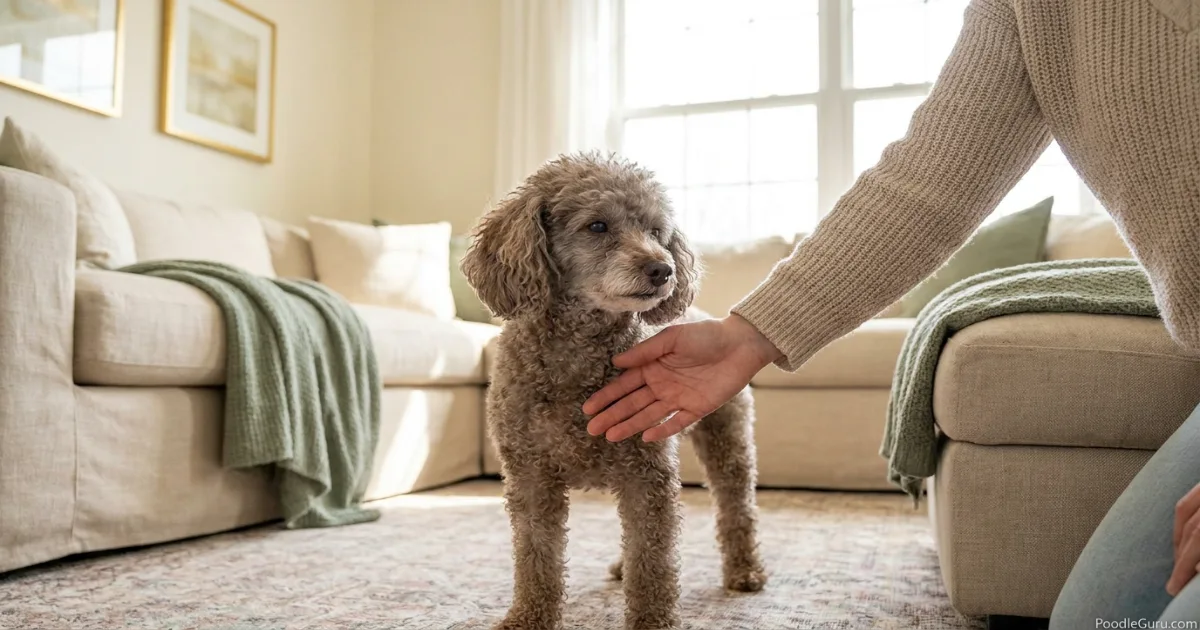
- Reluctance to be brushed, lifted, or touched.
- Restless sleep or frequent repositioning.
Body and Routine Changes
- Panting at rest when the room is not hot.
- Trembling, a tense expression, or squinting.
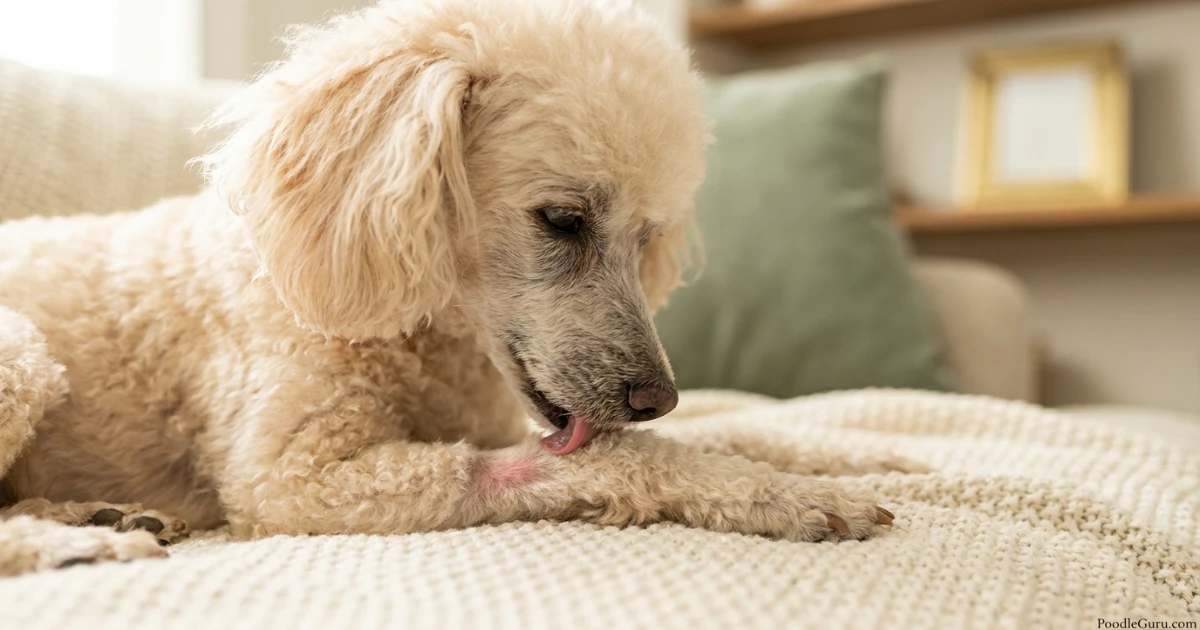
- Repeated licking or chewing of one spot.
- Eating differently, dropping food, or chewing on one side.
- New house-soiling or reluctance to go outside.
These signs can also appear with anxiety, cognitive change, heart or lung disease, endocrine illness, infection, vision loss, or other problems. That overlap is why observation should lead to a veterinary assessment, not a home diagnosis.
Why Senior Poodle Pain Is Often Missed
Chronic discomfort often develops gradually. Families adapt without realizing it: the dog stops using the stairs, the bed is moved downstairs, walks become shorter, and “slowing down” becomes the explanation. Dogs may still eat, greet familiar people, or wag their tails while experiencing pain, so those positive behaviors do not rule it out.
Another reason pain is missed is that several senior conditions look alike. Arthritis can cause withdrawal and nighttime restlessness; dental disease can reduce appetite; cognitive dysfunction can cause pacing and accidents. Our Poodle dementia symptoms guide explains why pain and cognitive changes should be evaluated together.
The best owner contribution is not to decide what hurts. It is to notice what changed, when it happens, how often it happens, and what activities trigger it.
The PoodleGuru S.O.F.T. Pain Observation Checklist
The S.O.F.T. check is a short observation routine you can use during normal daily life. It is not a physical examination and should never involve squeezing, stretching, manipulating joints, or deliberately repeating a movement that hurts.
S: Stillness and Starting Movement
Watch your Poodle while resting, rising, turning, and taking the first few steps. Note stiffness, repeated repositioning, an arched back, unusual limb placement, or reluctance to get up. Record a short video when the change is visible.
O: Ordinary Touch Response
During normal petting or gentle grooming only, notice flinching, muscle tightening, lip licking, turning the head toward your hand, moving away, or refusing an area that was previously comfortable. Stop immediately if your dog seems distressed. Do not press along the spine or test a joint.
F: Face, Ears, and Breathing
Look for squinting, a tense mouth, ears held back, a fixed or worried expression, or panting at rest. Because facial and breathing changes can have causes other than pain, note the context, room temperature, recent activity, and duration.
T: Trends Over Time
Track sleep, appetite, toileting, stairs, walks, grooming, and social behavior for several days. A pattern is more useful than a single observation. A sudden severe change should not be monitored at home—contact a veterinarian promptly.
What to Write in Your Pain Log
Record the date, time, activity, sign observed, duration, and whether it improved with rest. Add videos of walking from the front, side, and rear only when your dog is willing to move naturally. Do not force stairs, jumping, or repeated sit-to-stand tests.
Normal Aging vs. Possible Pain: A Side-by-Side View
Aging changes endurance and recovery, but repeated avoidance or distress should not automatically be accepted as “just old age.”
| Observation | May Fit Normal Aging | Possible Pain or Medical Concern |
|---|---|---|
| Rising after sleep | Moves more slowly, then loosens up and joins normal activity. | Repeated attempts, trembling, vocalizing, falling, or persistent stiffness. |
| Jumping and stairs | Chooses a slower route but remains willing and coordinated. | Stares, makes false starts, refuses, slips, or cries out. |
| Exercise | Prefers shorter outings but remains engaged and recovers normally. | Stops suddenly, lags, sits down, limps, or remains sore afterward. |
| Touch and grooming | Needs shorter sessions but accepts familiar handling. | Flinches, turns sharply, growls, snaps, or avoids one body area. |
| Sleep | Sleeps more but can settle comfortably. | Paces, pants, repeatedly changes position, or cannot lie down. |
| Social behavior | Less playful but still seeks familiar contact. | Hides, withdraws, becomes suddenly irritable, or avoids being approached. |
Movement and Physical Clues to Watch
Changed Gait or Posture
A shortened stride, head bob, weight shift, “bunny-hopping” movement, arched back, tucked abdomen, or reluctance to lower the head can signal discomfort. These patterns can come from joints, paws, muscles, the spine, or internal illness. See our focused guide to Poodle limping causes for the questions a veterinarian may investigate.
Repeated Licking or Chewing
Some dogs repeatedly lick a painful or irritated area. The cause may be orthopedic, neurologic, dermatologic, or behavioral, so licking alone does not prove joint pain. Check the skin visually, prevent self-trauma, and arrange an exam if the behavior persists or the area becomes red, swollen, warm, or damaged.
Muscle Loss or Body Asymmetry
Long-term unloading of a painful limb can contribute to muscle loss. You may notice one thigh or shoulder looks smaller, or your Poodle stands with less weight on one side. Do not try to confirm this by forcefully flexing or extending a limb; take photos and let your veterinarian compare muscle mass and range of motion safely.
Mouth, Eye, Ear, or Abdominal Clues
Dropping food, chewing on one side, bad breath, or resisting face handling can accompany dental pain. Squinting, tearing, cloudiness, or a red eye needs prompt attention because some eye problems are painful and time-sensitive. Head shaking and ear rubbing may indicate ear disease. A “prayer position”—chest lowered with the rear end raised—can accompany abdominal discomfort, especially when paired with vomiting, loss of appetite, or restlessness.
Common Sources of Pain in Senior Poodles
Osteoarthritis and Joint Disease
Osteoarthritis is a common cause of chronic pain in older dogs. Standard Poodles may also be evaluated for hip disease, while Toy and Miniature Poodles can develop kneecap problems. Helpful related guides include Poodle hip dysplasia and Poodle luxating patella.
Dental and Oral Disease
Periodontal disease, loose teeth, fractured teeth, and tooth-root problems can make chewing and face handling painful. Eating does not rule out dental pain. Review the preventive routine in our Poodle dental care guide.
Spine, Nerve, and Soft-Tissue Problems
Back or neck pain may cause a hunched posture, reluctance to move the head, sudden yelping, weakness, or an unsteady gait. Disc disease is one possibility, but muscle injury, arthritis, and neurologic conditions can look similar and require a veterinary examination.
Other painful conditions include ear infections, eye disease, urinary problems, pancreatitis and other abdominal disease, injuries, skin inflammation, nail or paw problems, and cancer. A complete senior workup helps identify the source rather than treating the visible behavior alone.
Mistakes Owners Make When a Senior Poodle May Be in Pain
| Mistake | Why It Is Risky | Safer Approach |
|---|---|---|
| Waiting for a dramatic limp or cry | Chronic pain may first appear as avoidance, stiffness, sleep change, or irritability. | Track small changes and share patterns with your veterinarian. |
| Giving aspirin, ibuprofen, naproxen, or acetaminophen | Human medicines may be harmful, interact with other drugs, or complicate veterinary treatment. | Give only medication and doses specifically directed for your dog by a veterinarian. |
| Pressing, stretching, or repeatedly testing the sore area | This may increase pain, worsen an injury, or trigger a defensive bite. | Observe natural movement, take videos, and let a clinician perform the examination. |
| Stopping all movement indefinitely | Prolonged inactivity can reduce strength, but the correct activity depends on the diagnosis. | Ask your veterinarian for an individualized low-impact activity or rehabilitation plan. |
| Assuming grumpiness is a personality change | New irritability can be a protective response to pain, sensory loss, or illness. | Reduce handling pressure and arrange a medical assessment. |
| Buying supplements before getting a diagnosis | Products vary, may interact with medication, and cannot treat every cause of pain. | Discuss diet, supplements, weight, and medication as one coordinated plan. |
When to Call the Vet
Seek Emergency Care Now
- Difficulty breathing, blue or very pale gums, collapse, or unresponsiveness.
- Sudden inability to stand or walk, dragging limbs, or rapidly worsening weakness.
- Severe trauma, uncontrolled bleeding, or obvious fracture.
- A swollen or painful abdomen, repeated unproductive retching, or repeated vomiting with marked distress.
- Severe eye pain, sudden blindness, or a visibly enlarged eye.
Contact Your Vet Promptly
- Sudden yelping, a new limp, persistent panting at rest, or inability to settle.
- Refusing food or water, dropping food, or showing mouth pain.
- New house-soiling, hiding, growling, or sensitivity to ordinary touch.
- Stiffness or activity avoidance that persists, returns, or worsens.
A pain workup may include history, observation of gait and function, a physical and neurologic exam, oral and eye checks, blood or urine testing, and imaging when indicated. AAHA guidance supports early, multimodal pain management tailored to the individual pet rather than relying on one treatment alone.
Safe Daily Comfort Adjustments
Home changes can reduce slips and unnecessary impact while you wait for a diagnosis or follow a veterinary treatment plan.
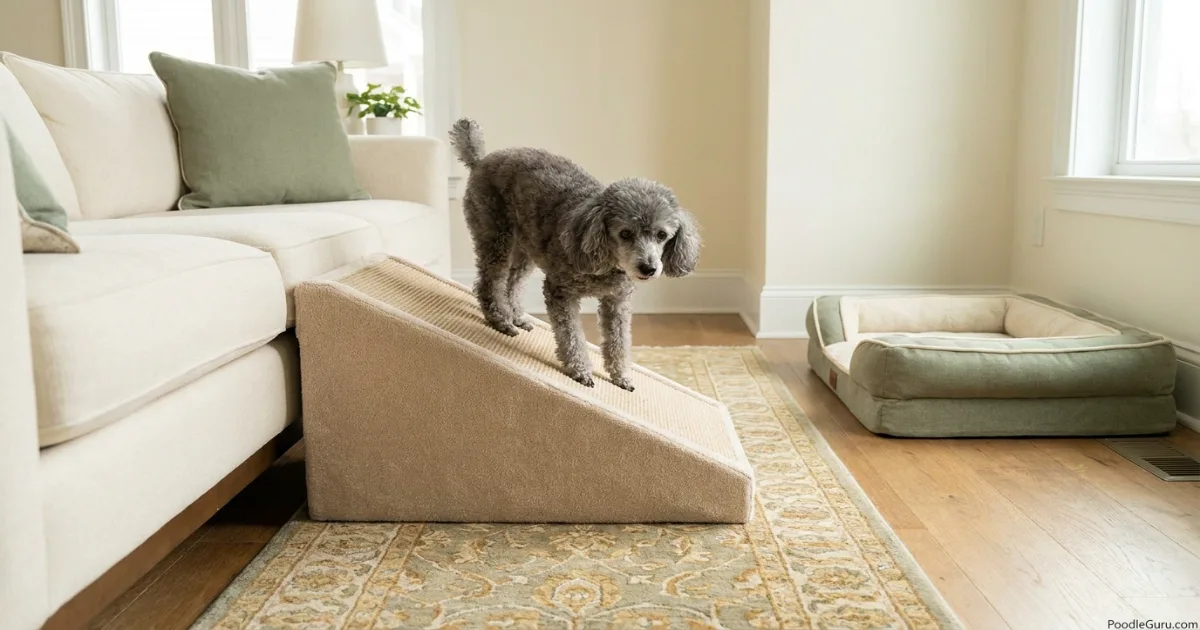
- Add traction: Place secure carpet runners or non-slip mats on smooth floors and near beds, food, water, and doors.
- Reduce jumping: Use a stable, shallow ramp or well-supported steps for furniture and vehicles. Supervise until your dog is confident.
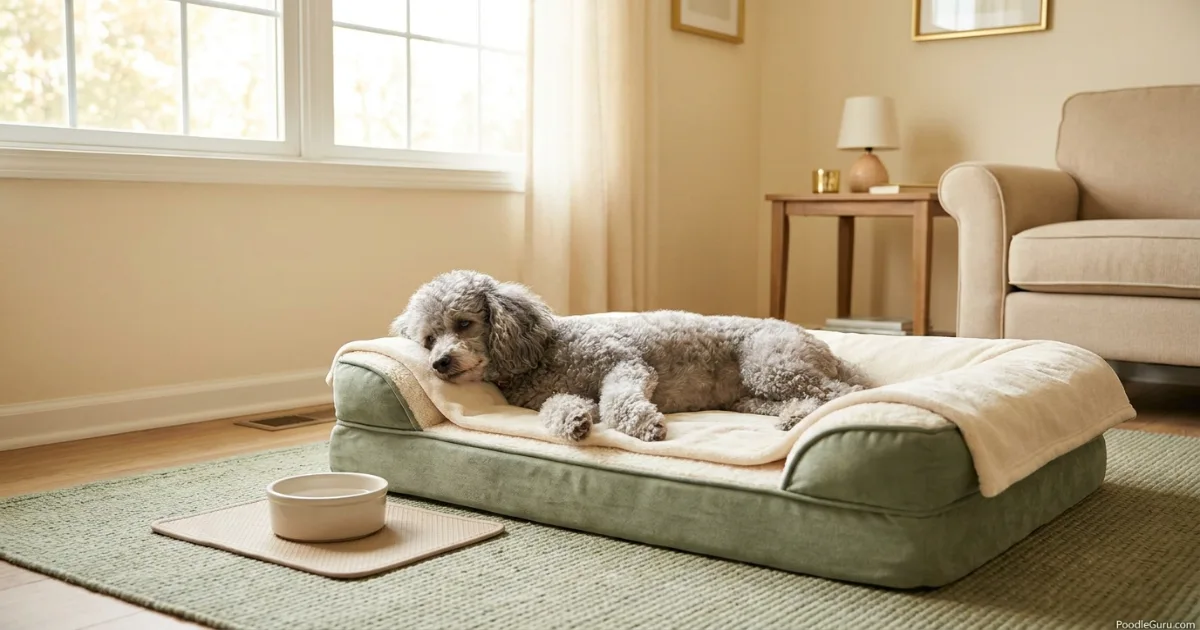
- Provide supportive rest: Use an orthopedic bed that is easy to enter and large enough for full-body stretching.
- Keep essentials accessible: Place water, food, and toileting access on the same level whenever possible.
- Adjust grooming: Use shorter, gentler sessions, a non-slip surface, and frequent breaks. See our Poodle grooming schedule by age.
- Protect a lean body condition: Extra weight can increase joint load. Ask your veterinarian for a safe target and feeding plan.
- Follow diagnosis-specific exercise advice: Short walks or rehabilitation may help some conditions, while strict rest is needed for others.
Owner Action Plan: What to Do Today
1. Observe Without Testing
Use the S.O.F.T. checklist during normal routines. Do not press, stretch, or repeatedly provoke a painful movement.
2. Create a Short Record
Write down when the sign occurs and capture a brief natural-movement video when safe. Include appetite, sleep, toileting, and medication history.
3. Call the Right Level of Care
Use the emergency and prompt-care list above. For gradual changes, request a senior examination and pain or mobility assessment.
While waiting for the appointment, prevent jumping and slipping, keep your dog comfortable, and avoid starting medication, supplements, massage, heat, cold, or exercise changes unless your veterinarian recommends them for the suspected condition.
Frequently Asked Questions
What are the earliest signs a senior Poodle is in pain?
Early signs often include stiffness after rest, hesitation before stairs or jumping, reduced enthusiasm for walks, difficulty settling, withdrawal, irritability, or new sensitivity during normal petting and grooming. Track patterns and discuss persistent or worsening changes with a veterinarian.
Can a senior Poodle still wag, eat, or play while in pain?
Yes. Positive behaviors do not rule out discomfort. Dogs may continue valued routines while modifying how they move, sleep, chew, or interact. Look at the whole pattern rather than one behavior.
What should I do if my Poodle suddenly yelps when touched?
Stop touching the area, restrict unnecessary movement, and contact a veterinarian promptly. Seek emergency care if yelping is accompanied by collapse, breathing difficulty, inability to walk, severe trauma, abdominal swelling, or rapidly worsening weakness.
Can I give aspirin or ibuprofen to a Poodle in pain?
Do not give aspirin, ibuprofen, naproxen, acetaminophen, or another human pain reliever unless your veterinarian specifically directs the exact product and dose for your dog. Human medicines can be harmful and may interact with veterinary drugs or underlying disease.
How is arthritis pain managed in senior Poodles?
Veterinarians often use a multimodal plan that may include prescription medication, weight management, rehabilitation or controlled activity, home modifications, and carefully selected nutrition or supplements. The safest plan depends on examination findings, bloodwork, other illnesses, and current medication.
Is slowing down always normal in an old Poodle?
No. Seniors may have less stamina, but avoidance, persistent stiffness, limping, restless sleep, or loss of interest can reflect pain or another treatable problem. A senior exam helps separate normal age-related change from disease.
How often should a senior Poodle see the veterinarian?
AAHA advises at least twice-yearly physical examinations for senior dogs, with testing individualized to age, size, health history, and current symptoms. A dog with pain, chronic disease, or new behavior changes may need more frequent visits.
Veterinary Sources Used for This Guide
Summary: Signs a Senior Poodle Is in Pain
Pain does not always look dramatic. The most useful clues are changes from your Poodle’s normal movement, sleep, appetite, grooming tolerance, toileting, and social behavior. Observe without provoking pain, record patterns, remove avoidable slipping and jumping hazards, and involve your veterinarian early.
- Stiffness, hesitation, altered gait, restless sleep, touch sensitivity, and repeated licking are common warning signs.
- The S.O.F.T. check means Stillness, Ordinary touch response, Face and breathing, and Trends over time.
- Do not press painful areas, manipulate joints, or force stairs and jumping for a home test.
- Never give human pain relievers unless a veterinarian specifically directs the product and dose.
- Urgent signs include breathing difficulty, collapse, inability to stand, severe trauma, abdominal swelling, and rapidly worsening weakness.
- Traction, ramps, supportive bedding, and easy access to essentials can improve safety while the cause is assessed.