Poodle Lifespan by Size: How Long Do Toy, Miniature and Standard Poodles Live?
The typical Poodle lifespan is long for a purebred dog, but there is no single number that fits every Toy, Miniature, and Standard Poodle. Size influences longevity, while genetics, body condition, dental health, preventive care, and early recognition of disease shape both the length and quality of life.
Quick Answer: What Is the Average Poodle Lifespan?
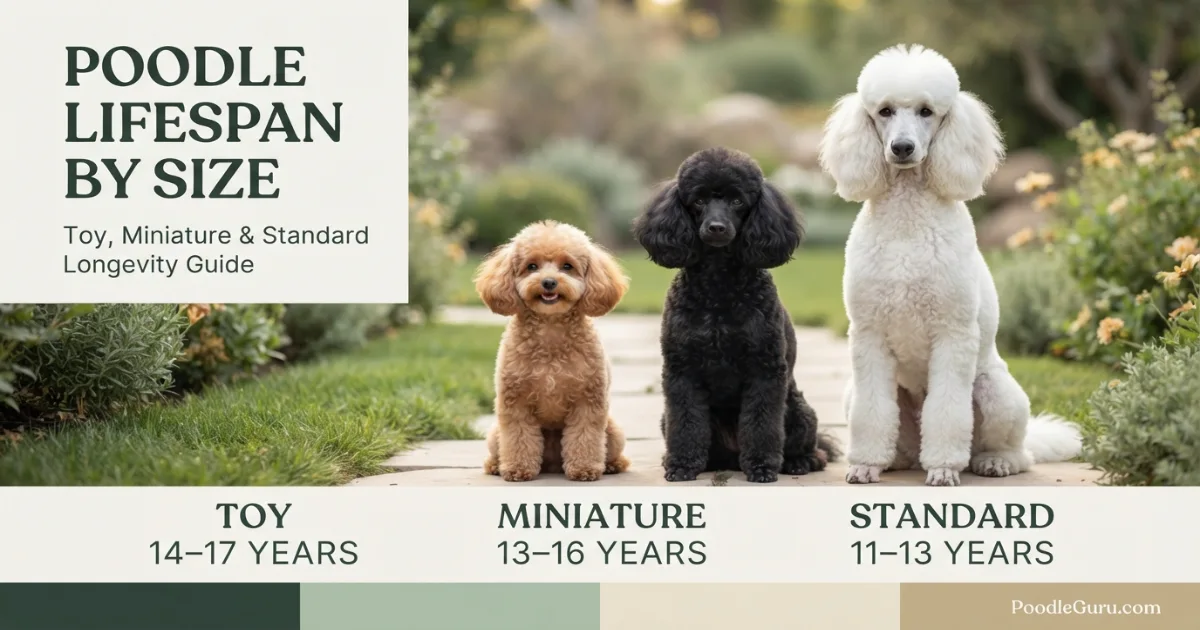
The American Kennel Club currently lists a broad Poodle life expectancy of 10–18 years across Toy, Miniature, and Standard varieties. A large 2024 UK study of more than half a million dogs reported a median lifespan of about 14 years for Poodles as a combined breed group, not separated by variety. In practical planning, Toy and Miniature Poodles often reach the mid-to-late teens, while Standard Poodles more often reach the early teens. Those are useful expectations, not promises. Sex, breeding quality, inherited disease, weight, dental health, accidents, and access to veterinary care can move an individual dog well above or below a population estimate.
Official Broad Range
AKC currently gives all three Poodle varieties a broad 10–18-year life expectancy. It does not publish separate official ranges for Toy, Miniature, and Standard Poodles.
Research Median
A 2024 UK longevity study reported a median of roughly 14 years for Poodles as one breed category. A median is not a maximum and does not predict one dog’s outcome.
Size Pattern
Across dogs generally, smaller and longer-nosed breeds tend to outlive larger breeds. That broad biological pattern helps explain variation among Poodle sizes.
What Current Evidence Really Shows About Poodle Life Expectancy
Lifespan articles often present precise age ranges as if they were universal facts. The evidence is more nuanced. Different datasets use different countries, veterinary populations, registry records, insurance records, owner reports, and definitions of average life expectancy. Some studies report a mean, others report a median, and many combine all Poodle sizes under one breed name.
The American Kennel Club’s current Poodle overview lists a 10–18-year life expectancy for Standard, Miniature, and Toy Poodles. That wide range acknowledges substantial individual variation.
A 2024 Scientific Reports study analyzed 584,734 dogs in the United Kingdom and reported a 12.5-year median across all dogs in the dataset. Poodles, grouped together rather than divided by size, had a median lifespan of about 14 years. The study also reinforced a broader pattern: smaller dogs and dogs without extremely shortened muzzles tended to live longer.
How to Read the Numbers Correctly
Life expectancy is a planning tool, not a countdown. It helps owners anticipate care needs and financial responsibility. It cannot tell you how long a specific puppy or adult Poodle will live. A dog may die younger because of inherited disease, cancer, trauma, infection, or an emergency, while another may remain active beyond the usual range.
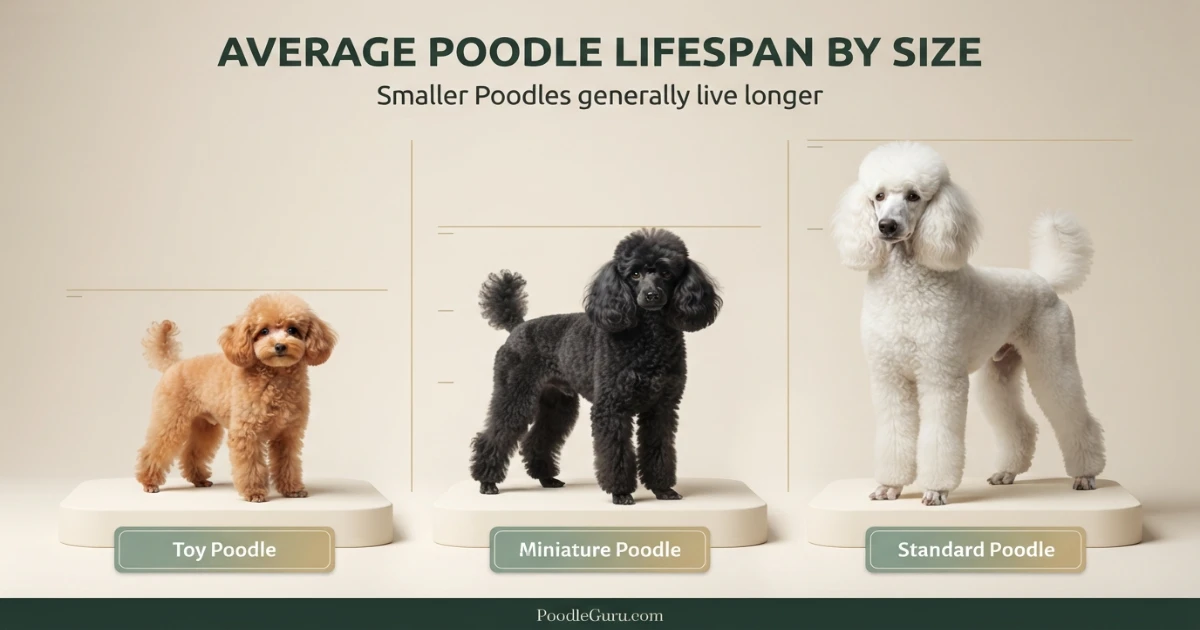
Poodle Lifespan by Size: Practical Planning Ranges
The following ranges are best treated as practical owner-planning windows. They combine the broad AKC range, large-dog-versus-small-dog longevity patterns, and common breed-care expectations. They are not separate official AKC averages and should not be presented as guaranteed outcomes.
| Poodle Variety | Typical Adult Size | Practical Planning Window | Senior-Care Planning | Main Owner Priority |
|---|---|---|---|---|
| Toy Poodle | Up to 10 inches; often 4–6 lb | Frequently reaches the mid-to-late teens | Begin proactive aging discussions before the final quarter of expected life | Dental care, patellar health, eye screening, safe handling, and weight control |
| Miniature Poodle | Over 10 to 15 inches; often 10–15 lb | Frequently reaches the early-to-mid teens | Adjust screening based on health history, activity, and veterinary findings | Eye, patella, and hip screening plus dental and metabolic health |
| Standard Poodle | Over 15 inches; commonly 40–70 lb | Frequently reaches the early teens | Senior-focused conversations usually begin earlier than for smaller varieties | Hip, eye, thyroid, skin, cardiac, mobility, and emergency-risk awareness |
Important: The Poodle Club of America defines the varieties by height, not by a guaranteed weight. Individual healthy dogs can fall outside common weight examples, especially Standards.
Why Smaller Poodles Often Live Longer Than Standard Poodles
Within the domestic dog species, body size has a strong association with longevity. Larger dogs generally grow faster, age more quickly, and have shorter average lifespans than smaller dogs. Researchers continue to study the exact biological mechanisms, but faster growth, differences in cellular aging, and variation in disease risk are all likely involved.
This does not mean every Toy Poodle will outlive every Standard Poodle. A well-bred, lean, carefully monitored Standard may live longer than a Toy with severe inherited disease, untreated dental infection, obesity, or poor veterinary access. Size shifts the probability; it does not determine the result.
Genetics Still Matter Within Each Size
Ask breeders about health testing and longevity in close relatives, but do not accept vague claims such as “our line lives forever.” Useful evidence includes verifiable test results, the ages and causes of death of parents and grandparents, transparent disclosure of inherited conditions, and a willingness to discuss both strengths and weaknesses in the pedigree.
What Most Influences a Poodle’s Longevity?
No responsible source can promise that one routine will add a fixed number of years. The goal is to reduce avoidable risk, recognize illness early, and preserve quality of life.
Breeding and Inherited Risk
Health-tested parents reduce the chance of passing on some preventable or predictable disorders. Screening cannot eliminate every disease, but it improves decision-making.
Healthy Body Condition
Keeping a dog lean supports mobility and lowers risk linked with obesity. Portion needs should be adjusted to age, activity, neuter status, and health—not package estimates alone.
Dental Health
Periodontal disease causes pain and infection and is especially important in small dogs. Home brushing and veterinarian-directed dental care protect comfort and eating ability.
Preventive Veterinary Care
Routine examinations create a baseline and can reveal weight changes, dental disease, murmurs, masses, pain, vision changes, or laboratory abnormalities before they become obvious at home.
Appropriate Activity
Regular movement supports muscle, cardiovascular fitness, confidence, and mobility. The right amount depends on age, size, orthopedic health, temperature, and conditioning.
Safety and Emergency Readiness
Leash control, secure fencing, microchipping, toxin prevention, heat awareness, and rapid action during bloat-like symptoms or injury can be as important as routine wellness care.
Health Screening Priorities for Toy, Miniature, and Standard Poodles
Health screening is most useful before breeding, but the same risk awareness also helps pet owners decide what to discuss with a veterinarian. The Poodle Club of America lists different recommended tests by variety.
| Variety | Parent-Club Screening Priorities | Pet-Owner Discussion Points |
|---|---|---|
| Toy | PRCD-PRA DNA testing, eye examination, and patellar-luxation evaluation | Vision changes, kneecap instability, dental crowding, coughing, weight, and safe handling |
| Miniature | PRCD-PRA DNA testing, eye examination, patellar evaluation, and hip evaluation | Vision, gait, knee or hip discomfort, dental health, body condition, and activity tolerance |
| Standard | Hip evaluation, eye examination, plus an approved thyroid, sebaceous-adenitis, or cardiac elective | Mobility, skin and coat changes, thyroid or cardiac signs, masses, appetite changes, and bloat preparedness |
Screening recommendations evolve, and a breeder may appropriately perform additional tests based on the line. Ask to see public results rather than relying only on statements that a dog was “vet checked.” A routine examination is not the same as a breed-specific health clearance.
The PoodleGuru Healthy-Aging Framework
This four-part framework turns a broad lifespan estimate into practical decisions you can revisit throughout your dog’s life.
Know the Baseline
Record your Poodle’s healthy adult weight, body-condition score, appetite, water intake, activity, sleep pattern, dental status, and normal behavior. Changes are easier to recognize when you know what normal looks like.
Match Care to Life Stage
Reassess food, exercise, parasite prevention, vaccination, dental care, pain management, and screening as your Poodle moves from puppy to adult, mature adult, and senior. Age alone should not dictate every decision.
Act on Small Changes Early
Do not wait for dramatic illness. Gradual weight loss, increased thirst, slower rising, new nighttime restlessness, mouth odor, reduced jumping, coughing, or altered interaction may justify an examination.
Protect Quality of Life
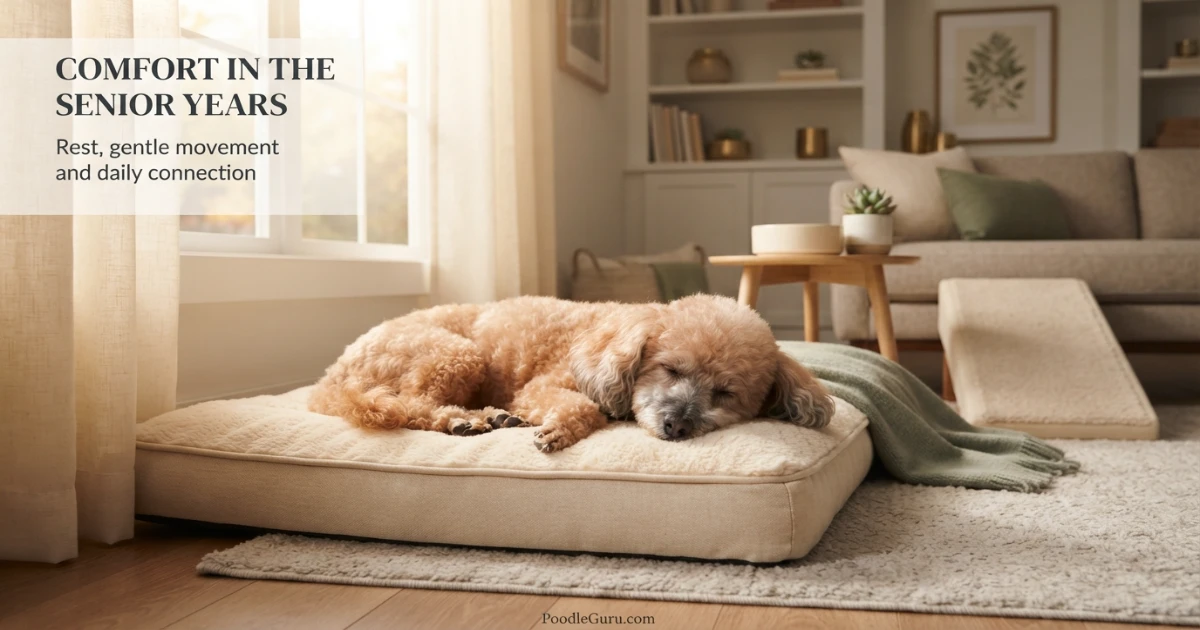
Longevity is meaningful only when comfort is protected. Provide traction, warm bedding, manageable grooming, pain assessment, adapted exercise, accessible food and water, and continued social and mental engagement.
When Is a Poodle Considered a Senior?
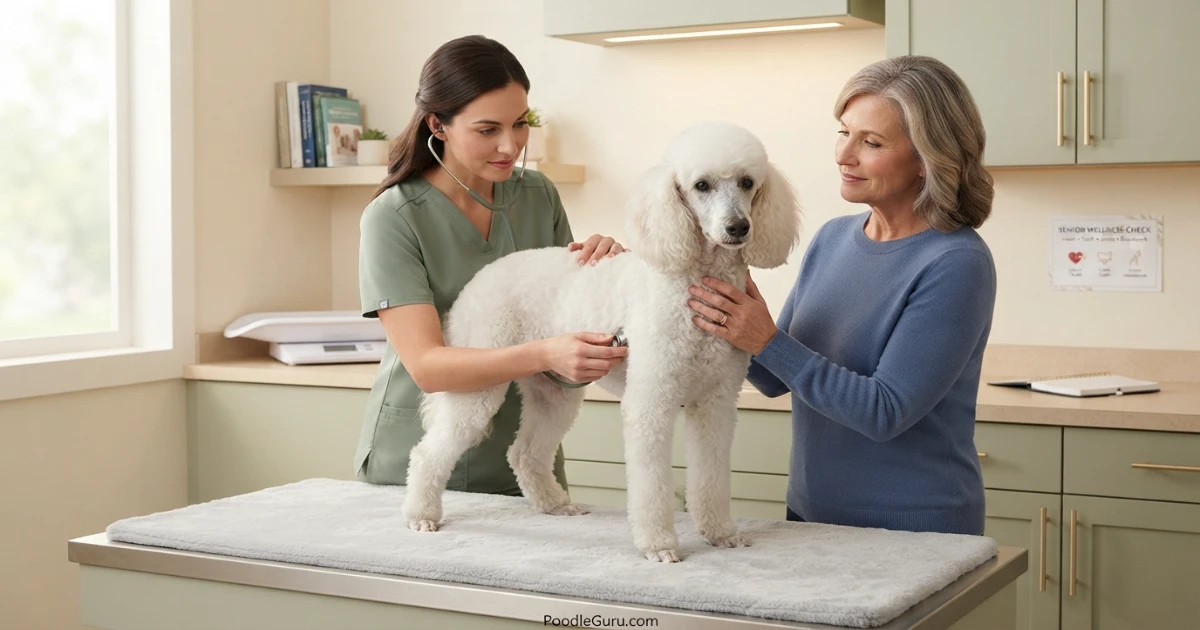
There is no single birthday when every Poodle becomes senior. The American Animal Hospital Association describes the senior stage as roughly the final 25% of a dog’s estimated lifespan. Because Standard Poodles generally have a shorter expected lifespan than Toys, senior-care planning often begins earlier for Standards.
Rather than waiting for a fixed age, ask your veterinarian when to increase examination frequency and when bloodwork, urine testing, blood-pressure checks, eye evaluation, pain assessment, or other screening becomes appropriate. AAHA advises that healthy senior dogs generally benefit from veterinary visits at least twice a year, although the schedule should reflect the individual dog.
Senior-Care Conversation Starters
- Has my Poodle’s weight or body-condition score changed since the last visit?
- Is the current exercise plan protecting muscle without worsening pain?
- Do the teeth and gums need professional treatment?
- Should we establish or repeat baseline bloodwork and urinalysis?
- Are any new lumps, heart sounds, vision changes, skin problems, or mobility changes present?
- What signs would require urgent rather than routine care?
Normal Aging Changes vs. Signs That Deserve Veterinary Attention
Slower movement or longer sleep may accompany aging, but owners should not assume that pain, confusion, bad breath, coughing, or appetite changes are “just old age.” Many age-related problems can be treated or managed more effectively when identified early.
| Change You Notice | Possible Meaning | Best Next Step |
|---|---|---|
| Slower rising, reluctance on stairs, or reduced jumping | Pain, arthritis, weakness, nail or paw discomfort, or neurologic change | Book an examination; do not begin human pain medication |
| Increased thirst or urination | Kidney, endocrine, urinary, medication, or other systemic issue | Arrange veterinary assessment and note approximate water intake |
| Weight loss despite normal eating | Dental disease, digestive disease, endocrine illness, cancer, or another condition | Schedule a prompt evaluation rather than simply increasing food |
| Bad breath, dropping food, or chewing on one side | Periodontal disease, loose or fractured tooth, oral mass, or pain | Request an oral examination and dental plan |
| Night pacing, house-soiling, staring, or altered interaction | Pain, sensory loss, urinary disease, anxiety, cognitive dysfunction, or other illness | Keep a log and share videos or patterns with the veterinarian |
| Repeated unproductive retching, swollen abdomen, or sudden distress | Possible gastric dilatation-volvulus, especially concerning in Standards | Seek emergency veterinary care immediately |
For a more detailed age-related checklist, read the signs your Poodle is aging guide.
An Owner’s Poodle Longevity Checklist
The best routine is one you can perform consistently and adjust with professional guidance.
Track Weight Monthly
Use the same scale when possible and record the number. Unexpected gain or loss is more useful when you can show a trend.
Check Body Condition
You should be able to feel the ribs under a light fat covering and see a waist from above. Ask your veterinary team to demonstrate.
Brush Teeth Regularly
Use dog-specific toothpaste and build the habit gradually. Home care reduces plaque but does not replace professional treatment when disease is present.
Maintain Safe Activity
Keep exercise regular, age-appropriate, and adapted to weather, fitness, joints, and heart or respiratory health.
Protect the Brain
Use gentle training, sniffing games, food puzzles, social contact, and predictable routines without overwhelming an older dog.
Keep Preventive Care Current
Discuss vaccinations, parasite control, screening, dental care, medication review, and visit frequency with the veterinarian.
For activity guidance across life stages, visit the Poodle exercise requirements guide. For coat and skin routines, use the complete Poodle grooming guide.
Common Poodle Lifespan Myths
| Claim | What Owners Should Know |
|---|---|
| “Every Toy Poodle lives to 18.” | Eighteen is possible, not guaranteed. The AKC range is broad, and individual disease or accidents can shorten life at any size. |
| “A Standard Poodle is old at seven.” | Some Standards show age-related needs around this stage, but life stage should be based on expected lifespan, health, and veterinary assessment rather than one birthday. |
| “Supplements add years.” | No supplement can promise extra lifespan. Use supplements only for a defined need and with veterinary guidance. |
| “Bad breath is normal in an old Poodle.” | Persistent odor can indicate dental disease or another problem. Aging does not make oral pain normal. |
| “A health-tested puppy cannot develop disease.” | Testing reduces or clarifies selected inherited risks. It cannot eliminate every genetic, infectious, traumatic, immune-mediated, or age-related condition. |
| “More exercise is always healthier.” | Exercise should be regular but appropriate. Excess intensity can worsen heat stress, pain, fatigue, or underlying disease. |
Frequently Asked Questions About Poodle Lifespan
How long do Poodles usually live?
The AKC gives Poodles a broad life expectancy of 10–18 years across all three varieties. A 2024 UK study reported a median of about 14 years for Poodles as a combined breed category. Individual lifespan varies widely.
What is the typical Toy Poodle lifespan?
Toy Poodles often reach the mid-to-late teens, but no age is guaranteed. Dental disease, inherited eye or kneecap problems, trauma, obesity, and other illness can affect an individual dog’s outcome.
What is the typical Miniature Poodle lifespan?
Miniature Poodles commonly reach the early-to-mid teens and may live longer. Their health plan should include attention to eyes, patellas, hips, teeth, weight, and age-related screening.
What is the typical Standard Poodle lifespan?
Standard Poodles often reach the early teens, although some live shorter or longer lives. Their larger body size is associated with a shorter average lifespan than smaller Poodle varieties.
Can a Poodle live to 18 years?
Yes, especially a Toy or Miniature Poodle, but 18 should be viewed as a possible long lifespan rather than an expected result. The AKC’s broad Poodle range extends to 18 years.
When should senior Poodle care begin?
AAHA defines the senior stage as approximately the final 25% of expected lifespan. Because size and health vary, ask your veterinarian when to increase visit frequency and begin age-focused screening.
Does keeping a Poodle lean help longevity?
Maintaining an appropriate body condition supports mobility and lowers obesity-related health risks. It cannot guarantee a longer life, but weight management is an important part of preventive care.
What health tests should a Poodle breeder perform?
Recommended tests vary by size. Toy testing includes PRCD-PRA, eye, and patella evaluation; Miniature recommendations add hip evaluation; Standard recommendations include hips, eyes, and an approved thyroid, sebaceous-adenitis, or cardiac elective. Verify current public results.
Key Takeaways: Poodle Lifespan and Healthy Aging
- The AKC lists a broad Poodle life expectancy of 10–18 years across Toy, Miniature, and Standard varieties.
- A 2024 UK study reported a median lifespan of about 14 years for Poodles grouped together, not separated by size.
- Toy and Miniature Poodles often reach the mid-to-late or early-to-mid teens, while Standards more often reach the early teens.
- Size affects population-level probability, but it cannot predict one dog’s exact lifespan.
- Choose breeders who complete and disclose variety-specific health testing recommended by the Poodle Club of America.
- Maintain a healthy body condition, protect dental health, provide appropriate activity, and keep preventive veterinary care current.
- Senior care should begin according to expected lifespan and individual health rather than one universal birthday.
- Track small changes in weight, thirst, movement, sleep, appetite, breathing, teeth, skin, vision, and behavior so concerns can be assessed early.
Your practical next step: record your Poodle’s current weight, confirm the date of the next wellness examination, and write down one recent change—if any—in appetite, thirst, mobility, sleep, teeth, skin, or behavior.