Poodle Hot Spots: Causes, Treatment & Prevention
That angry, wet, red patch on your poodle’s skin can appear overnight. Hot spots are painful, fast-spreading, and surprisingly common in the breed. Here’s what commonly causes them, what early care is safe while you arrange guidance, when veterinary treatment is needed, and which prevention strategies reduce recurrence.
Quick Answer
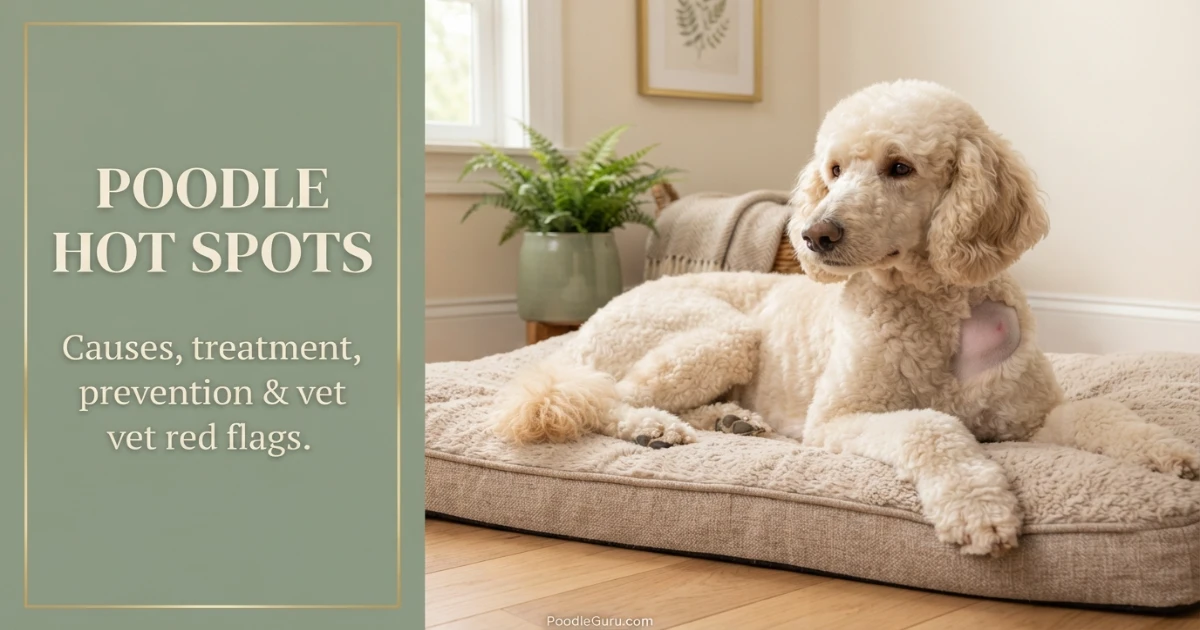
Poodle hot spots — also called acute moist dermatitis — are localized patches of inflamed, infected skin that develop rapidly when a poodle licks, chews, or scratches an irritated area. The moisture and trauma create a perfect environment for bacteria to multiply. Within hours, a quarter-sized spot can turn into a raw, oozing lesion. Early intervention helps stop the lick-chew cycle: keep the area dry, prevent further licking, and contact your vet if the spot is large, painful, spreading, smelly, or not clearly improving within 24–48 hours.
Fast Fact
A hot spot can grow from a tiny red dot to a palm-sized, weeping wound in under 6 hours. The speed surprises most first-time owners.
Most Affected
Poodles with thick, dense coats — especially those not regularly groomed or kept short — tend to develop hot spots more often.
Key Risk Factor
Any underlying allergy (food, environmental, flea) dramatically increases the chance of repeated hot spots. Treat the allergy, and you often stop the cycle.
What Are Poodle Hot Spots?
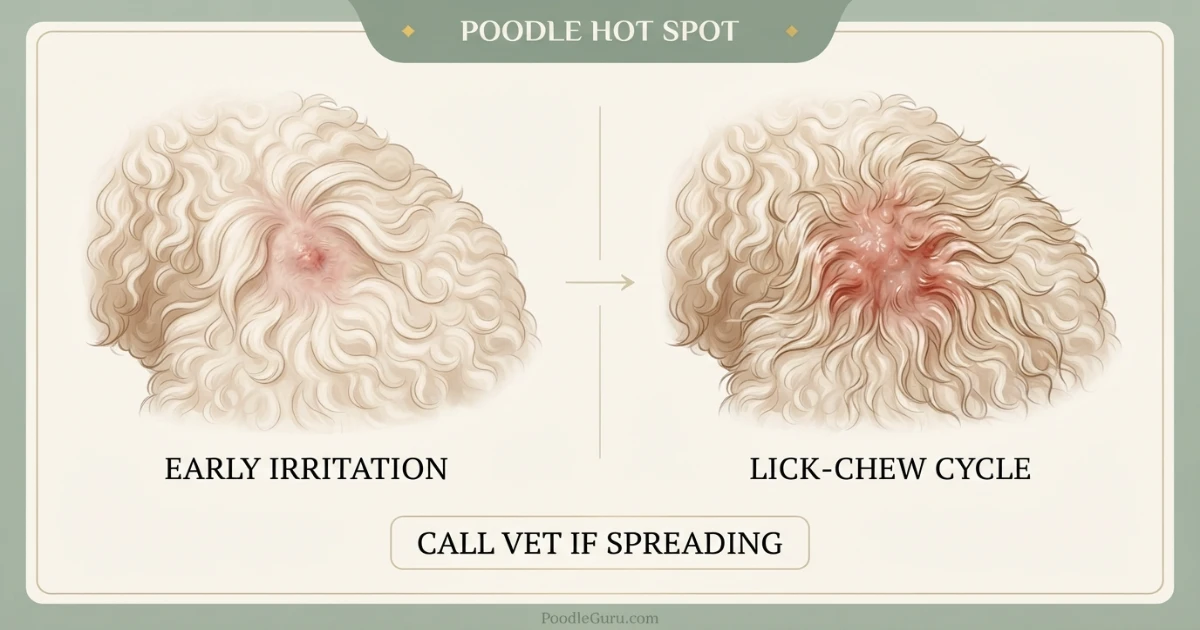
Poodle hot spots are localized areas of acute moist dermatitis — essentially a bacterial skin infection that takes hold when the skin’s protective barrier is broken by moisture, scratching, or licking. The term “hot spot” comes from the warmth these inflamed patches generate. For poodle owners, this means a condition that looks dramatically worse than it often is, but that escalates rapidly if left unchecked. The most important thing to understand is that hot spots are rarely a standalone problem. They’re almost always a symptom of an underlying itch or irritation your poodle is desperately trying to soothe.
The classic presentation is a red, wet, hair-matted patch that seems to have appeared from nowhere. The skin is often raw and may ooze a clear or yellowish fluid. Poodles will typically lick or chew at the site obsessively, making the lesion larger by the hour. This is one of those conditions where a picture can be worth a thousand words — but also one where owner action in the first 12 hours makes an enormous difference to healing time.
Why Poodles Get Hot Spots
Not all breeds are equally prone to acute moist dermatitis. Poodles have a combination of coat characteristics and breed predispositions that make them more susceptible than many other dogs.
The Dense Coat Trap
A poodle’s curly, water-resistant coat is beautiful — but it also holds moisture against the skin. After a swim, a bath, or even a romp in wet grass, that dampness can sit at skin level for hours if the coat isn’t dried thoroughly. Trapped moisture softens the skin and creates the warm, humid environment bacteria love. This is especially true for poodles kept in longer coat styles where air circulation is reduced.
Allergies: The Root Trigger
Underlying allergies are the number one reason poodles develop hot spots. A poodle with environmental allergies (pollen, dust mites, grass) or food sensitivities often experiences itchy skin. The dog licks or chews to relieve the itch, breaking the skin barrier. Once that tiny wound is there, normal skin bacteria — often Staphylococcus intermedius — multiply explosively in the moist, damaged tissue.
Veterinary resources like VCA Animal Hospitals’ overview of hot spots confirm that any condition causing itchiness can trigger the licking-chewing cycle. For poodles, the dense curls simply amplify the moisture problem, making the breed a frequent flyer at the vet for this issue.
Ear Infections and Anal Gland Issues
Sometimes the hot spot appears because your poodle is trying to reach a different source of discomfort. A poodle with an ear infection may scratch behind the ear so aggressively that a hot spot forms on the neck or cheek. Similarly, a dog with full or infected anal glands may lick at the hip or tail base area until the skin breaks down.
A well-maintained poodle coat — clean, detangled, and appropriately short — is one of the best defenses against hot spots. Matted fur pulls on the skin, traps moisture, and hides early warning signs. Regular grooming helps owners detect moisture, mats, parasites, and early irritation before a small problem becomes a larger hot spot.
Early Signs Every Owner Should Know
Hot spots don’t actually appear out of nowhere. There’s almost always a lead-up period where your poodle’s behavior changes before the lesion becomes obvious.
| Stage | What You Might See | Action |
|---|---|---|
| 1. Pre-lesion | Poodle licks, chews, or scratches one area repeatedly. The skin may look slightly pink but not yet broken. | Interrupt the licking. Check for fleas, mats, or ear odor. Dry the area if damp. Monitor closely. |
| 2. Early hot spot | A distinct red, moist patch appears — often the size of a dime or quarter. The hair may look wet or matted. | Start the PoodleGuru Early Response Framework below. If you are comfortable using pet clippers safely, expose the surrounding hair so air can reach the skin; otherwise, ask your vet or a professional groomer. |
| 3. Established hot spot | The patch is larger, raw, and may ooze. Hair loss is obvious. The poodle may be irritable when you touch the area. | Veterinary treatment is often needed. Topical antibiotics or anti-inflammatory medication may be prescribed. |
| 4. Spreading / infected | Multiple spots appear, or the original spot has a foul odor, thick discharge, or the surrounding skin feels warm and swollen. | Immediate vet visit. Systemic antibiotics are likely required. Rule out deep skin infection (pyoderma). |
Hot Spot vs. Other Poodle Skin Issues
Not every red patch is a hot spot. Mistaking one condition for another can delay proper treatment. Here’s how to tell them apart — at a glance.
| Condition | Appearance | Location | Itch Level | Key Distinction |
|---|---|---|---|---|
| Hot Spot | Red, moist, oozing, defined border, hair loss | Head, neck, hips, base of tail — wherever licking occurs | Intense, focused | Appears suddenly; spreads fast; warm to touch |
| Allergic Dermatitis | Pink, bumpy, diffuse redness; may have small scabs | Belly, groin, armpits, paws | Generalized itching | No oozing; more widespread; seasonal or food-related pattern |
| Yeast Infection | Greasy, thickened, yellowish skin; distinct musty odor | Ears, between toes, neck folds | Persistent, greasy feel | Odor is key; skin feels oily, not wet |
| Ringworm | Circular, crusty, hairless patches; not usually moist | Anywhere, often isolated | Mild to moderate | Dry and scaly; ring shape; contagious to humans |
| Flea Allergy Dermatitis | Small red bumps or scabs, often along the back near the tail | Base of tail, inner thighs, belly | Very itchy, especially at tail base | Presence of fleas or flea dirt; multiple small lesions |
When to Call Your Vet
Some very small, early-stage hot spots can be stabilized at home while you monitor closely, but painful, spreading, foul-smelling, or recurrent lesions need veterinary care. But there are clear signals that professional help is needed. Don’t wait if you see these.
- The hot spot is larger than a silver dollar (roughly 3 cm across).
- Your poodle is in obvious pain when you gently touch the area.
- There’s a foul smell or thick, colored discharge.
- The spot continues to enlarge despite 24 hours of home care.
- Your poodle is lethargic, not eating, or running a fever.
- Hot spots recur frequently — this signals an untreated underlying allergy or immune issue.
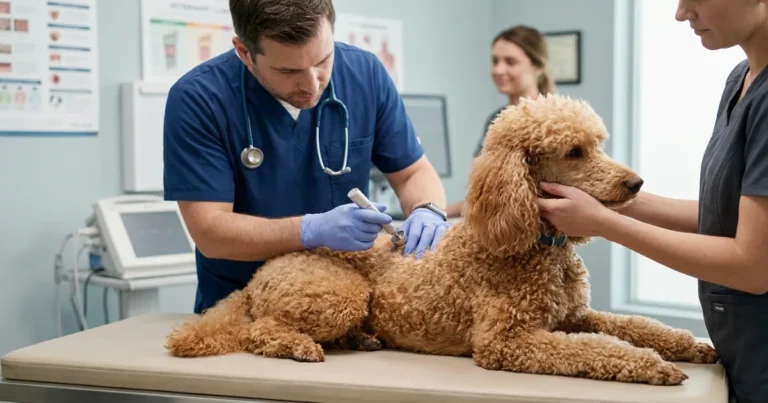
Veterinary treatment for a moderate-to-severe hot spot may include clipping and cleaning the area, sedation if the area is painful, medicated topical therapy, and sometimes oral medication when infection or inflammation is significant. Your vet will also discuss allergy testing or a food trial if repeated episodes suggest an allergic trigger.
The PoodleGuru Hot Spot Early Response Framework
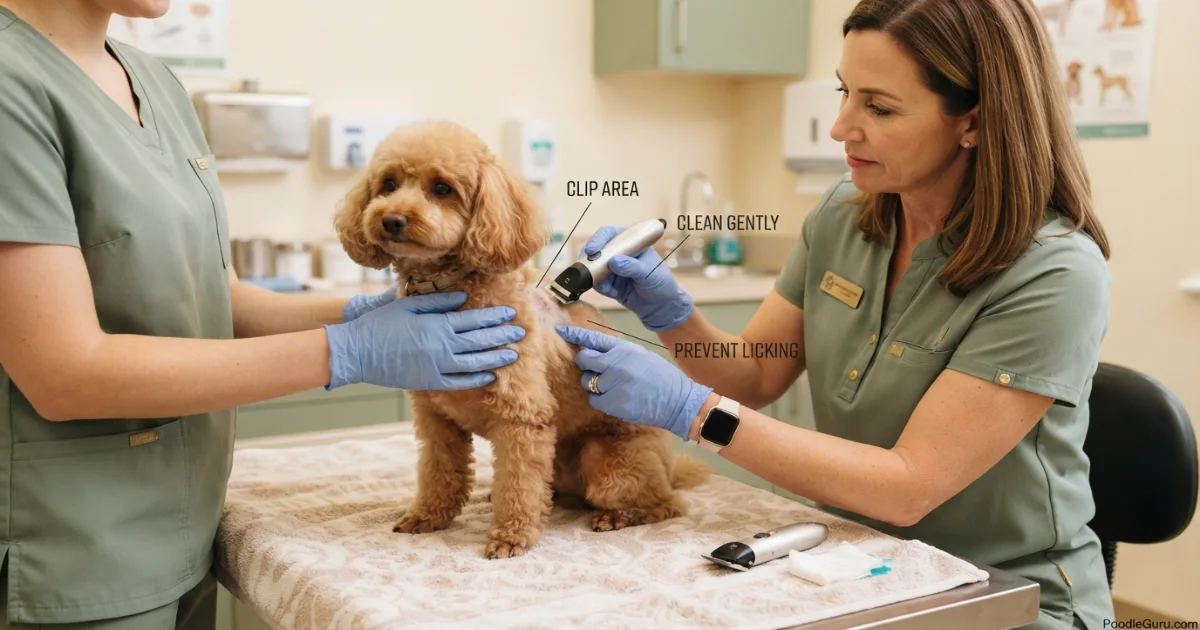
At PoodleGuru, we’ve developed a simple 4-step early response plan that every poodle owner can follow at the first sign of a hot spot. This framework isn’t a substitute for veterinary care — it’s an immediate-care bridge that often stops a small spot from becoming a big problem.
Identify & Interrupt
Locate the exact spot. Gently part the fur — you’ll see a red, wet area. Immediately prevent your poodle from licking it further using an Elizabethan collar (cone) or a soft recovery collar. Even 10 minutes of uninterrupted licking can double the size. This step alone stops the cycle of trauma.
Clip & Clean
Carefully clip the hair around and over the hot spot only if you can do so safely with pet clippers. Avoid scissors close to the skin because inflamed poodle skin is easy to cut. If clipping is painful or difficult, let your veterinarian handle it. Clean the area gently with a veterinarian-recommended antiseptic solution such as chlorhexidine or with sterile saline. Pat dry; don’t rub.
Apply a Barrier & Protect
Apply only a thin layer of a veterinary-approved hot spot product. Anti-itch sprays or gels may help comfort, but they should be labeled safe for dogs and used as directed. Do not bandage a hot spot unless your vet tells you to; trapped moisture can make the lesion worse. In most cases, the cone or recovery collar is the safest protection.
Monitor & Decide
Check the spot every 3–4 hours for the first day. If it’s drying, shrinking, and less red, continue home care. If it’s bigger, wetter, or painful — call your vet. Take a photo with your phone when you first spot it; a side-by-side comparison a few hours later is the most objective measure of progress.
At-Home Treatment Steps: What’s Safe and What’s Not
Many well-meaning owners reach for products they have at home. Some help. Others make things significantly worse. Let’s clarify what’s safe for poodle skin.
Safer First-Aid Options to Discuss With Your Vet
- Veterinary antiseptic cleansers: Chlorhexidine wipes or solutions are widely used to clean hot spots safely.
- Cool saline soaks: A clean cloth with room-temperature saline can soothe the skin and gently loosen crusts.
- Hydrocortisone sprays or creams (vet-approved): These reduce inflammation and itching. Only use products labeled for dogs; human formulations may contain ingredients toxic to pets.
- E-collar (cone): The single most effective tool for stopping the lick-itch cycle. Modern soft collars are more comfortable than rigid plastic ones.
What to Avoid
- Hydrogen peroxide: It damages healing tissue and can actually make the wound worse.
- Alcohol or witch hazel: These sting intensely and further traumatize raw skin.
- Heavy ointments or petroleum jelly: These seal moisture in, creating the perfect breeding ground for more bacteria.
- Tea tree oil (undiluted): Toxic to dogs if ingested and often too harsh for broken skin.
- Bandaging without vet guidance: A poorly applied bandage can trap moisture and bacteria, turning a small spot into a deep infection.
If you’re uncomfortable clipping the hair around a mild suspected hot spot yourself, ask your veterinarian first. A professional groomer may be able to do a careful spot clip only when the skin is not severely painful, not actively oozing, and the groomer agrees it is safe. Always disclose the skin issue before booking; many groomers correctly refer active skin infections back to a veterinarian.
Prevention Strategies for Poodle Owners
Once you’ve dealt with a hot spot, the real goal becomes making sure it doesn’t return. Prevention isn’t complicated — it’s about consistency in a few key areas.
Maintain a Dry, Clean Coat
After every bath, swim, or walk in the rain, dry your poodle thoroughly down to the skin. A high-velocity pet dryer is invaluable — it parts the curls and blows moisture out. Towel drying alone leaves the undercoat damp. Pay special attention to the neck, behind the ears, and the base of the tail.
Stick to a Grooming Schedule
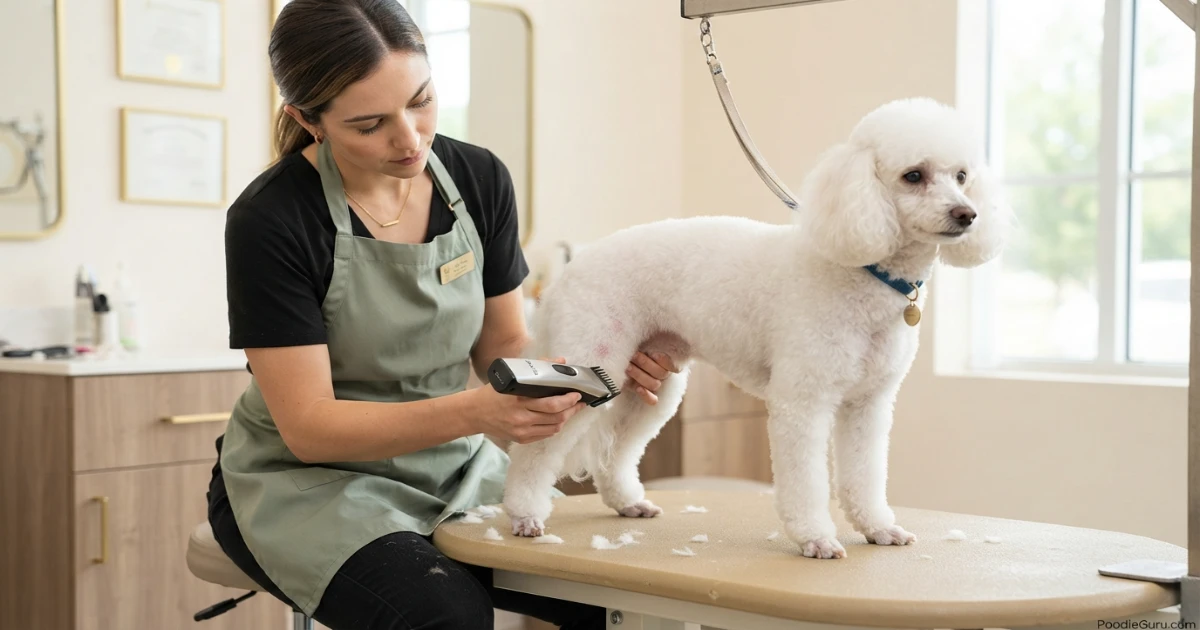
Regular grooming isn’t just about looks. A well-brushed, mat-free coat allows air circulation and lets you spot skin changes early. For poodles in a pet clip, a professional groom every 4–6 weeks is ideal. Between appointments, a quick daily comb-through with a metal comb catches tangles before they become mats. Our complete poodle grooming guide covers this in depth.
Identify and Manage Allergies
If your poodle has seasonal itching, recurring ear infections, or frequent paw licking, allergies are likely in play. Work with your vet on a plan — this might include a food trial, antihistamines, or allergy immunotherapy. Poodles can develop allergic skin disease like any dog, and recurring ear infections, paw licking, or seasonal itching deserve a veterinary allergy workup. Proactive management is a smart long-term investment.
Flea Control Year-Round
Even a single flea bite can trigger a full-blown hot spot in a poodle with flea allergy dermatitis. A veterinarian-recommended flea preventive, used without gaps, is one of the simplest and most cost-effective hot spot prevention tools available.
Post-Grooming Skin Checks
After any grooming session, run your hands over your poodle’s entire body. Feel for any warm, damp, or scabby areas. Early detection is everything.
Frequently Asked Questions
Can I treat my poodle’s hot spot at home without going to the vet?
Small, very early hot spots — dime- to quarter-sized and caught quickly — may improve with careful first-aid steps while you monitor closely. Clip the hair, clean with chlorhexidine, and prevent licking. If the spot is larger than a quarter, painful, or spreading, veterinary treatment is the safer path. Home care buys time; it doesn’t replace professional assessment when things escalate.
Are poodle hot spots contagious to other dogs or humans?
No. The bacteria involved are typically normal skin flora that only cause infection when the skin barrier is broken by moisture and trauma. A hot spot cannot spread from your poodle to another pet or to you. However, if an underlying ringworm infection is mistaken for a hot spot, that can be contagious — another reason to get an accurate diagnosis.
How quickly can a poodle hot spot develop?
A hot spot can progress from a slightly pink, damp patch to a raw, oozing wound in 4 to 6 hours. The speed is one of its defining features. Poodles left alone with a cone-free hot spot while the owner is at work often come home to a dramatically larger lesion.
Why does my poodle keep getting hot spots even after treatment?
Recurring hot spots nearly always point to an untreated underlying cause — most commonly environmental or food allergies. Other triggers include chronic ear infections, anal gland issues, or behavioral anxiety that leads to compulsive licking. Work with your vet to identify the root trigger; treating only the hot spot without addressing the cause is a cycle that repeats indefinitely.
Should I shave my entire poodle if it gets a hot spot?
No. Only the hair immediately surrounding and covering the hot spot needs to be clipped — enough to expose the skin to air and allow medication contact. Shaving the entire dog isn’t necessary and can expose sensitive skin to sun and irritation unnecessarily. A professional groomer or vet can do a precise spot clip.
Do hot spots always need antibiotics?
Not always. Very early, superficial hot spots that are cleaned, dried, and protected from licking may resolve without antibiotics. However, once a hot spot is oozing, has a foul odor, or is expanding, topical and sometimes oral antibiotics are usually required to clear the bacterial infection and prevent deeper skin involvement.
Can diet changes prevent hot spots in poodles?
If your poodle’s hot spots are triggered by a food allergy, switching to a novel protein or hydrolyzed diet under veterinary guidance can dramatically reduce or eliminate recurrences. If allergies are environmental, diet alone won’t fix the problem — but a high-quality, omega-3-rich food can still support overall skin health and resilience.
Key Takeaways
Poodle hot spots are painful but manageable when caught early. Here’s what to remember:
- A hot spot is a localized bacterial skin infection that develops rapidly when a poodle licks, chews, or scratches an area of irritated skin, especially in the dense, moisture-trapping coat.
- Underlying allergies — environmental or food-related — are the most common root cause of recurrent hot spots; treating the allergy often stops the cycle.
- The PoodleGuru Hot Spot Early Response Framework (Identify & Interrupt, Clip & Clean, Apply & Protect, Monitor & Decide) can halt progression when applied within the first few hours.
- Never use hydrogen peroxide, alcohol, or heavy ointments on a hot spot; they worsen the damage and trap moisture.
- Prevention centers on thorough drying after baths or swimming, regular grooming to prevent mats, year-round flea control, and allergy management.
- Consult a veterinarian if a hot spot is larger than a quarter, spreading, foul-smelling, or accompanied by signs of illness; professional treatment prevents deeper skin infections.