Senior Poodle Care: The Complete Guide
Aging is a gradual shift, not a switch. For poodles, the senior years can be some of the sweetest — if you know what to watch for, what to adjust, and how to support your dog through every stage.
Quick Answer
Senior poodle care is a proactive, health-focused approach that adjusts nutrition, exercise, grooming, vet visits, and home comfort to meet the changing needs of an aging Toy, Miniature, or Standard Poodle. For poodle owners, this means shifting from a maintenance mindset to a monitoring mindset. The most important thing to understand is that small, consistent adjustments — supportive bedding, age-appropriate activity, closer health monitoring, and more frequent veterinary checkups when recommended — can make a meaningful difference in comfort and quality of life.
In This Guide
- What Is Senior Poodle Care?
- When Is a Poodle Considered Senior?
- Quick Facts
- The PoodleGuru Senior Wellness Check Method
- Daily Care Adjustments
- Health Monitoring & Common Senior Issues
- Aging: Normal vs. Warning Signs
- Grooming the Senior Poodle
- Common Mistakes Owners Make
- Owner Action Plan
- Frequently Asked Questions
- Key Takeaways
What Is Senior Poodle Care?
Senior poodle care is a whole-dog approach that recognizes your poodle’s body and mind are changing — and that the routines that worked at age four won’t serve them at age twelve. It’s not about treating a sick dog. It’s about anticipating needs before they become crises.
Poodles age differently depending on size. PoodleGuru’s current lifespan guide places Toy Poodles around 14–18 years, Miniatures around 13–15 years, and Standards around 12–15 years. Individual dogs vary, so the most useful approach is to watch for changes in body condition, mobility, appetite, sleep, behavior, and daily function rather than relying on a birthday alone.
Poodles are known for intelligence and trainability, and older dogs still benefit from safe mental enrichment that matches their physical ability. Senior poodle care blends comfort, observation, and proactive veterinary partnership. For size-specific longevity context, see our Poodle lifespan guide.
When Is a Poodle Considered Senior?
There is no single birthday when every poodle becomes “old.” AAHA defines the senior life stage as roughly the last 25% of a dog’s estimated lifespan, which means breed, size, health history, and the individual dog all matter. The ranges below are practical planning points rather than diagnostic cutoffs.
| Poodle Size | Typical Weight | Practical Senior Planning Point | Average Lifespan |
|---|---|---|---|
| Toy | 4–6 lbs | About 10+ years | 14–18 years |
| Miniature | 10–15 lbs | About 9–10+ years | 13–15 years |
| Standard | 45–70 lbs | About 7–8+ years | 12–15 years |
These are guideposts, not deadlines. A healthy Standard Poodle may remain highly active at 10, while another dog may need senior-focused care sooner. AAHA advises that senior dogs receive a physical exam at least twice a year, with screening tailored to the individual dog. AAHA senior-dog guidance is a useful veterinary reference for preventive care.
Quick Facts
Senior Vet Visits
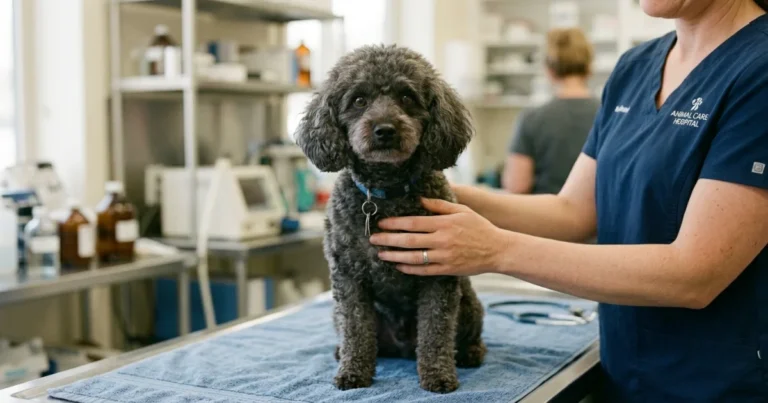
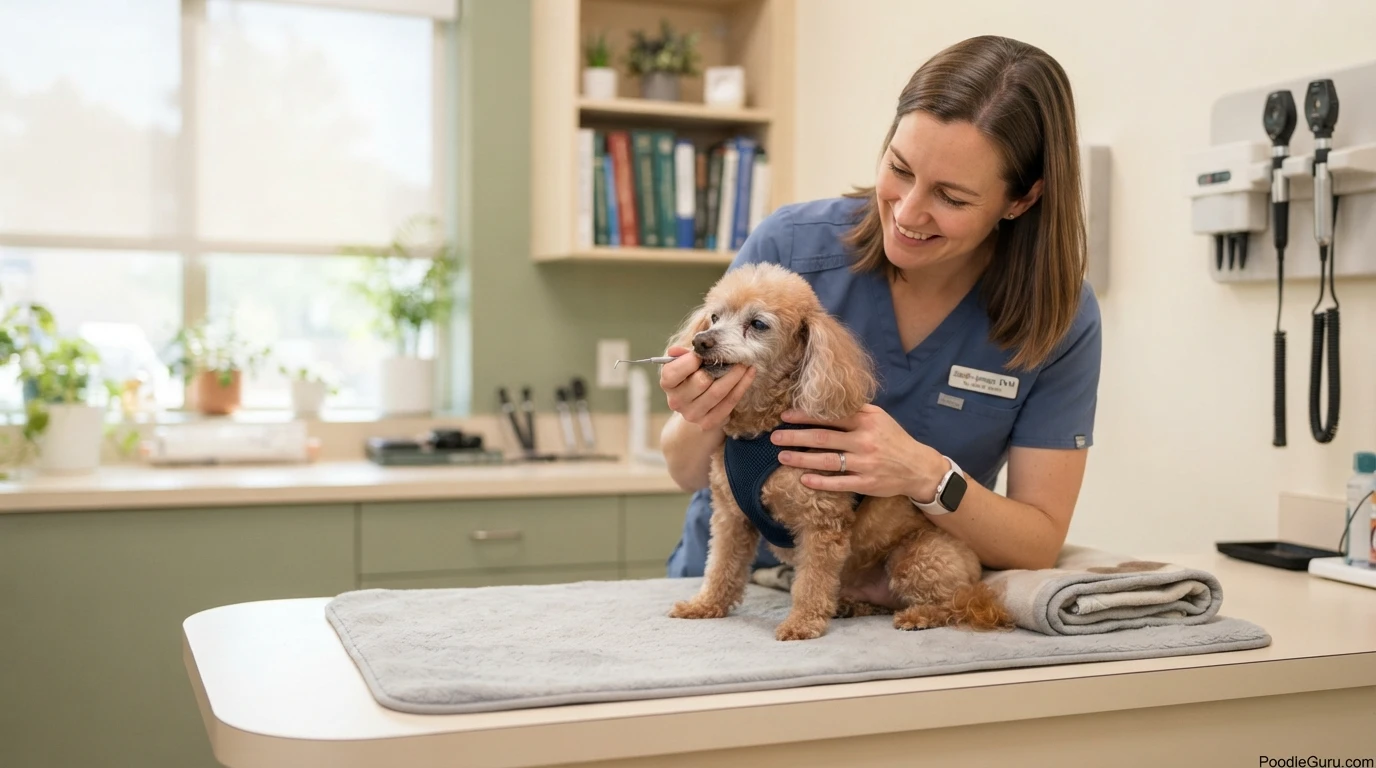
Senior poodles should generally have a veterinary physical exam at least twice a year. Your vet may recommend bloodwork, urinalysis, dental assessment, pain or mobility screening, and other tests based on age and health history.
Weight Management
Extra body weight can increase the workload on aging joints. Ask your vet to score body condition and muscle condition so calorie intake can be adjusted without sacrificing lean mass.
Dental Health
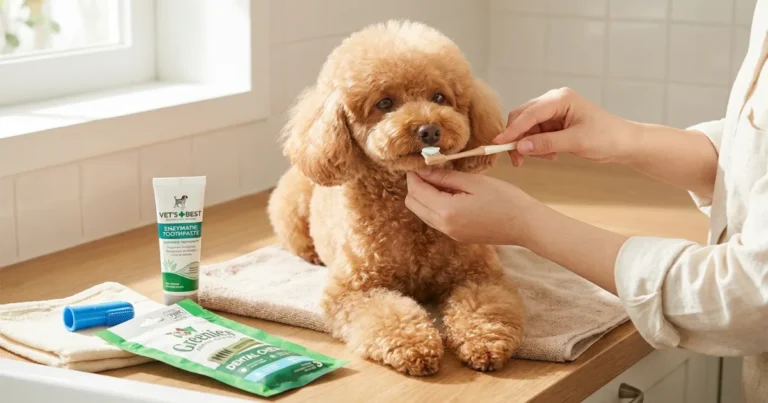
Dental disease becomes more common with age, especially in smaller dogs. Periodontal disease can cause pain, tooth loss, chronic inflammation, and broader health concerns, so oral exams remain an important part of senior care.
The PoodleGuru Senior Wellness Check Method
At PoodleGuru, we recommend owners perform a quick home assessment every weekend. It takes five minutes and can catch subtle changes before they become big problems. This method isn’t a substitute for veterinary care — it’s an early-warning system.
Observe Daily Habits
Note appetite, water intake, urination frequency, stool quality, and sleep patterns. Contact your veterinarian about new, persistent, worsening, or concerning changes rather than relying on a fixed waiting period.
Hands-On Body Check
Run your hands gently over your poodle’s body — ribs, spine, hips, legs, paws. Feel for new lumps, heat, swelling, or sensitivity. Check ears for odor, eyes for cloudiness, and gums for color.
Track Mobility
Watch your dog rise from a nap, navigate stairs, and walk on different surfaces. New stiffness, recurring difficulty rising, limping, reluctance to use stairs, or worsening mobility should be discussed with your veterinarian because pain is not something to dismiss as normal aging.
Monitor Mental Sharpness
Note any disorientation, pacing at night, forgetting familiar routines, or changes in social interaction. These changes can occur with canine cognitive dysfunction or other medical problems, so veterinary evaluation is important.
Schedule Proactive Vet Check-Ups
Schedule senior physical exams at least twice yearly and follow your veterinarian’s recommendations for bloodwork, urinalysis, and other screening. Baseline results can make later changes easier to recognize.
Daily Care Adjustments for Senior Poodles
Small tweaks to your daily routine make an outsized difference. The goal is comfort, not coddling. Senior poodles still want to participate — they just need you to meet them where they are.
Nutrition for the Senior Poodle
Senior dogs can lose lean muscle as they age, while their calorie needs may decrease. Current AAHA guidance does not support automatically restricting protein or phosphorus in every healthy senior dog. In fact, a healthy older dog may benefit from high-quality protein and careful calorie control to help preserve muscle and a lean body condition. Protein or phosphorus restriction is typically a disease-specific decision — for example, in some dogs with chronic kidney disease — and should be guided by your veterinarian. There is also no universal requirement to switch every older dog to a food labeled “senior.” Choose a complete and balanced diet based on your poodle’s body condition, muscle condition, medical history, appetite, and laboratory results. See the AAHA senior nutrition guidance for veterinary context.
Exercise: Shorter, Softer, Smarter
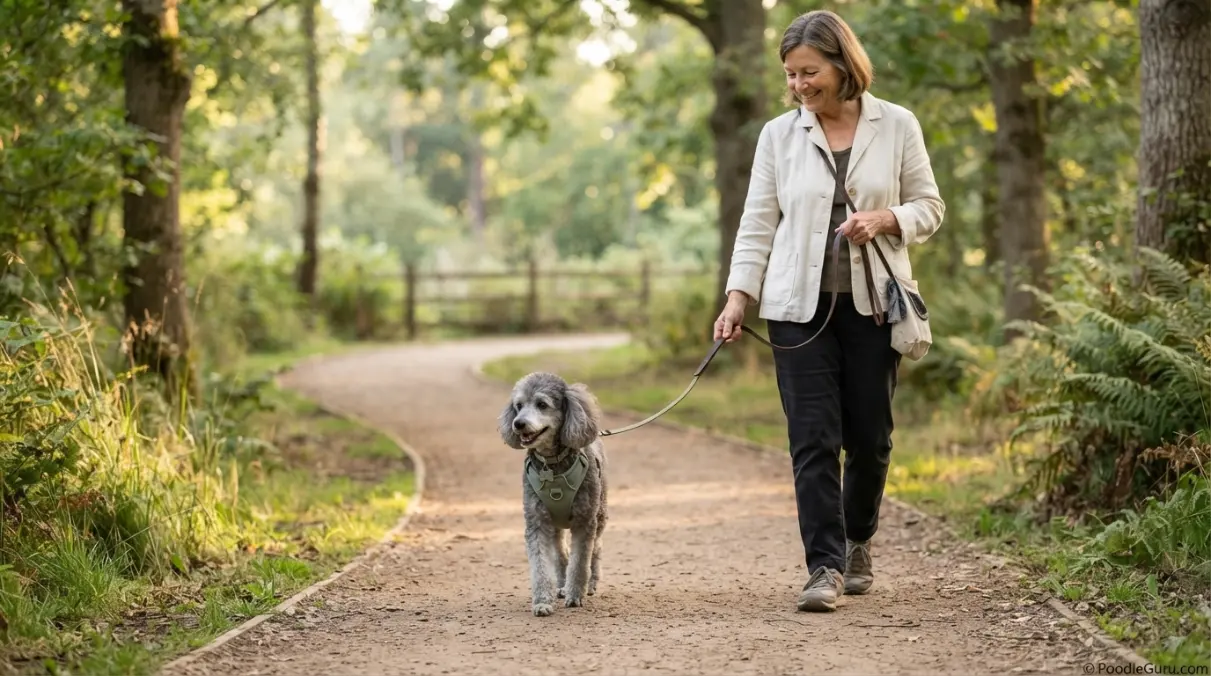
A senior poodle still benefits from regular movement, but intensity should match the individual dog’s joints, heart and lung health, body condition, and previous activity level. Shorter, more frequent walks are often easier to tolerate than a single long outing. Softer, non-slip surfaces may help dogs with mobility problems. Swimming can be a low-impact option for dogs that already enjoy water and are medically suitable for it. Stop and seek veterinary advice if exercise triggers unusual weakness, breathing difficulty, collapse, marked limping, or pain.
Home Comforts
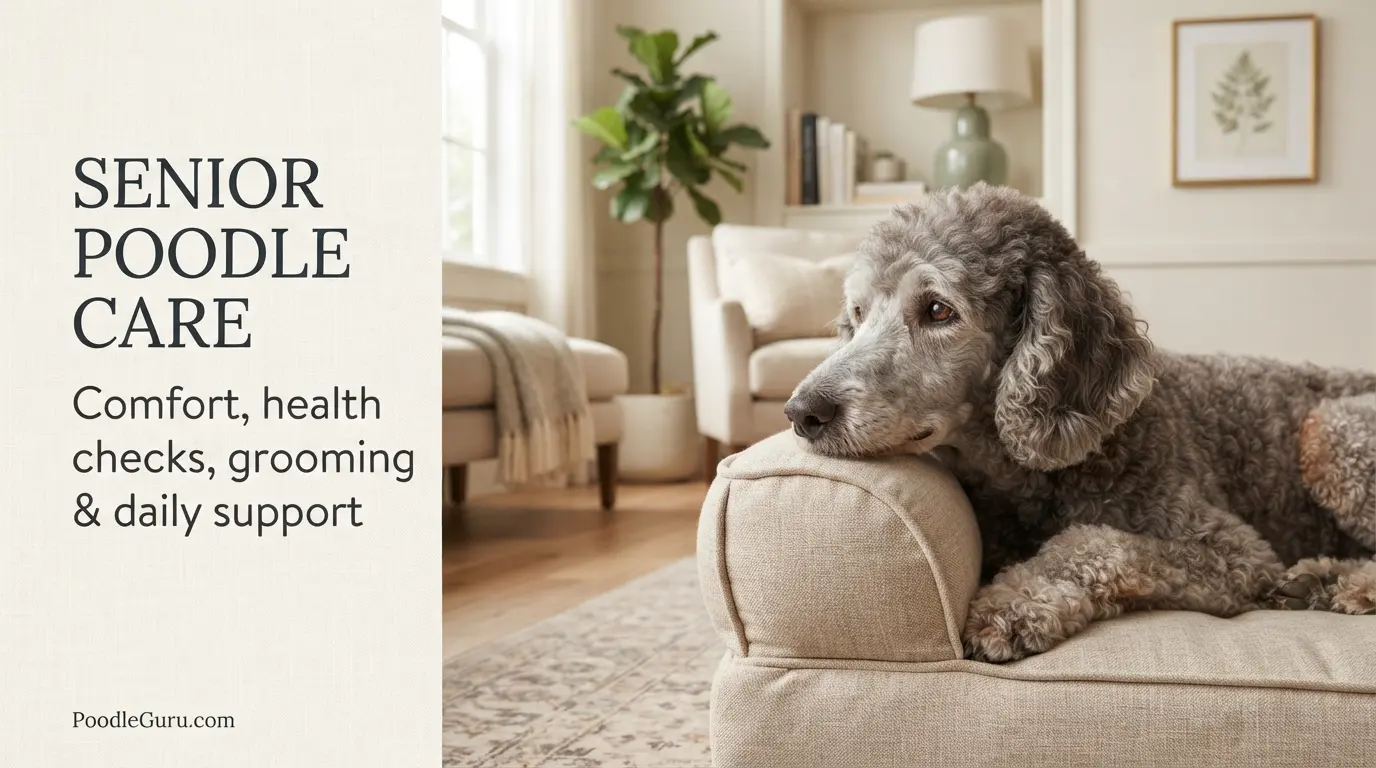
Supportive bedding, ramps or pet steps where appropriate, and non-slip runners can make everyday movement easier for an older poodle. Keep food, water, resting areas, and toilet access easy to reach, and avoid forcing painful stairs or jumps. Environmental changes should match your dog’s mobility and your veterinarian’s recommendations.
Health Monitoring & Common Senior Issues
Poodles have breed-specific tendencies that become more relevant with age. None of these are guarantees — they’re patterns worth monitoring.
| Condition | What Owners Might Notice | Poodle Size Most Affected | Action |
|---|---|---|---|
| Arthritis | Stiffness after rest, reluctance to jump, limping that improves after moving | All, especially Standards | Veterinary assessment, lean body condition, tailored activity, and a vet-directed pain plan; discuss supplements before use |
| Dental Disease | Bad breath, red gums, difficulty chewing, facial swelling | Toy & Miniature especially | Veterinary oral exam; professional dental treatment under anesthesia when indicated, with individualized pre-anesthetic assessment |
| Vision Loss / Cataracts | Cloudy eyes, bumping into furniture, hesitance in dim light | All sizes | Vet ophthalmology exam; keep furniture layout consistent |
| Hearing Loss | No response to name, startling when touched, sleeping through noises | All sizes | Use hand signals and vibration cues; no treatment, but safety adaptations help |
| Canine Cognitive Dysfunction | Pacing at night, forgetting housetraining, staring at walls, decreased interaction | All sizes, especially 12+ | Veterinary evaluation; management may include environmental enrichment, diet changes, and prescription treatment when appropriate |
| Kidney Disease | Increased thirst and urination, weight loss, decreased appetite | All sizes | Veterinary evaluation with bloodwork/urinalysis; treatment may include a therapeutic renal diet if kidney disease is confirmed |
When to Call a Vet
Seek urgent veterinary care for collapse, severe weakness, breathing difficulty, repeated seizures, inability to urinate, severe or persistent vomiting or diarrhea, a swollen painful abdomen, uncontrolled bleeding, or obvious severe pain. For less dramatic but persistent changes such as unexplained weight loss, coughing, increased thirst, reduced appetite, new house-soiling, or behavior changes, arrange a veterinary assessment promptly. When you are unsure how urgent a symptom is, call your veterinary clinic or local emergency service for triage advice.
Aging: Normal Changes vs. Warning Signs
Some changes are simply part of getting older. Others demand prompt attention. Knowing the difference prevents both unnecessary panic and dangerous delays.
| Change | Usually Normal If… | Warrants a Vet Visit If… |
|---|---|---|
| Sleeping more | Dog is still alert and engaged when awake, eating normally | Accompanied by lethargy, disinterest in food, or hiding |
| Graying muzzle | Gradual, no skin changes underneath | Hair loss, sores, redness, swelling, or other skin changes appear |
| Stiffness on rising | Brief and mild, with normal comfort and activity afterward — but mention new stiffness at the next senior exam | Recurring, worsening, limits activity, causes limping, or appears painful |
| Cloudy eyes | A veterinarian has confirmed an age-related lens change and vision remains functional | White opacity, vision loss, redness, or squinting |
| Occasional house accidents | Infrequent, with obvious reason (missed walk, UTI ruled out) | Sudden loss of housetraining, frequent accidents, or bloody urine |
When in doubt, a quick vet check is always the safer choice. Senior issues caught early are nearly always easier — and less expensive — to manage.
Grooming the Senior Poodle
Senior poodle grooming shifts from style to comfort. The coat still needs regular care, but the approach must be gentler.
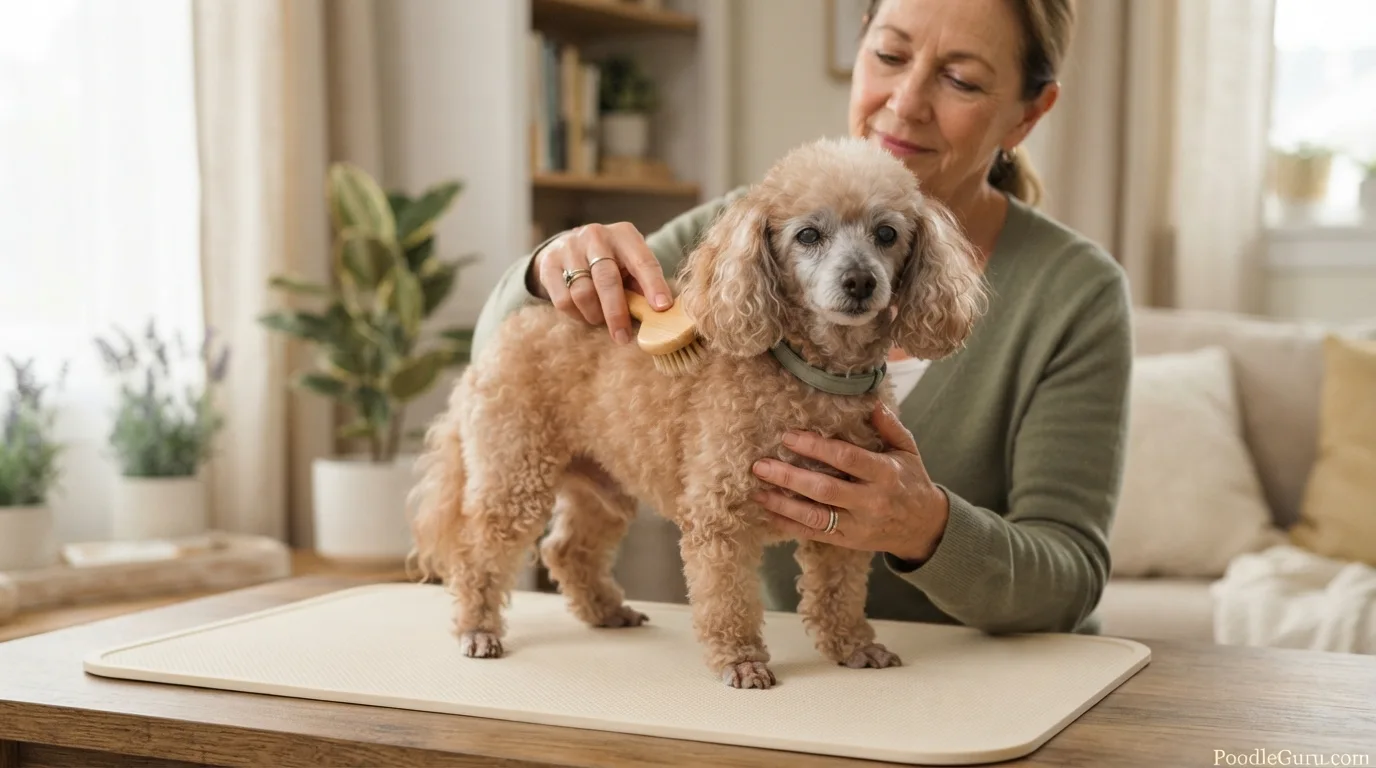
Older poodles often develop thinner skin and pressure-point calluses. A soft slicker brush and a wide-toothed comb replace the firmer tools of younger years. Mats behind the ears and under the harness become more common because seniors lie down more. Check these areas daily.
Many owners switch to a shorter, lower-maintenance pet clip to reduce brushing time and keep the dog comfortable. Professional groomers experienced with seniors can use non-slip surfaces, extra padding, breaks, and shorter sessions to reduce strain. If pain or severe anxiety makes necessary grooming unsafe, discuss options with your veterinarian; any sedating medication should only be used under veterinary direction. For a life-stage grooming schedule, see our Poodle grooming schedule by age.
Common Mistakes Owners Make with Senior Poodles
Even devoted owners slip into patterns that unintentionally reduce a senior poodle’s quality of life.
| Mistake | Why It Happens | What to Do Instead |
|---|---|---|
| Assuming slowing down is “just old age” | Gradual changes are easy to normalize | Report any change — even slow ones — to your vet. Pain is not a normal part of aging. |
| Skipping dental care because of age | Fear of anesthesia in older dogs | Age alone is not a disease. Pre-anesthetic bloodwork determines safety. Dental disease causes systemic harm. |
| Over-supplementing without vet guidance | Desire to help, marketing claims | Some supplements interact with medications. Always run any new supplement — even joint chews — past your vet. |
| Keeping the same feeding routine | Habit, not noticing weight creep | Calorie needs often change with age, but not every senior needs the same reduction. Reassess body condition, muscle condition, and portions with your vet. |
| Stopping all training and mental work | Belief that old dogs can’t learn | Many senior poodles enjoy gentle trick training, scent games, food puzzles, and short training sessions. Enrichment supports engagement and quality of life. |
Owner Action Plan: Your Senior Poodle Weekly Checklist
- Daily: Observe appetite, water intake, urination, and bowel movements. Check for any new lumps or limping. Offer a short, enjoyable walk.
- Weekly: Perform the PoodleGuru Senior Wellness Check. Gently brush coat and check for mats. Weigh your dog (use a baby scale for Toys).
- Monthly: Trim nails if they don’t wear naturally (senior poodles often walk less, so nails grow faster). Check ears and clean if needed.
- About every 6 months: Schedule a senior wellness exam. Follow your veterinarian’s recommendations for bloodwork, urinalysis, dental assessment, mobility screening, and other tests based on your dog’s needs.
- As needed: Adjust bedding, ramps, and traction surfaces. Keep microchip and emergency-contact details current. Reassess diet promptly if weight, appetite, or muscle condition changes unexpectedly.
Frequently Asked Questions
At what age is a poodle considered senior?
It depends on size. Toy Poodles are usually considered senior around 10–11 years, Miniatures around 9–10, and Standards around 7–8. These are guidelines — some individuals age more slowly. The key is proactive monitoring starting at these thresholds.
What’s the best diet for a senior poodle?
There is no single best “senior” diet for every poodle. Healthy older dogs often need careful calorie control plus enough high-quality protein to help preserve lean muscle. Protein or phosphorus restriction should be based on a diagnosed medical need, such as certain stages of kidney disease, rather than age alone. Ask your veterinarian to choose a diet based on body condition, muscle condition, health history, appetite, and laboratory results.
How often should a senior poodle see the vet?
Every 6 months is ideal for a senior wellness exam, including bloodwork and urinalysis. More frequent visits may be needed if your poodle has a chronic condition. Catching changes early is far easier than treating advanced disease.
My senior poodle sleeps all day. Is that normal?
Sleeping more is typical, but it should be restful, not lethargic. If your poodle is still alert, eating, and engaged when awake, it’s likely normal aging. If there’s disinterest in food, people, or activities they once enjoyed, schedule a vet visit to rule out pain or illness.
Should I still brush my senior poodle’s teeth?
Yes — but gently. Daily brushing with a soft toothbrush and enzymatic dog toothpaste reduces plaque and bacteria. Even if you’ve never brushed before, starting now helps. Pair home care with professional dental cleanings as recommended by your vet.
Can senior poodles learn new things?
Absolutely. Senior poodles retain their intelligence and benefit from mental stimulation. Scent games, gentle trick training, and puzzle toys can support engagement and quality of life. Adjust for physical limitations — sitting tricks instead of jumping ones, for example.
What are the signs of dementia in poodles?
Canine cognitive dysfunction may look like pacing at night, forgetting familiar people or routines, house soiling, staring blankly at walls, or decreased social interaction. A veterinarian can rule out other medical causes and discuss an individualized management plan that may include environmental changes, diet, enrichment, or prescription treatment.
Is it safe to put an older poodle under anesthesia for dental work?
Advanced age alone is not a contraindication to general anesthesia. Risk depends on the individual dog’s health, procedure, medications, and monitoring plan. Your veterinarian should perform an appropriate pre-anesthetic evaluation and tailor the protocol to your poodle; additional tests are based on the dog’s findings and medical history. Dental disease can cause significant pain and inflammation, so necessary treatment should be weighed against individualized anesthetic risk rather than rejected because of age alone. AAHA senior anesthesia guidance confirms that advanced age alone is not a contraindication to general anesthesia.
Key Takeaways
- Senior poodle care begins with a shift from annual to bi-annual vet exams, typically around age 10 for Toy, 9 for Miniature, and 7 for Standard Poodles.
- The PoodleGuru Senior Wellness Check Method — a five-step home assessment performed weekly — helps owners catch changes in habits, mobility, and cognition before they escalate.
- Arthritis, dental disease, and cognitive changes are important senior concerns; early veterinary assessment, lean body condition, oral care, and individualized treatment can improve comfort and function.
- Home adjustments like orthopedic beds, ramps, and non-slip rugs dramatically improve comfort — they’re not optional extras for an aging poodle with joint pain.
- Never dismiss changes as “just old age.” Pain, appetite loss, and sudden behavior shifts deserve veterinary evaluation, because many senior conditions are treatable.
- Mental stimulation through gentle training, scent work, and puzzle toys supports engagement, routine, and the bond with your senior poodle.
Start this week: do your first Senior Wellness Check, schedule that overdue vet visit, or swap your poodle’s bed for something softer. Small steps today mean more good years together.