Poodle Scratching a Lot? 9 Itchy Skin Causes & Vet-Safe Fixes
Poodles are known for elegant curls and bright personalities, so constant scratching can feel worrying fast.
When a poodle scratching a lot becomes a daily pattern, the cause is usually allergies, fleas, mites, yeast, dry skin, grooming irritation, or an infection hiding under the coat.
This guide helps you spot the likely trigger, use safe at-home support, and know when the itch needs professional veterinary care.
Quick Answer: Why Is My Poodle Scratching a Lot?
A poodle scratching a lot usually has allergies, fleas, mites, yeast, dry skin, contact irritation, or a secondary skin infection. Poodles can also itch when dense curls trap moisture, debris, shampoo residue, or pollen close to the skin.
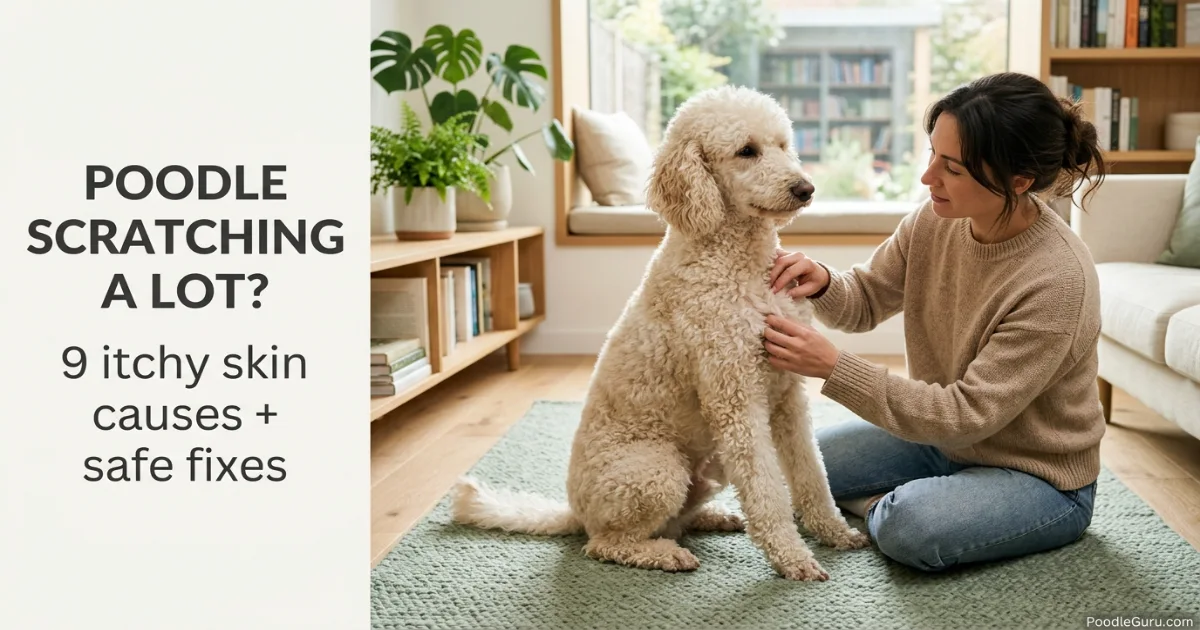
Start by checking the paws, ears, belly, armpits, tail base, and any red or flaky areas. Mild dry skin may improve with gentler grooming and humidity support, but scratching with odor, sores, hair loss, swelling, or behavior changes needs a vet exam.
Why Poodles Are Prone to Itchy Skin
Poodles have a single-layer, curly coat that behaves more like hair than typical shedding fur. Loose hairs can stay trapped within the curls, and the skin underneath can collect moisture, dust, pollen, and grooming residue.
The AKC poodle breed standard describes the coat as dense and harsh-textured. That density is beautiful, but it can create a warm microclimate close to the skin if brushing, bathing, or drying falls behind.
In daily life, this means itching may appear after a walk in tall grass, a new shampoo, a diet change, flea exposure, or a humid bath day where the coat did not dry completely.
3 Poodle Sizes, Similar Skin
Toy, Miniature, and Standard Poodles share the same curly coat type and many of the same itch triggers. Size changes grooming logistics, not the basic skin risks.
Coat Density Hides Clues
A full coat can hide redness, flakes, scabs, and early hot spots. Part the hair weekly so you are checking skin, not just brushing the top layer.
Vet Visit Rule
If scratching causes broken skin, hair loss, bleeding, odor, or sleep disruption, book a vet visit. Early treatment prevents painful secondary infections.
Common Causes of Poodle Scratching a Lot
Scratching is a symptom, not a diagnosis. The location, timing, smell, and skin appearance can point you toward the most likely cause.
| Cause | Key Signs in Poodles | Where It Appears | Typical Onset |
|---|---|---|---|
| Environmental Allergies | Paw licking, face rubbing, sneezing, red belly | Paws, ears, belly, armpits | Seasonal or after dust, pollen, mold, or grass exposure |
| Food Allergies | Ear flare-ups, rear-end itching, digestive upset, repeated licking | Ears, groin, rear, paws | Gradual; can happen even after years on the same food |
| Flea Allergy Dermatitis | Intense scratching from even a few bites; flea dirt may appear | Tail base, lower back, inner thighs | Sudden, often seasonal or after contact with other animals |
| Mites or Mange | Relentless itching, crusting, hair loss, irritated ear edges | Ears, elbows, hocks, face | Gradual; may spread between pets |
| Yeast or Bacteria | Musty odor, greasy coat, red skin, hot spots, discharge | Ears, paws, folds, armpits | Often secondary to allergies, moisture, or skin damage |
| Dry Skin | Flakes, dull coat, mild scratching, static, dandruff | Back, flanks, all over | Winter, low humidity, harsh shampoo, or over-bathing |
This table is only a starting point. Many itchy poodles have more than one problem at the same time, such as allergies that lead to paw yeast or ear infection.
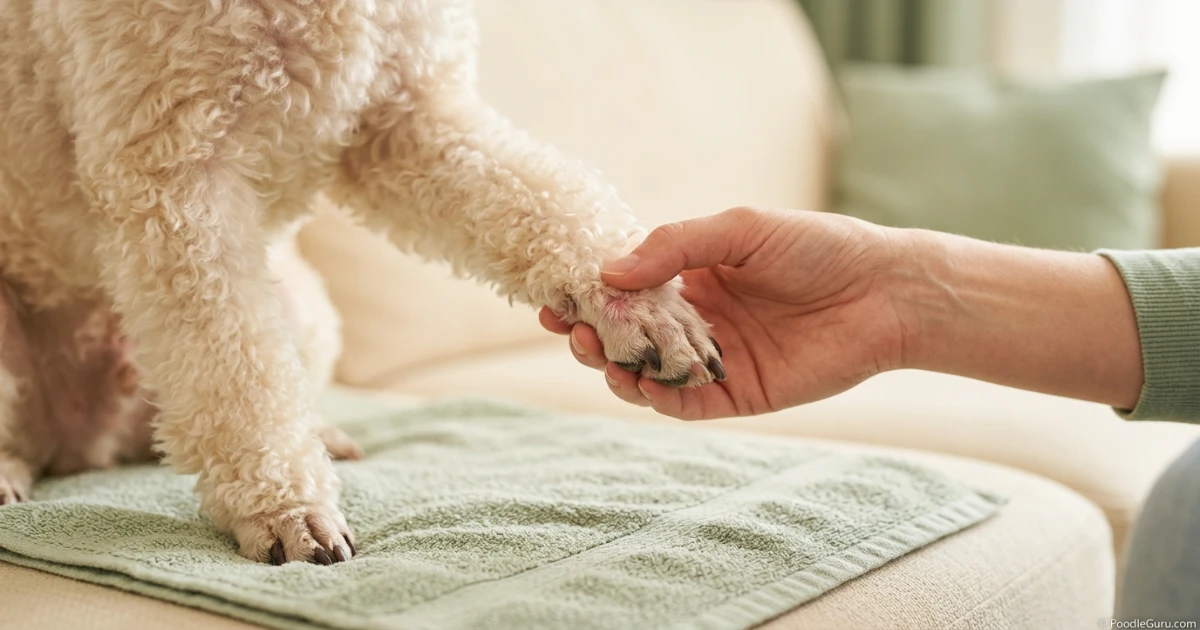
Allergies: The Usual Suspect Behind Poodle Scratching
Allergic dermatitis is one of the most common reasons a poodle scratching a lot keeps licking, chewing, and rubbing. Instead of a stuffy nose, many dogs show allergies through their skin.
Environmental Allergies
Pollens, dust mites, molds, and grass can trigger itch. You may notice paw chewing after walks, face rubbing after lying outside, or belly redness during certain seasons.
Simple support includes wiping paws after walks, washing bedding, vacuuming often, and reducing fragrance in the home. Moderate or severe allergy cases usually need vet-directed treatment.
Food Allergies
Chicken, beef, dairy, and other proteins can become triggers for some dogs. Food allergy itching is often year-round and may involve the ears, groin, rear, and paws.
A true elimination diet takes patience. Your vet may recommend a strict 8–12 week plan using a novel or hydrolyzed protein. Random food switching every few weeks usually makes the problem harder to solve.
Expert Insight: Do Not Guess on Food Allergies
Changing foods too often can confuse the pattern. Keep an itch log, note treats and table scraps, and work with your veterinarian before starting a serious elimination diet.
Parasites: Fleas, Mites, and the Invisible Itch
Even indoor poodles can get fleas. Fleas can travel on other pets, clothing, or outdoor surfaces, and a flea-allergic poodle may itch intensely from very few bites.
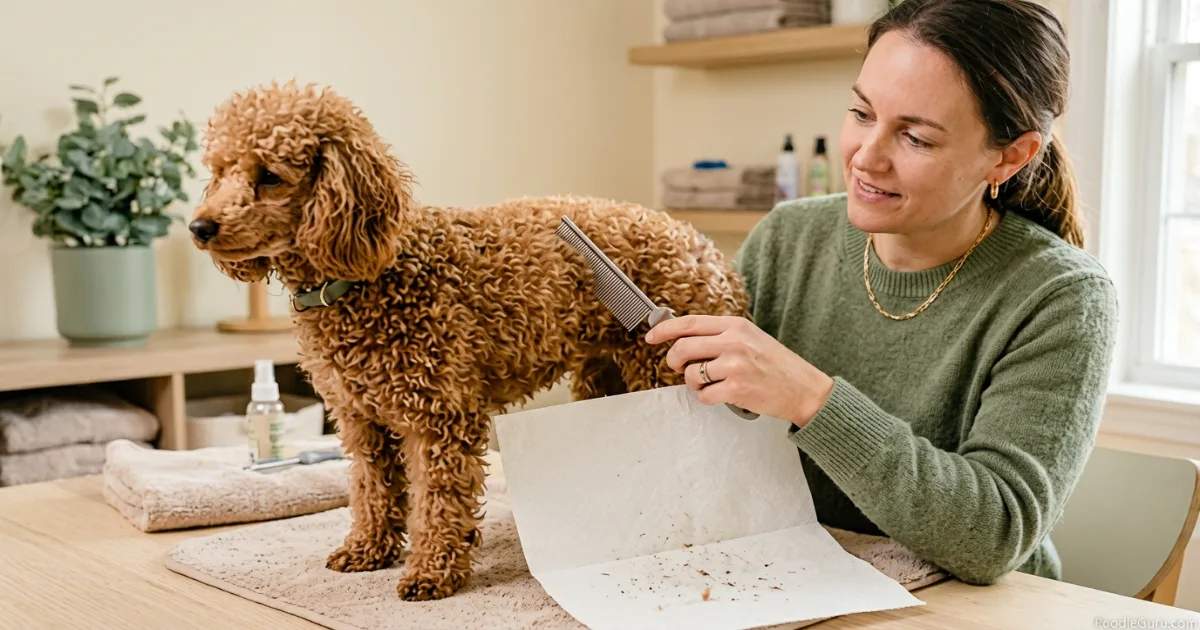
Flea allergy dermatitis usually targets the tail base, lower back, and inner thighs. Tiny black specks that turn reddish-brown when damp may be flea dirt.
Mites create a different pattern. Sarcoptic mange can cause severe itching and crusty lesions around ear edges, elbows, and hocks. Because some mites are contagious, suspected mange needs veterinary diagnosis and treatment.
Skin Infections and Hot Spots: When Scratching Leads to Worse
Chronic scratching damages the skin barrier. Once the barrier is weak, yeast and bacteria can multiply, causing more itching and a painful cycle.
Yeast often smells musty and may leave the coat greasy, especially around paws, ears, and folds. Bacterial infections may show up as pustules, circular red patches, oozing hot spots, or painful warm areas.
If your poodle’s itching suddenly intensifies and the skin looks angry, smells bad, or feels hot, professional care is the safest next step. The VCA veterinary resource on dog allergies explains how allergic skin disease can make secondary infections more likely.
Dry Skin and Environmental Factors
Not every itchy poodle has allergies or parasites. Low humidity, harsh shampoos, over-bathing, indoor heating, or a diet low in skin-supporting nutrients can cause flakes and mild scratching.
Dry skin often appears as fine dandruff along the back or flanks. The coat may look dull, and the itch is usually mild to moderate rather than frantic.
Supportive steps include using a gentle dog shampoo, rinsing thoroughly, running a humidifier in dry months, and asking your vet about omega-3 support.
The PoodleGuru 5-Step Itch Relief Method
Use this structured method to separate minor irritation from a problem that needs veterinary help.
Observe and Log
Track when, where, and how your poodle scratches. Paw licking in the morning, ear scratching after meals, or belly rubbing after walks can reveal patterns.
Check for Parasites
Use a flea comb over a white towel. Look for fleas, flea dirt, crusty ear edges, hair loss, or irritated skin.
Assess Diet and Environment
Review new foods, treats, shampoos, laundry detergent, room sprays, grass exposure, pollen season, and bedding changes. Adjust one variable at a time.
Soothe the Skin Safely
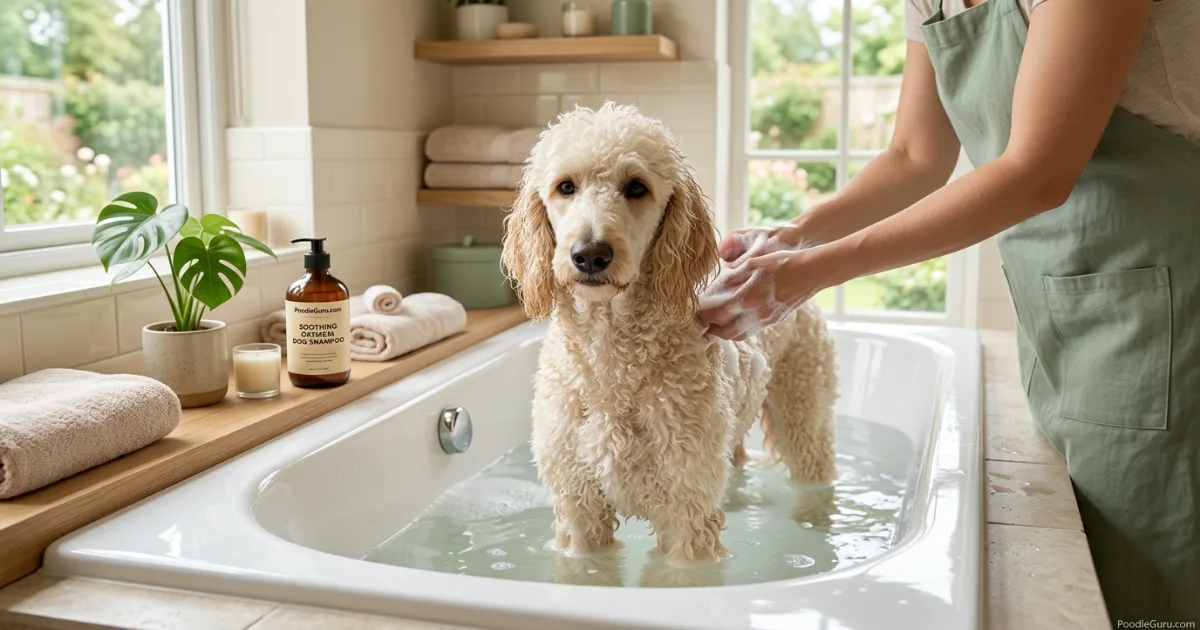
Use lukewarm water and a veterinarian-recommended soothing dog shampoo when appropriate. Rinse completely and dry the coat down to the skin.
Monitor and Decide
If itching improves within 5–7 days and there are no wounds, keep supporting the skin. If it worsens or returns quickly, book a vet appointment and bring your itch log.
Normal Scratching vs. Warning Signs
All dogs scratch sometimes. The concern begins when the scratching becomes frequent, intense, painful, or linked with visible skin changes.
Normal Grooming Scratch
- Occasional and brief
- No redness or broken skin
- Coat looks healthy
- Stops when distracted
Problem Itch
- Persistent licking, chewing, or scratching
- Redness, flakes, scabs, odor, or hair loss
- Hot spots or painful areas
- Scratching during sleep, meals, or play
A poodle that wakes from sleep to scratch, chews until the skin is wet, or whines when touched should be evaluated by a veterinarian.
Practical Care for Itchy Poodles
Between vet visits, smart home care can reduce irritation and support healing. Focus on grooming, nutrition, and the home environment.
Grooming That Helps, Not Hurts
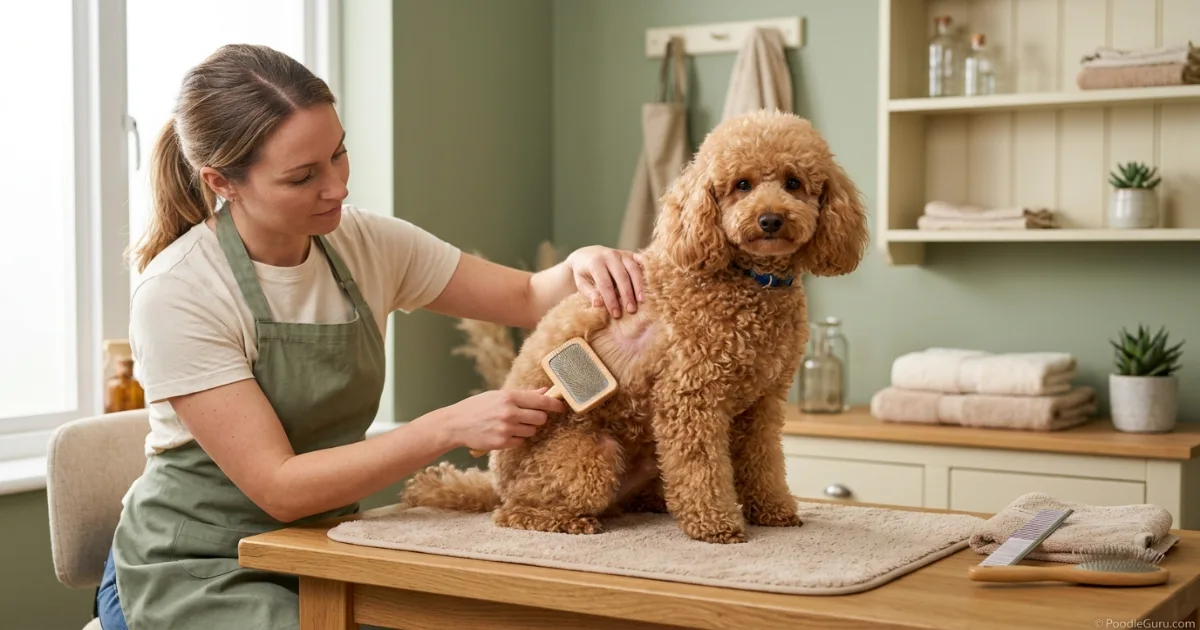
Use a pin brush and slicker brush gently to remove trapped hair and allow air to reach the skin. Never rake aggressively over irritated areas.
After baths, dry the coat completely on a cool or low setting. Damp curls against the skin can encourage yeast and make itching worse.
Nutrition for Skin Barrier Support
Choose a balanced diet with named animal proteins and skin-supporting nutrients. Ask your vet before adding fish oil or supplements, especially if your poodle has health conditions or takes medication.
Environmental Tweaks
Wash bedding weekly in fragrance-free detergent. Vacuum often if dust mites are suspected. During pollen season, wipe paws and the underbelly after outdoor time.
Owner Mistakes That Make Poodle Scratching Worse
- Over-bathing. Too many baths can strip natural oils and worsen dryness. Use a gentle dog shampoo and follow your vet’s advice.
- Leaving the coat damp. Moisture trapped under curls can encourage yeast and bacteria.
- Ignoring ears. Ear irritation and infections are common in poodles and often show up with scratching, shaking, or odor.
- Using home remedies without vet clearance. Essential oils, vinegar, peroxide, and human creams can irritate skin or be unsafe if licked.
- Switching foods too often. Constant food changes make it harder to identify a true food trigger.
- Waiting too long. Early vet care can prevent hot spots, ear damage, and chronic skin discomfort.
Frequently Asked Questions About Poodle Scratching
Why is my poodle scratching but has no fleas?
Poodles often scratch from environmental allergies, food allergies, dry skin, yeast, mites, or contact irritation even when fleas are not visible. A vet exam can help identify hidden causes.
Can stress cause my poodle to scratch more?
Yes. Stress, boredom, and anxiety can increase licking or scratching in intelligent breeds. Still, rule out skin disease first, especially if there is redness, odor, hair loss, or sores.
What shampoo is best for a poodle with itchy skin?
A gentle, soap-free dog shampoo with soothing ingredients may help mild irritation. If yeast, bacteria, or severe allergy is present, your vet may prescribe a medicated shampoo.
How can I tell food allergy from environmental allergy?
Food allergies are often year-round and may involve ears, paws, groin, or rear-end itching. Environmental allergies often flare seasonally with paw licking, face rubbing, and belly redness. A strict elimination diet is the most reliable food allergy test.
Should I shave my poodle to help with itching?
Not without professional advice. A shorter clip can make inspection easier, but shaving too close may irritate skin or increase sun exposure. A groomer or vet can recommend a safer length.
When should I take my scratching poodle to the vet?
Book a visit if itching causes broken skin, hair loss, bad odor, swelling, bleeding, ear pain, sleep disruption, or behavior change. Any itch that does not improve with safe basic care within 5–7 days should be checked.
Key Takeaways: Poodle Scratching a Lot
- Persistent scratching in poodles is usually tied to allergies, fleas, mites, yeast, bacterial infection, dry skin, grooming irritation, or several issues together.
- The location of the itch matters: paws often suggest allergies or yeast, the tail base suggests fleas, and ears may point to infection or food allergy patterns.
- Dense curls can hide early redness, flakes, scabs, and hot spots, so weekly skin checks are essential.
- Gentle grooming, complete drying, bedding hygiene, and fragrance-free products can support itchy skin, but they do not replace a vet diagnosis when symptoms are strong.
- Broken skin, hair loss, odor, swelling, ear pain, bleeding, or behavior changes are clear signs to call your veterinarian.
When in doubt, trust your observations. You know your poodle best, and early action prevents bigger skin problems.