Poodle Food Allergies: 7 Symptoms, Diagnosis & Elimination Diet Protocol
Quick Answer: Poodle food allergies typically show up as persistent itching, recurrent ear infections, paw chewing, face rubbing, skin redness, hot spots, and sometimes digestive upset. The most reliable way to diagnose a true food allergy is a strict 8–12 week elimination diet using a veterinary-selected novel protein or hydrolyzed diet, followed by a controlled challenge. Blood, saliva, and hair tests are not reliable for diagnosing food allergies in dogs.
Your poodle has been licking her paws raw. The ears you cleaned three days ago already smell yeasty again. Maybe there is intermittent soft stool you have blamed on stress, a grooming product, or one stolen treat. These signs are frustrating because they are not specific. They all pull a careful owner toward the same question: Is my poodle allergic to her food?
Poodle food allergies are real, but they are also widely misunderstood. The internet is crowded with anecdotal claims, questionable testing methods, and pet food marketing that blurs the line between sensitivity, intolerance, and true immune-mediated allergy. This guide explains the symptoms, the diagnosis process, the elimination diet protocol, and the practical reality of managing a poodle with food allergies so you can move from guesswork to a calmer, evidence-based plan.
Quick Facts: Poodle Food Allergies at a Glance
What Exactly Are Poodle Food Allergies?
A food allergy is an abnormal immune response to something in the diet, most often a protein. The dog’s immune system treats that ingredient as a threat and reacts. This is different from a food intolerance, which does not involve the immune system and is more likely to cause digestive upset such as gas, loose stool, or vomiting.
With true poodle food allergies, the skin and ears are often louder than the stomach. A poodle can have itchy paws, recurrent ear infections, face rubbing, or hot spots while still having normal stool. Another poodle may show both skin and gut signs. The pattern varies, which is why guessing by symptoms alone is not enough.
Food allergies can also develop after months or years of eating the same ingredient. A poodle that has eaten chicken for a long time can still become reactive later. This catches owners off guard because they assume an allergy would have appeared immediately. In reality, immune sensitization can build over time.
Veterinary safety note: Itchy skin, ear infections, and digestive upset can also come from fleas, mites, yeast, bacterial infection, environmental allergies, endocrine disease, parasites, pancreatitis, or other medical problems. A diet trial is most useful when your veterinarian has also checked for common non-food causes.
7 Common Symptoms of Poodle Food Allergies
1. Year-round itching
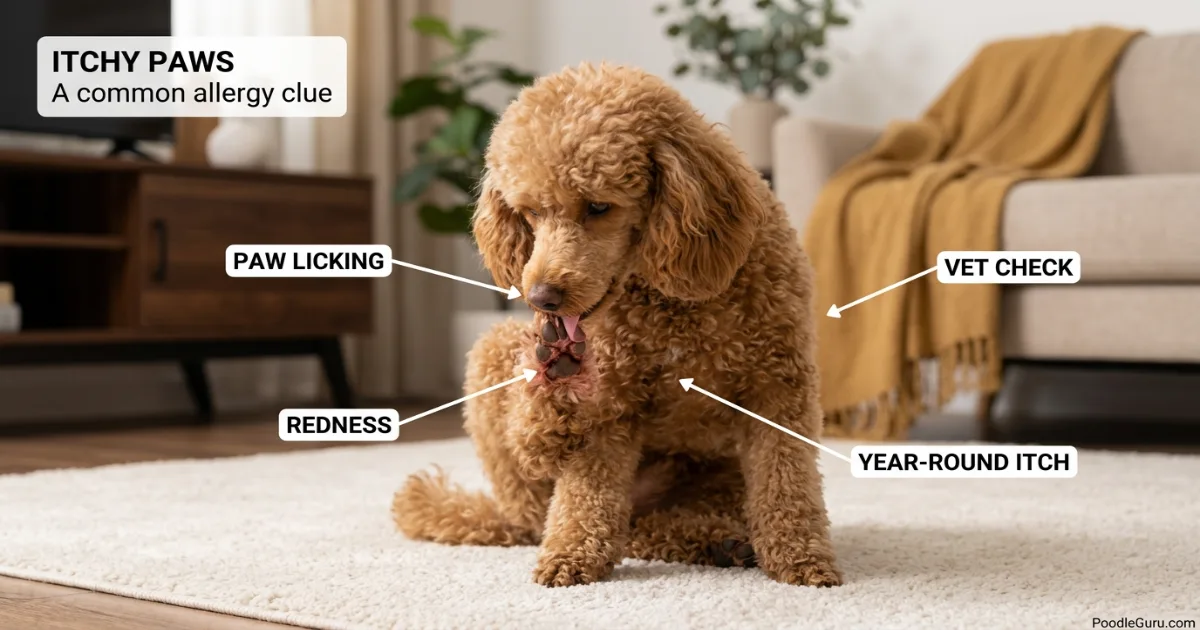
Food allergy itching tends to be persistent rather than clearly seasonal. Your poodle may scratch in winter, spring, summer, and fall. Environmental allergies can also become year-round in some homes, so this clue is helpful but not definitive.
2. Paw licking and chewing
Poodles often lick or chew their paws when the skin is irritated. You may see saliva staining, redness between toes, or a habit of chewing feet after meals or before sleep. Paw symptoms can also come from contact allergy, yeast, or environmental allergens, so pattern tracking matters.
3. Recurrent ear infections
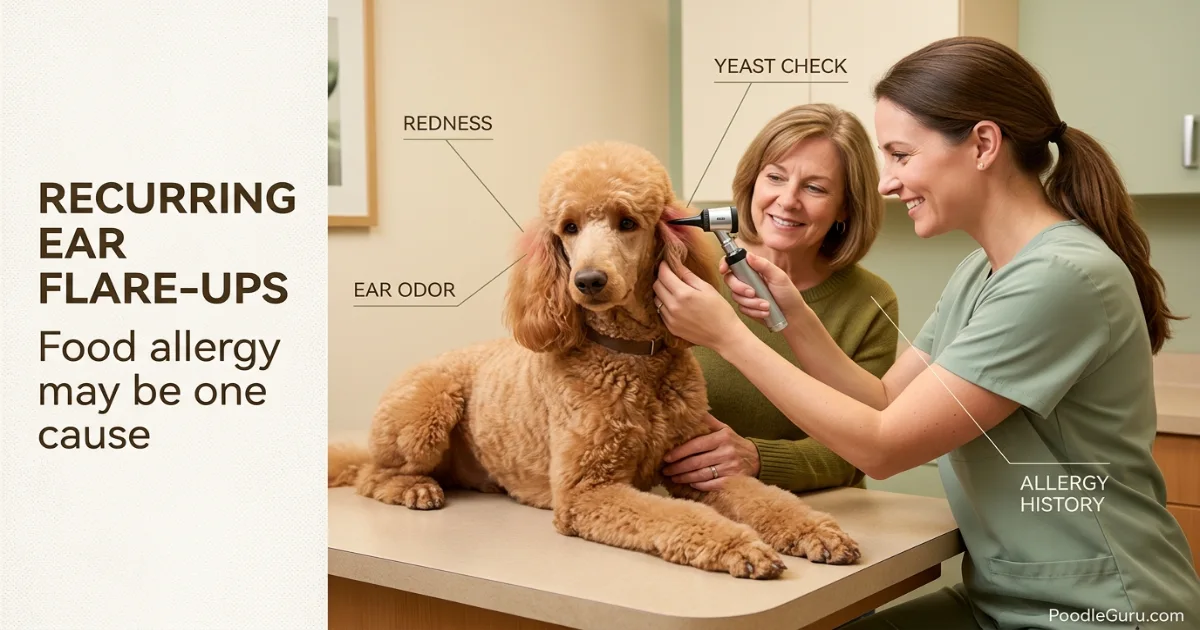
Ears that improve with drops and then flare again may point toward an underlying allergy. Food allergy is one possible cause, but poodles can also have ear issues from moisture, hair, anatomy, yeast, bacteria, or environmental allergy.
4. Face rubbing and muzzle irritation
Some poodles rub their face on carpet, bedding, or furniture. Redness around the muzzle, lips, and chin may appear. This sign can overlap with contact irritation from bowls, grooming products, or environmental triggers.
5. Hot spots and skin redness
Allergic inflammation can make the skin easier to damage. Licking and scratching can quickly turn mild irritation into hot spots, scabs, or secondary infection, especially under a dense poodle coat.
6. Digestive upset
Food allergies can cause soft stool, diarrhea, gas, vomiting, or increased bowel movements, but not every allergic poodle has gut symptoms. If digestive issues are severe or sudden, your veterinarian should rule out other causes before assuming allergy.
7. Symptoms that return after treats or flavored items
A poodle may improve on a controlled diet and then flare after a flavored chew, table scrap, training treat, or chewable medication. This is why food trials must include everything that enters the mouth, not just the main kibble.
Poodle Food Allergies vs Environmental Allergies
| Feature | Food Allergy | Environmental Allergy / Atopy |
|---|---|---|
| Seasonal pattern | Often year-round, though symptoms can fluctuate | Often seasonal at first, but may become year-round |
| Age of onset | Can appear at many ages after exposure | Often begins in young adulthood, but varies |
| Common signs | Itchy paws, ears, face, belly, rear area, plus possible GI signs | Itchy face, ears, paws, armpits, belly, and recurrent skin infections |
| Testing approach | Elimination diet and challenge | Veterinary exam, pattern history, and allergy testing for environmental immunotherapy planning |
| Treatment focus | Strict avoidance of confirmed trigger ingredient | Environmental control, medications, skin care, and sometimes immunotherapy |
Many poodles have more than one problem at the same time. A dog may have food allergy plus environmental allergy, or allergy plus yeast infection. That overlap is one reason diagnosis can feel slow. A diet change may improve part of the picture while another trigger keeps the dog itchy.
What Most Owners Get Wrong About Poodle Food Allergies
- Switching foods every two weeks. A proper elimination trial needs one consistent diet for long enough to judge response. Rapid switching introduces too many variables.
- Trusting blood, saliva, or hair tests for food allergy. These tests are commonly sold to owners, but veterinary nutrition and dermatology sources do not consider them reliable for diagnosing food allergy in dogs.
- Assuming grain-free fixes everything. Most true food reactions are linked to proteins. A grain-free food that still contains the trigger protein may not help.
- Forgetting treats and flavored medications. A single chew, table scrap, flavored pill, or dental treat can compromise a strict trial.
- Ignoring secondary infections. Diet can remove a trigger, but yeast or bacterial infections may still need treatment before the skin feels better.
What the research suggests: Food allergy is one possible cause of allergic skin disease in dogs, but it is not the only cause. Common reported food triggers include beef, dairy, chicken, wheat, soy, egg, and lamb, though exact rankings vary by study, region, diet exposure, and patient population. For an individual poodle, the trigger can be any ingredient the immune system has learned to recognize.
The Elimination Diet Protocol for Poodles
An elimination diet is not a casual food swap. It is a diagnostic protocol. The goal is to remove every possible trigger, allow inflammation time to settle, and then confirm the diagnosis by reintroducing the suspected food in a controlled way.
Step 1: Choose the trial diet with your veterinarian
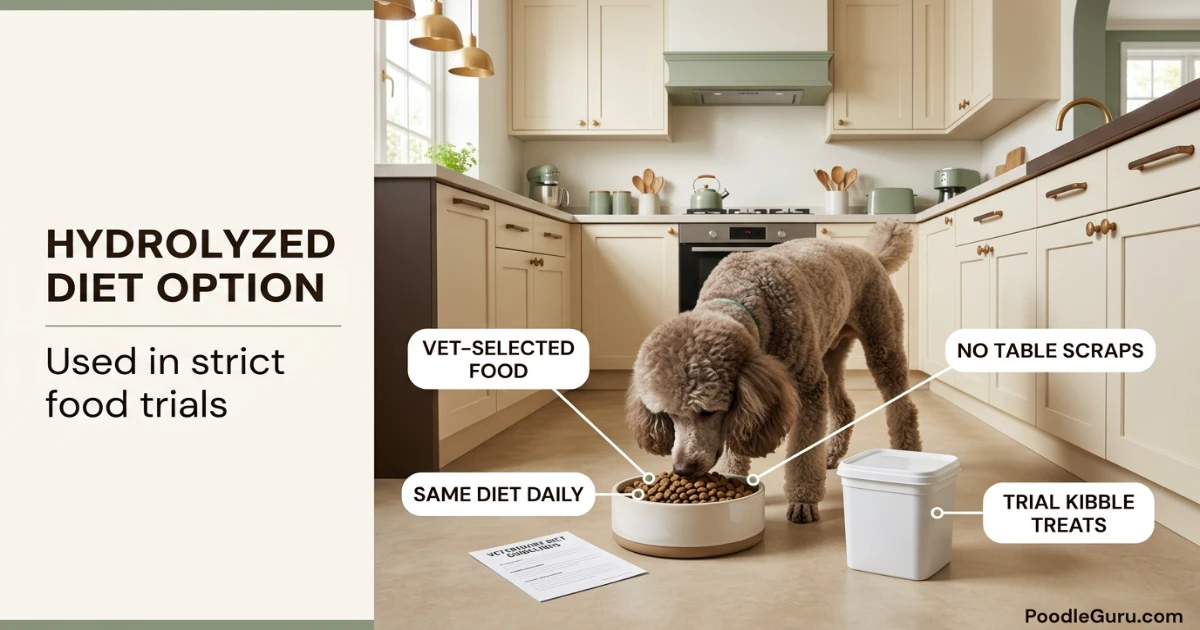
The most common options are a veterinary hydrolyzed diet or a carefully selected novel protein diet. Hydrolyzed diets contain proteins broken into smaller pieces that are less likely to trigger the immune system. Novel protein diets use a protein your poodle has not eaten before. Your veterinarian will help choose based on your poodle’s history and medical needs.
Step 2: Feed only the trial diet for 8–12 weeks
Strict means strict. No table scraps, commercial treats, dental chews, flavored supplements, rawhides, flavored toothpaste, or chewable medications unless your vet confirms they are safe for the trial. For training, use the trial kibble or a vet-approved version of the same diet.
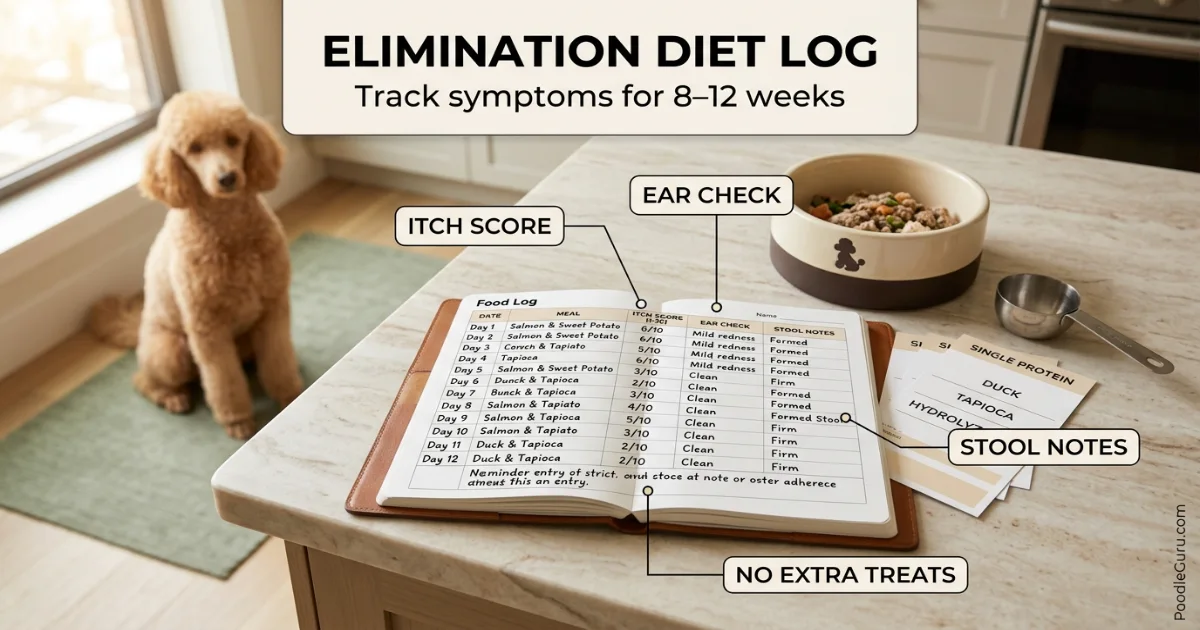
Step 3: Track symptoms weekly
Keep a simple log. Rate itching from 1 to 10, note ear odor or redness, track stool quality, and record any accidental exposures. Improvement can be gradual, especially when skin or ear infections are also present.
Step 4: Treat secondary infections at the same time
If your poodle has yeast, bacterial skin infection, or ear infection, diet alone may not make the dog comfortable quickly. Your veterinarian may use ear medication, medicated shampoo, anti-itch treatment, or other support while the diet trial runs.
Step 5: Complete the challenge phase
If symptoms improve during the trial, your veterinarian may recommend reintroducing the original food or a single suspected ingredient for 7–14 days. If symptoms return, food allergy is much more strongly supported. Without challenge, you may know the new diet helped, but you may not know exactly which ingredient was responsible.
Choosing a Long-Term Diet After Diagnosis
Once a food allergy is confirmed, the goal changes from diagnosis to sustainable management. Your poodle needs a complete and balanced diet that avoids the trigger and is practical enough for your household to maintain.
If your poodle is allergic to chicken, for example, you may need to avoid chicken, chicken meal, chicken liver, and sometimes chicken-flavored items. Many foods marketed as “lamb,” “salmon,” or “sensitive skin” may still contain chicken ingredients. Ingredient reading becomes a permanent habit.
Some poodles remain on a veterinary hydrolyzed diet long-term. Others do well on a commercial diet using a tolerated protein. A smaller number need a home-prepared diet formulated by a board-certified veterinary nutritionist. Home cooking without proper formulation can create dangerous nutrient imbalances, so it should not be improvised.
Practical Tips for Owners Managing Poodle Food Allergies
- Audit everything that enters the mouth. Include treats, supplements, toothpaste, chews, and medication flavorings.
- Train family members and visitors. One well-meaning snack can undo weeks of strict diet tracking.
- Keep safe rewards ready. Use trial-diet kibble or vet-approved treats that match the diet plan.
- Do not stop skin treatment too early. Existing infections may need medication even after the food trigger is removed.
- Recheck with your vet. If symptoms do not improve after a truly strict trial, the diagnosis may be incomplete or another allergy may be involved.
Are Poodles Genetically Prone to Food Allergies?
Breed-specific food allergy data for poodles is limited. Poodles can certainly develop allergic skin disease, but it is not accurate to claim that every poodle is genetically destined for food allergies. What makes poodles challenging is that their dense, continuously growing coat can trap moisture and irritation close to the skin. That can make itching, yeast, and secondary infections more noticeable when allergy is present.
Family history still matters. A poodle from lines with frequent allergic skin disease, chronic ear infections, or immune-related problems may deserve closer monitoring. Responsible breeders who track health patterns across generations give owners better information, but even a carefully bred poodle can develop food reactions.
Cost of Managing Poodle Food Allergies in 2026
Managing poodle food allergies can become expensive, especially during the diagnosis phase. Costs vary by country, city, poodle size, clinic, diet type, and whether your dog needs a specialist.
2026 Cost Snapshot
Veterinary hydrolyzed or novel protein diet monthly: $90–$220
Initial veterinary workup with skin or ear checks: $180–$500
Veterinary dermatologist consultation if referred: $300–$700
Medicated shampoo or ear solutions: $25–$60 monthly
Allergy medication if also needed: $60–$200 monthly
These are broad estimates, not a quote. Your veterinarian can give the most accurate plan for your poodle’s size and symptoms.
When to Ask for a Veterinary Dermatologist
Your primary veterinarian can guide many elimination diets. A specialist becomes more helpful when the case is severe, confusing, expensive, or not improving despite a strict trial. Ask about a board-certified veterinary dermatologist if your poodle has year-round intense itching, repeated ear infections, recurring skin infections, or no clear response after a properly managed diet trial.
A specialist can help separate food allergy from environmental allergy, parasites, contact reactions, endocrine disease, and infection. That clarity can save months of frustration and repeated product switching.
Related Reading on PoodleGuru
Sources Checked for This Guide
This article is educational and should not replace diagnosis from your veterinarian. For accuracy, the elimination diet and testing sections were aligned with veterinary guidance from reputable clinical and university sources.
Frequently Asked Questions About Poodle Food Allergies
What are the most common food allergies in poodles?
Common reported food triggers in dogs include beef, dairy, chicken, wheat, soy, egg, and lamb. For poodles, the trigger can be any ingredient they have eaten enough times for the immune system to recognize, so diet history matters more than guessing by breed alone.
How do I know if my poodle has a food allergy or environmental allergy?
Food allergy often causes year-round signs, while environmental allergy may be seasonal at first. However, the two can overlap. A strict elimination diet and controlled challenge are used to evaluate food allergy, while your vet may use other tools for environmental allergy.
How long does an elimination diet take for a poodle?
Most veterinary elimination diet trials last 8–12 weeks. Some dogs improve earlier, but skin inflammation and secondary infections may take longer to settle, so shortening the trial can create false conclusions.
Can I do an elimination diet without my vet?
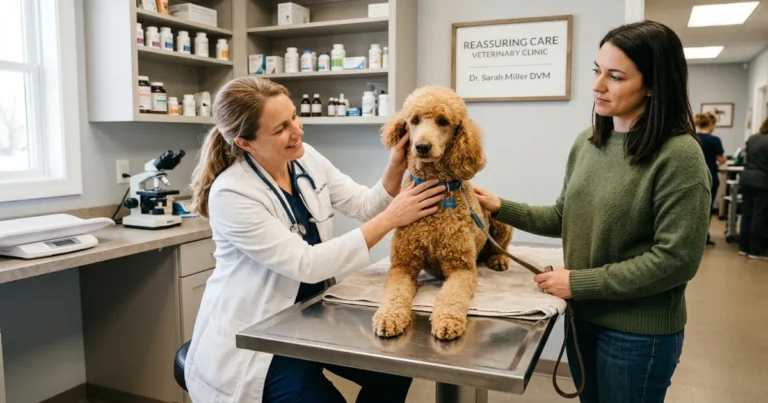
It is better to work with your veterinarian. Your vet can help choose a suitable hydrolyzed or novel protein diet, treat infections, review medication flavorings, and decide whether symptoms fit food allergy or something else.
Are blood allergy tests accurate for poodle food allergies?
No. Blood, saliva, and hair tests are not considered reliable for diagnosing food allergies in dogs. They can create false positives and false negatives, which may lead owners to avoid foods unnecessarily or miss the real trigger.
Can poodles outgrow food allergies?
It is uncommon but possible for sensitivity to change over time. Any re-challenge should be discussed with your veterinarian, especially if past symptoms were severe or involved repeated infections.
What treats are safe during an elimination diet for poodles?
During the strict diagnostic phase, the safest treats are usually the trial diet itself, such as kibble pieces or vet-approved canned food from the same formula. Avoid commercial treats, dental chews, rawhides, and flavored items unless your vet approves them.
Key Takeaways: Poodle Food Allergies
Real poodle food allergies are immune-mediated, often show up through the skin and ears, and cannot be confirmed by quick food switching or unvalidated tests. The most reliable path is a strict 8–12 week elimination diet, careful symptom tracking, treatment of secondary infections, and a controlled challenge when your veterinarian recommends it.
With patience and a clean plan, many poodles can return to clear ears, calmer skin, better sleep, and a much more comfortable daily life.