Poodle Losing Hair? 7 Vet-Checked Causes, Diagnosis & What to Do Next
Finding thinning spots on your poodle is unsettling. You brush, you fuss, you feed the best — and still the hair falls.
The good news: most poodle hair loss has a clear cause, and many cases can be reversed or well-managed once the trigger is found.
This guide walks you through what to check, when to call your vet, and how to give your poodle’s coat the best chance to grow back full and strong.
Quick Answer: Poodle Losing Hair — What It Usually Means
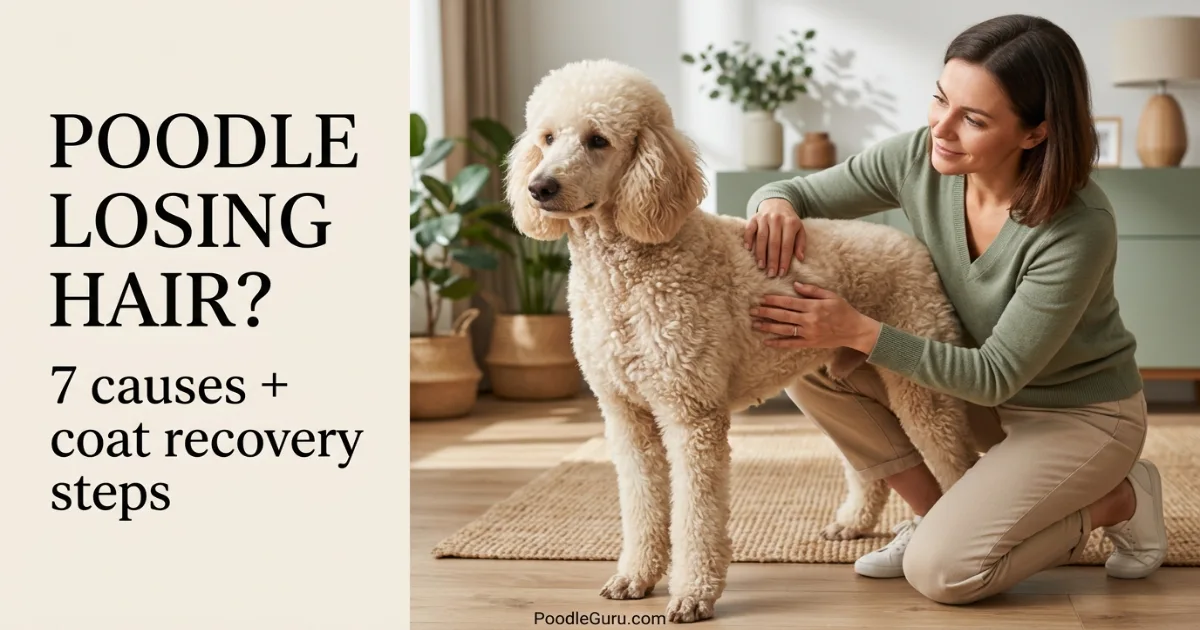
Hair loss in poodles rarely happens without a reason. The most common culprits fall into seven categories: hormonal imbalances, allergies, skin infections, parasite reactions, nutritional gaps, pressure-related alopecia, and a breed-specific condition called sebaceous adenitis.
A few causes can look like normal shedding at first, but obvious thinning, bare patches, brittle hair, or hair that pulls out easily should be investigated. Most causes are treatable, and early action gives the coat a better chance to regrow well.
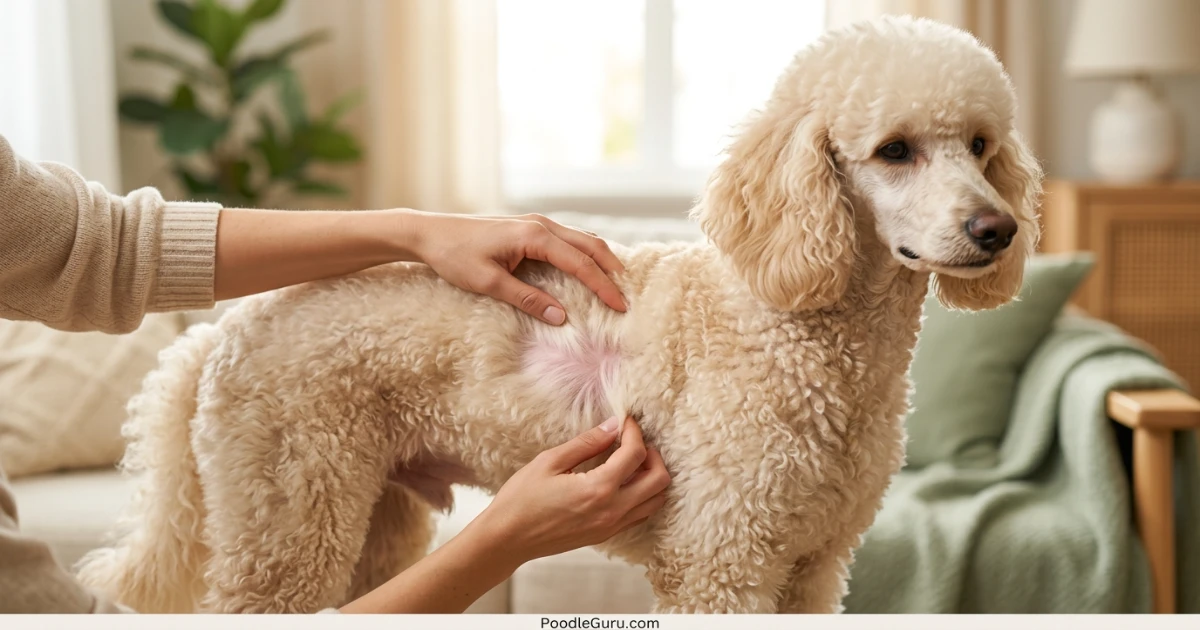
First, Know What’s Normal: Poodle Coat Shedding vs. True Hair Loss
Poodles have a curly, continuously growing, hair-like single coat. That coat type changes how you interpret shedding. A poodle’s single-layered, continuously growing coat traps loose hairs within the curls rather than dropping them onto your floor. So when you do see visible thinning, it’s not “finally shedding normally” — it’s a signal.
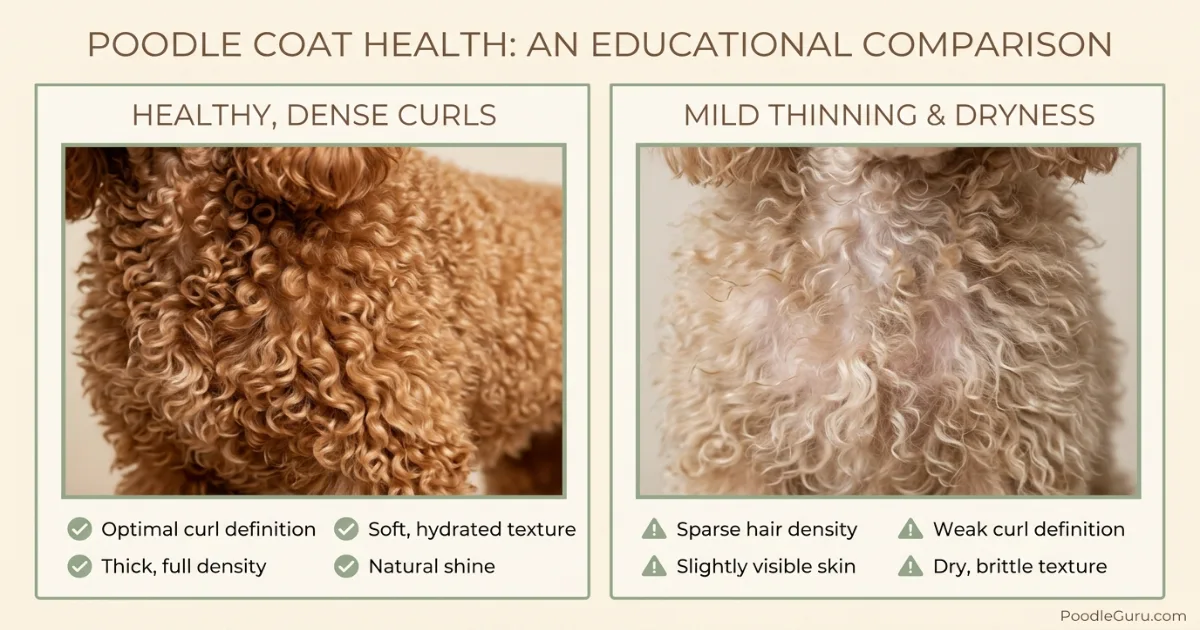
Most poodles lose a small amount of hair daily, just like humans do. That hair stays tangled in the coat and comes out during brushing. What you’re looking for instead are bare patches, a visibly thinner coat along the back or flanks, hair that pulls out easily with gentle pressure, or a coat texture that turns dry, brittle, or tufty. These aren’t normal. They’re the coat asking for help.
Hair loss in poodles is a symptom. It’s the outward clue that something internal, external, or genetic needs attention. The most important thing to understand is that a poodle’s coat reflects overall health — and when it fails, the root cause is rarely just skin-deep.
🐩 Poodle Coat Fact
Poodles have a single-layer, continuously growing hair coat. Unlike double-coated breeds, they don’t blow coat seasonally. Any obvious thinning should be investigated.
🔍 Early Warning Sign
If you can see skin through the coat without parting it, that’s thinning. If hair comes out in clumps during brushing beyond normal retained shedding, document it.
⏱️ Regrowth Timeline
Once the underlying cause is treated, poodle hair typically begins visible regrowth within 4 to 8 weeks. Full coat restoration can take several months.
The 7 Most Common Reasons Your Poodle Is Losing Hair
Veterinary dermatology in poodles typically points to one — or sometimes a combination — of these seven triggers. I’ll walk through each one with the specific signs poodle owners should watch for, because the pattern of hair loss often tells you more than the fact of hair loss alone.
1. Hormonal Imbalances (Endocrine Alopecia)
Hormone-driven hair loss is frustrating because it’s gradual. The coat thins symmetrically — same pattern on both sides — often starting along the trunk and sparing the head and legs. In poodles, hypothyroidism and Cushing’s disease are the two heavy hitters. With hypothyroidism, you might also see weight gain, lethargy, and a coat that feels coarse and breaks easily. Cushing’s tends to bring a pot-bellied appearance, increased thirst, and skin that bruises or tears easily. Both conditions require bloodwork for confirmation. The hair loss itself won’t stop until the underlying hormone imbalance is addressed.
2. Allergic Dermatitis (Food and Environmental)
Allergies don’t just make poodles itch. Chronic inflammation damages hair follicles over time. The classic pattern is thinning on the paws, belly, ears, and around the muzzle — areas that contact allergens or get licked excessively. Food allergies often show up as ear infections and paw-chewing alongside coat changes. Environmental allergies (pollen, dust mites, grass) tend to be seasonal at first, then become year-round. A poodle losing hair from allergies usually has red, irritated skin visible underneath the thinning areas. This isn’t just a cosmetic issue — those inflamed follicles can scar if the allergic trigger isn’t identified and removed.
3. Skin Infections (Bacterial and Fungal)
Bacterial folliculitis and ringworm (a fungus, despite the name) both attack the hair follicle directly. The hair loss pattern tends to be patchy, sometimes circular, often with scaling, crusting, or a raised red border. Ringworm is zoonotic — your family can catch it — so rapid identification matters. Bacterial infections frequently move in after another problem has already weakened the skin barrier, like allergies or a small wound. A poodle with recurrent skin infections and hair loss almost always has an underlying driver that needs to be found.
4. Parasites (Mange Mites and Flea Allergy)
Demodectic mange (caused by Demodex mites) and sarcoptic mange (scabies) both trigger intense hair loss, but they look different. Demodex often starts as small, localized bald patches — sometimes just on the face or forelegs — and may not itch much initially. Sarcoptic mange produces furious itching, crusty skin, and rapid coat deterioration. Even a single flea bite can trigger flea allergy dermatitis in sensitive poodles, leading to extensive hair loss over the rump and tail base. All of these require microscopic skin scrapings for diagnosis and specific prescription treatment — over-the-counter remedies rarely work completely.
5. Nutritional Deficiencies
Poodle coats are biochemically demanding. Hair is mostly protein, and the rapid growth cycle of a poodle’s continuously growing coat means even borderline nutritional gaps show up in the coat first. Inadequate high-quality animal protein, zinc deficiency, and insufficient omega-3 fatty acids are the most common nutritional culprits behind dull, brittle coats that break and thin. Homemade or unbalanced raw diets are common offenders here. A poodle eating a complete, AAFCO-compliant diet rarely develops true nutrition-related hair loss — so if you’ve ruled out other causes, it’s worth reviewing exactly what’s in the bowl.
6. Pressure-Related Alopecia (Friction Hair Loss)
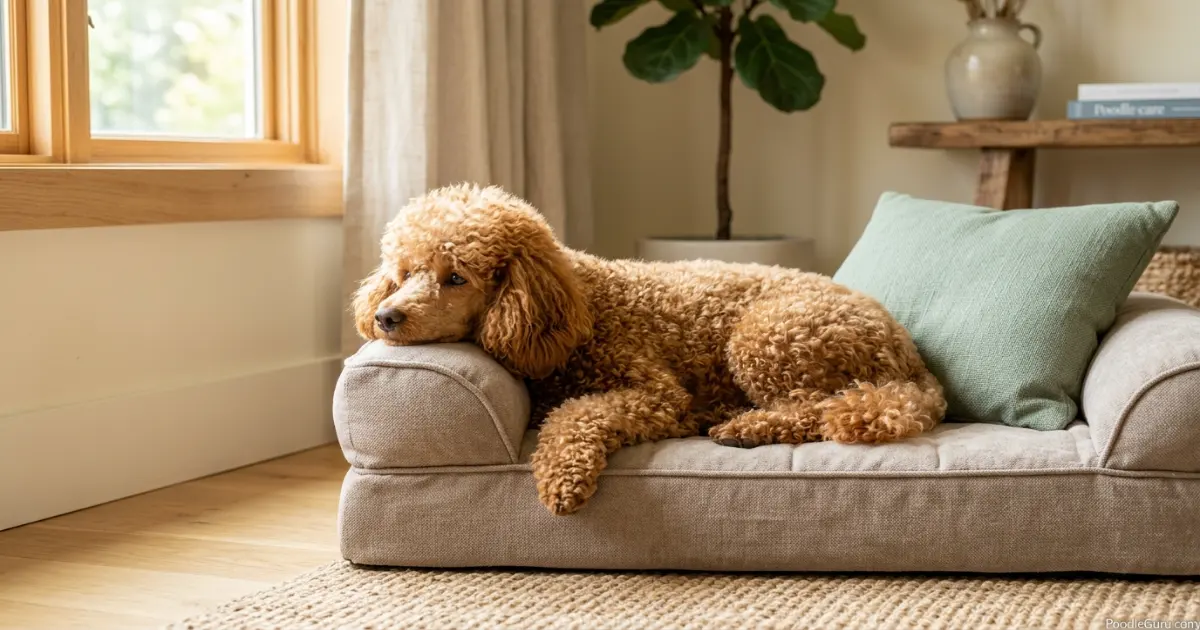
This one is often missed. Pressure alopecia occurs at contact points — elbows, hocks, hips, and anywhere the poodle rests against hard surfaces repeatedly. The hair simply rubs away over time, and the skin underneath may thicken and darken. It’s far more common in larger poodles (Standards and larger Miniatures) simply due to body weight. The fix is environmental: provide padded resting surfaces, rotate bedding, and protect bony pressure points. Hair may not fully regrow in long-term cases where follicles have been damaged, but the progression can be stopped.
7. Sebaceous Adenitis (SA) — The Poodle-Specific Concern
Sebaceous adenitis is an inherited inflammatory condition that destroys the sebaceous glands. Without those oil-producing glands, the hair follicle dries out, the hair shaft becomes brittle, and the coat develops a distinctive “moth-eaten” appearance with silvery scales. Standard Poodles are overrepresented in SA cases, though it can appear in any size. The condition is not curable but is manageable with consistent topical therapy. A skin biopsy is required for definitive diagnosis. At PoodleGuru, we emphasize that SA should be on every poodle owner’s radar — not because it’s common, but because early recognition dramatically improves quality of life for affected dogs.
Veterinary dermatology resources, including those from VCA Animal Hospitals, note that sebaceous adenitis often requires long-term management, and a veterinarian can help protect comfort, skin health, and coat quality over time.
📋 Quick Reference: Hair Loss Pattern vs. Likely Cause
Symmetrical thinning along the trunk, sparing head and legs → Think hormonal (hypothyroidism, Cushing’s).
Patchy, circular bald spots with redness or crust → Think infection (bacterial, ringworm).
Thinning on paws, belly, ears, muzzle with itching → Think allergies (food or environmental).
Bald elbows, hocks, or hips with thickened skin → Think pressure alopecia.
“Moth-eaten” coat, silvery scales, brittle hair → Think sebaceous adenitis — especially in Standards.
How Vets Diagnose the Root Cause of Poodle Hair Loss
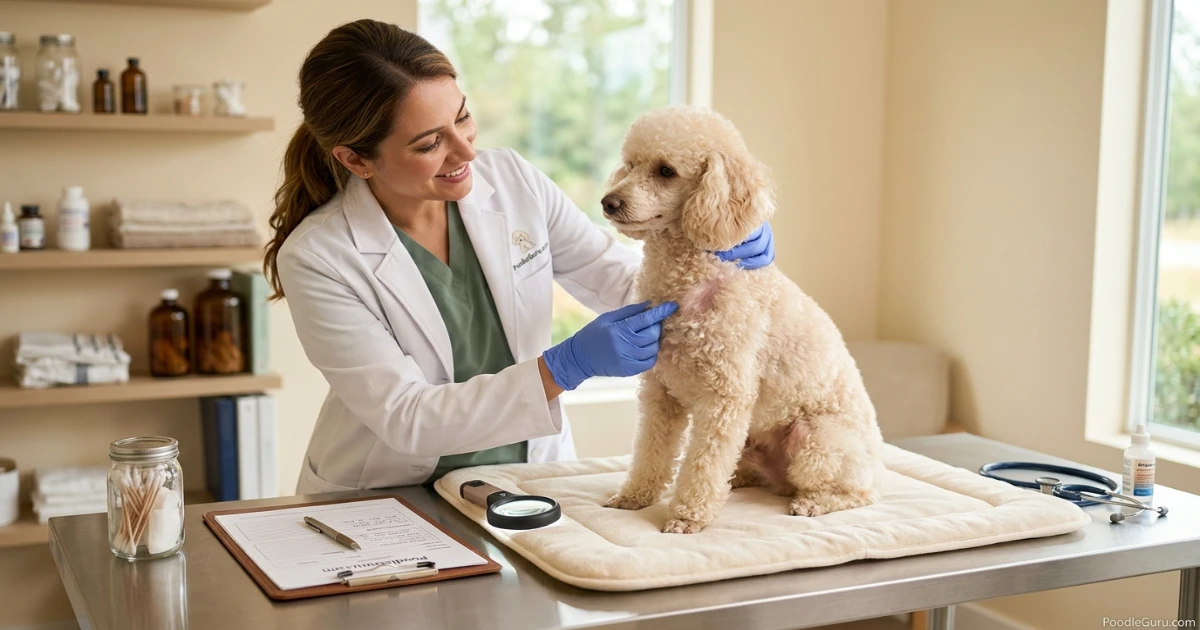
Your vet won’t guess — and neither should you. The diagnostic path typically follows a structured, stepwise process because hair loss can look identical across very different causes. Expect your veterinarian to start with the least invasive tests and work deeper if answers aren’t clear.
| Diagnostic Test | What It Detects | Typical Time to Results | When It’s Recommended |
|---|---|---|---|
| Skin Scraping | Mange mites (Demodex, Sarcoptes) | Same-day (microscopic exam) | Patchy hair loss with itching or crusting |
| Fungal Culture | Ringworm (dermatophytosis) | 7–14 days | Circular lesions, scaling, zoonotic risk |
| Cytology (Impression Smear) | Bacteria, yeast overgrowth | Same-day | Red, inflamed skin with odor or discharge |
| Blood Panel (CBC, Chemistry, T4, TSH) | Hypothyroidism, systemic illness | 1–3 days | Symmetrical thinning, weight gain, lethargy |
| ACTH Stimulation / LDDS Test | Cushing’s disease | 1–2 days (specialized) | Pot-belly, excessive thirst, skin fragility |
| Skin Biopsy (Punch Biopsy) | Sebaceous adenitis, autoimmune disease | 7–14 days (histopathology) | “Moth-eaten” coat, scaling, suspected SA |
| Elimination Diet Trial | Food allergy confirmation | 8–12 weeks | Non-seasonal itching, ear infections, paw licking |
A single test rarely gives the full picture. Many poodles with hair loss have a primary trigger (like allergies) and a secondary infection (bacterial or yeast) that both need treatment. If your vet recommends a stepwise approach rather than a single test, they’re doing it right — treating the secondary issue first often clarifies what’s happening underneath.
🩺 When to Call a Vet — Don’t Wait If You See These
• Sudden hair loss over large areas developing in less than a week
• Hair loss accompanied by lethargy, vomiting, weight changes, or increased thirst
• Skin that is hot, oozing, or has a foul smell
• Circular bald patches with red rings (possible ringworm — contagious to humans)
• Hair loss in a puppy under 6 months (could signal congenital or immune issues)
• Intense itching that disrupts sleep or normal behavior
The PoodleGuru Coat Recovery Framework: 5 Steps to Healthy Regrowth
At PoodleGuru, we developed this framework after analyzing the common recovery path that works across different causes of poodle hair loss. It’s not a replacement for veterinary diagnosis — think of it as your parallel action plan while working with your vet.
Identify the Trigger — Don’t Skip This Step
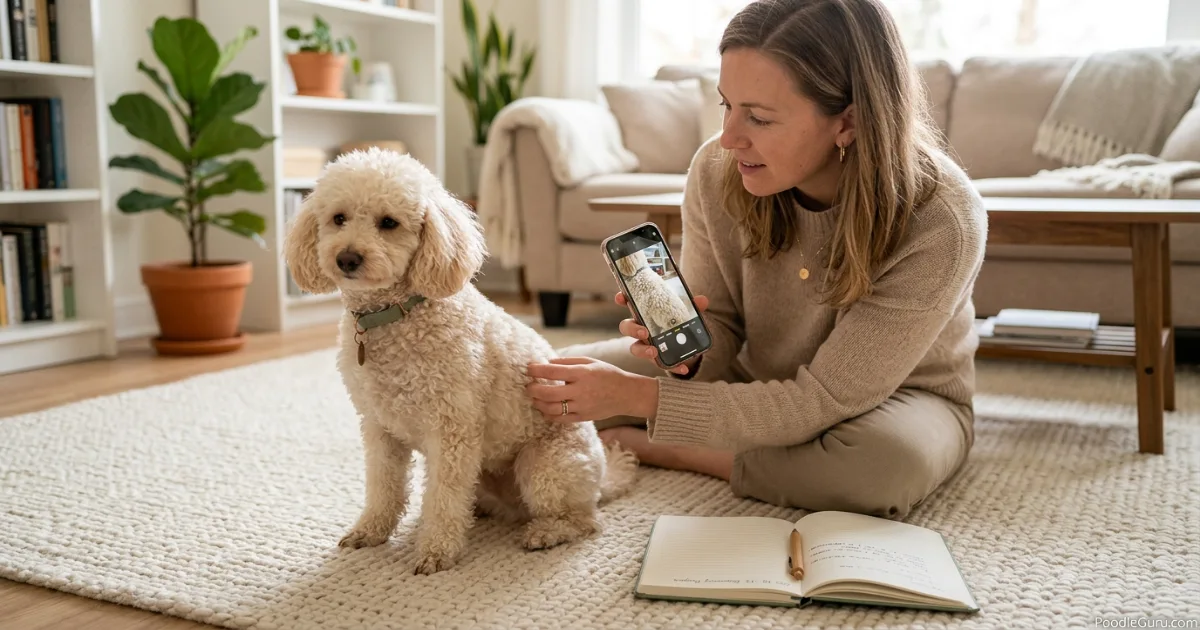
No supplement, shampoo, or diet change will fix hair loss permanently if the root cause is still active. Work with your vet to run the appropriate diagnostics. Document everything: when the hair loss started, the pattern, any other symptoms, diet history, and recent changes in environment or products. Photos every two weeks create an objective timeline.
Resolve Secondary Infections First
If your poodle has a bacterial or yeast infection on top of the primary problem, the skin won’t heal and the hair won’t regrow until the infection is controlled. Complete the full course of prescribed topical or systemic treatment — stopping early because the skin “looks better” is the #1 reason infections rebound.
Support Follicle Health from the Inside
High-quality animal protein should be the first ingredient in your poodle’s food. Talk to your vet about adding an omega-3 fatty acid supplement (fish oil with appropriate EPA/DHA levels) and confirming zinc levels are adequate. This isn’t a cure — it’s the baseline nutrition that gives follicles the raw materials to rebuild hair.
Protect the Skin Barrier Topically
Use veterinarian-recommended shampoos and conditioners formulated for compromised skin. Avoid harsh grooming products, excessive bathing, or anything that strips natural oils — especially important for poodles with sebaceous adenitis. Gentle, consistent brushing stimulates blood flow but must not irritate already-inflamed skin.
Track, Adjust, and Be Patient
Poodle hair grows on a cycle measured in weeks and months, not days. After the trigger is removed and treatment begins, visible fuzz usually appears within 4–6 weeks. Full length restoration can take 3–6 months depending on the severity. Take monthly photos. If there’s zero improvement after 8 weeks, revisit the diagnosis — something may have been missed.
Normal Shedding vs. Hair Loss: A Comparison Table for Poodle Owners
| Feature | Normal Poodle Coat Behavior | Abnormal Hair Loss (Alopecia) |
|---|---|---|
| Amount of Hair Lost | Small amounts caught in brush during grooming; minimal on floors | Visible clumps, bare patches, or obvious thinning over large areas |
| Skin Appearance | Pink, smooth, no irritation visible when coat is parted | Red, inflamed, scaly, crusty, darkened, or showing circular lesions |
| Coat Texture | Soft, springy curls; consistent texture across body | Dry, brittle, easily broken; tufty or “moth-eaten” areas; texture varies |
| Pattern | Even coat density across body; seasonal variation minimal | Symmetrical trunk thinning, circular patches, or localized bald spots |
| Itching Level | Minimal; normal occasional scratching | Persistent scratching, licking, rubbing; may disrupt sleep |
| Hair Pull Test | Hair stays firmly rooted; gentle tug removes 1–2 hairs at most | Hair pulls out easily with gentle traction; tufts come away in fingers |
| Timeline | Stable coat condition year-round; slight variation with climate | Progressive worsening or sudden onset within days to weeks |
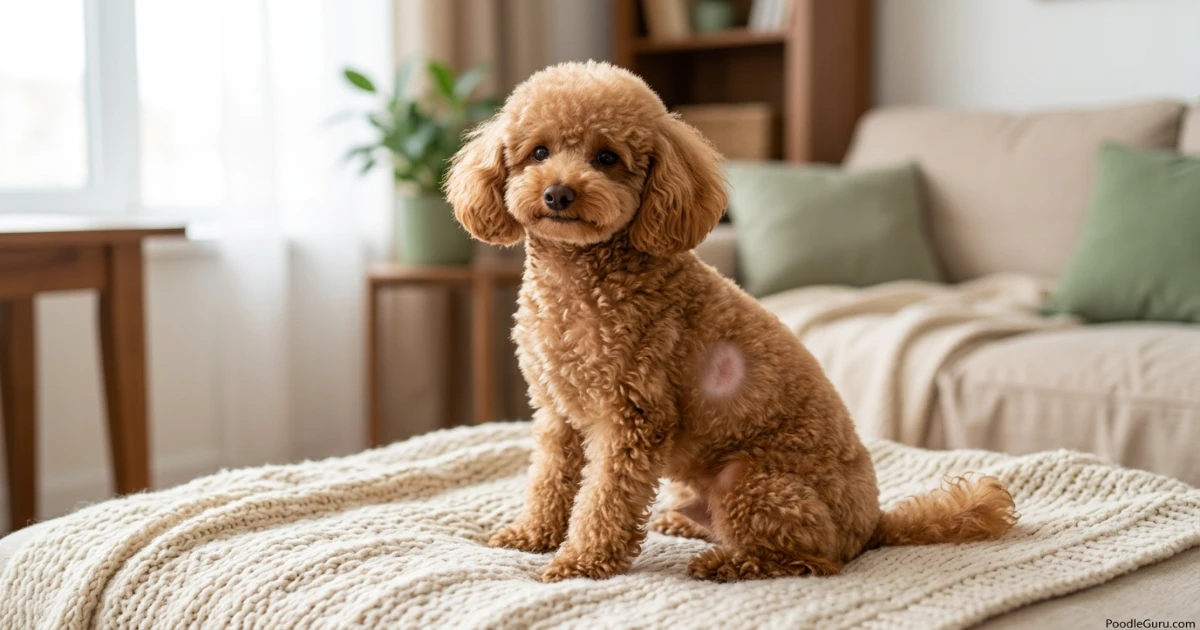
5 Owner Mistakes That Make Poodle Hair Loss Worse
Well-meaning actions can accidentally compound hair loss problems. Here are the mistakes I see most frequently in poodle owner communities — and what to do instead.
❌ Mistake 1: Over-Bathing with Harsh Shampoos
Why it hurts: Stripping natural oils from already-compromised skin accelerates dryness and follicle damage. Stick to vet-recommended products and reduce bathing frequency until the skin barrier stabilizes.
❌ Mistake 2: Switching Diets Rapidly and Repeatedly
Why it hurts: Each diet switch triggers an adaptation period. Frequent changes make it impossible to tell what’s helping or hurting. An elimination diet trial needs 8–12 weeks on a single novel or hydrolyzed protein source — no treats, no table scraps.
❌ Mistake 3: Applying Human Hair-Growth Products
Why it hurts: Minoxidil and other topical human hair-loss treatments can be toxic to dogs. Never use human products on a poodle’s skin without explicit veterinary approval. This is a safety issue, not just an effectiveness one.
❌ Mistake 4: Assuming It’s “Just Allergies” Without Testing
Why it hurts: Treating for allergies when the real problem is hypothyroidism, Cushing’s, or sebaceous adenitis wastes months. Pattern recognition helps, but diagnostic testing is what confirms the cause.
❌ Mistake 5: Shaving the Coat to “Let the Skin Breathe”
Why it hurts: Poodle skin doesn’t need to “breathe” — the coat actually protects compromised skin from UV damage and environmental irritants. A short trim is fine for topical treatment access; a full close shave can make things worse.
Treatment Options That Actually Work — Organized by Cause
Treatment isn’t one-size-fits-all. Here’s what evidence-based veterinary care typically involves for each major category of poodle hair loss. Remember: treatment works best when it targets the confirmed diagnosis, not the guess.
| Cause | Core Treatment | Supportive Care | Expected Timeline |
|---|---|---|---|
| Hypothyroidism | Daily levothyroxine (prescription hormone replacement) | Omega-3 supplementation, high-quality protein diet | 4–8 weeks for coat improvement; lifelong management |
| Cushing’s Disease | Trilostane or mitotane under veterinary supervision | Routine blood monitoring; skin support topicals | Variable; coat may improve slowly over months |
| Food Allergies | Strict elimination diet trial → confirmed novel protein diet | Omega-3s; antihistamines if prescribed | 6–12 weeks to see coat response after trigger removal |
| Environmental Allergies | Allergy testing + immunotherapy, Apoquel, or Cytopoint | Frequent gentle grooming to remove allergens; medicated baths | Ongoing management; flare-ups possible seasonally |
| Bacterial/Fungal Infection | Prescription antibiotics or antifungals (full course) | Medicated shampoos; environmental decontamination for ringworm | 2–6 weeks for infection; hair regrowth follows |
| Mange Mites | Prescription miticide (oral or topical isoxazoline class) | Skin soothers; treat all in-contact dogs | 4–8 weeks for mite clearance; hair regrows after |
| Sebaceous Adenitis | Frequent topical therapy (oil soaks, medicated shampoos) | Omega-3s, vitamin A under vet guidance; lifelong care | Ongoing management; early treatment preserves more follicles |
| Pressure Alopecia | Padded bedding, rotation of resting surfaces, weight management | Protective elbow pads or sleeves if needed | Stops progression; regrowth may be partial |
💡 Pro Tip: Build Your Poodle’s “Coat Journal”
Take a photo of your poodle’s coat from the same angles every two weeks. Note diet changes, new products, vet visits, and any symptom shifts in a simple notes app. When you walk into the vet’s office with a timeline instead of a vague “my poodle’s losing hair,” you dramatically shorten the path to an accurate diagnosis. This single habit makes you a more effective advocate for your dog.
What Poodle Owners Usually Misunderstand About Hair Loss
Three misconceptions surface repeatedly in poodle communities, and they cause real delays in getting appropriate care.
Misconception #1: “Poodles are hypoallergenic, so they can’t have skin problems.” Hypoallergenic means less dander for allergic humans. It says nothing about the poodle’s own susceptibility to allergies, infections, or hormonal conditions. Poodles are actually one of the breeds most frequently seen by veterinary dermatologists.
Misconception #2: “If the hair loss isn’t itchy, it’s probably not serious.” Some of the most significant causes — hypothyroidism, Cushing’s, and sebaceous adenitis — often present with minimal or no itching, especially early on. Silent hair loss can be the most concerning kind.
Misconception #3: “A better shampoo will fix it.” Topicals can support skin health and manage symptoms, but they rarely address the root cause of persistent hair loss. If a shampoo alone “fixes” it, the problem was likely mild and topical in origin. For everything else, the solution is deeper.
🧬 The Poodle Genetics Layer: What’s Passed Down Matters
Sebaceous adenitis has a known genetic predisposition in Standard Poodles. Hypothyroidism also shows breed-associated patterns. Responsible breeders screen breeding stock for these conditions. If you’re considering a poodle puppy, ask the breeder directly about sebaceous adenitis and autoimmune skin disease in their lines. At PoodleGuru, we recommend reviewing the AKC poodle breed standard and health statement — but going further by asking about specific skin-health screening in the parents and grandparents. A breeder who can discuss their health testing transparently is one worth trusting.
Your Action Plan: What to Do This Week
If you’re reading this because your poodle is actively losing hair, here’s your prioritized next-step checklist:
📸 Step 1: Document Everything
Take clear photos of all affected areas today. Note when you first noticed the hair loss, any diet or environmental changes in the last 30 days, and any other symptoms you’ve observed.
📞 Step 2: Schedule a Vet Appointment
Call your veterinarian and describe the hair loss pattern. Mention if there’s itching, odor, scaling, or behavioral changes. This helps them book the right amount of time and prepare appropriate diagnostics.
🛑 Step 3: Pause New Products and Treatments
Stop any new shampoos, supplements, or diet changes introduced within the last month. Return to what was previously tolerated. Adding variables while trying to diagnose confuses the picture.
FAQs: Poodle Losing Hair
Why is my poodle losing hair in patches?
Patchy hair loss most often points to skin infections (bacterial or fungal), mange mites, or localized allergic reactions. Circular patches with red rings suggest ringworm. Scattered small patches may indicate bacterial folliculitis. A vet can identify the cause with a skin scraping or cytology exam — don’t guess, because treatments differ completely.
Can stress cause hair loss in poodles?
Yes, but it’s less common than medical causes. Severe or prolonged stress can trigger telogen effluvium — a condition where hair follicles prematurely enter the resting phase and shed diffusely. This typically resolves once the stressor is removed. However, always rule out physical health causes before attributing hair loss solely to stress.
How can I tell if my poodle’s hair loss is from allergies?
Allergy-related hair loss usually comes with redness, itching, and a pattern focused on paws, belly, ears, and muzzle. You’ll often see secondary signs like frequent ear infections or paw licking. The skin under the thinning coat looks irritated. A true elimination diet trial or allergy testing with your vet can confirm the trigger.
Will my poodle’s hair grow back after treatment?
In most cases, yes — provided the underlying cause is correctly treated before permanent follicle damage occurs. Regrowth typically begins within 4–8 weeks, with full coat density returning over several months. Conditions like long-standing pressure alopecia or advanced sebaceous adenitis may result in partial permanent thinning, but treatment still prevents further loss.
Is poodle hair loss related to grooming frequency?
Under-grooming leads to matting, which can trap moisture and bacteria against the skin and cause localized hair loss. Over-grooming with harsh tools or products can irritate follicles. The sweet spot is regular, gentle brushing with appropriate tools and using coat-safe products. Grooming itself doesn’t cause systemic hair loss — but poor grooming practices can contribute to skin problems.
What should I feed my poodle to improve coat health?
Feed a complete, AAFCO-compliant diet with named animal protein as the first ingredient. Look for formulas that include omega-3 fatty acids (fish oil, flaxseed) and adequate zinc levels. If hair loss is already present, food alone won’t fix it — but a high-quality diet provides the nutritional foundation follicles need to rebuild healthy hair once the underlying cause is addressed.
Can poodle puppies experience hair loss?
Yes, though it’s less common than in adults. Puppy hair loss can signal congenital issues, severe parasite loads (especially Demodex mites), ringworm, or nutritional deficiencies from an unbalanced diet. Any hair loss in a poodle under 6 months warrants prompt veterinary evaluation — young puppies have less reserve and can deteriorate quickly.
How do I know if my poodle has sebaceous adenitis?
Early SA often looks like dry, flaky skin with a dull, brittle coat and subtle thinning — easily mistaken for dandruff or dry skin. As it progresses, the coat takes on a “moth-eaten” appearance with silvery-white scales clinging to the hair shafts. A skin biopsy is the only definitive diagnostic method. Standard Poodles are at highest risk, and early biopsy leads to better long-term outcomes.
Key Takeaways: Poodle Hair Loss
- Poodles have a curly, continuously growing, hair-like single coat — any visible thinning or bald patches should be treated as a health signal, not normal shedding.
- The seven most common causes are hormonal imbalances, allergies, skin infections, parasites, nutritional gaps, pressure alopecia, and sebaceous adenitis.
- The hair loss pattern often reveals more than the fact of hair loss — symmetrical, patchy, or pressure-point patterns each point toward different causes.
- Diagnosis requires veterinary testing: skin scrapings, blood panels, cultures, and sometimes biopsy. Guessing delays effective treatment.
- Most poodle hair loss is treatable, and hair regrows once the root cause is properly addressed. Early intervention preserves more follicles and leads to better cosmetic outcomes.
- Documenting with photos, avoiding human hair-loss products, and completing full treatment courses dramatically improve recovery success rates.