Poodle Puppy Crying at Night? 7 Gentle Fixes That Work
A poodle puppy crying at night is usually asking for safety, comfort, or a quick potty break. This guide explains what each cry means, how to set up a calming bedtime routine, and how to help your puppy sleep without creating long-term dependency.
Quick Answer
A poodle puppy crying at night is usually communicating separation distress, a need for comfort, or a bathroom break. Stay calm, place the crate or bed beside you for the first few nights, and never ignore crying if it may signal a potty emergency. Warmth, a worn shirt with your scent, a predictable routine, and a boring overnight potty plan can ease the transition.
Separation Instinct
Your puppy has just left littermates and a mother’s heartbeat. Crying is a normal response to sudden social separation.
Bladder Reality
A young Toy Poodle may only hold their bladder for a few hours. Night crying can mean a genuine potty need.
Crate Positioning
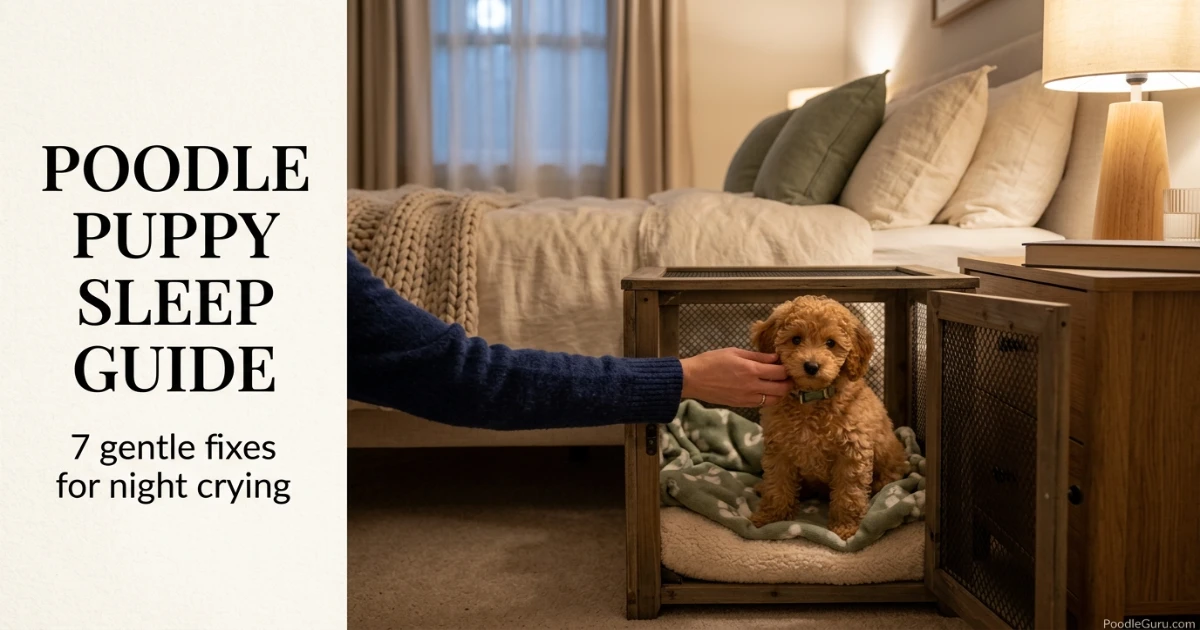
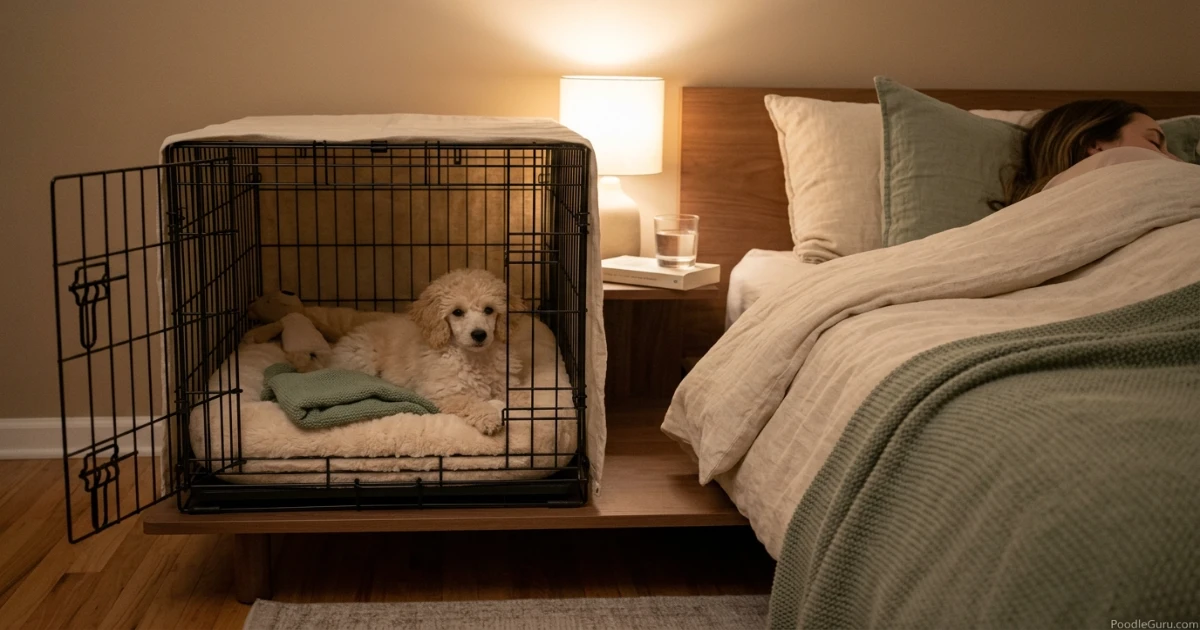
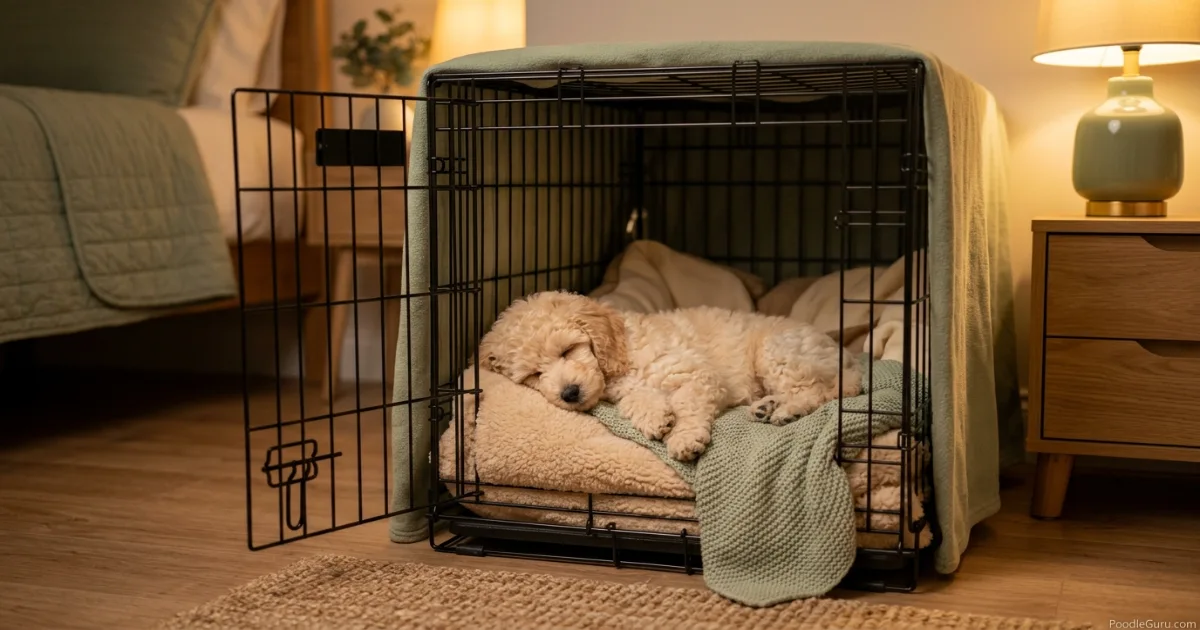
A crate beside your bed helps your puppy see, smell, and hear you without teaching unsafe bed habits too early.
Temporary Phase
Most poodle puppies improve within the first week and sleep more reliably as bladder control and confidence grow.
Why a Poodle Puppy Crying at Night Happens
Understanding the “why” turns frustration into strategy. Poodles are emotionally intelligent, people-focused dogs. A puppy who has spent every second with littermates and a mother suddenly finds themselves alone in a dark, unfamiliar space.
Their cry is the puppy version of calling for reassurance. A poodle puppy crying at night is not being dramatic or disobedient. They are learning that the new home is safe.
Still, poodles are quick pattern learners. If every whimper brings a long cuddle session, they may learn that crying creates attention. The goal is a middle path: respond to real needs, offer calm reassurance, and avoid turning 2 a.m. into playtime.
The 3 Types of Poodle Puppy Crying at Night
Not all night crying means the same thing. Listening to the sound, timing, and body language helps you respond without overreacting.
The Lonely Whimper
This is soft, intermittent, and often paired with pawing at the crate door. Offer quiet presence, a calm voice, or your fingers near the crate, but avoid lifting your puppy out for a long cuddle.
The Bathroom Signal
This cry is sudden, sharper, and restless. If your puppy has been quiet for a while and then starts urgently whining, take them out for a short, boring leash potty break.
The Over-Tired Meltdown
Over-tired puppies often cry more, not less. A frantic, unsettled cry after heavy evening play usually means your puppy needed a calmer wind-down before bed.
Expert Insight
Poodle puppies often mirror your emotional state. If you are anxious, hovering, or constantly checking, they can become more unsettled. Be the calm they can borrow until they find their own.
Crate Sleeping vs. Co-Sleeping for a Poodle Puppy Crying at Night
Every owner debates this, and poodles make the decision harder because they love closeness. Here is a clear comparison.
| Factor | Bedside Crate Training | Co-Sleeping in Bed |
|---|---|---|
| Immediate comfort | Moderate to high when crate is beside the bed | High because physical closeness soothes quickly |
| House training speed | Usually faster because dogs avoid soiling their sleeping space | Often slower because bedding accidents can happen |
| Long-term independence | Builds confidence with gradual distance | Can make later crate training harder if changed abruptly |
| Safety for Toy Poodles | Very safe with correct crate size and bedding | Risky because tiny puppies can fall or be rolled on |
| Owner sleep quality | Better after the first adjustment period | Often disrupted by movement and early waking |
Many poodle owners do best with a hybrid approach: a crate or playpen beside the bed for the first few weeks, then gradually moving it to the permanent sleep spot. This gives closeness without teaching that your pillow is the puppy’s forever bed.
What New Owners Usually Get Wrong About Night Crying
Some kind owners accidentally make night crying last longer. The problem is not love. The problem is inconsistent signals.
They Over-Tire the Puppy
Hard play right before bed can create hyper-arousal. Calm wind-down time works better than exhausting the puppy.
They Reward the Drama
Cuddling on the sofa at 2 a.m. teaches that crying leads to a party. Keep responses calm and boring.
They Ignore Potty Cues
Not every cry should be waited out. Sudden urgent crying after sleep often means your puppy needs to go outside.
7-Step Routine to Stop Poodle Puppy Crying at Night
Consistency is the biggest variable. Poodles thrive on predictable rhythms, so use the same routine every night.
Set the Final Meal Time
Feed dinner at least 2.5 hours before bed. This gives the digestive system time to settle before sleep.
Manage Water Wisely
For many puppies, reducing free water about 90 minutes before bed helps limit urgent night trips. Tiny Toy Poodles, hot weather, illness, or vet guidance may require a more flexible plan.
Use a Boring Potty Break
Take your puppy outside 10 to 15 minutes before bed. Use the same cue, praise softly, and go straight back inside.
Wind Down the Room
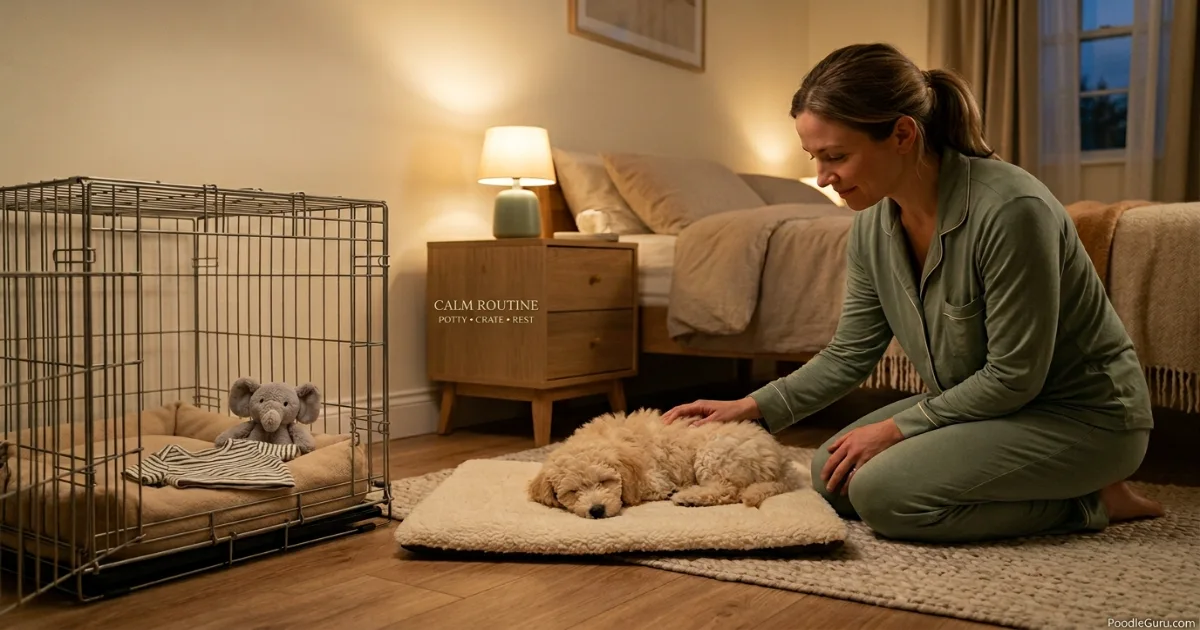
Dim lights, reduce noise, and avoid tug or chase games. The goal is a drowsy poodle, not a panting one.
Make the Crate Feel Safe
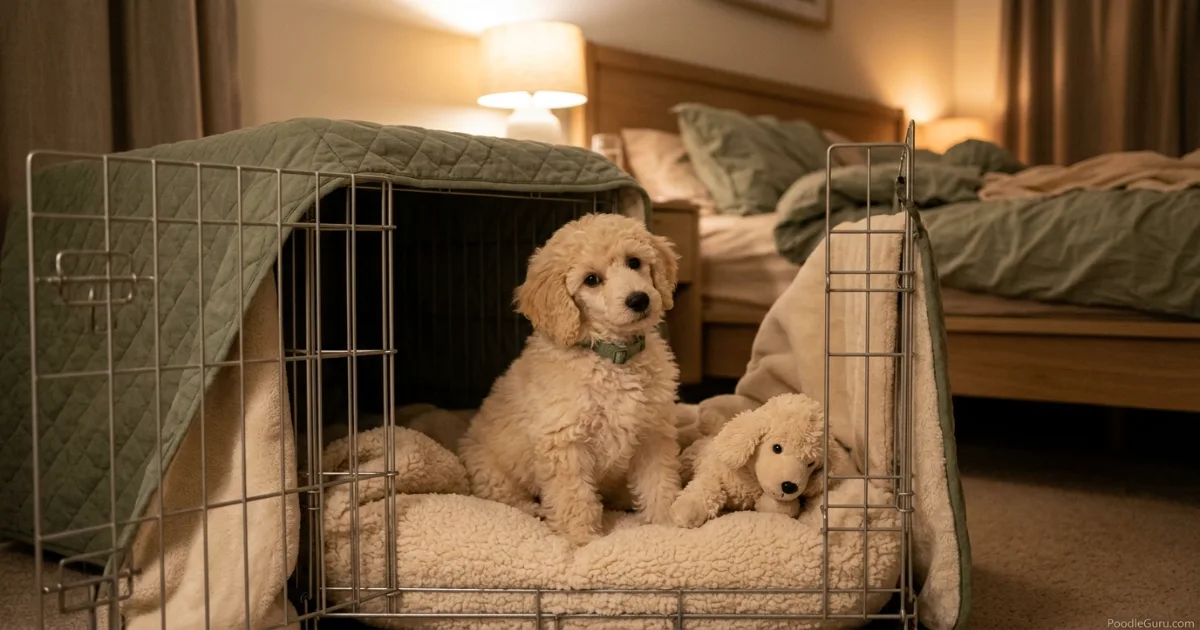
Add a safe snuggle toy, a soft blanket, and a worn shirt nearby. Keep bedding simple and safe for a puppy who may chew.
Stay Close at First
Place the crate near your bed. If crying starts, offer quiet presence before opening the door.
Keep Night Trips Dull
If your puppy needs potty, carry or leash them outside, wait quietly, then return to bed. No play, no bright lights, and no big celebration.
Soothing Tools That Actually Work
The puppy sleep market is full of gadgets, but not all are useful. These are the tools most likely to help without creating fear.
| Tool | Effectiveness | Notes for Poodles |
|---|---|---|
| Heartbeat snuggle toy | High | Mimics littermate comfort and can be especially helpful for Toy and Miniature Poodles |
| White noise machine | Moderate | Masks startling noises, although some poodles ignore it |
| Dog appeasing pheromone diffuser | Moderate | May help some puppies relax, but results vary |
| Warm wrapped bottle | High with supervision | Replicates body warmth when safely wrapped and placed where chewing is not a risk |
| Anti-bark collar | Unsafe | Never use on a puppy. It can increase fear and damage trust. |
PoodleGuru Soothing Tip
If possible, bring home a cloth that smells like your puppy’s mother or littermates. If not, place a cloth with your own scent near the crate. Familiar smell can reduce stress during the first 48 hours.
What Changes with Age: From 8 Weeks to 6 Months
Your response should change as your puppy matures. At 8 weeks, night crying is usually separation and bladder-related. By 12 weeks, many poodles need fewer overnight breaks.
By 16 weeks, if the routine has stayed consistent, night crying should be rare except during teething, growth spurts, or schedule changes. A 6-month-old poodle who still cries for hours may need a reset plan, better daytime enrichment, or help from a trainer.
When Poodle Puppy Crying at Night May Signal More Than Loneliness
Most night crying is normal adjustment, but health issues can mimic behavioral crying. Gas pain, stomach upset, a full bowel, or urinary discomfort can make a puppy cry even when the crate setup is good.
Call your veterinarian if crying comes with vomiting, diarrhea, lethargy, refusal to eat, repeated squatting with little urine, bloating, or signs of pain. Always rule out physical discomfort before assuming the issue is purely behavioral.
Frequently Asked Questions About Poodle Puppy Crying at Night
Why does my poodle puppy cry at night?
Your puppy is missing the warmth and heartbeat of their litter, adjusting to a new environment, and may need a potty break. Poodles form intense bonds quickly, so separation from you can feel frightening at first.
How long will my poodle puppy cry at night?
Many puppies cry most intensely for the first few nights, then gradually settle. By 10 to 14 days, crying often reduces to brief whimpers or potty signals if you stay consistent.
Should I ignore my poodle puppy crying at night?
Do not ignore every cry. Give your puppy a few moments to self-settle, then respond calmly if needed. Use quiet presence or a boring potty trip, not play or a long cuddle session.
Can a poodle puppy sleep through the night without crying?
Yes. By around 12 to 16 weeks, many poodle puppies can sleep longer stretches if bladder capacity allows and the bedtime routine is predictable.
What is the best way to soothe a crying poodle puppy?
Use a bedside crate, a calm routine, a heartbeat toy, and a cloth with familiar scent. Keep your voice low and your responses consistent.
Is it okay to let my poodle puppy sleep in my bed?
It is a personal choice, but it can be risky for tiny Toy Poodles and may make later crate training harder. Many owners wait until house training is reliable.
Does my poodle puppy cry because of separation anxiety?
Not usually. Early night crying is normal developmental distress. True separation anxiety is more likely when panic, destruction, and distress also happen during daytime absences.
Key Takeaways
- A poodle puppy crying at night is usually adjusting to separation, needing comfort, or asking for a potty break.
- A bedside crate offers closeness without the safety risks of bed-sharing with a tiny puppy.
- Night potty trips should be calm, short, and boring so crying does not become a play cue.
- Over-tired puppies often cry more, so wind-down time matters more than late-night excitement.
- Heartbeat toys, familiar scent, white noise, and warmth can help when used safely.
- Veterinary advice is needed if crying comes with vomiting, diarrhea, lethargy, pain, or repeated urinary signs.
Hearing your puppy cry is hard, but it will not last forever. With patient structure, calm reassurance, and a predictable routine, your poodle can learn that nighttime is safe.