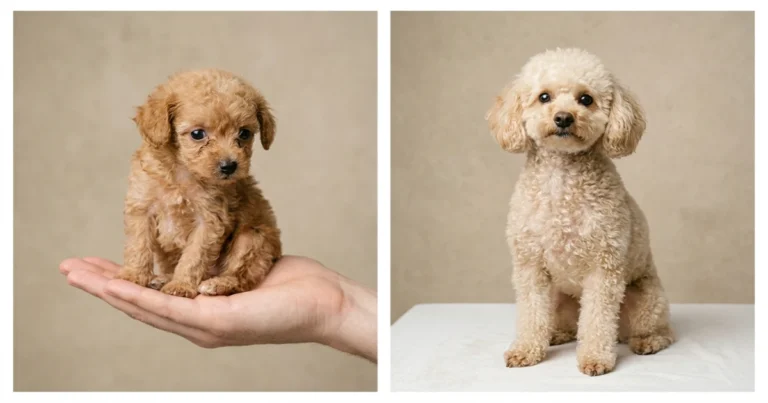
Irish Wolfadoodle GuideWolfadoodle Size, Temperament, Care & Health
Wolfadoodle — usually short for Irish Wolfadoodle — is the common name for an Irish Wolfhound Poodle mix. It’s a rare, large, affectionate Doodle-type dog that may combine the Irish Wolfhound’s gentle giant personality with the Poodle’s intelligence, trainability, and curly or wavy coat.
This guide fixes the confusing parts many pages miss: real size expectations, standard vs mini claims, coat shedding truth, grooming needs, family safety, lifespan, health risks, price, and what to ask breeders before bringing one home.
What Is an Irish Wolfadoodle?
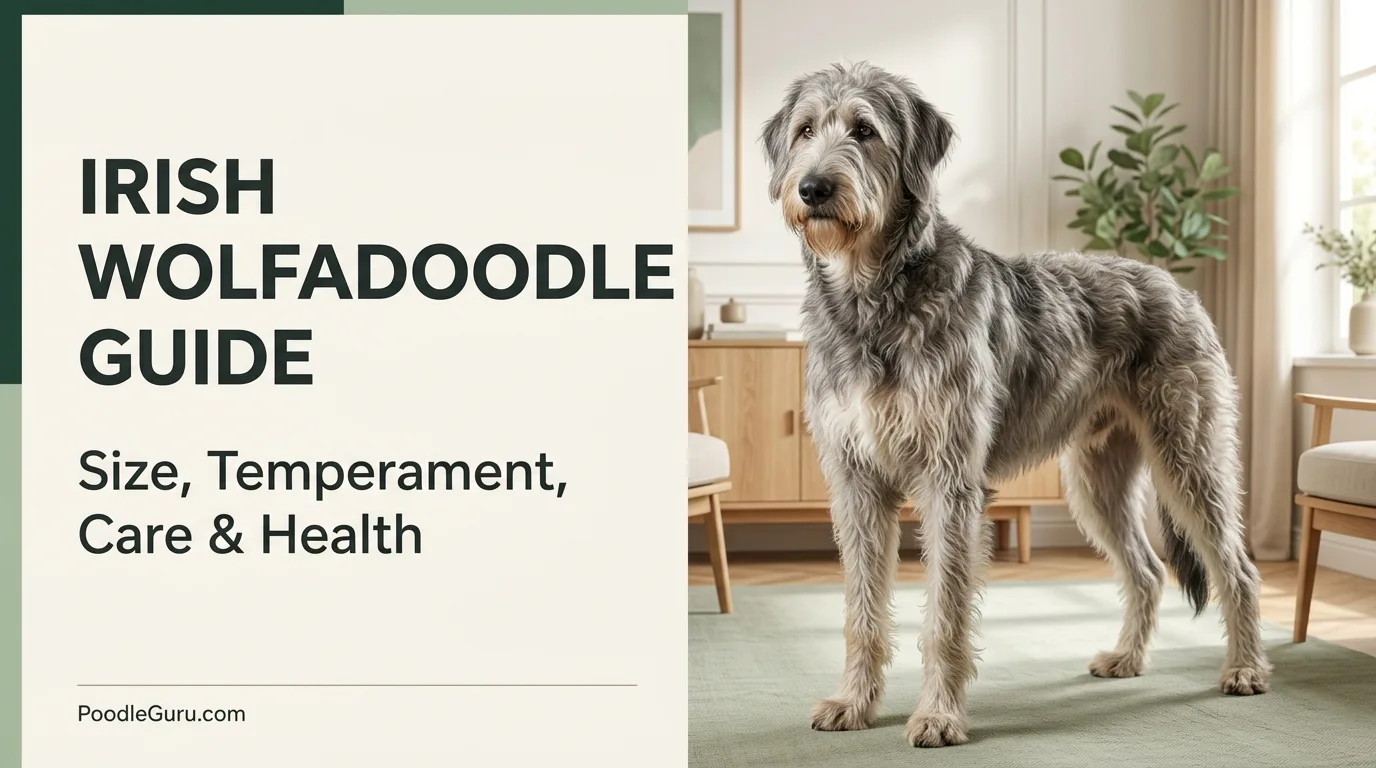
An Irish Wolfadoodle, also called simply a Wolfadoodle or an Irish Wolfhound Poodle mix, is a hybrid dog produced by crossing an Irish Wolfhound with a Poodle. Because this is not a standardized pure breed, puppies can vary a lot in height, weight, coat, temperament, and health needs.
The Irish Wolfhound side usually adds height, a calm nature, long legs, and a dignified look. The Poodle side may add trainability, athletic movement, curlier coat texture, and lower shedding. That combination can be wonderful, but buyers should be careful: a puppy is not guaranteed to be hypoallergenic, small, or perfectly predictable just because “Doodle” is in the name.
Irish Wolfadoodle parent breeds
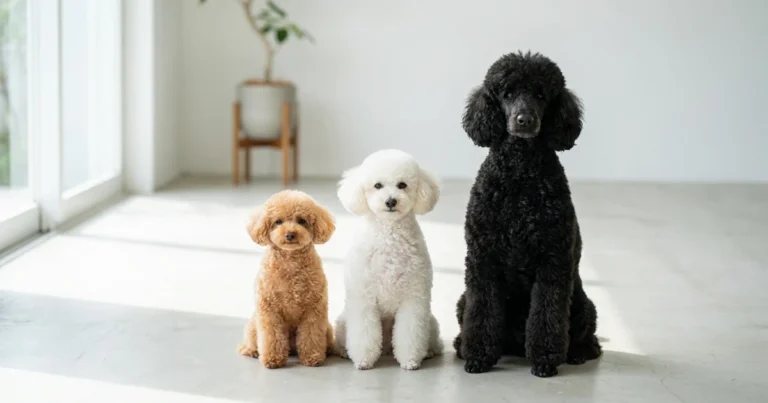
The Irish Wolfhound is famous for being a calm, dignified giant. The Poodle is known for intelligence, athletic ability, and a curly low-allergen coat. A responsible Irish Wolfadoodle breeder should understand both parent breeds, not just market puppies as rare or hypoallergenic.
Before choosing this mix, also read our Poodle breed guide, Poodle shedding guide, and Poodle Size Chart so you understand what the Poodle side can and cannot promise.
Irish Wolfadoodle Quick Facts
| Trait | Typical Expectation | Owner Notes |
|---|---|---|
| Breed type | Irish Wolfhound × Poodle hybrid | Not an AKC-recognized pure breed; traits vary by parents and generation. |
| Common names | Wolfadoodle, Irish Wolfadoodle, Irish Wolfhound Poodle mix | “Wolfadoodle” alone is searched far more often than the full name — use both naturally. |
| Size | Usually large to giant; many standard adults may fall around 70–120 lb | Exact weight depends on parent size, sex, nutrition, and genetics. |
| Coat | Curly, wavy, shaggy, or sometimes straighter | Curly coats need more brushing; straighter coats may shed more. |
| Temperament | Gentle, loyal, intelligent, affectionate, sometimes sensitive | Early socialization matters because large dogs must learn calm manners. |
| Exercise | Moderate daily exercise plus mental enrichment | Avoid overdoing high-impact exercise in fast-growing puppies. |
| Price | Often $1,800 – $4,500+ from a health-tested breeder | Rare-mix pricing varies widely; see the price section below. |
| Lifespan | Often estimated around 8–12 years | Giant-breed ancestry can shorten lifespan compared with smaller Poodle mixes. |
| Best home | Families with space, time, grooming budget, and calm handling | Not ideal for owners who want a tiny, low-cost, low-maintenance dog. |
Irish Wolfadoodle Temperament: Gentle Giant With a Smart Side
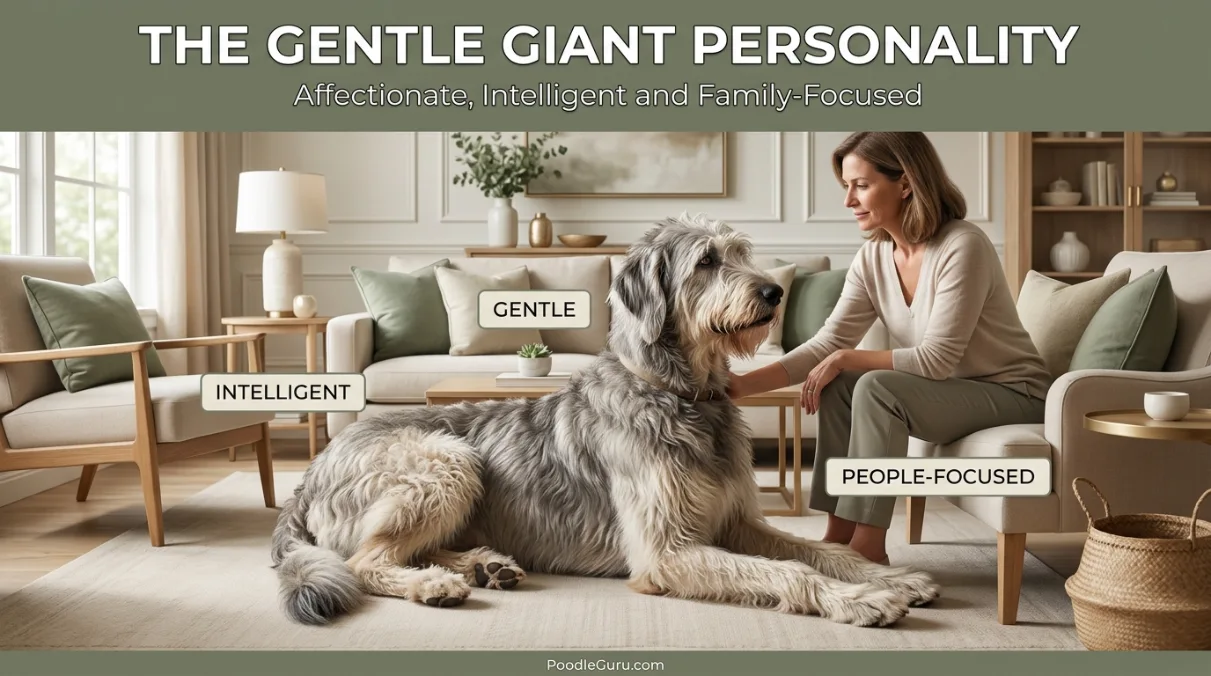
Irish Wolfadoodle temperament is often described as gentle, affectionate, and people-focused.
The best Irish Wolfadoodles are calm, affectionate, and deeply attached to their people. They may enjoy lounging near the family, following owners from room to room, and joining relaxed outdoor activities. Because the Poodle side can add alertness and mental energy, some Wolfadoodles are also playful, talkative, or quick to become bored without training games.
This is not usually a sharp guard dog mix. It is better described as watchful, loyal, and family-oriented. A well-raised Irish Wolfadoodle should meet visitors politely, but some may be reserved with strangers if they inherit more Wolfhound sensitivity.
Are Irish Wolfadoodles good with kids?
Yes, many Irish Wolfadoodles can be excellent with children. The important word is many, not all. Temperament depends on parent dogs, early handling, training, and the child’s behavior around dogs.
Because this mix can become very large, teach children not to climb on the dog, pull ears, grab the coat, disturb meals, or crowd the dog while it is sleeping. Even a gentle giant can accidentally knock over a small child during excited play.
Can Irish Wolfadoodles live with cats or small pets?
Some can, especially when introduced young and supervised carefully. However, Irish Wolfhounds have sighthound history, so chase instinct is possible. Use slow introductions, baby gates, leashes, and calm reward-based training before trusting the dog around cats, rabbits, or small pets.
Irish Wolfadoodle Size: Standard vs Mini Wolfadoodle
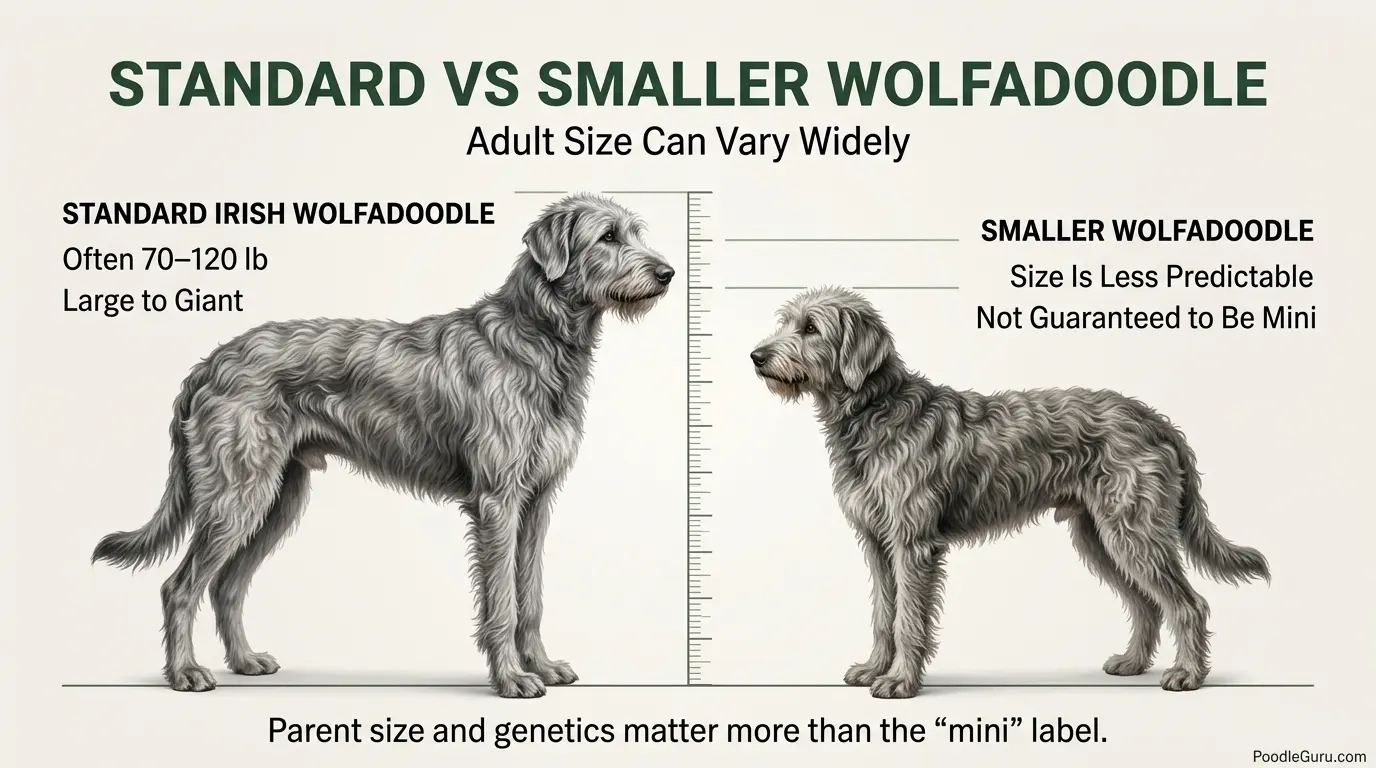
Use size claims carefully because Irish Wolfadoodle puppies can vary widely.
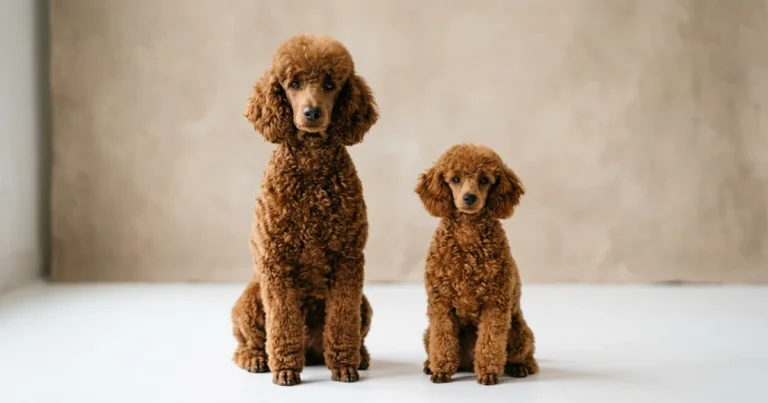
Wolfadoodle size is one of the biggest reasons this page needs careful wording. A standard Irish Wolfadoodle can be a very large dog, especially if the Poodle parent is a Standard Poodle. “Mini Irish Wolfadoodle” is possible only when a smaller Poodle is used, but the outcome is less predictable because the Irish Wolfhound parent is extremely large.
| Type | Expected Adult Weight | Expected Height | Best Fit |
|---|---|---|---|
| Standard Irish Wolfadoodle | Often around 70–120 lb | Commonly tall, sometimes near giant-breed height | Homes with space, secure yard access, and large-dog experience |
| Medium or smaller Wolfadoodle | May be smaller if a Miniature Poodle is used | Less predictable than standard | Owners who still accept a possibly large adult dog |
| “Mini Irish Wolfadoodle” claims | Ask breeder for real parent weights and past litter weights | No guaranteed tiny size | Only safe if the breeder is honest about uncertainty |
Male vs female Irish Wolfadoodle size
Males may be heavier and taller than females, but the difference is not always dramatic in mixed breeds. Parent size is a stronger clue. If both parents are large, prepare for a large adult regardless of sex.
Puppy growth notes
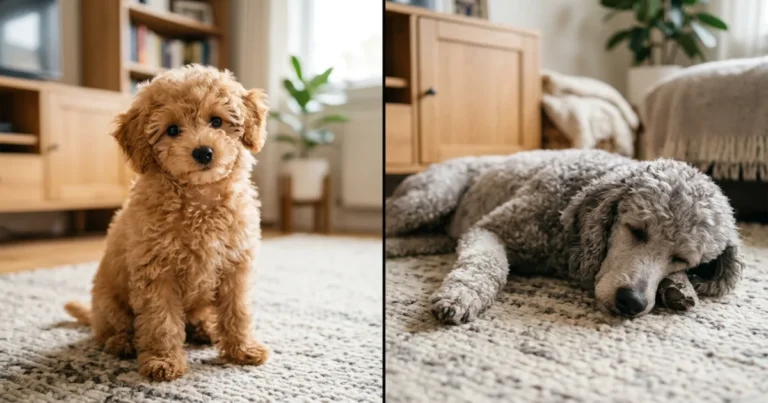
Irish Wolfadoodle puppies can grow fast. Slow, steady growth is healthier than pushing rapid weight gain. Ask your veterinarian about large-breed puppy food, safe exercise limits, and joint-friendly growth management. Our Poodle Puppy Growth Chart covers the Poodle-side growth pattern in detail.
Coat, Shedding, and Grooming Needs
The Irish Wolfadoodle coat can be curly, wavy, shaggy, or more Wolfhound-like. This matters because coat type affects shedding, allergy comfort, brushing time, and grooming cost.
| Coat Type | Likely Shedding | Care Level | Best Routine |
|---|---|---|---|
| Curly Poodle-type coat | Lower shedding but more matting risk | High | Brush 3–5 times weekly and groom every 6–8 weeks. |
| Wavy mixed coat | Low to moderate shedding | Moderate to high | Brush 2–4 times weekly; check ears, armpits, legs, and tail. |
| Straighter Wolfhound-type coat | More visible shedding | Moderate | Brush weekly or more during shedding periods; tidy coat as needed. |
No dog is completely hypoallergenic. An Irish Wolfadoodle with a curly Poodle-influenced coat may release less loose hair, but dander, saliva, and coat maintenance still matter. Allergy-prone families should spend time with the parent dogs or adult relatives before committing.
For more background, read our guide on whether Poodles shed.
Exercise, Training, and Daily Care
Irish Wolfadoodles usually need a balanced routine: relaxed walks, safe free movement, basic obedience, scent games, and calm indoor time. They are not the best match for owners who want either a couch-only dog or a non-stop running partner.
Training tips for a large Doodle mix
Start leash manners early. A cute puppy pulling on a leash becomes a serious problem when the dog reaches giant size. Reward calm walking, polite greetings, “leave it,” recall, and settling on a mat.
Use positive reinforcement rather than harsh corrections. The Wolfhound side can be sensitive, while the Poodle side can be mentally sharp. Short, upbeat sessions usually work better than long repetitive drills.
Food and feeding routine
Feed a high-quality diet appropriate for age and expected adult size. Many large and giant-breed dogs do better with measured meals instead of free feeding. Splitting food into two or more meals can also support better digestion and weight control.
Irish Wolfadoodle as a Family Dog
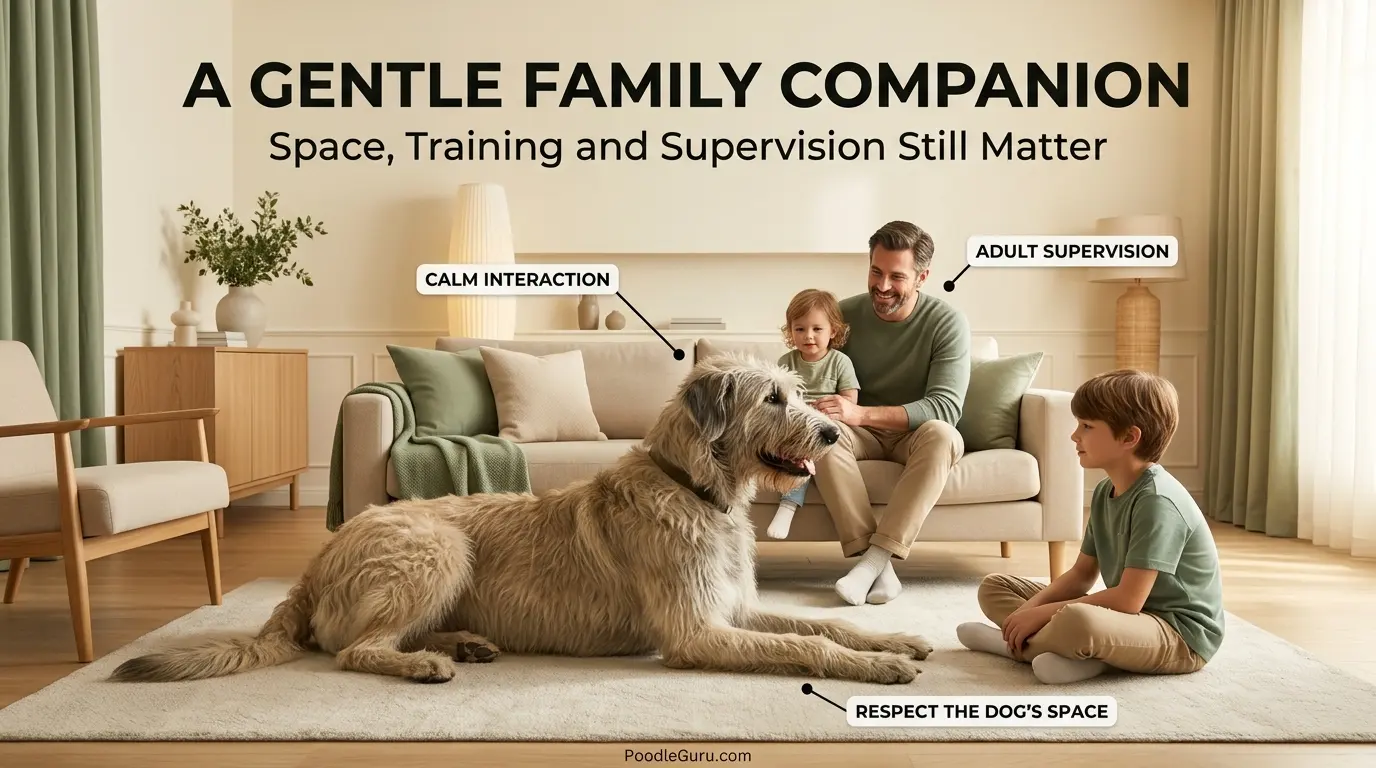
Irish Wolfadoodles can be loving family companions when trained and supervised properly.
An Irish Wolfadoodle can fit beautifully into a family home where people want a gentle, expressive, people-loving dog. They often enjoy being included in daily routines rather than left outside or isolated for long hours.
The ideal family is patient, consistent, and realistic about size. This dog may need wide walking paths, a large crate or sleeping area, bigger grooming tools, more food, and higher veterinary costs than smaller Poodle mixes.
Best home for an Irish Wolfadoodle
- Families with older children or supervised younger children
- Owners who enjoy daily walks and relaxed outdoor time
- Homes with space for a large dog to stretch and rest
- People who can afford regular grooming and large-dog vet care
- Owners who want a calm companion, not a tiny lap dog
Who should avoid this mix?
A Wolfadoodle may not be the best choice for someone who wants a guaranteed allergy-safe dog, a low-cost pet, a tiny apartment dog, or a dog that needs almost no grooming. It is also not ideal for homes where no one has time for training a very large puppy.
Irish Wolfadoodle Price and Cost
Because Irish Wolfadoodles are a rare mix, pricing varies more than it does for a standardized breed — and rarity alone shouldn’t be read as a sign of quality.
| Price Factor | Typical Range / Note |
|---|---|
| Puppy purchase price | Often $1,800 – $4,500+ from a health-tested breeder |
| What raises price | Health-tested parents, F1 vs F1b generation, coat rarity, breeder reputation |
| First-year costs | Large-breed puppy food, joint-friendly supplies, and vet visits add significantly to the puppy price — budget beyond the sticker number |
| Ongoing monthly cost | Grooming, food volume, and vet care run closer to a large Standard Poodle’s costs than a Toy or Mini’s |
| Red flag pricing | Very low prices with no health testing or parent records are a warning sign, not a bargain |
For a size-by-size baseline on what the Poodle side of this mix typically costs, see our Standard Poodle Price guide — most Wolfadoodles track closer to Standard-size costs than smaller Poodle varieties.
Irish Wolfadoodle Health Risks and Lifespan
Irish Wolfadoodles can inherit health risks from either side. Hybrid dogs are not automatically healthier. Responsible breeding, health testing, weight control, nutrition, and early veterinary care matter far more than the designer label.
| Health Concern | Why It Matters | What to Ask or Watch |
|---|---|---|
| Hip and elbow dysplasia | Large dogs can be vulnerable to painful joint problems. | Ask for OFA or PennHIP-style joint screening where available. |
| Heart disease | Irish Wolfhound lines can have serious heart concerns. | Ask about cardiac screening and family history. |
| Bloat / GDV | Deep-chested large dogs can be at risk of a life-threatening emergency. | Discuss feeding routine, symptoms, and preventive options with a vet. |
| Eye issues | Both parent sides can have inherited eye concerns. | Ask for eye exam history from breeding dogs. |
| Skin and coat problems | Dense coats can hide mats, irritation, hot spots, and ear issues. | Check skin weekly and maintain grooming appointments. |
| Weight-related strain | Extra weight stresses joints and heart. | Keep body condition lean and use measured meals. |
How long do Irish Wolfadoodles live?
A realistic estimate is often around 8 to 12 years, but individual dogs can vary. Giant-breed ancestry may shorten lifespan compared with smaller Poodle mixes. Good breeding, lean body weight, veterinary checkups, dental care, and careful exercise can all support better quality of life.
Health testing checklist for breeders
Finding an Irish Wolfadoodle Responsibly
Because Irish Wolfadoodles are rare, it is easy for weak breeders to use rarity as a sales point. Do not choose a puppy based only on cute photos, “hypoallergenic” claims, or a low deposit. Choose based on health testing, parent temperament, transparent records, and realistic expectations.
Questions to ask the breeder
- What size are both parents, and can I see current photos or meet them?
- What generation is this litter: F1, F1b, or multigenerational?
- What health tests were completed on both parent dogs?
- Have any relatives had heart disease, bloat, hip problems, or early death?
- What adult size did previous puppies reach?
- How are puppies socialized before they go home?
- What happens if the puppy develops a serious inherited condition?
- Will you take the dog back if the owner can no longer keep it?
Irish Wolfadoodle Talents: Therapy, Training, and Dog Sports
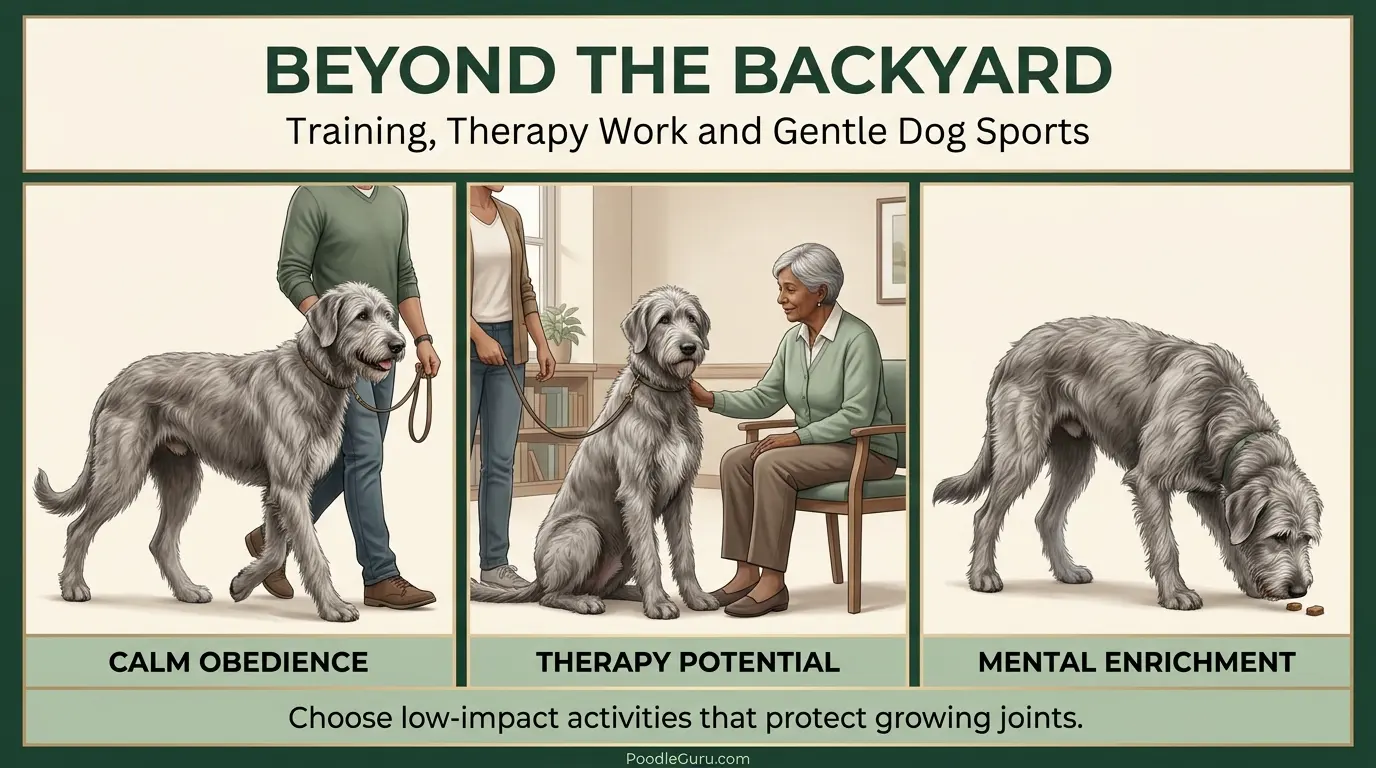
With calm training, some Irish Wolfadoodles can enjoy therapy-style work, obedience, rally, or gentle dog sports.
Some Irish Wolfadoodles have the calm presence for therapy-style visits, school reading programs, or emotional support roles. Others may enjoy obedience, rally, scent work, or low-impact activities that use the Poodle brain without overloading giant-dog joints.
For sports, avoid repeated jumping while the dog is growing. Focus on body awareness, recall, loose-leash walking, nose work, and calm confidence around people and dogs.
Irish Wolfadoodle FAQs
What is an Irish Wolfadoodle?
An Irish Wolfadoodle is a hybrid dog created from an Irish Wolfhound and a Poodle. It is also called a Wolfadoodle or Irish Wolfhound Poodle mix.
How big does an Irish Wolfadoodle get?
Most standard Irish Wolfadoodles are large to giant dogs. Many may fall around 70 to 120 pounds, but exact size depends on parent dogs, sex, generation, nutrition, and growth rate.
Is there a mini Irish Wolfadoodle?
Some breeders may use a Miniature Poodle to produce a smaller Wolfadoodle, but tiny size is not guaranteed because the Irish Wolfhound parent is very large. Ask for real parent weights and previous litter adult sizes.
Are Irish Wolfadoodles hypoallergenic?
No dog is fully hypoallergenic. Curly or wavy Poodle-type coats may shed less, but allergies can still be triggered by dander and saliva. Spend time around similar dogs before choosing one.
Do Irish Wolfadoodles shed?
Some shed lightly, especially if they inherit a curlier Poodle coat. Others shed more if their coat is closer to the Irish Wolfhound side. Coat type is not fully predictable in mixed breeds.
Are Irish Wolfadoodles good with kids?
They can be gentle and loving with children, but all interaction should be supervised because of their large size. Children should be taught to respect the dog’s space, food, sleep, and body.
How much grooming does an Irish Wolfadoodle need?
Most need brushing at least two to four times per week. Curly coats may need professional grooming every 6 to 8 weeks, while wavy or shaggy coats still need regular brushing to prevent mats.
How much does an Irish Wolfadoodle cost?
Most Irish Wolfadoodle puppies from a health-tested breeder cost $1,800 to $4,500 or more. Pricing varies with parent health testing, generation (F1 vs F1b), coat rarity, and breeder reputation. Very low prices with no health records are a warning sign, not a bargain.
What health problems should owners watch for?
Potential concerns include hip and elbow dysplasia, heart disease, bloat or GDV, inherited eye problems, skin issues, and weight-related joint strain. Responsible health testing is important.
How long do Irish Wolfadoodles live?
Many may live around 8 to 12 years, but lifespan varies based on genetics, adult size, diet, veterinary care, and inherited health risks from both parent breeds.
Is an Irish Wolfadoodle good for first-time owners?
It can be, but only for prepared first-time owners. This mix needs large-dog training, grooming, space, and a realistic budget. A smaller Poodle mix may be easier for beginners.
Final Verdict: Is the Wolfadoodle Right for You?
The Irish Wolfadoodle can be a beautiful, loyal, gentle companion for the right home. Choose this mix if you are ready for a large dog, regular grooming, careful health screening, calm training, and realistic size expectations.
Compare Poodle Sizes