Pomapoo (Pomeranian Poodle Mix): Complete Guide
Small, fluffy, and undeniably charming—the Pomapoo blends two beloved breeds into one companion-sized package. But behind the teddy-bear looks sit real questions about temperament, grooming demands, health risks, and whether this crossbreed actually fits your life. This guide answers every question that matters, with the honesty a serious owner deserves.
Quick Answer: What Is a Pomapoo?
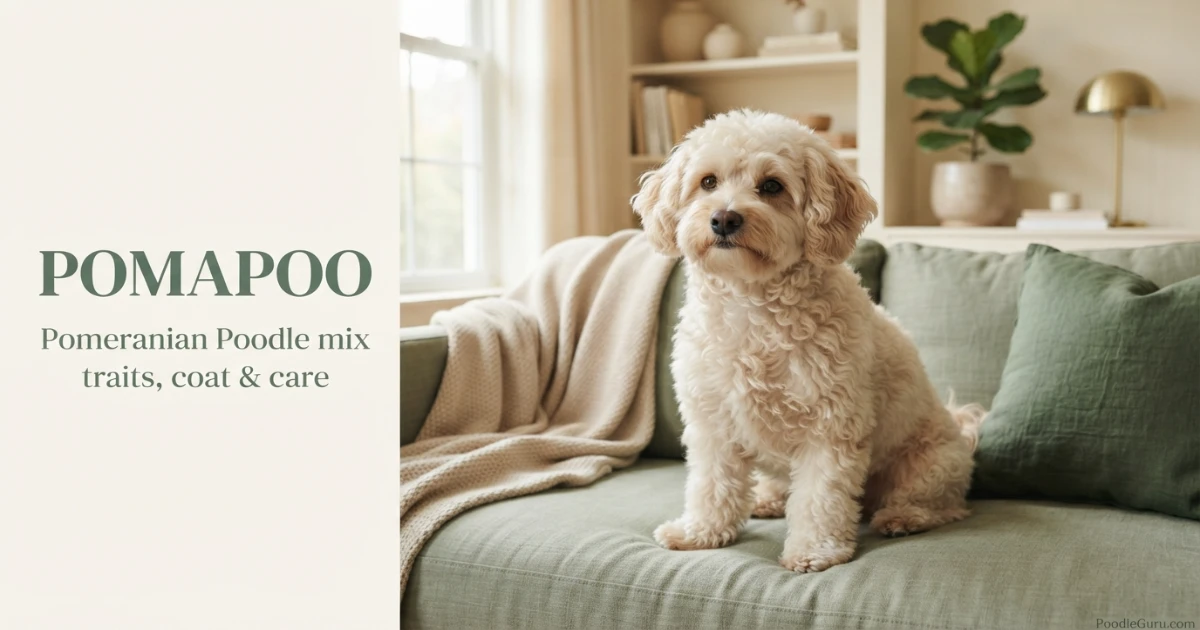
A (Pomeranian Poodle mix)Pomapoo is a designer crossbreed between a Pomeranian and a Toy or Miniature Poodle. Most weigh 5 to 15 pounds and stand 8 to 12 inches tall. They’re bred primarily as companion dogs—intelligent, affectionate, and moderately active. For poodle-aware owners, the Pomapoo represents a smaller, often lower-energy alternative to a purebred Toy Poodle, though coat type, shedding, and temperament vary far more than in either parent breed. The single most important thing to understand: no two Pomapoos are exactly alike, and your experience depends heavily on which parent the dog takes after.
What Is a Pomapoo? The Definition That Matters
A Pomapoo is a first-generation or multigenerational crossbreed dog that combines the Pomeranian with the Toy or Miniature Poodle. For poodle owners, this means the Pomapoo sits at the intersection of two distinct breed legacies: the Poodle’s working-retriever intelligence and the Pomeranian’s spitz-type confidence. The most important thing to understand is that the Pomapoo is not a standardized breed—it’s a cross with no official breed standard, which means size, coat type, and temperament can shift dramatically even within the same litter.
This unpredictability is both the charm and the challenge. Some Pomapoos inherit the Poodle’s curly, low-shedding coat and eager-to-please nature. Others lean heavily toward the Pomeranian’s thick double coat and more independent, watchful personality. Most land somewhere in between. If you’re coming from the poodle world, you’ll recognize familiar traits—but you’ll also encounter surprises.
Parent Breed 1
Toy or Miniature Poodle
Intelligent, athletic, low-shedding, highly trainable. Brings the lower-shedding coat potential, sharp learning ability, and working-dog focus.
Parent Breed 2
Pomeranian
Bold, loyal, thick-coated, alert. Brings the spitz confidence, plush double coat, and watchful companion temperament.
The Result
Pomapoo (F1 or Multigen)
A small companion with a wide personality range—some act like tiny Poodles, others like fluffy Poms. Always affectionate.
Why the Pomapoo Has Captured So Many Hearts
People don’t stumble into Pomapoo ownership by accident. They seek this crossbreed for specific reasons—and those reasons reveal a lot about what the Pomapoo does well.
The draw is almost always some combination of: small size suitable for apartment living, a teddy-bear appearance that stays puppy-like well into adulthood, the hope for a low-shedding coat inherited from the Poodle side, and a temperament that’s lively without being hyperactive. For poodle lovers who want a smaller, slightly lower-maintenance companion than a Standard or even a Miniature Poodle, the Pomapoo looks like the perfect answer.
But here’s the nuance most quick guides skip: the very traits that attract buyers also create the biggest misunderstandings. Let’s unpack that.
Expert Insight: The “Teddy Bear” Trap
Many Pomapoos are marketed as “teddy bear dogs”—and visually, they earn the label. But the teddy-bear look often comes from a specific coat type (soft, wavy, mid-length) that mats faster than either parent’s coat. Buyers who choose based on looks alone frequently underestimate the grooming commitment. At PoodleGuru, we’ve seen this pattern repeat across every small Poodle cross: the cuter the dog, the more the grooming gets underestimated.

The PoodleGuru Pomapoo Temperament & Traits Framework
At PoodleGuru, we evaluate every Poodle cross against four dimensions that predict real-world ownership satisfaction. This framework cuts through the “smart and friendly” clichés and gives you a usable mental model.
Trainability & Biddability
What to assess: Does the dog want to work with you, or does it prefer to work the room? Poodle-leaning Pomapoos are highly biddable—they watch you, respond to tone, and pick up commands in a handful of repetitions. Pomeranian-leaning dogs are clever but more independent; they understand what you want, but they may decide the reward isn’t worth the effort.
Sociability & Stranger Response
What to assess: Poodles tend toward reserved politeness with strangers. Pomeranians tend toward alert watchfulness—sometimes tipping into suspicion. A Pomapoo can land anywhere on this spectrum. Early, positive socialization is one of the most important parts of raising this mix, especially during puppyhood.
Energy & Settling Ability
What to assess: Most Pomapoos have moderate energy—they enjoy a good play session but don’t demand marathon exercise. The key question: can the dog settle indoors without constant stimulation? Poodle-leaning lines often have a better off-switch when properly exercised. Pomeranian-leaning dogs may stay more alert and reactive throughout the day.
Adaptability & Resilience
What to assess: How does the dog handle routine changes, new environments, or minor stressors? This dimension matters enormously for owners who travel, entertain guests, or live in busy households. Pomapoos with stronger Poodle influence tend to be more adaptable. Those with stronger Pomeranian influence may need more predictability and can be sensitive to chaotic environments.
Use this framework when you meet a litter. Don’t just ask “are they friendly?”—watch how each puppy responds to a new person, a new toy, a sudden noise, and a moment of calm. Those four observations map directly to the dimensions above.
Size, Coat & Appearance: What to Really Expect
The Pomapoo’s appearance is its headline feature—and its biggest wildcard. Unlike purebred dogs with predictable traits, the Pomapoo lottery can produce siblings that look like entirely different breeds.
For context, the AKC Pomeranian breed profile highlights the breed’s compact toy size and profuse double coat, while AKC Poodle information separates Toy and Miniature Poodles by height. A Pomapoo can sit between those reference points, but mixed-breed puppies do not follow a fixed standard.
Size Range
Most adult Pomapoos weigh between 5 and 15 pounds and stand 8 to 12 inches at the shoulder. A Pomapoo bred from a Toy Poodle parent typically lands on the smaller end (5–10 lbs). Those with a Miniature Poodle parent can reach 12–18 lbs—still small, but noticeably sturdier. Height usually tops out around 12 inches, though some Miniature Poodle crosses may stand slightly taller.
Coat Types: The Three Variations
Coat type is the single most misunderstood aspect of Pomapoo ownership. In practice, you’ll encounter three broad categories:
| Coat Type | Texture | Shedding | Matting Risk | Grooming Frequency |
|---|---|---|---|---|
| Poodle-dominant curly | Tight curls, springy | Very low | High—mats at the root if unbrushed | Daily brushing; professional groom every 4–6 weeks |
| Mixed wavy (teddy bear) | Soft waves, plush, mid-length | Low to moderate | Very high—the soft texture tangles fast | Daily brushing essential; groom every 4–6 weeks |
| Pomeranian-dominant double coat | Thick, straight outer coat with dense undercoat | Moderate to heavy (seasonal blows) | Moderate—undercoat compaction is the bigger risk | 3–4 brushing sessions per week; deshedding treatments seasonally |
That “teddy bear” coat—the one everyone wants—is actually the highest-maintenance option. The soft, fine texture feels wonderful to touch but mats almost overnight without consistent care. If you’re drawn to the teddy-bear look, plan for daily brushing as a non-negotiable part of your routine.

Color Possibilities
Pomapoos inherit from both parent breed color palettes, which means the range is enormous. Common colors include cream, apricot, red, black, brown, sable, parti-color (white with patches), and brindle. Solid cream and apricot are the most sought-after. Color can shift significantly from puppyhood to adulthood—a dark apricot puppy may lighten to cream by age two. Never pay a premium for a “rare” color guarantee; the only thing rare is a breeder who can honestly predict adult coat color in a crossbreed puppy.
Pomapoo vs. Purebred Poodle vs. Pomeranian: A Side-by-Side Look
If you’re reading this on PoodleGuru, there’s a good chance you’re weighing the Pomapoo against a purebred Poodle. This comparison table is built to make that decision clearer—it’s structured around the attributes that matter in daily life, not just breed-club talking points.
| Attribute | Pomapoo | Toy Poodle | Pomeranian |
|---|---|---|---|
| Adult weight | 5–15 lbs (varies widely) | 4–6 lbs (predictable) | 3–7 lbs (predictable) |
| Coat predictability | Low—three possible types | High—consistent curly coat | High—consistent double coat |
| Shedding level | Low to moderate (variable) | Very low | Moderate to heavy |
| Trainability | Moderate to high (variable) | Very high | Moderate (independent streak) |
| Barking tendency | Moderate (can be alert-barker) | Low to moderate | High (watchdog instinct) |
| Breed standard exists? | No—crossbreed, no standard | Yes—AKC recognized | Yes—AKC recognized |
| Health testing norms | Inconsistent; breeder-dependent | Established (Poodle clubs) | Established (Pom clubs) |
| Best fit | Owners who want a small, affectionate cross and accept variability | Owners who want predictability, trainability, and low shedding | Owners who want a bold, alert small companion with plush coat |
The Pomapoo’s biggest differentiator is also its biggest risk: variability. With a Toy Poodle, you know what you’re getting. With a Pomapoo, you’re making an educated guess—one that can go wonderfully right or surprisingly sideways depending on the breeding pair and the individual puppy.
PoodleGuru’s Honest Take
If coat predictability and low shedding are your top priorities, a purebred Toy or Miniature Poodle is almost always the safer choice. If you’re drawn to the Pomapoo’s specific look and are genuinely comfortable with variability—and committed to the grooming either way—the Pomapoo can be a wonderful companion. Neither choice is wrong. The mistake is choosing without understanding the tradeoffs.
Health & Longevity: What Owners Should Monitor
Pomapoos typically live 12 to 15 years, with well-bred individuals from health-tested lines sometimes reaching 16 or 17. That’s a long commitment—and the health picture deserves serious attention.
As a crossbreed, the Pomapoo can inherit conditions common to either parent breed. Responsible breeders screen for the overlapping concerns. Less responsible breeders—and there are many in the designer-dog space—skip testing entirely.
Conditions to Know About
| Condition | Inherited From | What Owners Should Watch For |
|---|---|---|
| Patellar luxation | Both parent breeds | Intermittent skipping or hopping gait; may progress to lameness |
| Progressive Retinal Atrophy (PRA) | Poodle | Night blindness progressing to daytime vision loss; genetic testing available |
| Collapsing trachea | Pomeranian and other toy/small breeds | Honking cough, especially during excitement or pressure on the neck; ACVS recommends a body harness instead of a neck lead for affected dogs |
| Dental disease | Both (small mouths) | Bad breath, tartar buildup, tooth loss; small mouths crowd teeth—dental care is not optional |
| Hypothyroidism | Both | Weight gain, lethargy, coat thinning; manageable with medication |
Veterinary guidance generally supports regular wellness exams, dental monitoring, and earlier screening when symptoms appear. The VCA notes that patellar luxation is one of the most common orthopedic conditions in small-breed dogs, and early detection can improve management options.
When to Call a Vet
Contact your veterinarian if your Pomapoo shows any of these: sudden lameness or skipping gait that doesn’t resolve within a few minutes, a honking cough that persists beyond a few seconds, visible eye cloudiness or bumping into objects in low light, or significant weight changes without diet adjustments. These are not “wait and see” symptoms in a small dog.
Grooming a Pomapoo: The Reality Check
If there’s one area where Pomapoo owners get caught off guard, it’s grooming. The online listings show fluffy, perfectly coiffed dogs. The reality involves daily brushing, regular professional appointments, and a learning curve that surprises even experienced dog owners.
The Minimum Grooming Routine
Daily Brushing (5–10 minutes)
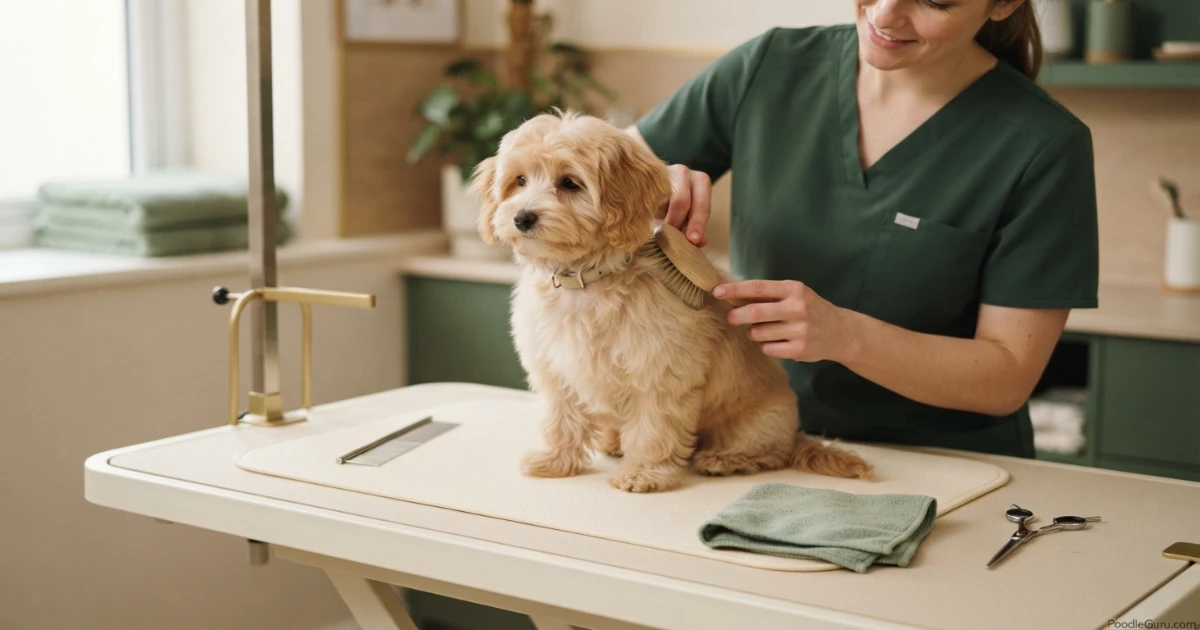
Use a slicker brush followed by a metal comb. Focus on friction zones: behind the ears, under the collar, armpits, and sanitary areas. These spots mat first. For curly and wavy coats, line-brush in sections down to the skin—surface brushing misses the mats forming at the root.
Professional Groom Every 4–6 Weeks
Even if you maintain the coat at home, a professional groomer handles the sanitary trim, nail grinding, ear cleaning, and any mat removal you may have missed. For many Pomapoos, this is not just a beauty appointment—it is preventive coat and skin care.
Bathing Every 3–4 Weeks
Use a mild, dog-specific shampoo. Never bathe a matted coat—water tightens mats. Brush thoroughly before every bath. Dry completely; damp undercoat invites skin issues.
Ear Checks Weekly
Poodle-leaning ears can trap moisture and debris. Check for redness, odor, or discharge weekly. Clean with a veterinary-approved ear cleaner—never use cotton swabs deep in the canal.
When to Ask a Professional Groomer
Book a groomer consultation if you notice: mats you can’t work out with a comb in under 5 minutes, skin redness beneath the coat, a foul odor that persists after bathing, or if your dog becomes increasingly resistant to handling during grooming sessions. Professional groomers commonly watch for early skin issues that owners miss—and a dog that fights brushing may be in pain from hidden mats pulling at the skin.
Training & Socialization: Small Dog, Smart Mind
Pomapoos are clever. That’s the good news and the challenge rolled into one. A smart dog that isn’t given mental work will create its own job—and in a small apartment, that job is often barking at every sound, shadow, and passing stranger.
What Works With Pomapoos
Positive reinforcement is the foundation. These dogs are sensitive to tone—harsh corrections shut them down or, worse, create a dog that avoids you. Short, game-based training sessions (5–10 minutes, 2–3 times daily) outperform long drilling sessions. Use high-value treats cut into tiny pieces—a full-sized training treat is a meal for a 7-pound dog.
The Socialization Window
The early puppy months are critical. The AVSAB puppy socialization guidance emphasizes early, positive exposure during the first months of life, with veterinary guidance on safe class participation and vaccination timing.
Expose your Pomapoo puppy to different floor surfaces, varied people, calm vaccinated dogs, household sounds, and gentle handling of paws, ears, and mouth. A well-socialized Pomapoo is more likely to become a confident companion. An under-socialized one can become reactive, fearful, or excessively barky—and unwinding that in adulthood is much harder than preventing it in puppyhood.
For more on building a solid training foundation, see our Complete Poodle Training Guide—the same principles apply beautifully to Pomapoos with Poodle-leaning temperaments.
Small-Dog Handling Note
Pomapoos may be sturdy in personality, but their bodies are still small. Use a well-fitted harness for walks, avoid letting children lift the dog without supervision, and keep furniture jumps under control. Small dogs can be injured by falls, rough play, or pressure on the neck faster than many owners expect.
Pomapoo Buyer’s Guide (2026): Price, Red Flags & Smart Questions
Bringing home a Pomapoo is a 12-to-15-year decision. The upfront cost is just the opening chapter—and where you source your puppy shapes everything that follows.
2026 Pomapoo Price Guide
| Source | Typical Price Range (USD) | What’s Usually Included |
|---|---|---|
| Responsible breeder (health-tested parents) | $1,500 – $3,500 | Health testing documentation, vaccination records, contract, breeder support |
| Mid-range breeder (limited testing) | $800 – $1,500 | Basic vaccinations, possibly a health guarantee (read the fine print) |
| Pet store or online marketplace | $600 – $2,000 | Often no verifiable health history; highest risk of puppy-mill sourcing |
| Rescue or adoption | $150 – $600 | Varies widely; may include spay/neuter and basic vetting |
Price inflators to watch: “rare” color claims (blue, merle, chocolate), “teacup” or “micro” sizing language, and breeding pairs marketed as “champion lines” without verifiable pedigree documentation. None of these justify a premium in a crossbreed with no breed standard.
Red Flags When Evaluating a Pomapoo Breeder
🚩 No Health Testing
If the breeder can’t produce OFA or equivalent documentation for patellas, eyes, and cardiac screening on both parents, walk away. “Vet-checked” is not health testing.
🚩 Multiple Litters Available
A breeder with 3+ litters on the ground at once is almost certainly running a commercial operation. Responsible breeders produce one or two litters at a time, max.
🚩 Won’t Let You Visit
If you can’t see where the puppies are raised—or they want to meet in a parking lot—that’s a dealbreaker. You should see the mother, the living conditions, and the puppies interacting naturally.
🚩 “Teacup” Language
Reputable breeders don’t use “teacup,” “micro,” or “pocket” as selling points. These terms often signal deliberately undersized breeding with associated health risks.
🚩 No Questions Asked of You
A breeder who doesn’t ask about your living situation, experience, or plans for the dog isn’t screening for good homes—they’re processing transactions.
🚩 Puppies Available Immediately
Quality breeders often have waitlists. A puppy available for immediate pickup without a waiting period deserves extra scrutiny.
Smart Questions to Ask Any Pomapoo Breeder
- “Can I see the health testing results for both parents—specifically patellas, eyes, and cardiac?”
- “Which parent does this puppy take after more in temperament and coat type?”
- “How do you socialize puppies before they go home?”
- “What’s your policy if a genetic health issue emerges later?”
- “Can you connect me with previous puppy buyers?”

Living With a Pomapoo: Daily Routines & Lifestyle Fit
What does a typical day actually look like with a Pomapoo? Not the highlight reel—the Tuesday-afternoon reality.
The Ideal Pomapoo Owner
Pomapoos thrive with owners who are home for meaningful parts of the day. This is not a breed cross that does well with 10-hour solo stretches. They bond closely—sometimes to one person especially—and can develop separation anxiety if left alone too long without training and gradual desensitization.
A well-adjusted Pomapoo fits beautifully into: apartments, condos, small homes with or without yards, households with older children who understand gentle handling, and calm multi-pet homes. They’re less suited to: homes with very young children who may handle them roughly, chaotic environments with constant loud noise, and owners who travel frequently without the dog.
Daily Exercise Needs
Expect 30 to 45 minutes of total daily activity—split between a couple of walks and indoor play. Mental exercise matters as much as physical: puzzle toys, short training sessions, and scent games tire out a Pomapoo more effectively than an extra lap around the block. A bored Pomapoo is a barky Pomapoo.
Common Myths About Pomapoos—And What’s Actually True
Myth: Pomapoos are always hypoallergenic.
Reality: No dog or mixed breed is truly 100% hypoallergenic. A Pomapoo with a Poodle-dominant curly coat may shed very little and may be easier for some allergy-sensitive homes, but individual reactions vary. A Pomapoo with a Pomeranian-dominant double coat sheds significantly. Coat type influences shedding and dander spread, but no coat removes allergens completely—and you may not know which coat a puppy will have until it matures. Spend time with the specific dog before committing if allergies are a concern.
Myth: Crossbreeds are always healthier than purebreds.
Reality: Hybrid vigor can reduce the risk of certain recessive conditions, but it’s not a health guarantee. A Pomapoo from untested parents can inherit problems from both sides. Health testing of the breeding pair matters far more than the “crossbreed” label. Poorly bred crossbreeds are not healthier than well-bred purebreds.
Myth: Pomapoos don’t need much training because they’re small.
Reality: Small dogs need training just as much as large ones—sometimes more, because problem behaviors like barking, resource guarding, and reactivity are easier to overlook in a 10-pound dog until they become entrenched. A well-trained Pomapoo is a joy. An untrained one can rule the household.
The PoodleGuru Pomapoo Owner Readiness Checklist
Use this checklist before you commit. If you can answer “yes” to every item, you’re positioned for a successful Pomapoo ownership experience.
Grooming Commitment Confirmed
You’re prepared for daily brushing (5–10 minutes) and professional grooming every 4–6 weeks, for the dog’s entire life. You’ve budgeted $60–$100+ per grooming session depending on your area.
Breeder Vetting Complete
You’ve identified a breeder who provides verifiable health testing on both parents, allows you to visit, asks you questions, and offers a fair contract. You’ve walked away from at least one red-flag situation.
Coat Variability Accepted
You understand the puppy’s adult coat may differ from what you see at 8 weeks, and you’re genuinely okay with whichever coat type emerges—curly, wavy, or straight double-coat.
Socialization Plan Ready
You have a concrete plan for socializing your puppy during the critical 8–16 week window, including exposure to different people, environments, sounds, and gentle handling.
Financial Cushion in Place
Beyond the purchase price, you’ve budgeted for: first-year veterinary care, spay/neuter, high-quality food, grooming supplies, professional grooming, training, and an emergency veterinary fund.
Lifestyle Alignment Realistic
Someone is home for meaningful portions of the day. Your living situation, activity level, and noise tolerance align with a small, people-oriented companion dog that may be vocal.

Frequently Asked Questions About Pomapoos
Are Pomapoos good with children?
Pomapoos can do well with gentle, dog-savvy children who understand how to handle a small dog. Due to their small size—often 5 to 15 pounds—they’re vulnerable to injury from rough handling. Homes with children under 6 should supervise all interactions closely. A well-socialized Pomapoo is patient and affectionate, but no small dog should be treated like a stuffed toy.
Do Pomapoos bark a lot?
It depends on the individual dog and which parent breed’s instincts dominate. Pomeranians are natural watchdogs and alert-barkers; Poodles tend to be more reserved. A Pomapoo may bark at doorbells, strangers, or unexpected sounds. Early training and mental enrichment reduce excessive barking significantly—a bored Pomapoo will find its voice.
How long do Pomapoos live?
Most Pomapoos live 12 to 15 years with proper care. Well-bred individuals from health-tested lines can reach 16 or 17. Longevity depends heavily on genetics, dental care, weight management, and regular veterinary checkups. Small dogs generally outlive larger breeds, and the Pomapoo benefits from both parent breeds’ relatively long lifespans.
Can Pomapoos be left alone during the day?
Pomapoos bond closely with their people and can develop separation anxiety if left alone for long stretches without training. A well-adjusted adult Pomapoo can typically handle 4–6 hours alone with proper preparation. Gradual desensitization, puzzle toys, and a consistent routine help. If you work full-time outside the home, plan for a midday dog walker or doggy daycare.
Are Pomapoos easy to potty train?
Small dogs can be challenging to house-train simply because their bladders are tiny. A Pomapoo puppy may need potty breaks every 1–2 hours initially. Consistency, crate training, and a regular schedule produce the best results. Poodle-leaning Pomapoos often catch on quickly due to high trainability; Pomeranian-leaning dogs may need more patience and reinforcement.
What’s the difference between a Pomapoo and a Maltipoo or Cockapoo?
All three are Poodle crosses, but the non-Poodle parent differs. A Pomapoo has Pomeranian lineage, a Maltipoo has Maltese, and a Cockapoo has Cocker Spaniel. Pomapoos tend to be smaller (5–15 lbs) than Cockapoos (12–25+ lbs) and often have a bolder, more alert temperament than the typically softer-natured Maltipoo. Coat type and shedding also vary based on the specific cross.
Do Pomapoos need a lot of exercise?
Pomapoos need moderate exercise—about 30 to 45 minutes total per day, split between walks and indoor play. They’re not marathon runners, but they do need daily activity to stay physically healthy and mentally balanced. Mental stimulation through training games and puzzle toys is just as important as physical exercise for this intelligent crossbreed.
Pomapoo: The Bottom Line
The Pomapoo is a small, affectionate, intelligent companion that can bring enormous joy to the right home. It’s also a crossbreed with significant variability in coat type, temperament, and health—variability that demands a thoughtful, well-researched approach from any potential owner. For PoodleGuru readers who are comfortable with that variability and committed to the grooming, training, and care this crossbreed needs, the Pomapoo can be a wonderful 12-to-15-year companion.
If predictability is your priority, a purebred Toy or Miniature Poodle is worth considering. If you’re drawn to the Pomapoo specifically, use this guide as your checklist, and take your time finding a responsible breeder. The effort you invest before bringing a puppy home pays dividends for the dog’s entire life.
- A Pomapoo is a Pomeranian–Poodle cross weighing 5–15 lbs with a lifespan of 12–15 years on average.
- Coat type is unpredictable—ranging from low-shedding curly to moderate-shedding double-coat—and determines your grooming commitment.
- Daily brushing and regular professional grooming are strongly recommended for most Pomapoo coat types, especially wavy and curly coats.
- Health testing on both parents (patellas, eyes, cardiac) matters far more than “hybrid vigor” claims.
- Pomapoos thrive with owners who are home for meaningful parts of the day and committed to early socialization and positive-reinforcement training.
- A responsible breeder welcomes questions, provides health documentation, and screens you as thoroughly as you screen them.
Next step: Read our Complete Poodle Grooming Guide to understand the coat-care commitment in detail—before you fall in love with a fluffy face.