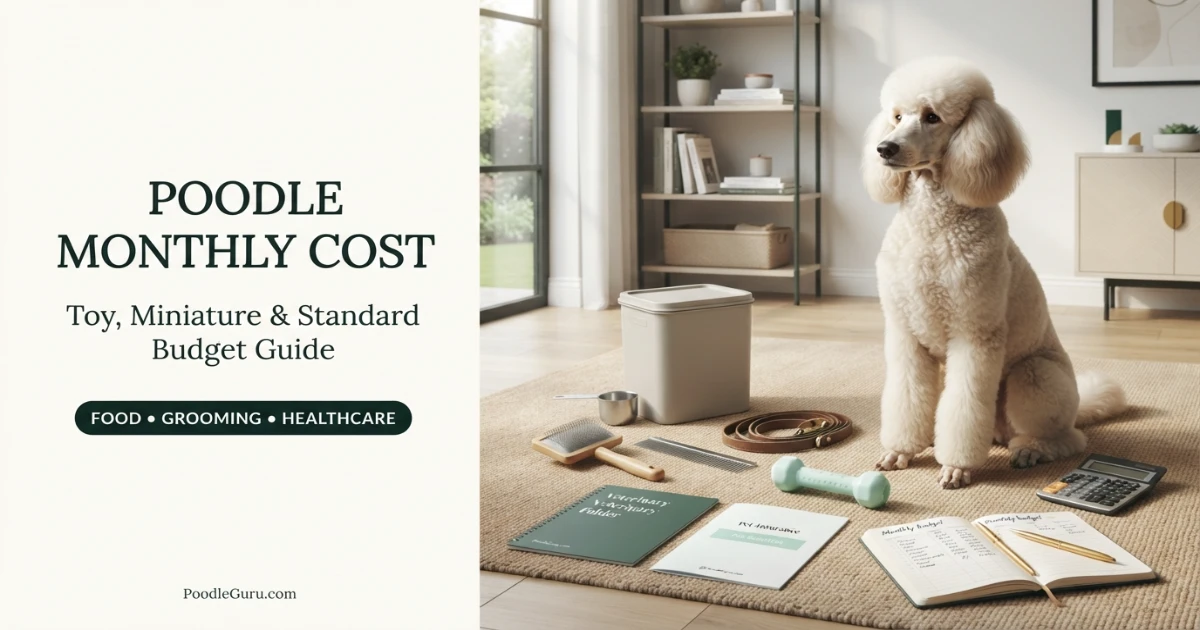
Poodle Monthly Cost: Real Budget for Toy, Miniature & Standard Poodles
A Poodle’s purchase or adoption fee is only the beginning. This practical 2026 planning guide breaks down food, grooming, preventive care, insurance, supplies, training, travel, and the periodic expenses that do not appear every month but still belong in your budget.
Quick Answer
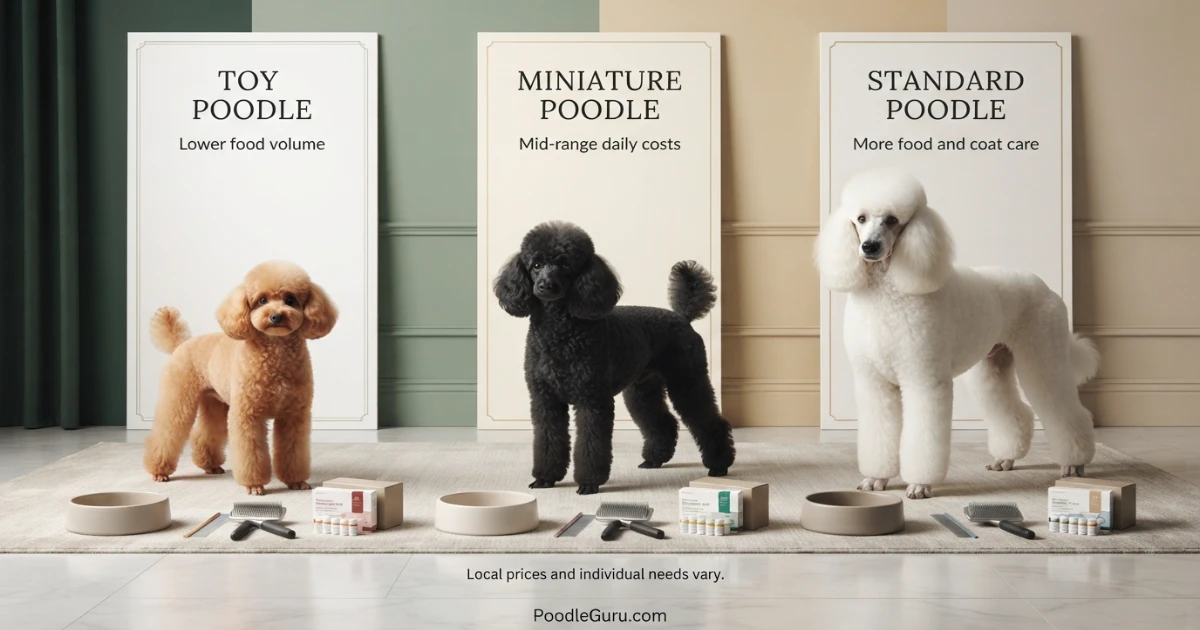
A realistic Poodle monthly cost is approximately $140–$260 for a Toy Poodle, $175–$340 for a Miniature Poodle, and $270–$520+ for a Standard Poodle. These are broad U.S. planning ranges for food, routine professional grooming averaged by month, parasite prevention, insurance or medical savings, routine veterinary care, treats, and ordinary supplies. They exclude the acquisition fee, major emergencies, daycare, frequent boarding, prescription diets, and complex medical care. Location, coat style, age, health, and how much grooming you perform safely at home can move the total substantially.
Lower food volume, but dental and grooming needs still matter.
A balanced middle range for food, coat care and preventives.
More coat, food and weight-based medication increase costs.
In This Guide
- How We Estimated the Budget
- Why Poodle Costs Differ
- Monthly Budget by Poodle Size
- What the Monthly Total Includes
- Food and Treat Costs
- Grooming Costs
- Veterinary Care and Preventatives
- Insurance vs. Emergency Savings
- First-Year Poodle Budget
- Hidden and Irregular Costs
- The PoodleGuru Budget Method
- How to Save Without Cutting Care
- Frequently Asked Questions
How We Estimated the Poodle Monthly Cost
No single number can describe every household. Prices in New York, rural Texas, and the Pacific Northwest are different. A short kennel clip costs less than a carefully maintained longer coat. A healthy young adult has different medical needs from a senior taking several medications. For that reason, this guide uses planning ranges rather than pretending there is one universal bill.
What the estimates assume
- A generally healthy Poodle living in the United States.
- A complete-and-balanced commercial diet appropriate for the dog’s life stage.
- Professional grooming on a roughly four-to-eight-week schedule, averaged into a monthly figure.
- Veterinarian-recommended parasite prevention and routine wellness care.
- Either an accident-and-illness insurance premium or a regular contribution to medical savings.
- Normal replacement of treats, toys, waste bags, cleaning supplies, and basic equipment.
The figures are intended for comparison and preparation, not as quotes. Before bringing home a Poodle, request local prices from two or three groomers, ask a veterinary clinic for its wellness and preventive-care fees, and obtain insurance quotes using the dog’s actual age, ZIP code, and size. That simple local check will be more accurate than any national average.
Why Poodle Costs Differ From Other Dogs
Poodles combine several cost drivers in one breed. Their dense, continuously growing coat requires regular brushing, bathing, drying, clipping, nail care, and ear monitoring. A neglected coat does not merely look untidy; tight matting can pull on the skin, trap moisture, hide irritation, and make later grooming longer and more uncomfortable. Coat maintenance is therefore part of routine welfare, not an optional beauty expense.
Size creates the next major difference. A Standard Poodle generally eats more than a Toy, needs larger equipment, receives weight-based medications, and takes longer to bathe, dry, brush, and clip. A small Poodle may use less food, yet smaller varieties can still create meaningful dental-care costs and may need the same frequency of salon visits as a larger dog.
Lifestyle matters too. A household that travels monthly may spend more on boarding than on food. An owner who keeps a long decorative coat may pay more than an owner choosing a practical short clip. A puppy may need group classes, several size changes in collars or harnesses, and more frequent replacement of chewed items. Senior years can add diagnostic testing, prescription medication, mobility support, or a therapeutic diet.
Monthly Poodle Budget by Size
The following table uses internally consistent low and high totals. It is designed as a starting worksheet. Replace each estimate with local quotes before making a final ownership decision.
| Expense Category | Toy Poodle | Miniature Poodle | Standard Poodle | Planning Notes |
|---|---|---|---|---|
| Food | $20–$40 | $35–$60 | $65–$110 | Brand, calorie density, life stage and medical needs change the total. |
| Professional grooming | $40–$75 | $55–$95 | $85–$155 | Monthly average of appointments commonly spaced four to eight weeks apart. |
| Parasite prevention | $15–$30 | $18–$35 | $25–$45 | Products and recommendations vary by weight, region and veterinarian. |
| Insurance or medical savings | $25–$55 | $30–$65 | $40–$90 | Premiums vary widely; a savings contribution is not equivalent to insurance. |
| Routine vet-care reserve | $15–$30 | $18–$35 | $25–$45 | Monthly reserve for exams, vaccines, testing and ordinary clinic fees. |
| Treats and chews | $10–$20 | $12–$25 | $18–$35 | Choose appropriately sized products and include calories in the daily total. |
| Supplies and enrichment | $10–$25 | $12–$25 | $15–$40 | Toys, waste bags, cleaning products and replacement equipment. |
| Training reserve | $5–$20 | $10–$30 | $15–$40 | Average for classes or occasional professional guidance; home practice is still essential. |
| Estimated monthly total | $140–$260 | $175–$340 | $270–$520+ | Excludes acquisition, emergencies, daycare, frequent boarding and complex illness. |
Annualized, these ranges equal approximately $1,680–$3,120 for a Toy, $2,100–$4,080 for a Miniature, and $3,240–$6,240+ for a Standard before major emergencies or lifestyle extras.
What the Monthly Total Includes—and What It Does Not
A useful budget separates ordinary care from optional lifestyle spending. The estimates above include expenses that most owners should expect repeatedly: feeding, grooming, preventive products, ordinary supplies, wellness-care savings, and a plan for medical risk. The table also includes a modest training reserve because early guidance can prevent far more expensive behavior problems later.
Included in the Estimate
Food, grooming, parasite prevention, insurance or medical savings, routine veterinary reserve, treats, common supplies, enrichment and a modest training allowance.
Not Included
Purchase or adoption fee, emergency surgery, chronic disease, prescription diets, daycare, frequent dog walking, boarding, travel documents, show grooming and property pet fees.
Highly Individual
Dental treatment, allergy management, medication, senior diagnostics, rehabilitation, behavior consultations and coat restoration after severe matting.
This distinction matters when comparing advice online. A page that quotes only food and annual vaccines will produce an artificially low total. A page that includes daily daycare and premium fresh food may appear unrealistically high for a home-based owner. Compare like with like.
Food and Treat Costs: Size Is Only One Variable
Food is usually predictable, but it should not be calculated from cup measurements alone. Different diets contain different calories per cup, and two Standard Poodles of the same weight may have different energy needs because of age, activity, neuter status, and body condition. Start with the manufacturer’s feeding guide, monitor body condition, and adjust with your veterinarian rather than assuming every dog of a particular size eats the same amount.
Toy Poodles use less food by volume, but buying very small bags can increase the cost per pound. Standard owners may save through larger bags or subscription discounts, provided food is stored safely and used while fresh. Fresh, refrigerated, prescription, limited-ingredient, or veterinary therapeutic diets can move any size well above the table’s range.
Training rewards and chews belong in the food budget. Poodles often respond well to reward-based training, and small frequent rewards can quietly add calories. Use pea-sized treats, reserve part of the dog’s normal ration for training where appropriate, and avoid paying for oversized novelty chews that do not suit the dog’s size or chewing style. For broader feeding guidance, browse the PoodleGuru nutrition library.
Grooming: The Largest Predictable Poodle Expense
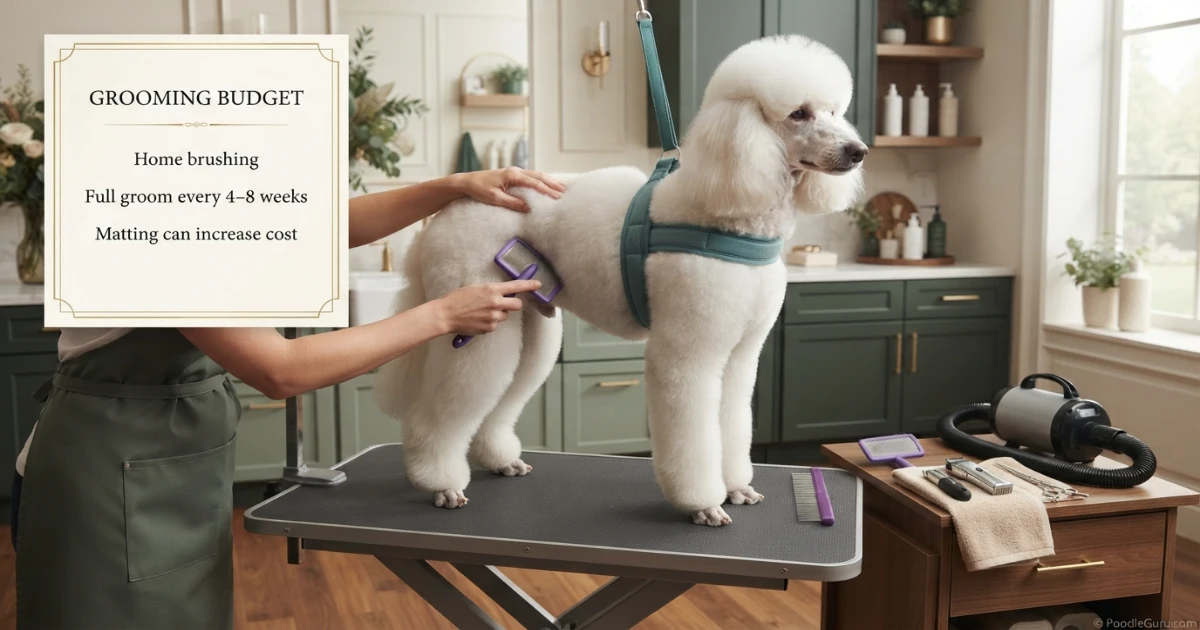
Professional grooming is commonly the biggest recurring difference between a Poodle and a short-coated breed. Poodle hair keeps growing and readily tangles where friction is greatest: behind the ears, under the collar, in the armpits, around the legs, beneath a harness, and near the tail. Regular home brushing helps, but it does not replace bathing, thorough drying, clipping, nail care, and other hands-on maintenance.
Many Poodles are professionally groomed roughly every four to eight weeks. The right interval depends on coat length, clip style, brushing skill, lifestyle, swimming, skin health, and how quickly the individual coat mats. The PoodleGuru grooming-cost guide currently places many full professional appointments in a broad range of about $60–$180, with Toy Poodles generally below Standards and metropolitan or specialist services often higher.
Home grooming can reduce salon spending, but it is not free. Clippers, blades, combs, slicker brushes, shears, shampoo, a high-velocity dryer, a stable work surface, blade maintenance, and replacement parts create an upfront and continuing cost. A hybrid approach often offers the best balance: owners handle brushing, comb checks, toothbrushing, and cooperative-care practice while a professional performs regular full grooms.
Veterinary Care, Preventatives and Dental Planning
Routine veterinary expenses arrive on different schedules, so owners often underestimate them when thinking only month to month. An annual or age-appropriate wellness examination, vaccines selected for the dog’s risk, diagnostic testing, parasite screening, and prescription preventatives may be billed at one appointment. Dividing the expected annual total by twelve creates a more stable monthly reserve.
Heartworm recommendations should come from your veterinarian, but the American Heartworm Society advises year-round prevention and annual testing for dogs. Flea and tick needs vary by geography, season, travel, local parasite pressure, and the products safe for the individual dog. Weight-based products generally cost more for a Standard than for a Toy.
Dental care deserves its own reserve, especially for smaller Poodles. Home toothbrushing can help control plaque, but it does not replace professional evaluation. A veterinary dental procedure is scheduled according to the dog’s oral examination rather than an automatic one-to-three-year timetable. When a professional cleaning is needed, the AVMA explains that anesthesia allows a more complete and less stressful examination and cleaning, including work below the gumline.
Poodle health risks vary by size and family line. The Poodle Club of America discusses concerns that include Addison’s disease, gastric dilatation-volvulus, epilepsy, orthopedic problems, eye disease, and other inherited or acquired conditions. This does not mean every Poodle will develop them. It means owners should choose health-tested sources where applicable, maintain a lean body condition, attend routine veterinary visits, and avoid a budget that can cover only ideal circumstances.
Pet Insurance or Emergency Savings?
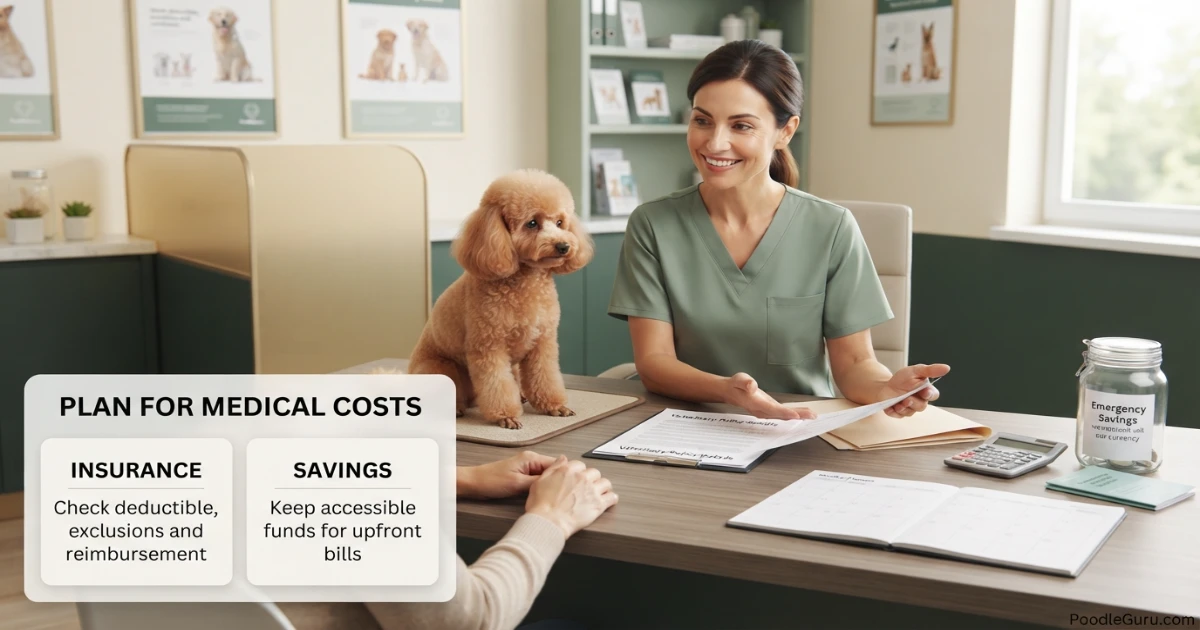
Insurance and savings solve different problems. A savings account gives you flexible cash but can be exhausted by one large event, particularly when it is still new. Insurance may reimburse eligible expenses after the deductible and co-insurance, but policies have exclusions, waiting periods, reimbursement rules, annual limits, and definitions of pre-existing conditions. Neither option removes the need for accessible money at the time care is provided.
As a general market benchmark, the Insurance Information Institute reports an average U.S. dog accident-and-illness premium of about $56 per month using 2023 NAPHIA data. Your actual Poodle quote can be much lower or higher based on age, ZIP code, coverage, deductible, reimbursement percentage, and insurer. Compare the policy wording—not only the monthly price. The Poodle pet-insurance cost guide explains the Poodle-specific questions worth asking.
| Approach | Strength | Limitation | Best Planning Practice |
|---|---|---|---|
| Insurance | Can limit exposure to eligible high-cost accidents and illnesses. | Exclusions, waiting periods, deductibles and reimbursement timing apply. | Read a sample policy and keep cash available for the deductible and upfront bill. |
| Emergency savings | Flexible and available for costs a policy may not cover. | A single serious event can exceed the account balance. | Automate a monthly transfer and set the target using local emergency-clinic prices. |
| Combined approach | Insurance addresses eligible catastrophe risk while savings covers gaps. | Requires room in the monthly budget for both. | Choose a deductible you could pay immediately and maintain a separate medical reserve. |
First-Year Poodle Budget: Why the Beginning Costs More
The first year combines recurring monthly expenses with setup purchases and early medical or training needs. A crate, bed, bowls, collar, harness, identification, leash, baby gates, grooming tools, cleaning products, travel restraint, and enrichment toys may be purchased within days. Puppies outgrow equipment, chew through inexpensive items, and benefit from structured socialization and training classes.
Acquisition cost should be listed separately because it varies enormously between rescue adoption, rehoming, and a responsibly bred puppy from health-tested parents. A lower acquisition price does not guarantee lower first-year medical or behavior costs, and a high price is not proof of responsible breeding. Ask what veterinary care, microchipping, testing, registration, support, and supplies are included.
| First-Year Category | Toy | Miniature | Standard | Notes |
|---|---|---|---|---|
| Recurring care for 12 months | $1,680–$3,120 | $2,100–$4,080 | $3,240–$6,240+ | Based on the monthly planning ranges above. |
| Setup and replacements | $500–$1,200 | $600–$1,400 | $800–$1,900 | Crate, barriers, bed, travel gear, bowls, tools, toys and size changes. |
| Puppy training and socialization | $150–$500+ | $150–$500+ | $150–$600+ | Group classes cost less than frequent private sessions. |
| Acquisition and major medical events | Separate | Separate | Separate | Too variable to combine honestly with routine ownership costs. |
Before committing, calculate the first year without assuming every setup item will last for life. Then test whether the recurring adult budget still works alongside rent, food, transportation, debt payments, and existing family obligations.
The PoodleGuru Three-Layer Budget Method
A single monthly total is useful, but a layered budget is more resilient. It shows which expenses are essential, which can flex temporarily, and which require dedicated preparation.
Fund Fixed Care First
Add food, grooming, preventatives, insurance premium, and the monthly share of routine veterinary care. These costs protect health and welfare. Do not rely on optional spending cuts to make them affordable.
Create Sinking Funds
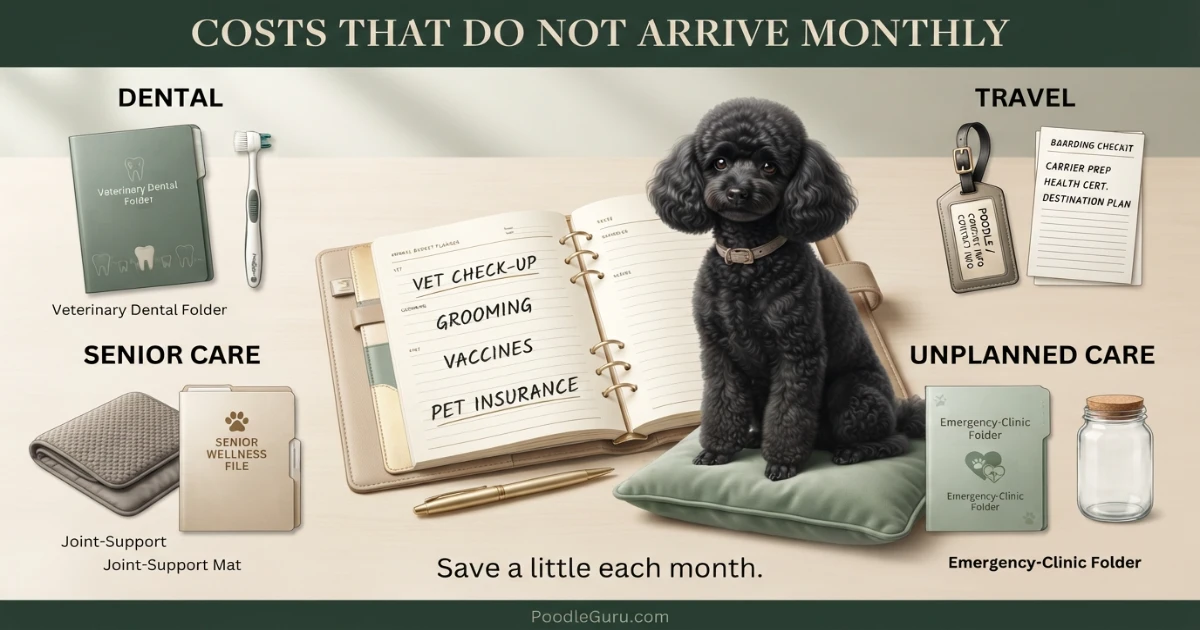
Set monthly amounts aside for dental care, equipment replacement, boarding, annual testing, deductibles, and senior needs. Keep these funds separate from ordinary spending so they remain available when the bill arrives.
Add Lifestyle Extras Last
Daycare, subscription boxes, premium accessories, elaborate clips, frequent professional walking, and luxury boarding come after essential care and risk planning. They are enjoyable, but they should not compete with veterinary or coat needs.
A simple monthly worksheet
Essential care + sinking funds + insurance or emergency savings + lifestyle extras = your real Poodle budget.
Run the calculation using the high end of local quotes. If the result is uncomfortable, reduce optional extras, choose a more practical coat style, build savings before adoption, or delay ownership. Planning honestly is kinder than bringing home a dog and hoping the essential bills remain low.
How to Save Money Without Cutting Poodle Care
Good savings reduce waste and improve consistency. Harmful savings postpone care until a small issue becomes painful or expensive. The goal is not to buy the cheapest option; it is to spend deliberately on the things that protect health, behavior, and coat condition.
- Choose a practical clip. A shorter maintenance style usually reduces brushing time, mat risk and salon complexity.
- Brush and comb correctly between grooms. Preventing mats is less expensive and more comfortable than paying for coat recovery.
- Measure food by calories and body condition. Overfeeding wastes food and can contribute to health problems.
- Use rewards efficiently. Tiny training treats work better than large pieces and reduce both cost and excess calories.
- Buy durable basics once. A stable crate, safe harness, quality steel comb and washable bedding can outlast repeated cheap replacements.
- Compare insurance before symptoms appear. New diagnoses may be excluded as pre-existing conditions under many policies.
- Use group training for foundations. Reserve private help for problems requiring individualized assessment.
- Maintain teeth at home. Regular dog-safe toothbrushing supports oral health, although it cannot replace veterinary evaluation.
- Ask about clinic and groomer packages. Compare the total service and terms rather than choosing by headline price alone.
- Build the emergency reserve before adoption. Starting with savings is safer than attempting to build it only after an urgent bill.
Our guide to the cheapest responsible way to own a Poodle explores safe cost reductions in more detail.
Frequently Asked Questions
How much does a Poodle cost per month?
A broad 2026 U.S. planning range is about $140–$260 per month for a Toy Poodle, $175–$340 for a Miniature, and $270–$520+ for a Standard. The estimate includes food, routine grooming, preventatives, insurance or medical savings, routine veterinary reserves, treats, supplies and a modest training allowance.
Why is a Standard Poodle more expensive than a Toy Poodle?
A Standard usually requires more food, larger equipment, higher weight-based medication doses and more grooming labor because there is more coat to wash, dry, brush and clip. However, Toy Poodles still require regular grooming and may generate meaningful dental-care expenses.
Is professional grooming optional for a Poodle?
Coat maintenance is not optional, but some skilled owners perform part or all of it at home. Most households should budget for professional appointments while learning safe brushing, combing and cooperative handling between visits. A practical clip and consistent home maintenance can control costs.
How often should a Poodle be professionally groomed?
Many Poodles are groomed approximately every four to eight weeks. The best schedule depends on coat length, clip, home brushing, activity, skin health and how quickly the individual coat mats. Ask a groomer to recommend an interval after examining the coat.
Should I buy pet insurance for my Poodle?
Insurance can reduce exposure to eligible high-cost accidents and illnesses, but it includes deductibles, exclusions, waiting periods and reimbursement rules. Compare policies while the dog is young and healthy, and keep accessible savings for the deductible, upfront payment and non-covered costs.
How much should I save for a Poodle emergency?
There is no universal target. Ask nearby emergency clinics about examination deposits and common urgent-care price ranges, consider your insurance deductible and reimbursement terms, and build an amount you could access immediately. Many owners combine insurance with a separate reserve of several thousand dollars.
How much does the first year with a Poodle cost?
The first year includes twelve months of recurring care plus a crate, barriers, bed, bowls, travel equipment, grooming tools, training, replacements and early veterinary needs. Acquisition and major medical costs should be added separately because they vary too widely for one honest total.
Does a Poodle become more expensive with age?
Often, yes. Senior Poodles may need more frequent examinations, diagnostic testing, medication, dental treatment, mobility support or a therapeutic diet. Building a senior-care sinking fund before those needs appear makes the transition easier.
What is the safest way to reduce Poodle ownership costs?
Prevent matting, choose a practical clip, measure food, practice reward-based training at home, compare providers, maintain teeth, buy durable essentials and plan for medical risk early. Do not save money by postponing veterinary care, skipping preventatives without veterinary advice or allowing the coat to become matted.
Editorial Sources and Cost Benchmarks
PoodleGuru used these references to check the care framework. Prices remain estimates and should be replaced with local quotes.
- American Kennel Club: Know the True Cost of Owning a Dog
- American Kennel Club: How to Groom a Standard Poodle
- American Heartworm Society: Heartworm Basics
- American Veterinary Medical Association: Pet Dental Care
- Insurance Information Institute: Pet Insurance Statistics
- Poodle Club of America: Health Concerns
Key Takeaways: Planning the Real Poodle Monthly Cost
- Plan approximately $140–$260 monthly for a Toy, $175–$340 for a Miniature, and $270–$520+ for a Standard before major emergencies and lifestyle extras.
- Professional grooming is commonly the largest predictable Poodle-specific expense and should be averaged into every month’s budget.
- Food, medication and equipment generally scale with size, while small Poodles still need the same coat-care consistency and may require substantial dental care.
- Keep separate sinking funds for dental treatment, equipment replacement, boarding, deductibles and senior needs.
- Insurance and emergency savings are not interchangeable; many owners benefit from using both.
- Use local groomer, veterinary and insurance quotes before deciding whether a Poodle fits comfortably within your household budget.
Next step: replace every estimate in the table with one local quote, then calculate the high-end monthly total. That number—not the cheapest possible month—is the safer figure for deciding whether you are financially ready.