Poodle Arthritis Symptoms: Joint Care & Relief Guide
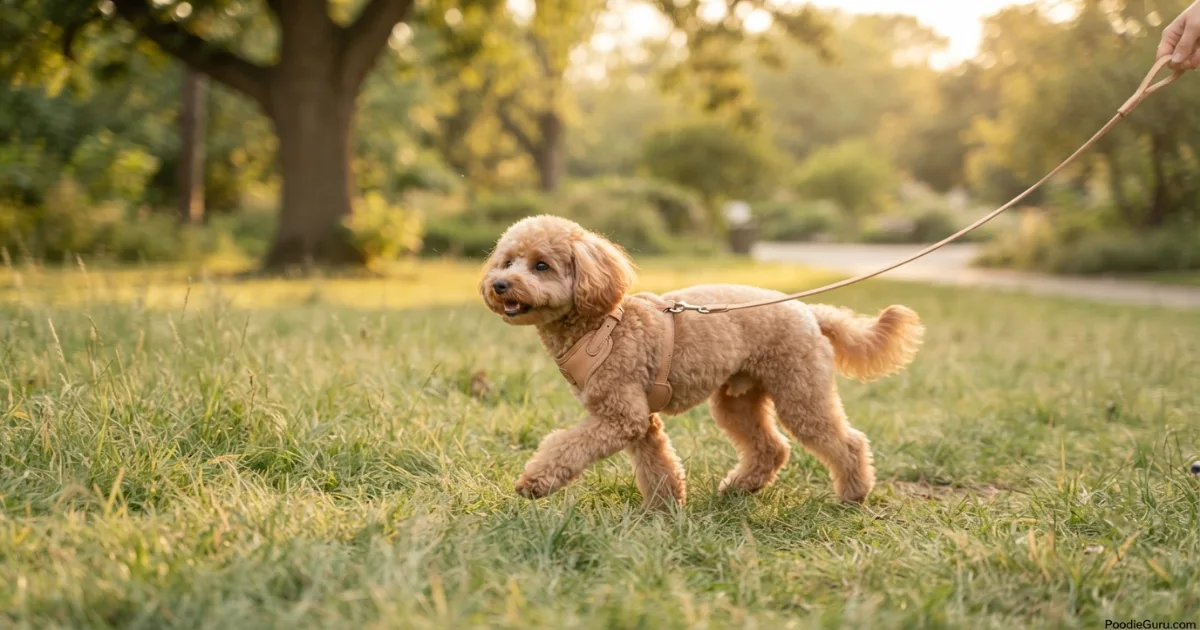
Arthritis doesn’t announce itself loudly. In poodles, it often starts as a slight hesitation before jumping or a quieter morning stretch. This guide unpacks poodle arthritis symptoms you might miss, explains why poodles are vulnerable, and gives you a practical, vet-informed joint care plan to keep your dog comfortable and mobile for years to come.
Quick Answer: What Are Poodle Arthritis Symptoms?
Poodle arthritis symptoms typically appear as morning stiffness, reluctance to jump or climb stairs, limping after rest, subtle irritability when touched near the hips or shoulders, and a noticeable decline in playfulness.
Many poodles hide joint pain well. You may see a tucked tail, slower walks, or licking at a specific joint before you ever see a pronounced limp. Because Toy and Miniature Poodles are especially skilled at masking discomfort, knowing these quiet signs can lead to earlier diagnosis and better long-term outcomes.
🐩 Breed Reality
Toy and Miniature Poodles often face patellar luxation-related arthritis; Standards are prone to hip and elbow dysplasia that leads to early joint degeneration.
🔍 Hidden Pain
Poodles rarely yelp. They’re far more likely to show arthritis pain through stillness — refusing stairs, sleeping more, or avoiding certain movements entirely.
⏳ Slow Progression
Arthritis develops over years. Catching it when your poodle simply seems “a little stiff” gives you years of intervention runway that late-stage diagnosis doesn’t.
What Is Arthritis in Poodles?
Arthritis is a degenerative joint condition where the protective cartilage that cushions bones wears down, leading to inflammation, pain, and reduced mobility.
For poodle owners, this means the graceful, springy dog who once bounced onto the sofa may gradually — or suddenly — start avoiding those same leaps.
The most important thing to understand is that poodle arthritis symptoms are often behavioral before they’re physical: your dog might become “lazy” or “grumpy” when the real issue is joint pain that never fully goes away.
Osteoarthritis, the most common form, isn’t curable, but it is manageable. With early recognition, weight control, targeted exercise, joint-supporting nutrition, and thoughtful home modifications, many poodles live comfortably with arthritis for years. The goal shifts from “fixing” the joint to protecting what’s left and keeping your poodle moving without pain.
Why Poodles Are Prone to Arthritis
No poodle is immune, but certain structural and genetic factors make this breed especially vulnerable.
Toy and Miniature Poodles frequently inherit shallow knee grooves that allow the kneecap to slide out of place — a condition called patellar luxation. Over months and years, repeated joint stress can contribute to arthritis. The chronic inflammation of arthritis in dogs commonly starts from these mechanical flaws.
Standard Poodles carry a different risk: their larger frames can develop hip dysplasia or elbow dysplasia, where the joint doesn’t form properly. Even without dysplasia, a lifetime of athletic movement can add joint stress over time.
Add the breed’s tendency to carry extra weight if owners aren’t vigilant, and you have a perfect formula for early arthritis.
Finally, age itself is a factor. Poodles often live well into their teens, and those senior years are prime arthritis territory. For more on what to expect as your poodle ages, see our guide to poodle lifespan and longevity.
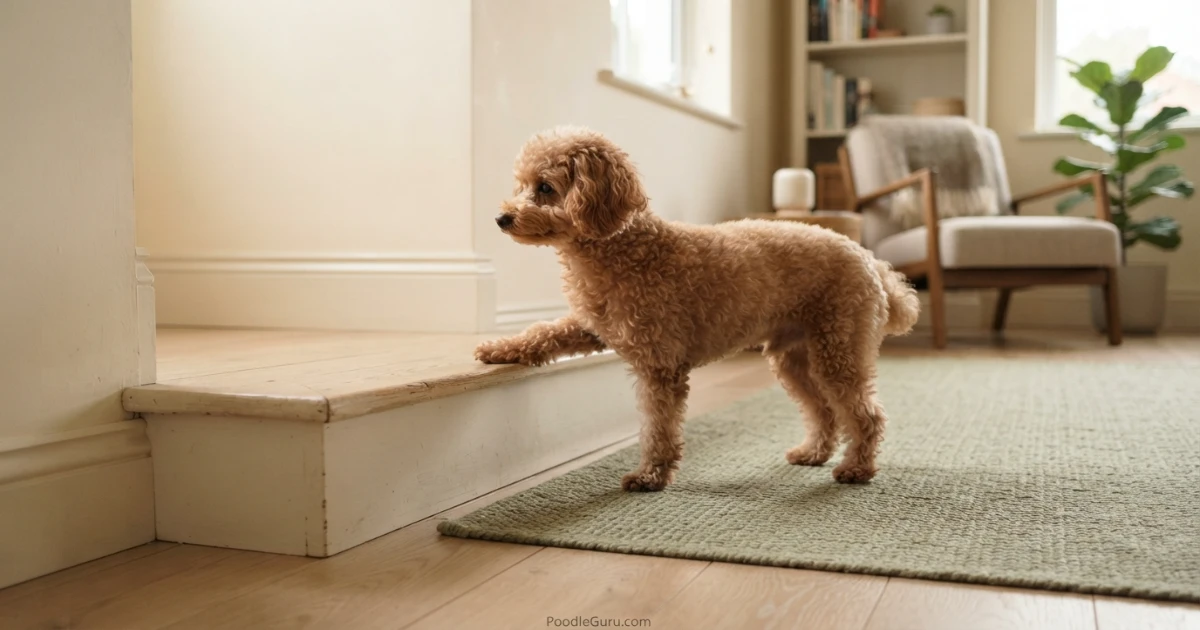
Early Poodle Arthritis Symptoms You Should Never Ignore
Joint pain doesn’t always look like a limp. Poodles, especially the smaller varieties, communicate discomfort through subtle daily changes. Recognizing them early can add years of quality mobility to your dog’s life.
Morning Stiffness That Fades
Your poodle may seem slow to rise, walk with short, choppy steps for the first few minutes, then appear normal. This “warm-up” pattern is a classic sign of early arthritis — and easily written off as “just getting older.”
Reluctance to Do What Used to Be Easy
Jumping onto the couch, climbing stairs, or even standing on hind legs to greet you may gradually stop. You might notice your poodle “asking” to be picked up more often. This isn’t laziness; it’s self-preservation.
Licking or Chewing One Joint
When a poodle repeatedly licks a wrist, knee, or hip area — sometimes until the fur thins — it’s often a pain response. The licking is soothing, but the underlying inflammation needs attention.
Changes in Temperament
A formerly friendly poodle may snap when touched near the hips, or a confident one may suddenly become clingy. Pain lowers tolerance. If your poodle’s personality shifts, screen for hidden joint discomfort.
Muscle Loss Along the Spine or Hind Legs
Arthritic dogs often shift weight away from painful joints, causing muscles to atrophy. You might feel bonier hips or a more prominent spine without weight loss elsewhere. This asymmetry signals chronic underuse.
Stages of Arthritis in Poodles
| Stage | Visible Symptoms | Joint Changes | Recommended Focus |
|---|---|---|---|
| Mild (Early) | Occasional stiffness after rest, slight hesitation on stairs, infrequent lameness | Early cartilage thinning, minor osteophyte formation | Weight optimization, omega-3 supplementation, low-impact exercise, home traction mats |
| Moderate | Frequent limping, difficulty rising, avoids jumps, muscle loss visible | Significant cartilage loss, bone spurs, joint space narrowing | Vet-prescribed pain management, joint diets, ramps, controlled physiotherapy |
| Severe | Constant lameness, audible joint crepitus, reluctance to move, personality changes | Bone-on-bone contact, severe deformity, chronic inflammation | Multimodal pain protocol, mobility aids, daily assistance, quality-of-life monitoring |
The PoodleGuru Joint Health Assessment Framework
At PoodleGuru, we evaluate arthritis risk using three practical lenses. This isn’t diagnostic — it’s a way to screen your poodle’s vulnerability and decide how proactive you need to be.
1. Size & Structure Risk
Toy & Miniature Poodles: high risk for patellar luxation, which directly feeds arthritis. Standard Poodles: moderate risk from hip/elbow dysplasia. Knowing your poodle’s structural starting point shapes prevention.
2. Body Condition Factor
Every extra ounce stresses joints. A Toy Poodle carrying 1 lb overweight is like a human carrying 10+ extra pounds on knees. Keep ribs easily palpable but not visible — that’s the sweet spot.
3. Movement Quality
Observe your poodle’s walk weekly. Is the stride smooth? Does the tail swing freely? Any hitch or shortened stride on one side is an early warning. Document with short phone videos — you’ll spot changes faster.
🩺 When to Call Your Veterinarian
- Your poodle has limped or favored a leg for more than 48 hours
- You notice sudden reluctance to bear weight or a yelp when touched
- Stiffness no longer resolves with gentle movement
- Appetite drops alongside mobility changes
- Your poodle seems anxious, withdrawn, or irritable for no clear reason
Many effective treatments — from anti-inflammatory medications to joint injections and laser therapy — work best when started early. Don’t wait until the pain is obvious.
How to Adapt Your Home for a Poodle with Arthritis
Environmental changes can reduce daily joint stress dramatically. These five steps create a home that works with your poodle’s body, not against it.
Invest in Orthopedic Bedding
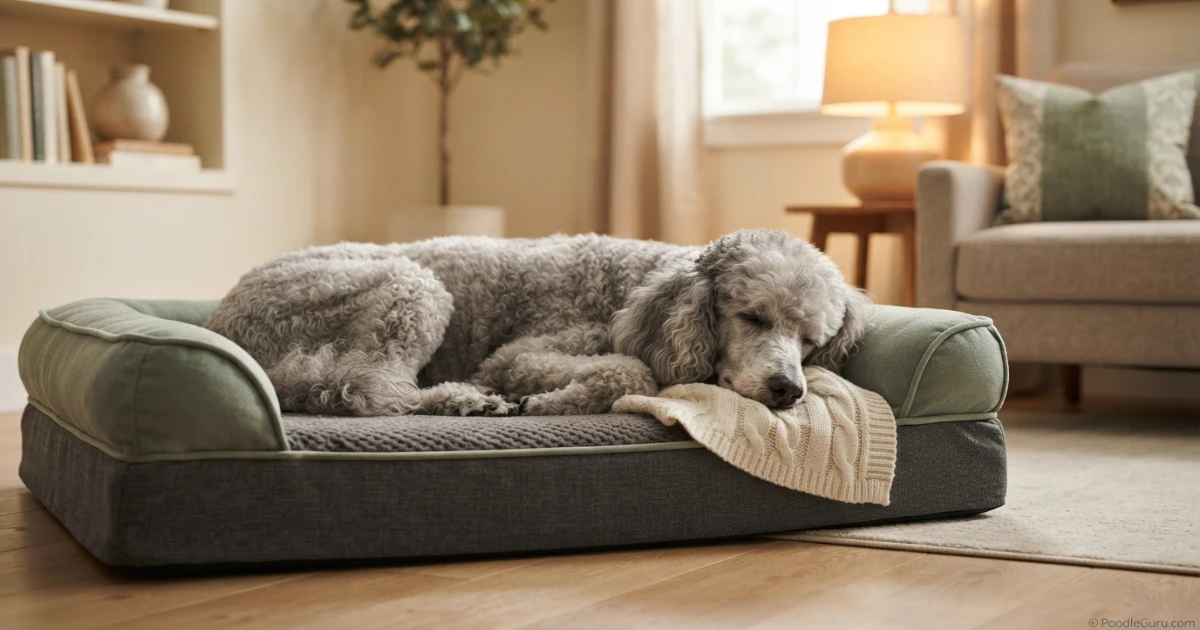
Choose a high-density memory foam bed at least 4 inches thick for Standards, 2-3 inches for Toys. Place beds in multiple rooms — your poodle shouldn’t have to choose between a hard floor and following you.
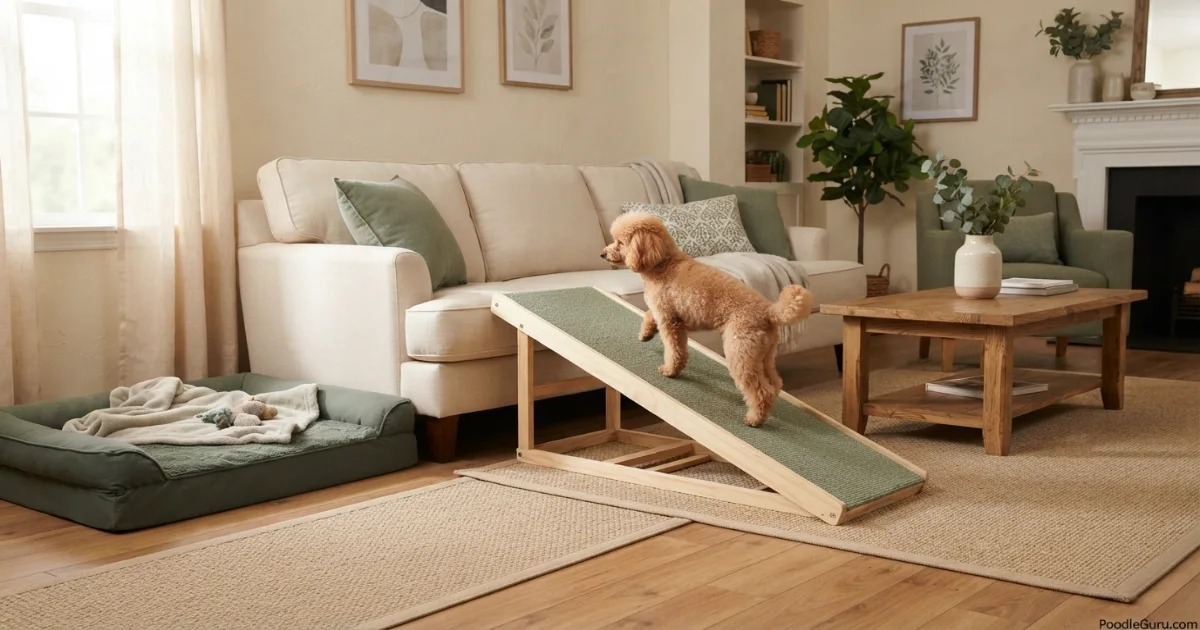
Install Lightweight Ramps
Foam or plastic ramps with a gentle incline (under 25 degrees) next to sofas and beds eliminate jump impact. Train your poodle with treats over a week, never force. A ramp pays for itself in saved joint cartilage.
Adjust Food and Water Bowl Height
Place bowls where your poodle can eat without crouching, stretching, or slipping. A low riser may help some arthritic dogs, but ask your vet before raising bowls for a Standard Poodle with bloat risk or a complex medical history.
Add Non-Slip Flooring Pathways
Slippery hardwood and tile terrify arthritic poodles. Place yoga mats or washable runner rugs in high-traffic zones. Secure them with rug grippers so they don’t slide — an unstable surface can cause a painful slip.
Groom With Joints in Mind
During grooming sessions, support your poodle’s legs gently. Avoid pulling limbs into unnatural positions. If your poodle resists a certain stance, work around it — that resistance is communication. A gentle grooming routine adapted for an arthritic dog preserves both coat and comfort.
Owner Mistakes That Can Worsen Arthritis Pain in Poodles
| Mistake | Why It Hurts | Better Approach |
|---|---|---|
| Carrying a Toy Poodle everywhere | Muscles weaken from disuse, leaving joints less supported and more painful | Let your poodle walk on safe surfaces; use short, frequent gentle movement sessions |
| Skipping joint supplements | Some joint-support products may help comfort and mobility, but results vary and dosing should be veterinary-guided | Discuss dog-specific joint supplements or therapeutic diets with your vet before starting anything new |
| Over-exercising on weekends | Weekend warrior syndrome flares inflammation that takes days to settle | Daily moderate, consistent exercise — think two 15-minute walks, not one hour-long hike |
| Ignoring nail length | Long nails alter gait, shifting joint angles and increasing pain | Keep nails trimmed short. If your poodle resists, have a professional groomer handle it regularly |
| Assuming it’s just old age | Pain is treatable. Writing it off as “slowing down” delays relief | Treat every mobility change as a medical question. A diagnosis opens the door to help |
How to Tell If Your Poodle Is in Pain
Poodles rarely whimper. Instead, watch for a constellation of quiet signals: a tucked tail when standing, ears held slightly back, a tense brow, or breathing that seems shallower than usual.
The common signs of canine arthritis often include subtle mobility and touch-sensitivity changes. Some poodles start sleeping in unusual positions because finding a comfortable rest posture becomes harder.
Appetite changes, especially a disinterest in chewing hard foods or treats, can reflect jaw or neck pain from holding the body differently.
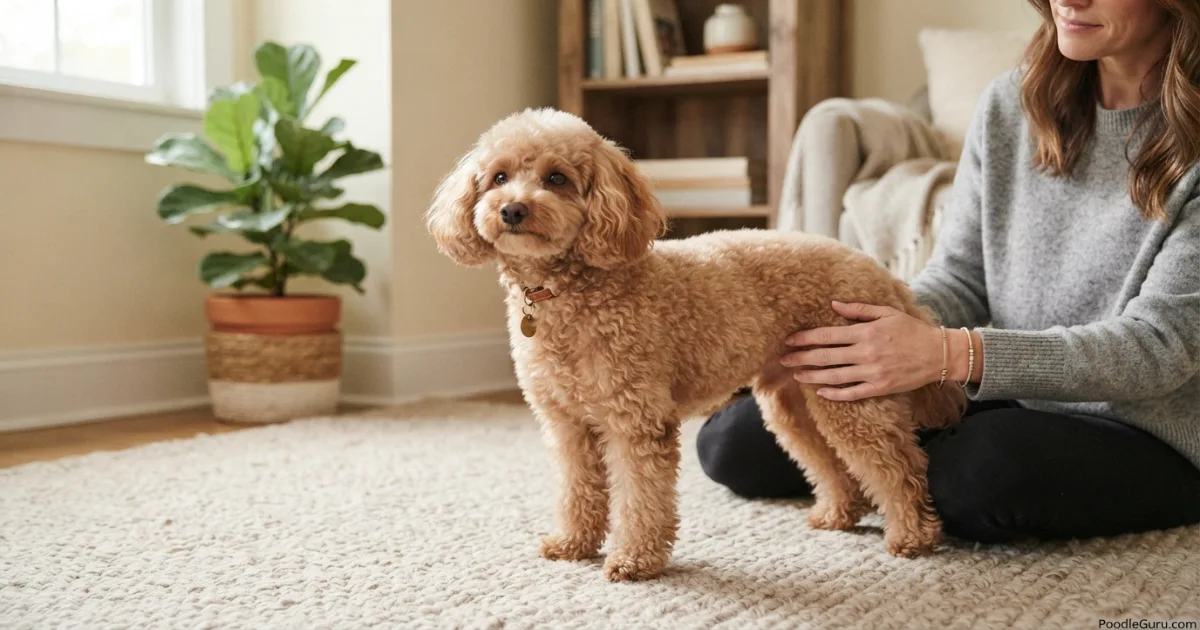
A simple home check: gently run your hands along your poodle’s spine and over each hip. If muscles feel tense, twitch, or your poodle turns suddenly toward your hand, note that area.
You’re not diagnosing — you’re gathering information to share with your vet. Video recordings of your poodle walking, standing, and rising are invaluable because they show what you see at home.
Frequently Asked Questions About Poodle Arthritis
What are the very first poodle arthritis symptoms I might notice?
The earliest poodle arthritis symptoms are often stiffness upon waking, a slight hitch in the stride that disappears after a few steps, and a quiet refusal to jump onto furniture that was previously easy. Some poodles become more withdrawn or irritable. These signs are easy to dismiss, but they’re the best window for early intervention.
Can arthritis be cured in poodles?
No, arthritis is a progressive condition without a cure, but it can be managed effectively. Weight control, joint supplements, anti-inflammatory medications (prescribed by a vet), physical therapy, and home modifications can all significantly reduce pain and slow deterioration. Many poodles live happily with arthritis for years when managed well.
Are Toy Poodles more prone to arthritis than Standard Poodles?
Not more prone overall, but they develop arthritis from different causes. Toy and Miniature Poodles often develop it secondary to patellar luxation, while Standards frequently face arthritis from hip or elbow dysplasia. Both size groups are susceptible, and aging increases risk across all poodles.
What supplements help with poodle arthritis?
Veterinary-formulated joint supplements containing glucosamine, chondroitin, and omega-3 fatty acids (EPA/DHA) are commonly discussed as part of a multimodal plan. Some dogs benefit, while others need prescription pain control, physical rehabilitation, or weight-management support. Always use supplements designed for dogs and confirm the dosage with your vet — human supplements can be unsafe.
Is exercise safe for a poodle with arthritis?
Yes, controlled, low-impact exercise is essential. Short walks on soft surfaces, gentle swimming, and slow play sessions maintain muscle mass that supports joints. Avoid high-impact activities like fetch with hard stops, jumping, or long runs. The key is consistency — daily moderate movement is better than weekend bursts of activity.
How can I tell if my poodle is in pain from arthritis?
Look for behavioral changes: reluctance to move, tucked tail, shallow breathing, reduced appetite, licking joints, and irritability when touched. Some poodles pant excessively or tremble when pain spikes. Keep a simple diary of these signs and share it with your vet — patterns are more useful than single observations.
What’s the best bed for a poodle with arthritis?
An orthopedic memory foam bed that’s thick enough that your poodle never touches the floor through the foam. For Standards, 4–6 inches; for Toys and Miniatures, 2–4 inches. Bolster edges give a sense of security. Multiple beds around the house prevent your poodle from lying on hard surfaces simply to stay near you.
Key Takeaways: Managing Poodle Arthritis With Confidence
Arthritis is common, but suffering is optional. Here’s what to remember:
- Poodle arthritis symptoms are subtle — morning stiffness, reluctance to jump, licking joints, and personality shifts are as important as a limp.
- Toy and Miniature Poodles often develop arthritis from patellar luxation; Standards are more prone to dysplasia-related arthritis. Weight management is the single most powerful tool across all sizes.
- Early intervention with joint supplements, home adaptations like ramps and non-slip rugs, and consistent gentle exercise can dramatically slow progression.
- Never write off mobility changes as “just old age” — pain is treatable, and your poodle doesn’t have to live with it silently.
- Work with your veterinarian to create a multimodal plan: medication, nutrition, environment, and appropriate activity each play a role.
Next step: If your poodle shows any of the subtle signs described here, schedule a veterinary checkup this month. Take notes and a short video of your dog’s movement.
Meanwhile, audit your home for slippery floors and add a supportive bed where your poodle spends the most time. Small moves today can prevent bigger pain later. Dive deeper with our complete poodle health issues guide.