Pet Relocation Dubai to Philippines: Cost, Documents & Timeline
Planning pet relocation from Dubai to the Philippines—or bringing a dog or cat back to the UAE—means following two different government systems. This route guide separates the rules by direction so you can plan permits, veterinary documents, rabies requirements, airline handling and likely costs without mixing the two processes.
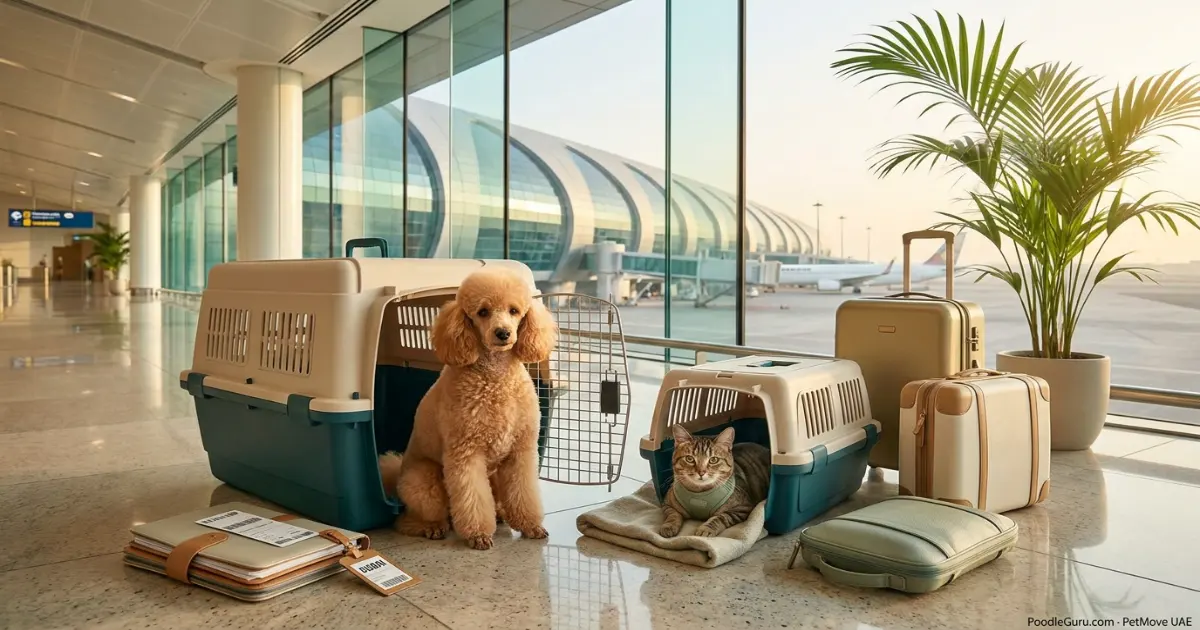
UAE ⇄ Philippines Pet Relocation Cost Estimator
This budgeting tool gives a broad planning range rather than a live airline or relocation-agent quote. Cargo charges, crate size, veterinary work, route, pet size and service level can materially change the final cost.
What You Need for Each Direction
The most common planning mistake is treating “UAE–Philippines pet relocation” as one process. It is two. The Philippines controls entry when the animal lands there, while MOCCAE requirements govern entry into the UAE on the return route.
UAE → Philippines
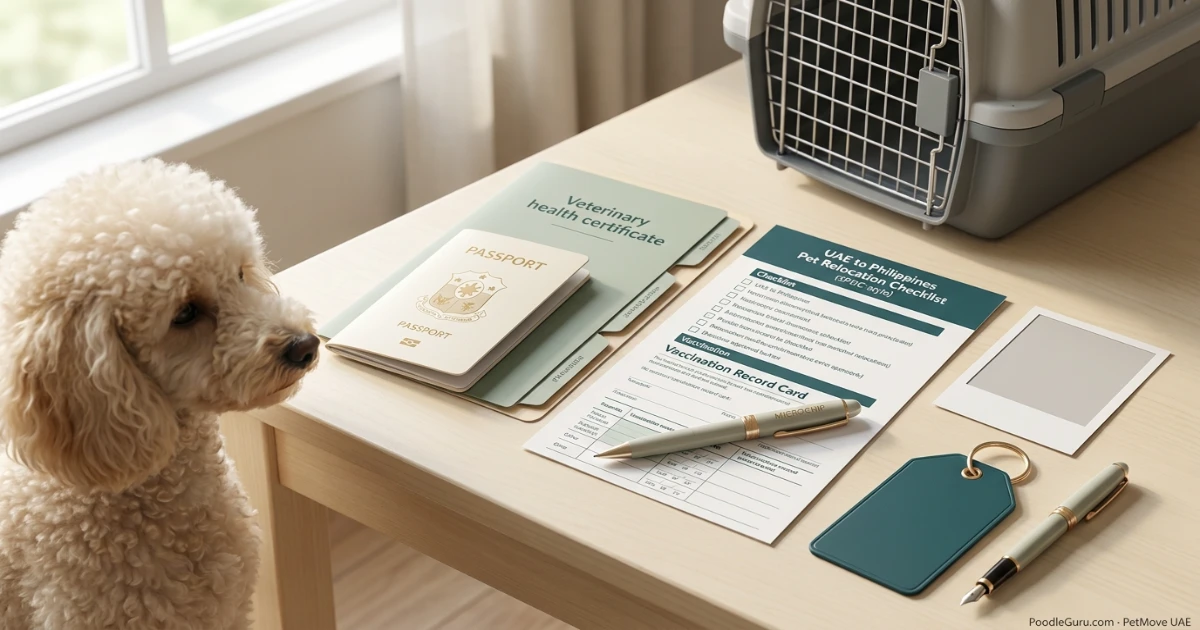
- Secure an approved BAI SPSIC before travel; current permit validity is 60 days.
- Provide vaccination and antiparasitic records, proof of microchip, a photograph of the actual pet and the pet passport when applicable.
- BAI currently states that dogs and cats should be at least 120 days old at the time of SPSIC application.
- The pet must carry an ISO-compatible microchip. Owners of pets with another chip type may need to provide a compatible scanner.
- Obtain the Export Permit/International Veterinary Health Certificate from the exporting country’s veterinary authority within 10 calendar days before departure.
- Carry printed copies of the SPSIC and the original EP/IVHC for arrival clearance.
Philippines → UAE
- Obtain a MOCCAE pet import permit before shipment. The current federal permit fee is AED 200 per animal and the permit is valid for 90 days.
- The pet needs permanent identification by microchip plus the vaccination and veterinary documents required for release.
- Because the Philippines is not on the UAE’s current low-risk rabies-country list, a rabies antibody titre is generally required.
- The titre result must be at least 0.5 IU/ml. Timing depends on whether the rabies vaccination is a valid booster or a first/lapsed vaccination.
- Current UAE release fees are AED 500 per dog and AED 250 per cat.
- Verify the current parasite-treatment, health-certificate and vaccination conditions before the veterinary appointment because these are time-sensitive.
Plan the Paperwork Before the Flight
Work backwards from the intended travel date. For UAE → Philippines, the SPSIC should be secured early enough to leave room for review, but the export/international health certificate belongs close to departure because BAI currently requires it to be issued within 10 calendar days before export.
For Philippines → UAE, the rabies-titre stage can become the longest part of preparation when the pet does not already have a compliant result linked to valid vaccination. Do not book a non-refundable flight until the permit, vaccination history, microchip record and titre timing have been checked together.
| Planning Item | UAE → Philippines | Philippines → UAE |
|---|---|---|
| Import permit | BAI SPSIC; currently valid 60 days | MOCCAE import permit; currently valid 90 days |
| Microchip | ISO-compatible chip required | Permanent microchip required |
| Rabies titre | Not presented by BAI as a standard requirement on its current general dog/cat import page | Generally required for higher-risk origins such as the Philippines; minimum 0.5 IU/ml |
| Health certificate timing | EP/IVHC issued within 10 calendar days before departure | Valid official health certificate required for release; confirm current timing with MOCCAE and the exporting veterinary authority |
| Government fee highlighted here | BAI publishes SPSIC, lodgement and inspection fees payable at arrival clearance | AED 200 permit + AED 500 dog or AED 250 cat release fee |
BAI Rules That Deserve Extra Attention
BAI’s current pet-import page goes beyond the basic permit requirement. For one-time importation it sets a maximum of three animals, requires vaccination and antiparasitic records, proof of microchip and an actual pet photograph, and states that the permit is valid for 60 days.
The same guidance states that dogs and cats should be 120 days or older at SPSIC application. Initial rabies vaccination should be administered at least 14 days before the SPSIC application, while vaccination and parasite-treatment details need to remain valid and consistent with the international veterinary health certificate.
Rabies Titre Planning for Philippines → UAE
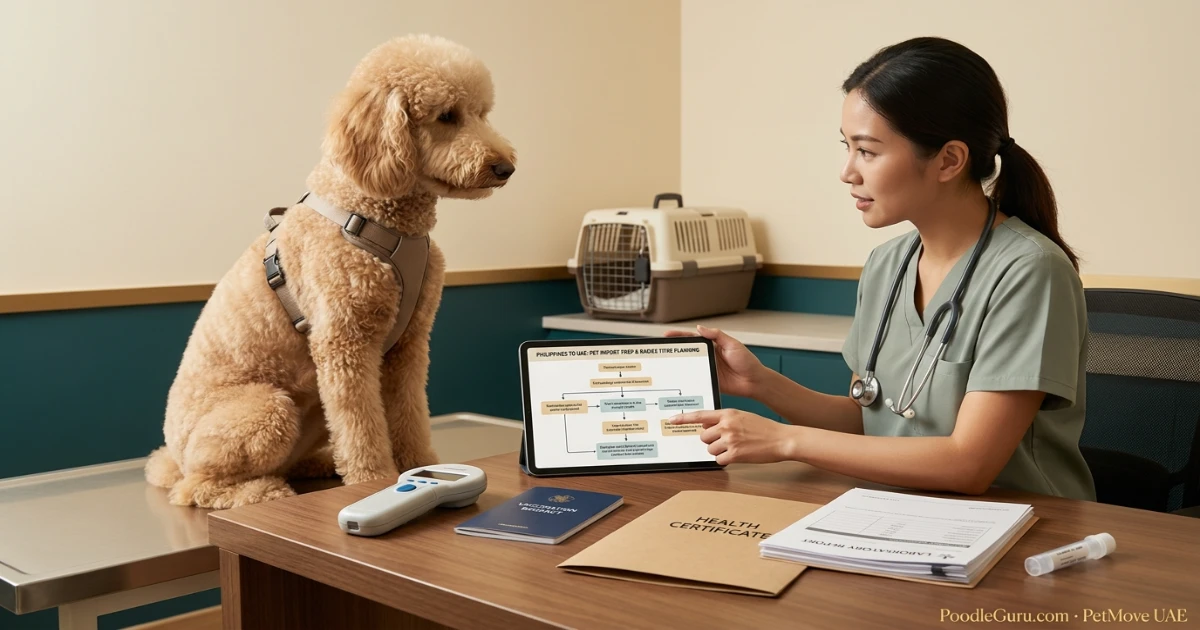
MOCCAE’s current service conditions require an antibody-titration certificate for pets arriving from high-risk origins. The Philippines does not appear on the ministry’s current low-risk list, so owners should plan around this requirement unless the ministry confirms an applicable exemption.
The result must be at least 0.5 IU/ml. MOCCAE states that if the animal has a valid booster vaccination, a 21-day post-vaccination wait is not required before testing. Where vaccination is first-time or has lapsed, the applicable waiting period and test timing need to be respected.
Government Eligibility and Airline Acceptance Are Separate Checks
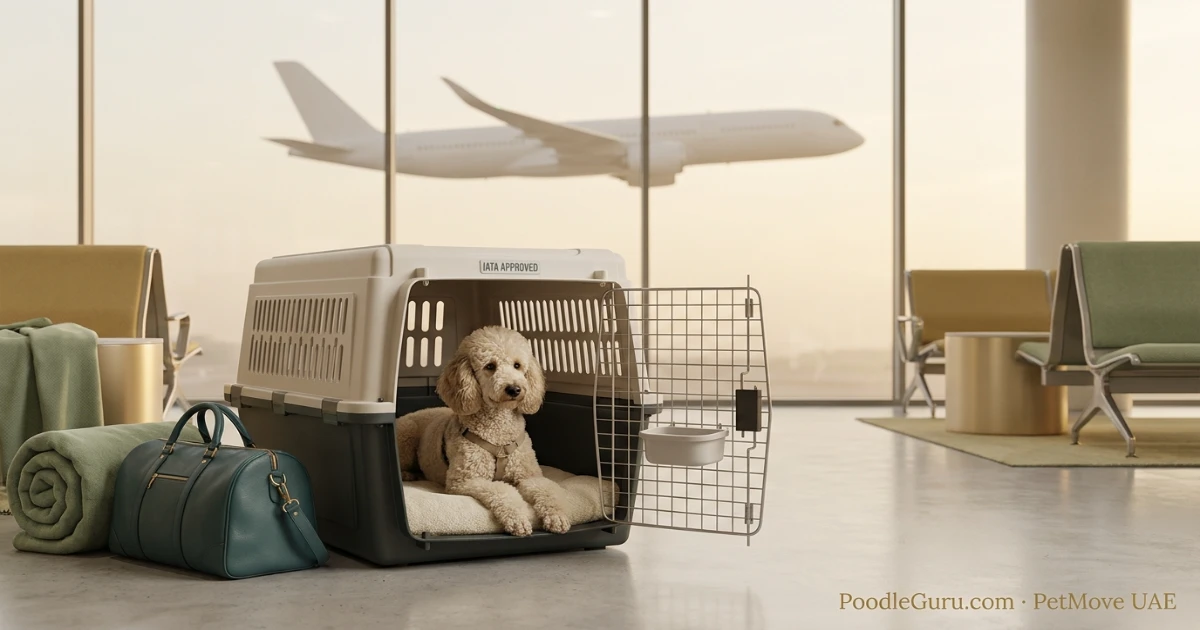
A government permit does not guarantee that a particular airline will accept the animal on a particular flight. Carriers can set their own requirements for crate dimensions, breed, aircraft type, route, cargo handling, connection length and seasonal restrictions.
Confirm the exact operating carrier—not only the airline brand shown on a booking screen—and ask how the pet will travel. A codeshare or aircraft change can affect whether an animal is accepted, especially on connecting journeys.
What Affects Pet Relocation Cost From Dubai to the Philippines?
The biggest private-cost variables are usually the pet’s size, crate dimensions, flight routing, cargo handling, veterinary work and whether you self-manage the paperwork or use a relocation company. Larger crates can materially increase air-freight charges because airlines often price animal transport using chargeable weight or dimensional calculations.
The calculator above is therefore best used as a planning range, not a quotation. Government fees are only one part of the total bill. Ask for written quotes that separate veterinary fees, crate cost, airline/cargo charges, handling, permit assistance, pickup or delivery and destination clearance.
UAE ⇄ Philippines Pet Relocation FAQ
You need an approved Sanitary and Phytosanitary Import Clearance (SPSIC) from the Philippines Bureau of Animal Industry before travel. BAI currently requires supporting vaccination, parasite-treatment and microchip records as part of the application process.
BAI currently states that the SPSIC is valid for 60 days. The travel and veterinary-document schedule should be planned within that validity window.
Current BAI guidance sets a maximum of three animals for one-time pet importation. Owners moving more animals should confirm the appropriate import category directly with BAI before travel.
Generally, yes. The Philippines is not on MOCCAE’s current low-risk-country list, and the UAE requires a compliant rabies antibody titre for pets from higher-risk origins. The accepted result must be at least 0.5 IU/ml.
The current federal MOCCAE import-permit fee is AED 200 per animal. The current release fee is separate: AED 500 per dog or AED 250 per cat.
It is safer to avoid non-refundable bookings until the route’s permit, veterinary timeline and airline acceptance have been checked. Pet travel rules involve several time-sensitive documents, and airline acceptance is separate from government import approval.
Rules Checked Against Government Sources
This guide was reviewed against the official Philippines BAI and UAE MOCCAE pet-import information in September 2026. Government and airline requirements can change, so verify the relevant official pages again before booking.