Teacup Poodle Health Risks + Breeder Red Flags: What Every Buyer Should Know
You’ve seen the photos—a palm-sized puffball with enormous dark eyes, advertised as a “teacup” poodle, so tiny and precious it doesn’t look entirely real. The appeal is visceral. But behind that viral Instagram post or charming breeder website, a buyer must confront a much harder question: what exactly is being sacrificed to produce a dog that small? This guide dissects teacup poodle health risks + breeder red flags without scaremongering, but also without sugarcoating. If you’re genuinely considering one of these tiny dogs, you deserve the unvarnished truth before a purchase that will shape the next decade of your life—and the dog’s.
“Teacup” poodles are not a recognized size variety; they are usually deliberately undersized Toy Poodles bred from runts or genetically stunted lines. The health risks are severe and lifelong: fragile bones, chronic hypoglycemia, liver shunts, collapsing trachea, hydrocephalus, and dental disaster. The red flags in breeders are equally stark: refusal to show health testing, puppies priced purely on tininess, no contract beyond a short guarantee, and a sales pitch heavy on “rare” or “micro” labels. The safest choice is almost always to walk away and select a well-bred Toy or Miniature Poodle from a breeder who prioritizes health over size extremes.
What Is a Teacup Poodle? The Uncomfortable Truth Behind the Label
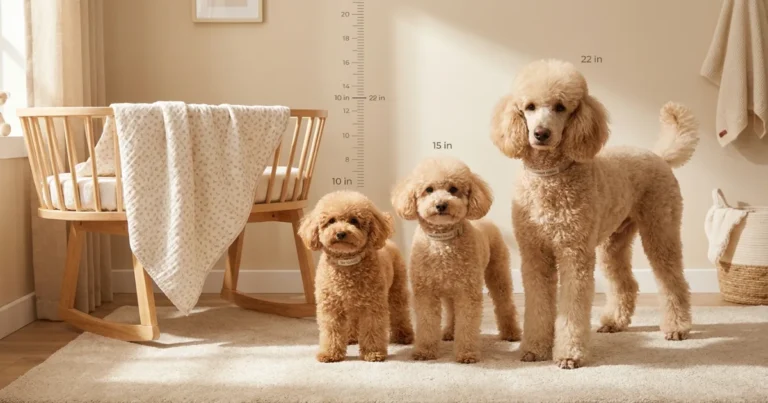
No major kennel club—not the AKC, UKC, or FCI—recognizes “teacup” as a legitimate poodle size. Toy Poodles are defined by a maximum height of 10 inches at the shoulder. A teacup poodle is, in practice, a Toy Poodle bred to fall dramatically beneath even the smallest accepted standard, typically aiming for 1.5 to 2.5 kilograms (3–5 lbs) at adulthood. To achieve this, breeders repeatedly mate the smallest, often sickliest, individuals—frequently runts—compounding genetic frailties with each generation. The result is a dog engineered for weight, not wellness. When you buy a teacup, you are buying into a marketing term, not a breed classification. And that term is often a flag of its own.

Teacup Poodle Health Risks: The Body Under Siege
The health problems clustered in teacup poodles aren’t bad luck; they are predictable consequences of pushing a dog’s body past anatomical limits. Here are the most common and heartbreaking.
Chronic Hypoglycemia
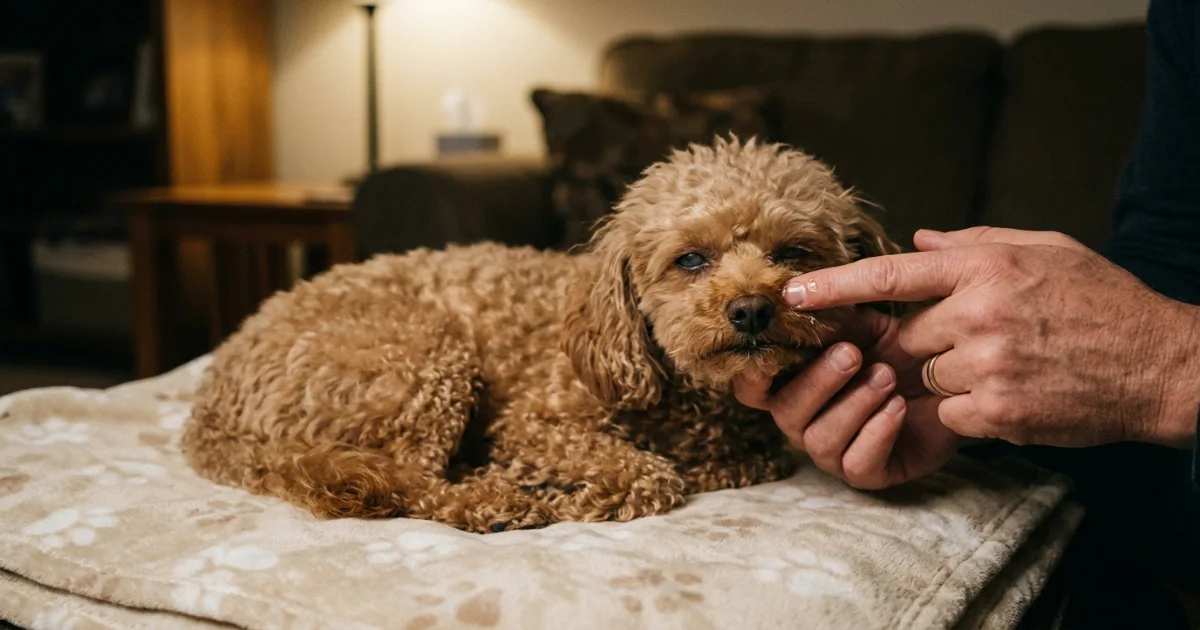
Tiny bodies can’t store adequate glucose reserves. Teacup puppies frequently crash into low blood sugar—lethargy, wobbling, seizures—and many owners spend years managing emergency syrup rubs on gums just to keep their dogs conscious. Skipping even a single meal can tip a teacup poodle into crisis.
Fragile Bones and Joints
Bone density is often insufficient. Jumping off a low sofa or being stepped on accidentally can result in a shattered leg. Toy breeds are already predisposed to luxating patellas and Legg-Calvé-Perthes disease; in teacups, these conditions appear earlier and are more severe. Fracture repair surgery in a dog this small is complex and frequently unsuccessful.
Collapsing Trachea
An undersized windpipe struggles to stay open. Even gentle pressure from a collar can trigger a honking cough and respiratory distress. Many teacup poodles spend their lives in harnesses, but the anatomical defect can’t be fixed without high-risk surgery.
Liver Shunt (Portosystemic Shunt)
Blood bypasses the liver, allowing toxins to circulate straight to the brain. Symptoms include stunted growth, strange behavior after eating, and seizures. Treatment is either an enormously expensive surgery or lifelong dietary management with a guarded prognosis.
Hydrocephalus and Skull Deformities
Breeding for an extremely rounded, apple-domed head often leads to cerebrospinal fluid buildup. Puppies may have open fontanelles (soft spots) well into adulthood, leaving the brain vulnerable. Neurological issues, blindness, and circling behaviors are not uncommon.
Dental Disaster
A mouth sized for a 2-pound dog can’t fit a full set of healthy teeth. Overcrowding, rot, and early tooth loss begin in young adulthood. Professional cleanings under anesthesia are high-risk due to the dog’s size, yet unavoidable.
Many veterinary offices dread teacup poodle emergencies—not because vets don’t care, but because the loss rate is so high. A simple bout of diarrhea that a standard Toy Poodle shrugs off in 24 hours can kill a teacup puppy through dehydration and shock before the owner can get help.

Teacup vs. Healthy Toy Poodle: A Side-by-Side Reality Check
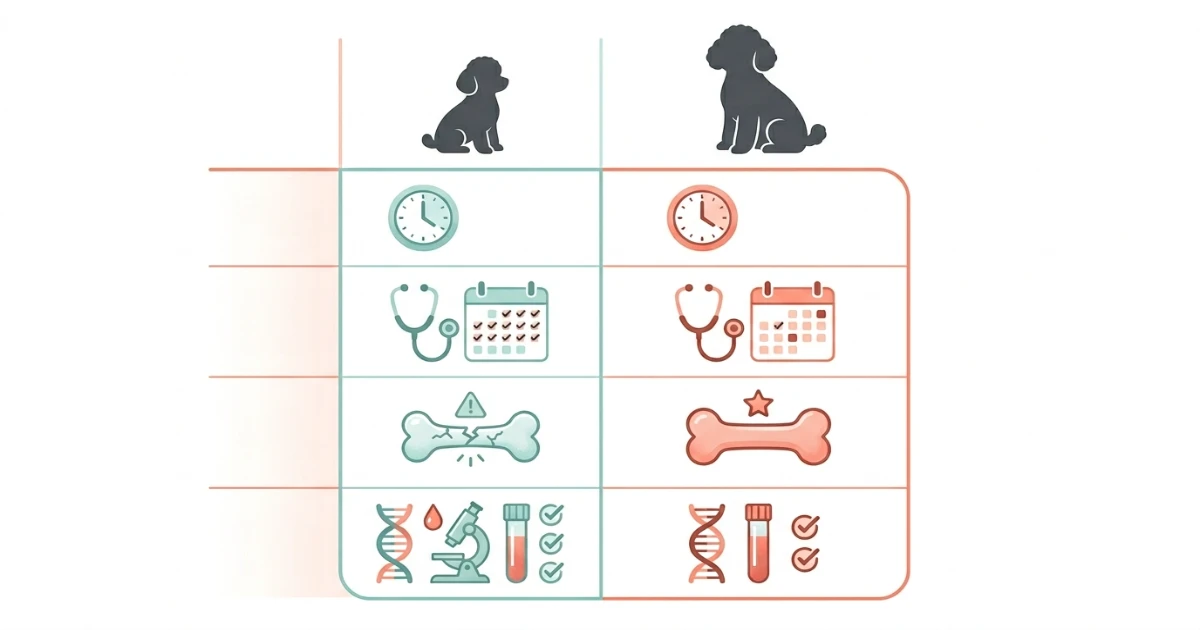
| Characteristic | Teacup Poodle | Healthy Toy Poodle (within standard) |
|---|---|---|
| Adult weight | 1.5–2.5 lbs (often under) | 4–6 lbs |
| Height at shoulder | Under 8 inches, often 6–7 | Up to 10 inches |
| Lifespan | 8–12 years (many much less) | 14–18 years |
| Common health crises | Hypoglycemia, fractures, tracheal collapse, liver shunt | Manageable patella issues, dental care, some eye concerns |
| Veterinary visits per year | 8–15 (emergencies frequent) | 2–4 (routine + prevention) |
| Temperament stability | Often anxious, frail, pain-driven irritability | Confident, playful, adaptable |
| Breeder transparency | Poor — health tests often missing | Excellent — OFA, CERF, patella exams standard |
Breeder Red Flags: How to Recognize a Teacup Operation That Doesn’t Deserve Your Money
The most dangerous teacup poodle sellers hide behind beautiful websites and professionally shot puppy photos. They know buyers are emotionally vulnerable and often uninformed. Learn to spot the patterns.
Red Flag 1: The Word “Teacup” Is the Selling Point
Ethical breeders don’t label their dogs as teacup, micro, pocket, or miniature-teacup. They breed Toy Poodles to the breed standard. If the entire pitch centers on tininess, run.
Red Flag 2: No Health Testing Documentation
Ask for OFA results for patellas, CERF eye certification, and genetic screening for prcd-PRA, von Willebrand disease, and liver shunt markers. If the breeder can’t produce certificates in the parent dogs’ names, they’re cutting corners you’ll pay for later.
Red Flag 3: Puppies Available Immediately, No Waiting List
Responsible poodle breeders usually have waitlists. A constant supply of tiny puppies suggests a puppy mill or a high-volume operation that doesn’t care where the puppies end up.
Red Flag 4: Refusal to Let You Meet the Mother
If you can’t see the dam (and preferably the sire, even if via video) in a clean, home environment, something is being hidden—likely the dam’s own poor health or extreme smallness.
Red Flag 5: Contract or Guarantee Is a Joke
A one-year health guarantee against life-threatening genetic defects is insultingly short when many teacup problems emerge before age two. Ethical breeders stand behind their puppies for years, require spay/neuter, and take back any dog, no questions asked.
Red Flag 6: Pressure to Buy Immediately
“Someone else is coming to see her tomorrow.” High-pressure sales tactics are a universal sign of a seller who doesn’t want you to think too long or consult a veterinarian.
Pro Tip: The Video Call Test
Ask for a live video call to see the puppy with its littermates and mother. A genuine breeder will oblige cheerfully. A teacup mill will have excuses—poor connection, the puppies are sleeping, you can only see staged photos. Hang up and move on.
Teacup Poodle Price Guide 2026: What You’re Actually Paying For
Teacup poodle puppies currently list between $2,500 and $6,000, with rare “micro” colors pushing toward $8,000. The premium comes entirely from the perceived rarity of extreme tininess, not from better genetics or superior care. In fact, the opposite is true: producing these dogs costs less in health testing, and the markup is pure profit on fragility.
What Inflates the Price of a Teacup Poodle
- Color “rarity”: Merle, phantom, or “exotic” markings are often bred irresponsibly for aesthetic, with no regard for the double merle health disaster.
- “Champion” bloodlines: Usually meaningless—no teacup poodle competes in conformation, because it’s outside the standard.
- Shipping and paperwork: Many teacup sellers add exorbitant fees, pushing the total even higher.
By contrast, a well-bred Toy Poodle from health-tested parents typically ranges from $1,800 to $3,500—a far better investment in a dog built to live.
What Buyers Usually Get Wrong About Teacup Poodles
The most pervasive misunderstanding is that teacup poodles are simply “smaller versions” of Toy Poodles and will act like any other poodle. They won’t. The constant physical discomfort many of these dogs live with can manifest as biting, fear-based aggression, and a total inability to cope with normal household noise. A young family expecting a playful lap dog instead gets a trembling animal that screams if a child moves too fast. The size is the smallest part of the challenge.
Another misconception: that veterinary insurance will cover the predictable costs. Many insurers exclude pre-existing conditions, and if the poodle is already showing signs of patella luxation or a heart murmur at purchase, those doors close forever. You’ll be paying out of pocket.
If You’re Considering a Teacup Poodle: Safer Alternatives That Still Fit in Your Lap
The desire for a tiny companion is valid. You’re not wrong to want a small dog. But you can honor that desire without supporting a breeding practice that trades health for size. A standard Toy Poodle bred to the middle of the range (5–6 lbs) is still small enough to carry in a bag, yet sturdy enough to jump onto the couch without snapping a femur. If even that feels too big, consider a well-bred Miniature Poodle from smaller lines—some Miniatures stay under 10 pounds and retain the elegance without the fragility.
Rescue is also a path. Occasionally, a surrendered Toy Poodle or small poodle mix turns out to be a petite, healthy adult. You’ll know exactly what you’re getting, and you’ll bypass the puppy mill pipeline entirely.

Practical Owner Insight: Living with a Dog Who Could Die from a Chill
Owners of teacup poodles often describe a life of hypervigilance. They can’t leave the house for more than a few hours without a trusted caretaker who knows the hypoglycemia protocol. They never let the dog off-lead, even in a fenced yard, for fear of an owl or hawk. They’ve memorized the route to the 24-hour emergency vet. This is not the easy, delightful companionship the marketing promised. It’s a caregiving commitment that rivals that of a medically fragile human child. Some owners rise to it with deep love; many more burn out and grieve. Go in with your eyes open.
Frequently Asked Questions About Teacup Poodle Health and Breeding
Are teacup poodles a real breed?
No. Teacup is a size descriptor invented by breeders, not a recognized variety. The AKC and other major registries recognize Toy, Miniature, and Standard poodles only.
What is the lifespan of a teacup poodle?
While a healthy Toy Poodle often lives 14–18 years, a teacup poodle typically lives 8–12 years, and many die much younger from trauma, organ failure, or complications of chronic disease.
Why are teacup poodles so expensive if they have health problems?
The price reflects marketing, perceived rarity, and high demand from buyers who don’t know the risks—not quality. Producing them costs less in health testing, making it a profitable but unethical business model.
Can a teacup poodle be healthy if the breeder does health testing?
Even with testing, the extreme smallness inherently strains organ systems. A truly ethical breeder will not deliberately breed for teacup size; they may occasionally have a smaller-than-average puppy that is placed with full disclosure and stringent health screening.
What is the smallest poodle size that’s still healthy?
A Toy Poodle within the breed standard—around 4 to 6 pounds—is generally robust and lives a long, healthy life when bred conscientiously. That’s the smallest size ethical breeders pursue.
How do I report a teacup poodle breeder I suspect is unethical?
Document the red flags (lack of health testing, poor conditions, lies about size) and report to the local animal control, the Better Business Bureau if they’re a registered business, and breed-specific rescue networks that track bad actors.
Is it possible to adopt a teacup poodle from a rescue?
Occasionally, but they are rare and often come with disclosed medical needs. Rescue organizations screen adopters carefully because these dogs require specialized care. Expect to demonstrate you can afford the lifetime veterinary commitment.
What should I do if I already bought a teacup poodle and am struggling with its health?
Focus on stability. Work with a veterinarian experienced in toy breed medicine. Feed small, frequent, high-quality meals to avoid hypoglycemia. Poodle-proof your home against falls. Don’t blame yourself—many buyers are deceived—but commit to giving this dog the safest, most comfortable life possible, even if it means difficult decisions later.
Your Affection Doesn’t Have to Be Measured in Ounces
The truth about teacup poodle health risks and breeder red flags is not meant to punish your dream of a tiny companion; it’s meant to protect your heart and your wallet from a tragedy you didn’t sign up for. A poodle’s value is never measured by how little it weighs. Choose a breeder who breeds for soundness, a sturdy frame, and a long, pain-free life. Walk away from anyone who makes “smallest ever” their proudest achievement. The perfect poodle will still fit in your lap—and in your life—without breaking under the weight of its own creation.