This article contains affiliate links. PoodleGuru may earn a small commission if you purchase through our links, at no extra cost to you.
Best Dog Toys for Poodles: Mentally Stimulating Picks
The best dog toys for Poodles do more than keep them occupied. They make a clever dog think, sniff, retrieve, solve, chew safely, and interact with you. A good toy rotation should challenge the brain without creating frustration or adding unnecessary risk.
Quick Answer
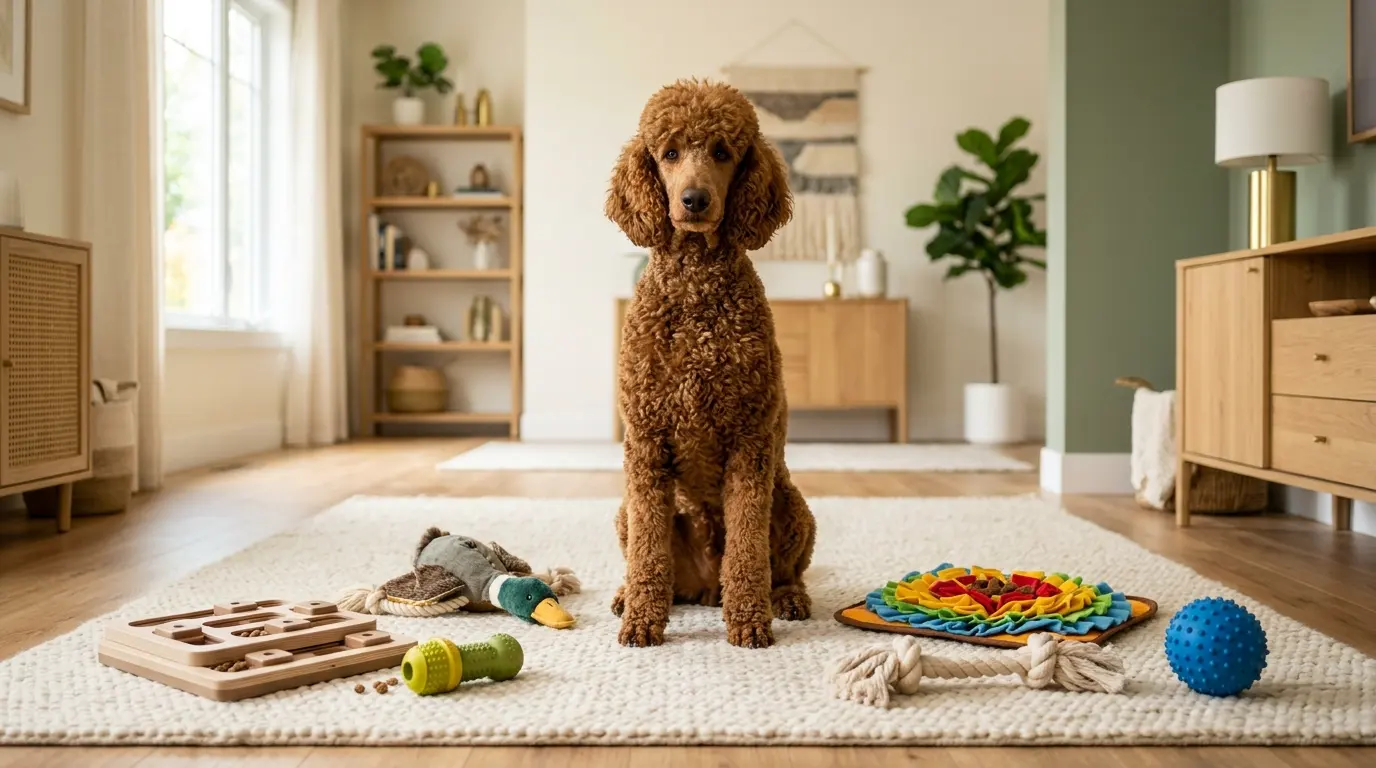
The best dog toys for Poodles are puzzle feeders, food-dispensing toys, snuffle mats, durable fetch toys, tug toys, scent games and appropriately sized chew toys. Poodles are bright, active dogs, so toys that require a decision or interaction usually provide more value than toys that simply lie on the floor. Choose the size and difficulty for your individual dog, supervise new toys, and remove anything that cracks, frays or becomes small enough to swallow.
Dog enrichment toys are play tools designed to encourage natural behaviors such as sniffing, searching, retrieving, chewing, problem-solving or interacting with a person. For Poodle owners, this means a toy can serve a purpose beyond entertainment. The most important thing to understand is that the best toy isn’t necessarily the most complicated one; it’s the toy that creates safe, repeatable engagement for your individual Poodle.
Poodles learn patterns quickly. If every day follows the same walk, the same ball throw and the same food bowl, many will start looking for their own entertainment. That may show up as pestering, stealing household objects or demanding attention—not because a dog needs an endless pile of products, but because predictable routines can become mentally flat.
That is why we treat toys as part of the wider activity plan described in our Poodle exercise guide. Physical movement matters, but thinking, sniffing and learning deserve space in the routine too.
Quick Facts: Choosing Toys for a Poodle
Best for Brain Work
Puzzle feeders, hide-and-seek toys and scent games make the dog investigate, remember and solve rather than simply chase.
Best for Interaction
Fetch and tug create shared play. They are especially useful when you want to mix exercise with cues such as wait, take, drop and retrieve.
Best Safety Rule
Size the toy for the dog in front of you. A toy should not become a choking or swallowing hazard simply because its label says “for dogs.”
What Makes the Best Dog Toys Good for Poodles?
A strong Poodle toy creates participation. The dog has to move it, smell it, retrieve it, manipulate it, wait for it or interact with you to make something happen.
This fits the breed particularly well. The AKC Poodle breed information describes Poodles as active and highly intelligent dogs. In everyday ownership, that combination means many Poodles benefit from activities that exercise both body and brain.
Difficulty should still be appropriate. A puzzle that is too easy becomes background furniture. One that is far beyond the dog’s current skill can create frustration. The useful middle ground asks the dog to work, but still allows frequent success.
Expert Insight: Difficulty Is Not the Same as Quality
At PoodleGuru, we don’t judge a toy by how complicated it looks. A simple towel hide-and-seek game can create excellent scent work, while an expensive puzzle can be poor enrichment if the dog has memorized it or refuses to engage with it.
10 Best Dog Toy Types for Poodles
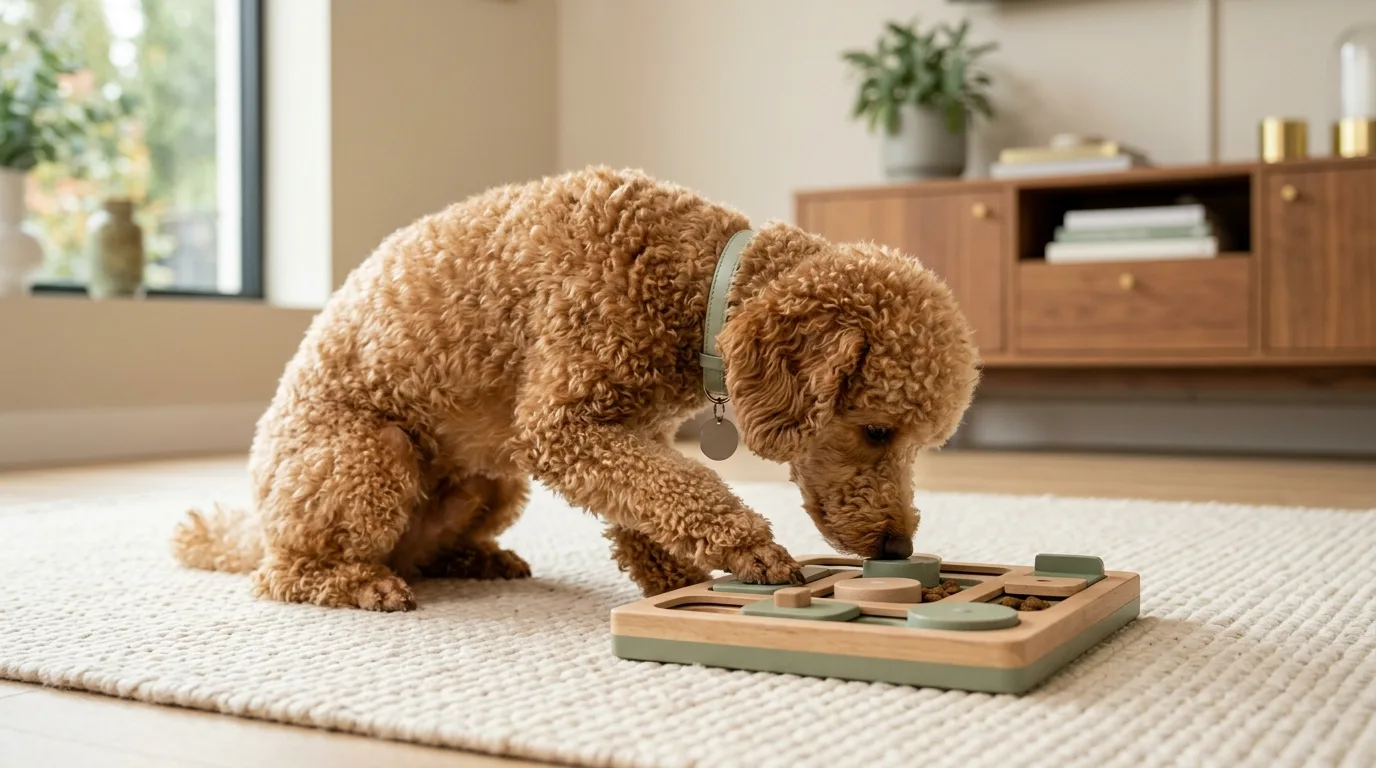
1. Puzzle Feeders
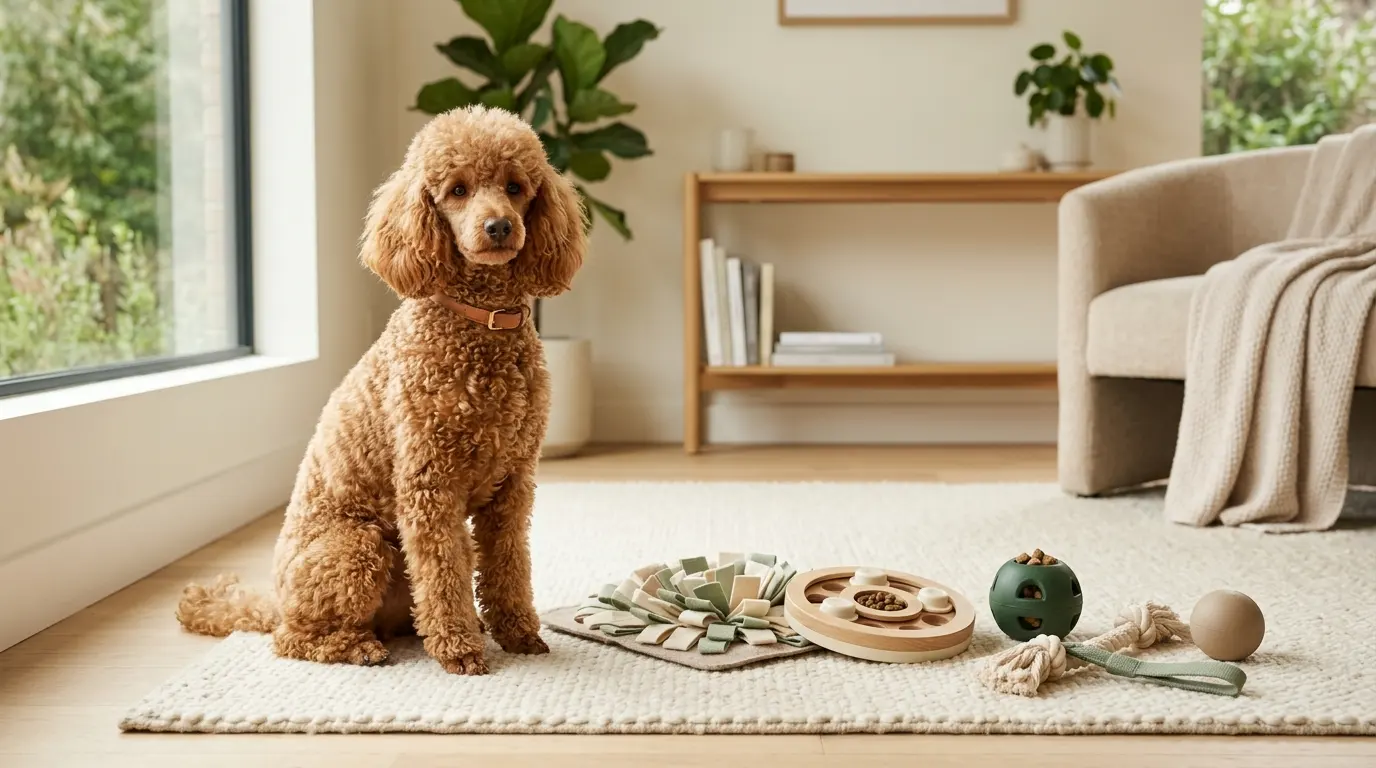
Puzzle feeders are one of the clearest ways to turn food into an activity. Sliding covers, rotating sections and hidden compartments require the dog to investigate before reaching the reward.
Start at an easy level. Once your Poodle understands the basic mechanics, increase complexity gradually rather than jumping straight to the hardest configuration.
2. Stuffable Rubber Food Toys
A durable hollow rubber toy can turn part of a meal into slower, independent enrichment. Food placed inside encourages licking, pawing and manipulation.
These can be particularly useful during quiet periods when you want the dog settled rather than highly aroused. Inspect rubber regularly because even durable toys wear differently depending on the dog’s chewing style.
3. Snuffle Mats
Snuffle mats use strips or folds of fabric to hide kibble or small treats. Instead of staring at a bowl, the Poodle follows scent and searches.
This is useful for Toy, Miniature and Standard Poodles because intensity comes from the search rather than impact on the joints. Supervise dogs that like to tear or swallow fabric.
4. Scent-Search Games
Some of the best toys are really setups rather than products. Hide a favorite toy or a few pieces of food around one room and teach a simple “find it” cue.
Scent work rewards patience and investigation. You can gradually make hiding places more challenging as your Poodle becomes better at the game.
5. Fetch Toys
Many Poodles enjoy retrieving, making balls and soft retrieving toys a natural fit. The best fetch toy is easy to see, comfortable to carry and large enough that your dog cannot accidentally swallow it.
Keep fetch structured. Repeated high-speed jumping, twisting and hard stops aren’t necessary for good play, especially for puppies or dogs with physical limitations.
6. Tug Toys
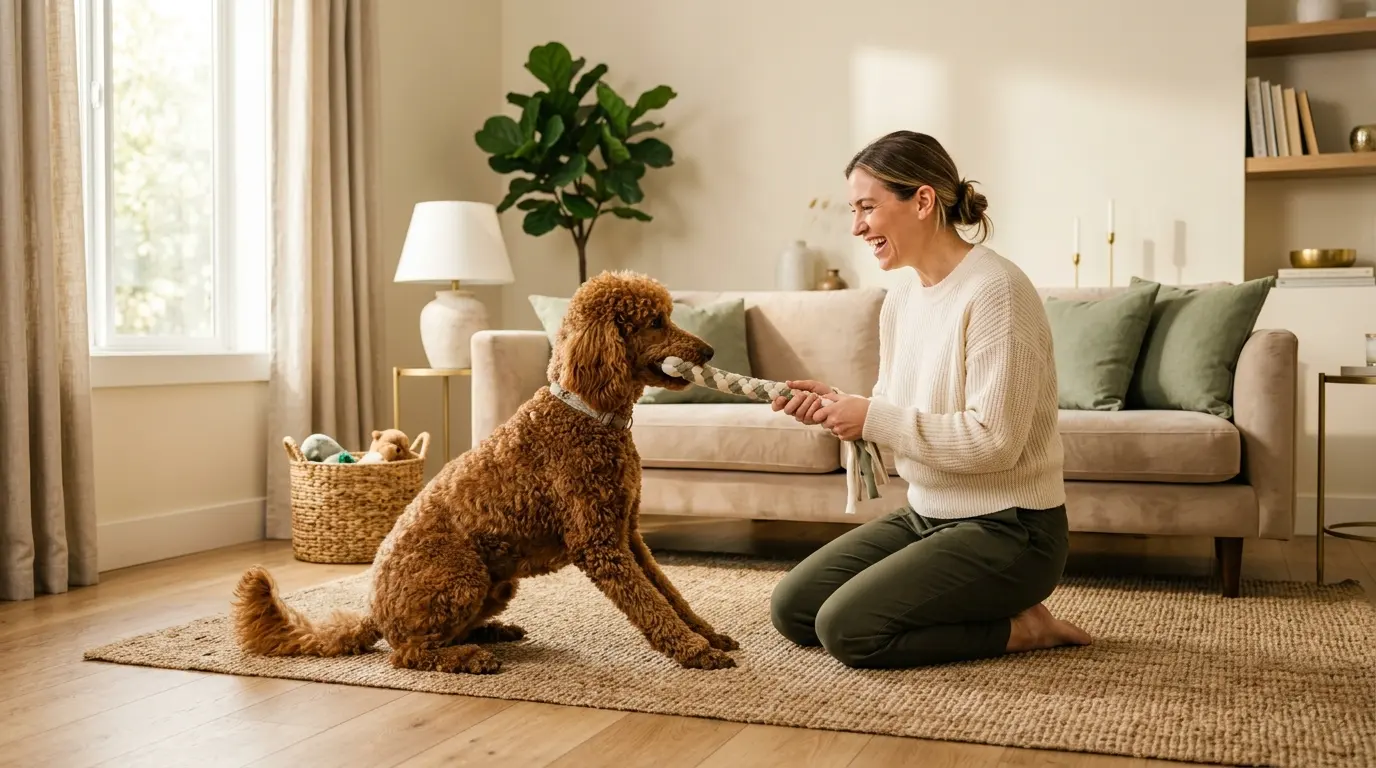
Tug combines physical play with communication. A well-run session can include “take,” “drop,” pauses and restarts, turning a simple toy into an impulse-control exercise.
Use a length that keeps hands away from teeth. Retire rope or fabric toys once fibers begin coming loose.
7. Treat-Dispensing Rollers
Rolling dispensers release food as the dog pushes them around. That cause-and-effect pattern is engaging for Poodles that enjoy experimenting with objects.
Use them on a surface where the toy won’t create excessive noise or roll into hazards such as stairs.
8. Durable Chew Toys
Chewing can help occupy a dog during calmer parts of the day, but “indestructible” should never be taken literally. Choose a shape and material suited to your dog’s chewing intensity and inspect it often.
If pieces are breaking away, the toy has reached the end of its safe life regardless of how recently you bought it.
9. Hide-and-Seek Plush Toys
These toys place smaller soft pieces inside a larger container for the dog to remove. They can be excellent for gentle problem-solving and repeated play.
They are a poor choice for dogs that immediately shred plush material or swallow stuffing. Match the toy to behavior, not appearance.
10. Training Toys Used as Rewards
A favorite ball, tug or soft toy can become a high-value training reward. Instead of leaving it available all day, bring it out for short sessions and put it away while the dog still wants more.
This approach can be especially effective with Poodles that value interaction as much as food. For broader training principles, see our guide to how Poodles learn and respond to training.
Poodle Toy Comparison: What Each Type Actually Does
| Toy Type | Main Skill | Arousal Level | Owner Involvement | Best Use | Watch For |
|---|---|---|---|---|---|
| Puzzle feeder | Problem-solving | Low–medium | Low after setup | Meals and rainy days | Frustration, loose parts |
| Snuffle mat | Scent searching | Low | Low | Calm enrichment | Fabric chewing |
| Fetch toy | Retrieving | High | High | Interactive exercise | Overexcitement, hard stops |
| Tug toy | Impulse control | Medium–high | High | Training and bonding | Fraying material |
| Food-stuffable toy | Manipulation | Low | Low | Settling periods | Damaged rubber |
| Scent search | Nose work | Low–medium | Medium | Mental variety | Food quantity |
This table highlights an important point: toys are tools for different jobs. Fetch is not a substitute for scent work, and a puzzle feeder is not a substitute for interactive play. A balanced collection gives you options based on what your Poodle needs that day.
Choosing Toys for Toy, Miniature and Standard Poodles
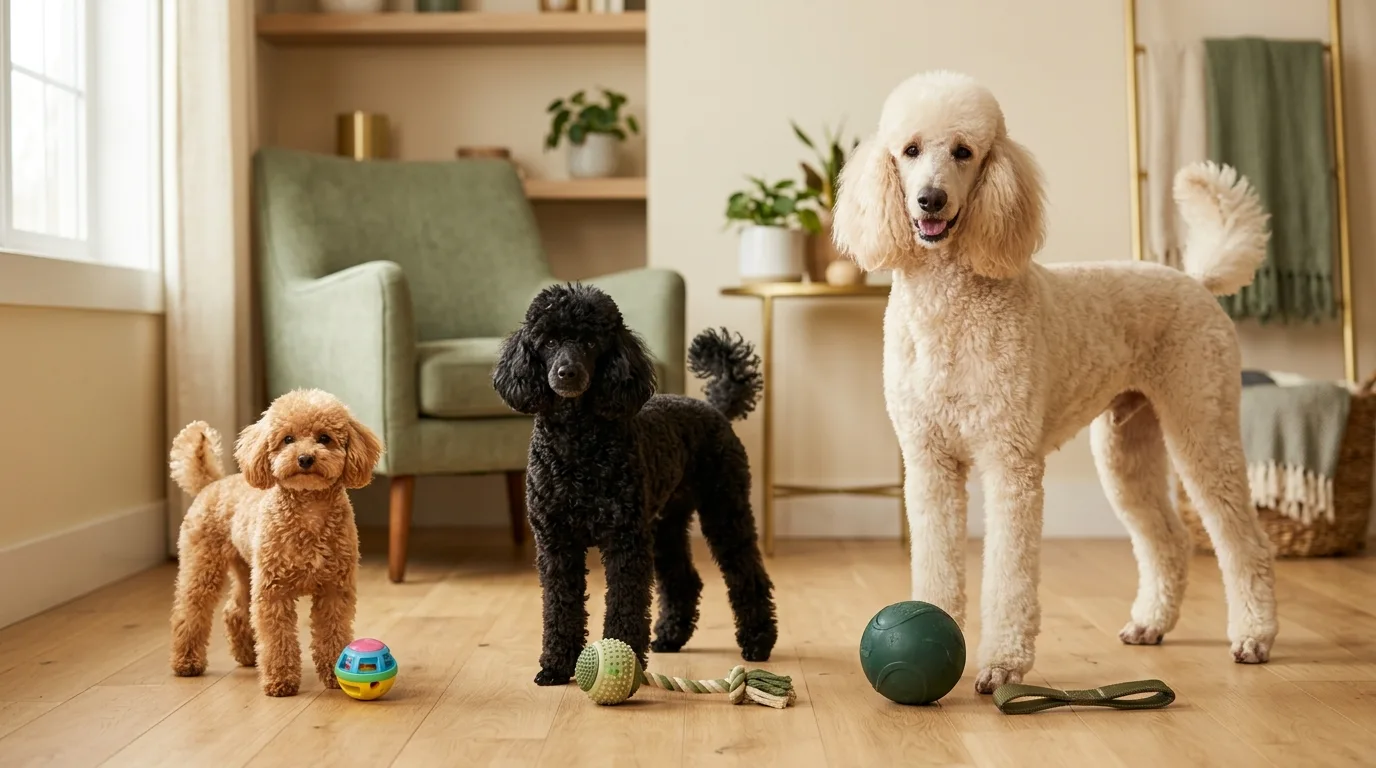
The enrichment goal can stay similar across all three recognized Poodle sizes, but physical scale changes the buying decision. Your dog’s mouth size, body weight, play style and chewing strength matter more than the picture printed on the package.
Toy Poodle
Prioritize lightweight toys the dog can manipulate without needing tiny pieces. Small shouldn’t mean miniature enough to swallow.
Miniature Poodle
Miniatures often suit medium-scale puzzles, fetch toys and tug options. Check fit individually because body and mouth size still vary.
Standard Poodle
Look for larger, sturdier toys that remain safe during enthusiastic retrieving, carrying and tugging. Durability becomes more important with stronger jaws.
Our Poodle size chart can help owners understand the physical differences between varieties, but a packaging weight range should still be treated as guidance rather than a substitute for watching how your dog actually handles the toy.
The PoodleGuru SMART Toy Framework
The PoodleGuru approach to toy selection prioritizes usefulness before novelty. We use the SMART Toy Framework to decide whether an enrichment toy deserves space in a Poodle’s rotation.
The PoodleGuru SMART Toy Check
S — Safe Size
Can the dog comfortably carry or manipulate it without the whole object becoming easy to swallow?
M — Mental Job
Does the toy ask the Poodle to search, solve, retrieve, chew appropriately, wait or interact?
A — Appropriate Difficulty
Can the dog succeed often enough to stay interested without completing the task instantly?
R — Resilient Construction
Does the material suit this dog’s actual chewing and play style, and can you inspect it easily?
T — Time With Purpose
Does the toy improve the day’s routine rather than simply adding another object to the floor?
A toy doesn’t need to score perfectly in every category. A soft fetch toy may not be intended for chewing, for example. The framework simply helps you understand what job a toy performs and where supervision is needed.
Common Toy Mistakes Poodle Owners Make
| Mistake | Why It Causes Problems | Better Approach |
|---|---|---|
| Leaving every toy out all day | Familiar toys can lose novelty and become background objects. | Rotate a smaller selection and reintroduce toys later. |
| Buying by breed label alone | Poodles of the same variety can have different chewing and play styles. | Choose by size, behavior and intended use. |
| Making puzzles too difficult | Repeated failure can turn thinking into frustration. | Start easy and add difficulty after successful sessions. |
| Using toys only for exercise | Fast movement doesn’t provide every form of enrichment. | Include scent, problem-solving and calmer activities. |
| Ignoring wear | A safe toy can become unsafe once cracked, torn or frayed. | Inspect toys routinely and discard damaged items. |
Owner Tip: Don’t Try to “Tire Out” Intelligence
A Poodle doesn’t need nonstop stimulation. Too much high-arousal play can make settling harder for some dogs. Mix energetic games with slower activities such as sniffing, licking, easy training and quiet chewing. The goal is a satisfying day, not permanent entertainment.
How to Evaluate a New Dog Toy for Your Poodle
Use this process whenever you introduce a new toy. It keeps the first session observational rather than assuming the product will be safe simply because it is marketed for dogs.
Check Size and Construction
Compare the toy with your Poodle’s mouth and play style. Look for loose pieces, weak seams, cracks, exposed stuffing or sections that could detach.
Introduce It Under Supervision
Watch the first few minutes closely. Note whether your dog carries, licks, paws, shakes, shreds or tries to swallow parts of the toy.
Adjust the Challenge
For a puzzle or food toy, make the first session easy enough for the dog to succeed. Increase difficulty only after the basic mechanism is understood.
Inspect It After Play
Look again for damage. The visible outcome you want is a toy that remains structurally sound after your dog’s normal style of play.
Decide Its Job
Classify the toy as a fetch, chew, food, scent, training or interactive toy. Store and use it according to that purpose rather than expecting it to do everything.
Build a Better Poodle Toy Rotation
You don’t need a basket overflowing with toys. A smaller, purposeful rotation is often easier to manage and gives old toys a chance to feel interesting again.
A practical setup might include one problem-solving toy, one scent activity, one fetch toy, one tug toy and one appropriate chewing option. Swap one or two choices every few days based on what your dog is using.
Pair this with physical activity rather than treating toys as a replacement for movement. Our guide to Poodle exercise needs by age and size explains why puppies, adults and older dogs may need different activity patterns.
Best Next Step
Today, audit the toys your Poodle already owns. Remove damaged items, identify which enrichment categories are missing, and choose one activity that adds a different type of mental work. You may discover that a simple scent game fills the gap better than buying several new toys.
Frequently Asked Questions
What toys are best for Poodles?
The most useful Poodle toys include puzzle feeders, scent games, stuffable food toys, fetch toys, tug toys and safe chewing options. A balanced selection works better than buying several toys that all provide the same type of play.
Do Poodles need mentally stimulating toys?
Many Poodles benefit from regular mental enrichment because they are intelligent, active dogs that learn routines quickly. Toys that involve searching, problem-solving, retrieving or training can add variety, but they should complement walks, interaction, rest and normal daily life rather than replace them.
Are puzzle toys good for Poodles?
Yes. Puzzle toys can work very well for Poodles when the difficulty matches the dog’s experience. Begin with an easy setup so the dog learns how the puzzle works, then make the task more challenging once solving it becomes routine.
What size toy should I buy for a Toy Poodle?
Choose a lightweight toy that a Toy Poodle can comfortably manipulate but that isn’t so small it can be swallowed. Because product dimensions vary, judge the actual toy against your dog’s mouth size and supervise the first sessions closely.
How many toys should a Poodle have?
There is no ideal number. A purposeful rotation of several different toy types can be more useful than leaving a large collection out permanently. Aim to cover different jobs such as problem-solving, scent work, retrieving, interaction and appropriate chewing.
How often should I rotate my Poodle’s toys?
You can rotate toys whenever interest drops rather than following a rigid schedule. Swapping a few items every several days is a practical starting point. Keep high-value interactive toys stored between sessions if that helps maintain their appeal.
Can Poodles be left alone with puzzle toys?
It depends on the toy and the individual dog. New toys should be introduced under supervision so you can see whether your Poodle solves them normally or tries to tear, swallow or dismantle parts. Only leave a toy unattended when you are confident its design and condition are suitable.
Key Takeaways: Choosing the Best Toys for Your Poodle
The best Poodle toy collection is varied, correctly sized and built around purposeful activities. Mental stimulation doesn’t require constant novelty; it requires giving your dog useful chances to think, search, retrieve, interact and settle safely.
- Poodles benefit from toys that combine problem-solving, scent work, retrieving, chewing and owner interaction.
- A toy’s physical size and construction should match the individual dog’s mouth size, strength and play style.
- Puzzle difficulty should increase gradually so mental work remains challenging without becoming frustrating.
- Toy, Miniature and Standard Poodles can enjoy similar enrichment categories, but the physical scale of the toy should change.
- Rotating a small group of purposeful toys can preserve interest better than leaving every toy available all day.
- Damaged, cracked, frayed or swallowable toys should be removed even if they were originally sold as durable dog toys.