Preparing Your Poodle for a New Baby: Step-by-Step Guide
Bringing a baby home is one of the biggest transitions a Poodle will ever experience. With thoughtful preparation, you can reduce stress, keep supervision clear, and help your dog adjust calmly to a very different household rhythm.
Quick Answer
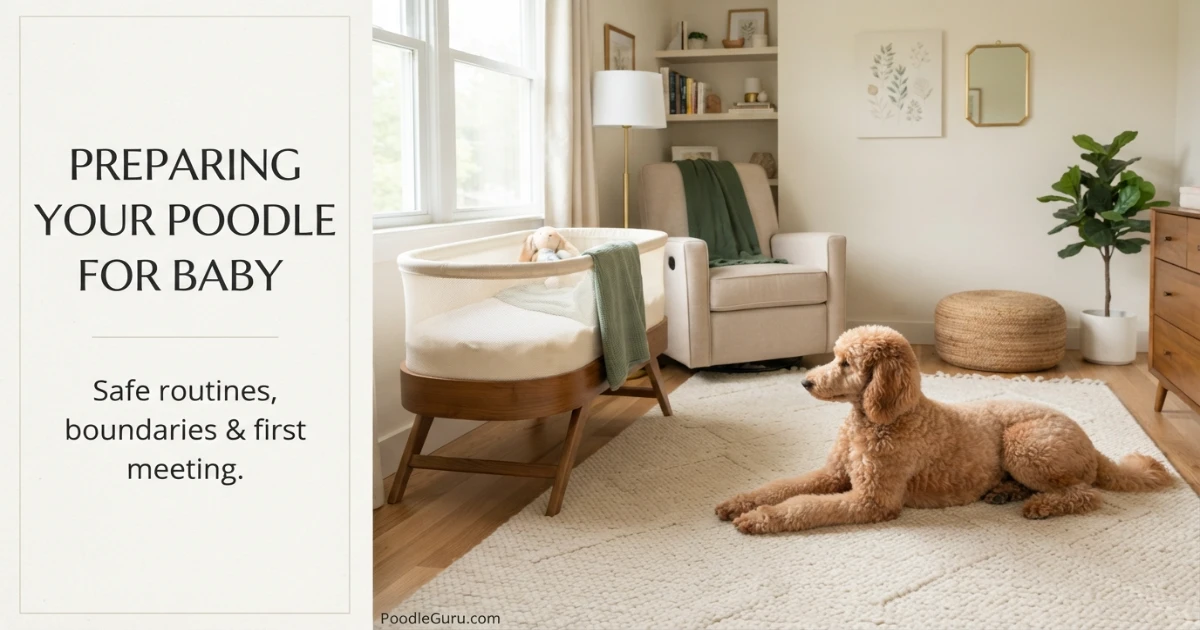
Preparing your Poodle for a new baby means reshaping routines, boundaries, sounds, smells, and calm-settle skills before the baby arrives. For Poodle owners, this matters because the breed is bright, active, and sensitive to sudden household changes. The safest approach is gradual, reward-based preparation: teach a reliable mat cue, practice stroller and nursery boundaries, pair baby sounds with calm rewards, and plan the first meeting with adult supervision. No dog, including a well-trained Poodle, should ever be left alone with a baby.
In This Guide
- What Is Preparing a Dog for a New Baby?
- Quick Facts
- Why Poodles Need a Tailored Approach
- The PoodleGuru New-Baby Prep Framework
- Pre-Baby Training Essentials
- Size-Specific Considerations
- Introducing Baby’s Sounds and Smells
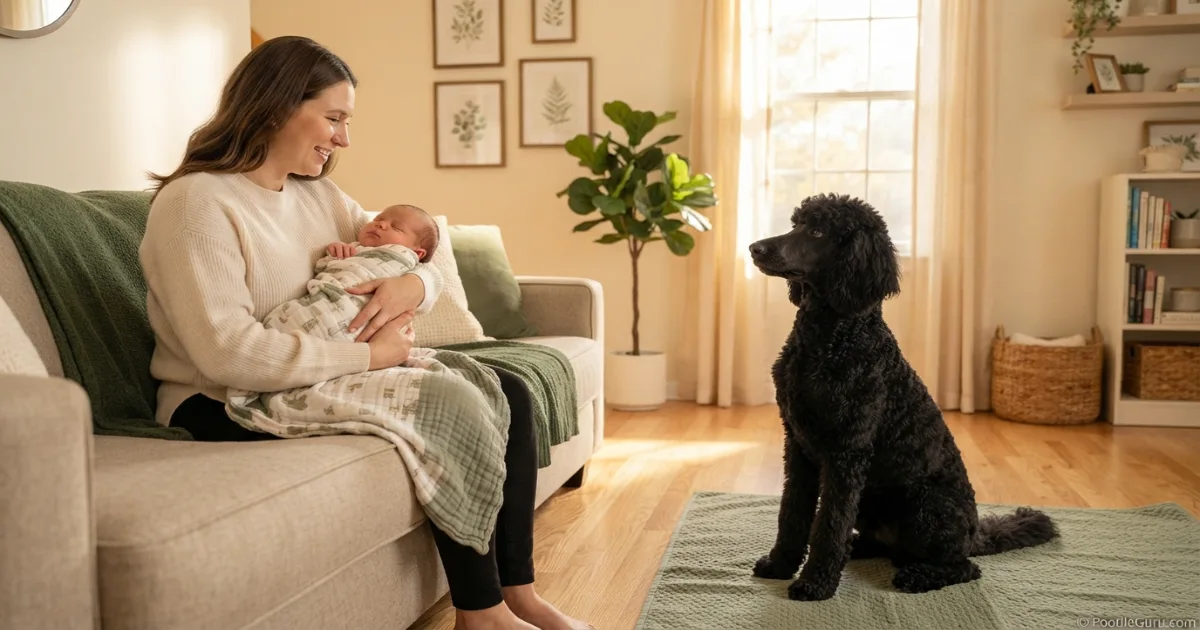
- The First Meeting: A Safe Protocol
- Common Mistakes Owners Make
- Ongoing Management: Boundaries, Routines, Attention
- Owner Action Plan
- Frequently Asked Questions
- Key Takeaways
What Is Preparing a Dog for a New Baby?
Preparing a dog for a new baby is a structured process of environmental, behavioral, and routine adjustments that reduce stress and lower the chance of unsafe interactions when an infant arrives. For Poodle owners, this means using the breed’s quick mind while protecting their emotional sensitivity. The most important thing to understand is that a Poodle who feels included, respected, and calmly prepared is far more likely to accept the baby as part of normal household life than one who is suddenly shut out.
Poodles read tone, routines, and body language closely. If the adults are unsure about the introduction plan, the dog may become more unsettled too. Preparation is not just training the dog — it is building a clear management plan for the whole family. The ASPCA’s guidance on dogs and babies emphasizes teaching dogs calm behaviors around baby-care routines and using positive associations instead of punishment.
Quick Facts
Start Early
Begin preparation 3–4 months before the due date. This gives your Poodle time to learn new rules without pressure and makes the changes feel normal.
Poodles Are Sensitive
Rough corrections or sudden isolation can trigger anxiety in this breed. All preparation should rely on positive reinforcement and gradual exposure.
Supervision Is Non-Negotiable
No dog — regardless of breed or temperament — should ever be left alone with a baby. Even a well-prepared poodle can startle or react unexpectedly.
Why Poodles Need a Tailored Approach
A generic “preparing dog for baby” checklist can miss what makes Poodles unique. Their intelligence means they learn patterns quickly, so inconsistent practice can confuse them. Their sensitivity also means harsh corrections around baby items can create avoidable worry instead of calm curiosity.
The bright side is that Poodles are highly trainable. They can learn a “gentle” cue, a “go to your mat” cue, and new household rhythms quickly when you teach with patience and rewards. Their attachment to their owners, when managed well, can become calm watchfulness instead of attention-seeking or anxiety. A secure Poodle has a clear place to settle while adults care for the baby.
The AKC describes Poodles as highly intelligent, active dogs that need regular exercise and training. Those same traits can support a smoother baby transition when the plan is steady, positive, and realistic.
The PoodleGuru New-Baby Prep Framework
At PoodleGuru, we guide families through three phases that align with a Poodle’s learning style. Each phase builds on the last.
Desensitize to New Sensory Input
Long before the baby comes home, expose your Poodle to recorded baby sounds at low volume, baby-safe lotion scent on a cloth, the stroller, the bassinet, and nursery items. Pair calm investigation with high-value treats so the new stimuli predict good things rather than sudden loss of attention.
Rewrite the Daily Routine
Gradually shift your Poodle’s walking, feeding, resting, grooming, and one-on-one attention times toward what you can realistically maintain after the baby arrives. If walks will move from 8 a.m. to 6 a.m., start adjusting now. Poodles thrive on predictability, and slow changes are kinder than a sudden schedule reset.
Teach Stationing and Calm Defaults
Train a solid “go to your mat” cue and reinforce calm lying-down behavior. This gives your Poodle a safe job during feeding, diaper changes, visitors, and crying. A dog who knows where to settle is less likely to pace, jump, or demand attention during difficult moments.
Pre-Baby Training Essentials
These skills aren’t optional — they’re the difference between a stressed household and a smooth transition.
- Gentle mouth: Practice taking treats softly from adult hands. Use the cue “gentle” and reward calm lip movements. This does not mean the dog should interact with the baby’s hands or face; it simply builds better impulse control.
- Leave it and drop it: Baby items will be everywhere — pacifiers, socks, burp cloths. A reliable leave-it and drop-it can prevent a dangerous swallow or resource guarding.
- Loose-leash walking beside a stroller: Introduce the stroller early. Walk your Poodle beside it with a loose leash, rewarding eye contact and calm pacing. A Poodle who pulls or barks at the stroller needs desensitization before the baby is in it.
- Door greetings without jumping: Practice having visitors enter without your Poodle leaping. Use a tether or mat stay. The baby’s arrival home should not be a chaotic, jumping scene.
- Handling acceptance: Gently touch paws, ears, tail, and muzzle while giving treats so grooming and routine care stay easy. This does not give babies permission to grab; adults should prevent pulling, poking, or climbing.
Size-Specific Considerations for Poodles and Babies
| Poodle Size | Key Safety Concern | Training Priority | Space Management |
|---|---|---|---|
| Toy Poodle | Fragility — a clumsy toddler or dropped item can seriously injure a 5-lb dog | Teach a “safe spot” (crate or raised bed) where the dog retreats when overwhelmed | Baby gates to separate dog and crawling baby when unsupervised; no dog on furniture when baby is on a blanket |
| Miniature Poodle | Startling — may react fearfully to sudden baby sounds, leading to a nip | Heavy desensitization to crying, plus mat-stay during feedings | Similar gates; ensure the dog has an escape route away from the baby |
| Standard Poodle | Size — a happy tail wag can knock a toddler over; a jump can scratch | Four-on-the-floor greeting; calm default when people hold the baby | Clear boundaries around the nursery; teach “out” when the baby is on the floor |
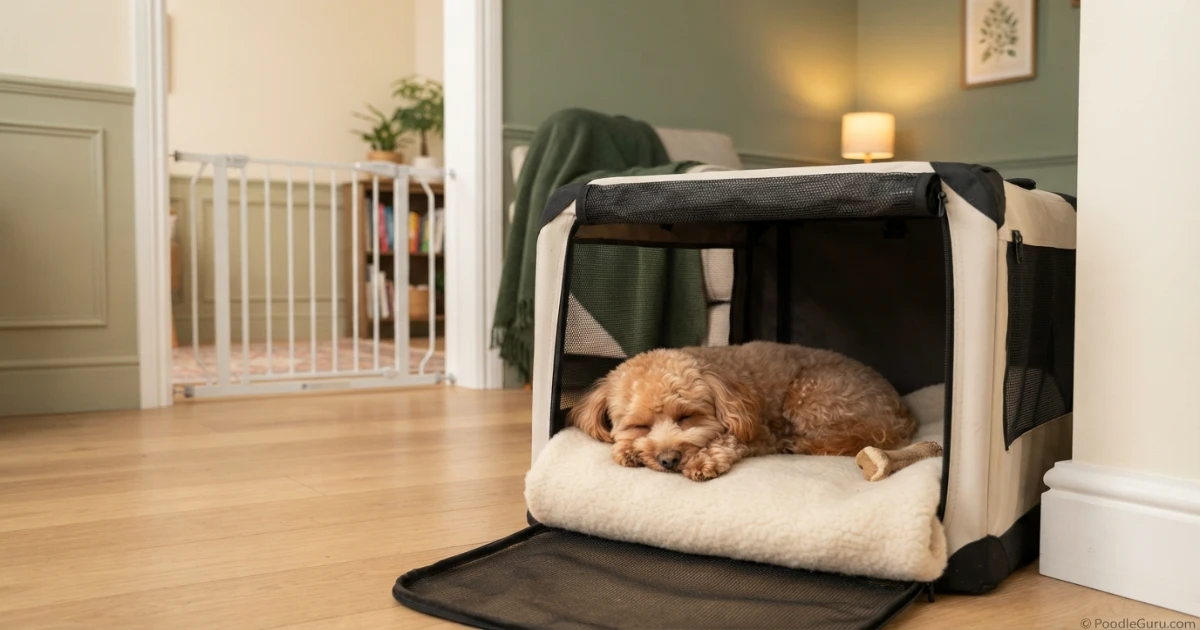
Regardless of size, every Poodle should have a private, comfortable area — an open crate, gated room, or quiet bed — where they can retreat when they need space. This is not punishment; it is a predictable safe zone in a home that has suddenly become louder and busier.
Introducing Baby’s Sounds and Smells
One of the most overlooked steps is sensory preparation. Poodles have sharp hearing and a strong sense of smell, so new stimuli can be alarming.
Play Baby Sound Recordings
Start at low volume while your Poodle eats or plays. Gradually increase the volume and duration over several weeks. The goal is for crying sounds to become background noise, not a trigger for barking or anxiety.
Introduce Baby Scents Early
Before the baby comes home, have an adult bring a blanket or onesie the baby has worn, if your hospital and family routine allow it. Let your Poodle sniff it calmly from the floor or from an adult’s hand — never push it toward the dog. Pair relaxed investigation with treats, then put the item away.
Use a Doll for Practice
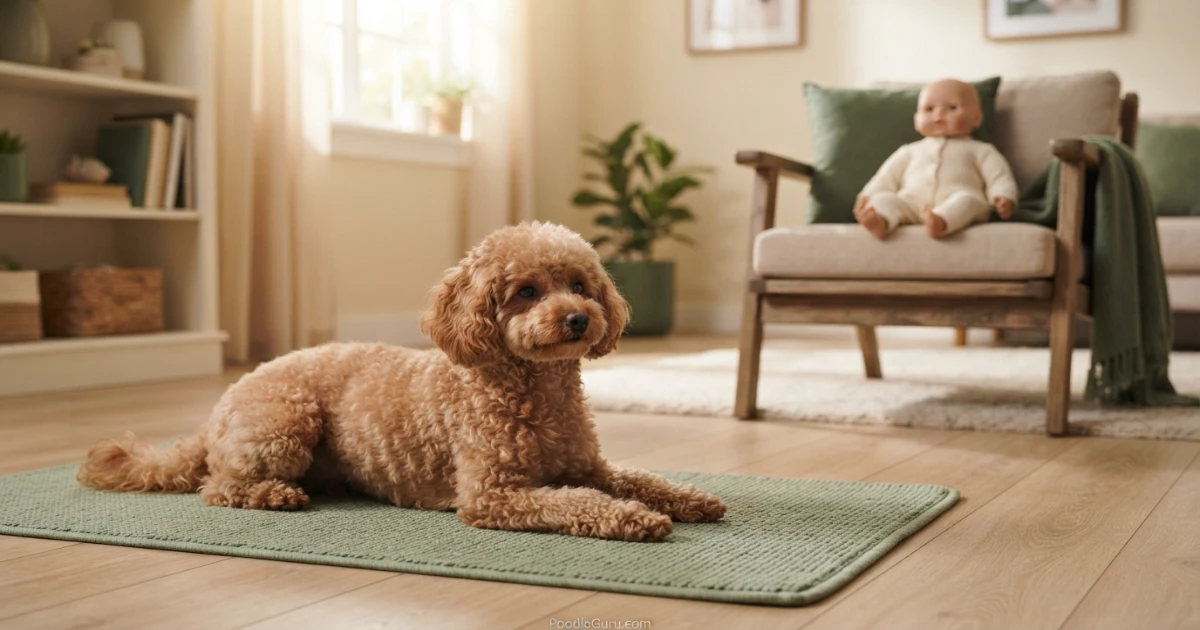
Hold a doll in your arms while giving your Poodle the “mat” cue. Reward calm behavior. Practice walking around the room with the doll in a baby carrier. This rehearsal lets you reward the behavior you want later — without real-baby pressure.
The First Meeting: A Safe Protocol
The day your baby arrives home is charged with emotion. A calm introduction helps set the tone, but safety depends on supervision and management every day after that.
- Give your Poodle a calm outlet first. A sniff walk, gentle play, or enrichment session before the introduction helps your dog approach the meeting with a settled mind, not pent-up energy.
- Greet the dog without the baby first. If possible, have one parent enter alone, greet the poodle warmly, and let them settle. Then bring the baby in quietly, in a car seat or held calmly.
- Let the dog sniff from a safe distance. Keep the baby held securely by an adult. If your Poodle is relaxed, allow a brief sniff of the blanket or covered feet — not the face or hands. Reward gentle investigation with soft praise and treats.
- Watch body language closely. A stiff body, whale eye, lip licking, or low growl means the dog is overwhelmed. End the interaction and give the dog a break. Never force proximity.
- End on a positive note. After a brief, calm interaction, give your Poodle a high-value chew or stuffed food toy in their safe space. The message: baby’s presence predicts good things and calm distance is rewarding.
Common Mistakes Owners Make
| Mistake | Why It Happens | Better Approach |
|---|---|---|
| Excluding the dog suddenly | Fear that the dog will be jealous or unsafe | Gradual space boundaries; include the dog with a “place” cue in the same room while supervised |
| Neglecting exercise and attention | Overwhelming new-parent exhaustion | Arrange help — a dog walker, a family member — to maintain walks and play. A bored poodle is a stressed poodle. |
| Punishing natural curiosity | Startling when the dog sniffs the baby | Redirect to a desired behavior; a sharp “no” can create fear of the baby |
| Leaving baby items within reach | Assuming the dog knows which items are off-limits | Use “leave it” training and keep pacifiers, bottles, and soiled diapers securely out of reach |
| Skipping the “safe zone” setup | Thinking the dog can handle constant togetherness | Every poodle needs a quiet retreat. Set it up before the baby arrives so it’s familiar, not a punishment. |
Ongoing Management: Boundaries, Routines, Attention
The first few months are an adjustment marathon, not a sprint. Expect some regression — a previously calm poodle may whine more, seek extra attention, or seem restless. This is normal. Respond with consistency, not frustration.
- One-on-one time, daily: Even 5 minutes of focused play or cuddling without the baby in the room reminds your Poodle they’re still valued. It’s not spoiling — it’s maintaining a bond.
- Predictable baby-dog interactions: When the baby is calm, invite your Poodle to lie nearby on their mat. Reward. Build the pattern: “baby calm = dog gets treats.”
- Never leave the dog and baby unsupervised together, not even for a moment. No matter how solid the training, it’s not worth the risk.
- Keep up with grooming. A matted Poodle is an uncomfortable Poodle. Discomfort can lower tolerance and increase irritability. Post-baby, it is easy to let grooming slide, but coat care is essential for comfort and skin health.
Owner Action Plan: Week-by-Week Countdown
- 3–4 months out: Start sound desensitization, introduce the stroller, shift walking schedule.
- 2 months out: Train “go to mat,” “gentle,” and “leave it.” Set up the safe zone.
- 1 month out: Practice with a doll, introduce baby-safe scents and, when available, a baby-worn blanket, finalize the feeding/walking routine.
- Due date week: Ensure a trusted person is assigned to exercise the dog on the day you go into labor. Prepare frozen Kongs for the first days home.
- First weeks home: Prioritize calm introductions, short positive sessions, and maintaining the dog’s routine as much as possible.
If at any point your Poodle shows extreme anxiety, resource guarding around baby items, repeated growling, snapping, or lunging, separate dog and baby calmly and contact a certified force-free trainer, certified behavior consultant, or veterinary behaviorist. Early help prevents escalation.
Frequently Asked Questions
How early should I start preparing my poodle for a new baby?
Start at least 3–4 months before the due date. This allows time for gradual desensitization to sounds, routine changes, and skill training without pressure. Poodles thrive on predictability, and rushed changes can cause anxiety.
Will my poodle be jealous of the new baby?
Poodles can experience something that looks like jealousy, but it’s usually anxiety about disrupted routines and reduced attention. Proactive training, maintaining some one-on-one time, and using positive associations (treats when baby is near) can prevent these feelings from developing.
Can I let my poodle lick the baby?
It is safest to avoid allowing your dog to lick the baby’s face or hands. Redirect to calm proximity instead — lying on a mat nearby while adults supervise is a better alternative.
What if my poodle growls at the baby?
A growl is a warning — never punish it. Immediately separate the dog and baby calmly, and contact a certified positive-reinforcement trainer or veterinary behaviorist. Punishing the growl can suppress the warning and lead to a bite without warning.
How do I manage walks with a baby stroller and my poodle?
Desensitize your Poodle to the stroller weeks in advance. Practice loose-leash walking beside an empty stroller first, then add mild distractions. Do not attach the leash to the stroller; use a standard leash handled by an adult. Start with short walks when the baby is calm and reward your Poodle for good stroller manners.
Should I send my poodle away when the baby first comes home?
Generally, no. Sending a Poodle away can increase anxiety and make the transition harder. Instead, have a helper manage the dog for the first few days while you settle in, but keep the dog in their familiar environment with their routine maintained as much as possible.
Are Poodles good with babies and children?
Well-socialized, positively trained Poodles can be excellent family dogs. They are intelligent and often bond deeply. However, individual temperament varies, and every dog-baby interaction must be actively supervised by an adult. Early, gentle exposure and clear boundaries are key.
What’s the biggest mistake new parents make with their poodle?
Suddenly shutting the dog out of family life. Drastic changes — like banning the dog from the living room overnight — create confusion and anxiety. Gradual boundary training with positive reinforcement works far better and preserves trust.
Key Takeaways
- Preparing your Poodle for a new baby should begin 3–4 months before the birth with gradual desensitization to sounds, scents, and routine changes.
- The PoodleGuru New-Baby Prep Framework (Desensitize, Rewrite Routine, Teach Stationing) aligns with poodle intelligence and sensitivity to build confidence.
- Toy Poodles need careful physical protection; Standards need calm greeting training; all sizes benefit from a safe retreat zone and positive reinforcement.
- Never punish curiosity or growling; instead redirect and seek professional help for any signs of aggression or extreme fear.
- Maintaining your Poodle’s exercise, grooming, and daily one-on-one attention — even in small doses — prevents anxiety and preserves your bond.
- The first meeting should be calm, brief, and positive, with the dog exercised beforehand and never forced into proximity with the baby.
Start this week: play a baby-crying recording at very low volume while your Poodle enjoys dinner or treats. That small, consistent step begins building a calm association with baby sounds.