Off-Leash Training a Poodle: How to Build Reliable Recall
Off-leash training a Poodle is not about trusting intelligence alone. It is a gradual process of building a rewarding recall, practicing around controlled distractions, using a long line for safety, and knowing when an environment is too risky for off-leash freedom.
Quick Answer: How Do You Train a Poodle Off Leash?
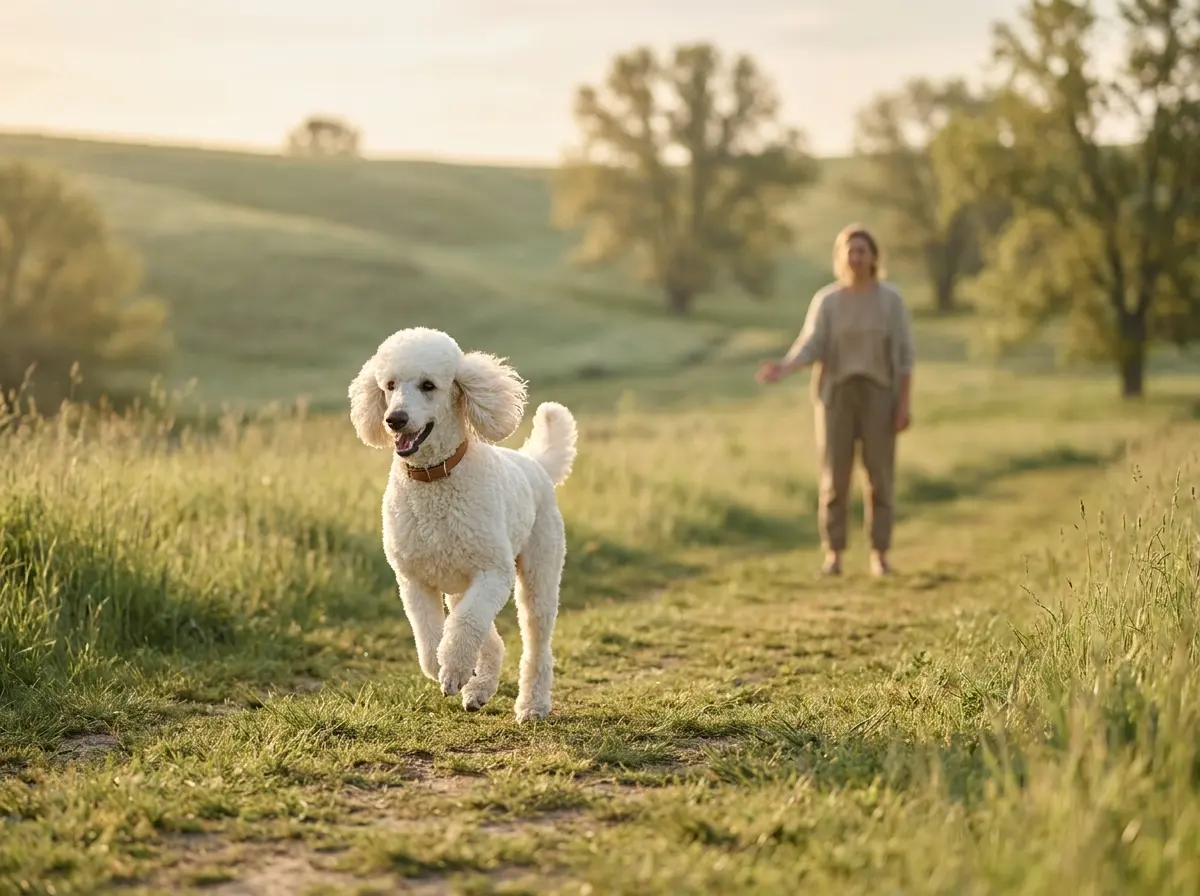
Start with a recall cue in a quiet indoor space and reward every successful return generously. Add distance and distractions in small steps.
Move outdoors on leash before progressing to a long line attached to a well-fitted harness. Use enclosed areas for early off-leash sessions, and only unclip where it is legal and low risk.
In This Guide
Why Off-Leash Reliability Matters for Poodles
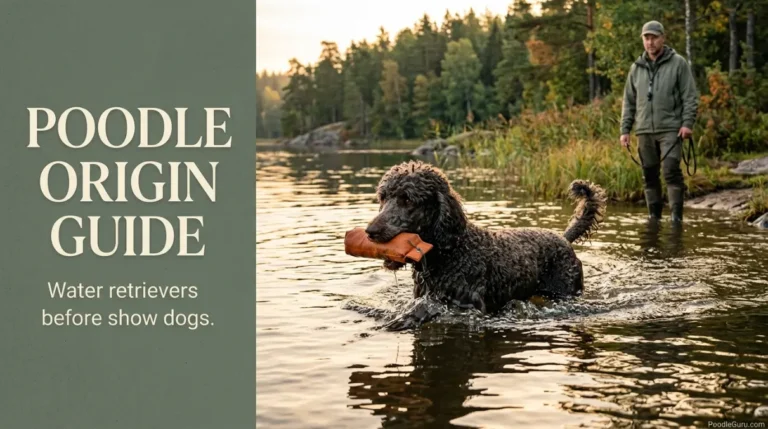
Poodles were developed as water retrievers that worked closely with handlers. That history helps explain why many Poodles enjoy training, retrieving, swimming, and staying engaged with their person.
Individual dogs still vary. Some Poodles are highly interested in birds, squirrels, other dogs, scents, or movement, so intelligence alone does not make a dog safe off leash.
Reliable recall can be an important safety skill. It may help you regain control before your Poodle reaches traffic, wildlife, an unfriendly dog, or another hazard.
The AKC recall guide recommends starting in a quiet environment, using rewards your dog values, and increasing distance and distractions gradually.
Off-Leash Training a Poodle: Quick Facts
There Is No Universal Timeline
Basic recall can improve within weeks, while dependable responses around outdoor distractions may take much longer. Age, training history, motivation, health, confidence, and environment all affect progress.
Recall Is the Foundation
Your Poodle should respond in several controlled environments before you consider more freedom. One excellent session is not proof of reliability.
Outside Is Harder
A Poodle that recalls beautifully indoors may struggle outside. Lower the difficulty, add distractions gradually, and keep the reward strong enough to compete with the environment.
The PoodleGuru Off-Leash Reliability Framework
Use four layers: connection, recall, proofing, and maintenance. Each layer makes the next one safer.
Foundation: Build the Bubble
Reward voluntary check-ins, eye contact, and choosing to stay near you. The goal is to make proximity valuable before you depend on a formal cue.
Recall: Build One Clear Cue
Choose one recall cue such as “come,” “here,” or a whistle. Practice it first where success is easy, and reward the full return generously.
Proofing: Generalize the Skill
Practice in new places and around controlled distractions. Increase only one challenge at a time: distance, distraction, or duration.
Maintenance: Keep Paying the Recall
Continue rewarding recalls after your Poodle improves. Surprise jackpots and call-reward-release repetitions help keep the cue valuable over time.
Pre-Training Prerequisites
These skills make off-leash recall training safer and easier to proof.
| Skill | Why It Helps | Useful Goal |
|---|---|---|
| Name Recognition / Eye Contact | You need your Poodle’s attention before another cue can work. | Turns toward you readily in several familiar settings with mild distractions. |
| Hand Target | A nose-to-palm touch gives you a simple way to bring the dog close enough to handle. | Moves several steps to touch your open palm indoors and outdoors on leash. |
| Brief Stay / Settle | Impulse control helps your dog pause instead of immediately bolting away again. | Can pause calmly while you take a few steps away in a quiet setting. |
| Leave It / Drop It | These cues can help when your Poodle becomes interested in an unsafe object. | Responds in practiced situations without grabbing or guarding the item. |
| Loose-Leash Check-Ins | Frequent voluntary connection on leash creates habits that support recall work. | Can move on a relaxed leash and reconnect after mild distractions. |
There is no fixed number of weeks for these prerequisites. Build them until they are repeatable, then keep using a leash or long line when the environment becomes harder.
Off-Leash Training a Poodle: From Long Line to Freedom
Advance by behavior, not by a calendar. If reliability drops when difficulty increases, make the next repetition easier.
Phase 1: Recall Indoors With No Distractions
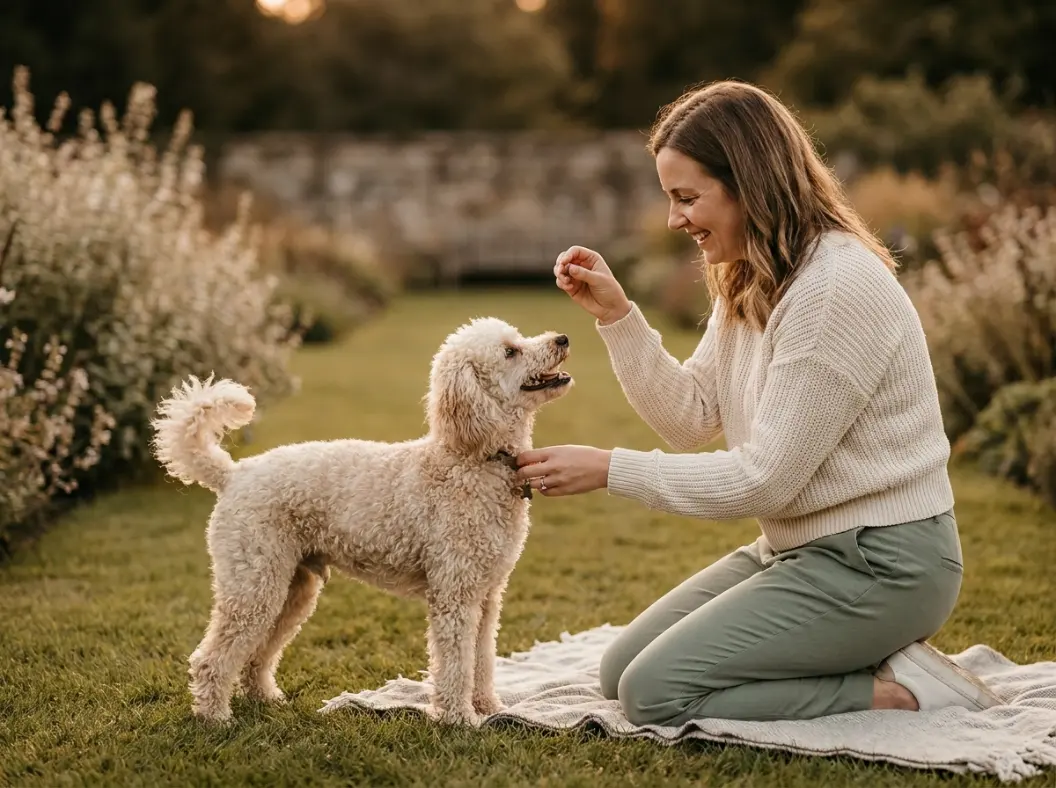
In a quiet room, say the cue once in a friendly voice. When your Poodle comes, mark the behavior and reward with several tiny treats or a favorite toy.
Keep sessions short. Gradually add a little distance before you add distractions.
Phase 2: Long-Line Training in Safe Open Spaces
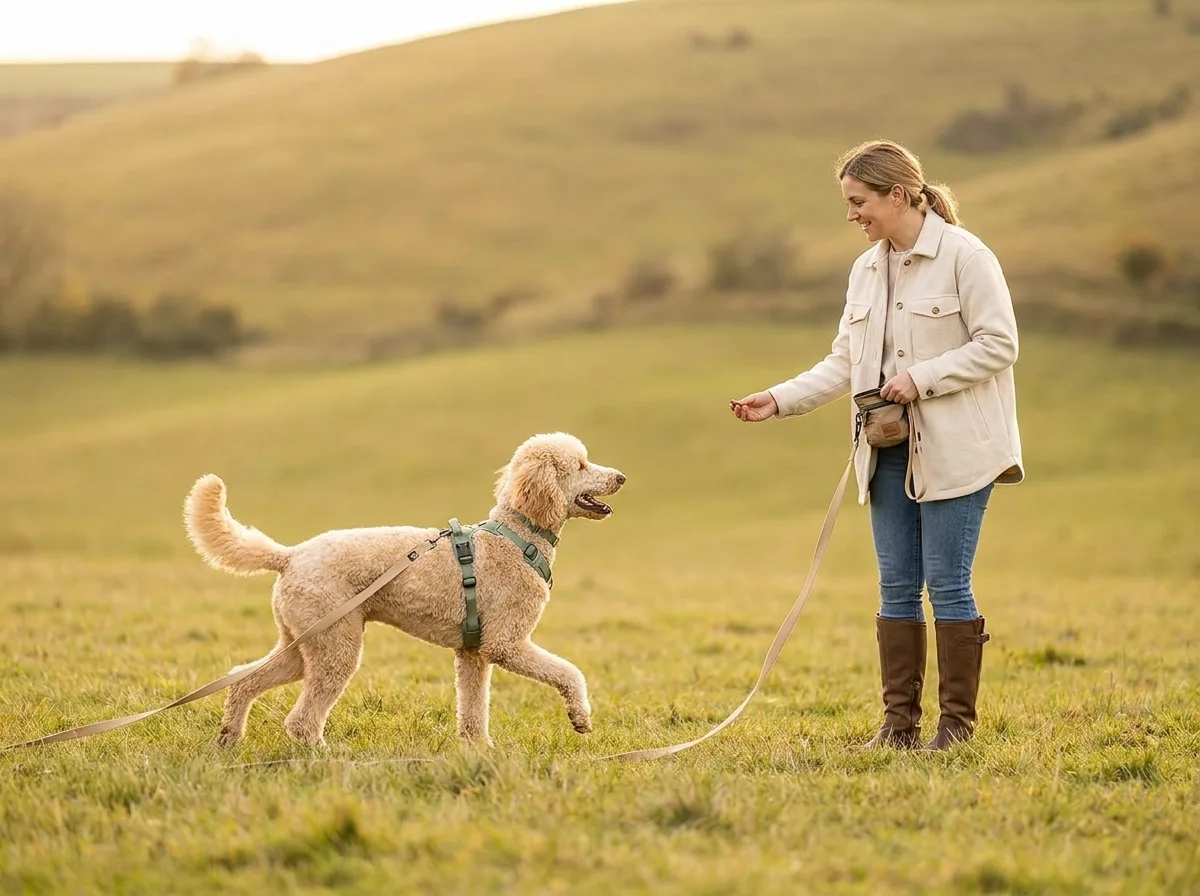
Attach a long line to a well-fitted back-clip harness in an open area where the line is unlikely to snag. Let your Poodle explore, then give the recall cue once.
If the dog does not respond, do not jerk the line or repeatedly shout the cue. Use the line as a safety backup, move closer, regain attention, and reset at an easier level.
Phase 3: Off Leash in Enclosed Areas
Use a securely fenced private yard or enclosed training area where dogs are allowed. Practice call-reward-release repetitions so returning to you does not always end the fun.
If you use a lightweight drag line, supervise closely and choose a clear surface where it cannot snag.
Phase 4: Controlled Open Environments
Do not use an unfenced public park as a final exam. Continue proofing on a long line where it can be handled safely.
Add distractions gradually. Off-leash practice should happen only where local rules allow it and the environment offers a reasonable safety margin.
The Emergency Recall
Teach a separate emergency cue and pair it with an unusually valuable reward during practice. Use it sparingly so it keeps a strong history.
The goal is a fast turn-and-return response, but no cue is a guarantee. Management and environment choice still matter.
Size-Specific Considerations for Off-Leash Training
The learning principles are the same across Poodle varieties, but size changes practical risk. Equipment should fit the individual dog rather than relying on a narrow weight rule.
| Factor | Toy Poodle | Miniature Poodle | Standard Poodle |
|---|---|---|---|
| Visibility | Can disappear quickly behind vegetation, terrain, or crowds. | Easier to track than a Toy but still small in tall cover. | Usually easier to see, but capable of covering ground quickly. |
| Environmental Risk | Very small dogs may face greater risk from larger dogs or local wildlife in some regions. | Still requires careful management around large dogs, wildlife, traffic, and rough terrain. | Speed and range can increase the distance covered during a chase. |
| Exercise | Can get excellent exercise through walks, play, training, sniffing, and secure fenced freedom. | Benefits from varied walking, games, scent work, and secure running opportunities. | Often enjoys vigorous exercise, swimming, retrieving, and running in appropriate environments. |
| Training Setup | Use lightweight equipment and secure fencing. | Size the harness and long line for comfort and safe handling. | Use strong equipment and handle the long line carefully to avoid burns or sudden impact. |
For a size-by-size overview, see the Poodle Size Chart.
Common Mistakes That Undo Recall Progress
Most recall problems are not stubbornness. They are usually a sign that the cue has been overused, under-rewarded, or tested in an environment that is too difficult.
| Mistake | Why It Hurts | Better Approach |
|---|---|---|
| Repeating the cue | “Come… come! COME!” can teach the dog that the first cue does not matter. | Say it once. If there is no response, reduce the difficulty, move closer, and help the dog succeed. |
| Calling only to end fun | If recall always predicts leaving, your Poodle may become slower to return. | Frequently call, reward, and release your dog back to an appropriate activity. |
| Punishing a slow return | Scolding after the dog arrives can make coming to you feel unsafe. | Reward the return, then make future repetitions easier and more valuable. |
| Too much freedom too soon | A high-distraction environment can create repeated failed recalls and self-rewarding chasing. | Return to a leash or long line and rebuild success gradually. |
| Using recall for unpleasant outcomes | Calling before nail trims, medication, or abruptly ending play can weaken the cue. | When practical, approach your dog instead and preserve the recall cue’s positive history. |
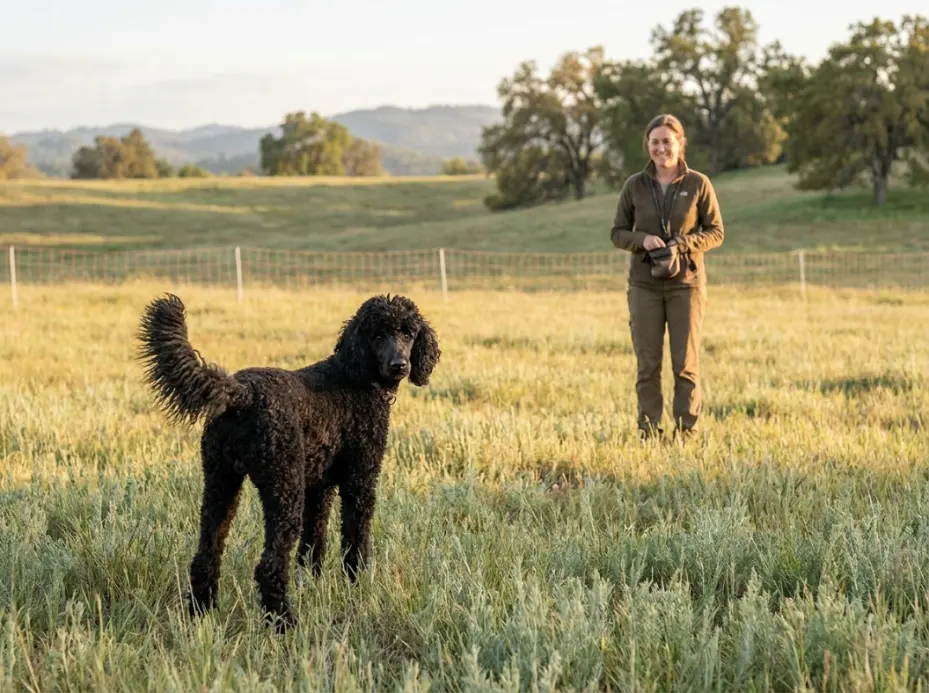
Safety, Legal Rules, and When Not to Go Off Leash
No recall is a guarantee. A well-trained Poodle can still make a mistake when a distraction is intense or the environment changes.
Legal Considerations
Leash rules vary by municipality, park, trail, beach, conservation area, and season. Check posted rules and the land manager’s current requirements before unclipping.
Even where off-leash activity is permitted, prevent your Poodle from approaching leashed dogs, wildlife, livestock, or people who have not invited contact.
When Off-Leash Is Not Appropriate
Keep your Poodle leashed or on a safely managed long line when:
- Traffic, parking areas, rail lines, cliffs, fast water, or other severe hazards are nearby.
- Wildlife is active or local rules protect nesting, grazing, or sensitive habitat.
- Your Poodle shows intense chase interest, fear, over-arousal, or repeated failure to disengage.
- Other dogs, livestock, horses, cyclists, runners, or children cannot be given reliable space.
- Your Poodle is in heat or reproductive behavior is affecting focus.
- Hearing, vision, pain, cognitive changes, or another health issue may reduce responsiveness.
- The area requires a leash, regardless of how good the recall seems.
When to Seek Professional Help
If your Poodle repeatedly bolts, freezes, becomes fearful, or cannot disengage from distractions, work with a qualified reward-based trainer or behavior professional before adding more freedom.
The IAABC consultant locator can help you search for certified consultants and trainers.
The American Veterinary Society of Animal Behavior recommends reward-based training and advises against aversive methods, including electronic collars, prong collars, and choke chains.
Owner Readiness Checklist: Before You Drop the Leash
Use this checklist as a practical decision aid, not as a guarantee of safety.
- My Poodle understands one clear recall cue and I do not routinely repeat it.
- My Poodle returns promptly on a long line around mild, controlled distractions.
- I have practiced recall in several safe locations.
- I carry high-value rewards and reinforce recall consistently.
- I do not punish my Poodle after a recall, even a slow one.
- I can recognize signs of stress and over-arousal.
- I have conditioned a separate emergency recall cue.
- My Poodle has current identification and microchip information.
- The environment is legal for off-leash use and free of immediate hazards.
- I am willing to return to a leash or long line when reliability drops.
Frequently Asked Questions
How long does off-leash training take for a Poodle?
There is no universal timeline. Basic recall may improve quickly, while dependable responses around outdoor distractions can take months of progressive practice.
Judge readiness by repeatable behavior in controlled environments, not by a calendar.
Can Toy Poodles be trained off leash safely?
Yes, but environment choice matters. Toy Poodles are highly trainable, yet their small size can increase risk around larger dogs, dense vegetation, and local wildlife.
Securely fenced areas are often the safest place for true off-leash freedom.
What is the best recall cue for a Poodle?
Choose a distinct word such as “come” or “here,” or use a consistent whistle. The cue matters less than the reward history behind it.
Why does my Poodle ignore recall outside?
Outside environments contain stronger smells, movement, sounds, and competing rewards. Your Poodle may understand the cue indoors but not yet be able to perform it around those distractions.
Go back to a long line, lower the difficulty, and increase reward value.
Should I use a shock collar for off-leash training a Poodle?
PoodleGuru recommends reward-based recall training. AVSAB’s current humane dog-training position recommends reward-based methods and advises against aversive tools, including electronic shock collars.
Can an adult rescue Poodle learn off-leash reliability?
Yes. Adult and senior Poodles can learn new skills, although dogs with a history of running off may need more management and longer proofing.
Start with the same foundation and do not skip the safety phases.
What is the most common recall mistake?
One common mistake is calling the dog mainly when fun is about to end. Use plenty of call-reward-release repetitions so returning to you stays worthwhile.
Is a harness or collar better for long-line recall training?
A well-fitted back-clip harness is generally the safer attachment point for long-line work because it avoids concentrating a sudden stop on the neck.
Use identification separately and choose equipment that fits the individual dog securely.
Key Takeaways
- Off-leash reliability is built through connection, recall conditioning, proofing, and ongoing maintenance.
- Readiness should be based on repeatable behavior, not a fixed number of weeks.
- Use a long line and harness to add distance without removing your safety backup too early.
- Reward recalls generously and avoid making the cue predict punishment or the end of every enjoyable activity.
- Small Poodles need extra consideration around larger dogs, dense cover, traffic, and wildlife.
- Legal rules and environmental safety always override training confidence.
Start with five minutes of easy recall practice indoors. Build success first, then add one small challenge at a time.