Cheapest Way To Own a Poodle Without Sacrificing Care
The cheapest way to own a Poodle is not to buy the lowest-priced food or skip care. It is to choose a healthy dog carefully, prevent avoidable problems, learn safe home grooming skills, and plan each recurring expense before it becomes urgent.

Quick Answer
The cheapest way to own a Poodle is to reduce preventable and convenience-based spending while protecting the essentials. Choose a healthy dog from a transparent rescue or responsible breeder, keep the coat in a low-maintenance clip, brush thoroughly at home, feed a complete and balanced diet in measured portions, use reward-based home training, and save monthly for veterinary care. Do not save money by delaying illness care, skipping legally required vaccines, using unsafe grooming techniques, or feeding a nutritionally incomplete diet.
In This Guide
- The True Cost of Owning a Poodle in 2026
- Why Affordable Doesn’t Mean Cheap
- Choose the Right Poodle Source
- The PoodleGuru Smart Ownership Budget Blueprint
- Biggest Saving: Grooming
- Smart Food & Nutrition Spending
- Healthcare Without Cutting Corners
- Affordable Enrichment & Training
- Costly Mistakes to Avoid
- Sample Annual Poodle Budget (2026)
- FAQs
- Key Takeaways & Next Step
The True Cost of Owning a Poodle in 2026
Before you can save, you need a realistic local baseline. Current AKC cost guidance notes that annual dog-care spending can approach roughly $1,900 before unusually expensive needs are added. A Poodle can fall below or above that figure because coat care, body size, location, health, and professional services change the total dramatically. The ranges below are owner-planning estimates for routine care—not guaranteed national prices.
| Expense Category | Toy Poodle (Annual Estimate) | Standard Poodle (Annual Estimate) |
|---|---|---|
| Food | $200–$400 | $500–$900 |
| Routine Vet Care | $200–$400 | $300–$500 |
| Grooming (Professional) | $500–$800 | $800–$1,200 |
| Supplies & Misc. | $150–$300 | $200–$400 |
| Training | $100–$300 | $100–$300 |
| Total (Typical) | $1,150–$2,200 | $1,900–$3,300 |
These figures do not include adoption or purchase costs, boarding, insurance premiums, chronic illness, or major emergencies. Unexpected veterinary treatment can run into thousands of dollars, so the cheapest long-term strategy is prevention plus a dedicated emergency plan—not hoping a crisis never happens.
Why Affordable Doesn’t Mean Cheap
Saving money is smart. Cutting corners on health, nutrition, or safety is risky. Health concerns differ by Poodle size and family line; the Poodle Club of America lists breed concerns that include Addison’s disease, bloat, epilepsy, and hip dysplasia. A low purchase price or a cheap bag of food is not a saving when it creates avoidable medical, behavior, or coat problems later.
Think of affordable ownership as a series of informed trade-offs. You might replace daycare with structured walks and scent games, but you should not delay a veterinary visit when your dog is unwell. You might maintain a simple clip at home, but you should stop when the coat is matted to the skin or the dog cannot be handled safely. Spend where it protects health and welfare; trim convenience costs first.
Choose the Right Poodle Source
The lowest upfront price is not always the cheapest way to own a Poodle over its lifetime. A poorly bred puppy, an online payment scam, or a dog sold without health information can create far larger veterinary and behavior costs later. Compare the full package: health records, temperament information, vaccinations already completed, spay or neuter status, microchip, return policy, and the support available after the dog comes home.
Rescue or Adoption
A Poodle rescue or reputable shelter may have a lower upfront fee and may include initial veterinary care. Ask what is known about health, grooming tolerance, behavior, medication, and previous home life so you can budget honestly.
Responsible Breeder
A responsible breeder should discuss health testing appropriate to the Poodle variety, the parents’ temperaments, and lifetime take-back support. The Poodle Club of America health-testing guidance is a useful starting point.
Avoid Bargain-Puppy Pressure
Walk away from sellers who rush payment, refuse live video or an in-person visit, cannot explain health testing, or offer multiple breeds with constant availability. A careful decision now can prevent expensive heartbreak later.
The PoodleGuru Smart Ownership Budget Blueprint
At PoodleGuru, we organize affordable poodle care into three pillars: Prevention, DIY Skill-Building, and Resourcefulness. This blueprint ensures every dollar serves your dog’s health and happiness.
Prevention First
Budget for veterinary exams, parasite prevention, dental home care, and a complete and balanced diet. Early assessment often gives you more treatment options and helps prevent minor problems from becoming harder and more expensive.
DIY Where Safe
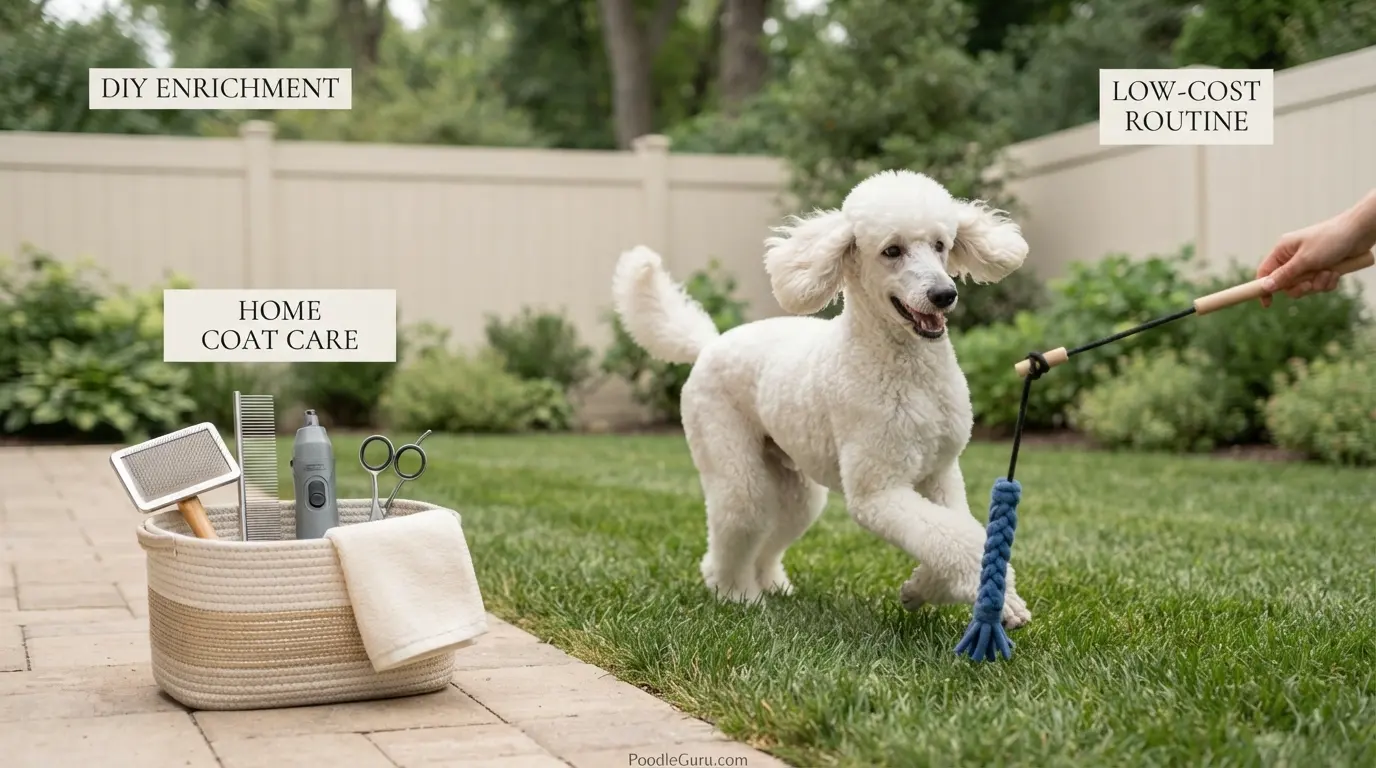
Learn safe brushing, bathing, drying, nail maintenance, and a simple pet clip. Check ears regularly and clean them only with an appropriate product and professional guidance.
Use Community & Free Resources
Public parks, online training videos, library dog behavior books, and local breed clubs often offer low-cost or free support.
Biggest Saving: Grooming at Home
For poodles, grooming is typically the largest recurring expense. Professional grooming every 4–6 weeks at $60–$100+ per session adds up fast. You can slash this by 50–70% by learning to maintain your poodle at home between professional visits—or doing it entirely yourself if you’re dedicated.
| Approach | Annual Cost (Standard) | What You Need |
|---|---|---|
| Full Professional Grooming (every 6 weeks) | $800–$1,200 | N/A |
| Professional every 8 weeks + home maintenance | $400–$600 | Quality clippers ($150–$200 one-time), scissors, brush, nail grinder |
| Fully DIY Home Grooming | $100–$300 (supplies + occasional pro face/feet trim) | Invest in a good clipper and learn from reputable poodle grooming videos |
Start with the safest maintenance skills: brush and comb to the skin several times a week, check ears rather than cleaning them automatically, and maintain nails on a schedule recommended by your groomer or veterinarian. Keep the coat in a simple pet clip, and do not attempt to cut tight mats or use scissors close to the skin. For current price ranges and a hybrid home-and-salon plan, use our Poodle grooming cost guide.
Smart Food & Nutrition Spending
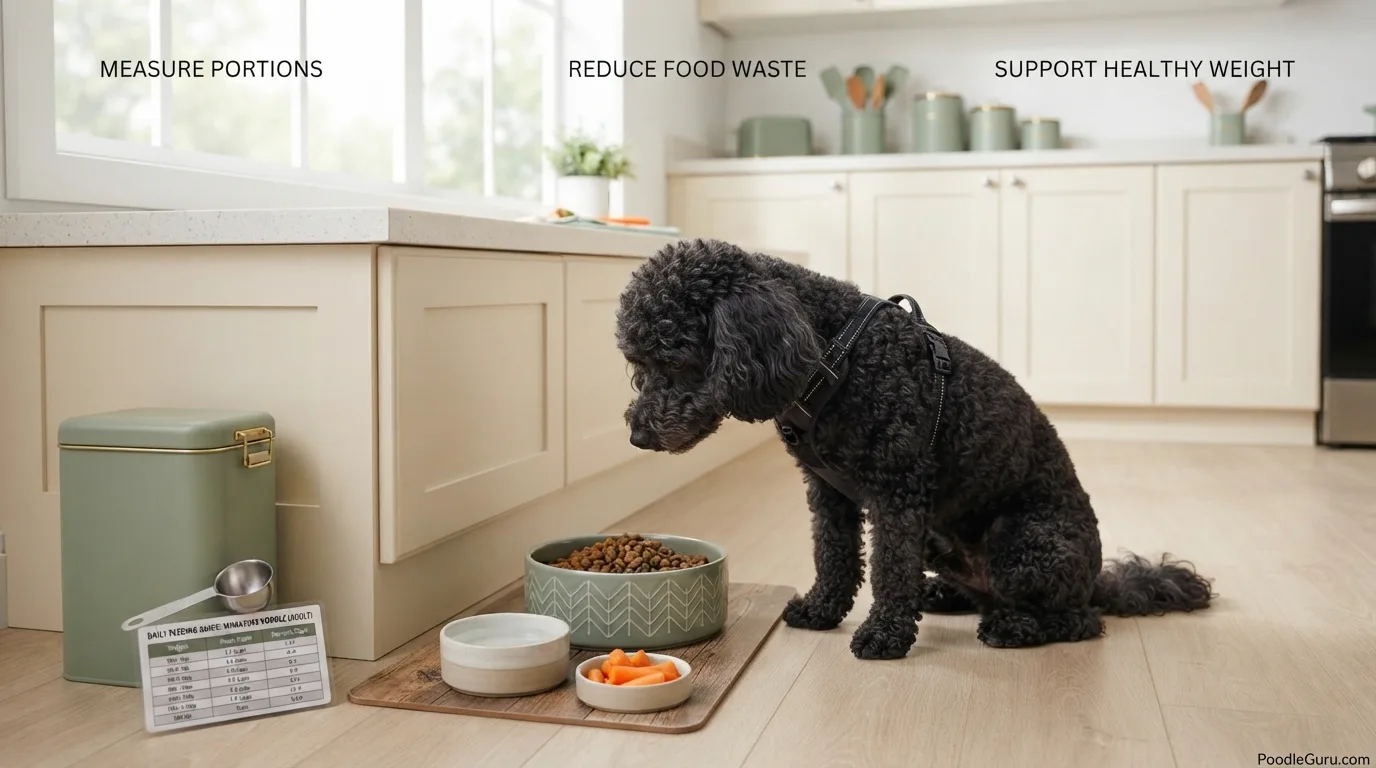
Good nutrition does not require the most fashionable bag. Check for a nutritional adequacy statement showing that the food is complete and balanced for your dog’s life stage; the FDA explains how to find this statement on the label. Compare the daily feeding cost—not just the bag price—and ask your veterinarian about calorie needs, especially after neutering, during growth, or when activity changes.
Measure portions instead of free-feeding so food is not wasted and weight gain is noticed early. Small pieces of dog-safe foods can be inexpensive training rewards, but treats should remain a small part of the diet and may not suit dogs with allergies or medical conditions. Do not improvise a homemade or raw main diet without formulation by a board-certified veterinary nutritionist.
Healthcare Without Cutting Corners
Preventive care is the single biggest money-saver in the long run. Here’s a poodle-specific approach that protects your wallet:
- Routine veterinary plan: Ask your veterinarian how often your individual Poodle should be examined and which parasite tests or preventives fit your region and lifestyle. Do not use a generic online schedule as a substitute for local medical advice.
- Dental care: Brush with dog-safe toothpaste as consistently as your dog will comfortably tolerate. Professional dental assessment and treatment should happen when your veterinarian recommends it. AAHA explains why a complete veterinary dental procedure requires anesthesia to examine and clean below the gumline.
- Pet insurance or emergency savings: Compare exclusions, hereditary-condition coverage, reimbursement rules, deductibles, and waiting periods before choosing a policy. If you self-fund, automate a monthly transfer and keep the money separate from routine spending. The ASPCA offers general planning guidance.
- Vaccination decisions: Follow a veterinarian’s risk-based schedule and local rabies law. AAHA notes that routine titer testing is not usually advised simply to replace recommended boosters, and rabies titers do not replace required rabies vaccination.
Bring cost concerns up early. Clinics may be able to stage non-urgent care, explain lower-cost diagnostic options, or direct you to local assistance. Never change medication, delay urgent treatment, or substitute a titer for a legally required vaccine solely to reduce expense.
Affordable Enrichment & Training
Poodles need daily mental work, but you do not need a subscription box. Rotate a few durable toys, scatter part of a measured meal in the grass, practice scent searches, or hide kibble in a loosely folded towel while supervising. Discard damaged items, avoid materials your dog may swallow, and count food used in games as part of the daily ration.
For training, begin with short reward-based home sessions and use free library, shelter, or trainer resources to learn the basics. Group classes are often less expensive than private instruction and provide useful practice around distractions. Browse the PoodleGuru training library for problem-specific guides, then seek a qualified professional for fear, aggression, separation distress, or any safety concern.
Costly Mistakes to Avoid
Even with good intentions, owners sometimes make decisions that inflate costs. Spot these early.
| Mistake | What It Costs You | Smarter Move |
|---|---|---|
| Skipping grooming tools to save money | Matted coats lead to painful shave-downs ($150+) and skin infections | Invest in a good slicker brush and steel comb; brush daily |
| Choosing food by marketing claims alone | You may overpay or select a diet that does not fit your dog’s life stage or medical needs | Check the complete-and-balanced statement, compare daily cost, and ask your veterinarian |
| Not socializing or training early | Behavioral issues can require expensive private sessions or result in rehoming | Use free resources and low-cost group classes from the start |
| Waiting while symptoms persist or worsen | A problem may become more painful, complex, or expensive to treat | Call the clinic early, describe the signs, and ask how urgently your Poodle should be seen |
Sample Annual Poodle Budget (2026) — Smart & Affordable
Here’s a realistic, modest budget for a healthy Standard Poodle owner who does moderate DIY grooming and home training. Adjust for your size and location.
Sample Lean Annual Planning Range: ~$1,900–$3,300
- Food: $600–$900 for a complete and balanced diet, measured carefully
- Routine Vet & Preventives: $350–$650, depending on region and individual needs
- Dental Home Care & Reserve: $100–$250 toward supplies and vet-recommended treatment
- Grooming: $250–$500 with substantial home maintenance and occasional professional help
- Supplies & Toy Replacement: $100–$200
- Training & Enrichment: $0–$150 using home practice plus an optional group class
- Emergency Savings or Insurance: $500–$650 as an annual starting contribution
Important: This lean example assumes a healthy adult Standard Poodle, careful home grooming, no boarding or daycare, and no major medical event. Build your own figure from local quotes rather than treating this range as a promise.
Frequently Asked Questions
What is the cheapest poodle size to own?
Toy Poodles usually cost less to feed and may cost less per grooming appointment because there is less coat and body area to maintain. However, size does not guarantee lower veterinary costs, so choose the variety that fits your household and build a health reserve for the individual dog.
Can I groom my poodle completely at home to save money?
Many owners handle brushing, bathing, drying, nail maintenance, and simple clipping at home. Full DIY grooming requires suitable tools, patient handling, and correct technique. Start with coat maintenance, use a professional for tight mats or difficult areas, and never place scissors beneath a mat close to the skin.
Is pet insurance worth it for a poodle on a budget?
It can be useful when a sudden four-figure veterinary bill would be difficult to absorb. Compare hereditary-condition coverage, exclusions, waiting periods, reimbursement method, annual limits, and deductibles. Insurance does not replace routine-care savings, and the best policy is the one you can keep long term.
How can I find low-cost vet care for my poodle?
Look for veterinary schools, non-profit clinics, and shelter outreach programs. Many offer reduced-cost wellness visits, vaccinations, and spay/neuter. Also, ask your regular vet about payment plans or wellness packages.
Are there any free ways to exercise my poodle?
Yes. Walking, suitable public trails, fetch in a secure area, short reward-based training sessions, and supervised indoor scent games can all provide useful exercise or enrichment at little or no cost. Match the activity to your Poodle’s age, fitness, weather, and health.
How much should I budget monthly for a poodle?
A lean Standard Poodle plan may average roughly $160–$275 per month before boarding, daycare, chronic illness, or a major emergency. A Toy Poodle may cost less for food and grooming, but local prices and health needs matter more than a universal monthly figure.
Is it cheaper to adopt a poodle from a rescue?
Often, yes. Rescue or shelter fees are usually lower than a responsible breeder’s purchase price and may include initial veterinary care. Ask what care is included, review all available health and behavior information, and keep a reserve for grooming, dental work, medication, or training that may be needed after adoption.
Key Takeaways: Affordable Poodle Ownership
You can own a poodle on a budget and still provide excellent care by making strategic choices. Use the PoodleGuru Smart Ownership Budget Blueprint to guide your spending.
- The cheapest way to own a poodle centers on preventive care, DIY grooming, and homemade enrichment—not on skipping essentials.
- Learn safe brushing, bathing, drying, and simple clipping; a hybrid grooming plan can save hundreds each year.
- Feed a high-quality but sensibly priced food in measured portions to prevent waste and health issues.
- Build a separate emergency reserve or keep suitable pet insurance so a sudden bill does not force delayed care.
- Use free community resources, online training, and household items for mental stimulation.
- Avoid the costly mistakes of ignoring dental care, delaying vet visits, and purchasing cheap food.
Next step: List your local monthly costs, request three grooming quotes, check the food’s daily serving cost, and automate a veterinary reserve transfer. Then use our Poodle grooming cost guide to compare a salon, hybrid, and home-maintenance plan.