Senior Poodle End-of-Life Care: A Compassionate Guide
Senior poodle end-of-life care is the part of ownership nobody wants to think about, but gentle planning can protect your dog’s comfort and your peace of mind. This guide explains how to recognize suffering, support dignity at home, work with your veterinarian, and make final decisions with love instead of panic.

Quick Answer: What Is Senior Poodle End-of-Life Care?
Senior poodle end-of-life care focuses on three priorities: recognizing and managing pain, preserving dignity and mobility, and watching whether joy still outweighs suffering. It means working closely with your veterinarian on palliative or hospice care, adapting your home for safety and comfort, tracking quality of life with an objective tool, and discussing euthanasia before a crisis forces a rushed decision. There is no single perfect day, but there are compassionate frameworks that help you see your poodle’s experience more clearly.
Do not wait for a quality-of-life score if your poodle has severe breathing difficulty, collapses, cannot be roused normally, has repeated seizures, shows uncontrolled pain, has a swollen abdomen with unproductive retching, or is rapidly deteriorating. Call an emergency veterinary service.
In This Guide
- What End-of-Life Care Actually Means
- Normal Aging vs. Signs That Need Attention
- Palliative and Hospice Care for Poodles
- Recognizing Pain in Senior Poodles
- The PoodleGuru Quality-of-Life Compass
- Home Adaptations for a Declining Poodle
- The Euthanasia Decision: What to Know
- Grief and What Comes After
- FAQs
- Key Takeaways
What Senior Poodle End-of-Life Care Actually Means
End-of-life care—sometimes called palliative care or hospice care—is a shift in medical approach. The goal is no longer simply curing disease or extending time at any cost. It becomes protecting comfort, reducing anxiety, managing pain, and preserving the quality of each remaining day. For poodle owners, this means accepting that some conditions will progress and choosing care that reduces distress rather than chasing procedures that no longer help your individual dog.
The most important thing to understand is that senior poodle end-of-life care is active, not passive. You are not “giving up.” You are choosing a different kind of care: one that prioritizes comfort, hygiene, mobility, nutrition support, pain control, and emotional safety. The AAHA end-of-life care guidance for pets describes hospice and palliative support as compassionate veterinary care that helps families relieve pain and anxiety while making decisions alongside a veterinary team.
— Consistent with veterinary end-of-life care principles from VCA Animal Hospitals’ quality-of-life guidance and AAHA senior-care recommendations.
Normal Aging vs. Signs That Need Attention
Not every change in a senior poodle signals crisis. Some things are simply part of growing old. The distinction matters because it helps you conserve emotional energy for the things that actually need intervention.
| Normal Aging | Potentially Concerning Change | What to Do |
|---|---|---|
| Sleeping more, deeper sleep | Difficulty waking, unresponsive to familiar voices | Call your veterinarian promptly; sudden unresponsiveness can be urgent |
| Graying muzzle, slower to rise | Refusing to stand, collapsing, or crying out when moving | Pain assessment; may indicate arthritis, injury, or neurological change |
| Becoming selective about texture or eating more slowly | Refusing all food, repeated vomiting, marked weakness, or inability to keep water down | Call your veterinarian the same day—or sooner if your dog is weak, diabetic, vomiting repeatedly, or rapidly worsening |
| Occasional accidents or needing more frequent toilet breaks | New or repeated loss of bladder or bowel control, straining, blood, or distress | Arrange a veterinary assessment; urinary, gastrointestinal, neurological, mobility, endocrine, or medication-related causes are possible |
| Slower walks, more sniffing | Complete disinterest in previously loved activities | Evaluate for depression, pain, or significant cognitive decline |
Palliative and Hospice Care for Poodles
Palliative care is the active management of symptoms when a condition is life-limiting but not always immediately terminal. Your poodle may remain comfortable for weeks or months with the right support, depending on the disease and how well symptoms can be controlled. Hospice care is the more focused final phase, when the care plan centers on comfort, dignity, anxiety relief, hygiene, and family decision support. AAHA notes that hospice and palliative candidates may include pets with terminal diagnoses, chronic progressive disease, severe disability, or advanced geriatric decline.
🐾 Pain Management
A veterinarian may use anti-inflammatory drugs, gabapentin, opioids, or other treatments depending on the diagnosis and your poodle’s kidney, liver, heart, and gastrointestinal health. Never give human pain medicine unless a veterinarian specifically directs it; several common products are toxic to dogs.
🐾 Nutritional Adaptation
Warm, aromatic, soft foods when appetite fades. Hand-feeding when necessary. Prescription diets for kidney, heart, or liver support if diagnosed.
🐾 Hygiene Assistance
Gentle cleaning if incontinence occurs. Waterless shampoo for poodles who can no longer tolerate full grooming. Sanitary trims to keep the rear clean and comfortable.
Important: Natural Death Still Requires Veterinary Support
Some families hope for a natural passing at home. In veterinary hospice, that choice should still include a veterinarian-led comfort plan, regular pain assessment, and a clear emergency threshold. If pain, fear, or breathing distress cannot be relieved, humane euthanasia may be the kindest medical option.
Recognizing Pain in Senior Poodles
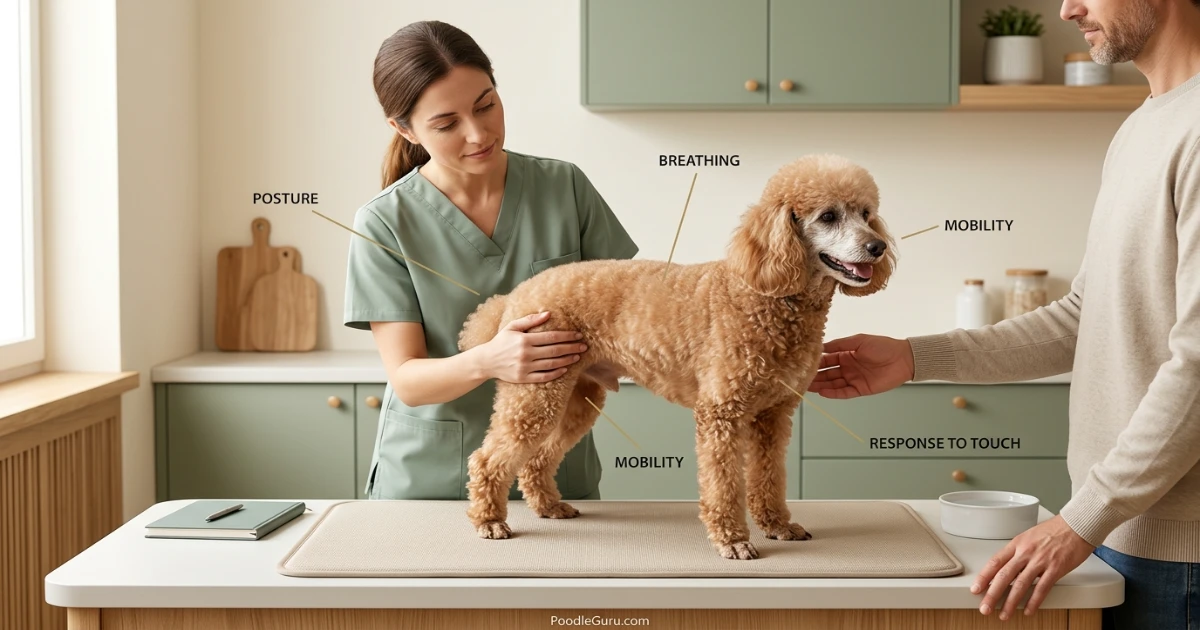
Dogs do not always whimper or cry when they are in pain. Discomfort may first appear as changes in posture, breathing, sleep, appetite, movement, or social behavior. The signs below can occur in senior dogs, including poodles. One sign can have many causes, so contact your veterinarian rather than trying to diagnose the source at home.
| Pain Signal | What It Looks Like | Common in Poodles With |
|---|---|---|
| Panting at rest | Heavy breathing without recent heat or exercise; sometimes worse at night | Pain, anxiety, medication effects, heart or respiratory disease, and other medical causes |
| Hunched or guarded posture | Back arched, head low, abdomen guarded, or reluctance to stretch | Musculoskeletal or abdominal discomfort; the cause requires veterinary assessment |
| Repeated licking of one area | Persistent attention to a joint, paw, skin area, or other body part | Pain, skin disease, infection, a foreign body, or anxiety-related behavior |
| Withdrawal | No longer seeking affection, hiding, or turning away from touch | Pain, nausea, weakness, fear, sensory loss, cognitive change, or other illness |
| Sudden irritability | Growling, flinching, or snapping when approached or touched | Pain is one possibility; fear, sensory decline, cognitive change, and illness can also contribute |
The PoodleGuru Quality-of-Life Compass
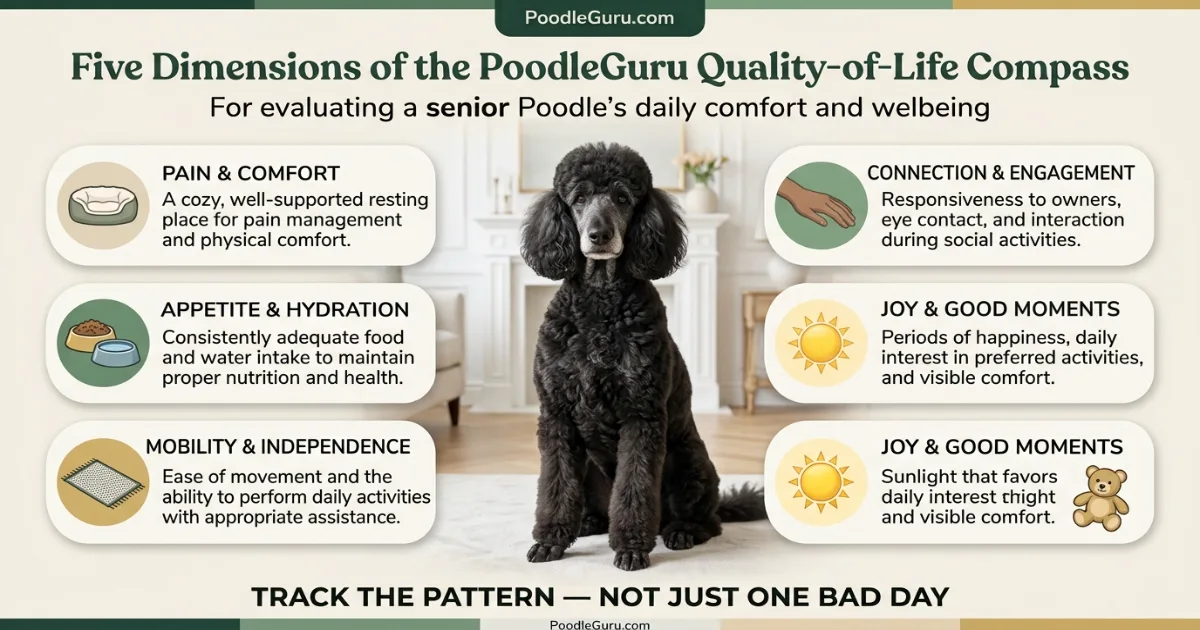
At PoodleGuru, we evaluate quality of life through five dimensions that help owners move from “I don’t know if it’s time” to a clearer, more grounded assessment. This is not a scorecard that makes the decision for you; it is a compass that points toward what your poodle is actually experiencing. You can also compare your notes with a veterinarian-approved tool such as the Lap of Love quality-of-life scale.
Pain and Comfort
Is your poodle’s pain controlled most of the time? Can they rest peacefully? Do they seek comfort rather than withdraw? If pain breaks through regularly despite medication, the current plan needs adjustment—or the conversation needs to shift.
Appetite and Hydration
Does your poodle still show interest in food—even if it’s hand-fed or warmed? Are they drinking enough to stay hydrated? A dog who no longer wants to eat or drink, even with encouragement and veterinary support, may be telling you something important about their body’s trajectory.
Mobility and Independence
Can your poodle stand, walk to their water bowl, and reposition themselves comfortably? Severe immobility requires an intensive, veterinarian-guided plan for repositioning, toileting, skin protection, and caregiver support. Repeated soiling or an inability to move away may cause distress and can signal that the current comfort plan is no longer sufficient.
Connection and Engagement
Does your poodle still recognize you? Do they respond to their name, seek your touch, or show interest in familiar rituals—even if only briefly? A change in connection can be emotionally difficult for families, but it is not diagnostic by itself. Pain, weakness, hearing or vision loss, medication effects, cognitive dysfunction, and neurological disease can all change engagement.
Joy and “Good Moments”
This is the hardest dimension to weigh honestly. Are there still moments of genuine contentment—a tail wag when you enter the room, a relaxed sigh in the sun, interest in a favorite person, or comfort after medication? When good moments become rare and symptoms remain hard to control despite veterinary help, the balance may be shifting.
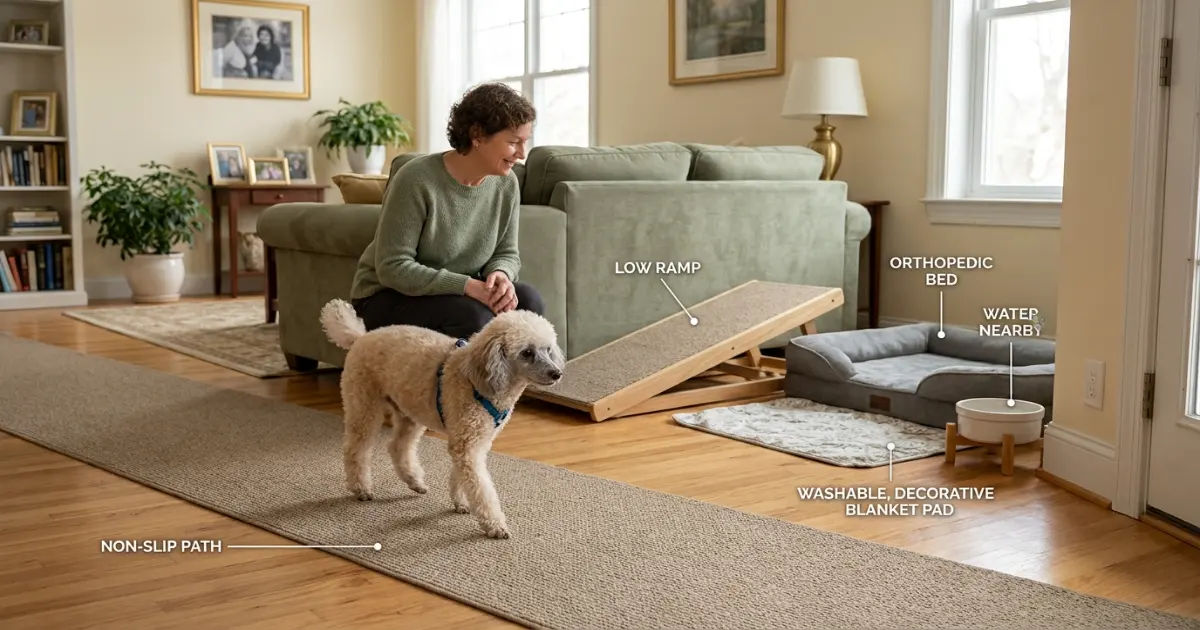
Home Adaptations for a Declining Poodle
Small changes to your home can dramatically improve a senior poodle’s daily comfort. These aren’t expensive—they just require attention to how your dog moves through space now, not how they moved a year ago.
🐾 Non-Slip Flooring
Yoga mats, carpet runners, or interlocking foam tiles on hardwood and tile. Senior poodles lose proprioception; slipping causes both injury and fear of movement.
🐾 Easy-Access Food and Water
Keep stable bowls close to your poodle’s main resting areas so stairs and long walks are unnecessary. Ask your veterinarian or rehabilitation professional whether a different bowl height or feeding position is appropriate for your individual dog.
🐾 Orthopedic Bedding in Multiple Locations
Memory foam or orthopedic beds in every room your poodle frequents. Joints stiffen fast on hard floors. Multiple beds mean they can rest near you without walking far.
Ramps for sofas and stairs, night lights for dogs with failing vision, and puppy pads near resting areas for incontinent seniors round out the essentials. For more context on when senior care usually begins by size, see our Poodle age and life-stage guide.
The Euthanasia Decision: What to Know
Euthanasia is a veterinary procedure intended to prevent or end suffering when comfort can no longer be maintained. For poodle owners, it is often the hardest decision of a lifetime—and also a final act of advocacy. Cornell University’s small-animal euthanasia guidance explains that when an owner and veterinarian decide a pet is suffering or unlikely to recover, euthanasia offers a way to end pain.
Many veterinarians now offer at-home euthanasia or can refer you to a mobile end-of-life service. For a poodle who finds car rides or clinic visits stressful, being at home—on their bed, in their favorite sunspot, with you beside them—can reduce fear. Ask the veterinarian exactly how their process works. Protocols vary. Some veterinarians give sedation first so the dog becomes deeply relaxed or asleep before the euthanasia medication; ask your veterinarian to explain their exact process in advance.
Planning ahead helps. Know your veterinarian’s euthanasia process, emergency-hours plan, and aftercare options: private cremation with ashes returned, communal cremation, or home burial where local regulations allow. Making these decisions in advance, while you can still think clearly, reduces the pressure of making logistical choices during a crisis.
🐾 Questions to Ask Your Veterinarian Before the Day
- Do you offer at-home euthanasia, or can you recommend a service that does?
- What does the sedation and procedure look like, step by step?
- Can I be present? Can I hold my poodle?
- What aftercare options do you offer, and what are the associated costs?
- How do I know, clinically, when we’ve reached the point where euthanasia is the kindest option?
Grief and What Comes After
Grieving a poodle is real grief. Don’t let anyone minimize it. These dogs share our beds, read our moods, and structure our days. When they’re gone, the silence is staggering. The morning walk you no longer take. The nose that no longer nudges your elbow at dinnertime. The click of nails on the floor that’s suddenly absent.
Give yourself permission to grieve fully. Some owners find comfort in memorializing their poodle: a photo album, a donation to a poodle rescue in their name, a garden stone. Others need time before they can look at pictures at all. There’s no wrong way. Pet loss support groups—both in-person and online—can help. So can a compassionate veterinarian who understands that grief after losing a dog is real family grief. Cornell’s euthanasia guidance also encourages owners to plan for aftercare and emotional support as part of the process.
If you have other poodles in the home, they may show behavior changes such as searching, vocalizing, sleeping differently, reduced appetite, or increased closeness. Maintain a predictable routine and offer calm companionship without forcing interaction. Contact your veterinarian promptly if the surviving dog stops eating, develops vomiting or diarrhea, appears painful, becomes very lethargic, or has persistent behavior changes. For more on healthy aging before the final chapter, read our guide on poodle lifespan and what to expect at every age.

Frequently Asked Questions
How do I know when it is time to say goodbye to my senior poodle?
Track quality of life over weeks, not only single bad days. Use the PoodleGuru Quality-of-Life Compass and discuss the pattern with your veterinarian. When pain, appetite, mobility, connection, and joy show sustained decline—and your vet believes further treatment is unlikely to restore comfort—it may be time to discuss euthanasia as a compassionate option.
Can a senior poodle die naturally at home?
Some dogs do, but natural death is not always peaceful. It can involve labored breathing, agitation, fear, vocalization, or prolonged unconsciousness. If your poodle is declining, talk with your vet about what a natural death may look like for the specific condition and what emergency signs mean euthanasia should be considered to prevent suffering.
How much does at-home euthanasia cost for a poodle in 2026?
There is no reliable single national price for at-home euthanasia in 2026. Fees vary by location, travel distance, appointment timing, your poodle’s care needs, and whether cremation or other aftercare is included. Ask local providers for a written estimate that separates the home visit, euthanasia procedure, transportation, and aftercare costs.
What are the signs a senior poodle is in pain?
Panting at rest, a guarded posture, reluctance to move, repeated licking of one area, withdrawal from touch, sleep changes, irritability, and appetite loss can occur with pain. None of these signs confirms the cause on its own, so new or worsening changes should be discussed with a veterinarian.
Should I get another poodle before my senior dog passes?
Usually, it is better to avoid adding a new dog during a senior poodle’s final decline because the change can increase stress and reduce the attention available for comfort care. Some households are different, but make that decision with your senior dog’s needs—not your fear of being without a dog—as the priority.
How do I help my other poodle cope with the loss?
Maintain familiar routines and offer calm companionship without forcing interaction. Watch food and water intake, elimination, sleep, and activity. Some families allow a surviving dog a brief, supervised opportunity to investigate the deceased companion, but evidence for a specific benefit is limited and it is optional. Contact your veterinarian promptly for appetite loss, vomiting, diarrhea, marked lethargy, pain, or persistent behavior change.
What is palliative care for senior poodles?
Palliative care is symptom management when a condition is life-limiting but not immediately terminal. It includes pain medication, nutritional support, hygiene assistance, and home adaptations to maintain comfort. The goal is maximizing quality of life for whatever time remains—whether weeks, months, or longer.
What should a senior poodle end-of-life care plan include?
A senior poodle end-of-life care plan should include pain control, appetite and hydration tracking, mobility support, hygiene help, emergency thresholds, after-hours veterinary contacts, and a written quality-of-life log. It should also include family decisions about euthanasia preferences and aftercare before a crisis arrives.
Key Takeaways: Senior Poodle End-of-Life Care
End-of-life care is the hardest and most important work you’ll do as a poodle owner. These truths can steady you when the path feels uncertain.
- Senior poodle end-of-life care shifts the goal from curing to comforting—it is an active, loving form of care, not a form of giving up.
- Pain in senior poodles often shows up as panting, withdrawal, posture changes, or irritability—not dramatic crying or whimpering.
- The PoodleGuru Quality-of-Life Compass evaluates five dimensions—pain, appetite, mobility, connection, and joy—to help you see trends clearly rather than reacting to single bad days.
- At-home euthanasia, when available, offers a peaceful passing in a familiar environment—plan the details with your veterinarian before crisis hits.
- Grief after losing a poodle is real and proportional to the love you shared. Pet loss support groups, memorial rituals, and time all have a place in healing.
- You will doubt yourself. That’s normal. The fact that you’re reading this, trying to do right by your dog, tells you what kind of owner you are.