Poodle Arthritis Home Care: Vet-Safe Pain Relief & Comfort Guide
Poodle arthritis home care helps an older or stiff poodle stay comfortable through a layered plan: veterinary diagnosis, healthy weight, non-slip floors, ramps, orthopedic bedding, gentle exercise, and vet-approved pain support. Arthritis is not something to ignore as “just old age,” but it is often manageable when owners act early and stay consistent.

Quick Answer: What Is the Best Poodle Arthritis Home Care Plan?
The best poodle arthritis home care plan combines a veterinary diagnosis, weight control, non-slip flooring, ramps instead of jumping, orthopedic bedding, short low-impact walks, gentle enrichment, and vet-approved supplements or medications when needed. Arthritis cannot usually be cured, but many poodles stay happy and mobile when pain is managed early. Never give human painkillers such as ibuprofen, naproxen, or acetaminophen unless your veterinarian specifically instructs you; many human medications can be toxic to dogs.
In This Guide
- What Poodle Arthritis Home Care Means
- Recognizing Arthritis Signs in Poodles
- Quick Facts for Owners
- The PoodleGuru Arthritis Comfort Framework
- Weight Management & Nutrition
- Home Modifications That Help
- Exercise: The Right Kind
- Supplements & Medications
- When to Call the Vet
- Common Mistakes Owners Make
- Daily Comfort Routine
- Frequently Asked Questions
- Key Takeaways
What Poodle Arthritis Home Care Means
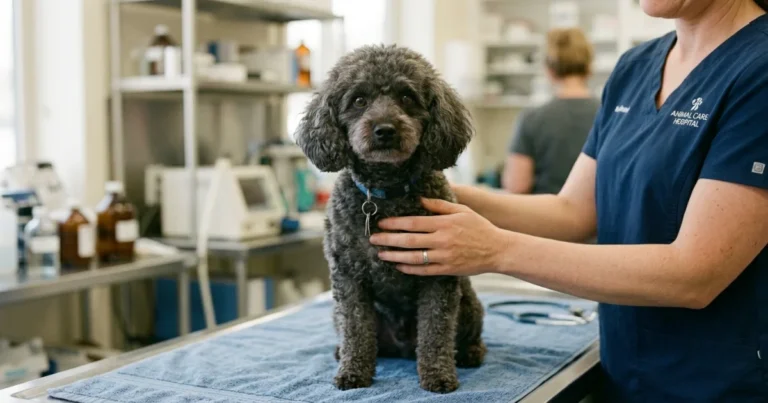
Poodle arthritis home care is a daily comfort system for dogs with diagnosed or suspected joint pain. It does not replace veterinary treatment. Instead, it supports the treatment plan your vet recommends by making your poodle’s home safer, movement easier, and pain triggers less frequent.
For poodle owners, the goal is not to stop all activity. Complete rest can weaken muscles that help stabilize painful joints. A more realistic goal is controlled movement, lean body condition, safe footing, and fast attention to pain changes. VCA describes osteoarthritis pain management as a multimodal approach that may include weight loss, controlled activity, nutrition, home modification, rehabilitation, and medication when appropriate.
Standards may show hip, elbow, shoulder, or spinal stiffness. Toy and Miniature Poodles may also deal with knee issues, including patellar problems, that can make stairs and jumping harder. Because poodles can be stoic and eager to please, owners often miss pain until the dog starts refusing activities they once loved.
Helpful veterinary background: read VCA’s overview of multimodal pain management for osteoarthritis in dogs, AKC’s guide to dealing with canine arthritis, and AAHA’s pain-management discussion of weight optimization, exercise, and rehabilitation.
Recognizing Arthritis Signs in Poodles
Poodles do not always limp loudly. Early arthritis often appears as small routine changes: slower rising, less jumping, shorter walks, new grumpiness, or reluctance to be touched around hips, knees, shoulders, or back.
| Common Sign | What It Might Look Like in a Poodle | Why It Is Easy to Miss |
|---|---|---|
| Stiffness after rest | Hesitating before rising, moving stiffly after naps, warming up after a few minutes | Often dismissed as normal aging |
| Reduced play or grooming tolerance | Stops bringing toys, avoids brushing, resists nail trims, becomes matted in harder-to-reach areas | May look like stubbornness instead of pain |
| Change in posture or movement | Arched back, tucked tail, bunny-hopping stairs, shorter stride, wider front stance | Subtle unless you compare videos over time |
| Irritability or withdrawal | Growling when lifted, avoiding children, hiding, or choosing quiet rooms | Owners may treat it as a behavior problem first |
| Licking at joints | Repeated licking around a knee, wrist, elbow, hip area, or paw | Can be mistaken for normal grooming or allergies |
If these changes last more than a few days, appear suddenly, or get worse after activity, schedule a vet exam. Home care should support a diagnosis, not delay one.
Quick Facts for Poodle Arthritis Home Care
Arthritis Is Common
Osteoarthritis is a common source of chronic pain in aging dogs. It can affect mobility, mood, sleep, appetite, and willingness to play.
Weight Matters
Lean body condition reduces joint load. For Toy and Miniature Poodles, even small weight gains can meaningfully affect comfort.
Pain Is Treatable
Stiffness, limping, and reluctance to move are not “just old age.” Your vet can build a pain-control and mobility plan.
The PoodleGuru Arthritis Comfort Framework
At PoodleGuru, we organize poodle arthritis home care around five practical pillars. Each pillar is simple on its own, but together they make daily movement less painful and more predictable.
Control Weight Precisely
Ask your vet for your poodle’s ideal weight and body condition score. Weigh small poodles regularly and measure meals instead of free-feeding. Weight loss should be gradual and supervised.
Optimize the Home Floor
Add non-slip runners, washable rugs, or yoga mats on slick paths. Focus on hallways, food-bowl areas, doorways, bed exits, and the route to the yard.
Move with Purpose
Swap long, intense outings for shorter low-impact walks. Aim for smooth movement on grass or level surfaces, and stop before your dog limps or lags.
Use Comfort Tools Safely
Orthopedic beds, ramps, gentle massage around tight muscles, and warm—not hot—compresses may help some dogs relax. Stop if your poodle resists or seems more painful.
Stay Consistent with Vet-Prescribed Support
Give prescribed medications exactly as directed, keep bloodwork appointments when NSAIDs are used long term, and call your vet before adding supplements.
Weight Management & Nutrition
Healthy weight is one of the most powerful home-care tools for an arthritic poodle. Extra weight increases load on painful joints and can make dogs less willing to move, which then reduces muscle support and creates a cycle of stiffness.
Ask your vet to score your poodle’s body condition. In general, you should be able to feel ribs under a light fat layer and see a waist from above. If your dog is overweight, use a measured feeding plan rather than guessing. This matters most for Toy and Miniature Poodles, where even a small gain can be a large percentage of body weight.
Nutrition changes should be individualized. Your veterinarian may discuss calorie reduction, therapeutic weight-management diets, senior diets, joint-support diets, omega-3 fatty acids, or protein targets to protect lean muscle. Avoid switching foods rapidly or stacking multiple supplements without guidance.
Quick Nutrition Tip
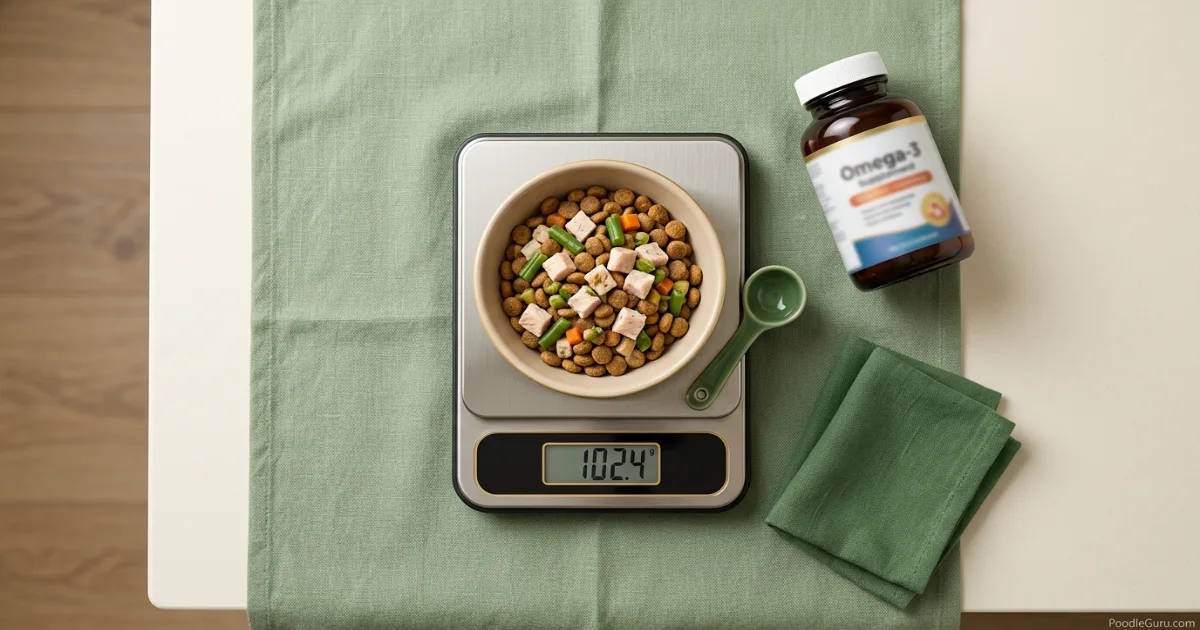
Use treats from the daily calorie budget. For tiny poodles, even “small” treats add up fast. Many owners succeed by weighing meals, pre-portioning daily treats, and tracking weekly weight trends.
Home Modifications That Help Arthritic Poodles
A few thoughtful changes can prevent painful slips and make ordinary routines easier.
- Non-slip rugs or runners: Place them on hardwood and tile in high-traffic areas, especially where your dog turns, rises, or eats.
- Orthopedic beds: Choose supportive foam with a washable cover and a non-slip bottom. Put beds away from drafts and in places your poodle already likes.
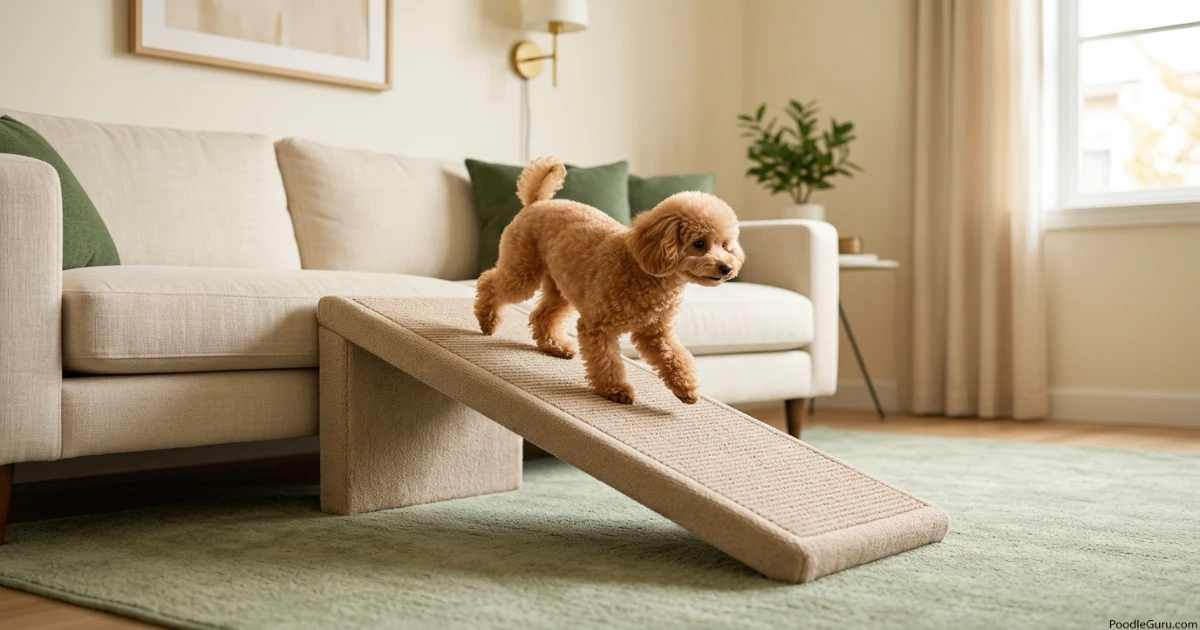
- Ramps and low steps: Use carpeted ramps for sofas, beds, and car access. Keep the incline gentle; steep ramps can be scary or unsafe.
- Accessible food and water: Keep bowls easy to reach. Elevated bowls may help some large dogs with neck discomfort, but they are not right for every dog. Ask your vet if your Standard Poodle has bloat risk or neck pain.
- Grooming setup: Use a non-slip mat during brushing and grooming. Painful joints can make standing for long sessions difficult, so break care into short calm steps.
Exercise: The Right Kind for Poodle Arthritis Home Care
Resting an arthritic poodle completely is usually not the best answer unless your vet recommends it for an acute injury. Muscles support joints, and controlled exercise helps preserve strength, coordination, and confidence.
Often helpful: short leash walks on level grass, slow sniff walks, gentle indoor scent games, warm-water swimming or hydrotherapy for dogs who enjoy water, and rehab exercises taught by a veterinary rehabilitation professional.
Often risky: repeated ball chasing, jumping from furniture, slippery floors, long pavement hikes, icy walks, and fast twisting games. These can trigger soreness or flare-ups, especially in senior Standards and small poodles with knee issues.
Use the “next-day test.” If your poodle is noticeably stiffer the morning after activity, shorten the next session or choose a softer surface. The right routine should leave your dog pleasantly tired, not painful.
Joint Supplements & Medications
Supplements and medications can be useful, but they must be matched to your individual dog. Your veterinarian may recommend one or more options based on pain level, kidney and liver values, age, weight, and other health conditions.
| Category | Common Examples | Typical Role | Important Note |
|---|---|---|---|
| Joint Support Products | Glucosamine, chondroitin, green-lipped mussel | May support joint comfort over time | Quality varies; ask your vet for reputable products and dose guidance |
| Omega-3 Fatty Acids | Fish oil products with EPA/DHA | May help support inflammation control | Too much can cause digestive upset or interact with conditions/medications |
| Prescription NSAIDs | Dog-approved anti-inflammatory pain medications | Reduce pain and inflammation for many dogs | Require veterinary prescription, dose control, and monitoring |
| Other Pain-Control Options | Adjunct medications, injections, rehabilitation, laser, acupuncture | Used in multimodal plans for chronic pain | Your vet should tailor these to your poodle’s exam and lab results |
Never give human pain relievers to a poodle without direct veterinary instruction. The FDA warns pet owners that NSAIDs can have serious side effects in dogs and that owners should not give over-the-counter medications without veterinary guidance. Small poodles are especially vulnerable because dose errors are easy.
Helpful safety reading: the FDA’s pain reliever safety guidance for pets.
When to Call the Vet
Contact Your Veterinarian Promptly If:
- Your poodle suddenly cries out, collapses, or cannot bear weight on a limb.
- A joint becomes swollen, hot, or sharply painful.
- You notice toe dragging, knuckling, weakness, or sudden coordination changes.
- Your poodle vomits, stops eating, has diarrhea, or seems lethargic while taking arthritis medication.
- Home adjustments no longer keep your dog comfortable.
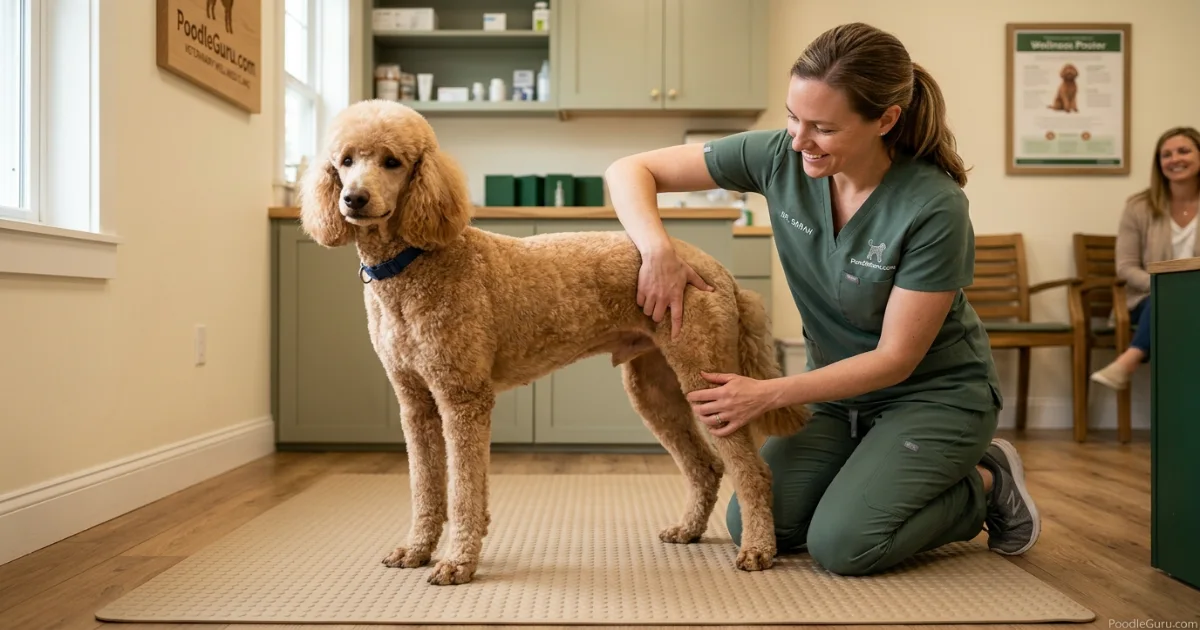
Arthritis management is a partnership with your veterinarian. Many dogs need reassessment every 6 months, and sooner if medication, appetite, mobility, or behavior changes. Do not wait until your poodle is visibly suffering.
Common Mistakes Owners Make
| Mistake | Why It Happens | Better Approach |
|---|---|---|
| Complete rest after diagnosis | Fear of causing pain | Use controlled, low-impact movement unless your vet recommends strict rest. |
| Relying on supplements alone | Hope that “natural” support will replace pain control | Use supplements only as one layer of a vet-guided multimodal plan. |
| Ignoring slippery floors | Not realizing small slips cause pain and fear | Add non-slip paths before your dog starts avoiding rooms. |
| Stopping medication when the dog seems better | Believing the pain has passed | Ask your vet before stopping, changing, or tapering any prescribed medication. |
| Using human painkillers | Urgency to help quickly | Never use human pain medicines without veterinary instruction. |
Daily Comfort Routine for an Arthritic Poodle
- Morning: Start with a slow potty walk on a non-slip path. Give prescribed medication exactly as directed.
- Midday: Offer a measured meal and a short, low-impact scent game. Keep enrichment easy enough that your dog succeeds.
- Afternoon: Encourage quiet rest on an orthopedic bed away from drafts. Check that rugs and ramps are still secure.
- Evening: Use a second gentle walk or slow sniff session. Stop before fatigue turns into limping.
- Weekly: Track weight, appetite, mobility, sleep, and any changes in mood. Share changes with your vet.
Frequently Asked Questions
How can I tell if my poodle has arthritis or normal aging stiffness?
Normal stiffness is usually mild and improves quickly after gentle movement. Arthritis pain may linger, worsen after activity, cause limping, or make your poodle avoid jumping, stairs, grooming, or touch. A veterinarian can confirm the cause with an exam and, when needed, imaging.
What is the best bed for a poodle with arthritis?
A supportive orthopedic bed with a washable cover and non-slip bottom is usually best. Choose a size that lets your poodle stretch out fully. Heated pet pads may help some dogs, but use only pet-safe products and supervise carefully.
Can I give my poodle glucosamine without a vet?
Ask your veterinarian first. Glucosamine products vary in quality and dose, and your vet can help you choose a reputable product that fits your poodle’s weight, medications, and health history.
Should I still walk my poodle if they have arthritis?
Most arthritic poodles benefit from shorter, more frequent low-impact walks. Gentle movement helps preserve muscle, but pushing through limping or fatigue can worsen discomfort. Ask your vet for an activity target tailored to your dog.
Are natural pain relief options enough for poodle arthritis?
Usually not by themselves. Omega-3s, weight control, ramps, massage, and enrichment may help as supportive care, but arthritis pain often needs a full vet-guided plan. “Natural” does not automatically mean safe or effective.
My poodle cries when getting up. What should I do?
Crying when rising is a pain red flag. Keep your poodle calm, prevent jumping or stairs, and call your veterinarian. Do not give human pain medication. If your dog cannot bear weight or seems severely distressed, seek urgent veterinary care.
How often should poodle arthritis be reassessed?
Many senior poodles with arthritis should be reassessed at least every 6 months, and sooner if pain, mobility, appetite, medication tolerance, or behavior changes. Dogs on long-term pain medication may need periodic bloodwork.
What home changes help poodles with arthritis most?
The highest-impact changes are non-slip flooring, ramps instead of jumping, orthopedic bedding, measured meals for weight control, and a predictable low-impact exercise routine. These reduce daily strain without making your home complicated.
Key Takeaways: Poodle Arthritis Home Care
Poodle arthritis home care works best when it is consistent, gentle, and guided by your veterinarian. The goal is not to make your poodle act young again; it is to reduce pain triggers, protect mobility, and keep daily life joyful.
- Poodle arthritis home care combines weight management, safe flooring, ramps, controlled exercise, comfort tools, and vet-prescribed support.
- Early signs like stiffness, reluctance to jump, reduced grooming tolerance, and joint licking are easy to miss in stoic poodles.
- Non-slip flooring, orthopedic beds, and ramps are practical tools that reduce daily joint strain.
- Extra weight has an outsized effect on Toy and Miniature Poodles, so measured meals and body-condition tracking matter.
- Never give human painkillers to a poodle unless your veterinarian specifically directs it.
- Call your vet promptly for sudden pain, inability to bear weight, swelling, toe dragging, vomiting on medication, or worsening mobility.
Start today: evaluate your floors, reduce jumping routes, record your poodle’s current weight, and ask your vet whether your dog needs a pain-management or mobility check.