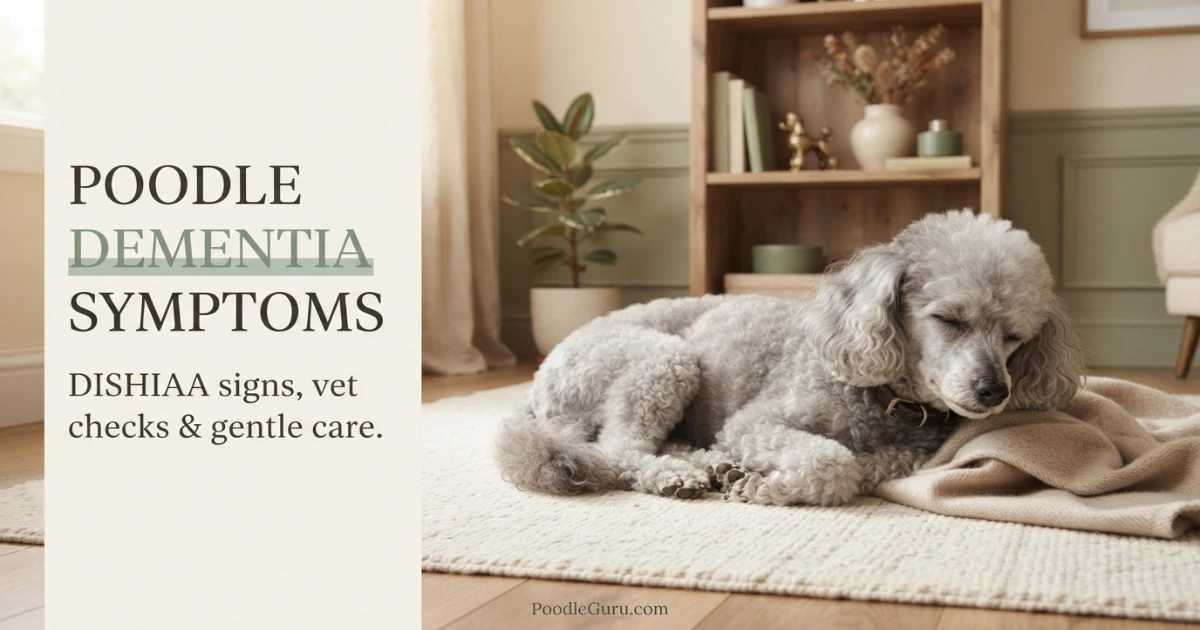
Poodle Dementia Symptoms: DISHAA Signs & Care
Poodle dementia symptoms can look like subtle confusion, night pacing, house soiling, anxiety, or changes in how your senior dog interacts with family. The goal is not to panic or blame age. The goal is to spot DISHAA signs early, rule out treatable medical causes, and build a calm care plan that protects your poodle’s comfort and dignity.
Quick Answer: What Are Poodle Dementia Symptoms?
Poodle dementia symptoms usually fall into the DISHAA pattern: disorientation, interaction changes, sleep-wake disruption, house soiling, activity changes, and anxiety. You may notice pacing at night, getting stuck in corners, staring at walls, forgetting house-training, seeming distant, or becoming unusually clingy. These signs should trigger a veterinary visit because pain, urinary tract infections, endocrine disease, vision loss, hearing loss, and other treatable problems can look very similar. If your vet diagnoses canine cognitive dysfunction, care focuses on comfort, routine, safe home changes, enrichment, and vet-guided medication or nutrition support.
What Is Canine Cognitive Dysfunction?
Canine cognitive dysfunction (CCD), also called canine cognitive dysfunction syndrome, is an age-associated brain condition that can affect memory, learning, perception, awareness, sleep, social interaction, and anxiety. For poodle owners, this may look like a dog who once knew every routine but now seems lost in familiar rooms, unsettled at night, or less responsive to people they love.
CCD is not the same as ordinary slowing down. Senior dogs can naturally sleep more, move more carefully, or respond more slowly, but persistent behavior changes deserve a veterinary workup. VCA Animal Hospitals explains the DISHAA signs of cognitive dysfunction, and the Merck Veterinary Manual notes that medical and cognitive changes can overlap in older dogs. That overlap is why this page focuses on both symptom recognition and ruling out treatable mimics.
Poodles, especially Toy and Miniature Poodles, often live into their teen years, so owners may notice age-related brain changes more often simply because their dogs live long enough for those changes to appear. Early recognition matters because environmental support, enrichment, pain control, sleep help, and veterinary therapies tend to work best when started before the dog is in severe distress.
Onset Age
Many owners first notice signs in the senior years, often after age 10. Toy and Miniature Poodles may show changes later because they often live longer.
Core Mechanism
Brain aging can involve oxidative stress, beta-amyloid accumulation, and neuron changes. CCD is similar to aspects of Alzheimer’s disease, but it is not identical.
Not a Normal Part of Aging
CCD is a medical condition, not bad behavior or stubbornness. Veterinary guidance and a tailored home-care plan make daily life safer.
Early Poodle Dementia Symptoms: The DISHAA Framework
Veterinarians commonly use DISHAA to organize the major behavioral domains of canine cognitive dysfunction. Learning the framework helps you explain changes clearly to your vet instead of saying only, “my dog seems different.” The categories below are not a home diagnosis, but they are useful for tracking patterns over several days or weeks.
| DISHAA Category | What It Means | How Poodle Dementia Symptoms May Look |
|---|---|---|
| D | Disorientation | Getting stuck behind furniture, staring at walls, going to the wrong side of a door, circling, or seeming lost in a familiar room. |
| I | Interaction changes | No longer greeting family, becoming unusually clingy, withdrawing from petting, or seeming irritable with familiar people or pets. |
| S | Sleep-wake disruption | Sleeping more during the day, pacing at night, vocalizing after bedtime, or seeming restless during normal sleep hours. |
| H | House soiling | Urinating or defecating indoors despite previous house-training, often without signaling to go out. |
| A | Activity changes | Less interest in toys or walks, aimless wandering, repetitive licking, pacing, or restlessness without a clear trigger. |
| A | Anxiety | New separation distress, trembling, panting, sound sensitivity, shadowing the owner, or evening agitation sometimes called sundowning. |
One isolated sign does not prove dementia. A single bad night, one accident, or one confused moment can happen for many reasons. But if two or more DISHAA categories persist, worsen, or appear together, schedule a senior veterinary assessment and bring a written symptom log.
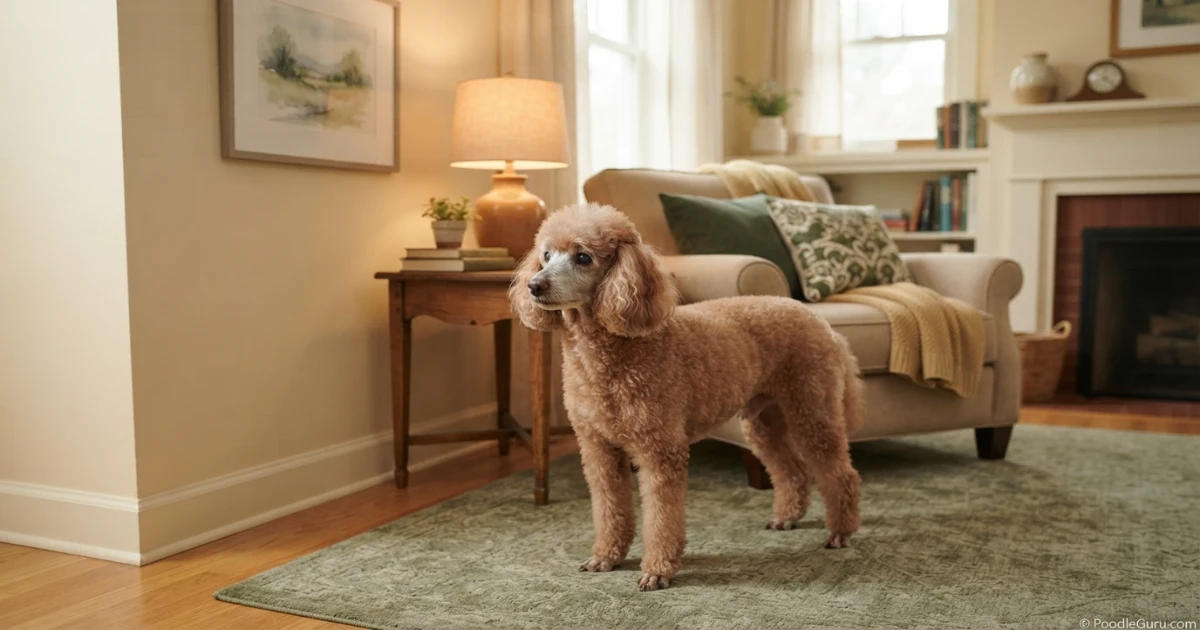
Normal Aging vs. Dementia: A Side-by-Side Comparison
Not every change in a senior poodle signals dementia. Some behaviors are simply part of aging. Knowing the difference helps you avoid panic while still catching real problems early.
| Symptom | Normal Aging | Possible Dementia |
|---|---|---|
| Sleep changes | Sleeping more deeply or lightly, but still resting through the night | Waking at 1–3 a.m., pacing, barking, unable to settle |
| House soiling | Occasional accident due to weaker bladder muscles or arthritis making it hard to go outside | Frequent indoor elimination with no signaling, sometimes in front of you |
| Social interaction | Slightly less playful but still enjoys affection and family presence | Actively walks away, seems to not recognize family members, or becomes aggressively fearful |
| Memory | Slower to recall commands but remembers routines | Gets lost in the home, fails to recognize the yard or regular walking route |
| Anxiety | Mild increase in clinginess | Pacing, panting, vocalizing for hours, especially in the evening (sundowning) |
Conditions That Mimic Poodle Dementia
Several treatable medical problems can produce signs that look like poodle dementia symptoms. A dog who suddenly has accidents, seems confused, withdraws, vocalizes at night, or becomes anxious may have pain, infection, sensory loss, endocrine disease, or another condition that needs treatment. This is why a veterinary diagnostic workup should come before assuming CCD.
When to Call the Vet
- Urinary tract infection or kidney changes: Can cause accidents, frequent urination, drinking more, and restlessness.
- Arthritis or chronic pain: May cause withdrawal, irritability, sleep disruption, reluctance to move, or new anxiety.
- Vision or hearing loss: Can make a poodle appear confused, startle easily, or fail to respond to normal cues.
- Endocrine disease: Conditions such as Cushing’s disease, diabetes, or thyroid problems can change thirst, appetite, sleep, coat, and behavior.
- Neurologic disease: Sudden circling, seizures, head tilt, collapse, weakness, or rapid personality change should be treated as urgent.
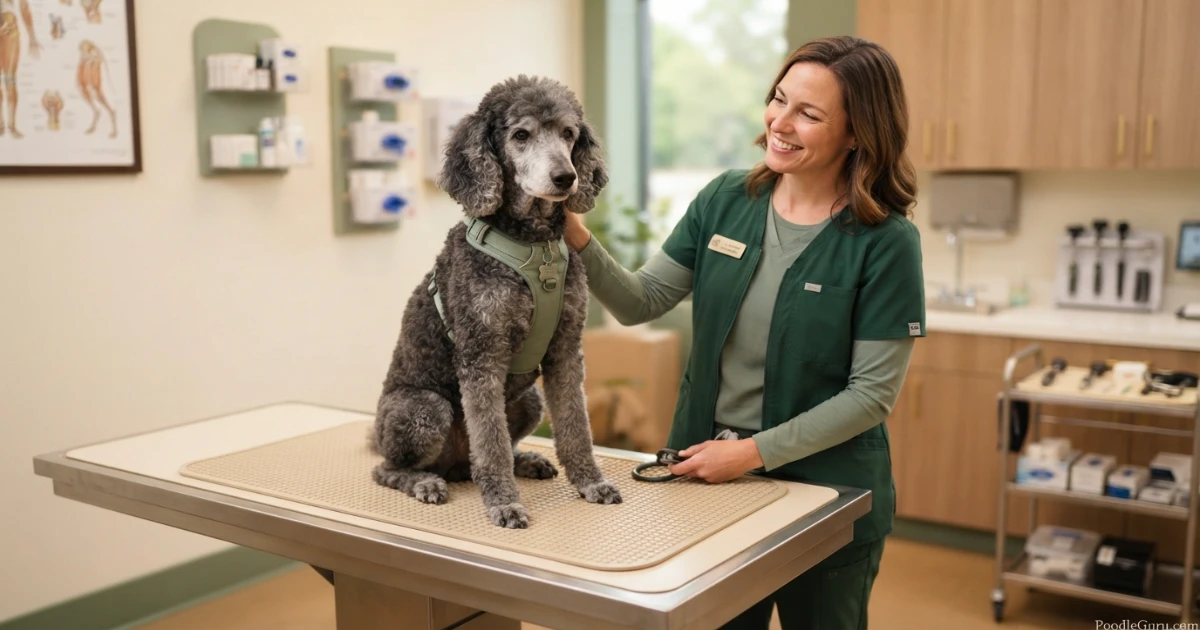
Ask your veterinarian about a senior exam, pain assessment, blood work, urinalysis, blood pressure, eye and ear checks, and any other testing your poodle’s signs suggest. AAHA senior-care guidance supports regular senior evaluations that may include CBC, chemistry, and urinalysis.
The PoodleGuru CARE Framework for Cognitive Support
At PoodleGuru, we created a simple acronym — CARE — to guide owners through the daily management of a poodle with CCD. This framework is not a replacement for veterinary treatment, but a practical structure you can implement at home starting today.
C: Consistent Routine
Poodles thrive on predictability, and a dog with cognitive decline needs it even more. Feed, walk, and offer potty breaks at the same times every day. Place water bowls, beds, and favorite toys in the exact same spots. Avoid rearranging furniture. A stable environment reduces anxiety and helps the dog navigate even as memory fades.
A: Adapt the Environment
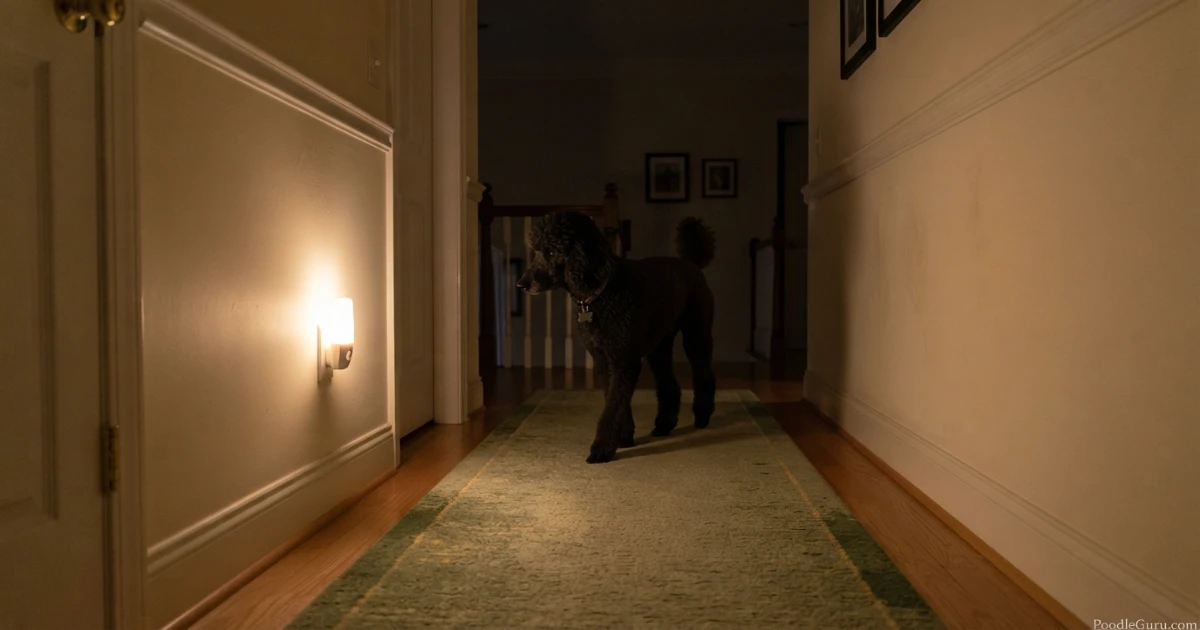
Use night lights to help a disoriented poodle find their way at night. Add non-slip rugs or yoga mats on hardwood floors to prevent slipping. Block off stairs and unsafe areas with baby gates. For poodles who soil indoors, place waterproof pads near their sleeping area and use a belly band (for males) or diaper (for females) as a backup — but change them frequently to prevent skin irritation. Read more about keeping your poodle’s skin and coat healthy.
R: Reinforce Positive Interactions
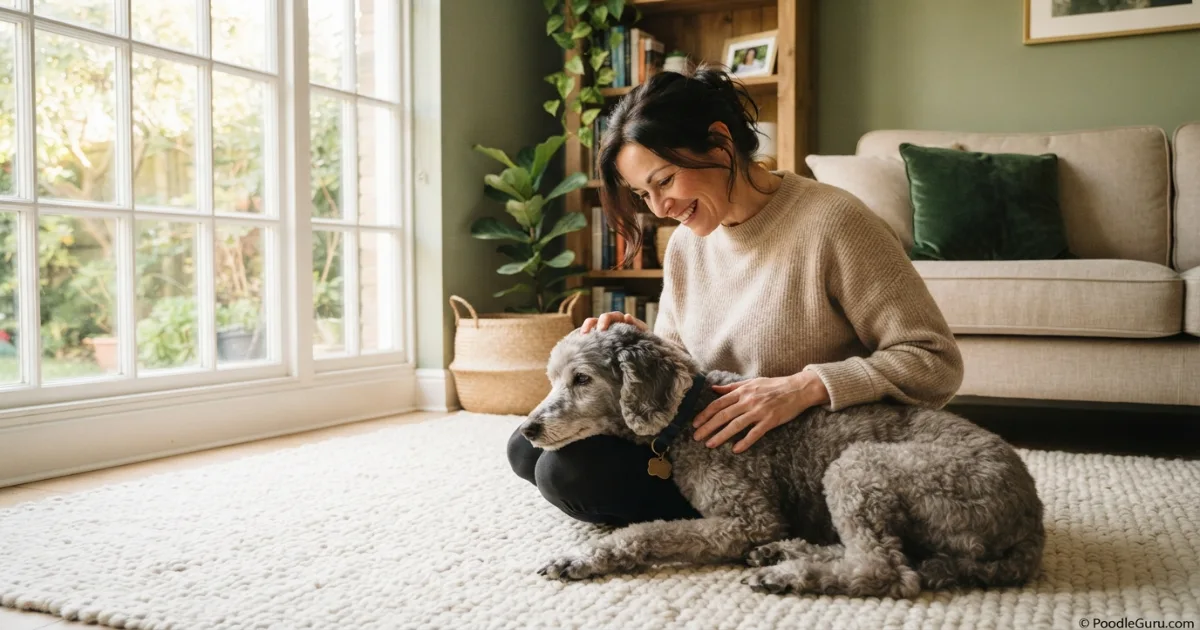
Even if your poodle doesn’t seem to recognize you, gentle touch and calm, familiar voices still matter. Short, positive interactions — a slow massage, soft brushing, sitting together without demands — reduce stress hormones. Avoid startling the dog or forcing interactions. Instead, let the dog initiate contact and reward calmness with a high-value treat.
E: Enrichment and Veterinary Partnership
Mental enrichment should be gentle and frustration-free. Sniff walks, easy food puzzles, and novel but quiet outdoor spaces can stimulate the brain without overwhelming it. Many senior poodles benefit from regular rechecks, often every 6 months, to monitor pain, sleep, anxiety, medication side effects, and progression. Your vet may discuss treatments such as selegiline, therapeutic diets, or carefully selected supplements. The FDA label for Anipryl notes use for controlling clinical signs associated with canine cognitive dysfunction syndrome, but it is not appropriate for every dog and has important drug-interaction warnings. Never start medication or supplements without veterinary guidance.
Daily Care Adjustments for a Poodle with CCD
Beyond the CARE framework, small practical shifts make the days smoother and safer. First, evaluate your poodle’s overall health status — managing arthritis, dental disease, or failing senses reduces the total burden on an aging brain. Then, focus on these areas.
Sleep and Sundowning
Many dogs with dementia experience “sundowning” — increased confusion, anxiety, and restlessness in the evening and overnight. Keep lights dim in the evening but not pitch black. Offer a predictable bedtime potty break and a quiet sleeping area. Some owners find that calming music, gentle pressure garments, or a familiar scent helps, but persistent nighttime pacing should be discussed with a vet because pain, anxiety, and medication needs may be involved.
Toileting Schedule
Accidents happen because the brain’s signaling to the bladder and bowel weakens. Take your poodle out every 3–4 hours, even if they don’t ask. Immediately after waking, eating, or a round of play, go outside. Celebrate successes with a gentle “good dog” — don’t punish mistakes; the dog can’t help it.
Nutrition for an Aging Brain
Some veterinary diets and nutrition plans use antioxidants, omega-3 fatty acids, and medium-chain triglycerides to support aging brains. Talk to your vet about whether a therapeutic senior diet, fish oil, or another supplement is appropriate for your poodle. Always check first, especially if your dog takes heart, thyroid, anxiety, pain, or seizure medication. For more on nutrition, see our Poodle Nutrition Guide.
Owner Action Plan: What to Do This Week
If you’ve noticed one or more DISHA signs in your poodle, here’s exactly where to start. The goal is to gather information, rule out treatable causes, and create a care baseline.
Keep a Symptom Journal
For 7 days, record time, duration, and circumstances of any disorientation, accidents, sleep disruption, or anxiety episodes. Note what happened right before. This is invaluable for your vet visit.
Schedule a Senior Vet Workup
Request a full blood panel, urinalysis, and a thorough physical exam. Ask specifically about cognitive dysfunction screening. If your vet isn’t comfortable with behavioral neurology, ask for a referral.
Implement the CARE Framework Tonight
Set a consistent feeding and walk schedule. Add night lights. Move water bowls to visible, easy-to-access spots. Use baby gates to block stairs. Start today — no need to wait for a diagnosis.
Frequently Asked Questions
At what age do poodles typically show dementia symptoms?
Many owners notice poodle dementia symptoms in the senior years, often after age 10, but there is no exact poodle-only age. Risk rises with age, and Toy or Miniature Poodles may show signs later simply because they often live longer than larger dogs.
Can poodle dementia be cured?
CCD is usually progressive and cannot be cured, but many dogs can be helped. Environmental adjustments, pain control, routine, enrichment, nutrition, and vet-guided medication may reduce signs or improve quality of life.
What’s the difference between sundowning and normal nighttime restlessness?
Sundowning involves significant agitation, vocalization, pacing, and confusion that worsen in the evening and night. Normal restlessness usually responds to a potty break or a drink of water; sundowning does not.
Should I change my poodle’s diet if I suspect dementia?
Talk to your veterinarian before making changes. Therapeutic diets enriched with antioxidants, DHA, and MCT oil may be recommended. Never add supplements without vet approval, especially if your poodle is on medication.
My poodle suddenly started having accidents. Could it be dementia?
Sudden accidents are more often caused by a UTI, diabetes, or kidney issues than dementia. See your vet immediately for diagnostic testing. If those are ruled out and other DISHA signs are present, CCD is considered.
How can I keep my poodle safe if they get lost in the house?
Use baby gates to create a safe, open room with a bed, water, and pee pads. Keep pathways clear and well-lit. Place a familiar-smelling blanket in the dog’s sleeping spot. Never scold a disoriented dog; gently guide them.
Is there medication for dog dementia?
Selegiline (Anipryl) is labeled for controlling clinical signs associated with canine cognitive dysfunction syndrome, and some dogs benefit from it. Other medications may be used for anxiety, sleep disruption, or pain when appropriate. Only a veterinarian can decide what is safe after reviewing your poodle’s health and current medications.
Key Takeaways: Poodle Dementia Symptoms
Poodle dementia symptoms can be unsettling, but understanding the DISHA framework gives you an early detection tool. With the CARE approach, you can build a supportive daily life that reduces anxiety and preserves your bond — even as the disease progresses.
- Poodle dementia symptoms typically emerge between ages 11–14 and are categorized by the DISHA model: Disorientation, Interaction changes, Sleep disruption, House soiling, Activity changes, Anxiety.
- Many medical conditions mimic dementia, including UTIs, arthritis pain, and sensory loss. A veterinary diagnostic workup is essential before assuming CCD.
- Normal aging and CCD differ. Track symptoms for one week and compare them to the Normal vs. Dementia comparison table.
- Implement the PoodleGuru CARE Framework: Consistent Routine, Adapt the environment, Reinforce positive interactions, and Enrichment with veterinary partnership.
- Never punish accidents or disorientation. Your poodle isn’t being stubborn — their brain is changing. Adjust your expectations and meet them where they are.
- Medications and targeted supplements can help some dogs, but only a veterinarian can prescribe or recommend them safely. Regular 6-month checkups are essential.
Next step: Track DISHAA signs for 7 days, book a senior veterinary visit, and bring your notes so your vet can separate true cognitive decline from pain, infection, sensory loss, or other treatable problems.