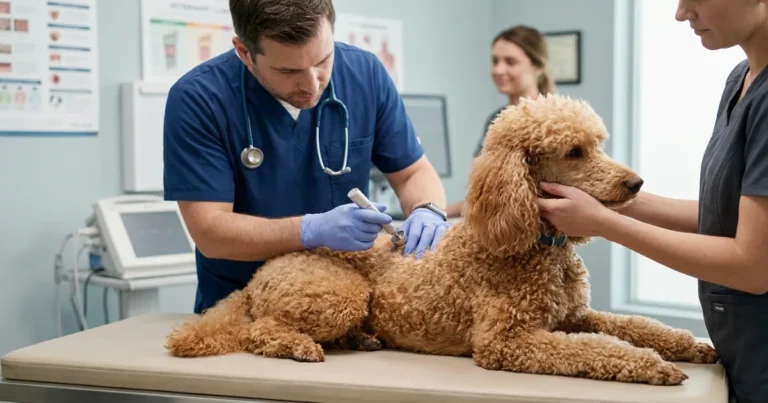
Poodle Heart Murmur & Heart Disease: Complete Guide
A murmur doesn’t automatically spell trouble, but it’s a signal you can’t ignore — especially in poodles. This guide cuts through the noise so you understand exactly what a heart murmur means, which heart diseases poodles face, and how to protect your dog’s heart for the long haul.

Quick Answer: What Is a Poodle Heart Murmur?
A poodle heart murmur is an abnormal heart sound — a whooshing or swishing noise between beats — caused by turbulent blood flow. Not every murmur means heart failure, and some puppy murmurs can be innocent and temporary. Still, a murmur is a finding that deserves follow-up because poodles can develop structural heart disease such as myxomatous mitral valve disease (MMVD), congenital defects, or, less commonly, dilated cardiomyopathy. Your vet may recommend rechecks, chest X-rays, blood pressure, ECG, or an echocardiogram to learn whether the murmur is harmless, stable, or a sign of disease that needs monitoring.
In This Guide
- What Exactly Is a Heart Murmur?
- Why Heart Health Matters Extra in Poodles
- Innocent vs. Pathological Murmurs
- Heart Murmur Grades (and What They Mean)
- The PoodleGuru Heart Murmur Monitoring Plan
- Heart Diseases That Cause Murmurs in Poodles
- Signs of Heart Disease You Shouldn’t Ignore
- Diagnosis: What to Expect at the Vet
- Treatment & Management Options
- When a Murmur Becomes an Emergency
- Living With a Poodle With Heart Disease
- Prevention: Daily Choices That Matter
- Common Myths About Poodle Heart Murmurs
- FAQs
What Is a Murmur?
A heart murmur is an extra or unusual sound heard during the heartbeat cycle. It’s a sign of turbulent blood flow, not a disease itself. It’s graded from I (barely audible) to VI (loud enough to feel through the chest wall).
Poodle Heart Risks
Poodles of all sizes can develop heart disease with age. Toy and Miniature Poodles may develop degenerative valve disease as senior small-breed dogs, while Standard Poodles also deserve attention for conditions such as dilated cardiomyopathy. Age, genetics, diet history, and size all influence risk.
Symptoms to Watch
Coughing (especially at night or after activity), exercise intolerance, rapid breathing at rest, fainting, and a swollen belly are the key red flags. Many dogs show no symptoms early — which is why regular vet checks are critical.
What Exactly Is a Heart Murmur?
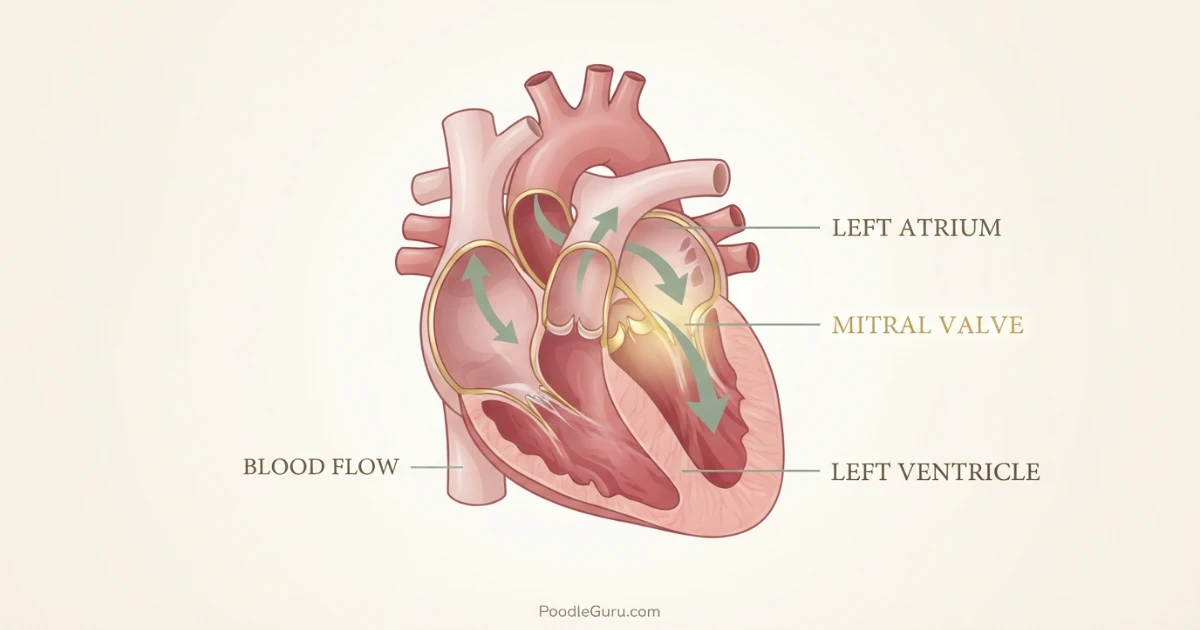
A heart murmur is a sound — a soft whoosh, rasp, or hum that slips between the steady lub-dub of a normal heartbeat. Your vet hears it with a stethoscope when blood doesn’t flow smoothly through the heart’s chambers and valves. For poodle owners, this means the heart’s mechanics need a closer look. The most important thing to understand is that a murmur is a physical finding, not a final diagnosis. Some murmurs are benign; others are the first audible clue of structural heart disease that will progress.
Veterinary cardiology describes murmurs by timing (systolic, diastolic, continuous), location, and loudness. VCA Animal Hospitals explains how heart murmurs are graded on a six-point scale, which helps owners and vets track changes over time.
Why Heart Health Matters Extra in Poodles
All dogs can develop heart murmurs, but poodles bring a few practical concerns to the table. Toy and Miniature Poodles are long-lived small dogs, so age-related valve changes can appear during the senior years. Standard Poodles have a larger body size and may also be evaluated for cardiomyopathy, arrhythmias, and diet-associated concerns when symptoms or imaging suggest them. The point is not to assume every murmur is dangerous — it is to identify which murmurs are innocent, which are stable, and which need a cardiology plan.
Size matters when monitoring symptoms. A Standard Poodle’s athletic build can sometimes mask early slowing until the disease is more advanced. A Toy Poodle may show subtle fatigue that is easy to dismiss as “just aging.” Regular exams, good owner notes, and early imaging when your vet recommends it give you a head start.
Innocent vs. Pathological Murmurs: Why the Distinction Is Everything
An innocent (physiologic) murmur happens in a structurally normal heart. Puppies, especially, can have soft murmurs that disappear by 4–5 months of age. These murmurs are usually Grade I–II, occur only during systole, and aren’t accompanied by any other clinical signs. A pathological murmur, in contrast, points to a structural abnormality — leaky valve, narrowed vessel, or weakened heart muscle. In poodles, a murmur that persists beyond puppyhood, gets louder, or appears for the first time in a middle-aged or senior dog is more likely to be pathological.
You can’t tell the difference by sound alone. An echocardiogram (heart ultrasound) is the gold standard. At PoodleGuru, we strongly advise not waiting if a murmur is detected — early imaging changes the entire management timeline.
Heart Murmur Grades at a Glance
Vets use a I–VI scale. The grade doesn’t always predict severity — a Grade III murmur could be from mild disease, while a different dog with the same grade may have significant changes. Still, grading helps track progression. Here’s what owners need to know.
| Grade | Description | Audibility | Typical Significance in Poodles |
|---|---|---|---|
| I | Very soft, focal | Barely audible, needs quiet room | Often innocent in pups; may be early MMVD in seniors |
| II | Soft but consistently heard | Easily heard with stethoscope | Common early-grade MMVD; watch and recheck |
| III | Moderately loud | No palpable thrill | Likely structural disease; echocardiogram recommended |
| IV | Loud, widespread | No thrill but radiates | Significant valve disease; medical management usually warranted |
| V | Very loud with palpable thrill | Thrill felt on chest | Advanced disease; often heart enlargement present |
| VI | Extremely loud, thrill, audible with stethoscope barely touching chest | Thrill easily felt | Severe pathology; urgent cardiac workup needed |
The PoodleGuru Heart Murmur Monitoring Plan
At PoodleGuru, we evaluate heart health by combining vet findings with at-home observations. This four-step plan helps you catch subtle changes between vet visits — changes that can dramatically alter outcomes.
Know the Grade and Trend
Ask your vet to document the murmur grade, timing, and point of maximal intensity at every exam. Track this in a simple log. A murmur that has jumped from Grade II to Grade III in six months, even without symptoms, often signals disease progression.
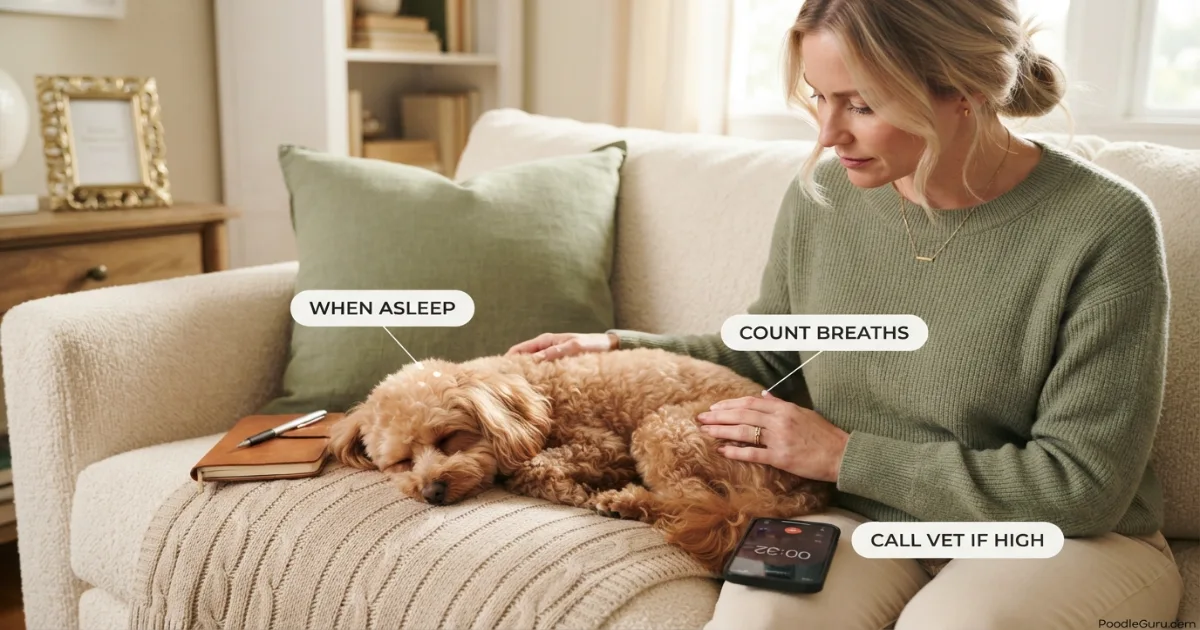
Track Resting Respiratory Rate
When your poodle is truly asleep and not dreaming, count breaths per minute. Normal is usually under 30. A persistent resting rate above 30–35 can be an early sign of fluid buildup from left-sided heart failure. Do this weekly and jot it down.
Record Subjective Symptoms
Note subtle changes: a cough after lying down, tiring halfway through a usual walk, hesitating on stairs, or breathing heavier on humid days. Video clips can be incredibly helpful for your vet.
Schedule Follow‑Up Imaging Proactively
If your poodle has a persistent murmur, a new murmur in adulthood, a murmur that is getting louder, or any symptoms such as coughing, fainting, or increased resting breathing rate, discuss an echocardiogram with your veterinarian. A board-certified cardiologist can measure chamber size, valve function, rhythm concerns, and blood flow — the data needed to decide whether monitoring or medication is appropriate.
Heart Diseases That Cause Murmurs in Poodles
Several specific conditions can produce a murmur. The list below covers the most common ones seen in poodles. Note that some, like dilated cardiomyopathy, may present with a soft or even absent murmur initially, making them trickier.
| Disease | What Happens | Poodle Types Most Affected | Typical Age Range |
|---|---|---|---|
| Myxomatous Mitral Valve Disease (MMVD) | Mitral valve leaflets thicken and fail to close tightly, causing a leak (regurgitation) and a systolic murmur. | Standard, Miniature, Toy — Standards highest risk | Mature adults, 6+ years |
| Dilated Cardiomyopathy (DCM) | Heart muscle weakens, chambers enlarge, pumping ability drops. Murmur may be soft or absent. | Standard Poodles, sometimes diet-associated | Middle-aged to older adults |
| Tricuspid Valve Dysplasia | Malformed tricuspid valve (right side) leading to regurgitation and right-sided heart changes. | Less common but reported in poodles | Can be congenital or appear later |
| Patent Ductus Arteriosus (PDA) | A fetal blood vessel fails to close after birth, causing a continuous machinery murmur. | Can occur in any poodle, often detected in puppyhood | Young puppies |
| Pulmonic Stenosis | Narrowing of the pulmonic valve, creating a systolic ejection murmur. | Rare in poodles but possible | Congenital, found young |
Signs of Heart Disease You Shouldn’t Ignore
Poodles can be stoic. A dog with moderate heart disease may still wag its tail and eat well. That’s why you have to watch for quiet signs — and act quickly when they appear. Common symptoms include:
- A soft, dry cough that worsens at night or early morning
- Increased respiratory rate even when resting
- Exercise intolerance — lagging behind on walks, needing breaks
- Fainting or collapsing (syncope)
- Swollen abdomen (ascites) from right-sided heart failure
- Weight loss or muscle wasting over the back and hindquarters
- Restlessness and inability to settle comfortably
When to Call the Vet Immediately
- Your poodle faints or suddenly collapses.
- Breathing is labored, open-mouthed, or accompanied by a heaving belly at rest.
- Gums appear pale, greyish, or blue-tinged.
- A previously dry cough becomes wet or constant.
These can be signs of impending heart failure, and prompt emergency care is critical.
Diagnosis: What to Expect at the Vet
When a murmur is heard, your veterinarian will start with a thorough physical exam, listening carefully to character and radiation. The next step is usually thoracic radiographs (chest X-rays) to assess heart size and lung vessels. But for poodles, the definitive test is an echocardiogram with Doppler — an ultrasound that measures chamber dimensions, wall thickness, valve function, and blood flow velocity. PetMD covers congestive heart failure signs and treatment in dogs, including the diagnostic path from murmur to confirmed disease.
Additional tests may include blood pressure measurement, ECG to check rhythm, and NT-proBNP blood test that can indicate cardiac stretch and stress. The combination gives a picture of not just whether disease is present, but how far it has advanced and whether the heart is compensating or failing.
Treatment & Management Options
Treatment depends entirely on the underlying disease and stage. An innocent murmur needs no treatment. Mild mitral valve disease without heart enlargement may simply be monitored with regular rechecks (every 6–12 months). Once enlargement begins or symptoms appear, veterinary cardiologists typically prescribe medications that can include:
- Pimobendan — may be prescribed for selected dogs with MMVD and documented heart enlargement, or for certain stages of heart failure. It should only be used under veterinary direction.
- ACE inhibitors (e.g., enalapril, benazepril) — reduce workload on the heart.
- Diuretics (e.g., furosemide) — control fluid accumulation when heart failure is present.
- Spironolactone — may provide additional benefit in advanced cases.
Lifestyle adjustments matter too. Mild sodium reduction (under veterinary guidance), avoiding strenuous heat, and maintaining a lean body condition can reduce cardiac workload. A poodle with heart disease shouldn’t be pushed through heavy exercise but should still enjoy gentle, consistent activity tailored to their tolerance.
When a Murmur Becomes an Emergency
Most murmurs are not emergencies. But if your poodle suddenly develops labored breathing, cannot lie down comfortably, faints, or produces a wet, gurgling cough, don’t wait. These are signs of congestive heart failure — a true medical crisis. Get to an emergency veterinarian immediately. Time is heart muscle.
Living With a Poodle With Heart Disease
A diagnosis doesn’t mean the end of joyful days. Many poodles live happily for years with well-managed heart disease. The key is consistency: daily medication on schedule, low-stress routines, weight control, and regular veterinary cardiology follow-ups. Owners often say the rhythm of checking respiratory rates and watching for subtle shifts deepens their bond with their dog. It transforms anxiety into empowered care.

Prevention: Daily Choices That Matter
You can’t change genetics, but you can influence how fast disease progresses and when symptoms appear. Research and veterinary consensus suggest:
- Feed a balanced, complete diet from a company with strong veterinary nutrition quality control. If you use boutique, grain-free, legume-heavy, or exotic-ingredient diets, discuss them with your veterinarian because the FDA has investigated a potential association between certain diets and canine DCM.
- Maintain ideal body condition — obesity dramatically increases cardiac workload.
- Schedule annual to biannual vet exams with careful cardiac auscultation. After age 7, twice-yearly exams are even better.
- Keep up with dental care. Periodontal disease can introduce bacteria into the bloodstream and affect heart valves.
Common Myths About Poodle Heart Murmurs
Myth: A soft murmur is nothing to worry about.
Reality: Many dogs with early MMVD have Grade I–II murmurs. Low grade doesn’t rule out structural change; an echo is the only way to know.
Myth: Poodles only get heart disease when they’re very old.
Reality: MMVD can begin in middle-aged dogs, and some congenital issues appear young. Don’t dismiss a murmur in a 5-year-old Standard Poodle.
Myth: If my dog acts normal, the heart is fine.
Reality: Dogs compensate remarkably well until they can’t. A dog with significant heart enlargement may still play fetch. Clinical signs often lag behind structural damage.
Frequently Asked Questions
Can a poodle live a normal life with a heart murmur?
Yes, depending on the cause. Innocent murmurs don’t affect lifespan. Even dogs with mild mitral valve disease can live years with good quality of life and appropriate monitoring. Regular vet checks and owner observation are what make the difference.
What is the life expectancy of a poodle with a heart murmur?
There’s no single number. An innocent murmur has no impact. For MMVD, the time from first murmur to heart failure varies widely — some poodles go 2–4 years before needing medication; others progress slowly over 5+ years. Early diagnosis and treatment of heart enlargement can extend the symptom-free period.
How much does a cardiac workup cost for a poodle?
Costs vary regionally, but a cardiology consultation with echocardiogram often ranges from $600–$1,200 USD in 2026. Thoracic radiographs and blood tests may add $200–$500. Pet insurance that covers cardiac conditions can offset these costs substantially.
Can diet cause heart murmurs in poodles?
Diet doesn’t directly cause a murmur, but certain grain-free, legume-rich diets have been linked to dilated cardiomyopathy (DCM) in Standard Poodles. DCM can produce a murmur or arrhythmia. Feeding a well-researched, grain-inclusive diet from a reputable brand is a prudent preventive step.
What’s the difference between a heart murmur and an arrhythmia?
A murmur is an abnormal sound due to turbulent blood flow. An arrhythmia is an irregular heart rhythm. A poodle can have a murmur, an arrhythmia, both, or neither. An ECG differentiates them, and both can coexist in advanced heart disease.
Should I still exercise my poodle with a heart murmur?
Gentle, consistent exercise is usually beneficial. Avoid sudden bursts of intense activity in hot weather. If your poodle shows signs of fatigue, coughing, or labored breathing, stop and consult your vet for an individualized exercise plan.
Key Takeaways: Poodle Heart Murmurs & Your Next Steps
Heart murmurs in poodles deserve respect, not panic. Use these evidence-based points to guide your decisions.
- A heart murmur is a physical finding, not a disease. It signals turbulent blood flow and needs further investigation.
- Poodles of all sizes can develop cardiac conditions; senior small poodles may develop valve disease, while Standard Poodles also warrant attention for cardiomyopathy and diet-associated concerns when clinically relevant.
- Murmur grade alone doesn’t predict severity — an echocardiogram is the definitive diagnostic tool.
- Tracking resting respiratory rate at home can catch heart failure signs days before a crisis.
- Diet matters: discuss boutique, grain-free, legume-heavy, or exotic-ingredient diets with your vet, and keep your poodle at a lean body condition.
- Early use of pimobendan in dogs with heart enlargement can extend the symptom-free period significantly.
If your poodle was just diagnosed with a murmur, ask your veterinarian what the grade, location, and likely next step should be. For persistent adult murmurs, worsening grades, symptoms, or any uncertainty, an echocardiogram answers questions a stethoscope cannot — and helps you choose the clearest path forward.