Poodle Obedience Training: Commands Every Owner Needs
Build a calm, confident companion with the 5-command foundation that works with your poodle’s brilliant mind—not against it.
Quick Answer
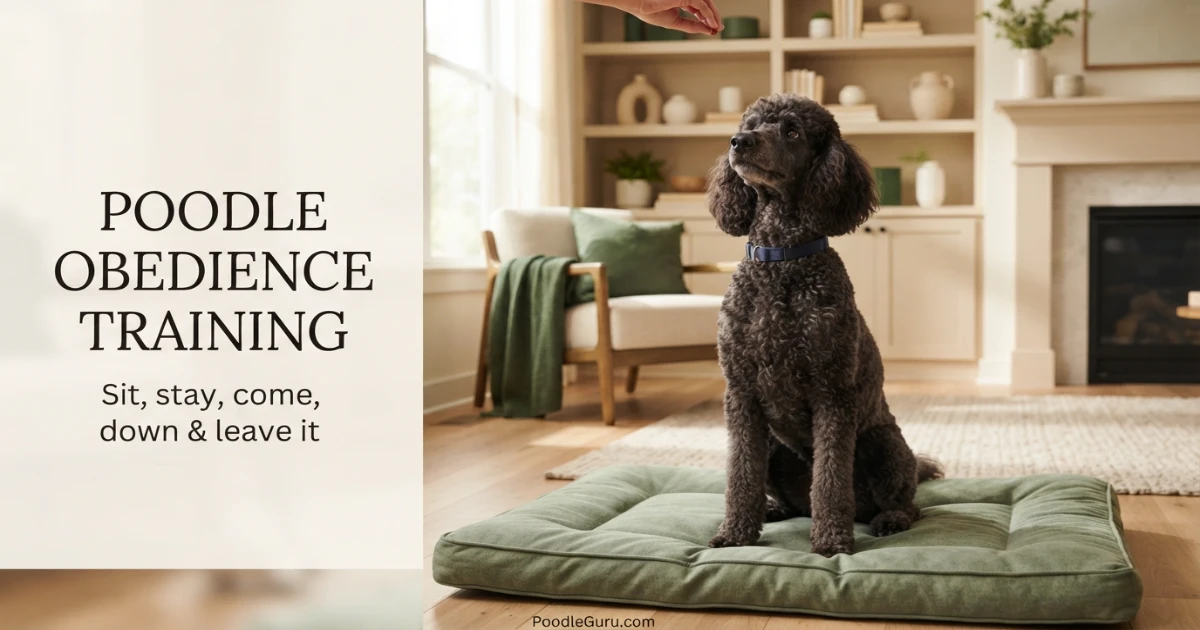
Poodle obedience training is the structured process of teaching your poodle a reliable set of commands—sit, stay, come, down, and leave it—that keep them safe and make daily life smoother. For poodle owners, this means shorter, game-like sessions built on positive reinforcement, because poodles learn fast but lose interest just as quickly. The most important thing to understand is that consistency and mental engagement matter more than drilling a single command for hours.
In This Guide
Why Poodle Obedience Training Is Different
Poodles are bright, athletic, people-focused dogs with a long working history, and the AKC describes the breed as highly intelligent with exceptional learning ability. That is why training a poodle works best when it feels clear, fair, and rewarding. Traditional “because I said so” training often falls flat: many poodles notice patterns quickly, read body language closely, and disengage when the exercise feels repetitive or confusing.
Obedience training with a poodle succeeds when you treat it as a collaboration, not a power struggle. When you use clear signals, reward generously at first, and keep sessions under 10 minutes, the same dog that ignored you yesterday might start offering behaviors before you ask. This isn’t just theory—it’s what thousands of poodle owners discover when they adjust their approach.
Think of poodle obedience training as mental enrichment disguised as manners. A bored poodle invents its own job: barking at shadows, counter-surfing, or herding the cat. A trained poodle channels that same intelligence into behaviors that make living together a joy. That’s why we focus on the commands that build real-world reliability, not just party tricks.
Learning Style
Poodles are quick pattern-readers. They often grasp a new cue fast, but true reliability still requires proofing across rooms, people, noises, and distractions.
Attention Span
Most poodles do better with short, upbeat sessions than long drills. Puppies usually need tiny 2–5 minute bursts, while adults often handle several 5–10 minute sessions.
Sensitivity Factor
Poodles often respond strongly to tone and body language. Harsh corrections can damage trust, while clear markers, redirection, and rewards keep learning emotionally safe.
The PoodleGuru 5-Command Foundation
At PoodleGuru, we evaluate training systems by one measure: does this command work when you actually need it? A “sit” performed perfectly in the kitchen but ignored at the front door isn’t trained—it’s a party trick. Our 5-Command Foundation strips obedience down to the minimum reliable behaviors that keep your poodle safe and manageable, no matter the environment.
These five commands aren’t arbitrary. Together they address impulse control, recall, stillness, and disengagement from distractions—the exact skills that prevent the most common poodle behavior complaints.
| Command | Real-World Use | Poodle-Specific Challenge | Start Age |
|---|---|---|---|
| Sit | Greeting guests, waiting at curbs, mealtime manners | Poodles may “sit” then immediately pop up if not proofed with duration | 8 weeks |
| Stay | Preventing door-dashing, safe car exits, vet exams | Highly social poodles want to follow you—practice stays with you out of sight early | 12 weeks (short duration) |
| Come | Off-leash recall, emergency recall, leaving play | Poodles can weigh the reward of ignoring you vs. the treat; jackpot rewards are essential | 8 weeks (name recognition) |
| Down | Settling in public, calming overexcited greetings, longer stays | Some poodles resist “down” on cold or hard surfaces—use a mat from day one | 10–12 weeks |
| Leave It | Dropping forbidden items, ignoring dropped food, passing other dogs | Curiosity drives poodles to investigate; make “leave it” a game, not a scold | 12 weeks |
Every command builds on the one before it. A solid “sit” makes “stay” possible. A reliable “stay” makes “come” meaningful when you’re 20 feet away. Approach them in order, but don’t wait for perfection before introducing the next—poodles thrive on layered learning.
What Each Command Actually Does for Your Poodle
You’ll notice we don’t include “paw” or “roll over” on this list. Those are fun, but they don’t save lives. The 5-Command Foundation prioritizes behaviors that matter when your poodle is amped up, distracted, or tempted to ignore you. Let’s break down why each one earns its place.
Sit: The Universal Starting Point
Sit is the easiest command to teach because poodles naturally sit when they’re waiting for something. Capture that moment by holding a treat near your poodle’s nose and slowly lifting it back over their head. Their rump will drop automatically. Mark the exact second it touches the ground with a click or a “yes,” then reward. Within a week, you’ll have a sit you can use at doorways, before meals, and during leash attachment.
Stay: Teaching a Poodle to Hold Still
Stay is the command that tests a poodle’s patience—and yours. The secret is to build duration, distance, and distraction as separate challenges. Don’t try to increase all three at once. Start with a one-second stay right next to you, then add time. Only increase distance once your poodle can hold a 10-second stay with you beside them.
Come: The Most Important Safety Command
A poodle that ignores “come” often has learned that coming to you ends the fun. Reverse that calculation. Call your poodle, reward generously with high-value treats or a favorite toy, then release them back to play when it is safe. Repeating that pattern builds a recall your dog is happy to choose, instead of one that feels like punishment.
Down: A Calmer Position for Longer Waits
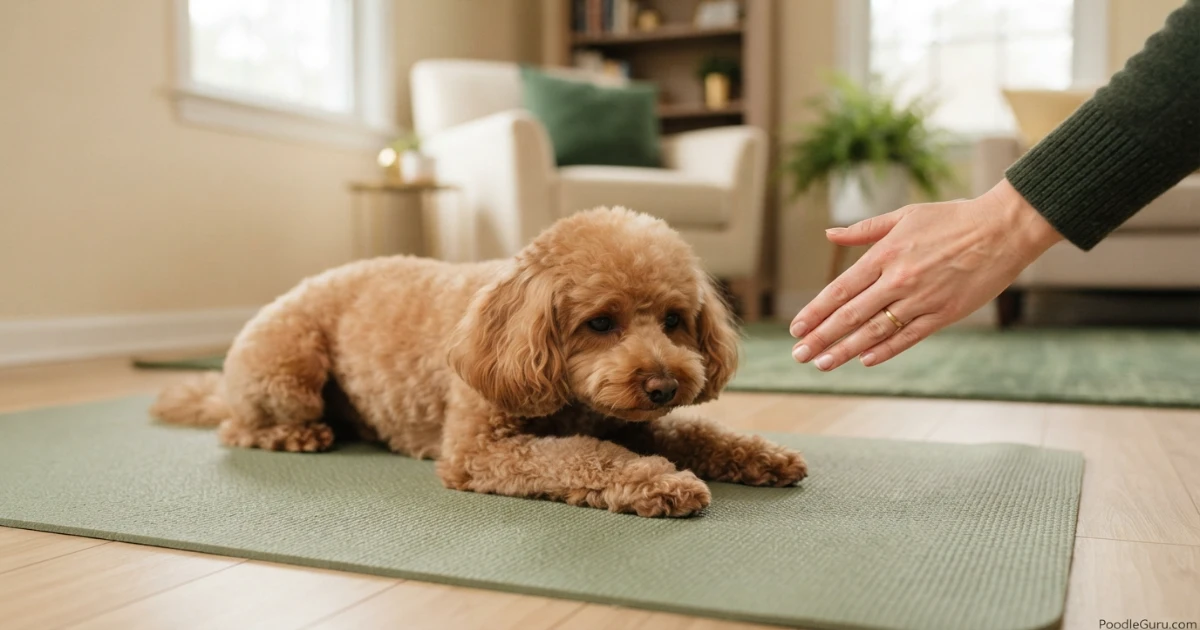
Down is more passive than sit, which makes it perfect for café patios, vet waiting rooms, or when guests arrive. Lure your poodle into a down by lowering a treat from their nose to the floor, then slowly drawing it forward. Some poodles find down physically awkward—if yours resists, practice on a carpet or a soft mat, and never push on their shoulders.
Leave It: Impulse Control in Real Time
Leave it teaches your poodle that ignoring a temptation earns an even better reward. Start with a low-value item in a closed fist. Let your poodle sniff, paw, or lick; the second they pull away, mark and reward from your other hand. Gradually progress to open hand, floor, and eventually moving objects. This command can prevent dangerous choices around dropped food, socks, sharp objects, or other household hazards.
Expert Insight: The “3D Rule” for Poodle Training
Poodles master a command in one context and forget it in another because they associate it with a specific location or body posture. Always train with the 3Ds separately: Duration (how long), Distance (how far from you), and Distraction (what’s happening around them). Raise one D at a time, and your poodle will generalize the command to any situation. Most training plateaus happen when an owner tries to add distance and distraction simultaneously.
How to Teach the “Stay” Command (Step by Step)
“Stay” is where many poodle owners hit a wall—not because the dog can’t do it, but because they rush the process. This 5-step method, designed specifically for poodles, breaks it into tiny wins your dog will enjoy. Use high-value treats and a quiet room with no other pets present.
Start with a solid “sit.”
Ask your poodle to sit beside you. If they don’t have a reliable sit yet, revisit that command first. A wiggly poodle can’t learn stay.
Give the cue clearly.
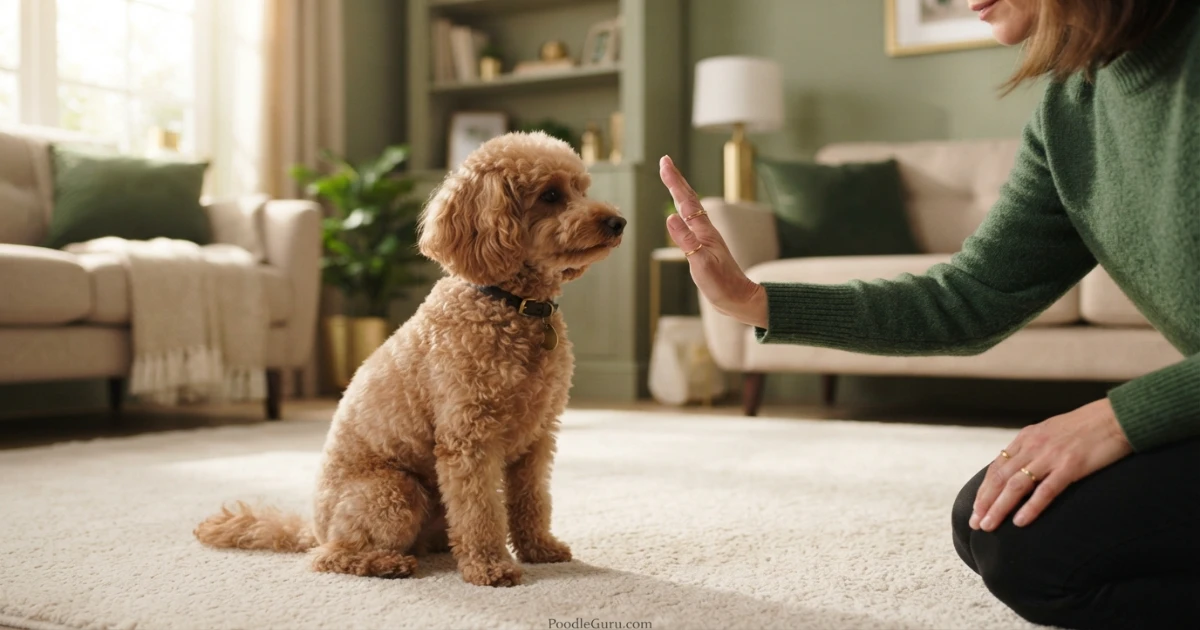
Show an open palm like a stop sign and say “stay” in a calm, steady voice. Don’t lean over your dog—stand tall and relaxed.
Wait just one second, then mark and reward.
Count “one-poodle” in your head. If your poodle holds the position, mark with a click or “yes” and deliver a treat right to their mouth. If they break, no reward—just reset.
Gradually add duration before adding distance.
Build from 1 second to 3, then 5, 8, 10. Only when your poodle can hold a 10-second stay with you beside them should you take one step away—and even then, return immediately to reward.
Add the release word.
Teach a release cue like “free” or “okay” that tells your poodle the stay is over. Say it cheerfully after you reward, then move. A clear release prevents them from guessing when it’s okay to move—a common poodle confusion.
Move at your poodle’s pace rather than forcing a calendar. Some dogs build duration in days; others need several weeks, especially around doorbells, guests, or outdoor distractions. Be patient; a poodle who learns stay this way is more likely to hold it in real daily moments, not just in training drills.
Owner Mistakes That Slow Poodle Training Progress
Even experienced dog owners slip into habits that confuse a poodle. Recognizing these patterns can shave weeks off your training timeline.
| Common Mistake | Why It Backfires with Poodles | What to Do Instead |
|---|---|---|
| Repeating a command | “Sit. Sit. Siiiit.” teaches your poodle that the first cue is meaningless. Poodles tune out repetition fast. | Say it once. If no response, pause 5 seconds, reset, and try again with a lure. |
| Skipping the release word | Poodles with no clear “okay” start deciding for themselves when a behavior ends. That looks like breaking a stay early. | Always use the same release word. Make it cheerful, and reward after you say it so they learn the sequence. |
| Training when frustrated | Poodles mirror your emotions. If you’re irritated, they’ll shut down or get silly. The session is wasted. | Stop after two failed attempts. Play for a minute, then try a simpler version of the command. End on a win. |
| Only training indoors | A poodle who sits perfectly in the living room may ignore you in the backyard. Context matters enormously to this breed. | Once a command is solid indoors, practice on a leash in a quiet outdoor spot. Add distractions gradually. |
| Using low-value rewards | Kibble won’t compete with a squirrel. Poodles are smart enough to rank rewards—and they’ll hold out for a better offer. | Use real meat, cheese, or a special toy reserved for training. Phase out food gradually, not abruptly. |
Realistic Training Timelines for Poodles
Owners often ask: “How long until my poodle is fully trained?” The honest answer depends on your consistency, your poodle’s age, and your definition of “trained.” Here’s what you can reasonably expect when you work daily in short sessions.
A Quick Reality Check
A poodle puppy may understand the idea of “sit” quickly, but that same puppy may “forget” everything when a guest arrives. True obedience—where the command works under distraction—usually develops through months of consistent, varied practice. Adult rescue poodles may need extra time to replace old patterns with new ones. The goal is dependable behavior, not temporary performance in one room.
Break your training into phases. Phase 1 (first 2–4 weeks): luring and marking in a quiet room. Phase 2 (months 2–3): fading the lure, adding the verbal cue only, introducing mild distractions. Phase 3 (months 4–6): proofing in the real world—doorbells, other dogs, new locations. Rushing to Phase 3 before Phase 1 is solid is why many poodle owners feel stuck.
Your Daily Poodle Obedience Training Checklist
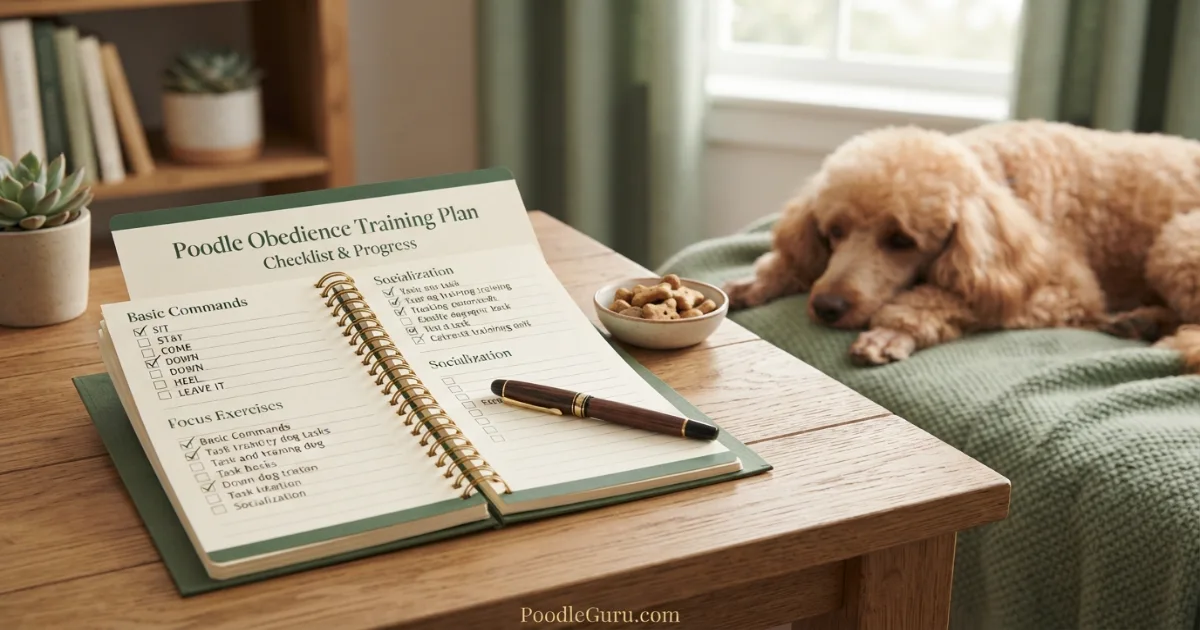
Print this or save it on your phone. Five minutes of intentional work beats a 20-minute unfocused session every time.
- ✅ 1-minute warm-up: 5 rapid sits for tiny treats.
- ✅ Practice one “stay” with a small duration increase from yesterday.
- ✅ One recall game: call your poodle from another room, reward, release.
- ✅ One “leave it” exercise with a new object.
- ✅ End with a 30-second calm “down” and release.
- ✅ Note one thing that went better than yesterday.
If you miss a day, don’t double up. Just pick up where you left off. Poodles appreciate consistency but they also forgive imperfect owners.
When to Involve a Professional Trainer
This guide is designed to help you teach foundation commands yourself. But there are moments when calling in a professional is the wisest move—not a failure. If your poodle shows signs of fear, anxiety, or reactivity (growling, lunging, cowering) during training, a force-free certified trainer or a veterinary behaviorist can assess the situation safely. Likewise, if you’ve worked consistently for 6 weeks with zero progress on a critical command like recall, a fresh set of eyes can identify the subtle communication gap you’re missing.
Training isn’t just about commands. If you’re dealing with separation anxiety, resource guarding, or aggression, these are emotional responses, not obedience failures. Humane, reward-based training is the safest foundation, but complex cases benefit from an individualized plan from a qualified professional.
Frequently Asked Questions
At what age should I start poodle obedience training?
You can begin the moment your poodle puppy comes home, usually around 8 weeks. Keep sessions to 2–3 minutes and focus on name recognition, sit, and gentle handling. Many puppy classes can begin earlier with veterinary guidance, appropriate vaccination status, and clean, well-managed class settings; ask your vet what timing is safest for your puppy.
Are poodles easy to obedience train compared to other breeds?
Poodles are exceptionally quick to learn new cues, often requiring fewer repetitions than many breeds. However, their sensitivity means they shut down under harsh training. They’re “easy” only if you use positive, patient methods that respect their intelligence.
How long should a poodle training session last?
Aim for 5–10 minute sessions for adult poodles, and 3–5 minutes for puppies. End the session before your poodle loses interest. Two or three short daily sessions are far more effective than one long one.
My poodle knows the commands but won’t do them when guests visit. Why?
This is a generalization gap. Poodles tie commands to context. Practice “sit” and “stay” with a helper at the door, then with a quiet visitor, gradually increasing excitement. Always set your poodle up to succeed by asking for a behavior they can perform in that moment.
Should I use a clicker for poodle obedience training?
A clicker can be very effective because it marks the exact moment your poodle does the right thing. Many poodles respond well to the clear, consistent sound. If you prefer verbal markers, a distinct “yes” works too—just keep it the same every time.
What if my poodle gets bored during training?
Boredom usually means the reward isn’t high enough, the repetitions are too many, or the challenge is too easy. Switch to a tastier treat, incorporate a new game, or end the session early and try again later. Short, successful bursts maintain enthusiasm.
Can an older poodle still learn obedience commands?
Absolutely. Adult and senior poodles are entirely capable of learning new commands. The process may be slightly slower if they’ve rehearsed alternative behaviors, but consistency and patience will reshape their responses. Senior dogs often enjoy the mental engagement.
Key Takeaways: Poodle Obedience Training
Poodle obedience training succeeds when you work with your dog’s intelligence, not against it. Start with the 5-command foundation, keep sessions short, and build proofing into everyday life.
- Poodles learn fast but require positive, consistent training—harsh corrections damage trust and slow progress.
- Teach sit, stay, come, down, and leave it in that order; each command builds impulse control for the next.
- Duration, distance, and distraction must be increased separately to help your poodle generalize behaviors.
- Most training plateaus come from repeating cues, skipping release words, or moving too fast.
- A 5-minute daily checklist with high-value rewards creates more reliable obedience than long, infrequent sessions.
- If fear, anxiety, or aggression appear, involve a force-free professional—obedience commands alone won’t resolve emotional root causes.
Your next step: Pick one command from the foundation that feels shaky. Commit to three short daily practice rounds for one week using the methods above. Notice what changes—and then tackle the next one. For a complete pre-training setup, explore our poodle puppy training guide.