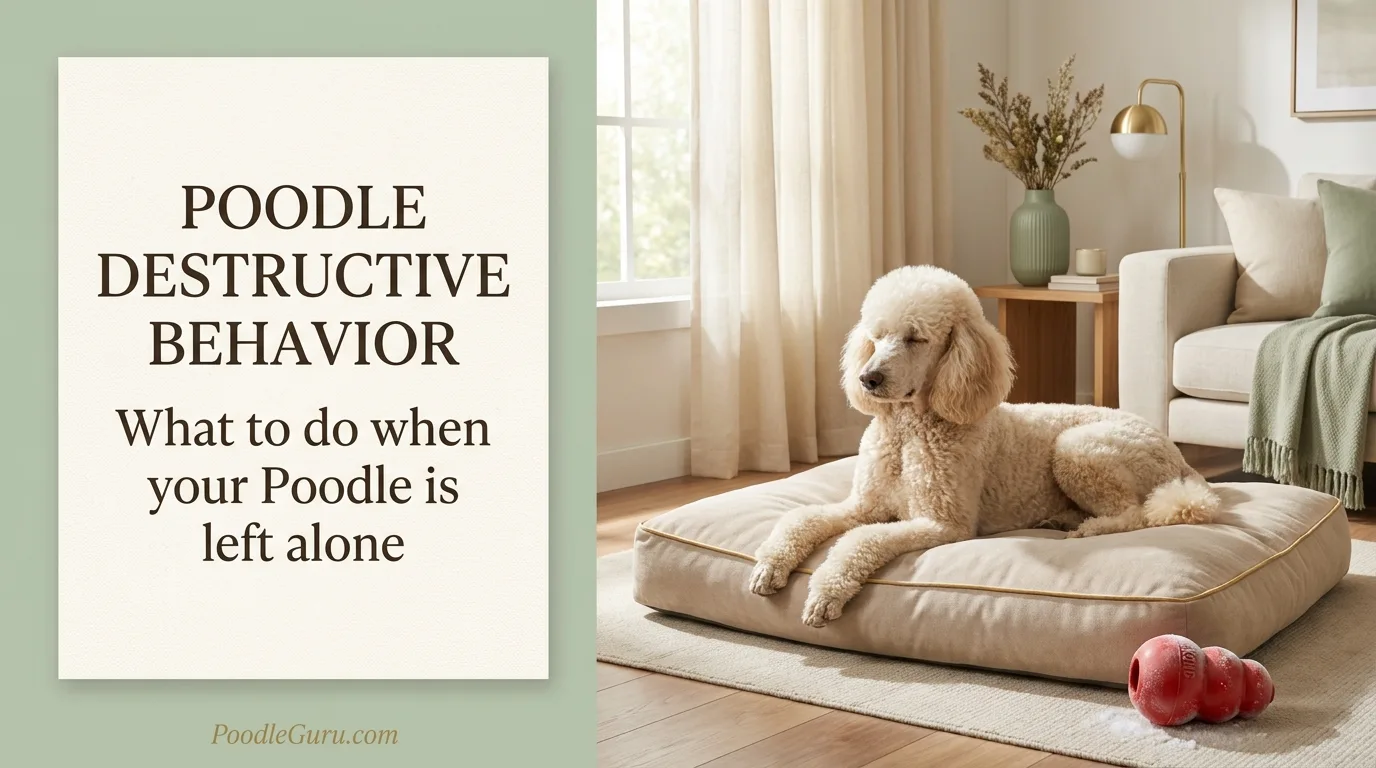
Poodle Destructive Behavior When Left Alone: What to Do
If your Poodle becomes destructive when left alone—scratching doors, chewing trim, shredding cushions, or trying to escape—the damage may reflect separation-related distress rather than simple boredom. This guide shows you how to identify the cause, protect your home and dog, and rebuild comfortable alone time without punishment.
Quick Answer
Poodle destructive behavior when left alone should first be separated from ordinary chewing or boredom. If the damage is concentrated around doors, windows, crates, or barriers and appears with pacing, vocalizing, drooling, house soiling, refusal to eat, or escape attempts, separation-related distress is more likely. Use video to identify the pattern, prevent repeated panic, practice absences short enough that your dog remains relaxed, and increase duration gradually. Punishment can worsen fear, and crating is not appropriate for a dog that panics when confined. Severe cases, self-injury, sudden behavior changes, or stalled progress warrant veterinary or qualified behavior support.
In This Guide
- Why Your Poodle Is Destructive When Left Alone
- Why Some Poodles Struggle With Alone Time
- Signs Beyond the Destruction
- Boredom vs. Separation Anxiety
- Mistakes That Make Destructive Behavior Worse
- The PoodleGuru SA Resilience Framework
- How to Desensitize Your Poodle to Alone Time
- When to Call Your Vet or a Behaviorist
- FAQs
Why Your Poodle Is Destructive When Left Alone
Poodle destructive behavior when left alone can have several causes, including separation-related distress, boredom, insufficient enrichment, puppy chewing, confinement frustration, or a medical issue that changes behavior. Separation anxiety becomes more likely when the destruction occurs mainly during absences and appears alongside signs such as pacing, vocalizing, drooling, house soiling, or escape attempts. The pattern and context matter more than the damage alone.
The most important thing to understand is that a distressed poodle is not deliberately damaging the house to “get back at you.” When destruction is driven by separation distress, the behavior reflects an emotional response to being alone. Treatment therefore focuses on safety, preventing repeated panic, and changing the dog’s emotional response to absence—not correcting the damage after you return. If the same destructive behavior happens while you are home, investigate boredom, chewing needs, environmental triggers, and other causes too.
Source: AAHA — Separation Anxiety in Pets
Not Spite
Separation-related destruction is not revenge. When it clusters around absences and appears with other distress signs, treat the behavior as an emotional and welfare issue rather than deliberate disobedience.
Any Size Can Be Affected
Toy, Miniature, and Standard Poodles can all show separation-related distress. There is not enough evidence to use poodle size alone as a reliable risk predictor.
Manageable & Treatable
Many dogs improve substantially with individualized behavior modification, careful management, and—when needed—veterinary treatment. The goal is comfortable, safe alone time.
Why Some Poodles Struggle With Alone Time
Poodles are highly trainable, socially engaged dogs that often pay close attention to household routines and human behavior. Some individuals become very attached to one or more people, but that does not mean every poodle is destined to develop separation anxiety—or that the breed is proven to have a higher risk than every other breed.
What matters more is the individual dog’s temperament, history, daily routine, previous experiences with being alone, and any major life changes. A move, schedule change, rehoming history, sudden increase in time alone, or a period when the dog was rarely left can all influence how separation is experienced.
Because poodles notice patterns quickly, pre-departure cues such as shoes, keys, bags, or a particular morning routine may become meaningful. If your poodle begins pacing or following you before you leave, those cues can be included in a gradual behavior plan rather than treated as disobedience.
Signs Beyond the Destruction
Destruction is the most visible sign, but it’s rarely the only one. Owners who set up a camera often discover a cluster of behaviors that point clearly to panic, not mischief.
| Behavior | What It Looks Like in Poodles | Why It Matters |
|---|---|---|
| Destruction | Chewing door frames, digging at exits, shredding objects that smell like you | Escape attempts, not play; often focused on exit points |
| Vocalization | High-pitched barking, howling, or whining that starts within minutes of departure | Record audio to check; neighbors often hear it before you know |
| House soiling | Urination or defecation despite being otherwise house-trained | Rule out medical causes with your vet first |
| Pacing | Repetitive path-walking, often along the same route | A classic canine anxiety displacement behavior |
| Hypersalivation | Wet patches on the floor, drool on the dog’s chest, or unusually heavy salivation during departures | Can occur with anxiety, but persistent or unexplained drooling should also be discussed with a veterinarian |
| Refusal to eat | Ignoring normally valued treats or food puzzles during an absence | Can suggest the dog is too distressed to engage with food; compare with normal appetite when you are home |
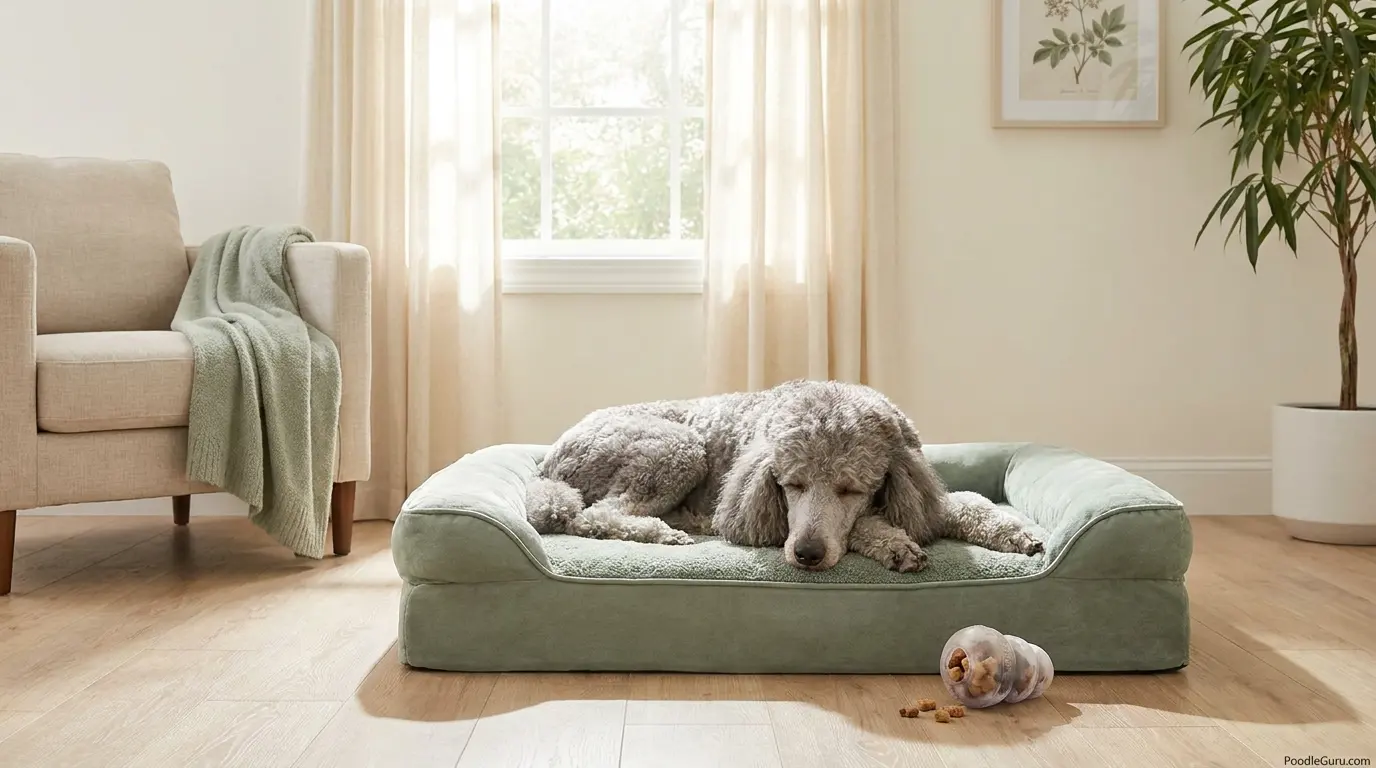
Boredom vs. Separation Anxiety: What Is Causing the Destruction?
Not every chewed TV remote means your poodle has separation anxiety. The distinction matters because the treatment paths are completely different.
| Factor | Normal Mischief / Boredom | Separation Anxiety |
|---|---|---|
| Timing | Can happen whether you’re home or not | Only—or almost only—when you’re gone |
| Type of damage | Scattered items, stolen food, chewed objects | Exit-focused: doors, windows, crates, barriers |
| Body language when you return | Excited but not frantic | Frantic, trembling, excessive licking, unable to settle |
| Eating when alone | Will usually eat treats or food puzzles | Often won’t touch food until you return |
| Response to more exercise | Often improves | Rarely fixes the problem on its own |
If you’re unsure, use a camera for several representative departures and note when distress begins, what the dog does, whether the dog can eat or settle, and how the behavior changes over time. Separation-related distress often begins soon after departure, but timing varies by dog; video is more useful than relying on the condition of the room when you return.
Mistakes That Make Destructive Behavior Worse
Most poodle owners try the intuitive fixes first. Unfortunately, several common responses accidentally intensify the anxiety or add new problems.
❌ Punishment After the Fact
Coming home and scolding your poodle for damage done hours earlier doesn’t connect in their brain. It does make your return a scary event—increasing their pre-departure dread next time.
❌ Getting Another Dog
Canine company does not reliably treat separation anxiety. Some poodles may enjoy another dog, but distress related to human absence can persist even when another pet is present. Do not add a second dog solely as a treatment strategy.
❌ Crate Punishment
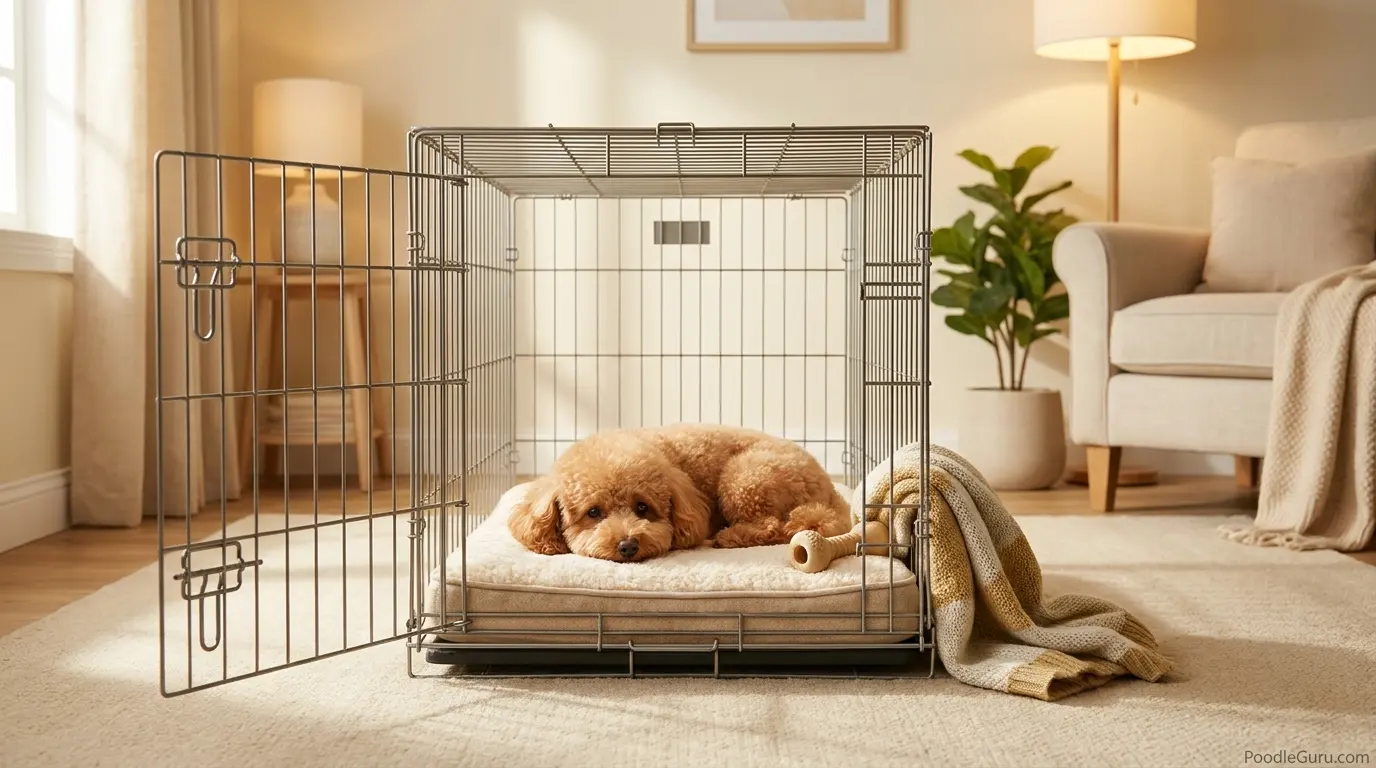
A crate used as a safe den can help. A crate a panicking poodle is forced into can cause injury—broken teeth, torn nails, bloody paws from frantic escape attempts. Crating must be reintroduced with desensitization, not used as containment.
The PoodleGuru SA Resilience Framework
At PoodleGuru, we evaluate separation-anxiety management plans through a three-pillar framework that addresses the whole picture, not just the destruction. This framework helps owners avoid the most common mistake: chasing a single “quick fix” while ignoring the poodle’s broader emotional state.
Predictability & Safety
Your poodle needs to learn that alone time follows a pattern they can trust. This means building a departure routine that doesn’t spike their anxiety before you even reach the door. Predictable, low-pressure routines can reduce uncertainty and make behavior training easier to structure.
Gradual Exposure (Systematic Desensitization)
Your poodle should experience absences short enough that distress does not begin, then build duration incrementally. The correct starting point varies widely: some dogs need only a few seconds, while others can already tolerate minutes. You’re not testing endurance; you’re creating repeated experiences of safe, manageable separation.
In-Session Support & Recovery
What happens during an absence helps you judge whether the session is truly below threshold. If your poodle can settle, explore calmly, or willingly work on a safe food toy, those can be useful signs of comfort. Food should never be used to push a dog through visible panic, and a dog that refuses a normally valued treat may simply be too distressed for that training step.
How to Desensitize Your Poodle to Alone Time
This is not a weekend project, and there is no reliable one-size-fits-all timeline. Mild cases may progress faster, while severe cases can require extended management and professional support. The steps below follow the PoodleGuru SA Resilience Framework in practice, but duration should always be adjusted to the individual dog’s behavior.
Map the Threshold
Use a camera to identify the earliest signs that your poodle is no longer comfortable: freezing, following the exit, pacing, vocalizing, scratching, panting, or abandoning food. Your starting point should be shorter and easier than that threshold. For some dogs this may be seconds; others can already tolerate several minutes.
Deconstruct Your Departure Cues
Make a list of everything you do before leaving: grabbing keys, putting on shoes, picking up a bag. Over a weekend, do these actions repeatedly without leaving. Pick up keys, sit down. Put on shoes, make coffee. The goal is to strip these cues of their predictive power.
Start Absences Below Threshold
Practice an absence short enough that your poodle remains relaxed, then return before distress begins. Repeat only while the dog is comfortable, and vary duration conservatively rather than increasing in a rigid sequence. If you see early anxiety signs, shorten the next repetition or stop the session. The goal is successful calm exposure—not testing how long the dog can endure being alone.
Add a Safety Signal
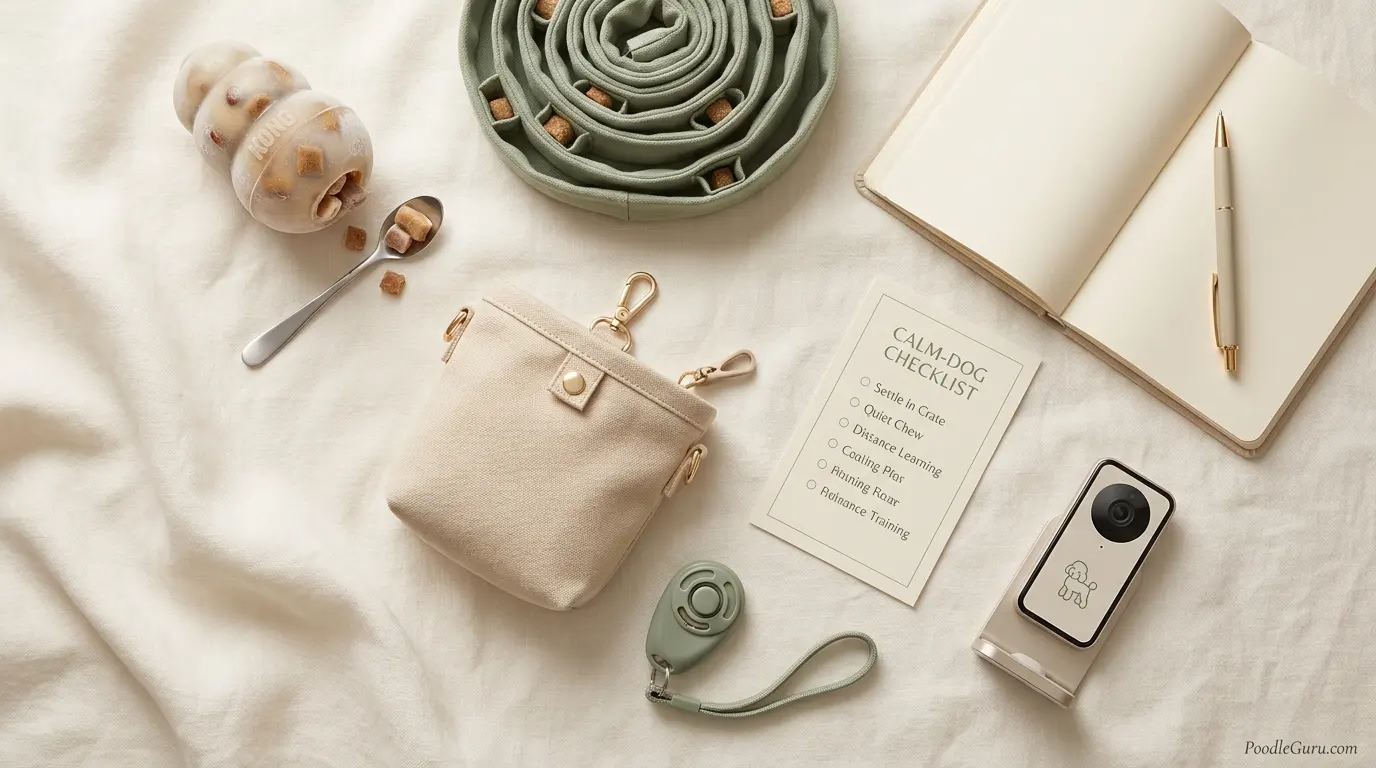
If your poodle is relaxed enough to eat, offer a safe stuffed food toy or other veterinarian-approved enrichment item during easy alone-time practice. Use it as a positive association, not as a way to mask distress. If your dog normally loves food but abandons it as soon as you leave, treat that as useful information that the session may be too difficult. For broader mental-stimulation ideas, see how to meet a poodle’s attention and enrichment needs.
Manage Real-Life Absences During Training
You can’t pause life for 8 weeks. Use management strategies so your poodle isn’t panicking daily while you train. Options include: a trusted pet sitter, doggy daycare (if your poodle is dog-social), or a friend or neighbor who works from home. Every unmanaged panic episode erodes training progress.
When to Call Your Vet or a Behaviorist
Self-guided desensitization works for many poodles. It doesn’t work for all. Know the thresholds where professional support becomes necessary.
🐾 Call your veterinarian if:
- Your poodle has injured themselves during panic episodes—cut paws, broken teeth, bloody nails.
- You notice weight loss, appetite changes, or stress-related gastrointestinal issues.
- House soiling appears suddenly in a previously house-trained adult poodle (rule out medical causes).
🐾 Seek a board-certified veterinary behaviorist or qualified reward-based separation-anxiety professional (for example, a CSAT) if:
- Your poodle remains distressed despite carefully staying below threshold, or you are unsure how to identify a workable starting point.
- Pre-departure cues alone trigger intense distress, or even very brief absences are difficult to practice safely.
- The problem is affecting your poodle’s welfare, your household’s safety, or your ability to keep the dog in the home.
In moderate to severe cases, a veterinarian may recommend medication alongside behavior modification. Depending on the dog and medication, treatment may involve a daily medication, a faster-acting situational option, or both; some medications take several weeks to reach full effect. Medication is not a substitute for behavior work, and it is not automatically “short term.” The Merck Veterinary Manual notes that medications can help anxious dogs become more able to learn, with duration and choice individualized by a veterinarian.

Frequently Asked Questions
Why is my Poodle destructive when left alone?
Your Poodle may be destructive when left alone because of separation-related distress, boredom, unmet chewing or enrichment needs, confinement frustration, or another behavioral or medical factor. Separation anxiety is more likely when damage happens mainly during absences and occurs with pacing, vocalizing, drooling, house soiling, refusal to eat, or escape attempts. Video of the first part of an absence can help you identify the pattern.
Does getting a second poodle help with separation anxiety?
Do not get a second dog solely to treat separation anxiety. Some dogs enjoy canine company, but separation distress often centers on the absence of a particular person and may continue even when another pet is present. Treat the existing dog’s anxiety directly before making a long-term decision to add another animal.
How long does desensitization training take to show results?
There is no dependable fixed timeline. Progress depends on how quickly your poodle becomes distressed, how often unavoidable absences occur, health factors, and how consistently training remains below threshold. Track behavior on video and judge improvement by calmer, longer absences rather than by a calendar deadline.
Should I use a crate for a poodle with separation anxiety?
Only if the crate has been positively conditioned as a safe den and your poodle shows no panic inside it. A panicking poodle trapped in a crate can suffer serious injuries. If your poodle already fears the crate, switch to a safe, puppy-proofed room or exercise pen while you rebuild crate confidence separately.
Can exercise alone fix destructive separation anxiety?
Physical exercise reduces general arousal, which helps, but it doesn’t address the panic trigger. A tired poodle can still panic. Exercise is a support tool—not a standalone treatment. Pair it with systematic desensitization for real progress.
Is medication bad for poodles with separation anxiety?
No. Medication can be an appropriate part of treatment when anxiety is severe or blocks learning. A veterinarian may use daily medication, situational medication, or a combination depending on the dog. Some dogs need medication for months or longer, and the plan should be reviewed with the prescribing veterinarian rather than stopped abruptly or treated as a failure.
Do Toy Poodles get separation anxiety more than Standards?
There’s no conclusive evidence that size predicts separation anxiety risk in poodles. All three sizes are highly bonded to their people. Toy Poodles may face additional challenges if they’ve been carried constantly or never taught independent settling skills—but this is a training factor, not a genetic one.
Key Takeaways
Poodle destructive behavior when left alone is manageable when you identify the cause instead of treating every damaged object as disobedience. Here’s what to remember.
- Destruction during absences is a panic symptom, not spite or boredom—your poodle needs help, not punishment.
- Poodles are attentive, people-oriented dogs, but individual history, routine, temperament, and life changes matter more than assuming the breed alone causes separation anxiety.
- The PoodleGuru SA Resilience Framework targets three pillars: predictability, gradual exposure, and in-session support.
- Systematic desensitization starts below the dog’s distress threshold and increases duration only while the poodle remains comfortable; the correct starting point can range from seconds to minutes.
- Punishment, getting a second dog, and forced crating are the most common mistakes that intensify destructive behavior.
- Seek veterinary or qualified behavior support when distress is severe, self-injury occurs, medical issues may be involved, or you cannot make safe progress with sub-threshold training.