Boxerdoodle (Boxer Poodle Mix): The Complete Owner’s Guide
A Boxerdoodle pairs the Boxer’s goofy, loyal athleticism with the Poodle’s sharp intelligence and potential for a lower-shedding coat. The result is a high-energy, people-focused dog that thrives in active homes—and struggles in homes that underestimate its exercise, training, and grooming needs.
Quick Answer: What Is a Boxerdoodle?
A Boxerdoodle is a cross between a Boxer and a Poodle, most often a Standard Poodle. For poodle owners, this means you’re getting a large, athletic dog that may inherit the Poodle’s lower-shedding coat and problem-solving brain alongside the Boxer’s enthusiasm, watchful nature, and occasional stubbornness. The most important thing to understand is that energy levels run high, coat type is not guaranteed, and a bored Boxerdoodle can become destructive faster than many owners expect.
What Is a Boxerdoodle, Really?
A Boxerdoodle is a first-generation or multigenerational cross between a Boxer and a Poodle. For poodle owners, this means half the genetic blueprint comes from the breed you already appreciate—but the other half introduces a working breed with a very different history and stronger watchful tendencies. The Boxer was developed as a working dog with hunting and guarding roots, not as a water retriever. That background can still show up today as a watchful, family-focused temperament and a stronger alerting tendency than many Poodle owners expect.
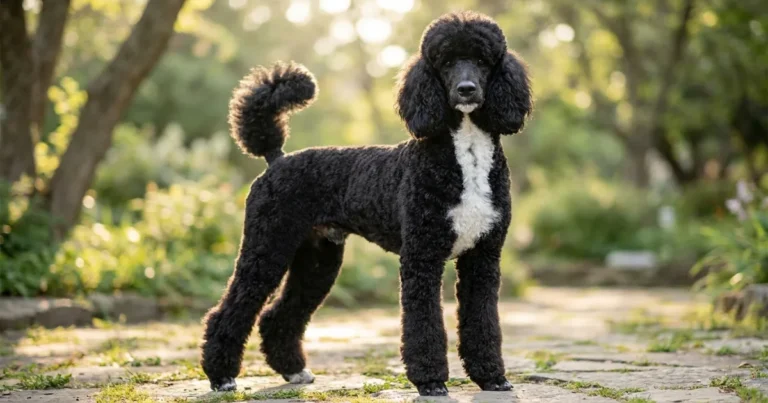
Most Boxerdoodles are bred using a Standard Poodle, producing a dog that weighs between 40 and 70 pounds and stands 21 to 25 inches at the shoulder. A Miniature Poodle is occasionally used, resulting in a smaller 25–40-pound dog, but that’s far less common. Either way, you’re looking at a substantial, powerful dog—not a lapdog.
Boxerdoodles aren’t recognized as an AKC breed because they’re a mixed breed, although the AKC maintains separate standards and breed information for the Boxer and the Standard Poodle. That means no uniform Boxerdoodle type exists. Two Boxerdoodles from different breeders can look and act quite differently.
Boxerdoodle Quick Facts
Size Range
40–70 lbs and 21–25″ at the shoulder with a Standard Poodle parent. Smaller when a Miniature Poodle is used—25–40 lbs.
Coat Type
Wavy to curly, sometimes nearly straight. Low to moderate shedding is possible, but some individuals shed more. Not reliably allergy-friendly across all individuals.
Lifespan
10–14 years on average. Health-tested lines with careful breeding can reach the upper end.
Energy Level
High. Needs vigorous daily exercise plus mental work. A tired Boxerdoodle is a good Boxerdoodle.
Good With Kids?
Often excellent when socialized early. The Boxer side is famously patient with children, but size means supervision around toddlers is essential.
Trainability
Smart but can be headstrong. Positive reinforcement works best; harsh methods backfire.
Boxerdoodle Appearance: Size, Coat, and Build
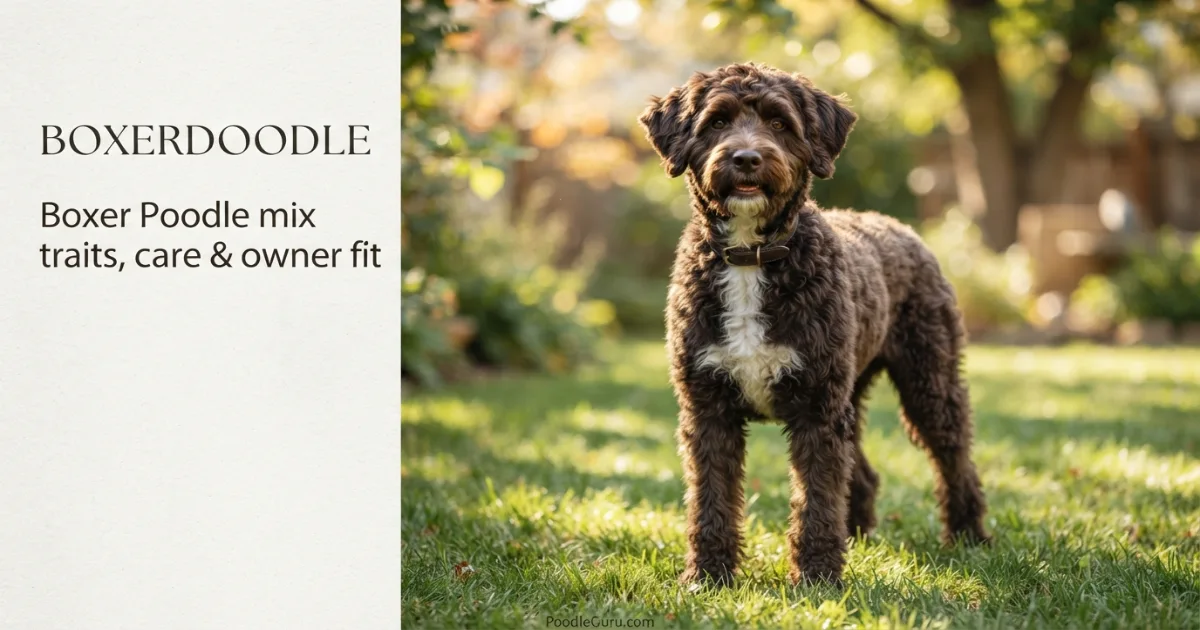
Boxerdoodles don’t have a fixed look. Some inherit the Boxer’s square, muscular build with a slightly longer muzzle. Others take after the Poodle, with a leggier, more elegant frame. Most land somewhere in between—a sturdy, athletic dog with a deep chest and a noticeable tuck-up.
The coat is the biggest wildcard. It can be tightly curled (Poodle-leaning), loosely waved, or nearly straight with a soft undercoat (Boxer-leaning). Color possibilities include black, brown, fawn, brindle, white, and combinations—often with the Boxer’s characteristic white chest and facial markings. Solid colors and parti-patterns both appear.
Ears typically hang down or fold slightly. Tails are usually naturally long when left intact; tail length and appearance can vary by breeding practice and local laws, so ask the breeder exactly what to expect. Facial expression tends to be alert and engaged, often with the Boxer’s characteristic furrowed brow.
Boxerdoodle Temperament: The Boxer-Poodle Blend
Here’s the combination that makes this mix so rewarding—and so demanding. The Poodle side brings quick learning, a desire to please, and remarkable problem-solving ability. The Boxer side contributes boundless enthusiasm, a deep attachment to family, and a watchful instinct that can become excessive alerting or reactivity if not properly socialized.
When those traits blend well, you get a dog that’s affectionate, playful, and eager to work with you. When they clash, you get a powerful dog that’s clever enough to outthink you but independent enough to ignore commands it finds boring. Most Boxerdoodle owners describe their dogs as clownish and loving—but also as dogs that need clear boundaries and consistent leadership.
Separation anxiety can be significant. Both parent breeds bond closely with their people, and a Boxerdoodle left alone for long hours may bark, chew, or dig. Early training to build independence is critical.
Expert Insight: The Guardian Factor
The Boxer was originally bred as a hunting and guard dog, and that instinct doesn’t disappear in a crossbreed. While many Poodles are alert but socially flexible, Boxers are often more naturally watchful. A Boxerdoodle may bark at unfamiliar people approaching the home or stand close to family members when unsure. Early and ongoing socialization is non-negotiable—without it, alert behavior can become problematic reactivity.
The PoodleGuru Boxerdoodle Temperament Framework
At PoodleGuru, we assess mixed-breed temperament using three dimensions that directly affect daily life: engagement style, impulse control, and social wariness. This framework helps you predict how an individual Boxerdoodle will behave in real-world situations—and what kind of training focus it will need most.
Engagement Style: Does the Dog Want to Work With You or Around You?
A Poodle-leaning Boxerdoodle checks in frequently, makes eye contact, and seeks direction. A Boxer-leaning dog may be more independent—happy to play near you but less tuned in to your cues. Observe how often the dog voluntarily looks at you during a walk. High voluntary check-ins signal easier trainability.
Impulse Control: How Easily Does the Dog Regulate Excitement?
Boxers are known for exuberant, sometimes clumsy enthusiasm. Poodles tend to have better self-regulation. A Boxerdoodle that jumps, mouths, or zooms uncontrollably when excited leans Boxer in this dimension. That’s not a dealbreaker—but it means you’ll need to prioritize calmness training from day one.
Social Wariness: How Does the Dog Respond to Strangers?
This dimension predicts whether your Boxerdoodle will be a social butterfly or a watchful guardian. A dog that approaches strangers with a loose body, soft eyes, and relaxed tail is showing a more socially confident pattern. A dog that hangs back, barks, or moves between you and a stranger is showing a more watchful pattern. Neither is automatically wrong—but the watchful type requires more careful management and socialization.
Boxerdoodle vs. Parent Breeds: At-a-Glance
| Trait | Boxerdoodle | Standard Poodle | Boxer |
|---|---|---|---|
| Size | 40–70 lbs | 40–70 lbs | 55–80 lbs |
| Coat Maintenance | Moderate; 3–4x weekly brushing | High; professional grooming every 4–6 weeks | Very low; occasional brushing |
| Shedding Level | Low to moderate; varies | Very low | Moderate year-round |
| Trainability | Moderate to high; can be stubborn | Very high; eager and responsive | Moderate; independent but food-motivated |
| Barking/Guarding | Moderate to high; protective instinct | Moderate; alert barker | High; natural guardian, alert barker |
| Kid Friendliness | Good with socialization | Good; may be sensitive | Excellent; famously patient |
| Common Health Concerns | Hip dysplasia, bloat, cardiac issues, hypothyroidism | Hip dysplasia, bloat, Addison’s, PRA | Cardiomyopathy, bloat, hip dysplasia, cancers |
| Best Suited For | Active owners who enjoy training and have time for exercise | Owners who want a highly trainable, elegant companion | Active families who want a loyal, playful guardian |
Boxerdoodle Health Considerations
Mixed-breed dogs may have broader genetic diversity, but that does not guarantee better health—especially when both parent breeds share certain risks. Boxerdoodles inherit from two breeds with important health considerations, so responsible breeding and veterinary care are everything.
The most commonly seen health issues in Boxerdoodles include:
- Hip dysplasia: A malformation of the hip joint that leads to arthritis. Both Boxers and Standard Poodles can be affected. Reputable breeders screen parents through OFA or PennHIP-style evaluations.
- Gastric dilatation-volvulus (bloat): A life-threatening emergency where the stomach twists. Deep-chested breeds like both parent breeds are at elevated risk. VCA Animal Hospitals provides detailed guidance on recognizing bloat early.
- Cardiac issues: Boxers are known for cardiac concerns such as arrhythmogenic right ventricular cardiomyopathy and aortic or subaortic stenosis. A Boxerdoodle can inherit cardiac risk from the Boxer side, so parent-dog cardiac screening is essential.
- Hypothyroidism: An underactive thyroid gland, common in both Boxers and Poodles. Symptoms include weight gain, lethargy, and coat changes. It’s manageable with medication.
- Progressive retinal atrophy (PRA): A degenerative eye condition in Poodles. DNA testing identifies carriers, so it’s preventable through informed breeding.
When to Call a Vet
Seek immediate veterinary attention if your Boxerdoodle shows a distended abdomen, unproductive retching, or restlessness—these can signal bloat. Also contact your vet for persistent limping, exercise intolerance, or sudden weight changes. This guide is educational and does not replace professional veterinary diagnosis.
Boxerdoodle Grooming and Coat Care
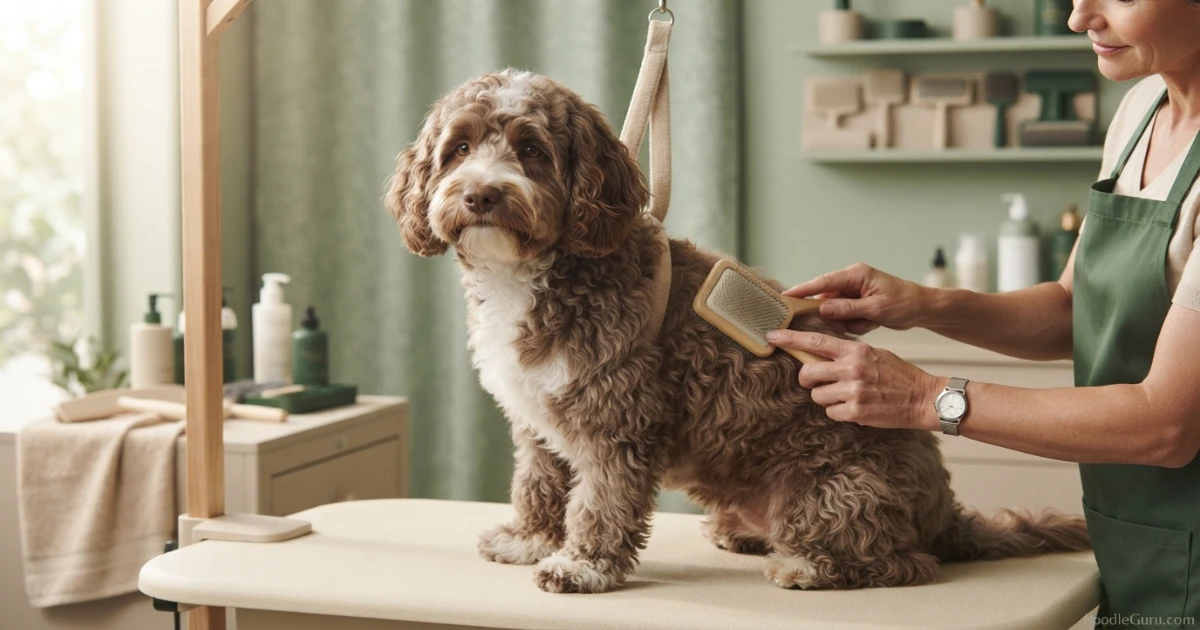
Grooming needs depend heavily on coat type. A Boxerdoodle with a tighter Poodle curl may need brushing every other day and professional grooming every 6–8 weeks. A looser, wavier coat may need brushing two or three times weekly, with grooming every 8–12 weeks depending on shedding and matting. Either way, don’t skip ear care.
Essential grooming tasks for every Boxerdoodle:
- Ear cleaning weekly: Both parent breeds have drop ears that trap moisture. Use a vet-recommended ear cleaner and check for redness or odor.
- Nail trims every 3–4 weeks: Long nails alter gait and can stress joints in a large, active dog.
- Dental care: Boxers are prone to gum issues, and Poodles to dental crowding. Daily brushing combined with annual veterinary dental checks is ideal.
Professional groomers often flag matting behind the ears and under the collar—areas owners overlook. If your Boxerdoodle inherits the Poodle’s coat density, invest in a quality slicker brush and steel comb. It makes a real difference.
Exercise: More Than You Might Think
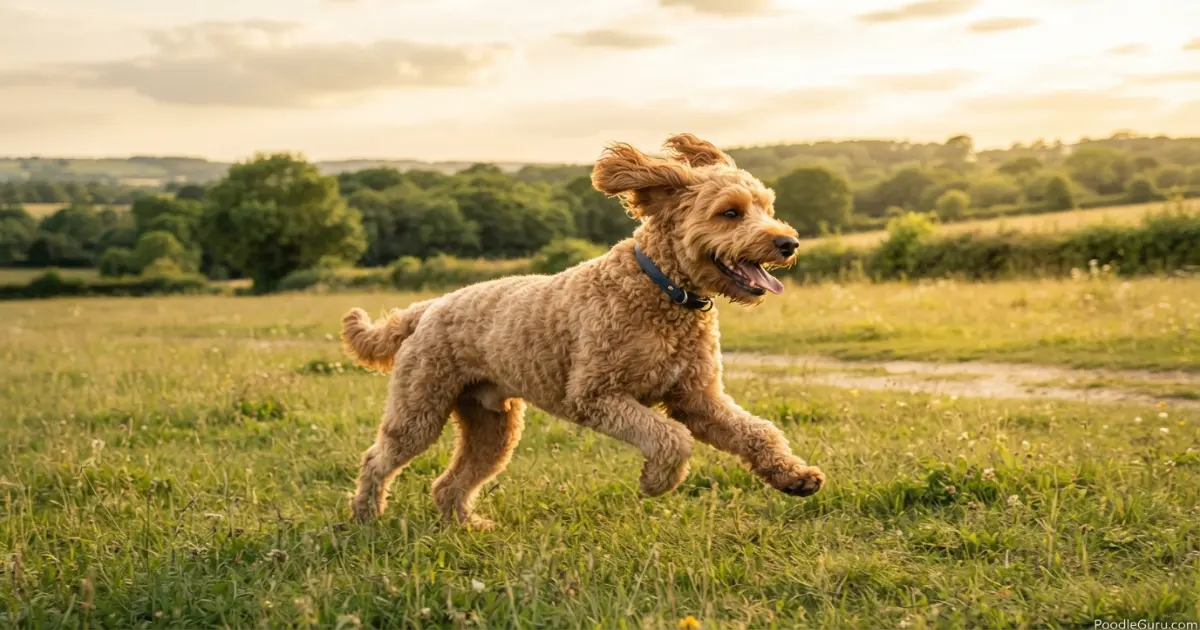
A short walk isn’t going to cut it. Boxerdoodles need at least 60 minutes of vigorous exercise daily—think running, swimming, or sustained fetch—plus mental stimulation. Without it, that powerful body and active brain find their own outlets. Chewed furniture, dug-up yards, and nonstop barking are common complaints from under-exercised owners.
Mental exercise matters equally. The Poodle brain needs puzzles and training challenges. The Boxer side benefits from scent games and structured play. A 15-minute nose-work session can tire a Boxerdoodle out more effectively than an extra 20-minute walk. Rotate puzzle toys, teach new tricks regularly, and consider dog sports like agility or rally—this mix often excels there.
Training a Boxerdoodle: What Actually Works
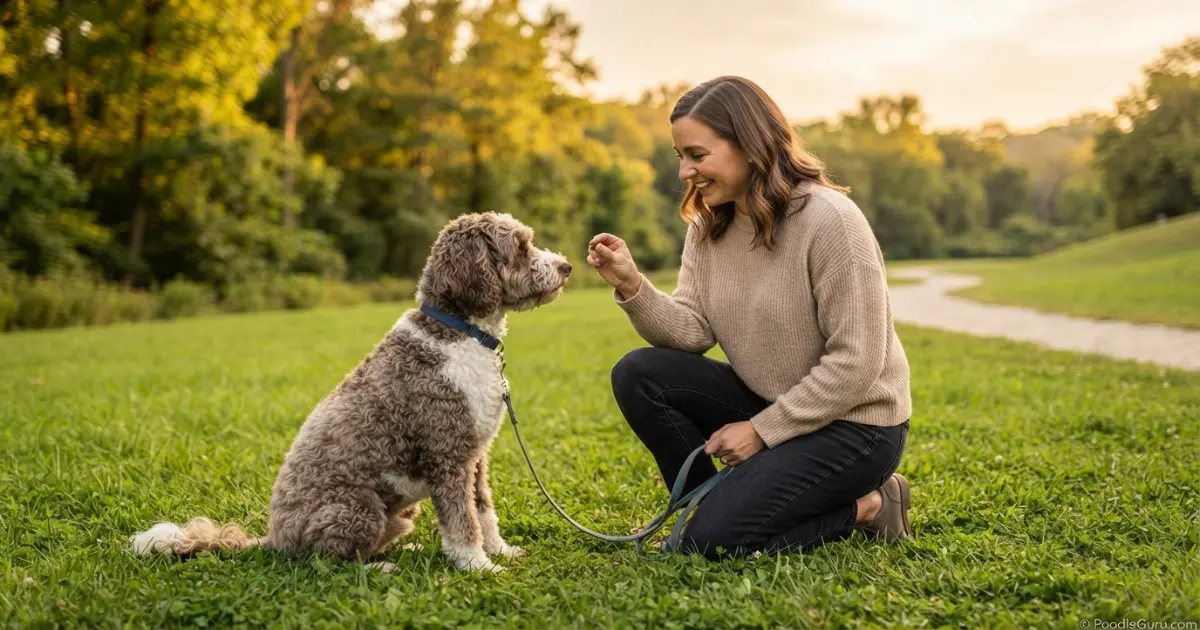
Boxerdoodles are smart enough to learn quickly and stubborn enough to decide when it’s not worth their time. Training must be engaging, fair, and consistent. Positive reinforcement with high-value rewards gets the best results—treats, toys, and enthusiastic praise all work.
Key training principles:
- Use food and play rewards: Many Boxerdoodles are highly food-motivated, but some value a tug toy just as much. Figure out what your dog finds irresistible.
- Keep sessions short and upbeat: Five to ten minutes, several times a day. End on a success.
- Prioritize calmness and impulse control: Teach a solid “settle” command early. Reward calm behavior consistently, not just exciting tricks.
- Socialize broadly and safely from puppyhood: Expose your puppy to different people, dogs, environments, sounds, and surfaces using positive, controlled experiences. This early work is critical for reducing fear and preventing alert behavior from becoming problematic.
Harsh corrections backfire. The Poodle side is sensitive and may shut down. The Boxer side is physically tough but emotionally soft—yelling or physical punishment damages trust. Positive methods build a dog that wants to work with you.
Boxerdoodle Buyer’s Guide (2026)
If you’re ready to add a Boxerdoodle to your life, go in with clear expectations and a sharp eye for responsible breeding. Designer breeds attract good breeders and opportunistic operations alike. Knowing the difference protects your wallet and your future dog’s health.
What Affects Boxerdoodle Pricing
In 2026, Boxerdoodle puppies from health-tested parents typically range from $1,500 to $3,200. Several factors push that price higher or lower:
- Health testing: Breeders who screen for hip dysplasia, cardiac issues, PRA, and thyroid function charge more—and they’re worth it.
- Generation: F1 puppies (Boxer × Poodle) tend to be less expensive than multigenerational Boxerdoodles bred for specific traits like coat consistency.
- Coat predictability: F1b Boxerdoodles (a Boxerdoodle bred back to a Poodle) often command higher prices because breeders may be aiming for a more predictably lower-shedding coat, but shedding is still not guaranteed.
- Location: Metropolitan areas and regions with high demand push prices up. Rare coat colors may inflate cost without adding real value.
Buyer Red Flags to Watch For
- Breeder won’t provide health testing results for both parent dogs
- Puppies always available with no waitlist—ethical breeders plan litters intentionally
- No questions about your lifestyle or home setup
- Puppies released before 8 weeks of age
- Claims that Boxerdoodles are “completely hypoallergenic” or “maintenance-free”
- Breeder dismisses or downplays known Boxer and Poodle health conditions
How to Evaluate a Boxerdoodle Breeder
At PoodleGuru, we recommend a structured evaluation when choosing a breeder or rescue. This four-step process helps you gather the information that matters for long-term health and temperament.
Request Full Health Documentation for Both Parents
Ask for OFA or PennHIP hip scores, cardiac screening results, DNA tests for PRA, and thyroid panels. A responsible breeder shares these willingly. The outcome: verifiable proof that parents were screened for the major concerns.
Meet the Mother Dog in Person
Seeing the mother gives you a preview of adult temperament and size. Observe how she interacts with strangers and her environment. Is she calm and confident, or nervous and reactive? That’s valuable information for your puppy’s potential.
Ask About Early Socialization Protocols
Quality breeders expose puppies to household noises, different surfaces, gentle handling, and varied people from a young age. The outcome: a puppy that’s already started building resilience, making your transition home smoother.
For Rescue Boxerdoodles: Request a Trial Period
Many rescues offer foster-to-adopt arrangements. Use that time to assess the dog’s temperament using the three-dimension framework above—engagement style, impulse control, and social wariness—in your actual home environment before committing.
Frequently Asked Questions
Are Boxerdoodles hypoallergenic?
No dog is truly hypoallergenic. Some Boxerdoodles shed very little—especially those with tighter Poodle curls—but others shed moderately. If allergies are a concern, spend time with the specific dog before bringing it home.
How big does a Boxerdoodle get?
With a Standard Poodle parent, most Boxerdoodles reach 40–70 pounds and 21–25 inches tall. If a Miniature Poodle is used, the dog may stay between 25 and 40 pounds. Always ask about the Poodle parent’s size for the most accurate estimate.
Are Boxerdoodles good guard dogs?
They can be excellent watchdogs. The Boxer influence brings a natural protective instinct. Without proper socialization, that can become problematic reactivity. With training, you get a dog that alerts appropriately without aggression.
Do Boxerdoodles get along with other dogs?
Usually, yes—especially when socialized from puppyhood. Some Boxerdoodles may be selective with other dogs, especially if poorly socialized or overly aroused. Early positive experiences with stable dogs and ongoing management can reduce conflict risk, but they do not guarantee universal dog-friendliness.
How much exercise does a Boxerdoodle need?
At least 60 minutes of vigorous activity daily, plus mental stimulation. This is not a low-energy dog. Without sufficient exercise, behavioral issues like destructiveness and excessive barking become common.
Are Boxerdoodles easy to train?
They’re intelligent and learn fast, but they can also be stubborn. Positive reinforcement, short sessions, and high-value rewards work best. Harsh training methods damage trust and make stubbornness worse.
What health problems do Boxerdoodles have?
Common concerns include hip dysplasia, bloat, cardiac issues like cardiomyopathy, hypothyroidism, and PRA. Health testing in parent dogs can reduce these risks but never eliminates them. Yearly veterinary checkups catch problems early.
How long do Boxerdoodles live?
Average lifespan is 10–14 years. Dogs from health-tested lines who receive preventive care, quality nutrition, and appropriate exercise often live toward the longer end of that range.
Key Takeaways: Is a Boxerdoodle Right for You?
A Boxerdoodle is a large, loving, high-energy companion that thrives with active owners who enjoy training and can meet its substantial exercise needs. It’s not the easiest poodle mix—but for the right person, it’s one of the most devoted.
- A Boxerdoodle is a Boxer-Poodle cross, typically 40–70 lbs with a lifespan of 10–14 years.
- Coat type varies from tight curls to loose waves, with corresponding differences in shedding and grooming needs.
- Protective Boxer instincts mean early and ongoing socialization is non-negotiable to prevent reactivity.
- Health testing for hips, heart, eyes, and thyroid in parent dogs is the strongest indicator of a responsible breeder.
- This mix requires at least 60 minutes of vigorous daily exercise plus mental stimulation to stay calm and well-behaved.
- Bloat/GDV is a life-threatening risk in deep-chested dogs—know the warning signs, avoid hard exercise around meals, and ask your vet whether meal timing or preventive gastropexy should be discussed for your individual dog.
Your next step: If you’re seriously considering a Boxerdoodle, start by evaluating breeders using the four-step process above. Meet adult Boxerdoodles if you can. And bookmark our Complete Poodle Grooming Guide—your Boxerdoodle’s coat, whatever type it turns out to be, will need consistent care.