Poogle (Beagle Poodle Mix): The Complete Owner’s Guide
A Poogle blends the Beagle’s cheerful, nose-driven enthusiasm with the Poodle’s sharp intelligence and lower-shedding coat potential. That combination sounds appealing on paper—and it often works beautifully in real life. But it also creates a dog with distinct needs that catch first-time owners off guard.
Quick Answer: What Is a Poogle?
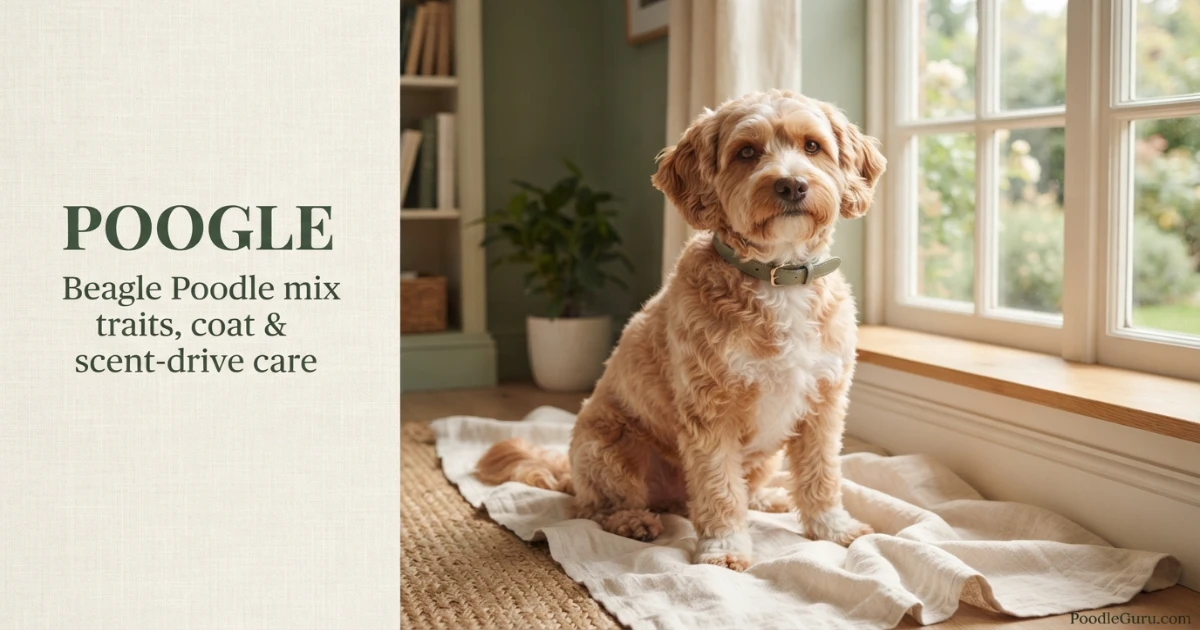
A Poogle is a designer crossbreed between a Beagle and a Poodle—most often a Miniature or Toy Poodle. For poodle owners, this means you may get the Poodle’s intelligence and lower-shedding coat potential alongside the Beagle’s sociability, scent drive, and sometimes stubborn independent streak. The most important thing to understand is that no two Poogles are alike: one litter can produce puppies that lean strongly toward either parent breed in coat type, size, and temperament.
What Is a Poogle, Really?
A Poogle is a first-generation or multigenerational cross between a Beagle and a Poodle. For poodle owners, this means the dog may carry many traits from the breed you already know and love—but the Beagle side introduces one of the most scent-driven, pack-oriented hound temperaments in the dog world. The most important thing to understand is that calling a Poogle a “hypoallergenic Beagle” is misleading. Some Poogles shed very little. Others shed noticeably. The outcome depends entirely on which parent’s coat genes dominate.
Most Poogles are bred using a Miniature or Toy Poodle paired with a Beagle. The result is a small-to-medium dog, usually landing between 15 and 30 pounds. Breeders occasionally use a Standard Poodle, producing a larger dog, but that’s far less common.
Poogles are not recognized by the AKC, which maintains the official Beagle breed standard, because they are a mixed breed. That doesn’t make them less wonderful—it just means no unified breed standard exists. Every Poogle is a unique blend.
Poogle Quick Facts
Size Range
Typically 15–30 lbs and 13–18 inches at the shoulder. Larger if a Standard Poodle is used—up to 45 lbs in rare cases.
Coat Type
Wavy to curly, sometimes nearly straight. Low-to-moderate shedding. Not reliably hypoallergenic across all individuals.
Lifespan
12–15 years on average. Well-cared-for Poogles from health-tested lines often reach the upper end of that range.
Energy Level
Moderate to high. Poogles need daily walks plus scent-based mental work—a bored Poogle becomes a noisy, destructive one.
Good With Kids?
Generally yes, when socialized early. The Beagle influence tends to make them patient and playful with children.
Trainability
Smart but selectively cooperative. The Poodle brain wants to work; the Beagle nose wants to follow interesting smells.
Poogle Appearance: What to Actually Expect
Poogles don’t have a uniform look. Some look like small, curly-coated Beagles with longer legs. Others resemble Poodles with slightly droopy ears and a broader muzzle. Most fall somewhere in between.
The coat is the biggest variable. A Poogle’s fur can be tightly curled (leaning Poodle), loosely waved, or nearly straight with a slight texture (leaning Beagle). Color possibilities are broad: black, white, tan, brown, cream, apricot, red, and the classic Beagle tri-color pattern all appear in the Poogle gene pool. Solid colors and parti-color patterns are both common.
Ears usually sit somewhere between the Poodle’s high-set fold and the Beagle’s long, low-hanging drop. The tail may curl slightly over the back or hang with a gentle upward sweep. Body shape tends toward a slightly longer-than-tall profile, especially in dogs that inherit more Beagle structure.

Poogle Temperament: The Beagle-Poodle Blend
Here’s where things get interesting. The Poodle side brings problem-solving intelligence, a desire to engage with people, and—in many lines—a sensitive, almost intuitive responsiveness to their owner’s mood. The Beagle side brings relentless curiosity, a nose that overrides nearly every other instinct, and a cheerful, pack-oriented sociability.
When those traits combine well, you get a dog that’s smart, affectionate, playful, and surprisingly versatile. When they combine in ways that clash, you get a dog that’s clever enough to outsmart you but too scent-distracted to care about your commands.
Most Poogle owners report that their dogs are friendly with strangers, good with other dogs, and deeply attached to their families. Separation anxiety can be an issue—both parent breeds are socially motivated, and a Poogle left alone for long hours may bark, howl, or chew destructively.
Expert Insight: The Nose Factor
The Beagle’s scenting ability is one of the breed’s defining traits—AKC breed information describes Beagles as scent-focused hounds with a strong instinct to follow their nose. Even a Poogle that looks mostly like a Poodle may inherit a powerful nose. In practice, this means off-leash reliability is never a guarantee with this mix. A scent trail can override even well-trained recall. Professional trainers familiar with hound mixes consistently recommend long-line training in unfenced areas.
The PoodleGuru Poogle Temperament Assessment
At PoodleGuru, we evaluate mixed-breed temperament by looking at three dimensions that matter most in daily ownership: biddability, environmental focus, and social drive. This framework helps prospective owners understand which parent breed traits are likely dominant in an individual dog—and what that means for real life.
Biddability: How Eager Is the Dog to Work With You?
High biddability means the dog looks to you for direction—a strong Poodle trait. Low biddability means the dog is more independently motivated, often by scent—a strong Beagle trait. Observe how quickly the dog checks in with you during walks or play. Frequent voluntary eye contact suggests higher biddability.
Environmental Focus: What Grabs the Dog’s Attention?
A dog that scans visually and responds to movement may lean Poodle. A dog that keeps its nose glued to the ground, trailing scents with single-minded focus, leans Beagle. This dimension predicts how easy or difficult recall training will be. The stronger the scent focus, the more management you’ll need in unfenced spaces.
Social Drive: How Does the Dog Respond to People and Other Dogs?
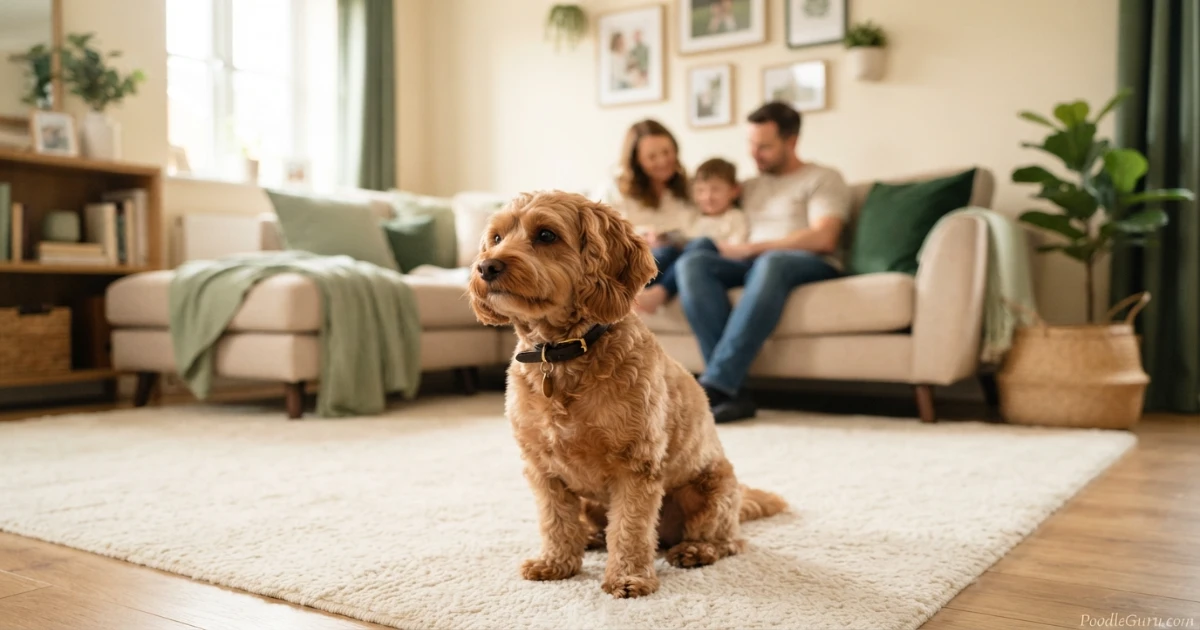
Both parent breeds are social, but the expression differs. A Poodle-leaning Poogle may bond intensely with one or two people. A Beagle-leaning Poogle tends toward broad, waggy friendliness with everyone. Neither is better—but the difference shapes how the dog fits into a busy household versus a quiet single-owner home.
Poogle vs. Parent Breeds: At-a-Glance Comparison
| Trait | Poogle | Miniature Poodle | Beagle |
|---|---|---|---|
| Size | 15–30 lbs (typical) | 10–15 lbs | 20–30 lbs |
| Coat Maintenance | Moderate; brushing 3–4x weekly | High; professional grooming every 4–6 weeks | Low; weekly brushing sufficient |
| Shedding Level | Low to moderate; varies by individual | Very low | Moderate to heavy |
| Trainability | Moderate; smart but scent-driven | High; eager and quick to learn | Moderate; independent and nose-focused |
| Barking Tendency | Moderate to high; may howl | Moderate; alert barker | High; bred to bay and vocalize |
| Off-Leash Reliability | Low to moderate; scent risk | Moderate to high with training | Low; nose overrides recall |
| Kid Friendliness | Good with socialization | Good; may be sensitive to rough handling | Excellent; patient and playful |
| Common Health Concerns | Ear infections, patellar luxation, hip dysplasia, IVDD | Patellar luxation, progressive retinal atrophy, Addison’s | Ear infections, hip dysplasia, hypothyroidism, IVDD |
Poogle Health Considerations
Mixed-breed status does not guarantee better health. Poogles can inherit health issues from either parent line, and responsible breeding, appropriate screening, weight management, and regular veterinary care matter enormously.
The most commonly seen health concerns in Poogles include:
- Ear infections: Both parent breeds have drop ears that trap moisture and debris. Poogles with Beagle-like ear structure are especially prone. Weekly ear checks are important; cleaning should be done only with a veterinarian-recommended cleaner when your vet or groomer says routine cleaning is appropriate.
- Patellar luxation: A kneecap that slips out of place, common in small-to-medium breeds. This is well-documented in both Toy Poodles and Beagles.
- Hip dysplasia: More common if a Standard Poodle or larger Beagle is in the lineage. Reputable breeders screen parent dogs through OFA or PennHIP.
- Intervertebral disc disease (IVDD): Beagles are a chondrodystrophic breed with long backs relative to leg length, increasing disc risk. Poogles that inherit this body type share the vulnerability.
- Progressive retinal atrophy (PRA): A degenerative eye condition present in Poodle lines. DNA testing can identify carriers.
When to Call a Vet
Contact your veterinarian if your Poogle shows signs of persistent ear odor or head shaking, limping or skipping steps (possible patellar luxation), reluctance to jump or climb stairs, or changes in vision. This guide is educational—it does not replace professional veterinary diagnosis. VCA Animal Hospitals provides detailed guidance on recognizing early signs of these conditions.
Poogle Grooming and Coat Care
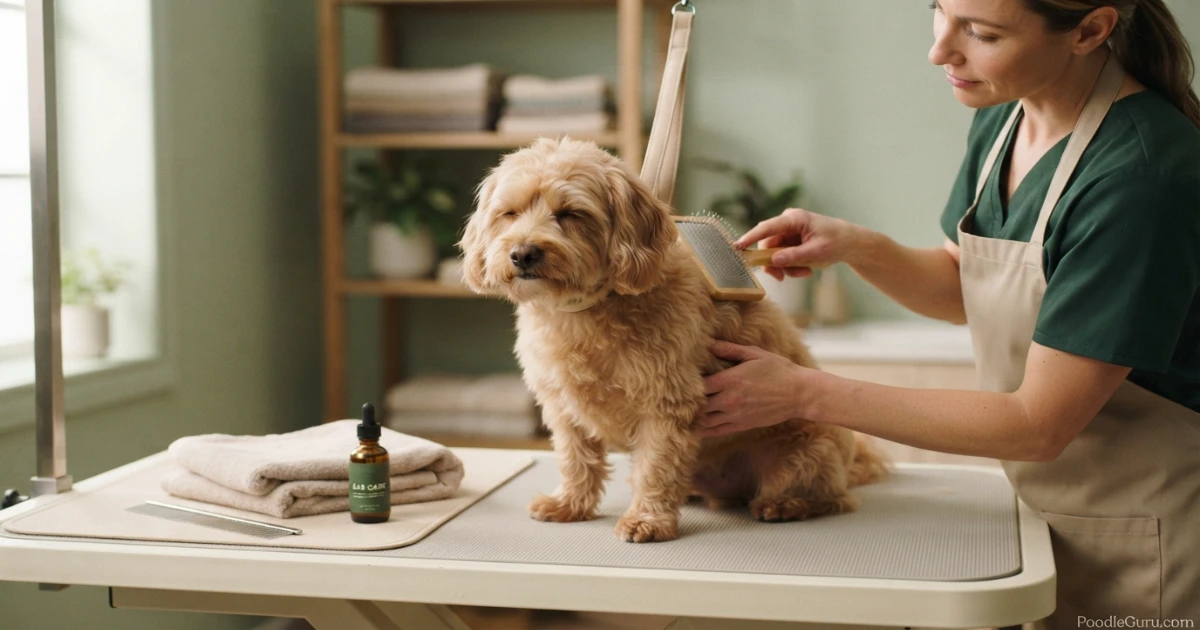
Grooming needs depend almost entirely on which coat type your Poogle inherits. A dog with a tighter Poodle-style curl needs brushing every other day and professional grooming every 6–8 weeks. A dog with a looser, wavier coat may get by with twice-weekly brushing and grooming every 10–12 weeks.
Regardless of coat type, every Poogle needs:
- Ear cleaning once a week: Use a veterinarian-recommended ear cleaner. Both parent breeds have drop ears prone to infection, and Poogles are no exception.
- Nail trims every 3–4 weeks: Long nails change gait and can contribute to joint discomfort over time.
- Dental care: Small-to-medium dogs are prone to dental disease. Daily brushing is ideal; dental chews and annual veterinary cleanings help fill the gap.
Professional groomers commonly watch for matting behind the ears, under the collar, and in the armpits—areas owners often miss. If your Poogle has a Poodle-leaning coat, investing in a good slicker brush and metal comb will save you both frustration.
Exercise and Mental Stimulation
A Poogle needs more than a quick walk around the block. Both parent breeds were developed for active work—Poodles as retrieving water dogs, Beagles as all-day scent hounds. Your Poogle carries that working heritage even if it lives entirely as a companion.
Plan for:
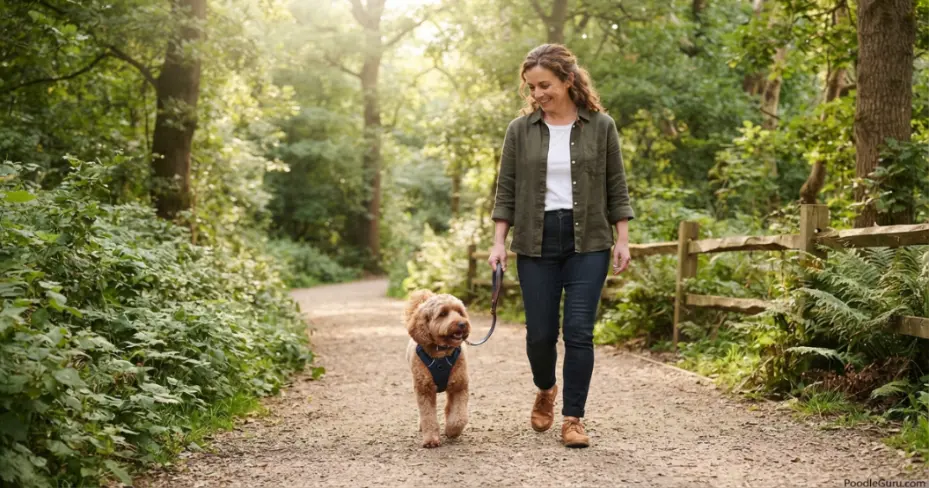
- 30–60 minutes of daily physical exercise: Walking, fetch, or supervised play with other dogs.
- Scent-based enrichment: Snuffle mats, hidden-treat games, and structured nose work satisfy the Beagle brain. A 10-minute scent game can tire a Poogle out more effectively than 20 extra minutes of walking.
- Puzzle toys and training sessions: The Poodle side craves mental engagement. Short, positive training sessions keep that mind occupied and reduce problem behaviors.
Owners often notice that a Poogle who gets adequate mental work is calmer, quieter, and less destructive indoors. A Poogle who only gets physical exercise without mental stimulation may still pace, bark, or chew.
Poogle Training: What Works
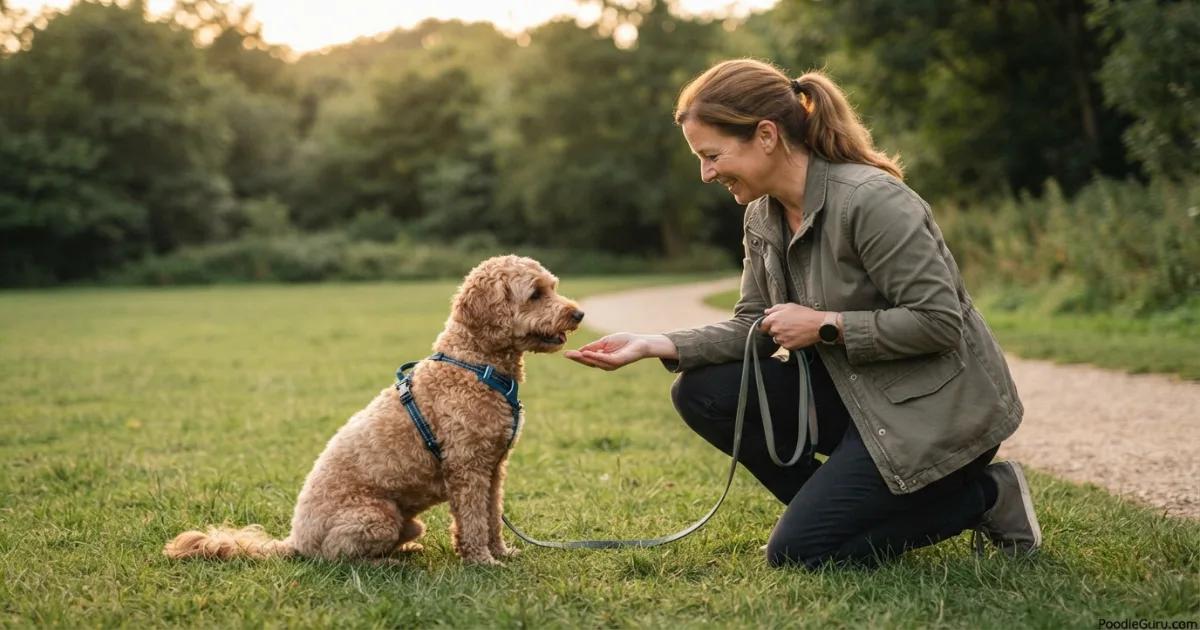
Training a Poogle means working with two very different motivational systems. The Poodle side responds beautifully to praise, clicker work, and the joy of learning new tasks. The Beagle side is often strongly food-motivated, especially when scent distractions are present. Combine both approaches, and you’ll get the best results.
Key training principles for Poogles:
- Use high-value treats: Kibble won’t cut it when a scent trail is competing for attention. Use tiny, dog-safe high-value rewards your vet approves for your dog’s diet; the goal is strong motivation without overfeeding.
- Keep sessions short and frequent: Five-minute sessions three times a day beat one long, frustrating session.
- Don’t rely on off-leash recall: Even a well-trained Poogle may follow its nose into danger. Fenced areas and long lines are safer management tools.
- Socialize early and broadly: Expose your Poogle puppy to different people, dogs, surfaces, and environments between 8 and 16 weeks. Both parent breeds benefit enormously from early socialization.
Harsh corrections backfire with this mix. The Poodle side is sensitive and may shut down. The Beagle side is independent and may simply ignore pressure. Positive reinforcement builds a dog that wants to work with you.
Poogle Buyer’s Guide (2026)
If you’re considering bringing a Poogle home, go in with clear expectations and a sharp eye for responsible breeding. Designer breeds attract both excellent breeders and opportunistic operators. Knowing the difference saves you heartache, money, and veterinary bills down the road.
What Affects Poogle Pricing
In 2026, Poogle puppies from health-tested parents typically range from $1,200 to $2,800. Several factors influence where a specific puppy falls in that range:
- Health testing: Breeders who screen for PRA, patellar luxation, hip dysplasia, and cardiac issues charge more—and they’re worth it.
- Generation: F1 (first-generation Beagle × Poodle) puppies tend to be less expensive than multigenerational Poogles bred for specific traits.
- Coat predictability: Breeders producing F1b Poogles (Poogle bred back to a Poodle) often charge more because the coat is more reliably low-shedding.
- Location and demand: Prices in major metropolitan areas run higher. Rare color patterns may also inflate price without adding real value.
Buyer Red Flags to Watch For
- Breeder won’t share health testing results for both parent dogs
- Puppies available year-round with no waitlist—responsible breeders plan litters intentionally
- No questions asked about your lifestyle or home—good breeders care where their puppies go
- Puppies offered before 8 weeks of age
- Claims that Poogles are “100% hypoallergenic” or “completely non-shedding”
How to Evaluate a Poogle Breeder or Rescue
At PoodleGuru, we recommend a structured evaluation process whether you’re working with a breeder or considering a rescue Poogle. This approach helps you gather the information that matters most for long-term health and temperament.
Request Health Documentation for Both Parent Dogs
Ask for OFA or PennHIP results for hips, DNA testing for PRA, and patellar luxation screening. A breeder who hesitates or provides incomplete records is a red flag. The outcome you want: clear, verifiable documentation you can confirm independently.
Meet at Least One Parent Dog in Person
Seeing the mother (or father, if available) tells you about adult size, coat type, and temperament. Observe how the dog interacts with strangers. Is she calm? Friendly? Excessively shy? This gives you a preview of potential temperament in the puppies.
Ask About Early Socialization Protocols
Quality breeders expose puppies to household sounds, different surfaces, gentle handling, and varied people before they go home. The outcome: a puppy that’s already started building confidence and resilience, making your transition smoother.
For Rescue Poogles: Request a Foster-to-Adopt Period
Many rescues allow a trial period. Use it to assess the dog’s temperament using the PoodleGuru three-dimension framework above. Observe biddability, scent focus, and social drive in your actual home environment before committing.
Frequently Asked Questions
Are Poogles hypoallergenic?
No dog is truly hypoallergenic, and Poogles are no exception. Some Poogles shed minimally and produce less dander—especially those with tighter Poodle-style curls. Others shed noticeably. If allergies are a concern, spend time with the specific dog before committing.
How big does a Poogle get?
Most Poogles reach 15–30 pounds and 13–18 inches at the shoulder. Poogles bred with a Standard Poodle may reach 40–45 pounds, though this is less common. Ask the breeder about the Poodle parent’s size for the most reliable estimate.
Do Poogles bark a lot?
Poogles can be vocal. The Beagle side brings baying and howling instincts, while the Poodle side contributes alert barking. Early training, adequate exercise, and mental stimulation help manage excessive vocalization, but a completely quiet Poogle is rare.
Are Poogles good with children?
Generally yes. The Beagle influence makes most Poogles patient and playful with kids. Supervision is still important—smaller Poogles can be injured by rough handling, and any dog needs guidance around very young children.
How much exercise does a Poogle need?
Plan for 30–60 minutes of daily physical activity plus scent-based mental enrichment. A bored Poogle often develops problem behaviors like excessive barking, digging, or chewing. Mental exercise matters as much as physical.
Do Poogles have health problems?
Poogles can inherit conditions common to both parent breeds, including ear infections, patellar luxation, hip dysplasia, and eye issues like PRA. Health testing in parent dogs helps reduce these risks, but it cannot eliminate them. Regular veterinary care catches problems early.
How long do Poogles live?
Poogles typically live 12–15 years. Dogs from health-tested lines who receive consistent preventive care, a quality diet, and regular exercise often reach the upper end of that lifespan range.
Key Takeaways: Is a Poogle Right for You?
A Poogle can be a wonderful companion for the right owner—someone who appreciates intelligence, has time for daily exercise and mental enrichment, and doesn’t expect a silent, scent-oblivious dog. It’s not the easiest poodle mix, but for many owners, it’s one of the most rewarding.
- Poogles are a Beagle-Poodle cross, typically weighing 15–30 lbs with a lifespan of 12–15 years.
- Coat type varies dramatically—even within a single litter—from tight curls to loose waves with corresponding differences in shedding and grooming needs.
- The Beagle’s powerful scent drive means off-leash reliability is never guaranteed, regardless of training.
- Health testing in parent dogs for PRA, patellar luxation, hip dysplasia, and cardiac issues is the single strongest indicator of a responsible breeder.
- Mental stimulation through scent work and puzzle toys is as essential as physical exercise for a calm, well-behaved Poogle.
- Ear problems are one of the most important preventable issues—regular ear checks and vet-guided cleaning when needed should be part of Poogle care.
Your next step: If you’re seriously considering a Poogle, start by evaluating breeders or rescues using the four-step process above. Spend time with adult Poogles if possible. And bookmark our Complete Poodle Grooming Guide—you’ll need it whether your Poogle’s coat leans Beagle or Poodle.