Great Danoodle (Great Dane Poodle Mix): Complete Guide
The Great Danoodle can blend the Poodle’s intelligence with the Great Dane’s gentle-giant temperament — but its size brings real structural, health, grooming, training, and cost implications that many buyers underestimate.
Quick Answer
A Great Danoodle is a designer cross between a Great Dane and a Standard Poodle. Adults are usually estimated around 24–30 inches at the shoulder and 70–120 pounds, though individuals can vary widely depending on the parents. Their coat may be wavy, shaggy, or curly, and shedding can range from low to moderate. The temperament is often loyal, patient, and affectionate — but this is not a low-maintenance giant. The biggest practical concerns are bloat/GDV risk, orthopedic soundness, cardiac screening, grooming cost, and a shorter giant-dog lifespan. Careful breeder selection and realistic budgeting are non-negotiable.
What Is a Great Danoodle?
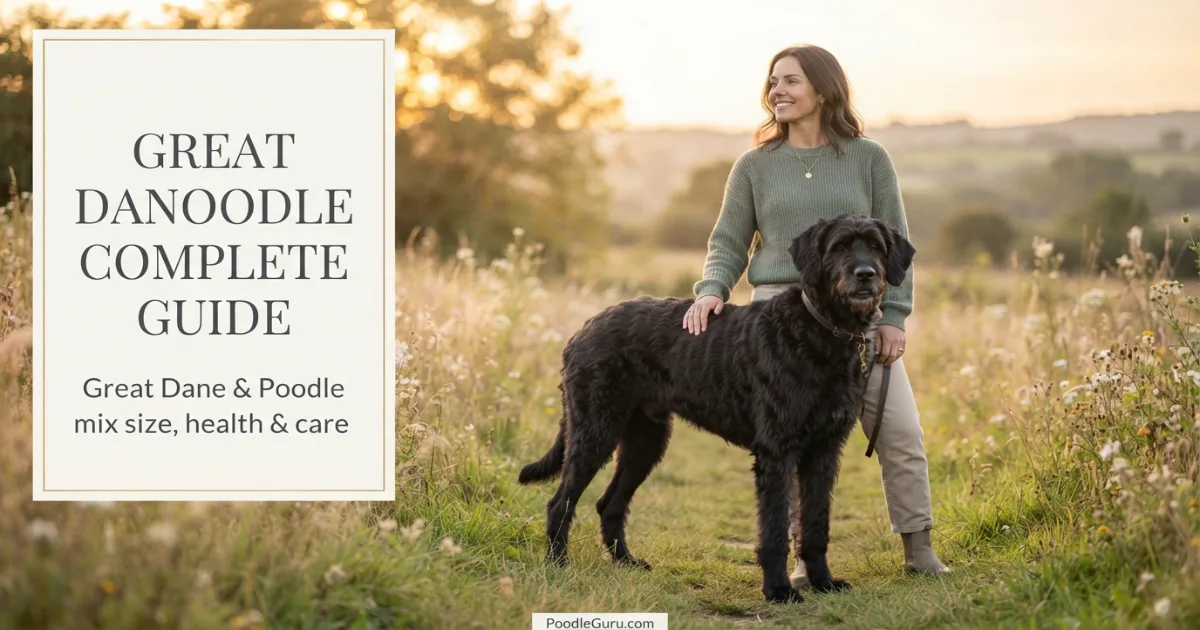
A Great Danoodle is a mixed-breed dog produced by crossing a Great Dane with a Poodle — almost always a Standard Poodle to better match the Dane’s size. This cross belongs to the giant designer-dog category, and it is one of the largest doodle mixes most families will encounter.
For poodle owners accustomed to the breed’s agility and long lifespan, the Great Danoodle introduces a very different ownership equation. The most important thing to understand is that giant breeds age faster and live shorter lives, and the structural demands of supporting that much weight on a Poodle-like frame require rigorous health testing. You are not just getting a bigger Poodle — you are getting a giant cross where bloat/GDV, joint disease, and cardiac screening must be part of the ownership plan from the start.
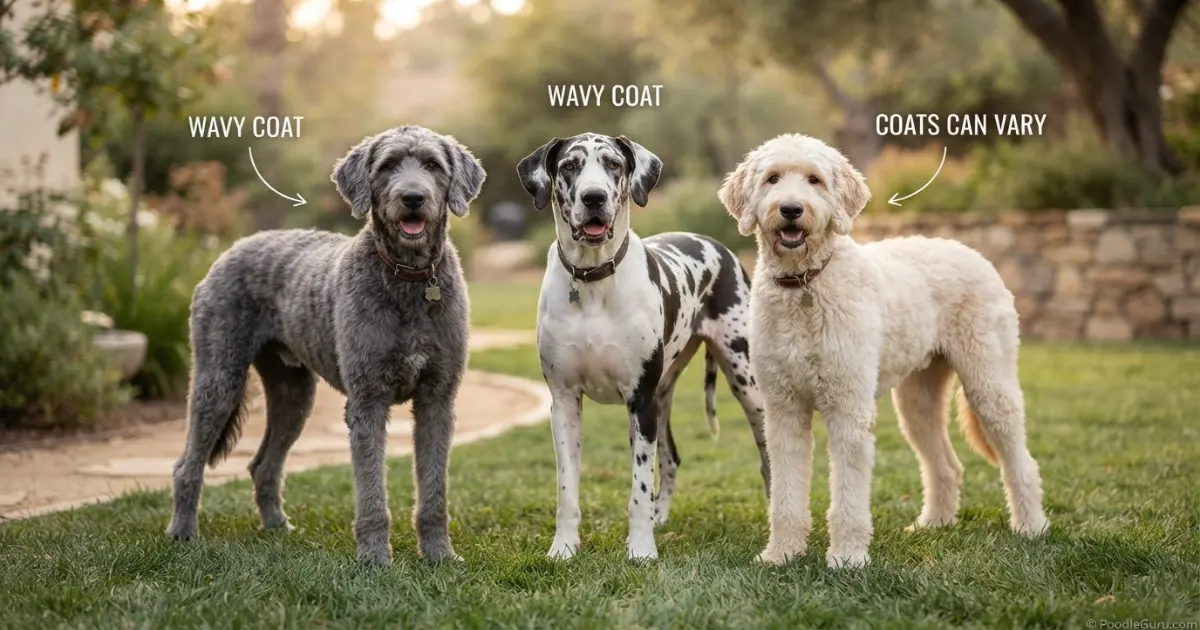
Because the mix is still relatively uncommon, puppies vary widely in appearance. Some have the Dane’s square, muscular build with a curly topknot; others look like oversized shaggy poodles. That variability is part of the appeal, but it’s also what makes breeder diligence critical.
Quick Facts at a Glance
Size
24–30 inches at shoulder
Weight
70–120 lbs (can exceed 130 lbs)
Coat
Wavy to curly; moderate shedding
Lifespan
8–12 years (giant breed reality)
Temperament
Gentle, loyal, good-natured, can be reserved
Energy Level
Moderate — needs space, not marathons
Temperament & Personality: Gentle, But Not a Pushover
The Great Danoodle typically inherits the Great Dane’s famously gentle, people-oriented temperament and the Poodle’s alert intelligence. Most are calm indoors, affectionate with their families, and surprisingly good with children — provided they’ve been socialized early to prevent accidental knocks from that long, happy tail.
However, the Poodle’s protective streak can surface. This mix may be reserved with strangers and will alert bark if someone approaches. Early, continuous socialization prevents wariness from turning into fearfulness. A poorly socialized Great Danoodle of this size is a serious liability.
They form intense bonds and don’t do well left alone for long hours. Separation anxiety can be destructive in a dog that can reach kitchen counters without trying. Plan for a dog that wants to be in the same room — or preferably leaning against your leg — most of the day.
Size & Appearance: The Reality of Living With a Giant
The Great Danoodle’s size is its defining feature. Most stand 24–30 inches at the shoulder and weigh between 70 and 120 lbs. Dogs from larger Great Dane lines can push past 130 lbs. This is usually a difficult fit for small apartments unless the owner has easy outdoor access, elevator access, and the ability to manage a giant dog safely every day.
The body is typically rectangular, blending the Dane’s deep chest with the Poodle’s more refined bone structure. The head can be blockier like a Dane’s or more sculpted like a Poodle’s, with ears that hang or fold over. The tail is long and expressive — and at coffee-table height, it will clear surfaces with gleeful sweeps.
Coat colors include black, blue, harlequin, merle, fawn, brindle, cream, and parti. Because the Great Dane parent can carry the merle gene, responsible breeders avoid merle-to-merle pairings to prevent associated hearing and vision problems.
Coat & Grooming Reality
The coat is usually wavy or curly, sitting somewhere between the Poodle’s tight curls and the Dane’s short, sleek fur. Shedding can range from low to moderate — often less than a pure Great Dane, but not as predictable as a well-bred Poodle. A hypoallergenic guarantee does not apply here; no dog is truly allergen-free.
Grooming a dog this size is a commitment. Brush thoroughly 2–3 times per week to prevent matting, particularly behind the ears, under the collar, and in the feathering along the legs. Professional grooming every 6–8 weeks is strongly recommended, and the cost reflects the dog’s size — expect to pay $120–$200 per session depending on your area.
If the coat leans toward the Dane’s short double coat, seasonal shedding can be impressive. Invest in a quality deshedding tool and a vacuum built for pet hair. Keep the ears clean and dry, as floppy-eared giants are prone to infections.
Health: The Giant Breed Reality You Can’t Ignore
The Great Danoodle carries the health risks of both giant breeds — and giant breeds simply don’t live as long. A lifespan of 8–12 years is realistic, and every year beyond 10 is a gift. The most urgent risk is bloat, or gastric dilatation-volvulus (GDV), where the stomach twists and cuts off circulation. Great Danes are the breed most at risk for bloat, and a deep-chested Great Danoodle shares that anatomy.
Signs of bloat include a distended abdomen, unproductive retching, pacing, and restlessness. It’s a life-threatening emergency that requires immediate veterinary surgery. The VCA Animal Hospitals guide on GDV explains why deep-chested dogs are so vulnerable. Prophylactic gastropexy — a surgery that tacks the stomach to the body wall — is often performed on giant breeds and is worth discussing with your vet.
Other major concerns include:
- Hip and elbow dysplasia: common in both parent breeds; demand OFA clearances.
- Dilated cardiomyopathy (DCM): a heart condition prevalent in Great Danes.
- Hypothyroidism and Addison’s disease: seen in Poodles and occasionally Danes.
- Osteosarcoma (bone cancer): giant breeds have a higher incidence.
- Eyelid abnormalities like entropion or ectropion.
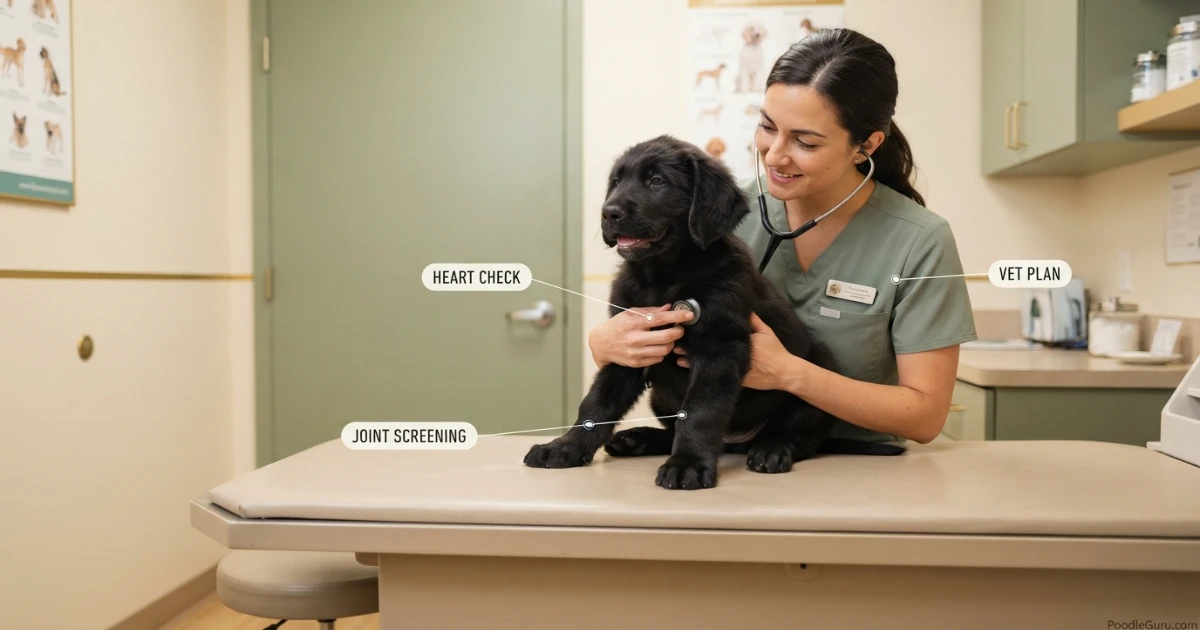
The AKC Great Dane breed page describes the breed’s size and structure, but even a well-built Dane is a deep-chested dog. Pair that with a Poodle’s frame and structural soundness depends heavily on breeder decisions. Regular veterinary exams, orthopedic awareness, and cardiac screening when recommended are part of responsible giant-breed ownership.
6 Breeder Red Flags for Great Danoodles
The giant doodle market is small but growing, and it attracts breeders who prioritize profit over structural soundness. Here’s what separates a responsible program from a risky one:
- No health testing for parent dogs. Both Great Danes and Standard Poodles need OFA hip and elbow scores, cardiac exams (cardiologist, not just a vet’s stethoscope), and eye clearances (CAER). Thyroid screening and Poodle-specific DNA tests for von Willebrand’s, prcd-PRA, and neonatal encephalopathy are basic.
- Breeding extreme Danes. A Great Dane parent with an exaggerated deep chest and narrow build is a bloat disaster waiting to happen. Look for a moderate, athletic Dane.
- Merle-to-merle breeding. This creates a 25% chance of double merle puppies with blindness or deafness. Reputable breeders don’t do it.
- No waiting list. Ethical giant-breed breeders produce one or two litters a year, carefully planned. Constant availability is a puppy-mill signal.
- No written health guarantee. A contract should cover genetic conditions for at least two years, including the right to return the dog if a major issue arises.
- Dismissing the short lifespan. A breeder who won’t discuss the reality of giant-breed longevity isn’t being honest. You should know that 10 years is a good run.
For help vetting breeders, read our guide on questions every Poodle breeder should answer — the same logic applies to mixed giants.
Great Danoodle Price Guide (2026)
- Ethical breeder: $2,000 – $4,000 (health-tested parents, limited registration, early socialization)
- Rare-color breeder: $4,500 – $7,000+ (harlequin, merle, blue — often inflated without better health)
- Rescue or rehome: $300 – $800 (adoption fees; adults occasionally available through giant-breed rescues)
What inflates the price: rare coat patterns, “Euro” Dane lineage claims, and breeders who charge a premium for giant size. Focus your budget on health clearances, not aesthetics.
Training & Socialization: Start Early, Stay Consistent
Training a dog that will outweigh you by six months of age isn’t optional. Great Danoodles are intelligent and generally biddable, but their size makes even minor behavior problems unmanageable. Jumping up, pulling on leash, and counter-surfing must be addressed while the dog is still small enough to correct safely.
Positive reinforcement works beautifully with this mix. They’re sensitive and shut down under harsh corrections. Short, engaging sessions that use high-value treats and enthusiastic praise build a dog that wants to work with you. Puppy kindergarten followed by basic obedience classes are strongly recommended.
Socialization to people, other dogs, different environments, and handling should be intensive in the first four months. A poorly socialized Great Danoodle can become fear-reactive, and at this size, that’s a dangerous combination. Never skip the critical socialization window.
Great Dane vs. Poodle vs. Great Danoodle: A Side-by-Side Look
| Trait | Great Dane | Standard Poodle | Great Danoodle |
|---|---|---|---|
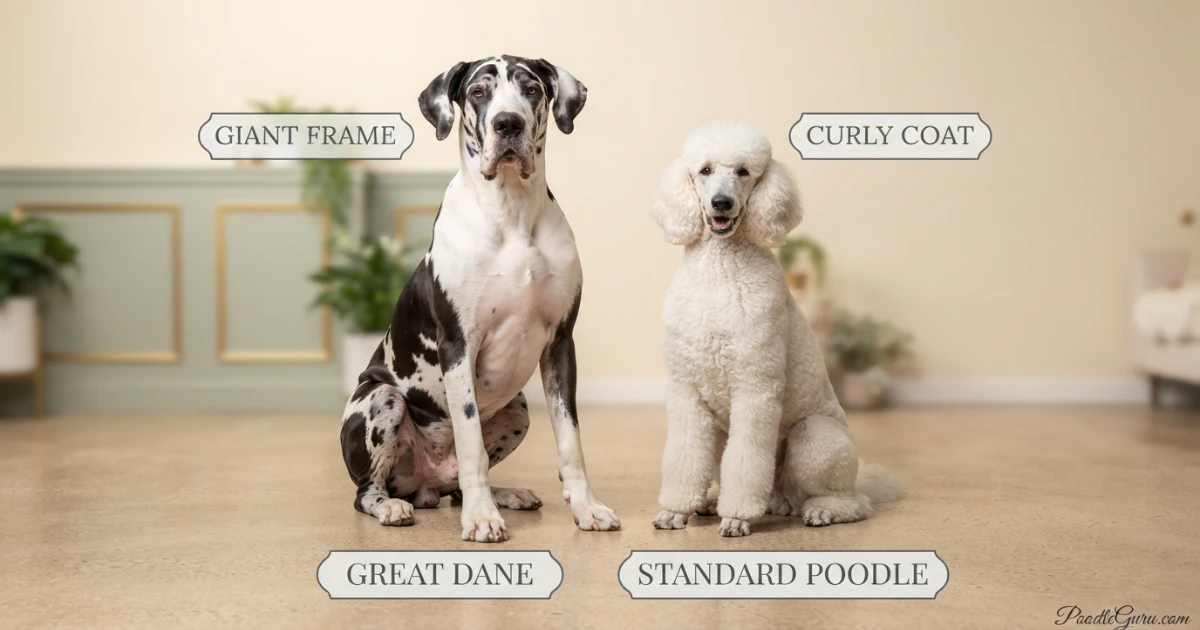
| Height | 28–32 inches | 18–24 inches | 24–30 inches |
| Weight | 110–175 lbs by sex (larger individuals vary) | 40–70 lbs by sex | 70–120+ lbs (estimate) |
| Lifespan | 7–10 years | 10–18 years | 8–12 years (estimate) |
| Bloat (GDV) Risk | Very High | Moderate | High to Very High (chest depth dependent) |
| Shedding | Moderate | Minimal | Low to Moderate |
| Trainability | Gentle, cooperative | Highly intelligent, biddable | Intelligent, sensitive, eager to please |
| Space Needs | Large home, yard | Adaptable, active | Large home with room to move; not for apartments |
This comparison highlights the unique middle ground: a dog that may inherit some Dane mass and some Poodle coat and trainability, while still carrying meaningful giant-breed health considerations. Bloat/GDV risk depends heavily on chest depth, family history, feeding routine, and veterinary prevention planning. At PoodleGuru, we evaluate giant crosses by mapping where the structural extremes of each parent meet, and what that means for real-world care.
The PoodleGuru Great Danoodle Size & Structure Framework
When we assess whether a Great Danoodle is built for a functional, healthy life, we look at five dimensions. Use this framework yourself when evaluating a litter or adult:
1. Chest Depth & Body Proportions
A deep chest is normal, but an exaggerated, narrow tuck signals high bloat risk. Balance is key.
2. Joint & Hip Architecture
Parents must have passing OFA hip and elbow scores. Giant pups grow fast; early spay/neuter can harm joint development.
3. Cardiac Health Baseline
Documented cardiac screening in parent dogs — and echocardiography when a veterinarian or cardiologist recommends it — separates serious programs from casual breeding.
4. Coat Type & Allergen Load
Curl pattern dictates grooming intensity and affects shedding. There’s no hypoallergenic guarantee.
5. Temperament Stability & Socialization Plan
Look for a puppy that is curious, handler-focused, and recovering quickly from startles.
This is a PoodleGuru original framework, designed to anchor your decision in structure and health — not cute photos.
How to Evaluate a Great Danoodle Breeder in 4 Steps
Demand Full Health Testing Documentation
OFA hips, elbows, cardiac (cardiologist), eyes (CAER), and DNA panels for both parents. No exceptions. A “vet check” is not enough.
Evaluate the Great Dane Parent’s Chest Conformation
A moderate chest with good width and a visible tuck, not an extreme barrel chest with a sucked-up waist. Ask about family history of bloat.
Meet the Mother Dog On-Site
The dam should be healthy, calm, and comfortable with strangers. If you can’t meet her, walk away.
Secure a Detailed Contract
The contract must include a health guarantee covering genetic hips, heart, and eyes for at least 24 months, plus a return-to-breeder clause.
Frequently Asked Questions About Great Danoodles
How big do Great Danoodles get?
Most Great Danoodles stand 24–30 inches at the shoulder and weigh 70–120 lbs. Some from very large Great Dane lines can reach 130 lbs or more. This is a giant breed, and everything from food to vet bills scales accordingly.
Are Great Danoodles good family dogs?
Yes, when properly socialized. They’re typically gentle and patient with children, but their sheer size can accidentally knock over toddlers. Supervision and early training around kids are essential.
Do Great Danoodles shed a lot?
Shedding is usually moderate. A curly Poodle coat reduces shedding, but the Great Dane’s smooth coat gene can still produce a dog that leaves hair on furniture. There’s no guarantee of a non-shedding dog.
What’s the lifespan of a Great Danoodle?
Realistically, 8–12 years. Giant breeds simply don’t live as long as smaller dogs. Excellent breeding, a lean body weight, and proactive veterinary care can push toward the upper end of that range.
Are Great Danoodles easy to train?
They’re intelligent and generally eager to please, but sensitive. Positive reinforcement works well. Start training early — a dog this size must have reliable basic obedience before it reaches full strength.
Do Great Danoodles have health problems?
Yes. The primary concerns are bloat (GDV), hip and elbow dysplasia, dilated cardiomyopathy (DCM), and certain cancers. Health-tested parents reduce but don’t eliminate risk. Lifetime veterinary costs are higher for giant breeds.
How much does a Great Danoodle cost?
From an ethical breeder, $2,000–$4,000 in 2026. Rare colors can push prices above $5,000. Rescue adoption fees are typically $300–$800. Remember that purchase price is just the beginning — giant dogs cost more to feed and treat.
Key Takeaways: Great Danoodle Ownership in 2026
- A Great Danoodle is a Great Dane-Standard Poodle cross standing 24–30 inches and weighing 70–120+ lbs.
- Bloat (GDV) is the #1 life-threatening emergency; chest conformation and prophylactic gastropexy matter.
- Lifespan ranges from 8–12 years — shorter than a Poodle, longer than many Danes, but still a giant-breed reality.
- Grooming a dog this size costs $120–200+ per session; coat care is a significant ongoing expense.
- Expect to pay $2,000–$4,000 from an ethical breeder; insist on OFA hips, elbows, cardiac, and eye clearances.
- Training and socialization from 8 weeks are non-negotiable for managing a dog of this size safely.
- Use The PoodleGuru Size & Structure Framework to evaluate any litter or adult dog.