Huskydoodle (Husky Poodle Mix): Complete Owner Guide
A Huskydoodle is a striking, high-energy blend of Siberian Husky and Poodle — but this designer mix can bring intense exercise needs, unpredictable shedding, vocal habits, and escape-risk behavior that catches unprepared owners off guard. Here’s what you need to know before bringing one home.
Quick Answer
A Huskydoodle (sometimes called Siberpoo) is a cross between a Siberian Husky and a Poodle, typically a Standard or Miniature Poodle. Adults usually weigh 35–60 pounds and stand 18–23 inches tall. The coat ranges from wavy to curly and can shed heavily or minimally — there’s no guarantee. Temperament is intelligent, social, and extremely active, with a strong prey drive and a talent for escaping enclosures. Major health watchpoints include hip dysplasia, eye diseases, and hypothyroidism. This mix demands an experienced, active owner who can provide hours of daily exercise and a secure environment.
What Is a Huskydoodle?
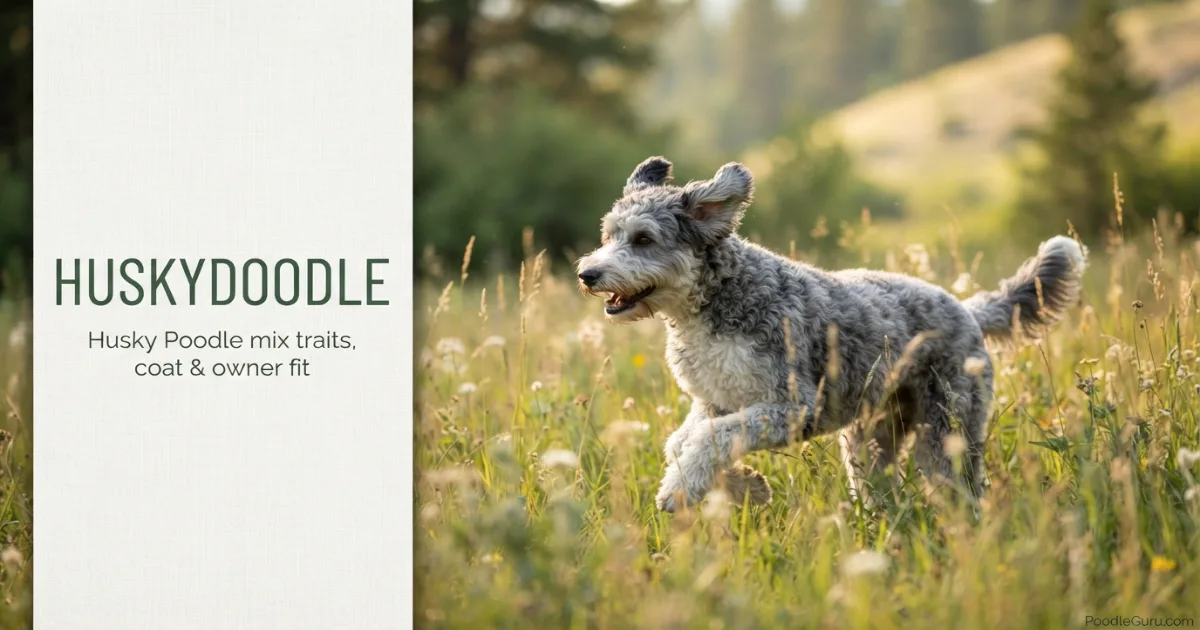
A Huskydoodle is a hybrid dog produced by crossing a Siberian Husky with a Poodle, most often a Standard or Miniature Poodle. The goal is usually a medium-sized dog that blends the Husky’s striking looks and endurance with the Poodle’s intelligence and lower-shedding coat potential. However, the result is not standardized or predictable, and no Huskydoodle should be treated as guaranteed allergy-friendly.
For poodle owners, this means expecting a dog with a far higher prey drive, much more vocalization, and an independent, mischievous streak that can rival any purebred working dog. The most important thing to understand is that a Huskydoodle’s high energy, curiosity, and escape tendencies often reflect inherited working-dog traits — not simple stubbornness. Without daily vigorous exercise, mental challenge, and secure, well-checked containment, this mix may find ways to entertain itself, often destructively.
Because the breed mix is still relatively uncommon, appearance and temperament vary widely. Some puppies favor the Husky’s thick double coat and howling nature; others take after the Poodle’s curly non-shedding coat and eagerness to please. The element of surprise is part of the Huskydoodle’s appeal — and its biggest challenge.
Quick Facts at a Glance
Size
18–23 inches at shoulder
Weight
35–60 lbs (larger with Standard Poodle)
Coat
Wavy, curly, or double coat; low to heavy shedding possible
Lifespan
12–14 years
Temperament
Energetic, social, intelligent, vocal
Energy Level
Very high — needs intensive daily exercise
Temperament & Personality: Fiercely Friendly, Relentlessly Active
The Huskydoodle personality is a hurricane of friendliness, curiosity, and problem-solving wrapped in fur. They adore people, including strangers, which makes them poor guard dogs but wonderful social companions. This mix thrives on interaction and bonds deeply with its family. Left alone too long, they can develop severe separation anxiety and become destructive.
Vocalization is a hallmark. Howling, “talking,” and dramatic woo-woo noises are common, inherited from the Husky. You won’t train the voice out of a Huskydoodle; you manage it with consistent quiet cues and by meeting their need for stimulation. Neighbors should be prepared.
The intelligence is there — the Poodle’s sharp mind combined with the Husky’s creative, independent thinking. This dog learns quickly but also learns how to outsmart you. Expect counter-surfing, gate-latch-opening, and serious escape attempts. They’re not being bad; they’re fulfilling their genetic drive to explore and problem-solve. Channel that brainpower with puzzle toys, scent work, and advanced trick training.
Size & Appearance: Medium Build, Mask and Markings
Most Huskydoodles land in the medium-to-large range: 18–23 inches at the shoulder and 35–60 pounds. When a Standard Poodle is used, some individuals may reach 70 pounds. The body is athletic and slightly longer than tall, reflecting both parents’ working heritage.
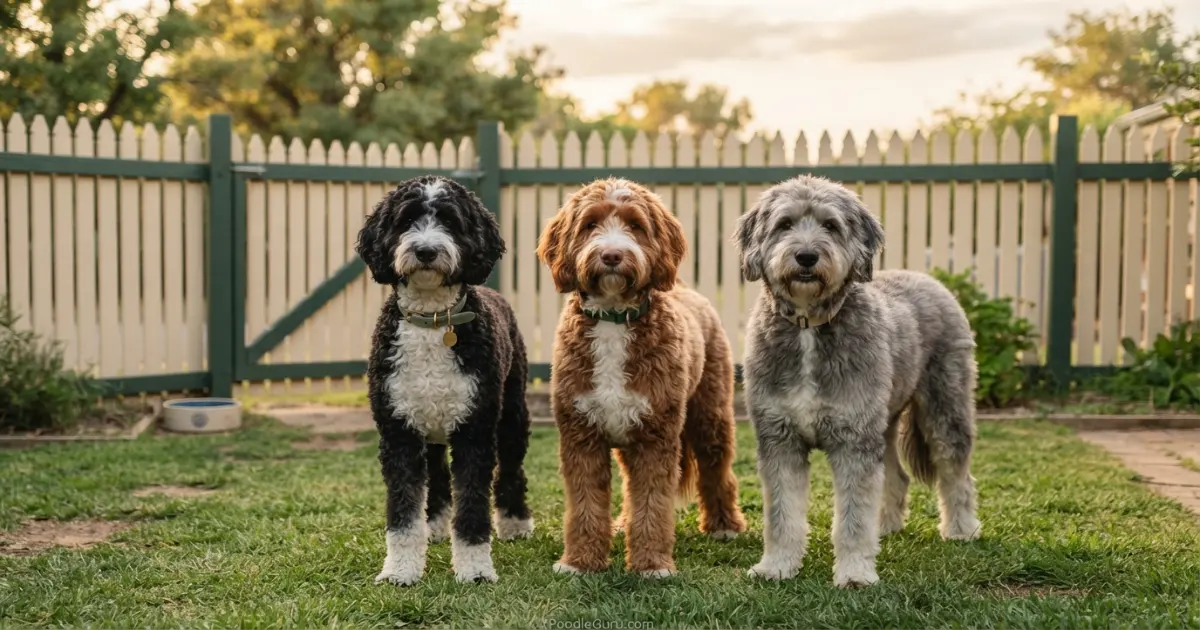
One of the most appealing features is the variety of coat colors and patterns. Common colors include black and white, gray and white, red and white, sable, agouti, and solid white or cream. Many inherit the Husky’s facial mask, which can create a wolf-like or coyote-like expression. Blue eyes are possible, as are bi-colored eyes (one blue, one brown) — a striking trait, but breeders shouldn’t charge extra for eye color alone.
The ears are typically erect or semi-erect, and the tail may curl over the back or hang in a plume. The overall silhouette is graceful yet powerful, built for endurance.
Coat & Grooming Reality
The coat is one of the most unpredictable traits. A Huskydoodle may inherit:
- A dense, double coat (Husky-dominant): may shed heavily during seasonal coat changes, requires regular brushing 2–3 times per week or more, and is not allergy-proof.
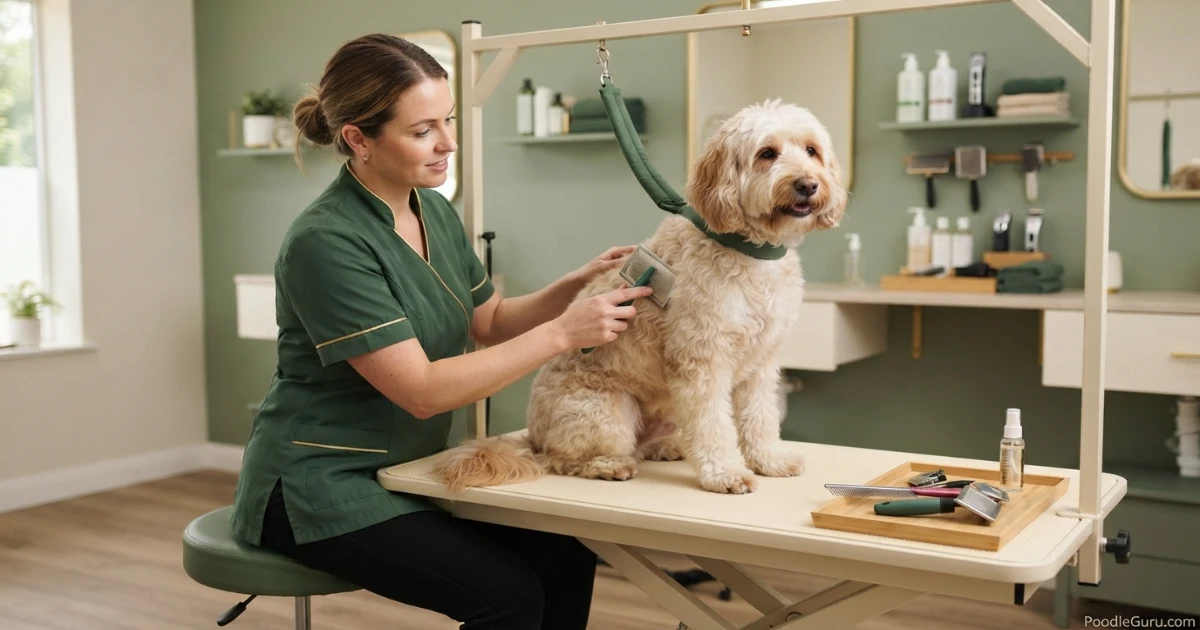
- A wavy or curly coat (Poodle-dominant): often sheds less, but can mat easily without frequent brushing and professional grooming every 6–8 weeks.
- A combination: a thick undercoat with a wavy topcoat that traps shed fur, creating mat-prone tangles and seasonal coat work.
Learning line-brushing techniques is useful for any coat type. Husky-influenced coats may “blow coat” seasonally, which can overwhelm owners who expected a low-shedding Doodle. If your Huskydoodle inherits this trait, a high-velocity dryer used carefully can be a helpful grooming tool.
Health: Eye, Joint, and Hormone Risks
Although hybrid dogs are sometimes marketed as healthier, a Huskydoodle can still inherit real risks from both parent breeds. The most significant concerns include:
- Hip dysplasia: both Siberian Huskies and Standard Poodles can be affected by hip problems. Ask for OFA or PennHIP-style hip evaluation records on breeding dogs.
- Eye disorders: cataracts, progressive retinal atrophy (PRA), corneal dystrophy, and other inherited eye conditions can appear in parent lines. Current ophthalmologist eye exams such as CAER are important for breeding dogs. The AKC Siberian Husky breed page details these risks.
- Hypothyroidism: common in Huskies, causing weight gain, skin issues, and lethargy. Often manageable with medication.
- Zinc-responsive dermatosis: a skin condition seen in Northern breeds that causes crusting and hair loss; requires dietary supplementation.
- Epilepsy: idiopathic epilepsy appears in both parent breeds.
Responsible breeding programs commonly use hip evaluations at the appropriate age, current ophthalmologist eye exams, and thyroid screening when indicated by the parent breed’s health guidance. Not all Huskydoodles will face these issues, but the potential is real — and treatment can be expensive.
5 Breeder Red Flags for Huskydoodles
As the Huskydoodle’s popularity rises, so do poor breeding practices. Watch for these warnings:
- No documented hip evaluation and current ophthalmologist eye clearances. Both parent breeds are genetically predisposed. A breeder who can’t produce certificates is cutting corners.
- Breeding primarily for blue eyes or rare colors. Charging a premium for eye color or “wolflike” masks while ignoring health testing is a classic sign of a puppy mill.
- Multiple litters always available. Ethical breeders plan one or two litters per year and have waiting lists.
- No socialization protocol. Huskydoodles need early exposure to sounds, surfaces, and people to prevent skittishness. Good breeders follow Puppy Culture or similar programs.
- No return policy in the contract. A responsible breeder will take back a dog at any point if you can’t keep it.
Use our list of questions to ask a Poodle breeder — the same due diligence applies to mixed breeds.
Huskydoodle Price Guide (2026)
- Ethical breeder: $1,500 – $3,000 (health-tested parents, early socialization)
- Boutique breeder with rare colors: $3,500 – $5,500 (often no better health guarantees)
- Rescue or rehome: $250 – $700 (adoption fees; Husky mixes are common in shelters)
Blue eyes, striking masks, or “mini” size claims can inflate prices. Pay for health testing, temperament, and early socialization — not aesthetics. And remember: the purchase price is the cheapest part of owning a high-energy, large-breed dog.
Training & the Escape-Artist Mindset
Training a Huskydoodle requires patience, creativity, and a sense of humor. Their intelligence is remarkable, but they bore easily. Short, positive sessions (5–10 minutes) scattered throughout the day work far better than long, repetitive drills. Use high-value treats and switch up commands to keep them guessing.
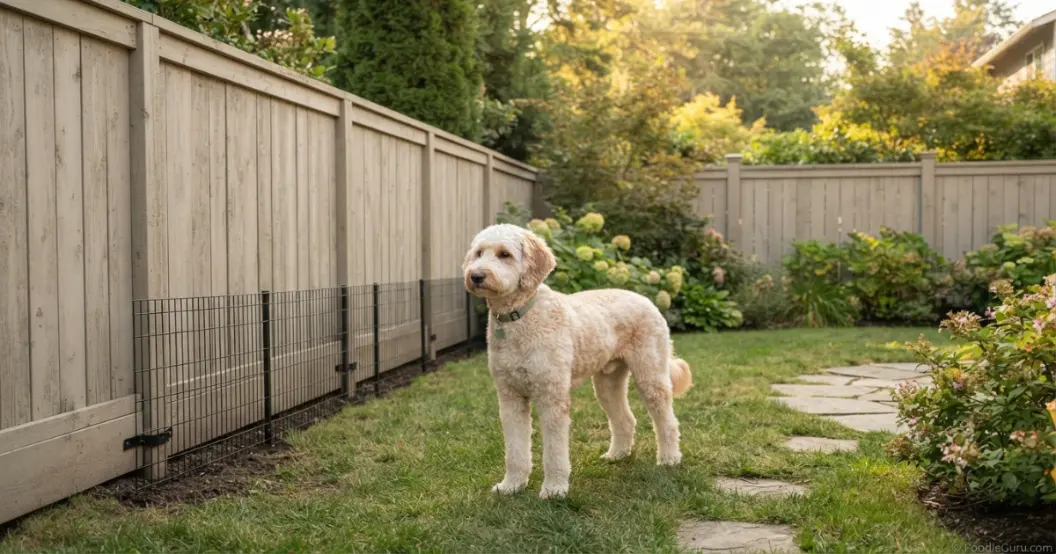
Recall training is critical, but the Husky prey drive means a squirrel or rabbit may override even good training. Use a long line in unfenced areas unless your dog is in a legally permitted, securely fenced space. Many Huskydoodle owners rely on a secure, tall wooden fence with checked gates and dig protection because some individuals can climb, squeeze through gaps, or dig under barriers.
Crate training provides a safe den and prevents destruction when you’re away. Start from day one. Socialization to people, dogs, bicycles, and household chaos should be intensive between 8–16 weeks. A well-socialized Huskydoodle is a joy; an under-socialized one is a whirlwind of anxiety and noise.
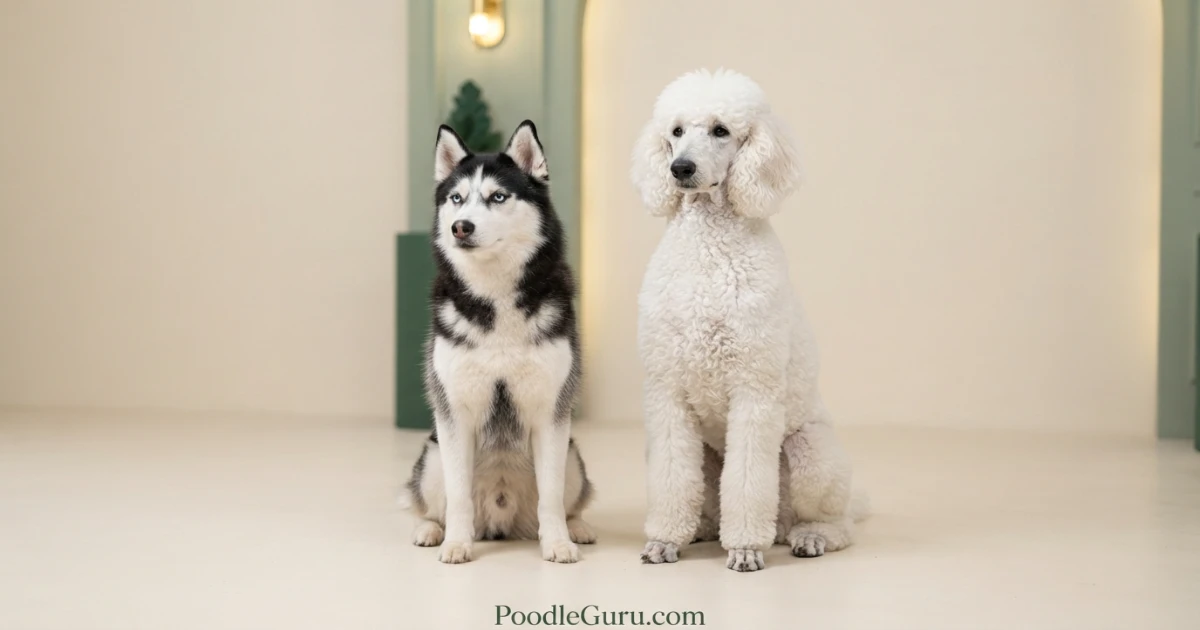
Husky vs. Poodle vs. Huskydoodle: A Side-by-Side Look
| Trait | Siberian Husky | Standard Poodle | Huskydoodle |
|---|---|---|---|
| Weight | 35–60 lbs | 40–70 lbs | 35–60 lbs |
| Shedding | Very heavy, blows coat | Minimal | Low to heavy; highly variable |
| Energy Level | Extremely high; born to run | High; needs mental work | Very high; needs both physical and mental outlets |
| Trainability | Independent, stubborn | Highly biddable | Smart but easily bored; can be selectively obedient |
| Prey Drive | Very high | Low to moderate | High; may chase cats and small animals |
| Vocalization | Howls, talks | Barks alertly | Howls, talks, woo-woos |
| Best For | Active, experienced homes | Active families, allergy-sensitive | Highly active, experienced owners with secure space |
This table highlights the interplay of extremes: a coat that can shed like a Husky, a brain like a Poodle, and vocalizations that fill a home. At PoodleGuru, we evaluate this mix by recognizing that the Husky’s working-drive DNA doesn’t dilute in a single cross.
The PoodleGuru Huskydoodle Compatibility Framework
We assess whether a Huskydoodle is right for an owner by evaluating five key dimensions. Use this framework before you commit:
1. Energy Commitment Score
Can you provide 90+ minutes of vigorous exercise daily, rain or shine? If not, this mix will find destructive outlets.
2. Containment Security
Does your yard have a dig-proof, climb-proof fence at least 6 feet tall? Huskydoodles need secure containment, not a picket fence.
3. Noise Tolerance
Are you — and your neighbors — okay with howling, talking, and dramatic outbursts? This is not a quiet apartment dog.
4. Grooming Commitment
Coat type will dictate your routine. Be financially and mentally prepared for either heavy shedding or intense grooming bills.
5. Prey Drive Management
If you have cats, small dogs, or backyard chickens, a Huskydoodle’s prey drive could be a dealbreaker. Honest assessment matters.
This is a PoodleGuru original framework, designed to prevent the most common reason Huskydoodles end up in rescue: owner underestimation.
How to Evaluate a Huskydoodle Breeder in 4 Steps
Verify Hip and Eye Health Clearances
Ask for OFA or PennHIP-style hip evaluations and current CAER ophthalmologist eye exams for both parents. Thyroid testing is a strong plus, especially on the Husky side. Paperwork is non-negotiable.
Assess Parent Temperaments On-Site
Meet the mother. A calm, friendly Husky dam is a positive sign; extreme skittishness or aggression is a red flag.
Check the Living Environment
Puppies raised in a stimulating, clean home with early exposure to household sounds and handling are better adjusted. Avoid kennel-only setups.
Secure a Detailed Contract
It must include a genetic health guarantee (hips, eyes) for at least two years, a spay/neuter agreement, and a return-to-breeder clause.
Frequently Asked Questions About Huskydoodles
Are Huskydoodles good family dogs?
They can be wonderful with active families and older children who understand how to interact with an energetic dog. Their exuberance may knock over small children accidentally, so supervision and early socialization are important.
Do Huskydoodles shed?
Yes, most do. Even those with a Poodle-like coat may shed lightly, and Husky-dominant coats blow heavy undercoat seasonally. There is no truly allergy-free guarantee.
Are Huskydoodles easy to train?
They’re smart and can learn quickly, but their independent Husky side may make them selectively obedient or easily bored. Reward-based training, variety, consistency, and experienced coaching help.
Can Huskydoodles live in apartments?
Usually not ideal. Some may adapt only with a highly active owner, multiple structured exercise sessions, enrichment, and careful noise management. Their energy and vocal nature can make close-quarters living challenging.
Do Huskydoodles have blue eyes?
Some do, depending on what they inherit from the Husky side. They can also have brown or mixed-color eyes. Eye color alone does not prove better health or temperament, and ethical breeders should not breed solely for appearance.
What health issues are common?
Potential concerns include hip dysplasia, inherited eye diseases such as cataracts or PRA, hypothyroidism, zinc-responsive skin issues from the Husky side, and epilepsy. Health-screened parents can reduce risk but never eliminate it.
How much exercise does a Huskydoodle need?
Many adults need about 60–90+ minutes of structured activity daily, with both physical and mental outlets. A quick walk usually will not be enough, but the exact amount should match the dog’s age, health, weather, and conditioning.
Key Takeaways: Huskydoodle Ownership in 2026
- A Huskydoodle is a Siberian Husky-Poodle cross weighing 35–60 lbs, with a lifespan of 12–14 years.
- This mix often needs substantial daily exercise and secure containment — escape risk is high if energy, boredom, and fencing are not managed.
- Coat types vary widely from heavier-shedding double coats to lower-shedding wavy or curly coats; grooming needs change with genetics.
- Major health risks include hip dysplasia, eye diseases, and hypothyroidism; demand OFA hip and CAER eye clearances from breeders.
- Vocalization is a defining trait — expect howling, talking, and dramatic woo-woos that require tolerant neighbors.
- Expect to pay $1,500–$3,000 from an ethical breeder; rare eye color or markings often inflate price without adding health value.
- Use The PoodleGuru Huskydoodle Compatibility Framework to honestly assess whether this high-octane mix fits your life.