Yorkipoo (Yorkie Poodle Mix): Complete Guide
A clear-eyed look at the Yorkipoo — one of the most searched Yorkie Poodle mixes — including what is real, what is marketing, and what actually matters before you bring one home.
Quick Answer
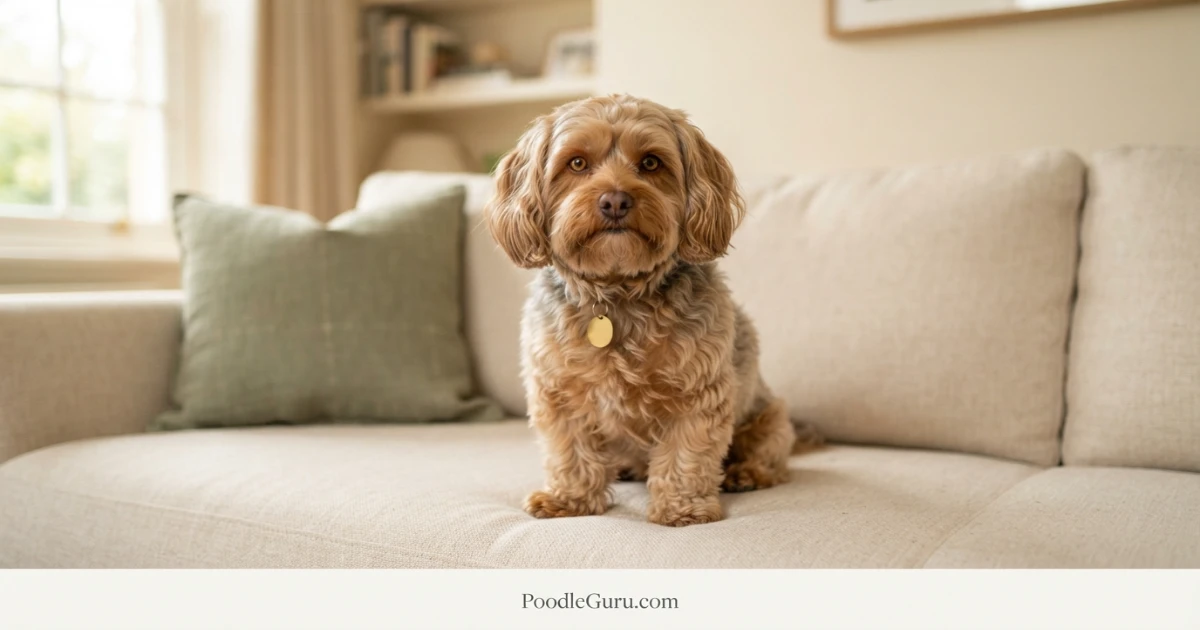
A Yorkipoo, also called a Yorkie Poodle mix or Yorkiepoo, is a designer cross between a Yorkshire Terrier and a Toy or Miniature Poodle. Most weigh 5–15 lbs and stand 7–14 inches tall. They are known for spirited, affectionate personalities, low-shedding coats, and sharp intelligence — but coat type, size, and temperament are never guaranteed in a first-generation cross. Expect a clever, people-focused companion that needs consistent grooming, early socialization, and patient positive training.
Not every Yorkipoo is hypoallergenic, and not every one is apartment-sized. The mix matters less than the individual dog and the breeder behind it.
Yorkipoo Quick Facts
Size
5–15 lbs, 7–14 inches at the shoulder. Depends entirely on whether the Poodle parent was Toy or Miniature.
Coat
Wavy to curly, low-shedding but not zero-shedding. Coat texture varies widely — even within the same litter.
Lifespan
12–15 years on average. Well-cared-for individuals from health-tested lines often reach the upper end.
Temperament
Alert, affectionate, clever, and sometimes stubborn. A terrier streak meets poodle sensitivity.
Exercise
Moderate. 30–45 minutes daily, plus mental work. A bored Yorkipoo is a barky Yorkipoo.
Best For
Attentive owners in apartments or houses. Retirees, singles, and families with gentle older children.
What Is a Yorkipoo?
A Yorkipoo is a designer hybrid dog that crosses a Yorkshire Terrier with a Toy or Miniature Poodle. For poodle owners and prospective buyers, this means you’re getting a small, intelligent companion that blends the terrier’s bold, watchful nature with the poodle’s trainability and low-shedding coat. The most important thing to understand is that no two Yorkipoos are exactly alike — coat type, adult size, and temperament can vary significantly, even among siblings from the same litter.
This isn’t a breed in the traditional sense. The AKC recognizes three distinct poodle sizes as purebred standards, but the Yorkipoo sits outside that system entirely. It’s a deliberate crossbreed — sometimes called a “designer dog” — and its popularity has exploded over the last decade. People want the poodle’s brains and coat without the full commitment to a purebred, and the Yorkie’s compact, portable charm seals the deal.
But the label “Yorkipoo” covers a lot of ground. A Toy Poodle crossed with a 5-lb Yorkie produces a very different dog than a Miniature Poodle crossed with a larger Yorkie. Some Yorkipoos top out at 6 lbs. Others push 15. That range alone should tell you how much variation lives inside this single name.
Coat Genetics: Why Littermates Look Different
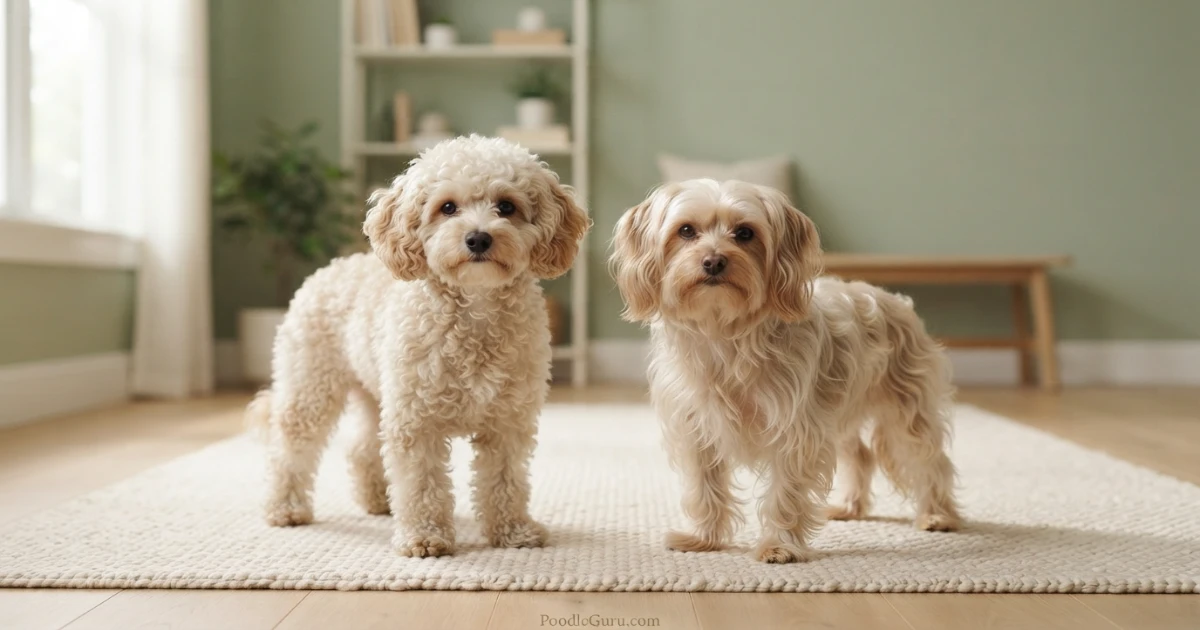
First-generation (F1) Yorkipoos inherit one set of genes from each parent. Coat outcome depends on which genes dominate. The poodle’s curly coat gene and the Yorkie’s straight, silky coat gene don’t blend predictably — they compete. Some puppies get loose waves. Others get tight curls. A few end up with coats closer to the Yorkie’s straight, human-hair-like texture.
Breeders producing F1b Yorkipoos (a Yorkipoo bred back to a Poodle) typically get more consistent curl and lower shedding, but no cross is ever a perfect 50/50 split in practice.
This variability is the single most misunderstood aspect of the Yorkipoo. Buyers expecting a guaranteed “teddy bear” coat are sometimes surprised by what actually arrives.
Yorkipoo Appearance & Size
Most Yorkipoos stand between 7 and 14 inches at the shoulder and weigh anywhere from 5 to 15 lbs fully grown. That’s a threefold weight spread — wide enough that “small dog” is the only consistent category. Toy Poodle crosses usually produce the smaller end of the range. Miniature Poodle crosses push toward the upper end, and occasionally beyond it.
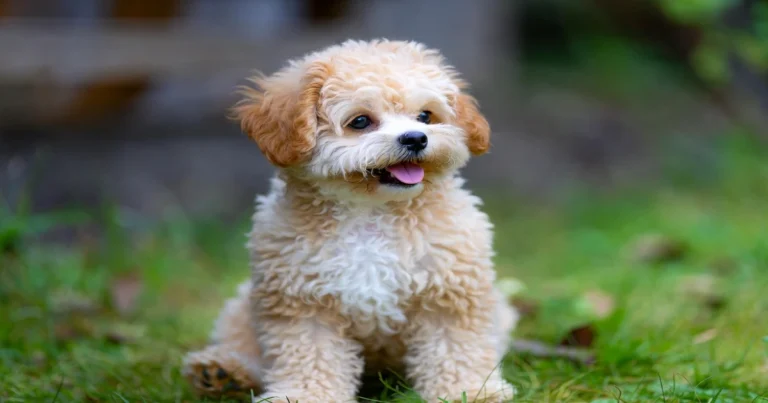
Coat colors run the full Yorkie-and-poodle palette: black, tan, cream, silver, apricot, chocolate, and parti patterns. Color often fades or shifts with age — a dark puppy may lighten to silver or cream by age two. This is normal. The poodle’s progressive graying gene commonly expresses in mixes.
Ears can be floppy or semi-erect. Muzzles are usually medium-length. Eyes are round, dark, and expressive — and they’ll use them to work a room. Build is generally compact and well-proportioned, though some individuals run leggier when the poodle frame dominates.
Buyer Tip: Don’t Fixate on One Look
If you’re set on a very specific coat color, curl pattern, or ear set, a purebred — not a mix — is your safer path. The Yorkipoo’s charm is in its unpredictability. The best breeders will tell you that upfront. The ones who promise a carbon-copy puppy are the ones to avoid.
Yorkipoo Temperament & Personality
Yorkipoos are alert, people-oriented dogs with a surprising amount of personality packed into a small frame. They inherit the poodle’s sharp intelligence and the Yorkie’s terrier confidence — a combination that produces a dog who’s quick to learn, quick to react, and not always quick to back down.
Most owners describe them as affectionate, playful, and a little bit nosy. They want to know what you’re doing. They’ll follow you from room to room. They’ll perch on the back of the sofa to watch out the window. That watchfulness has a flip side: Yorkipoos can be vocal. Barking at doorbells, passing dogs, and suspicious squirrels is a feature of the mix, not a bug. Early training shapes whether it stays manageable.
With family, they’re usually warm and gentle — but small children need supervision. A 7-lb dog is fragile. Toddlers who don’t yet understand gentle hands can hurt a Yorkipoo without meaning to. For families with kids over eight or so, the match tends to work well. For retirees or solo dwellers looking for a devoted shadow, it’s often excellent.
Separation anxiety crops up in this mix more than in some other poodle crosses. Both parent breeds bond closely with their people. A Yorkipoo left alone for long stretches without training can develop destructive habits or excessive barking. Crate training and gradual alone-time practice from puppyhood make a significant difference.
Yorkipoo vs. Purebred Poodle vs. Yorkie
If you’re choosing between a Yorkipoo and one of its parent breeds, the differences come down to predictability, coat, and temperament consistency. Here’s how they stack up side by side:
| Trait | Yorkipoo | Toy Poodle | Yorkshire Terrier |
|---|---|---|---|
| Size (lbs) | 5–15 (varies widely) | 4–6 (predictable) | 4–7 (predictable) |
| Coat type | Wavy to curly; inconsistent | Tight, dense curls; consistent | Straight, silky; consistent |
| Shedding | Low to very low | Very low | Low |
| Temperament | Variable — affectionate, alert, sometimes stubborn | Intelligent, sensitive, eager to please | Bold, tenacious, watchful |
| Trainability | High, with terrier independence | Very high, biddable | Moderate; can be strong-willed |
| Barking tendency | Moderate to high | Moderate | High |
| Breed recognition | None (designer mix) | AKC recognized | AKC recognized |
| Price range (2026) | $1,200–$3,500 | $1,500–$4,000 | $1,000–$3,000 |
The Yorkipoo occupies a middle ground that appeals to buyers who want poodle-like qualities without committing to a purebred’s specific demands — but that middle ground comes with less predictability. If consistency matters more than novelty, the Toy Poodle is the stronger choice. If you’re comfortable with a little genetic surprise, the Yorkipoo can be a wonderful companion.
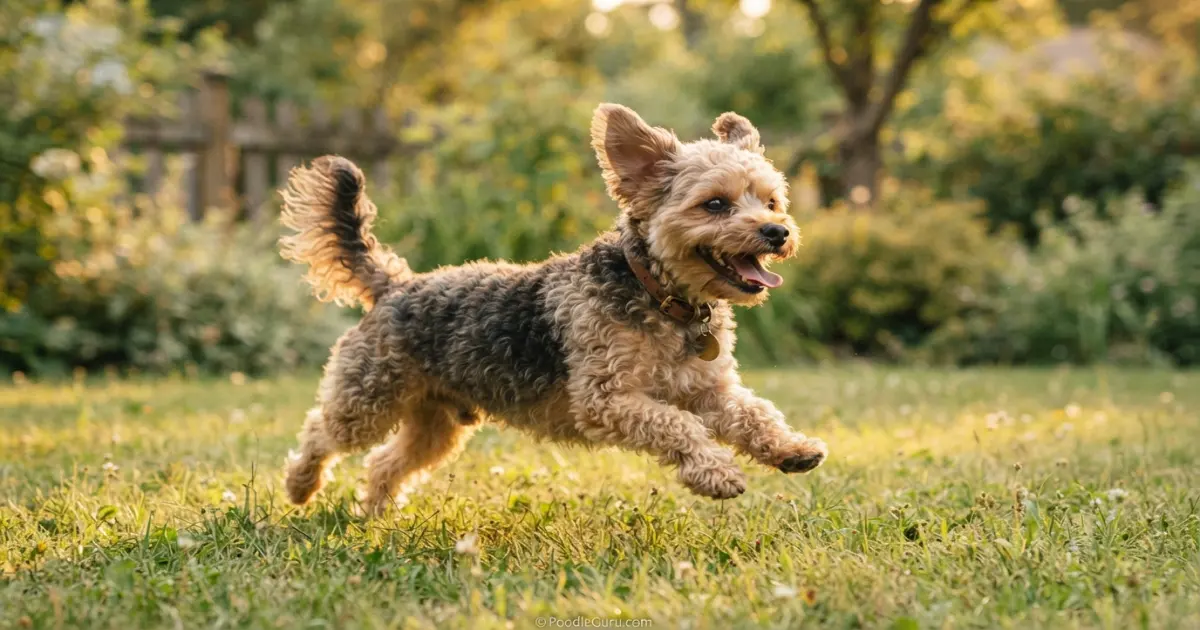
The PoodleGuru Hybrid Evaluation Framework
At PoodleGuru, we evaluate every poodle mix against four criteria that matter in real ownership — not just on a breeder’s website. This framework helps you decide whether the Yorkipoo is actually the right dog for your life, or whether you’re being pulled by a cute photo and a clever name.
Predictability Check
Ask the breeder: what generation is this cross? F1, F1b, or multigenerational? How consistent are the puppies’ adult sizes and coat types across previous litters? A breeder who can’t answer these questions clearly doesn’t have the data — or isn’t tracking it. Walk away.
Health Testing Audit
Both parent breeds carry known genetic risks. Request proof of patella evaluation, eye clearance (CERF or OFA), and PRA testing for the Poodle parent. For the Yorkie side, ask about Legg-Calvé-Perthes screening and liver shunt awareness. Paperwork matters more than promises.
Lifestyle Match Score
Be honest: how many hours will the dog be alone each day? How much barking can your living situation tolerate? Do you have young children? Score each factor from 1–5. A total below 12 out of 20 suggests the Yorkipoo may not be your ideal match right now.
Grooming Reality Check
Yorkipoo coats need brushing 3–4 times per week minimum, professional grooming every 6–8 weeks, and regular ear and dental care. If that routine feels like a burden rather than a manageable commitment, reconsider. A matted coat isn’t just unsightly — it hurts.
Run through these four steps honestly. They’ll protect you from the most common Yorkipoo ownership regrets we hear about: unexpected size, unexpected coat work, unexpected vet bills, and unexpected behavioral challenges from under-socialized dogs.
Grooming & Coat Care
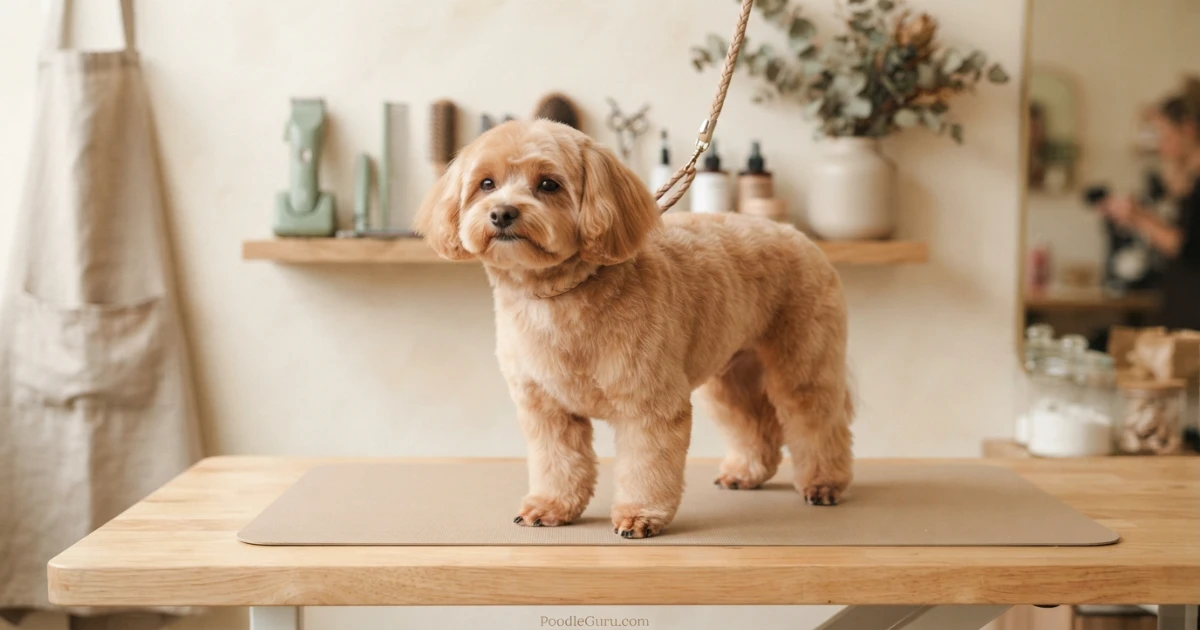
Yorkipoo grooming is not optional maintenance — it’s a core ownership responsibility. That wavy or curly coat traps dirt, dead hair, and debris close to the skin. Without regular brushing, it mats. Mats pull tight against the skin and cause pain, irritation, and sometimes infection.
Aim to brush your Yorkipoo 3–4 times per week with a slicker brush followed by a metal comb to catch tangles near the skin. Pay extra attention behind the ears, under the collar, and inside the hind legs — these are mat hotspots. A detangling spray helps reduce breakage on curly coats.
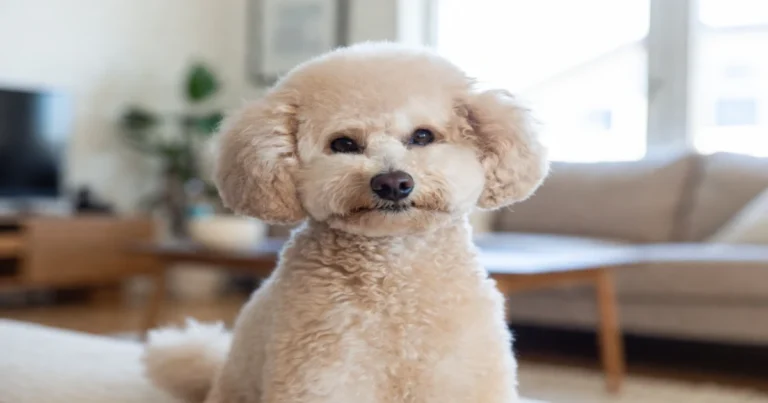
Professional grooming every 6–8 weeks keeps the coat at a manageable length. Most owners opt for a “puppy cut” or “teddy bear trim” — short and even all over, with a slightly rounded face. It’s practical, cute, and easier to maintain between appointments. If you prefer a longer look, expect to brush daily.
Grooming Red Flags to Watch For
During brushing, check for redness between paw pads, waxy buildup in the ears, and any dark discharge around the eyes. Yorkipoos can inherit the poodle’s tendency toward tear staining and the Yorkie’s narrow ear canals. Both need regular attention. If the ears smell yeasty or the dog flinches when you touch them, it’s time for a vet visit — not a wait-and-see approach.
Dental care deserves equal attention. Small dogs with small mouths are prone to early dental disease. Daily tooth brushing with a dog-safe enzymatic toothpaste, plus annual dental checkups, can add years to your Yorkipoo’s comfortable life. For a deeper dive into coat maintenance across all poodle types, see our complete poodle grooming guide — the same principles apply to your mix.
Health Considerations
Yorkipoos are generally healthy dogs with a 12–15 year lifespan, but no mix is immune to the conditions carried in its parent lines. Responsible breeding with full health testing reduces risk significantly. Skipping testing doesn’t.
The conditions worth knowing about fall into a few key categories:
- Patellar luxation: A kneecap that slips out of place. Common in small breeds. Mild cases may need monitoring; severe cases require surgery.
- Progressive retinal atrophy (PRA): An inherited eye disease that leads to blindness. DNA testing can identify carriers before breeding.
- Legg-Calvé-Perthes disease: Degeneration of the hip joint, more common in the Yorkie line. Causes limping and pain in young dogs.
- Dental disease: Small mouths crowd teeth. Without care, periodontal disease sets in early.
- Collapsing trachea: A weakening of the tracheal rings, leading to a honking cough. More common in toy-sized dogs.
When to Call Your Vet
Any sudden limping, persistent cough, change in eating or drinking habits, or unexplained weight loss warrants a veterinary visit — not an online search. Yorkipoos are small and can decline faster than larger dogs when something is wrong. Trust your instincts. You know your dog better than any general guide does. For more breed-specific health context, VCA Animal Hospitals covers common small-breed health concerns with practical, vet-reviewed guidance.
Buyer Red Flags & Yorkipoo Pricing (2026)
Prices above $4,000 usually reflect marketing more than added value unless the breeder can justify the cost with clear health testing, transparent parent histories, a strong contract, and meaningful after-sale support.
What actually affects the price:
- Generation: F1b Yorkipoos (bred back to a Poodle) often cost more because coat consistency improves.
- Parent size: Toy Poodle crosses tend to command higher prices than Miniature crosses — smaller is trendier.
- Coat color: Rare colors like solid chocolate or merle patterns (controversial in poodles) inflate price without adding health value.
- Location: Coastal urban markets run higher than rural breeders. Don’t confuse geography with quality.
Yorkipoo Price Guide (2026)
| Breeder Tier | Price Range | What to Expect |
|---|---|---|
| Reputable (health-tested) | $1,800–$3,500 | Full health testing documentation, contract, health guarantee, take-back clause, early socialization |
| Mid-range | $1,200–$1,800 | Some testing, decent conditions, less transparency about parent histories |
| Budget / high-volume | $500–$1,200 | Little to no testing, possible puppy mill source, generic health claims with no paperwork |
| “Rare color” premium | $3,500–$5,000+ | Color-marketed pricing; often no additional health value. Proceed with extreme caution |
Red flags that should stop you immediately: breeders who won’t let you meet at least one parent on-site, who can’t produce written health testing results, who pressure you to commit same-day, or who use “teacup” as a size descriptor. “Teacup” is not a real size — it’s a marketing term that usually means underweight, fragile, or prematurely separated puppies. Walk away.
Training & Socialization
Yorkipoos are smart enough to learn almost anything — and stubborn enough to decide they’d rather not. The terrier independence is real. Positive reinforcement wins where repetition and force fail. Treats, praise, and short, engaging sessions (5–10 minutes) work far better than drilling commands for half an hour.
Potty training can be a sticking point. Small dogs have small bladders, and some Yorkipoos take longer to housetrain than larger poodle mixes. Consistency is everything. Crate training, a regular schedule, and zero punishment for accidents will get you there. Punishment just teaches the dog to hide where they go.
Socialization should start early and cover a lot of ground: different people, calm dogs, car rides, vacuum cleaners, doorbells, and being handled gently all over. A well-socialized Yorkipoo is confident and easygoing. An under-socialized one is nervous, barky, and harder to manage in new situations. Puppy kindergarten classes are worth every dollar.
The Bark Management Reality
You won’t train the alertness out of a Yorkipoo — it’s wired in. What you can do is teach a solid “quiet” cue and reward calm behavior when triggers appear. The goal isn’t silence. It’s a dog who alerts and then settles. That’s realistic. Expecting a silent Yorkipoo is not.
Is a Yorkipoo Right for You?
This mix suits a specific kind of owner. Someone who’s home enough to provide companionship, patient enough to handle a clever dog with opinions, and consistent enough to maintain a grooming routine without resentment. It’s not the easiest small dog. It’s also not the hardest. It’s a dog that rewards effort with loyalty and charm — and punishes neglect with noise, mats, and anxiety.
You’ll thrive with a Yorkipoo if:
- You want a small, portable companion with a big personality.
- You can commit to 3–4 brushing sessions per week and regular professional grooming.
- You enjoy training and don’t mind a dog that sometimes outthinks you.
- Your household is relatively calm or your children are gentle and older.
- You’re comfortable with some unpredictability in coat and adult size.
You might reconsider if:
- You’re away from home 9+ hours a day without a dog walker or sitter.
- You need a silent dog or live in a noise-sensitive environment.
- You want a guaranteed hypoallergenic dog — no dog is fully allergen-free.
- You’re on a very tight budget and can’t absorb surprise vet or grooming costs.
Frequently Asked Questions
Are Yorkipoos hypoallergenic?
No dog is truly hypoallergenic. Yorkipoos tend to shed less than many breeds thanks to the poodle influence, which can reduce airborne allergens — but they still produce dander and saliva proteins that trigger allergies. Spend time with the individual dog before committing if allergies are a concern.
How big do Yorkipoos get?
Most adult Yorkipoos weigh between 5 and 15 lbs and stand 7–14 inches tall. A Toy Poodle parent produces smaller offspring; a Miniature Poodle parent pushes toward the upper range. Ask the breeder about previous litter sizes for the most realistic estimate.
Do Yorkipoos bark a lot?
They tend to be alert and vocal. Both parent breeds are watchdogs by nature, so barking at unfamiliar sounds, visitors, and passing animals is common. Consistent training can reduce excessive barking, but a completely silent Yorkipoo is unlikely.
Are Yorkipoos good with kids?
They do best with gentle, older children who understand how to handle a small dog. Because Yorkipoos can weigh as little as 5 lbs, rough play or accidental drops pose a real injury risk. Supervised interactions are essential with young children.
What’s the difference between a Yorkipoo and a Yorkiepoo?
There is no difference — the terms are interchangeable. Both refer to the same Yorkshire Terrier–Poodle cross. Spelling varies by breeder preference and regional convention, but the dog is the same hybrid.
How often does a Yorkipoo need grooming?
Brush at home 3–4 times per week, and schedule professional grooming every 6–8 weeks. Neglecting either leads to matting, skin irritation, and discomfort. Between-appointment maintenance is non-negotiable with this coat type.
Are Yorkipoos easy to train?
They’re intelligent and capable of learning quickly — but terrier stubbornness can make them selective about when they comply. Short, positive, reward-based sessions yield the best results. Housetraining may require extra patience due to small bladder size.
Final Summary: Key Takeaways
The Yorkipoo is a charming, clever, and affectionate designer mix — but it’s not a one-size-fits-all dog. Here’s what to remember before you decide:
- A Yorkipoo is a Yorkshire Terrier–Poodle cross weighing 5–15 lbs with a 12–15 year average lifespan.
- Coat type, adult size, and shedding level vary significantly — even among littermates in the same F1 litter.
- Yorkipoos need brushing 3–4 times weekly and professional grooming every 6–8 weeks to prevent painful matting.
- Health testing for patellas, eyes, and breed-specific conditions is the single strongest quality signal in a breeder.
- As of 2026, expect to pay $1,800–$3,500 for a well-bred Yorkipoo from health-tested parent lines.
- This mix thrives with attentive, present owners — it does poorly with long solo hours and inconsistent routines.
Ready to take the next step? Start with our poodle mix breeds comparison to see how the Yorkipoo stacks up against other popular crosses — or dive into our complete grooming guide to understand the coat-care commitment before you commit.