Poodle Bad Breath Causes: Periodontal Disease & Fresh Breath Fixes
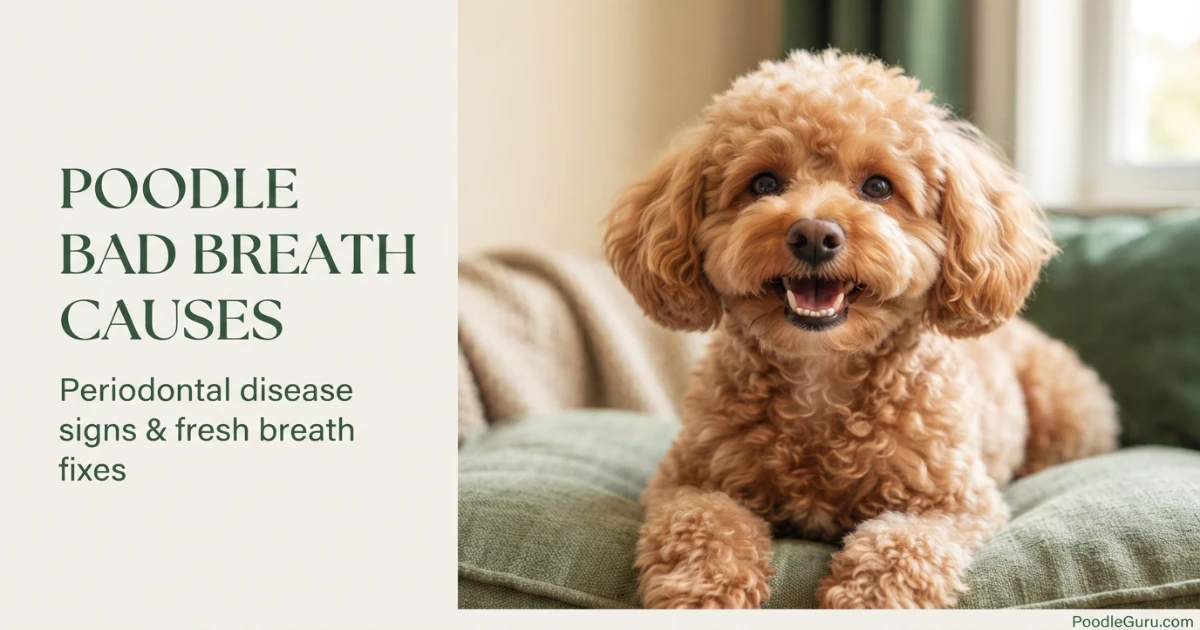
That fishy, sour, or metallic smell on your poodle’s breath isn’t just unpleasant — it can be an early warning sign of periodontal disease. The most common poodle bad breath causes are hidden beneath the gumline, not on the tongue. Here’s how to trace the real source, protect your poodle’s teeth, and fix the odor before it signals irreversible damage.
Quick Answer
The leading poodle bad breath causes are periodontal disease (plaque and tartar buildup below the gumline), retained food particles between crowded teeth, and underlying infections. Unlike occasional “dog breath,” this persistent odor comes from bacteria releasing sulfur compounds as they destroy gum tissue and bone. Fixing it requires a veterinary dental exam, professional cleaning if needed, and a consistent home care routine — brushing, appropriate chews, and water additives. Ignoring the smell won’t just cost you cuddle time; it can lead to tooth pain, tooth loss, and wider health concerns if infection progresses.
What Is Poodle Periodontal Disease?
Periodontal disease is a progressive bacterial infection of the gums, ligaments, and bone that hold a poodle’s teeth in place. For poodle owners, this means that bad breath isn’t just a cosmetic annoyance — it’s the smell of bacteria destroying the support structures of the teeth. The most important thing to understand is that periodontal disease is one of the most common dental problems in adult dogs, and small-breed poodles are at especially high risk because their teeth are crowded in a compact jaw, trapping debris that can turn into hard tartar.
When food particles and saliva mix, they form a sticky film called plaque. Over time, plaque can harden into tartar (calculus) that can’t be brushed away at home. Bacteria beneath the gumline release toxins that cause inflammation — first gingivitis (reversible), then periodontitis (permanent bone loss). The foul odor comes from volatile sulfur compounds produced by these bacteria as they feed. Left untreated, advanced oral infection can enter the bloodstream and may affect organs such as the heart, kidneys, and liver.
Quick Facts at a Glance
Primary Cause
Plaque and tartar buildup below the gumline triggers bacterial infection that releases smelly sulfur compounds.
Poodle Risk Factor
Toy and Miniature Poodles’ small jaws often lead to crowded, crooked teeth that trap debris and speed up plaque buildup.
Early Warning
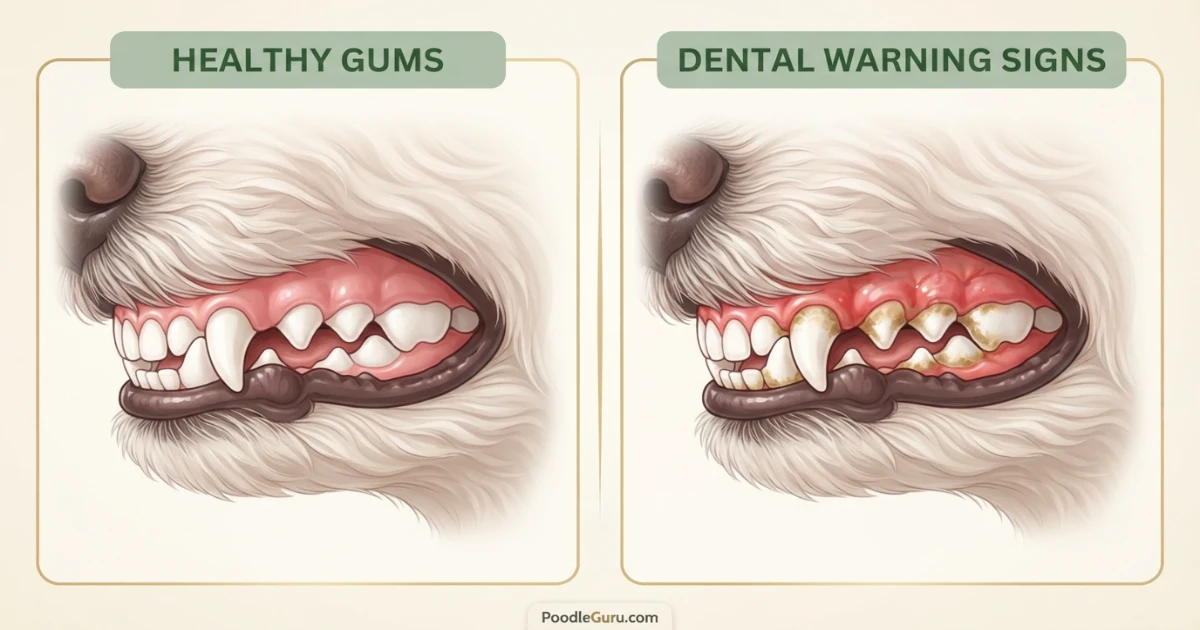
A persistent sour, metallic, or fishy odor, especially paired with red gums or brownish-yellow tartar along the gumline.
Prevention Works
Daily brushing, veterinarian-approved dental aids, and routine professional evaluations help reduce plaque and tartar before they become painful disease.
Reversible Stage
Gingivitis (red, swollen gums that bleed on brushing) can be fully reversed with professional cleaning and consistent home care.
When It’s Serious
Loose teeth, bleeding gums, a lump on the gum, or refusal to eat signal advanced disease — see a vet immediately.
Stages of Dental Disease & What They Smell Like
Bad breath doesn’t appear overnight — it intensifies as periodontal disease moves through four distinct stages. Recognizing where your poodle falls on this spectrum helps you act before tooth extraction becomes the only option.
| Stage | What’s Happening | Breath Odor | Visible Signs | Reversibility |
|---|---|---|---|---|
| Stage 1: Gingivitis | Plaque buildup; gums are inflamed but no bone loss | Mildly sour or “stale” smell | Red gum line, slight swelling, may bleed on brushing | Fully reversible with professional cleaning and home care |
| Stage 2: Early Periodontitis | Up to 25% attachment loss; bacteria begin destroying bone | Noticeable sour-metallic odor | Gums receding, visible yellow-brown tartar, deeper pockets | Partially reversible; professional cleaning can stabilize |
| Stage 3: Moderate Periodontitis | 25–50% bone loss; infection well established | Strong fishy or metallic smell | Gums bleed easily, teeth may slightly wiggle, pus possible | Not reversible; requires extensive treatment to save teeth |
| Stage 4: Advanced Periodontitis | Over 50% bone loss; teeth loose or falling out | Foul, rotting odor | Obvious loose teeth, gum recession exposing roots, pain | Irreversible; tooth extraction often necessary |
This staging is a general guide. A veterinarian must perform a dental exam and X-rays to determine the exact degree of bone loss and treatment plan.
Poodle-Specific Causes of Bad Breath and Dental Disease
While any dog can develop dental issues, certain poodle traits make them disproportionately vulnerable to the poodle bad breath causes that stem from periodontal disease. Understanding these helps you target prevention.
Crowded Teeth in Toy and Miniature Poodles
The most overlooked cause is simple anatomy. Toy and Miniature Poodles have the same number of teeth (42) as a Standard Poodle or a Labrador, but those teeth are crammed into a much smaller jaw. This crowding creates tight interproximal spaces where food, hair, and bacteria collect. Brushing reaches the outside surfaces but may miss these in-between areas where decay and odor often start.
Retained Deciduous (Baby) Teeth
Poodle puppies sometimes retain their baby teeth after the adult tooth erupts, especially the canine teeth. When a baby tooth doesn’t fall out, it creates a tiny pocket that traps debris and accelerates tartar formation. If you see a double row of teeth in a young poodle, a vet needs to extract the retained tooth — usually at the time of spay or neuter — to prevent early-onset periodontal disease.
Mouthing and Grooming Hair
Poodles are notorious for nibbling their own hair or ingesting loose fur during self-grooming. Swallowed hair isn’t a dental issue, but hair that wraps around teeth or gets wedged between them is. It creates a biofilm trap. Regular grooming and checking your poodle’s teeth for hair floss after brushing helps.
Diet and Chewing Behavior
A diet of exclusively soft, wet food provides no abrasive action to scrape plaque. Meanwhile, small poodles that are picky chewers may not gnaw on appropriate dental chews long enough to get the mechanical cleaning benefit. The right combination of kibble texture and veterinarian-recommended dental treats matters enormously.
Normal Dog Breath vs. Disease Breath: A Comparison
Poodle owners often wonder if their dog’s breath is “normal” or signaling a problem. Use this side-by-side comparison to gauge what you’re smelling.
| Characteristic | Normal “Dog Breath” | Periodontal Disease Breath |
|---|---|---|
| Odor Type | Mild, slightly musky or neutral; fades after drinking water | Sour, metallic, fishy, or distinctly foul; persistent even after water |
| Intensity | Barely noticeable unless you’re nose-to-nose | Strong enough to smell from a foot away or when your dog pants |
| When It Appears | After meals or waking up; resolves quickly | Constant; may worsen after eating but never truly disappears |
| Accompanying Signs | None; gums pink and firm, teeth clean | Red gums, yellow-brown tartar, drooling, pawing at mouth, difficulty chewing |
| Action Needed | Maintain routine dental care | Schedule a veterinary dental exam within 1–2 weeks |
Beyond the Mouth: Hidden Health Risks of Untreated Bad Breath
When owners dismiss bad breath as a minor issue, they risk far more than tooth loss. The bacteria living in a diseased mouth don’t stay there. They enter the bloodstream through inflamed gum tissue and travel to major organs.
- Heart Disease (Endocarditis): Oral bacteria may contribute to serious inflammation of heart structures in susceptible dogs.
- Kidney Damage: The kidneys filter blood; chronic bacterial exposure may contribute to inflammation and reduced function over time.
- Liver Stress: The liver bears the burden of detoxifying bacterial byproducts, and long-term inflammatory burden may affect its function.
- Diabetes Complications: Existing diabetes can worsen because infection increases insulin resistance, making blood sugar harder to control.
Veterinary guidance consistently links periodontal disease to systemic illness, which is why a dental exam isn’t just about fresh breath — it’s about protecting your poodle’s entire body. VCA Animal Hospitals details how periodontal disease progresses from plaque to organ damage and why early intervention matters.
Vet-Backed Fixes & Home Care for Poodle Bad Breath
Treating bad breath requires two phases: a professional reset (veterinary dental cleaning under anesthesia) and a consistent home care routine that prevents reinfection.
Professional Dental Cleaning
Anesthesia-free “dentals” offered at some grooming salons cannot clean below the gumline and provide a false sense of security. A proper veterinary dental cleaning involves scaling above and below the gums, root planing, polishing, and full-mouth X-rays to assess bone health. For Toy and Miniature Poodles with crowded teeth, this is often the only way to reach deep interproximal plaque. Your vet will discuss pre-anesthetic blood work to ensure safety.
Daily Brushing — The Gold Standard
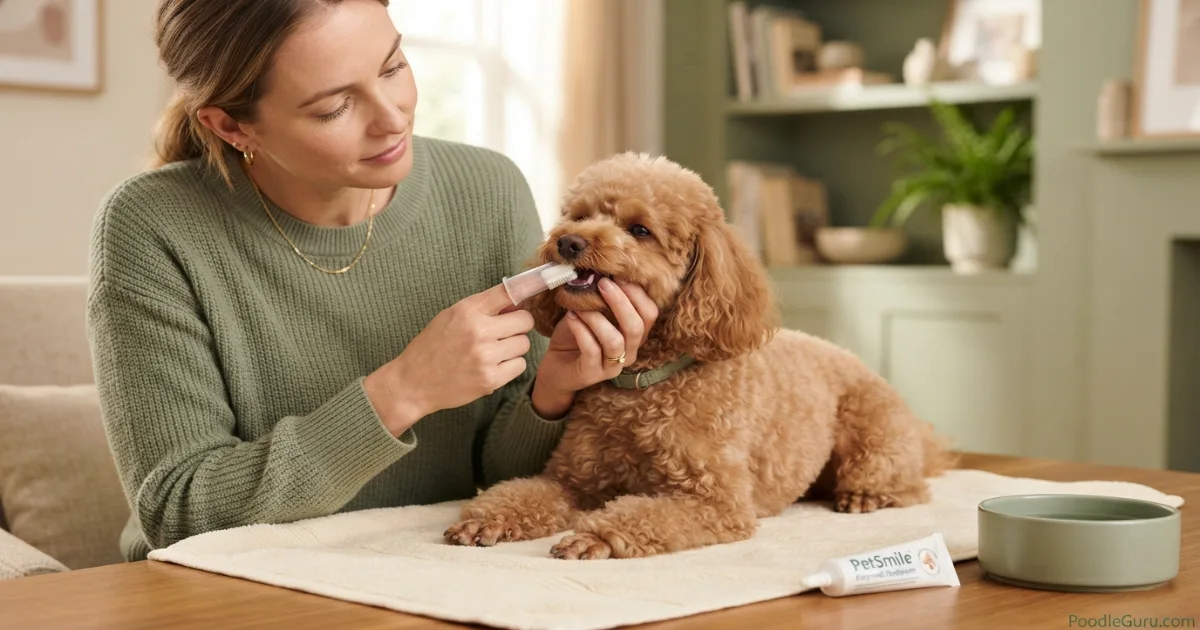
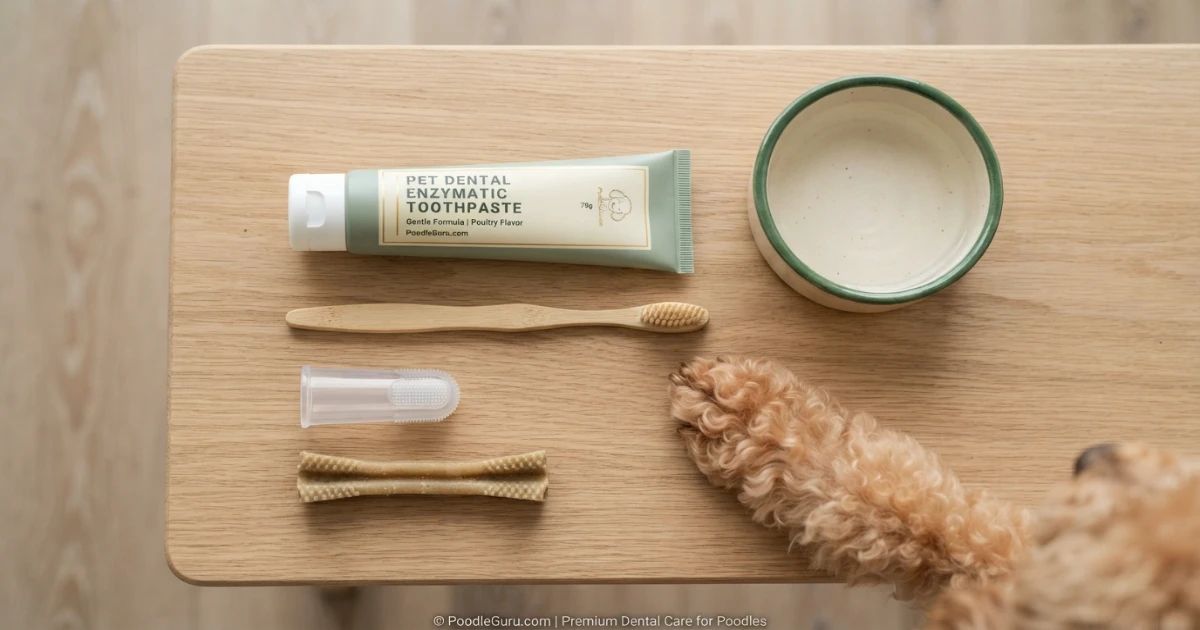
Use a canine enzymatic toothpaste (never human toothpaste — xylitol is highly toxic to dogs, and fluoride or foaming agents are not meant to be swallowed) and a soft-bristled brush or finger brush. Focus on the outer surfaces of the back teeth, where tartar accumulates fastest. Start slow with pea-sized toothpaste on your finger, then introduce the brush over a week. Even 30 seconds of brushing per day makes a measurable difference. A small reward afterward builds positive association.
Dental Chews, Water Additives, and Prescription Diets
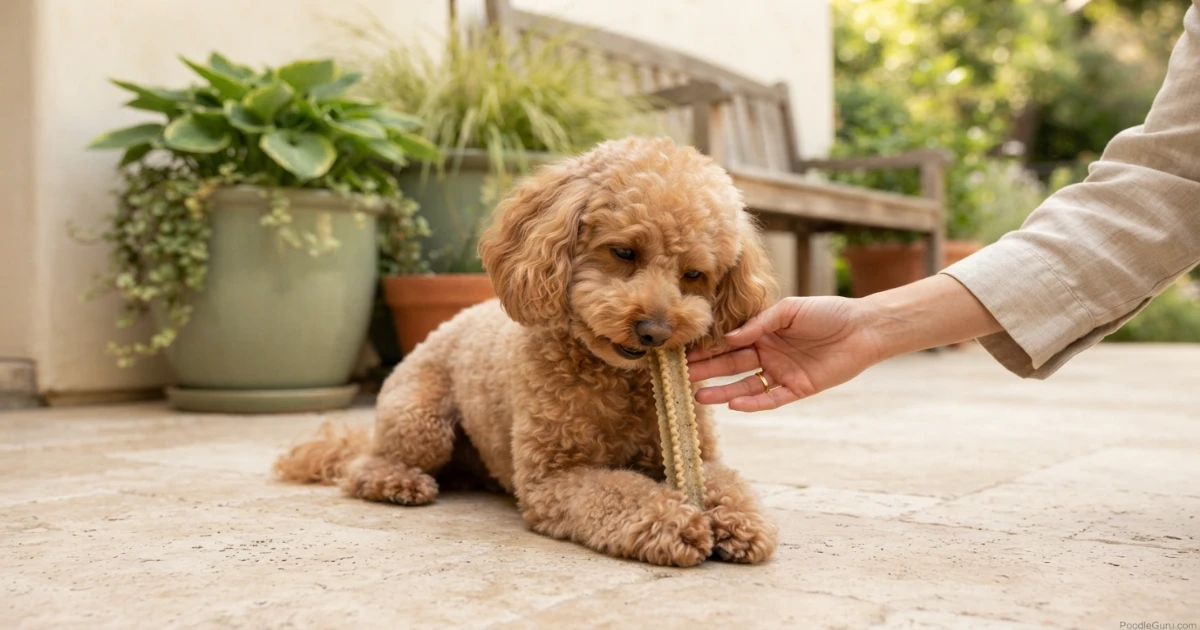
Products carrying the Veterinary Oral Health Council (VOHC) seal have been independently tested to reduce plaque or tartar. Dental chews, water additives, and specially formulated kibble can slow tartar accumulation between brushings. They are not substitutes for brushing, but they are valuable supplements — especially for poodles that resist toothbrushes. Ask your vet which products are appropriate for your dog’s size and any dietary restrictions.
The PoodleGuru Fresh Breath & Healthy Gums Framework
At PoodleGuru, we built this four-step system to address the specific dental challenges poodles face — from crowded mouths to picky chewing habits. Use it as your ongoing oral health checklist.
Establish a Realistic Brushing Routine
Aim for daily brushing, but commit to a minimum of 4 times per week. Use an enzymatic dog toothpaste and a soft brush sized for your poodle’s mouth. For Toy and Miniature Poodles, a finger brush often works better than a long handle. Make it a positive, treat-rewarded experience — a tiny piece of freeze-dried liver goes a long way.
Outcome: You physically disrupt plaque daily before it calcifies into tartar, attacking the root cause of bad breath.
Add VOHC-Approved Dental Aids
Select at least one additional product with the VOHC seal: a dental chew, water additive, or prescription dental diet. Rotate chews to prevent boredom, but never give rawhide (choking and blockage risk) or hard antlers (tooth fracture risk). Always supervise chewing.
Outcome: Mechanical and chemical plaque control between brushings, reaching areas the brush may miss.
Schedule Annual Veterinary Dental Evaluations
Even with perfect home care, poodles need a professional oral exam once a year. The vet will probe gum pockets and may recommend X-rays. Professional cleanings under anesthesia may be recommended on a schedule your veterinarian sets, especially for small poodles with crowded teeth or heavy tartar. Delaying care can allow invisible subgingival damage.
Outcome: Early detection of stage 1–2 disease when it’s still reversible, preventing painful and expensive extractions.
Monitor Breath and Gums Weekly
Once a week, do a quick “sniff check” — put your nose close to your poodle’s mouth and note any change from their baseline. Lift the lip and look for redness, swelling, or brown tartar. Record any changes. Early gingivitis smells sour; advanced periodontitis smells putrid. Trust your nose.
Outcome: You’ll catch the earliest signs of disease before they require invasive treatment.
Common Mistakes That Make Bad Breath Worse
| Mistake | Why It’s Harmful | Better Approach |
|---|---|---|
| Using human toothpaste or baking soda | Xylitol, fluoride, and detergents are toxic; baking soda upsets stomach pH if swallowed and is abrasive. | Only use enzymatic toothpaste formulated specifically for dogs. |
| Relying on breath sprays or treats without brushing | They mask odor temporarily but don’t remove the bacteria-laden plaque at the gumline. | Use breath products as a supplement, not a substitute for mechanical cleaning. |
| Skipping annual dental checkups because “teeth look fine” | 50% of the tooth structure is below the gumline; you can’t see bone loss without X-rays. | Commit to yearly vet oral exams and X-rays as recommended, especially for small poodles. |
| Giving hard bones, antlers, or ice cubes as chews | Poodles’ teeth can fracture, creating an entry point for bacteria and abscesses. | Choose flexible, veterinarian-recommended dental chews or rubber toys designed for dental health. |
| Assuming that because a puppy’s teeth are white, there’s no problem | Retained baby teeth and crowded adult teeth create pockets invisible to the naked eye. | Have a vet examine the bite and tooth alignment early — especially in Toy and Miniature puppies. |
When to Call the Vet (and When It’s Urgent)
Schedule a Veterinary Dental Exam Within 1–2 Weeks If:
- Your poodle’s breath has a persistent sour, metallic, or fishy odor that doesn’t improve with brushing.
- You notice red, swollen, or bleeding gums, especially along the back molars.
- Yellow-brown tartar is visible on the teeth, particularly near the gumline.
- Your poodle is drooling more than usual, pawing at the mouth, or chewing on one side.
Seek Urgent Veterinary Care If:
- A tooth is loose, visibly broken, or missing with a bloody socket.
- There’s a lump or swelling on the gums, under the eye, or along the jaw.
- Your poodle refuses to eat, cries when yawning, or has sudden behavior changes.
For additional guidance on systemic effects of dental disease, PetMD explains the common underlying causes of halitosis in dogs and why a vet visit is essential for persistent bad breath.
Owner Action Plan: What to Do This Week
Your 7-Day Fresh Breath Start:
- Day 1: Buy an enzymatic dog toothpaste, a soft brush (finger brush for small poodles), and a VOHC-approved dental chew.
- Day 2–4: Let your poodle taste the toothpaste from your finger. Praise and reward. No brushing yet.
- Day 5: Gently lift the lip and touch the outer surfaces of the front teeth with your finger. Reward.
- Day 6: Introduce the brush or finger brush with toothpaste. Brush a few back teeth for 15 seconds. Reward generously.
- Day 7: Aim for 30 seconds of brushing. Even if you only reach one side, that’s progress. Schedule a vet dental check if you noted any redness or odor.
Frequently Asked Questions About Poodle Bad Breath Causes
What is the most common cause of bad breath in poodles?
Periodontal disease — plaque and tartar buildup below the gumline — is the top cause of poodle bad breath. Bacteria release sulfur compounds as they destroy gum tissue. In Toy and Miniature Poodles, crowded teeth exacerbate the problem by trapping more debris.
Can bad breath in my poodle be caused by something other than teeth?
Yes. Kidney disease can cause ammonia-smelling breath, diabetes can produce a sweet or fruity odor, and gastrointestinal issues sometimes cause foul breath. If dental disease is ruled out and bad breath persists, your vet will run blood work to check organ function.
How often should I brush my poodle’s teeth?
Daily brushing is ideal, but a minimum of 4 times per week provides significant benefit. Use a dog-specific enzymatic toothpaste. Even 30 seconds of brushing focusing on the outer surfaces of the back teeth makes a measurable difference in plaque reduction.
At what age should I start dental care for my poodle puppy?
Start handling your puppy’s mouth from day one, but introduce toothpaste and brushing around 12–16 weeks when adult teeth begin erupting. This early positive association prevents future resistance. Also have your vet check for retained baby teeth at 6 months.
Do dental water additives really work for bad breath?
VOHC-accepted water additives may help reduce plaque or tartar when used consistently as directed. They’re a useful supplement to brushing, not a replacement. They reach areas a brush may miss but won’t remove established tartar below the gumline — only a professional cleaning can do that.
How much does a professional poodle dental cleaning cost?
In 2026, a routine veterinary dental cleaning under anesthesia for a poodle typically ranges from $400–$1,200, depending on your location, the extent of disease, and whether extractions are needed. Pre-anesthetic blood work is usually an additional $100–$200. It’s a worthwhile investment compared to treating organ damage later.
Why is my poodle’s breath worse even after brushing?
If brushing isn’t improving the odor, the infection is likely below the gumline where your brush can’t reach. This signals the need for a professional dental exam and possibly X-rays. Persistent odor despite home care is a strong indicator of periodontitis requiring veterinary attention.
Can diet change fix my poodle’s bad breath?
Switching to a dental prescription diet or adding crunchy kibble can help scrape teeth, but it won’t reverse established gum disease or remove tartar. Diet is one tool in a multi-step plan that must include brushing and professional cleanings for true bad breath resolution.
Key Takeaways: Fresh Breath Starts With Healthy Gums
Poodle bad breath isn’t a breed quirk — it’s a signal. When you trace that odor to its source and act early, you protect not just your poodle’s teeth but their heart, kidneys, and overall vitality.
- The most common poodle bad breath causes are periodontal disease and plaque buildup below the gumline, with crowded teeth in Toy and Miniature Poodles making the problem worse.
- Bad breath progresses through four stages of dental disease, from mild sourness in gingivitis to a foul rotting odor in advanced periodontitis — the smell directly reflects the severity.
- Daily brushing with enzymatic dog toothpaste, VOHC-approved dental aids, and annual veterinary dental evaluations form the core defense against plaque, tartar, and organ damage.
- The PoodleGuru Fresh Breath & Healthy Gums Framework — realistic brushing, dental aids, professional evaluations, and weekly monitoring — addresses poodle-specific risks like crowded teeth and retained baby teeth.
- Human toothpaste, hard chews, and relying on sprays without brushing are dangerous shortcuts that can fracture teeth or mask underlying disease.
- If bad breath persists despite home care, or you see red gums, loose teeth, or swelling, schedule a vet dental exam immediately — the bacteria causing that odor are already at work below the gumline.
For a complete guide to maintaining your poodle’s overall wellbeing, see our Poodle Size Chart and our lifespan guide. Ready to start brushing? Grab an enzymatic toothpaste today — your poodle’s fresh breath is just one week away.