Poodle vs Corgi: Which Breed Fits Your Lifestyle?
Two incredibly popular, intelligent breeds — yet they suit very different homes. The poodle vs corgi debate isn’t just about looks. It’s about energy, grooming, noise, and the quiet rhythm of your household. This guide goes beyond the fluff to give you a clear-eyed, practical comparison so you can choose the dog that fits your actual life, not an Instagram version of it.
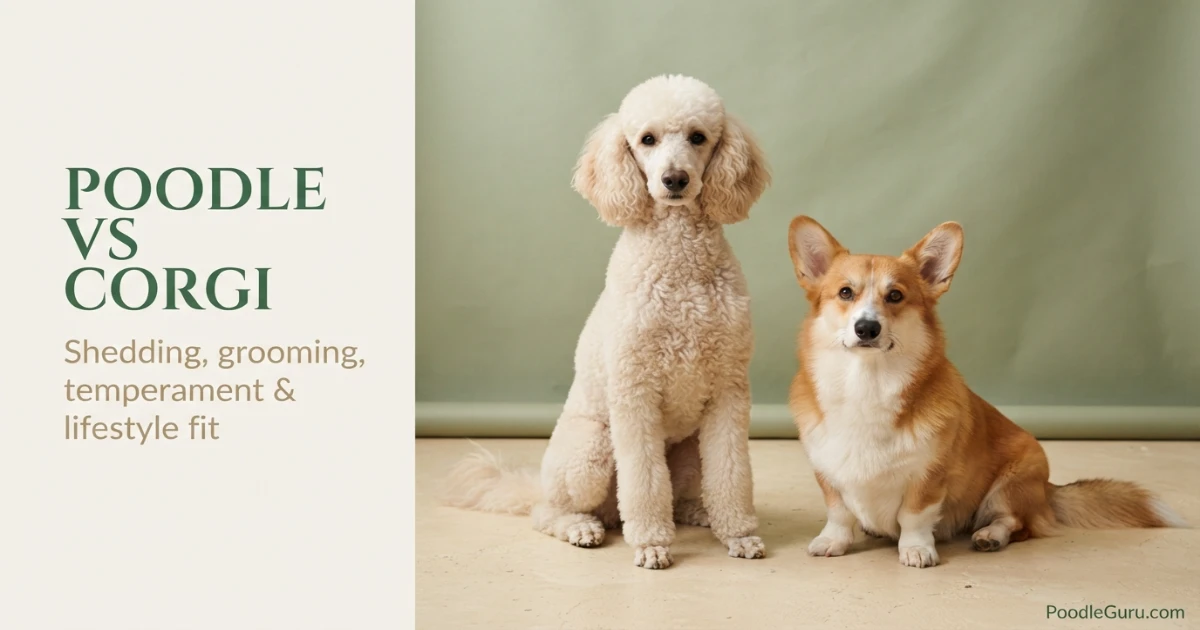
Quick Answer: Poodle vs Corgi — Which Is Right for You?
If you want a dog with very low shedding, highly trainable for complex commands, and sensitive to your emotional rhythms, the Poodle — in a size that fits your home — is the stronger match. If you thrive on a dog with a big personality in a compact, sturdy body, don’t mind daily fur on the floor, and enjoy a more mischievous, opinionated companion, the Corgi may win your heart. Choose the Poodle for versatility and a cleaner house; choose the Corgi for heft and herding charm — but be ready for stubborn streaks and heavy shedding.
🐩 Poodle Size Range
Toy (4–6 lbs), Mini (10–15 lbs), Standard (40–70 lbs). You can pick a size that fits your apartment, car, or hiking habit. Corgis are one-size: 25–30 lbs of muscle.
🧹 Shedding Reality
Poodles shed very little — their curls trap loose hair. Corgis are heavy shedders with a thick double coat. Expect daily vacuuming.
🧠 Brain vs. Boss
Both are brilliant, but a Poodle wants to collaborate; a Corgi wants to manage the operation. Training success hinges on your leadership style.
At-a-Glance: Poodle vs Corgi Comparison
| Trait | Poodle (Toy, Mini, Standard) | Pembroke Welsh Corgi |
|---|---|---|
| Size & Weight | Toy: 4–6 lbs; Mini: 10–15 lbs; Standard: 40–70 lbs | 25–30 lbs; short legs, long body |
| Coat & Shedding | Single, curly coat; very low shedding | Thick double coat; heavy shedding year-round, plus seasonal blowouts |
| Grooming Frequency | Professional clip every 4–6 weeks; regular brushing | Brush 2–3 times per week; more during shedding season |
| Temperament | Eager, sensitive, affectionate, alert | Bold, affectionate, bossy, sometimes vocal |
| Trainability | Very high; excels in advanced obedience | High, but independent; may question commands |
| Exercise Needs | Moderate to high (size-dependent); thrives on mental games | Moderate to high; needs a job or purpose |
| Barking Level | Alert barker; can become excessive if bored | Natural watchdog; frequent barking, often for attention |
| Common Health Issues | Bloat (Standard), patellar luxation (Toy/Mini), eye disorders, Addison’s | IVDD (back problems), hip dysplasia, eye conditions, obesity |
| Lifespan | 12–15+ years (Toy often longer) | 12–13 years |
| 2026 Puppy Price | $1,500–$4,000+ | $1,200–$3,000 |
Size & Living Space: Adaptable vs. Sturdy
A Toy Poodle can thrive in a high-rise studio. A Standard Poodle can keep up on a multi-mile trail run. The Poodle’s three distinct sizes give you a level of customizability no other breed offers. You can match the dog precisely to your square footage, your vehicle, and your physical strength. Corgis, on the other hand, come in one package: a compact, long-bodied herder that feels far heavier than it looks.
While Corgis fit in apartments, their voice doesn’t. They bark — loudly and often. If you have shared walls, a Poodle might be the quieter neighbor. But if you want a dog with substance that you don’t have to carry up stairs, and you’re not put off by hair, the Corgi’s 25–30 pound frame is sturdier around small children than a Toy or Mini Poodle. The AKC Poodle breed standard highlights the square, elegant build, while the Corgi’s long back demands special handling — jumping off furniture can be dangerous for their spine. For more on poodle sizes, see our complete poodle size chart.
Temperament & Family Life: Sensitive vs. Spunky
Poodles are sensitive barometers of household tension. They tune into your mood and can become anxious in chaotic environments. They bond deeply, often choosing a favorite person. With proper socialization, they’re gentle with children, but Toy Poodles can be fragile. The Poodle’s desire to please makes them eager partners in daily life.
Corgis were bred to move cattle — and they haven’t forgotten. They’re confident, sometimes to the point of bossiness, and they’ll herd children, cats, and even adult guests if they feel the flock needs organizing. They’re not as emotionally fragile as Poodles, but they can be stubborn and demanding. Corgi owners often describe them as “a big dog in a small body.” They bark when excited, bored, or when they simply want the last word. If you appreciate quiet dignity, the Poodle may feel more comfortable; if you enjoy a dog with comedic timing and strong opinions, the Corgi delivers.
Grooming & Shedding: The Dealbreaker Question
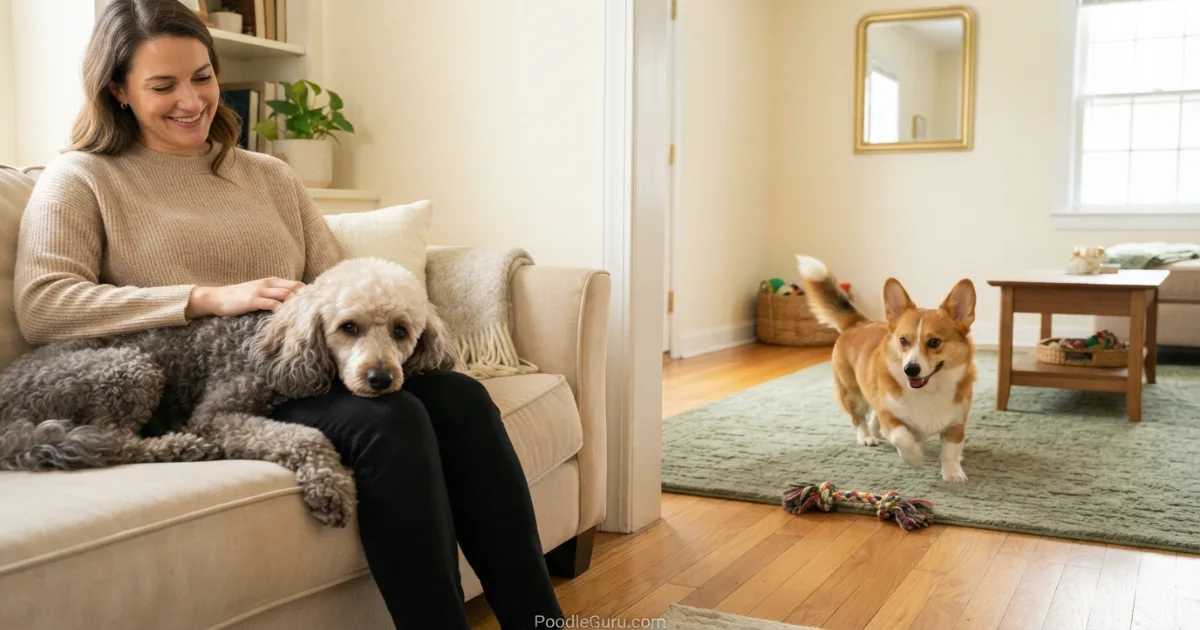
The Poodle’s non-shedding coat is a genuine advantage — but it comes with a steep maintenance bill. You’ll visit a professional groomer every 4–6 weeks ($60–$120 per session) and brush daily to prevent mats. When brushing is neglected, loose hair can tangle into the curls and form mats. The payoff: you won’t find fur on your clothes, and your home smells less “doggy.”
The Corgi’s coat, by contrast, requires no professional clipping in most pet homes — but it sheds heavily. A weekly brush becomes a near-daily task during spring and fall. There’s no haircut to pay for, but you’ll invest in lint rollers, a good vacuum, and a relaxed attitude about hair on your sofa. The AKC Pembroke Welsh Corgi breed page notes the weather-resistant double coat, but does make the shedding reality clear: this is a daily-shedding double-coated breed. If allergies or a pristine home are non-negotiable, the Poodle wins this round decisively.
Exercise & Mental Stimulation: Brain Games vs. Jobs
Both breeds need daily exercise, but the flavor differs. A Standard Poodle needs a good run or long walk, but a Toy Poodle can meet most needs indoors with fetch and puzzles. Mental stimulation is non-negotiable: Poodles solve puzzles, learn tricks, and can become destructive when intellectually starved.
Corgis also crave mental work, but they want it to feel like a job. Herding balls, agility courses, or even learning to put toys away satisfy their innate drive. Corgis are more physically robust than a Toy or Mini Poodle and can handle rougher play. However, their long backs make high-impact jumping risky — no Corgi should repeatedly leap on and off couches. For the Poodle, the real risk is understimulation leading to anxiety; for the Corgi, it’s excess weight, which can add strain to their long back and joints. Both breeds need an owner who considers daily exercise a pleasure, not a chore.
Trainability & Will to Please
Poodles sit near the top of canine intelligence rankings. More importantly, they *want* to get it right. This makes them stellar candidates for obedience, therapy work, and complex trick training. Their sensitivity means harsh corrections backfire — positive reinforcement builds a confident, happy dog.
Corgis are just as smart, but they apply that intelligence selectively. If they don’t see the point of a command, they may simply ignore it or offer an alternative behavior. Training requires consistency, patience, and a sense of humor. Corgis respond well to food rewards, but owners must be careful not to overfeed — that stocky frame piles on weight fast. If you value a dog that almost reads your mind, Poodles are your closer match. If you’re up for a negotiation, the Corgi will keep you on your toes.
The PoodleGuru Lifestyle Match Framework
At PoodleGuru, we evaluate breed compatibility across four practical lenses. This isn’t a test — it’s a reality check for real owners.
1. Cleanliness Factor
Poodle wins. Very low shedding means less time cleaning. But high grooming costs and regular brushing are mandatory. Corgi: heavy shedder, lower grooming bills but constant fur management.
2. Noise Tolerance Factor
Corgis bark more. They vocalize excitement, boredom, and their opinion. Poodles bark to alert but can be trained to quiet. Apartment dwellers and noise-sensitive households should carefully consider this.
3. Emotional Sensitivity Factor
Poodles are more emotionally attuned. They absorb family stress. Corgis are resilient but may react by herding or barking. A calm, stable home benefits both, but the Poodle demands it more.
Health & Lifespan: Different Vulnerabilities
Poodles live 12–15+ years, with Toy Poodles often reaching their late teens. Major concerns include bloat in Standards, patellar luxation in smaller sizes, and hereditary eye diseases like progressive retinal atrophy. Responsible breeders screen for these. Good daily habits matter: understanding breed-specific health risks helps you catch problems early.
Corgis typically live 12–13 years. Their most serious risk is intervertebral disc disease (IVDD) due to their long back and short legs. Even a jump off a bed can trigger a slipped disc. Maintaining a lean body weight is the single most protective action a Corgi owner can take. Hip dysplasia, eye conditions, and a predisposition to obesity also appear. Both breeds need attentive, informed owners who see the vet for preventive care, not just emergencies.
Price & Lifetime Value (2026)
A well-bred Poodle puppy costs $1,500–$4,000 or more, with rarer colors and champion lines at the top. Corgi puppies range from $1,200–$3,000. These upfront costs are just the start. Annual Poodle grooming can easily reach $1,000–$1,600. Corgis don’t have that recurring grooming expense but may incur costs for back-related vet visits if weight isn’t managed. Both breeds need high-quality food, routine vet care, and training classes.
💰 What Inflates the Price
- Poodles: Phantom, parti, or rare solid colors; champion bloodlines; extensive health clearances on parents; early socialization programs.
- Corgis: Champion titles; OFA hip and eye certifications; popular coat colors like red or sable; breeder reputation.
Worth paying for: verified health testing and a breeder who offers lifetime support. That’s your true value.
Buyer Red Flags for Both Breeds
| Red Flag | What It Hides |
|---|---|
| “Teacup” or “Micro” Poodle ads | Unethical breeding for extreme small size, often with severe health issues |
| Corgi breeders who cannot discuss back-health management, hip screening, or eye testing | A weaker health-screening and management plan for a long-backed breed |
| Puppies sold before 8 weeks | Missed critical social window; often a sign of high-volume breeding |
| “Merle” Corgis without registration | Merle is not a natural Corgi color; often indicates crossbreeding or health risks |
| No health guarantees or refusal to share test results | Likely hiding genetic problems in the lineage |
How to Decide: A 4-Step Process
Move from “both seem great” to a clear, confident decision.
Audit Your Shedding Tolerance
Spend time in a Corgi owner’s home. Are you okay with fur on your work clothes and couch? If not, Poodle. If you don’t mind, Corgi’s grooming simplicity becomes an asset.
Measure Your Desired Trainability
If you love teaching complex routines and want a near-telepathic bond, the Poodle is your dog. If you enjoy a more independent thinker who makes you laugh, the Corgi’s charm may outweigh the stubbornness.
Calculate the 10-Year Budget
Poodle: Add $10,000–$16,000 for professional grooming. Corgi: Plan for possible back-related veterinary costs, weight management, ramps, and a great vacuum. Which financial picture feels more sustainable?
Match Personality to Home Vibe
A quiet, introspective household will relish a Poodle’s sensitivity. A busy, playful, noisy family might find the Corgi’s energy and barking perfectly in sync. Visit adult dogs of each breed and trust your gut.
Frequently Asked Questions About Poodle vs Corgi
Do Poodles or Corgis shed more?
Corgis shed significantly more. Poodles have a single, curly coat that traps loose hair, resulting in very little shedding around the home. Corgis have a thick double coat and shed constantly, with heavier seasonal blowouts. If you’re allergic or want a clean house, the Poodle is the clear winner.
Which breed is better for apartments?
A Toy or Miniature Poodle adapts best to apartment living due to size and generally quieter nature. Corgis can live in apartments but their loud barking may disturb neighbors. Standard Poodles need more space and exercise.
Are Corgis harder to train than Poodles?
Corgis are highly intelligent but more independent and stubborn. They often question commands and may require more patience. Poodles are eager to please and typically excel in obedience, making them easier to train for most owners.
Can a Poodle protect me like a Corgi?
Corgis are natural watchdogs and bark at any unusual sound. Poodles, especially Standards, are alert and will bark to warn you but are generally less territorial. For protection work, neither breed should be chosen casually; focus on watchdog temperament, training, and professional guidance rather than expecting either breed to act as a true protection dog.
How much does a Poodle cost compared to a Corgi?
In 2026, well-bred Poodle puppies cost $1,500–$4,000+ depending on size and color, while Corgis range from $1,200–$3,000. Lifetime Poodle costs are higher due to professional grooming; Corgi costs may rise with back-related veterinary care if weight, jumping, and daily management are ignored.
Do Poodles and Corgis get along with other pets?
Both can coexist with other dogs when socialized early. Poodles are generally accepting; Corgis may try to herd cats or smaller dogs. Introductions should be gradual, and a Corgi’s bossy nature might clash with dominant dogs.
Which breed lives longer?
Toy Poodles can live 15–18 years; Miniature and Standard Poodles average 12–15. Corgis average 12–13 years. Smaller Poodles tend to have the longest lifespan, while Corgis face earlier health challenges related to their long spine.
Key Takeaways: Poodle vs Corgi
Your choice comes down to cleaning, quiet, and cooperation — or compact charisma and a willingness to overlook fur and stubbornness.
- Poodles are customizable in size, shed very little, and aim to please — but demand expensive grooming and emotional stability at home.
- Corgis are one-size, shed heavily, bark frequently, and bring a confident, sometimes bossy personality that thrives on having a job.
- Training a Poodle feels like a partnership; training a Corgi is a negotiation. Both need consistent, positive methods.
- Lifetime costs differ: Poodles spend more at the groomer, Corgis may require expensive spinal care.
- Your daily routine — not your fantasy of ownership — is the best predictor of which breed will feel like home.
Next step: Visit adult Poodles and Corgis in person. Ask breeders about health clearances and temperament lines. Then check our poodle size guide to see which Poodle variety might match your space and schedule best.