Can Poodles Be Aggressive Toward Other Animals? 7 Warning Signs
Poodles are often seen as elegant, bright, and eager to please. But any dog can show aggression under certain circumstances. This in-depth guide answers the question, can poodles be aggressive toward other animals, and explains what poodle owners need to know about warning signs, triggers, safe introductions, and calm multi-pet relationships.
Quick Answer
Yes, poodles can be aggressive toward other animals, but can poodles be aggressive as a normal breed trait? Usually no. Most well‑socialized poodles are sociable and tolerant. When people ask can poodles be aggressive, the real answer usually points to fear, poor early socialization, pain, territorial pressure, leash frustration, or resource guarding. It’s a behaviour, not a personality, and with the right understanding it’s often manageable.
Not a breed constant
Only a minority of poodles display serious inter-animal aggression. So, can poodles be aggressive? Yes in certain contexts, but the breed standard describes a proud, active, intelligent dog, not a naturally reactive one.
Early experiences matter most
Poodles who miss early socialization with other animals during the critical 3‑14 week window are far more likely to react fearfully later.
Neutering alone isn’t a fix
Altering can reduce some hormone‑driven behaviours, but it doesn’t replace training or address learned reactivity.
Can Poodles Be Aggressive? Understanding the Temperament Foundation
Poodle aggression toward other animals is best understood when you start with the breed’s true temperament. Poodles were developed as retrievers, not fighters. They needed to work alongside people and other dogs without conflict. That heritage still matters. Most poodles are cooperative, sensitive, and highly responsive to their owner’s mood. They don’t typically default to aggression unless something feels threatening or unpredictable.
Still, sensitivity cuts both ways. A poodle reads tension in the room faster than many breeds. If they perceive danger—even when it’s not real—they may stiffen, bark, or lunge. That’s often fear masquerading as aggression. The AKC breed standard doesn’t describe poodles as aggressive, but no standard can guarantee a calm dog without good experiences behind it.
Can Poodles Be Aggressive? 7 Warning Signs Toward Other Animals
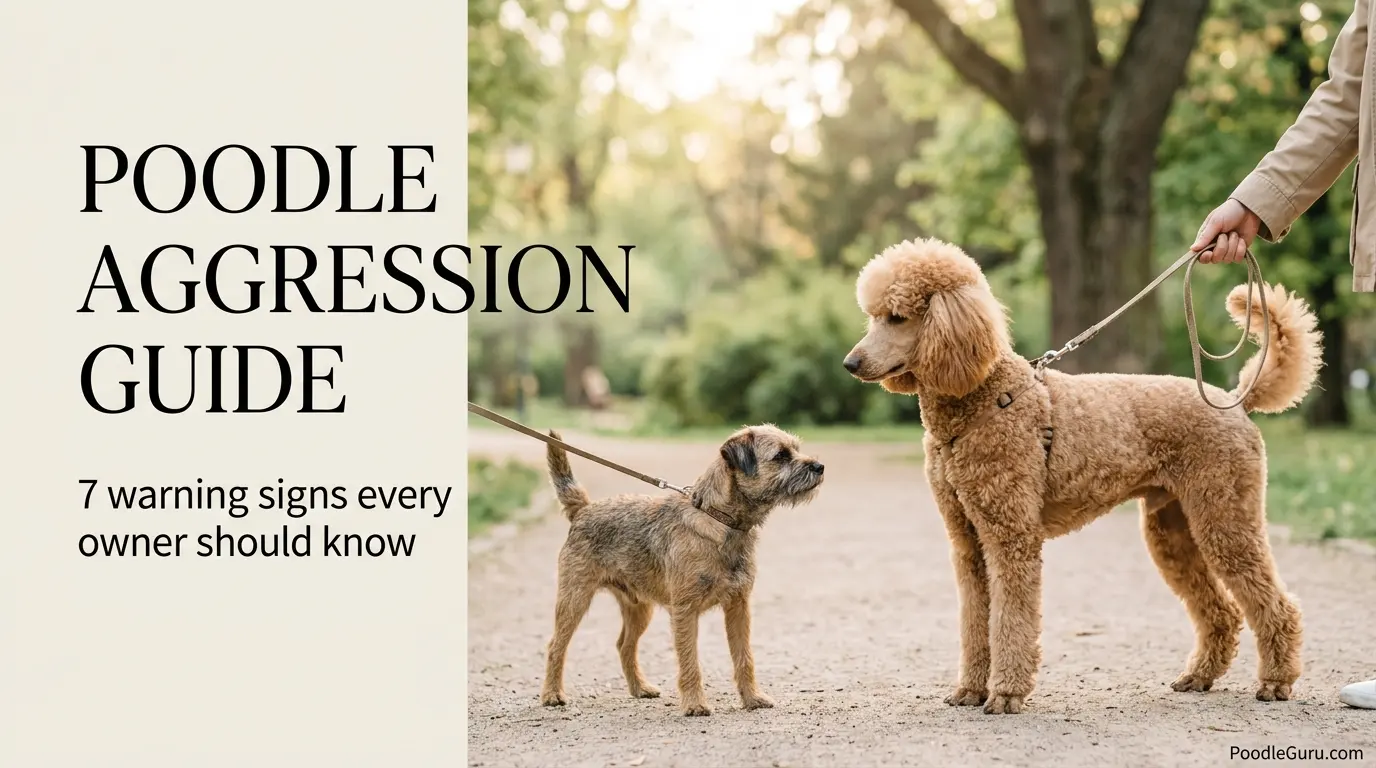
Can poodles be aggressive without biting first? Yes. Aggression is a spectrum, and recognizing early signs helps you interrupt the cycle before it escalates. Owners often miss subtle warnings because poodles can be expressive in ways that look playful or excited. Look for:
- Hard staring — fixed, unblinking gaze at another animal
- Lip lifting or muzzle wrinkling
- Stiff, slow tail wags (not the loose, full‑body wag)
- Freezing or suddenly going rigid when another animal approaches
- High‑pitched, rapid barking that doesn’t stop with distraction
- Lunging or snapping on or off leash
- Raised hackles or stiff forward posture when another animal comes close
A poodle that growls and then retreats is often frightened, not dominant. That’s an important distinction. Fear‑based reactions require a completely different management approach than resource‑guarding or territorial behaviour.
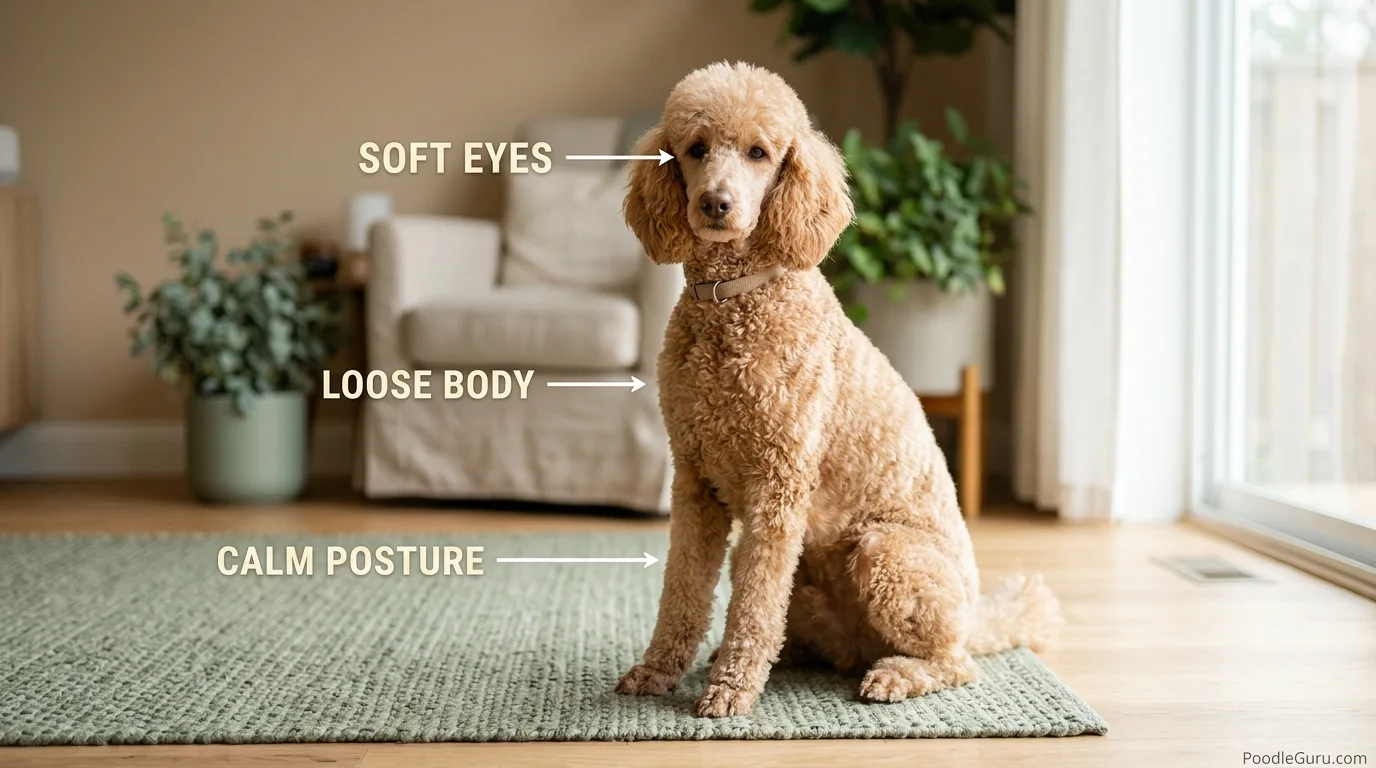
Expert Insight: Read the Whole Body
A wagging tail doesn’t always mean a happy dog. Pair it with tense shoulders, a tucked croup, or whale eye (showing the whites), and the dog is likely agitated. Poodle body language rewards patient observation.
Why Can Poodles Be Aggressive Toward Other Animals? Common Triggers
If your Rank Math focus question is can poodles be aggressive, the most useful owner question is what triggered it. Not all aggression looks the same, and knowing the trigger is the first step toward a real solution. Poodles rarely aggress without a reason—though sometimes that reason isn’t obvious to us. The most frequent triggers include:
| Trigger Category | What Happens | Typical Poodle Reaction |
|---|---|---|
| Fear & under‑socialization | The dog never learned that other animals are safe | Barking, lunging, trying to flee |
| Resource guarding | Protecting food, toys, beds, or even a favourite person | Stiffening, growling, snapping when another animal comes near |
| Territorial instinct | Defending the home, yard, or car | Barking at animals passing by, charging fences |
| Pain or illness | Undiagnosed discomfort lowers tolerance | Irritability, sudden snapping when touched or approached |
| Leash reactivity | Frustration from being restrained, combined with excitement | Barking and lunging on walks, especially when a dog can’t be reached |
| Predatory drift (mainly Standards) | Chasing small animals that trigger prey drive | Stalking, chasing cats or tiny dogs, sometimes grabbing |
Many poodle owners see a combination of triggers. A dog who is leash‑reactive may also guard their owner at the dog park. That’s why generic advice often fails—you need to address the specific pattern, not just the label.
Can Poodles Be Aggressive by Size? Toy, Miniature, and Standard Differences
Can poodles be aggressive in any size? Yes. Aggression can show up in any poodle variety, but size changes both the triggers and the consequences. A Toy Poodle snarling at a large dog looks different from a Standard Poodle doing the same—and the management strategies shift accordingly.
| Aspect | Toy Poodle | Miniature Poodle | Standard Poodle |
|---|---|---|---|
| Typical height/weight | ≤10″ / 4‑6 lbs | 10‑15″ / 10‑15 lbs | over 15″ / 40‑70 lbs |
| Common aggression triggers | Fear due to small size, rough handling by larger animals | Leash reactivity, guarding owner | Territoriality, predatory drift toward small animals |
| Body language cues | Often subtle; trembling, avoidance before escalation | Alert barking, stiff posture | Deep chest barking, raised hackles, staring |
| Management priority | Protection from unintentional injury; never unsupervised with large dogs | Structured introductions, confidence building | Strong recall training, channel prey drive safely |
| Owner mistake | Carrying constantly — can increase fear and defensiveness | Assuming smaller size means less need for training | Underestimating the seriousness of a 60‑lb dog’s reactivity |
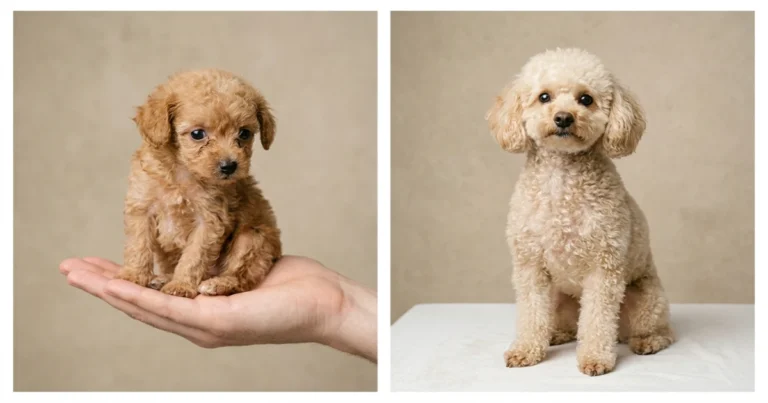
Standards need particularly consistent boundaries because their size makes even playful roughness a risk for smaller pets. But a Toy Poodle’s fear can be just as serious—a large dog may react defensively to a tiny dog’s aggressive display, and the outcome can be tragic.
The PoodleGuru 4-Pillar Framework: Can Poodles Be Aggressive or Just Reactive?
At PoodleGuru, we evaluate the question can poodles be aggressive toward other animals by looking at four distinct pillars. This framework helps owners move past the “is my dog aggressive?” panic and toward a clear, manageable picture.
Trigger
What exactly sets your poodle off? Another dog approaching, a cat walking past, food nearby? Be specific — write it down over a week. The trigger is never “everything.”
Context
Where and when does it happen? On leash? At home? Only when you’re present? Context changes the intervention. A dog who guards you at the dog park needs a different plan than one who reacts behind a fence.
Body Language
Is your poodle stiff and staring, or frantic and yelping? Fearful body language points to anxiety, while confident, forward posture may signal territoriality. This pillar prevents mislabelling.
Pattern
Is the behaviour predictable? Same trigger, same reaction, every time? Or is it erratic? Predictable aggression often responds well to training. Erratic aggression, especially with sudden onset, should involve a vet check first.
The most important thing to understand about poodle aggression is that it’s almost always contextual, not random. This framework lets you describe your situation so clearly that a trainer or vet can give precise advice instead of generalities.
Can Poodles Be Aggressive Without Socialization? Prevention That Works
Can poodles be aggressive when they miss calm early exposure? They can become reactive, which is why prevention works far better than trying to undo deeply ingrained reactions. The most powerful window is early — but adult poodles can still learn if you go at their pace.
Start with controlled, positive exposures. Instead of flooding your puppy with chaotic dog park visits, arrange calm one‑on‑one playdates with a dog you know is stable. Reward glances toward the other animal with a treat before the poodle has time to react. This builds the association: other animal = good things happen. If you missed that early window, work at a distance where your poodle notices but doesn’t react, then gradually decrease distance over weeks.
Training commands like “watch me,” “let’s go,” and a solid recall are safety nets. They won’t fix aggression alone, but they give you a way to redirect focus before arousal spikes. Consistent, reward‑based training, never punishment, is the backbone. The ASPCA’s aggression guidance emphasizes that aversive methods often increase fear and worsen the behaviour in sensitive dogs like poodles.
Buyer Tip: Ask About Early Socialization
If you’re buying a puppy, ask the breeder exactly how the litter was socialized with other animals between 3‑12 weeks. A good breeder will describe structured exposure to other friendly, vaccinated dogs, not just littermates. This single factor strongly predicts future tolerance.
Managing Multi-Pet Homes When Poodles Can Be Aggressive
Living with a poodle who does not get along with your cat, rabbit, or other dog is stressful. If you are asking can poodles be aggressive in multi-pet homes, the answer depends heavily on supervision, space, and trigger control. But many households find a workable balance. The goal isn’t always best friends—peaceful coexistence is a win.
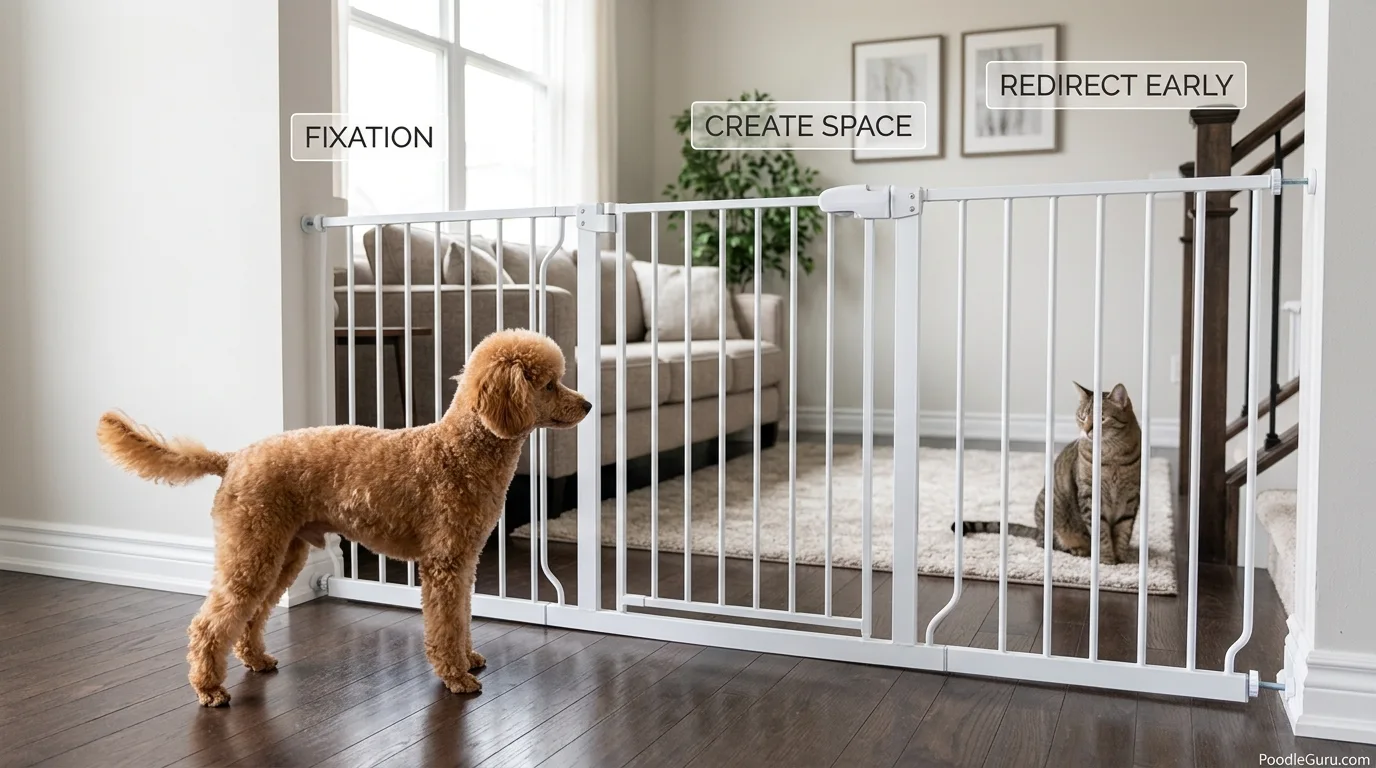
Management tools matter. Baby gates, crates, and separate feeding stations remove conflict opportunities while you train. Feed dogs in different rooms or at least well apart. Don’t leave high‑value chews lying around. When you can’t supervise, keep the animals separated until you’re confident in their calm behaviour.
Build positive associations between pets through parallel activities. Walk the dogs together but side‑by‑side at first, keeping enough space that neither reacts. Gradually bring them closer. With cats, reward the poodle for calmly lying down while the cat moves freely at a distance. Never force interactions. Let curiosity replace anxiety at the animal’s own speed.
If conflicts are frequent and intense—especially if one pet is being injured or living in constant fear—it’s time to involve a certified force‑free trainer or a veterinary behaviourist. Not every combination is safe, and rehoming is sometimes the most humane option.
When to Call a Vet
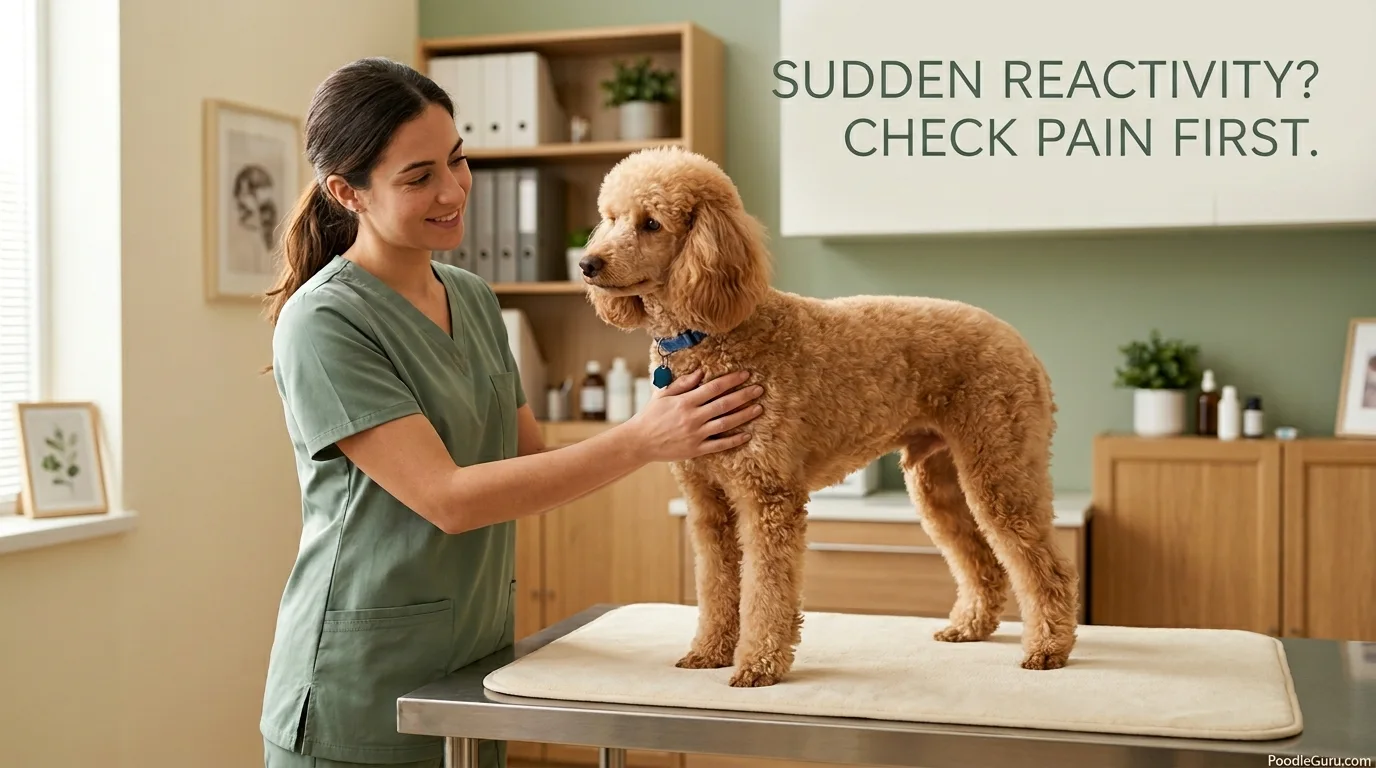
If your poodle’s aggression appears suddenly, especially after being gentle for years, book a veterinary exam. Pain from dental disease, arthritis, thyroid imbalances, or neurological issues can lower tolerance dramatically. A medical work‑up is a non‑negotiable first step before any behaviour modification program.
Can Poodles Be Aggressive Suddenly? Health and Pain-Related Causes
Can poodles be aggressive suddenly even after years of calm behavior? Yes, and not all aggression is behavioral. Poodles are prone to several health conditions that can contribute to irritability. It’s not the dog being “bad”—it’s a dog in discomfort who has run out of polite ways to communicate.
Conditions worth discussing with your vet include hypothyroidism (known to cause mood changes in some dogs), progressive retinal atrophy reducing vision and increasing startle responses, hip dysplasia causing pain when another animal jostles or bumps them, and chronic ear infections making the dog head‑shy. Even a subtle limp can lower a dog’s threshold. Before spending months on a training plan, rule out pain first. Many owners are surprised at how much behaviour improves once a hidden medical issue is treated.
Mistakes That Make “Can Poodles Be Aggressive?” Problems Worse
When owners search can poodles be aggressive, they often want a quick fix, but well-meaning choices can sometimes make things harder. Here are patterns we see often at PoodleGuru:
Punishing the growl
Suppressing a growl removes the warning signal, not the emotion. The dog may skip straight to snapping next time. Honour the growl — it’s information.
Forcing “friendship”
Dragging a reluctant poodle toward another dog or holding them in place while a stranger sniffs can create lasting fear. Let them choose.
Over‑protection
Picking up a Toy Poodle every time a big dog approaches teaches the small dog that they need to be saved — and can make them feel trapped, triggering defensive snapping.
Inconsistent routines
Poodles thrive on predictability. Unpredictable schedules or chaotic households can heighten baseline anxiety, making aggressive responses more likely.
Can Poodles Be Aggressive During Introductions? Safe First Meetings
Can poodles be aggressive during first meetings? They can be if the introduction is rushed. Whether you are bringing home a second dog, a cat, or just meeting a friend’s pet, a structured introduction drastically reduces the risk. Use these steps as your foundation.
Neutral ground first
Meet in a quiet, unfamiliar outdoor space — not your home or yard. This reduces territorial tension. Both animals should be on harness and leash, with enough slack to move freely but not entangle.
Parallel walking
Walk parallel at a distance of 10‑15 feet. Keep both dogs focused on the handler and reward calm behaviour. Gradually decrease distance only when both stay relaxed. This can take several sessions.
Scent swap before face‑to‑face
Exchange blankets or toys between the animals before they meet directly. This lets each animal process the new scent without the pressure of direct interaction. It’s especially useful with cats.
Short, supervised nose‑to‑nose
Allow a brief 3‑second greet, then call the poodle away and reward. Repeat. Avoid letting either animal fixate. End the session before either gets over‑aroused.
Gradual indoor integration
Once outdoor meetings go well, bring both animals inside but keep them in separate areas with baby gates for the first few days. Feed on opposite sides of a gate so they associate each other’s presence with something positive.
Can Poodles Be Aggressive? Buyer Awareness Before You Choose
If you are considering a poodle and already have other pets, or you plan to add a poodle to a multi-pet home, the question can poodles be aggressive should be answered before day one.
Not every poodle is a natural diplomat. A high‑drive Standard from working lines may be more intense than a show‑line Toy bred for companionship. Ask breeders about the parents’ behaviour around other animals. A mother who is fearful or reactive may pass on a predisposition that careful socialization can soften but not always erase.
Consider the individual dog, not the size. A Miniature Poodle with a confident, bossy personality can still bully a larger, more passive dog. Avoid stereotypes. Poodles are individuals, and their history matters. Rescue poodles, especially, may carry unknown baggage that requires patience and professional guidance. Adopting an adult poodle can work beautifully, but you need to be honest about your household setup and any existing pet dynamics.
Before You Bring a Poodle Home
If you already have a dog, arrange a meet‑and‑greet on neutral ground before committing. Watch body language carefully. A stiff, prolonged stare from either dog is a red flag, even if tails are wagging. A brief, relaxed sniff followed by disengagement is ideal.
Frequently Asked Questions
Can poodles be aggressive naturally toward other dogs?
No. When people ask can poodles be aggressive naturally toward other dogs, the better answer is that aggression is not typical of well-socialized poodles. It usually reflects poor socialization, fear, pain, guarding, or stressful management.
Why is my poodle suddenly aggressive toward our other dog?
Sudden aggression often points to pain or illness. Book a vet check first. If health is fine, look for recent changes in routine, resource guarding, or redirected frustration.
Can a poodle and a cat live together safely?
Yes, many poodles coexist peacefully with cats when introduced gradually. Supervise early interactions, and never leave a poodle with a strong prey drive alone with a cat until trust is well established.
Is a Toy Poodle less aggressive than a Standard?
Not inherently. Toy Poodles may react out of fear because of their small size, while Standards can show territorial or predatory behaviours. Each dog’s history and training matter more than size.
Will neutering stop my poodle’s aggression toward other animals?
Neutering can reduce roaming and some hormone‑linked behaviours, but it won’t fix fear‑based or learned reactivity. Training and behaviour modification are still essential.
How long does it take to reduce aggression through training?
Mild reactivity may improve in weeks with consistent counter‑conditioning. Deeper fear or guarding can take months. Progress is measured in small wins, not a single deadline.
What should I do if my poodle bites another animal?
Separate the animals calmly. Seek veterinary care for any wound. Then consult a certified force‑free professional. A bite is a serious event that requires a structured behaviour plan, not punishment.
Key Takeaways
- Can poodles be aggressive toward other animals? Yes, but they are not inherently aggressive; aggression is usually situational, not a breed trait.
- Fear, poor socialization, pain, and resource guarding are the most common drivers of poodle aggression.
- Toy, Miniature, and Standard Poodles express aggression differently — size shapes both triggers and safe management.
- Sudden aggression in a previously gentle poodle requires a veterinary exam to rule out hidden illness or pain.
- The PoodleGuru 4‑Pillar Framework (Trigger, Context, Body Language, Pattern) turns vague worry into an actionable plan.
- Structured introductions using parallel walking, scent swaps, and short greetings give multi‑pet households the best chance of peaceful coexistence.
If you are still asking can poodles be aggressive in your specific home, start by observing your poodle without judgment. If you’re ever unsure, a force‑free trainer or vet behaviourist can make a remarkable difference. You’re not alone in this — and with the right strategy, calm is possible.