Poodle Face Trim: 9 Safe Steps for a Clean Face
Poodle face trim grooming gives your dog that crisp, clean muzzle and elegant topknot — but it also involves sharp tools near the eyes, lips, and throat. This step-by-step guide shows you how to prepare safely, choose the right blade, trim in the correct order, avoid common mistakes, and know when a professional groomer is the better choice.
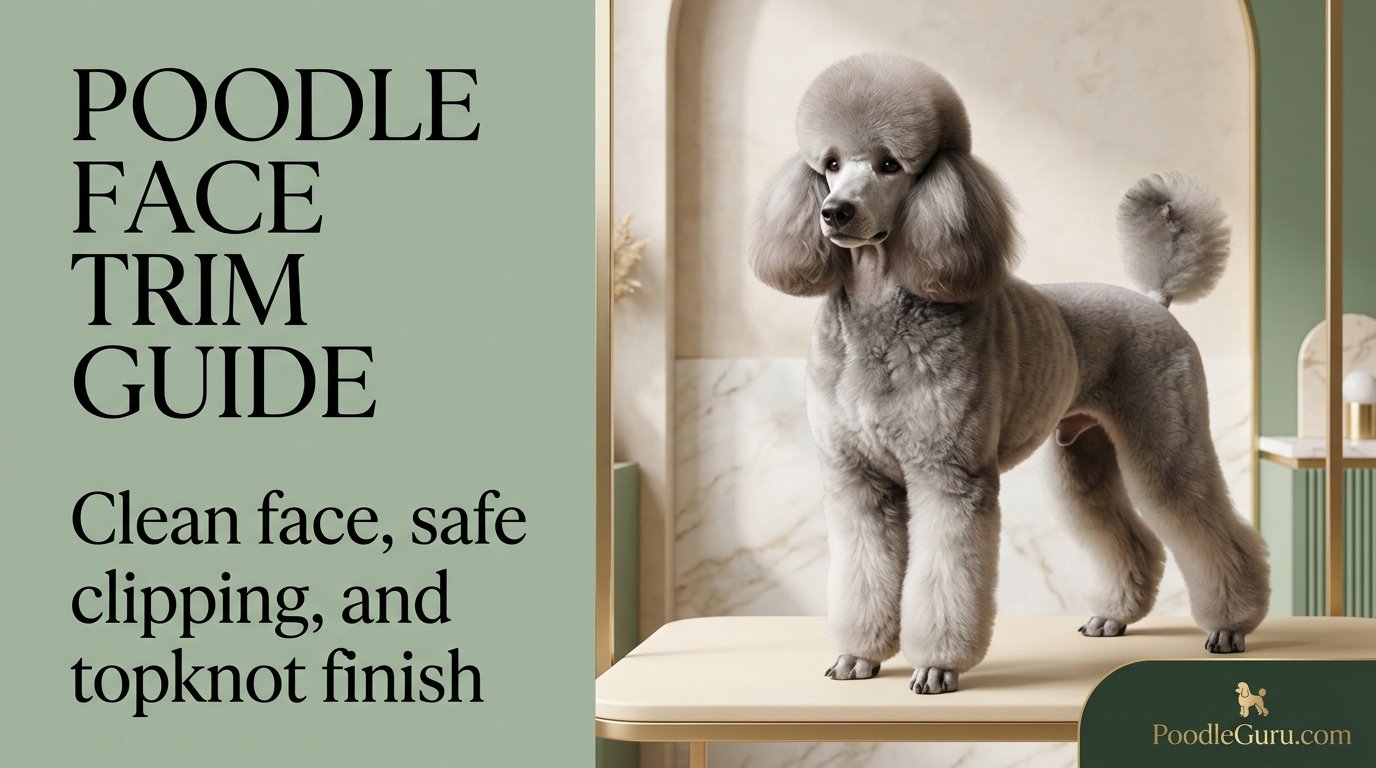
Poodle Face Trim Quick Answer
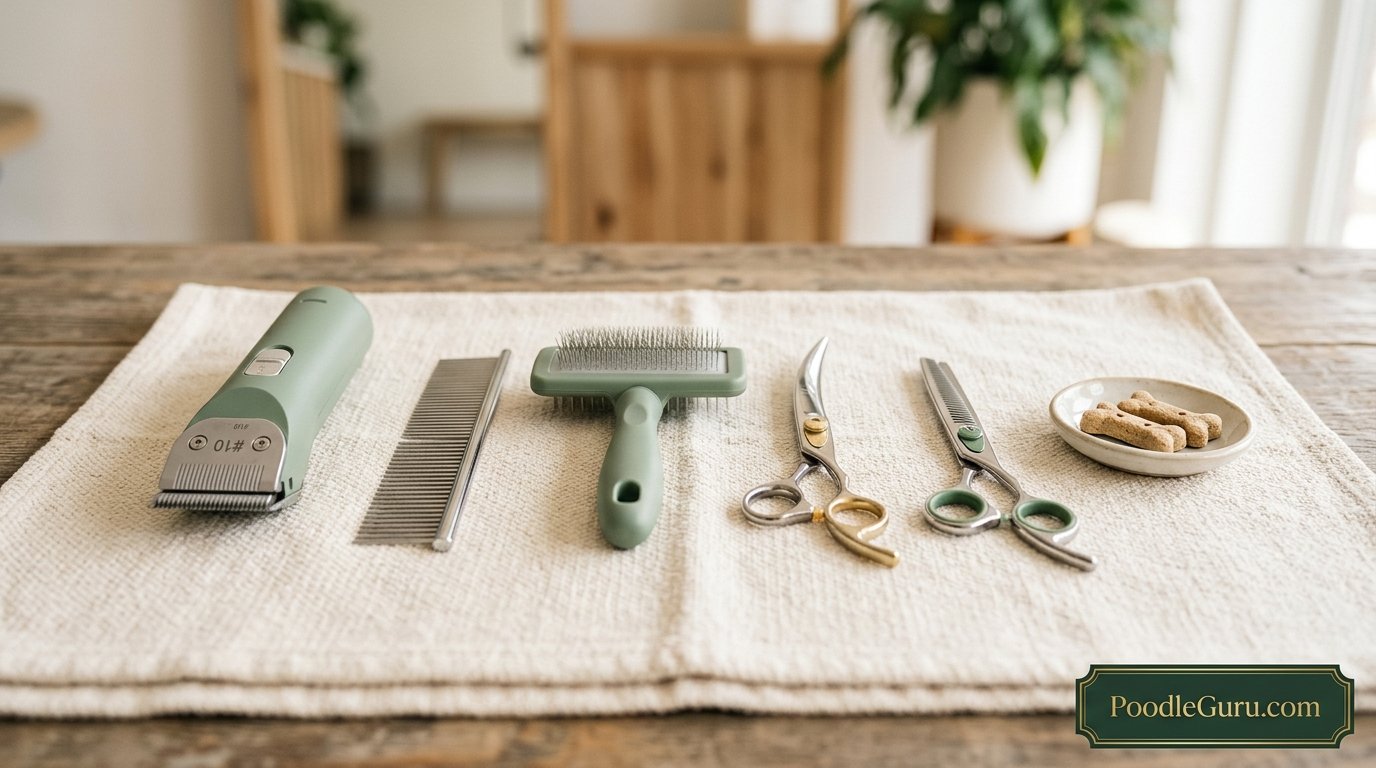
A poodle face trim means carefully trimming the cheeks, throat, muzzle, and under-eye area while leaving the topknot full and blended. For most beginners, a #10 blade is the safest starting point; a #15 blade gives a closer finish but needs a steadier hand. You will need pet clippers, a slicker brush, metal comb, curved scissors, thinning shears, treats, and a calm setup. The highest-risk areas are the eye corners, lip folds, throat skin, and ear leather, so keep the blade flat, stretch loose skin gently, and stop if your dog becomes too wiggly or stressed.
In This Guide
Quick Facts at a Glance
✂️ The Goal
A smooth, close shave on the cheeks, throat, and muzzle with a seamless transition into the topknot. The face should look clean and angular, not patchy or stubbled.
⏱️ Time Investment
Your first try might take 45–60 minutes. With practice, a full face trim can be done in under 20 minutes. Rushing leads to uneven lines and nicks.
🛡️ Safety First
Start with a #10 blade if you are new to face trimming. A #15 blade is closer and better left for confident hands. Keep the skin taut, avoid the ear leather, and know where the lip folds hide. Stop immediately if your dog thrashes.
Beginner Safety Note Before You Start
If this is your first poodle face trim, practice by letting your dog hear and feel the switched-off clippers first, then the running clippers away from the face. Do not begin with the eye corners, lips, or throat. Start only when your Poodle is calm, dry, brushed, and standing on a stable non-slip surface. If your dog is fearful, snapping, severely matted, or has irritated skin, book a professional groomer instead.
What Is a Poodle Face Trim?
A poodle face trim is the grooming process of shaving the hair from the muzzle, cheeks, under the eyes, and throat to create the breed’s signature clean, elegant appearance. For Poodle owners, this means maintaining a hygienic area that reduces food buildup, tear staining, and matting around the mouth. The most important thing to understand is that the clean face is not just cosmetic — it’s functional. It keeps the dog’s eyes clear and prevents wet, matted hair from causing skin irritation.
The AKC Poodle breed standard describes traditional clips that include a shaved face, but the modern pet version often pairs a clean face with a fluffy topknot and varying body lengths. Done correctly, the trim enhances the dog’s natural bone structure.
The PoodleGuru Face Trim SAFETY Method
At PoodleGuru, we use a six-point SAFETY checklist to keep every home face trim calm, clean, and controlled. Run through it before you even plug in the clippers.
Set Up a Calm Environment
Choose a quiet room with good lighting. No other pets or distractions. Put your dog on a non-slip surface at waist height. A grooming table is ideal, but a yoga mat on a sturdy table works too.
Assess Coat & Skin
Brush the face thoroughly first. Check for existing mats, scabs, or hot spots. Never clipper over irritated skin — wait until it heals. A #10 blade glides over clean, dry, detangled hair.
Flat Skin, Flat Blade
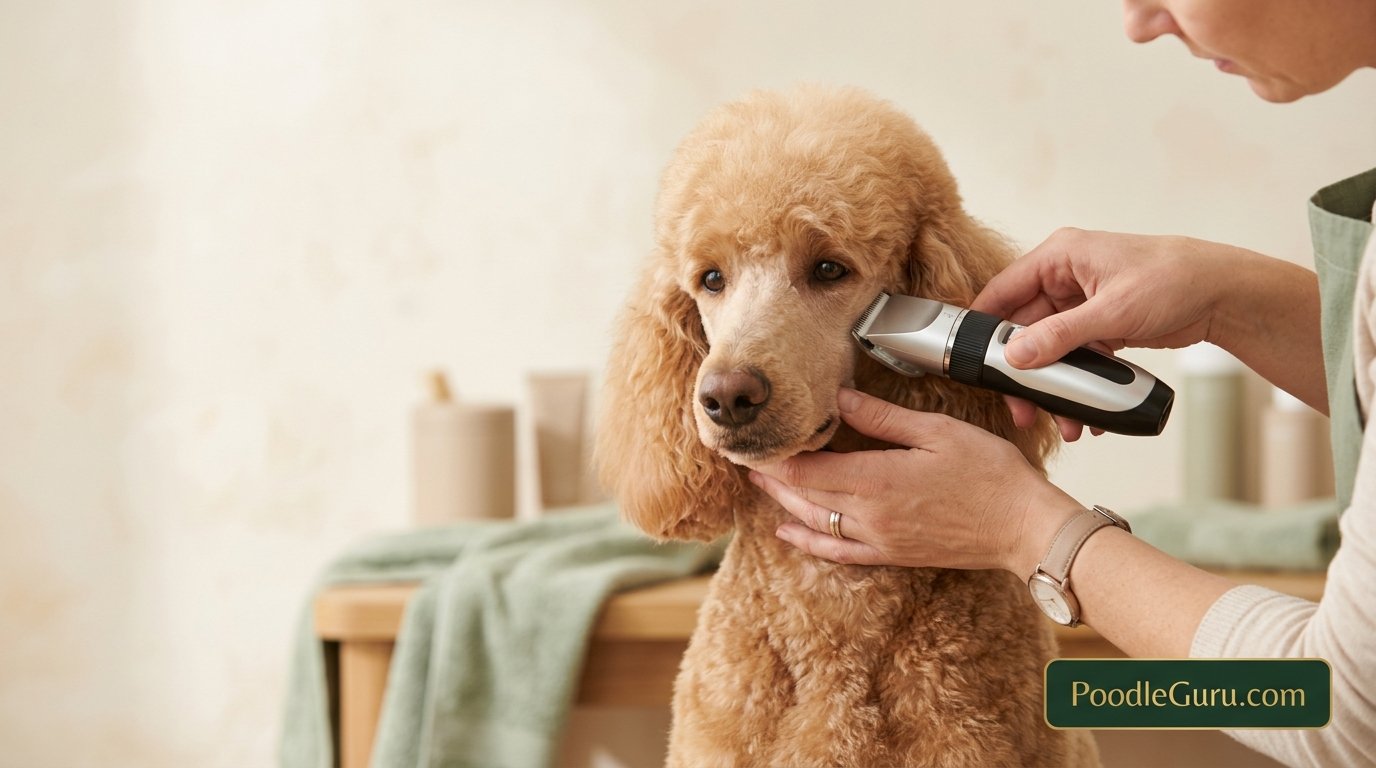
Always stretch the skin taut with your free hand. Hold the clipper blade flat against the skin surface. Any angle increases the risk of catching a fold or cutting the dog. Move against the hair growth for the closest shave.
Eye & Ear Awareness
The corners of the eyes and the ear canals are danger zones. Use your thumb to cover the ear opening and keep clippers moving parallel to the edge. For under-eye area, switch to thinning shears if your dog flinches.
Take Breaks
If your dog gets restless, stop. A wiggling dog can get hurt. Give a treat, let them shake, and resume. The face trim doesn’t need to be done in one pass. Two short sessions are better than one panicked struggle.
Yield & Finish Neatly
After shaving, use curved scissors to blend the line where the clean face meets the topknot. Clean up stray hairs with thinning shears. The result should look seamless, not like a hard helmet strap.
When to Ask a Professional Groomer
If your dog has severe matting near the skin, deeply wrinkled lip folds, or a history of grooming aggression, let a professional handle the face. Forcing clippers on a fearful dog can cause injuries — and it can destroy their trust in grooming long-term. A qualified groomer can also teach you in person.
Tools You’ll Need
Having the right equipment makes the difference between a crisp, safe trim and a stressful mess. Don’t improvise with household scissors — they’ll crush the coat and won’t give the close finish a poodle face requires.
| Tool | Purpose | Recommended Type |
|---|---|---|
| Clippers | Shaving cheeks, throat, muzzle | Corded or cordless professional pet clippers with adjustable speed |
| #10 or #15 blade | Close shave on face | Ceramic-edge or stainless steel; #10 is safer for beginners |
| Slicker brush | Detangling and fluffing before trim | Soft to medium pins; avoid harsh “pin brush” types |
| Metal comb | Checking for hidden mats | Fine-toothed greyhound comb |
| Curved scissors | Blending the topknot edge | 5–7 inch curved shears with ball tips for safety |
| Thinning shears | Softening harsh lines, under-eye detail | 42–46 tooth thinning shears |
| Styptic powder | Stopping minor bleeding if a nail or skin nick occurs | Kwik Stop or similar; always have on hand |
Step-by-Step Face Trim Tutorial
We’ll work from the large areas inward, finishing with detail. Read through the whole tutorial before starting — then take it one section at a time.
Preparation: Brush, Bathe & Dry
Brush the entire face with a slicker brush, then check with a metal comb. Bathe if needed and blow-dry the coat completely straight. Wet or damp hair can clog the blade and create an uneven finish. Use a pet dryer if available, or a human hair dryer on a cool, low setting while keeping it moving.
Shave the Cheeks
Hold the muzzle gently closed. Start at the outer corner of the eye and clip downward along the cheekbone to the corner of the mouth. Keep the blade flat. Repeat on the other side. The cheek should be smooth from the eye to the jawline.
Clear the Throat & Underjaw
Tilt the head up gently. Clip from the chin downward along the throat to the Adam’s apple area. Shave the underside of the jaw from ear to ear. Be careful around the loose skin of the throat — stretch it flat with your fingers.
Shave the Muzzle
With the mouth gently closed, clip from the nose leather backward toward the eyes using short, controlled strokes. Avoid digging into the lip edges because those folds can be easy to catch. A flat #10 blade is safer than an angled blade, but do not press. The area directly under the nose requires the lightest touch.
Blend the Topknot Line
Find the natural ridge between the eyes. Use curved scissors to create a soft arc from the outer corner of one eye up over the forehead to the other eye. Don’t cut a straight line — it’ll look like a bowl cut. Comb the topknot forward and trim any stray hairs that fall into the eyes.
Detail & Finish
Use thinning shears to soften the line where the shaved face meets the topknot. Gently thin the bridge of the nose if the transition looks harsh. Comb everything one final time and check both sides in a mirror — asymmetry is more obvious than you think.
Face Trim Style Comparison
Not every Poodle owner wants the traditional clean face. Here’s how the clean face stacks up against other popular face styles — and which one your face trim technique can be adapted for.
| Style | Appearance | Clipper Work | Maintenance |
|---|---|---|---|
| Clean Face | Shaved smooth from eyes to throat, long topknot | Full shave with #10 or #15 blade | Touch-ups every 1–2 weeks to stay smooth |
| Teddy Bear Face | Rounded, fluffy face with no shaved areas | Scissor-only shaping; no clippers on face | Biweekly brushing; full scissor trim every 4–6 weeks |
| Asian Fusion Face | Extra large, perfectly spherical head, often with clean muzzle | Clean muzzle and under eyes; massive topknot | Daily brushing; professional styling every 4 weeks |
This comparison is unique to PoodleGuru. If you’re interested in the Asian Fusion look, our Poodle Asian Fusion Cut guide goes deep on the full-body style.
Common Mistakes & How to Fix Them
Every Poodle owner makes a few face-trim mistakes early on. The key is recognizing them and knowing how to recover.
| Mistake | What Happens | The Fix |
|---|---|---|
| Using a dull blade | Hair pulls instead of cuts; uneven finish; increased skin irritation | Replace or sharpen blades regularly. A dull blade can cause clipper burn and micro-abrasions. |
| Clipping too close to the eyes | Risk of nicking the eyelid or cornea | Use a #10 blade for the area below the eye, and switch to thinning shears for the inner corner if the dog flinches. |
| Straight line across the forehead | Gives a harsh “helmet” appearance | Create a soft arc using curved scissors. Comb the topknot forward first, then cut a gentle curve from eye corner to eye corner. |
| Neglecting the lip folds | Stubble gets trapped, causing irritation and possible infection | Gently lift each lip flap and clip the hidden hair. This area is sensitive, so go slow. If your dog resists, let a groomer handle it. |
| Forgetting to brush before clipping | Mats clog the blade and pull painfully | Always fully brush and comb-check the face before starting. No exceptions. |
| Trimming a wiggly dog without breaks | Uneven results, increased risk of cuts | Use the SAFETY method. A calm dog yields a smooth trim. Never fight through severe resistance. |
Skin Health Alert
If you notice redness, bumps, swelling, discharge, odor, or repeated scratching after a face trim, stop trimming and let the skin rest. These can be signs of clipper irritation or a hidden skin problem. Keep the area clean and dry, and contact a veterinarian if irritation persists, worsens, or looks painful.
Aftercare & Maintenance
Once the face is trimmed, a little daily upkeep keeps it looking fresh between full grooming sessions.
- Wipe the muzzle after meals. Wet food and saliva quickly mat the short stubble and can cause lip fold dermatitis.
- Keep the muzzle dry after meals and drinking. Moisture around the lips can encourage staining, odor, and irritation. Use a soft cloth rather than heavy powders unless your groomer or vet recommends them.
- Check for ingrown hairs on the chin and muzzle. A warm compress can help; if a bump persists, have a vet examine it.
- Touch up the clean face every 1–2 weeks with a quick pass of the clippers. This keeps the look crisp without needing a full groom.
The clean face is the fastest part of the poodle to lose its crispness. Stubble appears within days. Many owners who learn the face trim end up doing just the face weekly and leaving the body to the professionals — a great compromise.
Frequently Asked Questions
What length blade is best for a poodle face trim?
A #10 blade is the safest choice for beginners, leaving about 1/16 inch of hair. A #15 blade cuts closer and is commonly used by professionals but requires more skill to avoid nicks. Avoid surgical blades shorter than #15 on the face.
How often should I trim my Poodle’s face?
For a crisp clean face, touch up with clippers every 1–2 weeks. Full scissor blending around the topknot can be done every 4–6 weeks with a full groom. Stubble becomes visible in 4–7 days, so frequent quick passes maintain the look.
Can I use human hair clippers on a Poodle’s face?
Not recommended. Human clippers aren’t designed for the density of poodle hair and can overheat quickly. They also lack the fine blade adjustments that prevent nicks around delicate facial skin. Invest in professional pet clippers with a #10 blade.
My Poodle hates the clippers near his face. What can I do?
Counter-condition slowly. Start by turning on the clippers across the room while giving treats. Gradually move closer over several days, always pairing the sound with something positive. Use a quiet cordless clipper. Never force it — it’ll make the fear worse.
How do I avoid cutting my Poodle’s lip folds?
Keep the blade flat against the skin and move parallel to the lip edge. Use your thumb to gently pull the fold taut. If your dog struggles, leave the deepest part of the lip fold for a professional — it’s the trickiest spot and a common site for nicks.
What’s the difference between a clean face and a teddy bear face?
A clean face is shaved smooth with clippers. A teddy bear face is left long and shaped only with scissors — no shaving at all. The teddy bear face is softer and rounder, but requires different maintenance. The clean face shows off the Poodle’s elegant bone structure.
Can I trim the face without bathing first?
Yes, if the coat is clean and dry. However, dirt and oil will dull your blade faster. A quick brush-out is non-negotiable. For the smoothest shave, the hair should be clean, dry, and straightened — a bath and blow-dry makes a big difference.
Why does my Poodle’s face look grey or patchy after trimming?
Patchiness usually comes from an uneven blade angle, a dull blade, or clipping against the hair grain inconsistently. The coat may also look lighter because you’re seeing the undercoat. Brushing and re-clipping lightly in the direction of growth can even out the tone.
Final Summary: Mastering the Poodle Face Trim
A safe poodle face trim is less about speed and more about calm handling, the right blade, and smart stopping points. The clean face can save grooming touch-up money and keep the muzzle neater, but it should never come at the cost of your dog’s comfort or safety.
Start with short sessions, reward your dog heavily, and don’t expect perfection on day one. Every session builds both your confidence and your dog’s tolerance. Before you know it, that iconic clean face will be your handiwork.
Key Takeaways
- A poodle face trim involves carefully trimming the cheeks, throat, muzzle, and under-eye area with a #10 or #15 clipper blade while preserving and blending the topknot.
- Always brush and detangle the face first, keep the skin taut, and hold the blade flat to avoid nicks and clipper burn.
- The PoodleGuru SAFETY method (Setup, Assess, Flat Skin, Eye awareness, Take breaks, Yield neatly) is a mental checklist to prevent injuries.
- A professional cordless pet clipper with a ceramic #10 blade is the ideal starter tool; human clippers are unsafe for poodle hair density.
- Touching up the face every 1–2 weeks maintains the crisp look; full grooming can be done every 4–6 weeks.
- If your dog is fearful or has deep lip folds, seek hands-on guidance from a professional groomer rather than forcing the trim.