Poodle German Clip Guide: 7 Elegant Styling Tips
Poodle German clip is a classic grooming style for owners who want a polished poodle trim without the heavy upkeep of show cuts. This guide explains the German clip’s short body, soft blended chest mane, clean face and feet, rounded topknot, maintenance routine, cost, and exactly how to ask your groomer for the right finish.
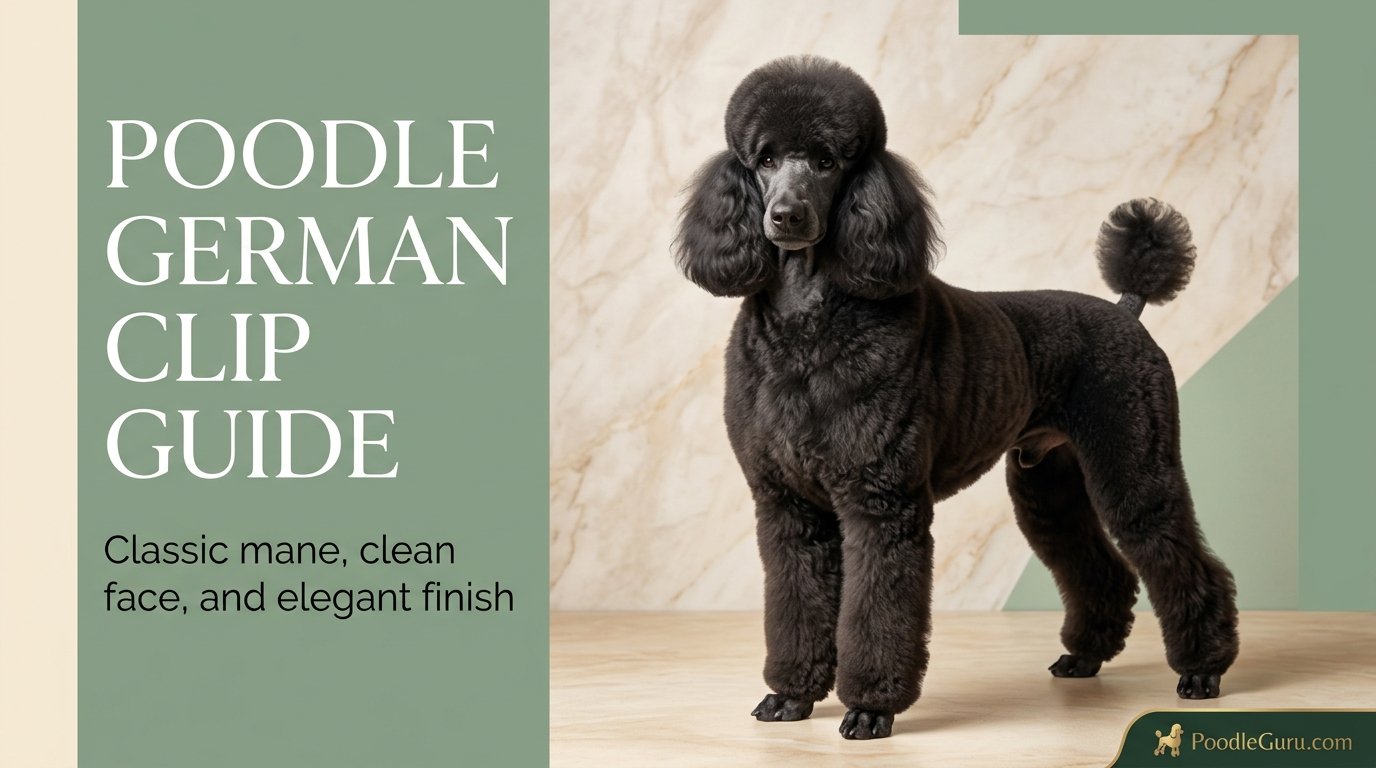
Poodle German Clip Quick Answer: What It Means
The poodle German clip is a traditional pet trim that keeps the body coat short — typically ¼ inch to ⅜ inch — while leaving a slightly longer, blended mane over the chest and shoulders. The face and feet are shaved clean, the topknot is scissored into a soft dome, and the tail is shaped into a small pom. It’s the look that says “poodle” without the theatricality of a Continental, and it’s a perennial favourite among owners who want polish without a marathon brushing routine.
What Is the Poodle German Clip, Exactly?
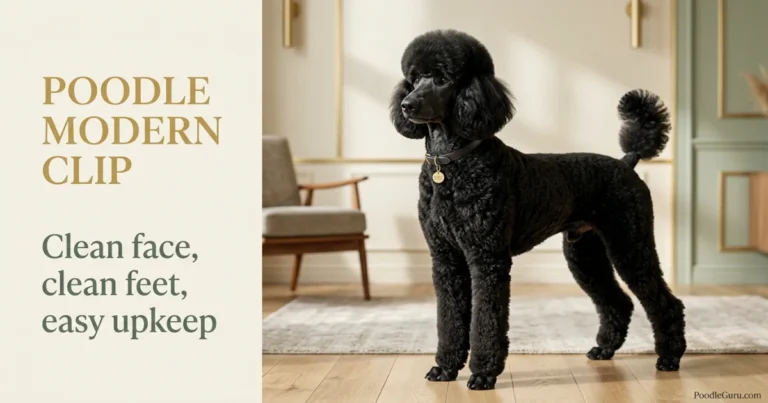
The poodle German clip is a classic poodle trim that uses a short blade over the body — typically a #4F or #5F — and leaves a soft, longer mane that flows from the topknot down across the chest and withers. For poodle owners, this means you get a practical, low‑matting cut that still reads as unmistakably poodle. The most important thing to understand is that the German clip is about proportion: the mane balances the clean face and shaved feet, giving the dog a regal but approachable silhouette.
Unlike the AKC breed standard clips used for showing, the German clip is a pet trim. It has no formal rosettes or bracelets. It’s not judged in the ring. But it borrows the poodle’s signature clean face and feet — the very features that make a poodle recognizable — and wraps them in a softer, everyday package. This is why many European owners have chosen it for generations, and why it’s gaining traction in North America.
Poodle German Clip History: Where It Comes From
You won’t find a single inventor of the poodle German clip. It evolved organically among European poodle owners who wanted a tidy, dog‑friendly cut that didn’t require the extensive coat growth of show trims. In Germany, where poodles were used for hunting and retrieving, a short body coat kept the dog clean and mobile, while a slightly longer chest and neck offered a bit of warmth and protection in cold water. Over time, groomers refined that practical shape into a balanced style that’s both utilitarian and beautiful.
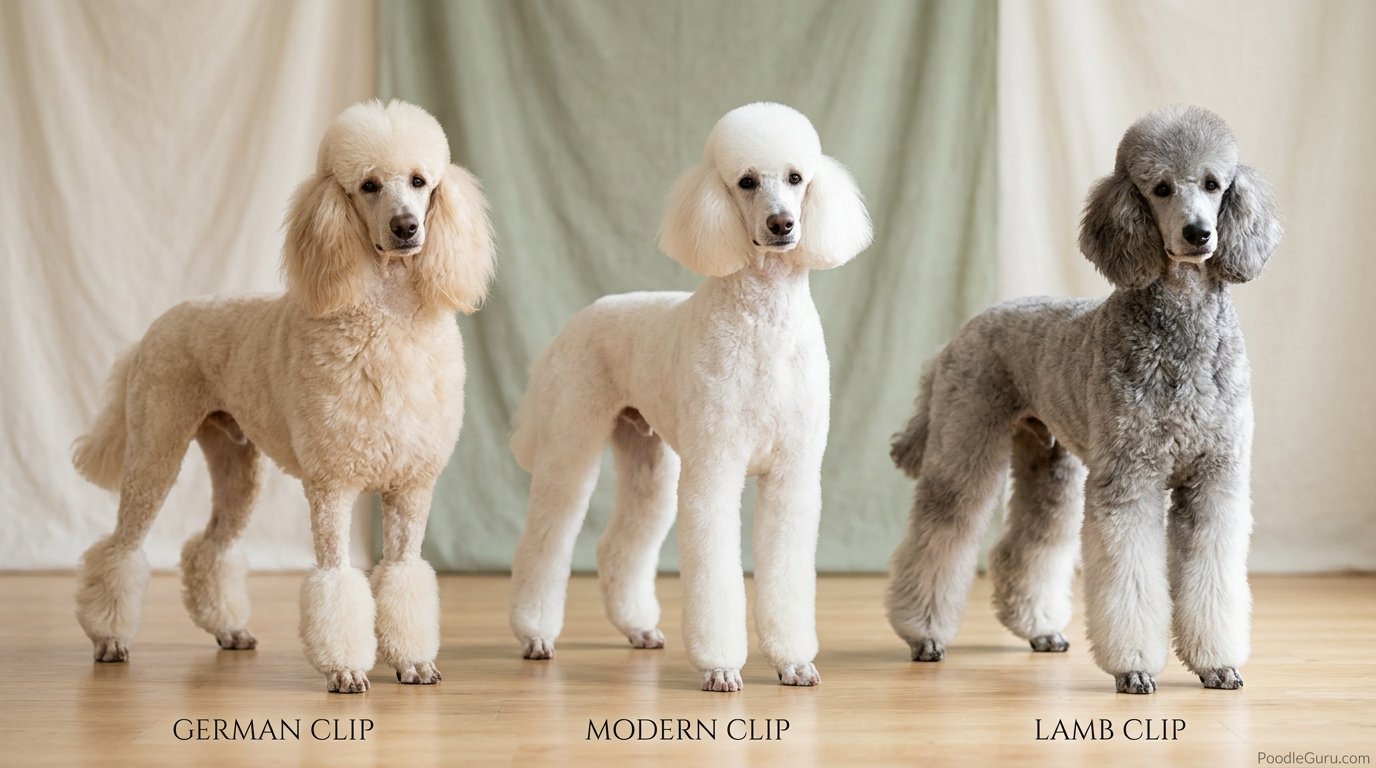
Today, the German clip lives somewhere between the modern clip and the lamb clip. It’s less extreme than either — not as severe as the modern clip’s all‑over sameness, and not as fluffy‑legged as a lamb. That middle ground makes it a favourite for owners who want a low‑maintenance cut that still photographs like a work of art.
Poodle German Clip Quick Facts
Poodle German Clip Blade Length
Body: #4F (⅜″) or #5F (¼″)
Mane: Scissored, 1–2″
Poodle German Clip Face & Feet
Clean‑shaven with a #10 or #15 blade, throat and under‑jaw included.
Poodle German Clip Topknot & Tail
Rounded dome topknot, small pom tail with shaved base.
Poodle German Clip vs. Modern, Lamb & Continental
| Feature | German Clip | Modern Clip | Lamb Clip | Continental |
|---|---|---|---|---|
| Body length | ¼″–⅜″ uniform | ¼″–½″ uniform | Shaved short | Shaved hindquarters with rosettes |
| Mane / chest | Soft, blended mane | None — same as body | None | Full, sculpted mane |
| Legs | Short, neat | Short, neat | Full, fluffy | Bracelets (pompons) |
| Face/feet | Clean | Clean | Clean (often fuzzy feet) | Clean |
| Maintenance | Moderate | Low–Moderate | High | Very High |
Poodle German Clip Anatomy: Zone by Zone
Body
Run with a #4F or #5F blade against the grain. The goal is an even, velvety finish that follows the ribs and tuck‑up. No tufts behind the elbows.
Mane
Scissored and blended from the topknot base down over the chest. It extends no lower than the point of the shoulder and must not look like a separate bib.
Legs
Trimmed short but not shaved — usually with the same blade as the body or scissored for a clean outline. The feet are shaved smooth up to the ankle joint.
Topknot
A soft dome, never a high crest. It flows into the mane without a hard line. The ears are clipped short or shaved, depending on preference.
Tail
Shaved at the base for one‑third of its length, then shaped into a neat, rounded pom that’s proportionate to the dog’s size.
Poodle German Clip Mane: The Defining Feature
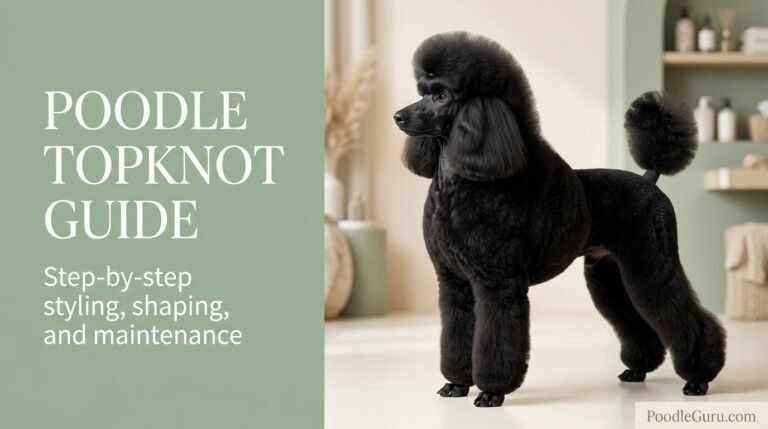
If you remove the mane, you’ve got a modern clip. That’s why this single detail matters so much. The German clip’s mane isn’t a heavy lion’s mane — it’s a subtle elongation of the topknot that cascades down the chest and stops cleanly at the sternum. Done well, it gives the dog an elegant, lifted front without looking like a costume.
Groomers build the mane by scissoring the chest hair while the dog is standing naturally. They blend it upward into the topknot and downward into the short body coat, using thinning shears to avoid harsh lines. On a well‑conditioned poodle coat, the mane should look like the dog grew it that way on purpose. If it stands out as a separate puff, the blend hasn’t been finished properly — and you should point that out before you leave the salon.
Poodle German Clip Maintenance & At‑Home Care
A poodle German clip is lower maintenance than a lamb or puppy cut, but it’s not maintenance‑free. The short body can go a week between brush‑outs, but the mane and topknot demand daily or every‑other‑day attention. Use a soft slicker brush and a conditioning spray, and work from the ends upward to prevent pulling. The clean face needs a quick wipe every day — food and tear stains show up fast on that short muzzle.
Bathing at home is fine, but you must blow‑dry the coat thoroughly while brushing. Air‑drying a poodle’s coat causes the curls to tighten into mats, and the mane will become a solid felted mass within 48 hours. If you don’t own a high‑velocity dryer, towel‑dry gently and get the dog to a groomer or a self‑wash station with a dryer within a few hours.
The PoodleGuru Poodle German Clip Care Routine
At PoodleGuru, we’ve developed a simple, three‑step weekly system that keeps a German clip looking fresh between salon visits. Do this once mid‑cycle, and your groomer will notice the difference.
Condition & Brush the Mane and Topknot
Mist with a leave‑in conditioner, then brush in small sections with a pin brush. Pay extra attention to the area behind the ears — this mats first. Outcome: a tangle‑free mane that holds its shape.
Wipe the Face and Check the Feet
Use a damp, soft cloth to clean the muzzle folds. Inspect between the paw pads for debris or matted hair. Clean feet stay healthier and look sharper. Outcome: a bright face and comfortable paws.
Curry the Body Coat
Run a rubber curry mitt over the short body to lift loose hair and stimulate the skin. Check the tail base and under the armpits for early tangles. Outcome: a coat that stays even and glossy longer.
Common Poodle German Clip Owner Mistakes
Mistake: Asking for “Just a Trim”
Vague language leads to vague results. If you want a German clip, say “German clip” and specify the blade. Otherwise you might walk out with a kennel cut or something the groomer assumes you meant.
Mistake: Neglecting the Mane Between Grooms
The mane is the hardest‑working hair in this clip — it’s longer, so it mats faster. Skip a few brush‑outs, and your groomer may have to take it shorter than you’d like.
Mistake: Using the Wrong Collar
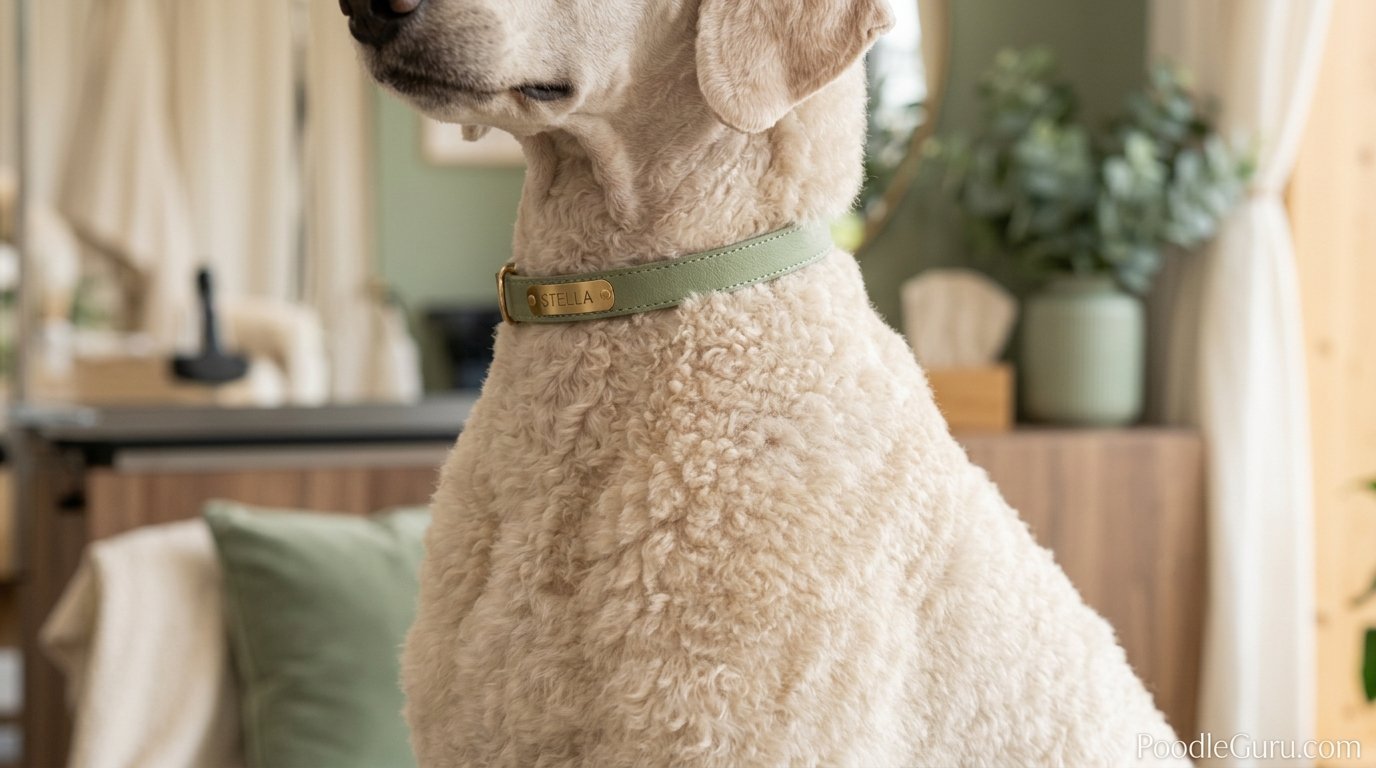
A flat collar can create a ring of matted hair where it sits against the mane. A rolled leather collar or a properly fitted harness is much kinder to the coat, especially on a German clip.
How to Ask Your Groomer for a Poodle German Clip
Walking in with a clear request makes all the difference. Use this script, and you’ll leave with exactly what you pictured.
Show a Reference Photo
Bring an image of a poodle in a German clip — ideally one that matches your dog’s size and colour. Point to the mane, the body length, and the tail style.
Name the Blade
“I’d like a #5F on the body, please.” Or a #4F if you prefer a bit more cushion. Giving the blade number removes guesswork.
Request Clean Face & Feet Explicitly
“Clean face with a #10, and clean feet.” Never assume it’s automatic. Mention any skin sensitivities.
Describe the Mane
“A soft mane that blends from the topknot over the chest, stopping at the sternum. Not a separate lion mane — a gentle transition.”
Book Your Next Appointment
German clips need refreshing every 4–6 weeks. Booking ahead keeps the cut consistent and helps you avoid emergency dematting charges.
Poodle German Clip on Toy, Miniature & Standard Poodles
The poodle German clip scales surprisingly well across all three sizes. On a Toy Poodle, the mane can easily overpower the dog’s frame if it’s left too long — a shorter, more subtle chest blend works best. Miniature Poodles carry the style beautifully, with the mane adding presence without bulk. Standard Poodles, with their broader chests, are the natural canvas for this clip: the mane balances their height and gives a truly statuesque outline.
Tail proportions also shift with size. Toy Poodles often look best with a slightly larger pom relative to their body. Standards can carry a tighter, more athletic pom that reinforces the sporty‑elegant vibe. These are artistic choices — your groomer can guide you based on your individual dog’s structure. For a deeper look at choosing the right poodle size for your home, see our Poodle Size Chart.
Poodle German Clip Cost & Grooming Value in 2026
A professional poodle German clip in 2026 ranges from $85 to $185, depending on location, poodle size, and coat condition. Toy Poodles sit at the lower end, Standards at the upper. The German clip’s moderate length means you’re not paying for extensive scissoring like a lamb cut, but you are paying for the blending work on the mane — which takes a skilled hand.
Poodle German Clip Cost Snapshot (Per Session)
Toy Poodle: $75–$115
Miniature Poodle: $90–$145
Standard Poodle: $115–$185
Prices assume a well‑maintained coat. Matting, heavy tangles, compacted curls, or behavioural challenges can add $20–$60 per session. Book every 5 weeks to control costs.
If you’re new to poodle grooming, our Complete Poodle Grooming Guide covers everything from tools to coat science — a strong foundation before your first German clip appointment.
When to Consult a Professional Groomer
If your poodle develops razor burn, persistent paw licking, or a sudden fear of grooming, pause at‑home maintenance and speak with your groomer before the next appointment. A good groomer will switch to a cooler blade, adjust technique, or recommend a vet check if a skin issue is suspected. Grooming should never be painful.
Frequently Asked Questions
What exactly is a poodle German clip?
The German clip is a traditional pet trim with a short body (¼″–⅜″), a soft blended mane over the chest, clean face and feet, a rounded topknot, and a small pom tail. It’s more refined than a kennel clip but easier to maintain than a lamb clip.
How is the German clip different from a modern clip?
The modern clip uses one uniform length all over the body. The German clip adds a slightly longer, blended mane on the chest and shoulders. That mane is the key visual difference — it softens the look and gives a more traditional poodle silhouette.
Can a Toy Poodle wear a German clip?
Absolutely. Toy Poodles carry the German clip well, but the mane should be scaled back — too much chest hair can make a small dog look top‑heavy. A skilled groomer will adjust the proportions so the dog looks balanced.
How often does a German clip need to be refreshed?
Every 4–6 weeks to keep the mane from overgrowing and the body line crisp. Waiting longer usually means the mane mats where it meets the collar, and the groomer may need to take it shorter to fix it.
Is the German clip good for active poodles?
Yes — the short body coat stays clean and dries quickly after a swim or a muddy walk. The mane is short enough that it doesn’t drag through puddles. It’s one of the most practical classic clips for an outdoor‑loving poodle.
Does the German clip work on all poodle coat colors?
It does. On dark colours like black or brown, the mane creates a beautiful contrast with the short, velvet‑like body. On light colours, the blended lines look soft and natural. Parti‑colored poodles show the clip especially well because the uniform body length lets the pattern shine.
Can I maintain a German clip at home without a groomer?
The short body is manageable with good clippers, but blending the mane takes scissoring skill. Most owners do basic upkeep — brushing, paw checks, face wipes — and leave the full shaping to a professional. Attempting the mane at home without training often results in a choppy, uneven look.
Final Summary: Poodle German Clip
Poodle German clip is a timeless choice for owners who want a polished, practical trim that honours the poodle’s elegant heritage. It’s easy to live with but looks far more deliberate than a basic pet cut. Here’s what to remember:
- The German clip features a short body (¼″–⅜″), a soft blended mane on the chest, clean face and feet, and a rounded topknot.
- The mane is the signature detail — it must blend seamlessly from the topknot, not sit as a separate chunk of hair.
- Home maintenance is moderate: brush the mane and topknot every day or two, wipe the face daily, and curry the body weekly.
- Always give your groomer a specific blade number, a reference photo, and clear language about the mane shape.
- Cost ranges from $75–$185 per session depending on size, and grooming every 5 weeks keeps the look sharp and prevents matting fees.
- The PoodleGuru Care Routine (above) gives you a simple weekly framework to keep your poodle looking showroom‑ready between appointments.
Next step: If you’re ready to book a German clip, save a photo of the style to your phone, check our Complete Poodle Grooming Guide for at‑home tools, and call your groomer today. Your poodle is about to look like the classic it is.