Poodle Dandruff: 5 Dry, Flaky Skin Causes & Safe Fixes
White flakes scattered through those signature curls can be unsettling. This guide explains what poodle dandruff actually means, the common dry-skin triggers behind it, and the safe fixes that help most poodles feel comfortable again.
Quick Answer
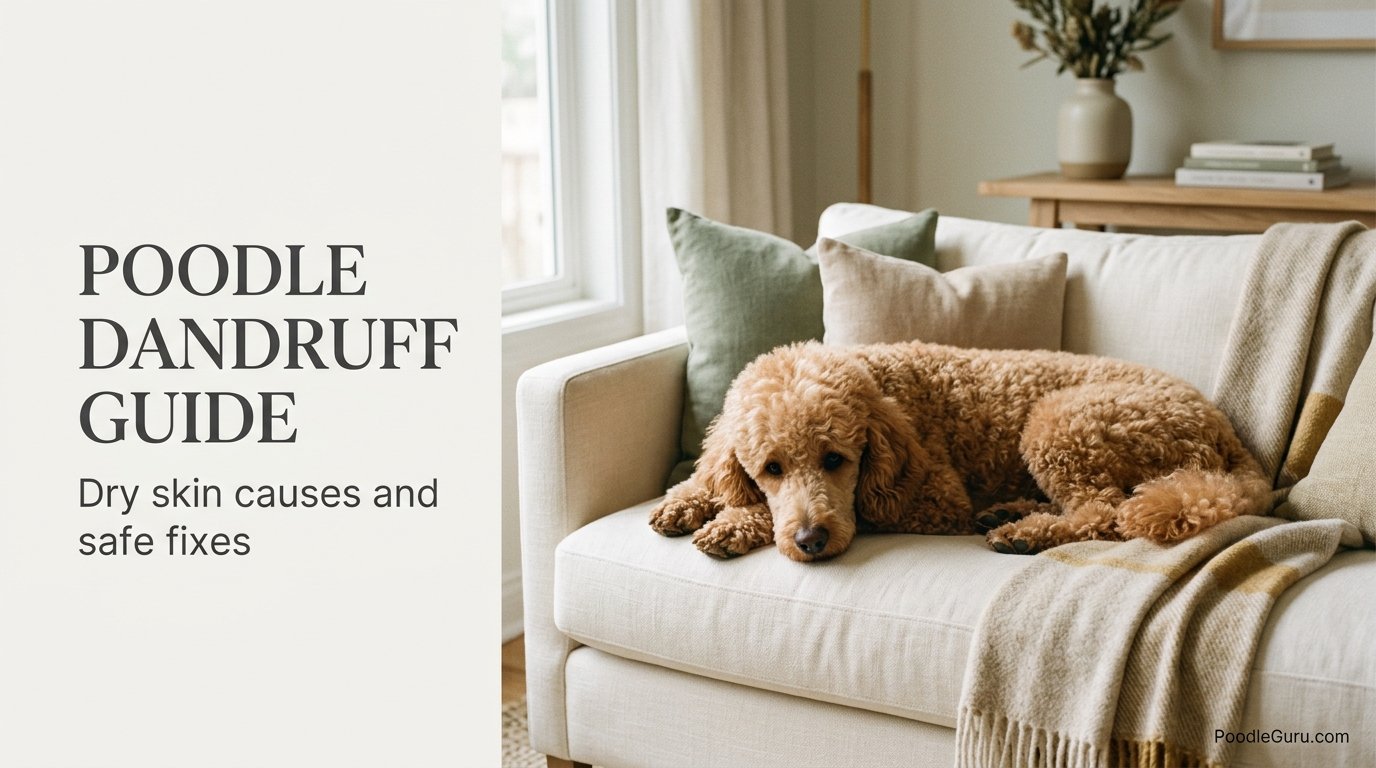
Poodle dandruff is almost never a disease by itself. It is usually a visible symptom that your dog’s skin barrier is under stress from dry air, grooming gaps, diet quality, allergies, or an underlying skin condition.
Most mild white flakes improve within two to four weeks once the trigger is corrected. If flakes are yellow, greasy, smelly, itchy, or paired with redness, hair loss, or skin chewing, call your veterinarian before trying more home remedies.
What Is Poodle Dandruff?
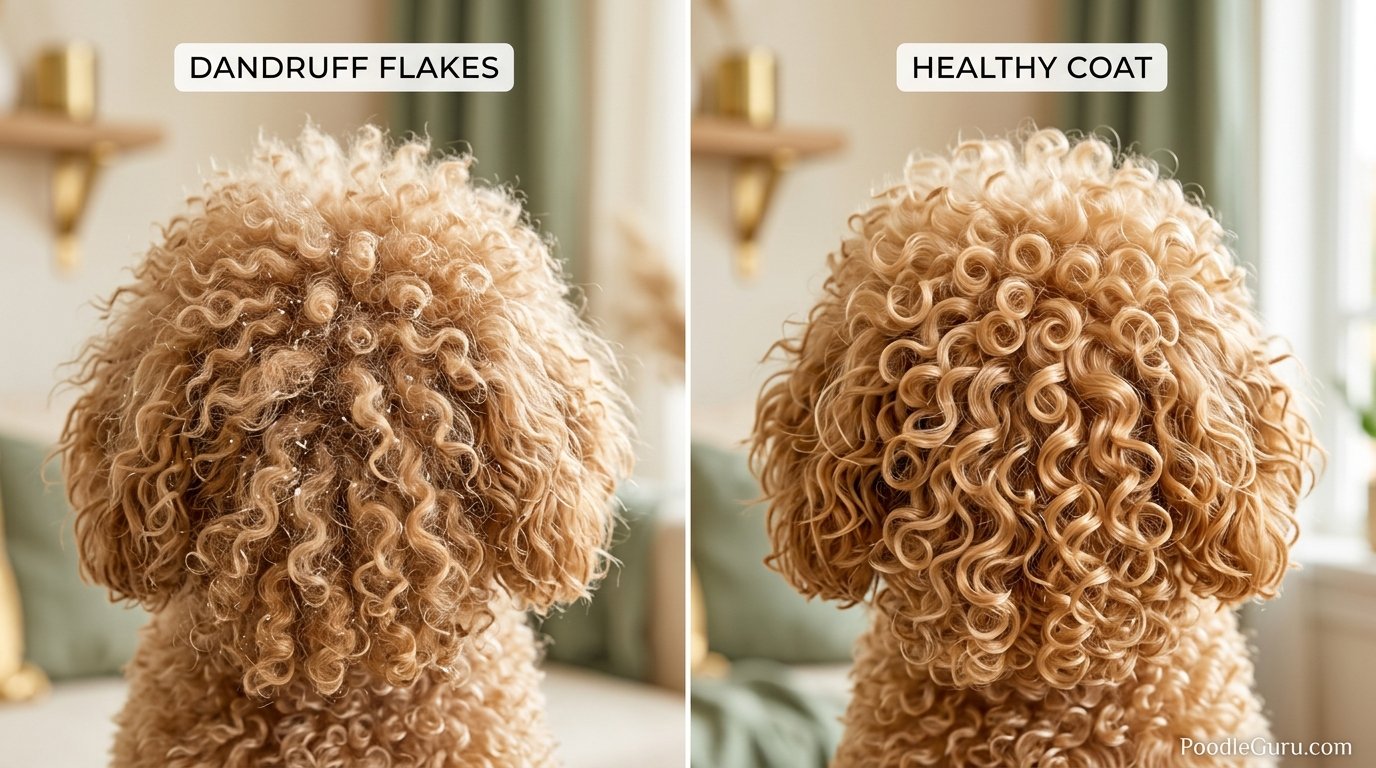
Poodle dandruff is a visible skin condition where dead skin cells shed in noticeable white or grayish flakes from your dog’s coat. For poodle owners, this means their normally elegant, low-shedding companion suddenly has flakes scattered through the curls — on the back, near the tail, or along the shoulders.
The most important thing to understand is that poodle dandruff is almost always a symptom of an underlying issue, not a standalone problem.
Unlike heavy-shedding breeds where some flaking might blend into daily fur loss, poodles trap dead skin cells inside their dense, curly coats. That makes even mild dandruff much more visible.
It also means flakes can build up against the skin if grooming isn’t consistent, creating a cycle of irritation that’s easy to miss until it’s obvious.
Dandruff itself isn’t painful or dangerous. But the conditions that cause it — chronic dryness, allergies, infection — can progress if ignored. Most cases resolve with straightforward adjustments at home. A smaller number need veterinary attention. Knowing how to tell the difference is what this guide is built for.
Quick Facts About Poodle Dandruff
It’s Not Normal Shedding
Poodles are low-shedding dogs. Visible flakes aren’t part of a typical coat cycle — they signal skin stress.
All Three Sizes Get It
Toy, Miniature, and Standard poodles are equally prone. Coat density, not body size, is the common factor.
Winter Is Peak Season
Indoor heating dries the air — and poodle skin. Most owners first notice flakes between November and March.
What Causes Poodle Dandruff? 5 Common Triggers
Dandruff doesn’t have one single cause. It’s the skin’s way of saying something is off balance. For poodles specifically, the dense single coat makes them more sensitive to certain triggers than double-coated breeds. Here are the most common culprits — and how each one shows up in real life.
1. Low Humidity and Dry Indoor Air
This is the number one cause owners report during colder months. Forced-air heating strips moisture from the environment, and poodle skin loses its natural hydration fast. You’ll typically see fine, white, dry flakes scattered across the back and shoulders — no redness, no odor, just dryness.
2. Nutritional Gaps
Poodle skin needs a steady supply of omega-3 and omega-6 fatty acids to maintain its lipid barrier. When poodle nutrition falls short — particularly in EPA and DHA from quality animal fats — the skin can become dull and flaky.
Veterinary nutrition guidance generally recommends diets meeting WSAVA global nutrition standards as a baseline for skin health.
3. Infrequent or Improper Grooming
Those iconic curls are beautiful, but they are also efficient at trapping dead skin cells. When brushing sessions stretch too far apart, flakes can accumulate against the skin and create a cycle of irritation.
The complete poodle grooming routine matters more than most new owners realize. A slicker brush used every two to three days can make a measurable difference.
4. Mild Allergies
Environmental allergens — pollen, dust mites, certain grasses — can trigger low-grade skin inflammation that presents as dandruff before more obvious signs appear. Food sensitivities can work the same way.
According to veterinary guidance on canine allergies from VCA Animal Hospitals, skin reactions are among the earliest visible allergy symptoms in dogs.
5. Underlying Health Conditions
Less commonly, persistent dandruff points to something that needs a vet’s diagnosis: hypothyroidism, Cushing’s disease, seborrhea, yeast overgrowth, mites, or bacterial infection. These conditions do not resolve with grooming changes or humidifiers alone.
The key distinction is that dandruff from these causes tends to be greasy, yellow-tinged, odorous, itchy, or accompanied by other symptoms like hair thinning, weight changes, or excessive thirst.
The PoodleGuru Skin Assessment Framework
At PoodleGuru, we evaluate poodle skin issues using a simple three-point check that any owner can perform at home. This framework helps you decide whether you’re dealing with routine dryness or something that needs a vet’s eyes.
1. Flake Color
White and dry: Usually environmental or nutritional.
Yellow, greasy, or clumped: Possible infection or seborrhea — vet check recommended.
2. Skin Appearance
Pale pink, no odor: Likely simple dryness.
Red, inflamed, or smelly: Possible bacterial or yeast overgrowth — don’t wait.
3. Location Pattern
Scattered across back only: Classic dry-air dandruff.
Concentrated near ears, belly, or tail base: May indicate allergies or localized infection.
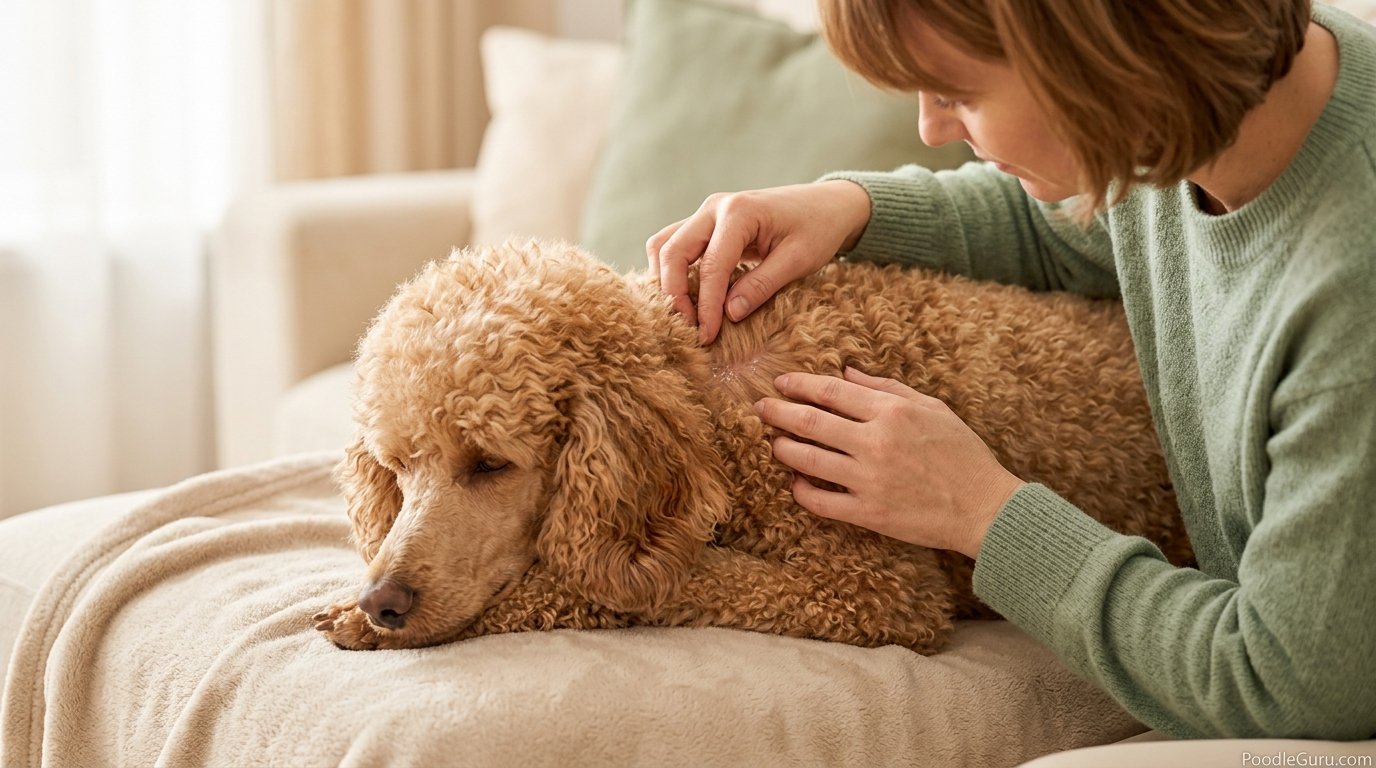
Run this check once when you first notice flakes, and again after two weeks of any home-care adjustments. If the pattern moves from white-and-scattered toward yellow-and-concentrated, that’s your signal to escalate.
Dandruff vs. Other Poodle Skin Conditions
Not every flake is dandruff. Poodles can develop several skin conditions that look similar at first glance but need very different responses. This comparison table is built to help you distinguish between them at a glance.
| Condition | Flake Appearance | Skin Look | Odor | Itching Level | Typical First Step |
|---|---|---|---|---|---|
| Simple Dandruff | White, fine, dry | Pale pink, calm | None | Mild or none | Humidifier + grooming |
| Seborrhea | Yellow, greasy, clumped | Oily, may be red | Strong, musty | Moderate to severe | Vet diagnosis required |
| Allergic Dermatitis | Fine white flakes + redness | Red, inflamed patches | None to mild | Moderate to intense | Identify allergen + vet |
| Yeast Infection | Greasy flakes, skin thickening | Darkened, leathery | Sweet, musty | Intense | Vet treatment (antifungal) |
| Walking Dandruff (Mites) | Flakes that appear to move | Variable | None | Moderate | Vet diagnosis (skin scrape) |
This table is for educational comparison only. A veterinarian should confirm any diagnosis before treatment begins.
How to Help Your Poodle with Dandruff: 5 Safe Fixes
If your assessment points toward simple dry dandruff — white flakes, calm skin, no odor — here’s a practical step-by-step plan. Most poodles show improvement within two weeks when these changes are applied consistently.
Add a Humidifier to Your Poodle’s Main Room
Set it to maintain 45–55% humidity. Run it during heating season or in dry climates year-round. This single change helps many cases of winter dandruff when dry indoor air is the main trigger.
Increase Brushing Frequency to Every 2–3 Days
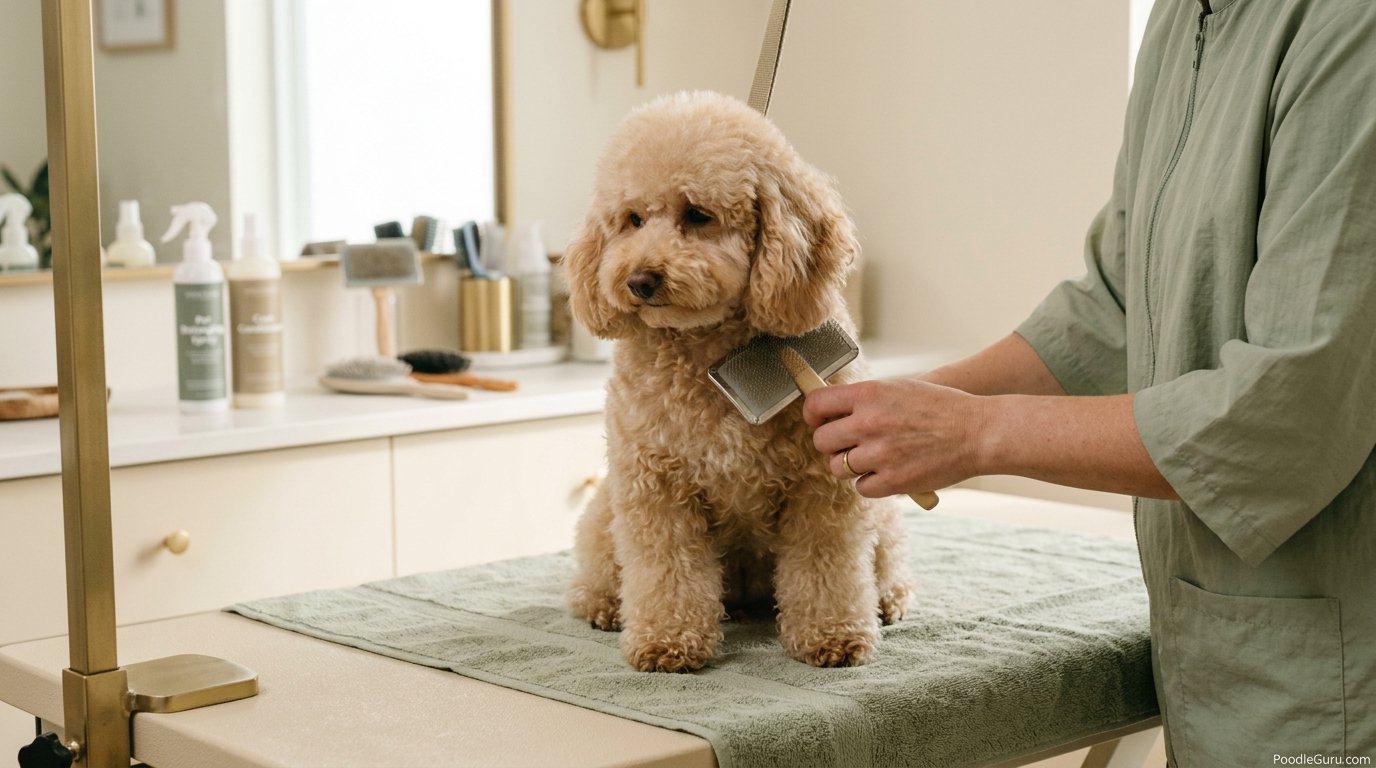
Use a quality slicker brush followed by a greyhound comb. Brushing distributes natural oils from the skin through the coat — something that happens far less efficiently in curly-coated breeds than in straight-coated dogs.
Evaluate Your Poodle’s Diet for Omega Fatty Acids
Look for a food that lists named animal fats and includes supplemental omega-3s, or talk to your vet about adding a high-quality fish oil. Results take three to six weeks to become visible — this is a long game.
Use an Oatmeal-Based or Moisturizing Dog Shampoo
Bathe no more than once every three to four weeks. Over-bathing strips natural oils and makes dandruff worse. When you do bathe, choose a shampoo formulated for dry skin — colloidal oatmeal is the gold standard ingredient.
Reassess After Two Weeks Using the Skin Assessment Framework
Check flake color, skin appearance, and location pattern. If things are improving, stay the course. If not — or if anything has worsened — move to the veterinary step below.
When to Call Your Veterinarian
Veterinary Visit Indicators
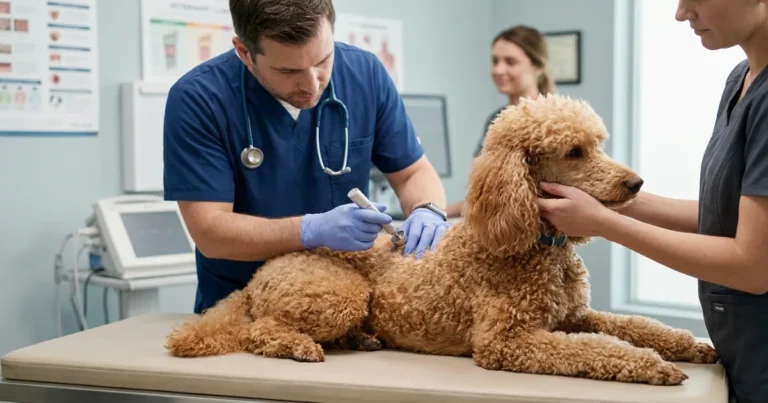
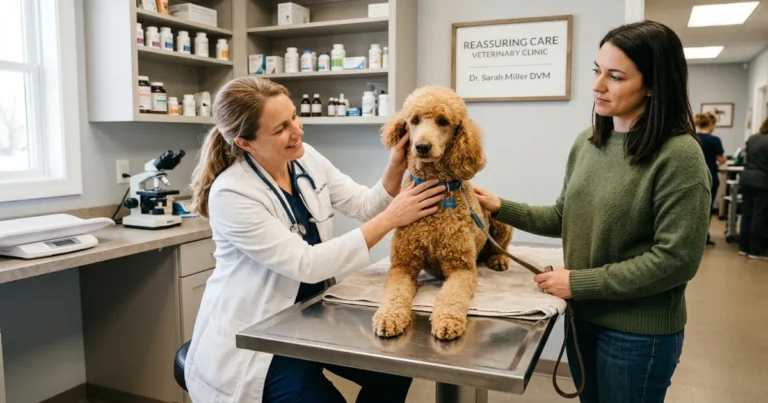
Schedule an appointment if your poodle’s dandruff includes any of the following:
- Yellow, greasy, or clumped flakes that don’t improve with grooming
- Redness, inflammation, or hot spots on the skin
- A noticeable odor — musty, sweet, or sour
- Excessive scratching, licking, or skin chewing
- Hair loss in patches beyond normal coat thinning
- Flakes that appear to be moving (possible Cheyletiella mites)
- Dandruff accompanied by weight changes, lethargy, or increased thirst
These signs suggest conditions that won’t resolve with home care alone — including bacterial infection, yeast overgrowth, seborrhea, or endocrine disorders that need proper diagnosis.
Owner Mistakes That Make Dandruff Worse
Even experienced poodle owners sometimes reach for fixes that backfire. Here are the most common missteps — and what to do instead.
Over-Bathing
The mistake: Bathing weekly to “wash away” flakes. The fix: This strips the lipid barrier and triggers more flaking. Stick to a three-to-four-week bathing schedule with a moisturizing shampoo.
Using Human Dandruff Shampoo
The mistake: Applying Head & Shoulders or similar products. The fix: Human shampoos have the wrong pH for canine skin and may irritate or dry the skin with repeated use. Always use dog-specific formulations.
Ignoring the Diet Piece
The mistake: Treating dandruff as purely external. The fix: Skin health starts from within. A diet low in quality fats will undermine every topical treatment you try. Nutrition and grooming work together.
Why Poodles Are Different From Other Breeds
Poodles have a single-layer, continuously growing coat — more similar to human hair than to the double coats of breeds like Golden Retrievers. This means they do not shed dead skin cells efficiently through seasonal coat blows.
Instead, those cells can sit trapped against the skin until they are mechanically removed by brushing or bathing. That is why grooming consistency matters so much for poodles. It is not just cosmetic; it helps keep their skin functional.
Frequently Asked Questions
Can poodle dandruff go away on its own?
Yes, mild dandruff caused by dry air or minor grooming gaps often resolves once the trigger is addressed — usually within two to three weeks of adding humidity and consistent brushing. If it persists longer or worsens, an underlying issue needs investigation.
How often should I bathe a poodle with dandruff?
Every three to four weeks with a moisturizing dog shampoo. Bathing more frequently strips natural oils and can make dandruff significantly worse. Between baths, rely on brushing to distribute oils and remove loose flakes.
Does coconut oil help poodle dandruff?
Coconut oil applied topically in very small amounts can provide temporary moisture relief for dry skin, but it can also clog pores and attract dirt if overused. Dietary omega-3 supplementation tends to be more effective and less messy for long-term skin health.
Is dandruff more common in certain poodle colors?
Dandruff appears equally across all poodle coat colors, but it’s far more visible on dark coats like black, brown, or blue. Owners of lighter-colored poodles — cream, apricot, white — may not notice mild flaking as quickly.
Can stress cause dandruff in poodles?
Yes. Stress triggers cortisol release, which can disrupt the skin’s normal barrier function and oil production. Boarding, moving homes, or significant routine changes are common stress-related dandruff triggers that typically resolve once the poodle settles.
What’s the difference between poodle dandruff and walking dandruff?
Walking dandruff is caused by Cheyletiella mites — the flakes appear to move because the mites are carrying them. True dandruff flakes are stationary. If you notice movement in the flakes, especially along the back, a veterinary skin scrape is needed for diagnosis.
Should I change my poodle’s food if they have dandruff?
Consider it if the current diet is low in named animal fats or lacks supplemental omega-3 fatty acids. A switch to a higher-quality food with EPA and DHA from fish oil can improve skin condition noticeably within four to six weeks. Make any diet change gradually over 7–10 days.
Key Takeaways: Poodle Dandruff
Poodle dandruff is a solvable problem in the vast majority of cases. Here’s what to remember:
- Poodle dandruff is a symptom, not a disease — it signals that the skin barrier is under stress from environment, nutrition, grooming, or health factors.
- White, dry flakes scattered across the back usually respond to humidifiers, consistent brushing every 2–3 days, and dietary omega-3 supplementation.
- Yellow, greasy, or odorous flakes — or flakes with redness and itching — warrant a veterinary visit for proper diagnosis.
- The PoodleGuru Skin Assessment Framework (flake color, skin appearance, location pattern) helps owners decide between home care and professional help.
- Poodles’ single-layer curly coats trap dead skin cells more than double-coated breeds — making regular grooming a health necessity, not just a cosmetic choice.
- Most simple dandruff cases improve within two to four weeks when the underlying trigger is identified and addressed consistently.