Are Poodles Good Apartment Dogs? Size-By-Size Breakdown
You live in 700 square feet. You want a dog who matches your energy, your space, and your lease rules — not one who’ll bounce off the walls. Poodles are often recommended for apartment living, but the truth isn’t one-size-fits-all. A Toy Poodle and a Standard Poodle face very different realities inside the same apartment. This guide breaks down every poodle size honestly, so you know which fits — and which might not.
Quick Answer
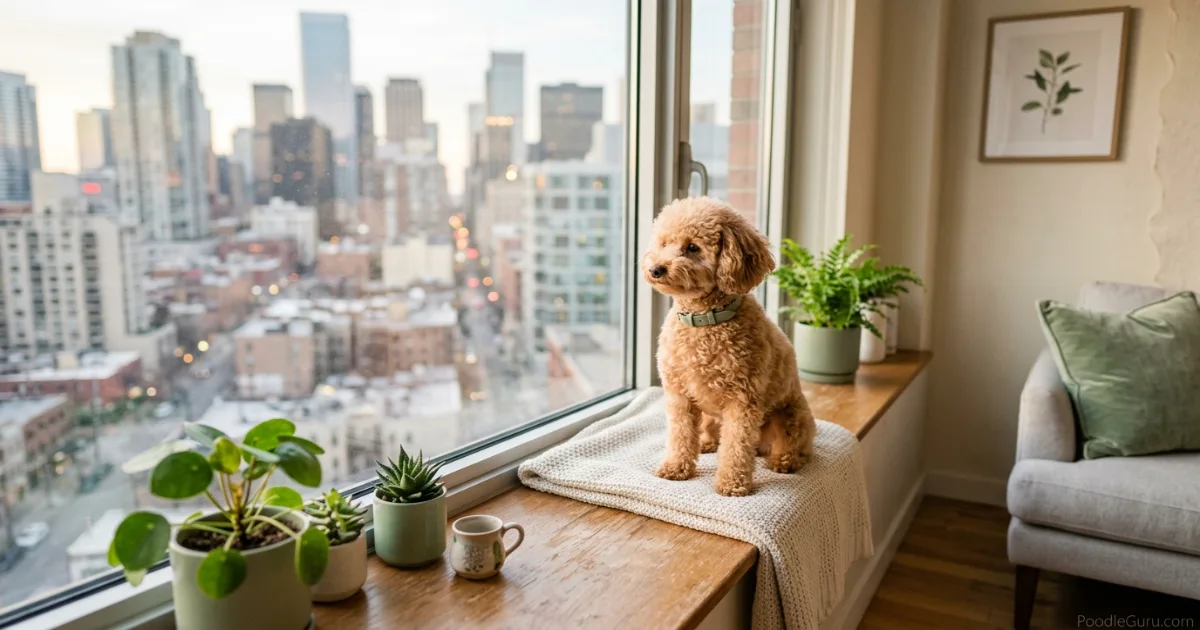
Yes, poodles can be excellent apartment dogs — when matched correctly. Toy and Miniature Poodles usually adapt well to apartment living because they need modest indoor space and manageable daily exercise.
Standard Poodles can thrive in apartments too, but they need more physical activity, more floor space to stretch out, and more daily mental enrichment. The real key isn’t size alone: it’s whether your routine meets the energy and stimulation needs of the poodle you choose. Get that right, and poodle apartment living works beautifully.
The PoodleGuru Apartment Suitability Scorecard
We evaluated each poodle size against the five factors that most determine apartment success: square footage tolerance, exercise demand, noise sensitivity, potty logistics, and adaptability to close-quarter living. The table below gives you a direct, side-by-side comparison built specifically for poodle apartment living decisions.
| Factor | Toy Poodle | Miniature Poodle | Standard Poodle |
|---|---|---|---|
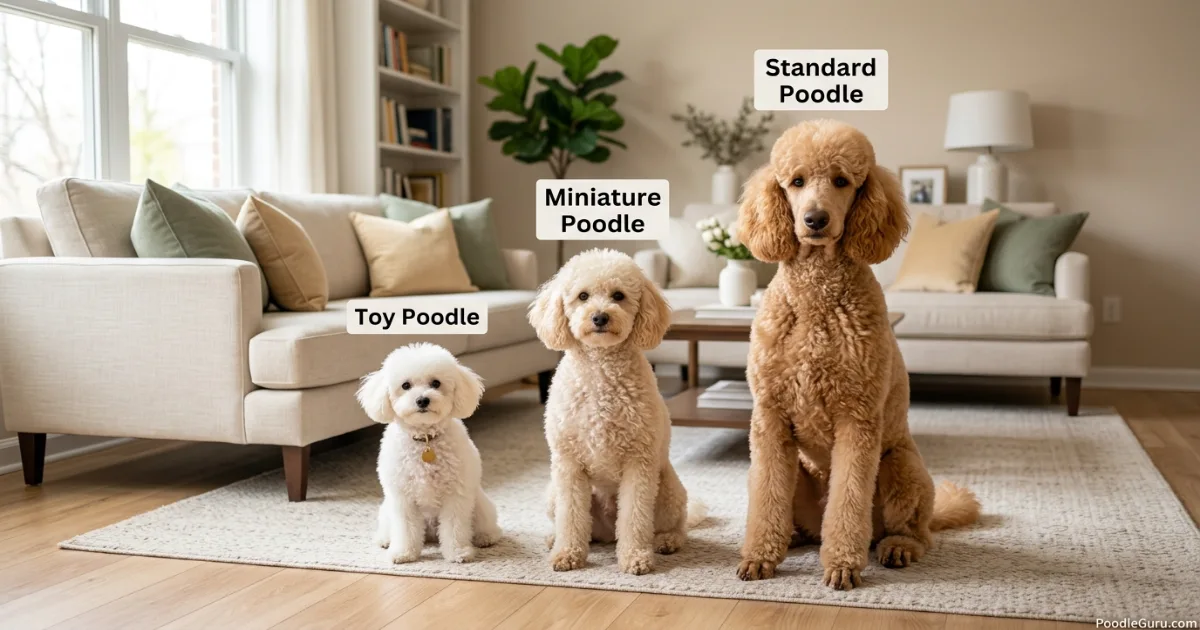
| Weight | 4–6 lbs | 10–15 lbs | 40–70 lbs |
| Minimum Living Space | Studio (400 sq ft+) | 1-Bedroom (600 sq ft+) | 1-Bedroom + open layout (800 sq ft+) |
| Daily Exercise Requirement | 30–45 min (short walks, play) | 45–60 min (walks, mental games) | 60–90 min (long walks, running, training) |
| Barking Tendency | Higher alert barking; manageable with training | Moderate; can be vocal if bored | Lower-frequency; deeper bark carries farther |
| Potty Logistics Ease | Easiest — indoor pads work well | Good — pads or short outdoor trips | Harder — needs reliable outdoor access |
| Adaptability Score | ★★★★★ | ★★★★☆ | ★★★☆☆ (requires commitment) |
Expert Insight
According to the AKC breed standard, all three poodle sizes share the same breed temperament: intelligent, active, and proud. That means the core personality doesn’t change — it’s the scale of their needs that shifts with size. A Standard Poodle will challenge your apartment routine far more than a Toy, but neither size is “bad” for apartments if the owner is prepared.
Toy Poodles in Apartments: The Compact Companion
Toy Poodles are the most apartment-adaptable size by a wide margin. They weigh under 6 pounds, take up almost no floor space, and can meet a significant portion of their exercise needs with indoor play and short walks. For studio renters, retirees, or anyone in a high-rise without elevator patience, a Toy Poodle is the lowest-friction entry into poodle apartment living.
There’s a catch, though: Toys are alert dogs. They notice every hallway footstep and delivery knock. Without training, a Toy Poodle can become a tiny but persistent barker — exactly what neighbors in thin-walled apartments dread. The solution isn’t avoiding the breed; it’s proactive socialization and teaching a “quiet” cue from day one. When trained well, Toys settle beautifully into apartment rhythms.
Potty logistics are also the simplest. Many Toy Poodle owners use indoor potty pads or grass patches as a backup for bad weather or late nights, reducing the strain of multiple elevator trips. Just be mindful: relying entirely on indoor solutions can sometimes delay full house-training if not balanced with outdoor exposure. Our poodle training guide covers this balance in detail.
Miniature Poodles in Apartments: The Middle Ground
Miniature Poodles sit in the sweet spot for many apartment dwellers. They’re small enough to curl up on a couch without dominating the room, but sturdy enough to handle longer walks and city staircases without fragility concerns. A well-exercised Miniature is content to nap while you work from home — and that’s where they shine.
The challenge with Minis is that their energy level is nearly identical to a Standard’s, just compressed into a 10–15-pound frame. A 20-minute stroll won’t cut it. They need active engagement: brisk walks, puzzle toys, hide-and-seek games. When that need isn’t met, they invent their own jobs — often involving vocal commentary that neighbors might not appreciate. Apartment success with a Mini hinges on whether you can provide 45–60 minutes of focused daily activity, rain or shine.
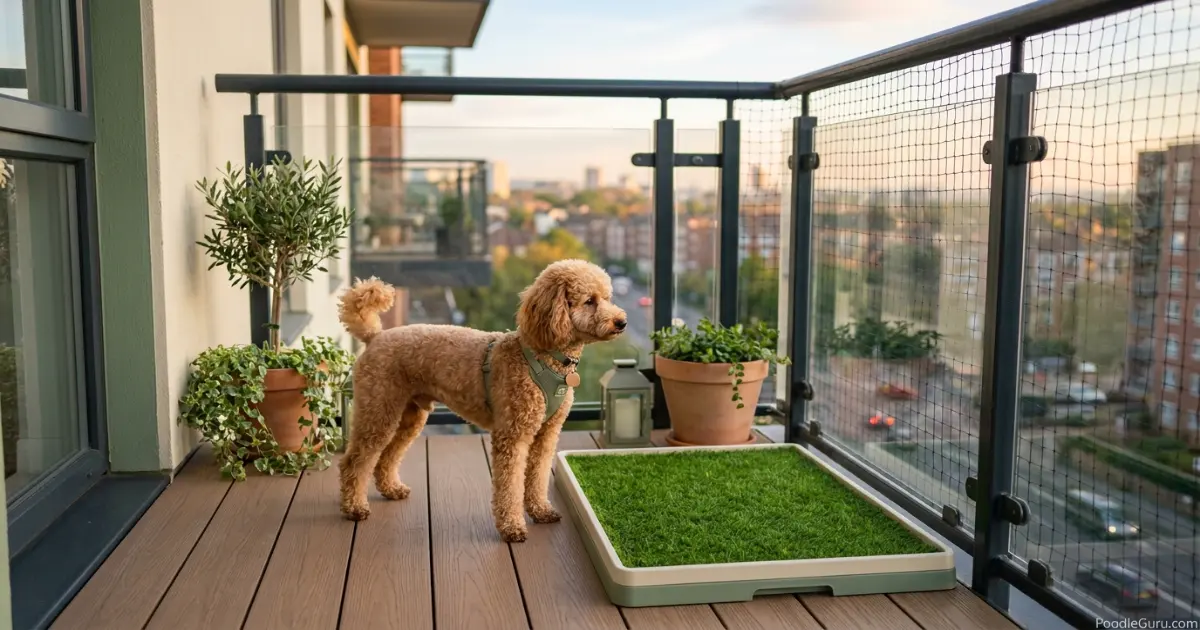
Potty-wise, Miniatures adapt well to a mix of outdoor walks and occasional indoor backup. Their size makes a balcony grass patch viable, but they still benefit from real outdoor sniffing time. If your apartment has easy ground access, they’re remarkably unfussy.
Standard Poodles in Apartments: The Surprising Contender
Don’t let their size fool you — Standard Poodles can live happily in apartments, but only with an owner who treats exercise like a non-negotiable appointment. Standards often need 60–90 minutes of daily physical activity, and they need it even when it’s raining, even when you’re tired, and even when your workday runs long.
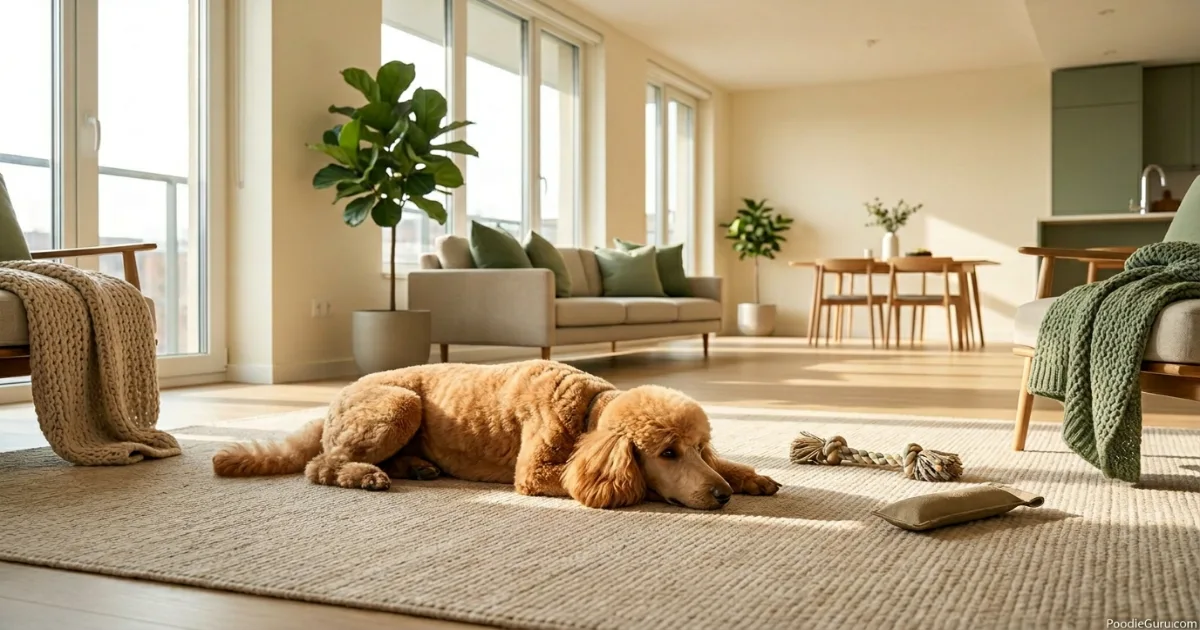
If you’re already an active person — a runner, a hiker, or someone who walks miles daily — a Standard can be an exceptional apartment companion. They’re usually calm indoors when properly exercised, often content to sprawl elegantly on the floor like a living sculpture.
The real risk is space. A Standard Poodle’s long legs and bounding play style mean a cramped studio with fragile furniture can lead to knocked-over lamps and frustrated dogs. They do best in apartments with open layouts, generous floor space, and ideally, proximity to parks or trails.
Their bark is deep and carries, so while they may bark less frequently than Toys, each bark is more noticeable. Apartment living with a Standard is a lifestyle choice, not a convenience choice. Do it right and it works. Do it halfway and both of you will feel the strain.
Potty logistics demand commitment. Indoor pads are generally not practical for a 50-pound dog. You’ll be going outside multiple times a day, and if you’re on a high floor, that means elevator trips. The ASPCA’s apartment dog guidance highlights the importance of exercise, routine, and appropriate outlets for dogs in apartments. For a Standard Poodle, that means reliable outdoor bathroom access and a predictable daily schedule.
Poodle Barking in Apartments: What Owners Need to Know
Noise complaints are one of the biggest reasons poodles struggle in apartment homes. All poodle sizes are alert and will bark at unfamiliar sounds — it’s bred into them as watchful companions. The difference lies in frequency and volume. Toy and Miniature Poodles tend to bark more often at small triggers (doorbells, hallway voices, neighboring dogs). Standard Poodles bark less frequently, but when they do, the sound travels through walls more effectively.
This doesn’t mean you need a silent dog; it means you need a training plan. Start “quiet” training early. Reward calm behavior when strangers pass. Use white noise machines or soft music to mask triggering hallway sounds. For highly reactive barkers, a certified positive-reinforcement trainer can make the difference between lease trouble and peaceful cohabitation. The bark itself isn’t the problem — it’s the unmanaged bark that becomes one.
Exercise Reality vs. Apartment Myths
A persistent myth says small dogs don’t need real exercise. That’s dangerous for poodles. A Toy Poodle without at least two daily play-and-walk sessions will become restless, anxious, and often vocal. Miniatures, similarly, are athletes in compact bodies. Poodles were originally water retrievers — they have working brains that need to be tired out. Apartment size doesn’t replace exercise; it just changes how and where you do it.
The most successful apartment poodle owners treat mental exercise as equal to physical. A 15-minute scent game indoors can burn as much energy as a 20-minute walk. Puzzle feeders, trick training, and hide-and-seek sessions become apartment superpowers. If your schedule can accommodate two solid daily activity blocks, you can own any poodle size in an apartment. If not, lean toward Toy or Miniature, and even then, commit to daily engagement.
Potty Logistics Without a Yard: A Real-World Breakdown
Living without a private yard changes the potty equation. Here’s how each size handles the challenge in practice:
- Toy Poodles: Indoor potty pads or fresh grass patches work reliably. Many owners keep a designated pad area near the balcony door for late-night convenience. Balance with outdoor trips to maintain house-training flexibility.
- Miniature Poodles: Most do well with 3–4 outdoor trips daily plus a backup pad for emergencies. A balcony grass patch can reduce elevator fatigue during bad weather.
- Standard Poodles: Pad training is rarely practical. Expect 4–5 outdoor bathroom trips per day. If you don’t have easy ground access, a Standard will test your patience — and your elevator wait time.
Practical Tip
If you’re considering a poodle for a high-floor apartment, invest in a high-quality indoor grass pad system like a porch potty. It’s not a replacement for walks, but it’s a sanity-saver during storms, illness, or late-night emergencies — especially for Toy and Miniature sizes.
The PoodleGuru Apartment Readiness Checklist
At PoodleGuru, we evaluate apartment readiness across five dimensions. Use this checklist to test any poodle size against your real life — not your aspirational one.
Assess Your Square Footage Honestly
Toy Poodles need 400 sq ft minimum. Miniatures need around 600. Standards need at least 800 with an open floor plan. Can your layout accommodate a dog bed, feeding station, and a clear play zone without constant furniture dodging?
Calculate Your Daily Exercise Commitment
Write down your current weekday routine. Can you realistically block 45 minutes for a Toy, 60 for a Mini, or 90 for a Standard? If your only outdoor time is a 10-minute morning rush, reconsider the size you’re choosing.
Evaluate Your Noise Tolerance — and Your Neighbors’
Poodles will bark. Can you invest in training from day one? Do you have neighbors directly above, below, or through thin walls? If so, factor in white noise, strategic furniture placement, and a willingness to manage alert barking before it becomes a complaint.
Plan Potty Logistics for Your Floor and Schedule
If you’re on the 20th floor with a slow elevator, a Standard Poodle’s bathroom needs become a serious logistical commitment. Toy and Mini Poodles offer more flexibility. Be honest about what you’ll actually manage when you’re tired or sick.
Commit to Mental Enrichment
Poodles need brain workouts. Puzzle feeders, scent games, trick training — these are not optional extras for apartment poodles; they’re daily requirements. Without them, even a tiny apartment can feel too small for a bored, restless dog.
Buyer Tips for Choosing an Apartment Poodle
If you’re still in the decision phase, a few practical pointers will save you heartache later:
- Consider an adult rescue poodle. Adult dogs come with known temperaments and energy levels. A calm 4-year-old Miniature Poodle is a safer apartment bet than a high-drive puppy of any size. Many breed-specific rescues can match you with a dog already comfortable in apartment settings.
- Talk to breeders about apartment placements. Good breeders know which puppies in a litter are lower-energy or more noise-sensitive. Ask directly: “Which puppy would you place in a 700-square-foot apartment?” Their answer will tell you a lot about both the dog and the breeder’s honesty.
- Check your lease — twice. Many apartments have weight limits, breed restrictions, or pet deposits. Poodles are rarely on restricted breed lists, but a Standard Poodle’s weight could exceed a 40-lb limit. Confirm before you fall in love.
- Budget for dog walkers or daycare. If your workdays are long, a midday walker isn’t a luxury — it’s essential for apartment poodles. Factor $300–$500 per month into your budget if you’ll be gone more than 6–7 hours regularly.
What Owners Usually Misunderstand
Many buyers think a smaller poodle means less work. It doesn’t. It means different work. A Toy Poodle still needs training, socialization, exercise, and mental stimulation — you’re just doing it in a smaller package. Size doesn’t remove responsibility; it shifts the logistics. Underestimate that, and apartment poodle living will disappoint you regardless of which size you choose.
Frequently Asked Questions
Which poodle size is best for an apartment?
Toy Poodles are the most apartment-friendly size due to their small footprint, lower exercise demands, and easy potty logistics. Miniature Poodles are a close second for owners who can provide 45–60 minutes of daily activity. Standard Poodles can succeed but require significant space and exercise commitment.
Do poodles bark a lot in apartments?
Poodles are alert dogs and will bark at unfamiliar sounds. Toy and Miniature sizes tend to bark more frequently at small triggers, while Standards bark less often but more loudly. Training a “quiet” cue early, using white noise, and rewarding calm behavior dramatically reduces problem barking in any poodle size.
Can a Standard Poodle live in a studio apartment?
It’s not recommended. Standards need room to stretch, play, and move without knocking into furniture. A studio apartment under 600 square feet doesn’t provide enough physical space for a Standard Poodle to feel comfortable, even if exercise needs are met outdoors.
How much exercise does an apartment poodle need?
Toy Poodles need 30–45 minutes daily, Miniatures 45–60 minutes, and Standards 60–90 minutes. This should include physical activity like walks plus mental enrichment like puzzle toys and training. Apartment living doesn’t reduce exercise needs — it just shifts where it happens.
Are poodles good for first-time apartment owners?
Yes, especially Toy and Miniature Poodles, if the owner is committed to training and daily mental stimulation. Poodles are intelligent and sensitive, which makes them responsive to positive training but also prone to anxiety if ignored. First-time owners who educate themselves do well with poodles.
What if my apartment has a weight limit for dogs?
Check your lease before choosing a size. Many apartments cap dogs at 25–40 lbs, which rules out Standard Poodles. Toy and Miniature Poodles easily fall under most weight restrictions. Always confirm the limit in writing.
Can I leave my apartment poodle alone during the workday?
Adult poodles can manage 6–8 hours alone if they’ve had sufficient morning exercise and have access to water and a potty solution. Puppies need more frequent breaks. A midday dog walker or daycare is strongly recommended for full-time workers to prevent loneliness and accidents.
Key Takeaways: Poodle Apartment Living
Poodles and apartments can be a perfect match — with the right size, the right expectations, and the right daily routine. Here’s what to remember:
- Toy Poodles are the most apartment-adaptable poodle size, needing minimal space, moderate exercise, and accommodating indoor potty options.
- Miniature Poodles thrive in apartments when owners commit to 45–60 minutes of daily activity and mental engagement; they offer a balance of sturdiness and compact size.
- Standard Poodles can live happily in apartments but demand 60–90 minutes of daily exercise, open floor plans, and an owner whose lifestyle already includes significant outdoor activity.
- Barking is a manageable challenge for all poodle sizes in apartments, provided training begins early and environmental management (like white noise) is used consistently.
- The PoodleGuru Apartment Readiness Checklist — assessing space, exercise, noise, potty logistics, and mental enrichment — helps any prospective owner make an honest, informed decision.
- Weight limits, lease restrictions, and realistic budgets for dog walkers should be confirmed before choosing a poodle size; Toy and Miniature sizes fit most apartment regulations, while Standards often exceed weight caps.
- Poodle apartment living works when you choose the dog that fits your actual daily routine, not your aspirational weekend self. Get that right, and you’ll have a contented, elegant companion who makes apartment life richer every day.
Next step: Compare all poodle sizes in detail with our Poodle Size Chart before making your final decision.