Poodle as an Emotional Support Animal: How to Register (and What Owners Must Know)
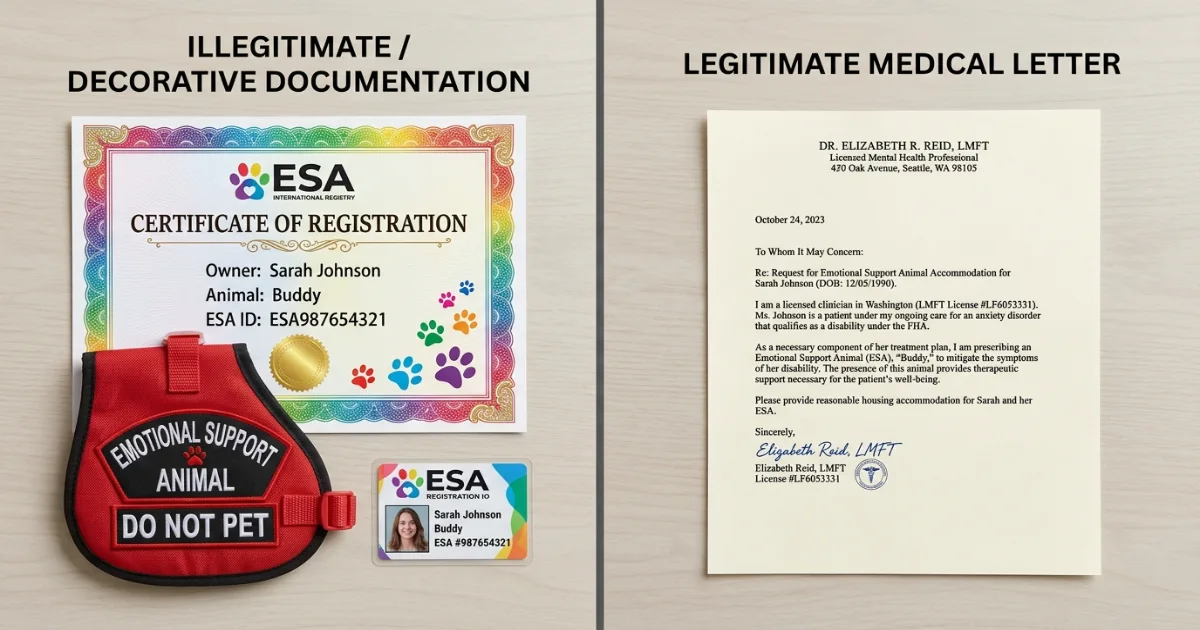
Quick Answer: Poodles make outstanding emotional support animals (ESAs), but they are not “registered” through any government agency or online database. The only legitimate way to qualify your Poodle as an ESA is by obtaining a valid ESA letter from a licensed mental health professional. Any website selling instant “certification” without a real evaluation is misleading. That letter — not a vest, not a fancy ID card — is what protects your housing rights under the Fair Housing Act. Poodles are naturally empathetic, highly intelligent, and their hypoallergenic coats make them one of the most recommended ESA breeds for individuals with anxiety, depression, or PTSD.
Few dog breeds embody emotional intelligence quite like the Poodle. Whether you’re drawn to the teacup-sized Toy, the balanced Miniature, or the regal Standard, these curly-coated companions have spent centuries finely attuned to human emotion. If you’ve been searching for reliable information about a Poodle as an emotional support animal and how to register one, you’ve probably run into a tangle of confusing websites promising instant legitimacy. This guide unpacks what actually matters: the law, the process, the common traps, and why a Poodle might be the most therapeutic decision you’ll ever make.

No official ESA registry
There is no government-recognized database, and “registration” alone holds zero legal weight.
ESA letter is everything
Only a letter from a licensed mental health professional grants housing (and limited travel) protections.
Poodles top ESA lists
Intuitive, affectionate, and non-shedding, they’re ideal for emotional support roles.
Not a service dog
ESAs do not have public access rights — they can’t accompany you into restaurants or stores.
Housing rights are real
Under the Fair Housing Act, landlords generally must accommodate a verified ESA Poodle without pet fees.
Air travel changed
Since 2021, U.S. airlines are no longer required to accept ESAs in the cabin for free; most treat them as pets.
What Is an Emotional Support Animal (and Why Poodles Excel)
An emotional support animal is not a pet in the ordinary sense — it’s a companion prescribed by a mental health professional to alleviate symptoms of a diagnosed emotional or psychological condition. Unlike service dogs, ESAs require no specialized task training. Their mere presence provides comfort, stability, and a calming routine. The Poodle, in particular, stands out. Their high emotional receptivity, combined with an uncanny ability to read micro-expressions, means they often know you’re upset before you’ve even spoken. That’s not anecdotal fluff; it’s bred into them over generations as thoughtfully perceptive companions.
Why a Poodle as an Emotional Support Animal Makes So Much Sense
The question isn’t just “can a Poodle be an ESA?” but “why do so many therapists instinctively recommend them?” Start with temperament. Poodles are famously gentle, people-oriented, and remarkably adaptable. A Toy Poodle will curl quietly on your chest during a panic attack; a Standard Poodle will lean its solid body against you as a grounding anchor. They’re also one of the few breeds that truly seem to modulate their energy to yours. Add the hypoallergenic coat — crucial for owners with allergies who still need close contact — and you have a breed that fits seamlessly into both apartments and family homes.
Emotional Support Animal vs. Service Dog vs. Therapy Dog: Clearing the Confusion
Misidentification runs rampant. Too many people assume an ESA letter turns a Poodle into a service dog. It doesn’t. The table below clarifies exactly where your Poodle ESA stands — and what rights don’t apply.
| Category | Specialized Training | Public Access Rights | Housing Protection | Key Purpose |
|---|---|---|---|---|
| Emotional Support Animal (ESA) | None required | No (except limited airline discretion) | Yes (Fair Housing Act) | Provide comfort through presence |
| Service Dog | Extensive task-specific training | Full (ADA) | Yes (FHA) | Perform tasks for a disability |
| Therapy Dog | Obedience and temperament evaluation | Invited facilities only | No | Provide affection in settings like hospitals |
The Legal Truth: What an ESA Letter for Your Poodle Actually Protects
Here’s where many owners get tripped up. A legitimate ESA letter entitles you to “reasonable accommodation” in housing under the Fair Housing Act (FHA). That means a landlord cannot refuse your Poodle based on breed or pet restrictions, nor can they charge a pet deposit or monthly pet rent. However, if your Poodle poses a direct threat or causes significant property damage, those protections can evaporate. And regarding air travel? As of 2021, the U.S. Department of Transportation no longer classifies ESAs as service animals; airlines are free to treat them as pets, charge fees, or deny cabin access. Always check individual airline policies.
How to Properly Qualify Your Poodle as an Emotional Support Animal (The Right Way)
Since “registration” is the word so many people search for, let’s replace it with what actually matters: qualification. Here’s a truthful step-by-step path that won’t leave you holding a useless certificate.
- Assess your emotional need honestly. Do you experience anxiety, depression, panic attacks, PTSD, or another condition that a constant companion significantly alleviates?
- Schedule an evaluation with a licensed mental health professional. This can be your existing therapist or an online ESA evaluation service that connects you with a credentialed clinician. Legitimate services will conduct a live consultation, not just a checkbox form.
- Discuss how your Poodle helps. The professional needs to establish a nexus between your condition and the dog’s support — for example, the routine of caring for your Poodle pulls you out of depressive episodes.
- Obtain the official ESA letter. It must be on the provider’s letterhead, include their license number and date, and state you have a disability and that the animal is part of your treatment.
- Provide the letter to your landlord or housing provider. Do this before bringing the Poodle into a “no pets” property. Keep a digital copy always accessible.

How to Spot a Legitimate ESA Letter Service (and Avoid Scams)
The internet is littered with sites offering “instant Poodle ESA registration” for $49. They’ll send a fancy certificate, a vest, and maybe an ID card. None of that holds legal water. A real ESA evaluation isn’t instant — it involves a consultation. Watch for these red flags:
- They guarantee approval without any clinical conversation.
- They sell “lifetime” registrations — ESA letters should have an expiration (typically one year).
- They use terms like “certified ESA registry” — no official registry exists.
- They don’t connect you with a real, verifiable licensed professional in your state.
A trustworthy service will be transparent, provide the clinician’s details, and have clear refund or re-evaluation policies if the letter is challenged.
ESA Letter Cost Breakdown: What to Expect in 2026
Typical ESA letter pricing (U.S.)
- Online evaluation (single pet)$120 – $180
- Combined consultation + letter$150 – $220
- Renewal fee after 1 year$80 – $120
- Housing letter add-on (detailed accommodation request)$25 – $40 extra
What inflates price: instant-guarantee scams that charge for worthless “certification kits,” or services bundling unnecessary ID cards. A higher price doesn’t guarantee legitimacy, but rock-bottom prices with no live consultation are a giant red flag.
What Owners Often Get Wrong About Poodle Emotional Support Animals
Time and again, well-meaning Poodle parents make missteps that can undermine their ESA status. Here are the most persistent myths:
- “An online registry makes it official.” There is no ESA registry recognized by any U.S. federal agency. Save your money.
- “I can take my ESA Poodle anywhere.” You cannot. ESAs are not granted public access under the ADA. Restaurants, grocery stores, and shopping malls can legally deny entry.
- “My ESA letter works forever.” Most letters require annual renewal to remain valid, mirroring the need for ongoing therapeutic relationship.
- “Any breed qualifies automatically.” While there’s no breed restriction, a landlord can dispute an animal that poses a threat. Poodles’ non-aggressive nature helps, but still, documentation is key.
- “If an airline says no, I can sue.” Not anymore. Post-2021 rule changes give airlines broad discretion.
Living with a Poodle ESA: Practical Owner Insights
Beyond the paperwork, what does day-to-day life genuinely feel like? Jasmine, a Toy Poodle owner with generalized anxiety disorder, shares: “Léon doesn’t just follow me around — he notices shallow breathing before I do. He’ll press his tiny body against my leg until my breath evens out. No training taught him that.” Many ESA Poodle owners echo this sentiment. The breed’s emotional intuition is remarkable, but it doesn’t replace professional mental health treatment. Your Poodle is a supplement, not a substitute.
Expect to invest in grooming — that famous non-shedding coat requires brushing every other day and professional trims every 4–6 weeks. A matted Poodle is an uncomfortable Poodle, and discomfort can make them less capable of providing calm support. Size also matters: a Standard Poodle might offer deep pressure therapy simply by leaning, while a Toy Poodle’s portability works for those who need constant closeness but limited space.
Training Your Poodle ESA: Not Mandatory, but a Game-Changer
You are under zero legal obligation to train an ESA. However, a Poodle with basic obedience — sit, stay, settle, loose-leash walking — navigates the world (and landlord encounters) more comfortably. A well-mannered Poodle reinforces your credibility. No landlord wants to accommodate an emotional support animal that barks incessantly or damages property. Even short daily training sessions deepen your bond and provide a grounding ritual. Poodles’ high intelligence means they thrive on this mental engagement, which in turn reduces their own anxiety.
Travel, Housing, and Day Trips: Real Talk for Poodle ESA Owners
For housing: always present your ESA letter before signing a lease if possible. If you already live in a rental, submit the letter as a reasonable accommodation request. The landlord may ask for verification of the letter’s authenticity but cannot demand your specific diagnosis. For travel: though airlines are no longer mandated to accept ESAs, some still permit small pets in the cabin for a fee. A Toy or Miniature Poodle in an airline-approved carrier might travel under the seat. Check JetBlue, Delta, or Southwest’s current pet policies. Road trips? Your Poodle ESA is a dream travel companion — just secure them with a harness and plan rest stops.
Poodle Size and Coat: Unknown ESA Superpowers
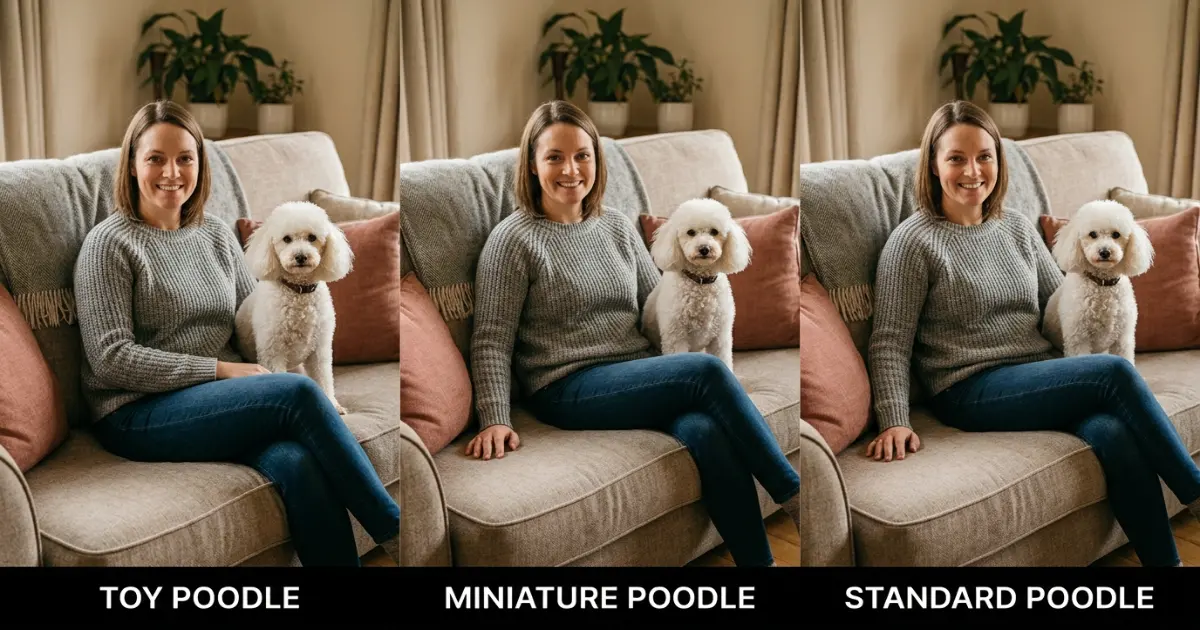
The three Poodle sizes let you match your emotional needs to the right energy level. A Toy Poodle suits someone who’s homebound or needs a dog that can be held for hours. A Miniature balances portability with sturdiness. A Standard Poodle suits active individuals who benefit from outdoor motivation — those long walks become a lifeline for depression. And that coat? It’s not just about cleanliness. Many owners with allergies or respiratory issues find they can bury their face in a Poodle’s fur without a reaction, enabling intimate comfort that other breeds can’t safely offer.

Is a Poodle the Right Emotional Support Animal for You?
A Poodle isn’t a stuffed animal. They need exercise, mental stimulation, grooming, and routine veterinary care. If depression makes self-care difficult, a lower-maintenance breed or even a cat might be a gentler start. But if you’re ready for a deeply intelligent, sensitive shadow who mirrors your joy and soothes your lows, a Poodle could be transformative. The breed’s longevity (often 12–15 years) also means you’ll have a steadfast emotional anchor for a long chapter of your life.
Frequently Asked Questions About Poodle Emotional Support Animals
Do I need to register my Poodle as an ESA?
No. There is no official ESA registry. You need a valid ESA letter from a licensed mental health professional — nothing else legally matters.
Can any Poodle be an emotional support animal?
Absolutely. All three sizes — Toy, Miniature, and Standard — make excellent ESAs as long as their presence demonstrably helps with a diagnosed emotional or mental condition, documented by a professional.
What rights does my Poodle ESA have in housing?
Under the Fair Housing Act, landlords must reasonably accommodate your ESA, even in “no pets” buildings, and cannot charge pet fees. They may request a copy of your valid ESA letter.
How much does a legitimate ESA letter cost for a Poodle?
Expect to pay between $100 and $220 for a thorough online or in-person evaluation and the resulting letter. Be wary of services offering lifelong packages for under $50 — they’re rarely valid.
Can I fly with my Poodle emotional support animal for free?
Since 2021, U.S. airlines are no longer required to accept ESAs as service animals. Most now treat them as pets, meaning you’ll likely pay a pet fee and must use an airline-approved carrier.
Is a Poodle ESA allowed in restaurants or stores?
No. Emotional support animals do not have public access rights under the Americans with Disabilities Act. Only trained service dogs are granted that access.
Can a landlord reject my Poodle ESA letter?
Only in limited cases, such as if the housing provider is exempt (e.g., owner-occupied buildings with four or fewer units), or if the specific animal poses a direct threat or would cause undue financial burden.
Does my Poodle ESA need special training?
No training is legally required. However, basic obedience is strongly recommended to ensure your Poodle is a good neighbor and doesn’t give landlords a reason to challenge your accommodation.
Summary: Registering a Poodle as an emotional support animal is a misnomer. The only path that holds legal weight is obtaining an ESA letter through a licensed mental health professional. Poodles — empathetic, intelligent, and hypoallergenic — are one of the most suitable breeds for emotional support. They grant you critical housing protections but limited travel privileges. Avoid scam registries, train for good manners, and recognize that your Poodle is a cherished therapeutic partner, not a shortcut to bypass pet policies. Done honestly, the human-Poodle ESA bond is life-changing.