Camping With a Dog: Poodle Safety Guide (2026)
Camping with a dog becomes much easier when the plan is built around the dog in front of you. A poodle is smart, sensitive, athletic, low-shedding, and famously curly-coated — which means your camping checklist must cover coat debris, cold ground, ticks, campsite restraint, nighttime visibility, and safe sleeping. With the right prep, your poodle can be a brilliant camping companion instead of a muddy, matted, anxious mess by night one.
Quick Answer: Camping With a Dog and a Poodle
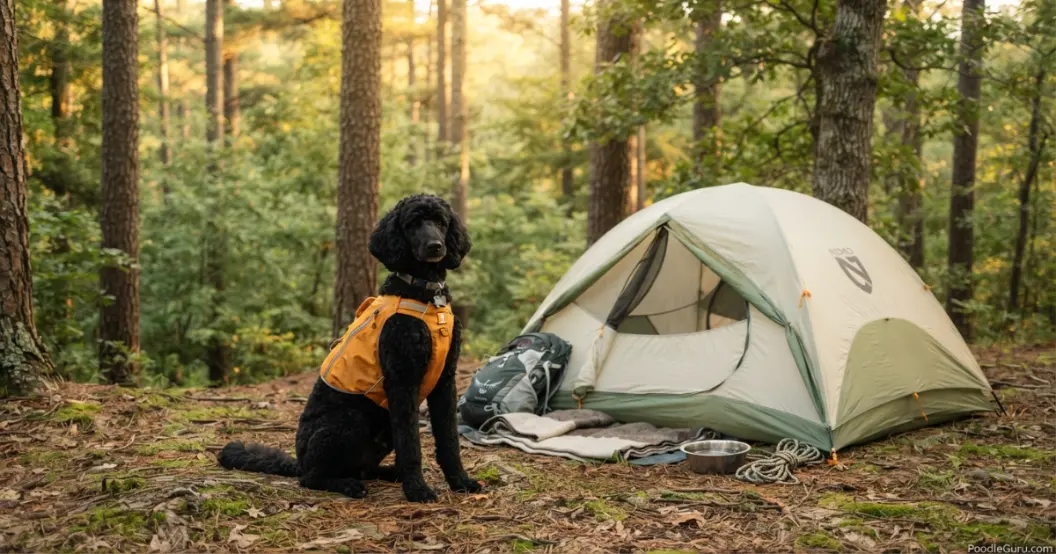
Camping with a dog — specifically a poodle — succeeds or fails on three things: coat preparation before you leave, a safe sleeping setup, and a realistic emergency plan for ticks, burrs, skunk spray, heat, cold, and sudden weather. Bring a long-line for campsite freedom without escape risk, a closed-cell foam pad so your poodle sleeps off the cold ground, current flea-and-tick prevention from your veterinarian, and a nightly coat-check routine. Toy and Miniature Poodles need extra warmth and predator awareness. Standard Poodles need space management, leg-stretch breaks, and a plan for wet coat care inside a small tent.
Why Poodles Camp Differently
Camping with a poodle is not the same experience as camping with a rugged, wash-and-wear breed. That is not a complaint — it is a planning detail. Poodles were developed as water retrievers with sharp awareness and high trainability. The same brain that figures out puzzle toys in your living room is the one that will notice the tent zipper, the campfire crackle, and every rustle outside the tent after dark.
The coat is the other major difference. A poodle’s dense, curly hair is a dirt-and-debris magnet. In a suburban backyard, that is manageable. In a forest with pine needles, sticky seed pods, creek mud, and burrs, it becomes a real comfort and skin-health issue. For poodle owners, the most important thing to understand is that camping coat care starts before you leave the driveway. The right prep cut can save hours of detangling and reduce painful mats.
What Owners Usually Misunderstand
The biggest surprise for first-time poodle campers is often the cold. Poodles have a curly single coat rather than a dense insulating undercoat, so many need more bedding than owners expect. A Standard Poodle sleeping directly on a cold tent floor can become uncomfortable quickly. A Toy Poodle can get chilled even faster. Bring a dog-safe insulating layer, a foam pad, and a fleece blanket, and monitor your poodle instead of relying only on the outdoor temperature number.
Camping With a Dog: Poodle Quick Facts
Best Coat Cut
A short sport clip or tidy puppy cut helps reduce burr pickup and mud matting. Save longer decorative coats for home.
Sleep Setup
Closed-cell foam pad plus fleece blanket. Raised dog cots can work well in larger tents for Standard Poodles.
First-Aid Essential
Pack a tick remover or fine-point tweezers, styptic powder for torn nails, saline eye rinse, and your vet’s phone number saved offline.
Temperature Planning
Toy and Miniature Poodles need extra warmth sooner than Standards. In heat, all sizes need shade, water, and rest breaks.
Leash Setup
A 20- to 30-foot biothane long-line gives camp freedom with control. Avoid retractable leashes in brushy areas because they snag easily.
Pre-Trip Vet Check
Confirm vaccines, flea/tick prevention, regular medications, and travel fitness, especially for puppies, seniors, or dogs with medical conditions.
Pre-Trip Prep: Coat, Gear & Vet Check
Most camping mishaps with poodles are preventable with a few hours of preparation at home. What you do during the week before the trip matters more than what you throw into the car at the last minute.
Book the Pre-Camping Groom
Schedule a grooming appointment or do a careful home groom 3–5 days before departure. Ask for a short, even sport clip or practical puppy cut. Long coat catches burrs, twigs, and mud clumps. A tidy, short coat is easier to inspect for ticks and faster to dry after rain or swimming.
Check Ears, Nails, and Paw Pads
Clean the ears, trim nails, and inspect paw pads for cracks before rough terrain makes them worse. Poodles with hairy feet can trap mud and small debris between toes, so a paw-pad trim is worth doing before any multi-day trip.
Confirm Flea and Tick Prevention
Camping areas often include grass, leaf litter, deer traffic, and brush — prime tick habitat. Use a veterinarian-recommended flea and tick preventive that is appropriate for your poodle’s size, age, and region. Never use a cat product on a dog or a dog product on a cat.
Save Vet and Emergency Details Offline
Cell service can disappear at campsites. Save your regular vet’s number, your poodle’s medication list, vaccine record, microchip number, and the nearest emergency clinic near the campground before you leave home.
The PoodleGuru Camp Packing List
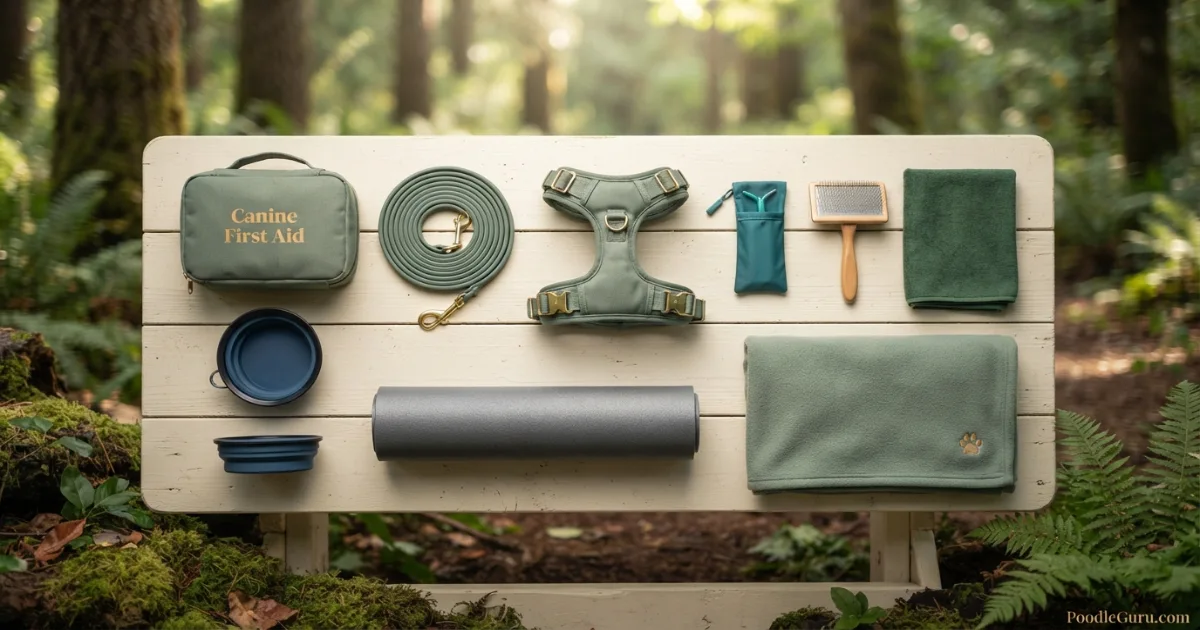
At PoodleGuru, we organize camping with a dog into gear that solves real poodle problems: escape risk, coat debris, cold ground, hydration, and small emergencies. This is not a generic dog camping checklist — it is built around the poodle’s coat, temperature sensitivity, and alert temperament.
Essential Gear for Every Poodle Camper
- 20- to 30-foot biothane long-line and sturdy stake: Gives your poodle supervised freedom while reducing escape risk. Biothane does not absorb water and odor like many nylon lines.
- Well-fitted harness: Clip the long-line to a harness, not a collar. A startled dog pulling against a collar can injure the neck or slip out.
- Closed-cell foam sleeping pad: Insulates from the cold tent floor and does not puncture like an inflatable pad.
- Fleece blanket or dog sleeping bag: Even summer nights can turn cool. Fleece dries quickly and gives curly-coated dogs a warm layer.
- Collapsible silicone water bowl and extra water: Bring more water than you expect, especially if you are hiking, driving between sites, or camping away from a safe water source.
- Dog first-aid kit: Include tick remover or fine-point tweezers, styptic powder, antiseptic wipes, vet wrap, saline eye rinse, blunt-tip scissors, and any vet-prescribed emergency medication.
- Coat-care kit: Slicker brush, metal comb, detangling spray, and a microfiber towel that can absorb water from curly hair.
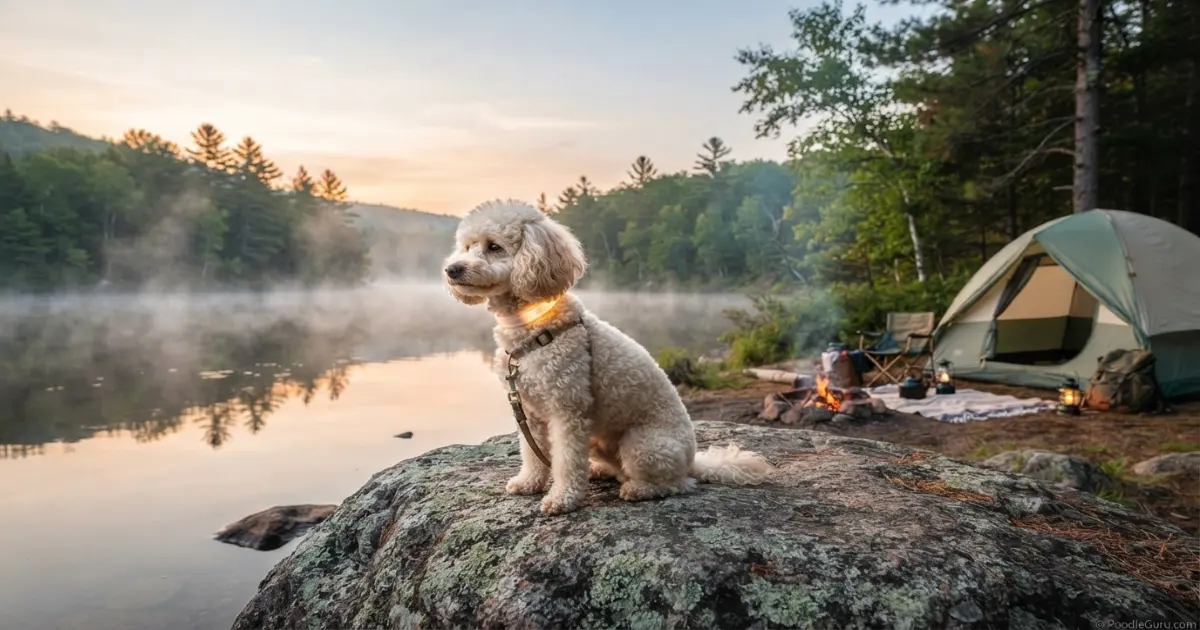
- LED collar or clip-on light: A reflective vest helps during the day. A light-up collar helps during dusk, night, and early-morning bathroom breaks.
- Sealed food and treat containers: Dog food attracts wildlife just like human food. Store it securely and follow campground or bear-country rules.
At the Campsite: Setup & Safety
You have arrived. The tent is not pitched yet, the car doors are open, and your poodle can smell wildlife, other campers, food, damp soil, and firewood. This is the moment where a calm system prevents chaos.
First Things First: Secure the Dog
Set up the long-line and stake before you unpack the full campsite. Your poodle can rest on the line while you pitch the tent, organize gear, and set up the cooking area. A loose dog at a new campsite can disappear into brush in seconds, even if recall is usually reliable at home. The AKC’s camping guidance also recommends keeping dogs with you day and night rather than leaving them unattended.
Tent Sleeping Arrangements
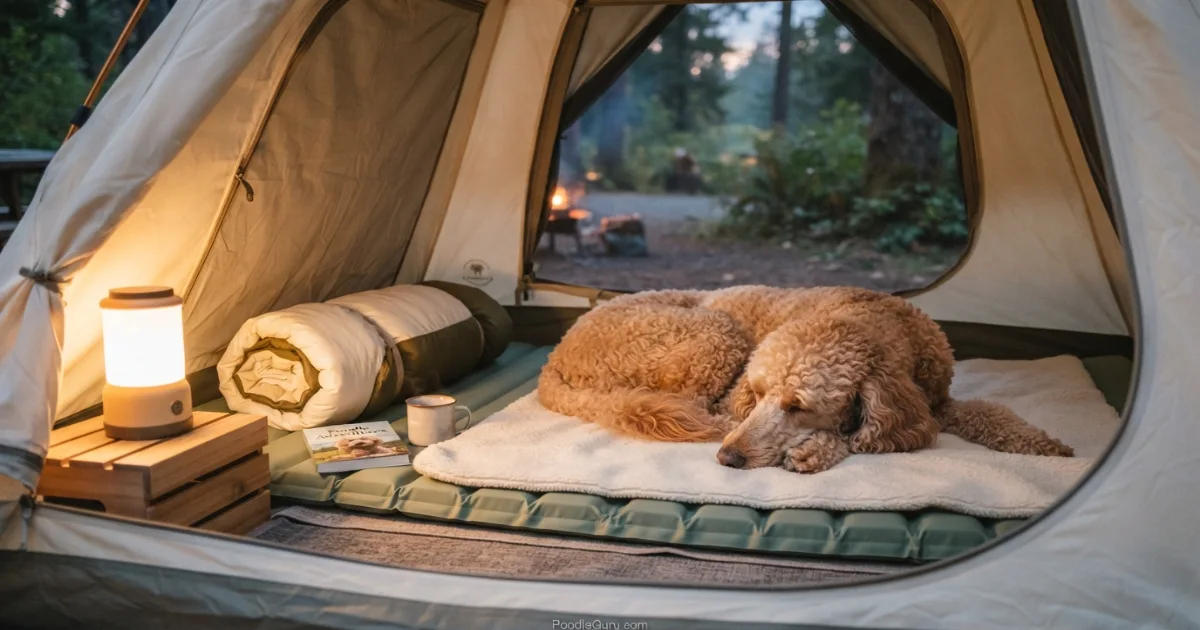
Practice sleeping in the tent once at home before the trip, even if it is only in the living room. A poodle who has never seen a tent may treat it like a strange nylon cave. Treats inside, calm praise, and a familiar blanket help the tent become a safe space. At camp, place your poodle’s bed where no one will step on it. Dogs sleeping directly on a cold groundsheet lose body heat quickly, so the foam pad is not optional for cool nights. Small poodles should not be buried deep inside a mummy sleeping bag where they may overheat or struggle to move; a dog blanket beside you is safer.
Campfire Safety Note
Keep your poodle upwind and at a safe distance from flames, sparks, hot ash, and cooking tools. A long-line should never be long enough for the dog to reach the fire ring. If your poodle seems stressed by smoke or crackling sounds, move them farther away or let them rest in the tent or vehicle while supervised.
Coat Care in the Wild
This is where poodles diverge most from many other camping dogs. Mud, burrs, seed pods, and pine needles do not simply shake out of curly hair. They can work toward the skin and form mats that pull painfully, trap moisture, and irritate the skin.
The Evening Coat Check Routine
Before bed every night, do a five-minute coat check. Run your fingers through the coat from skin outward. Feel for burrs, ticks, cuts, tender spots, and early mats. Pay special attention to armpits, behind the ears, between toes, under the collar or harness, and the belly. A metal comb finds things your fingers miss.
If you find a tick, remove it promptly with a tick-removal tool or fine-point tweezers. The CDC tick-removal method advises grasping close to the skin and pulling with steady pressure; it also warns against petroleum jelly, heat, nail polish, and similar methods. After removal, clean the area and contact your veterinarian if your dog later develops fever, lethargy, joint swelling, appetite loss, or unusual illness.
For burrs and sticky seed pods, use detangling spray and a slicker brush gently. Do not yank. Work from the ends of the hair toward the skin. If you find a tight mat that will not release, leave it for a professional groomer when you get home. Cutting close mats with camp scissors can nick the skin.
Camping by Poodle Size: Different Dogs, Different Trips
Camping advice that treats a Toy Poodle and a Standard Poodle as interchangeable misses the point. Size changes warmth needs, predator risk, hiking distance, carrying options, and even how much debris the coat collects.
| Consideration | Toy Poodle | Miniature Poodle | Standard Poodle |
|---|---|---|---|
| Temperature Vulnerability | Needs extra warmth early. Use a jacket, foam pad, and close monitoring on cool nights. | Moderate cold risk. A fleece layer and insulated sleeping setup are usually smart. | More tolerant of cool weather than Toys, but still needs a pad, dry bedding, and shade in heat. |
| Predator Awareness | High concern in areas with coyotes, owls, hawks, or foxes. Never leave outside unattended. | Still needs supervision and a long-line. Coyote risk varies by region and campground. | Lower risk from aerial predators, but wildlife conflicts and bear-safe food storage still matter. |
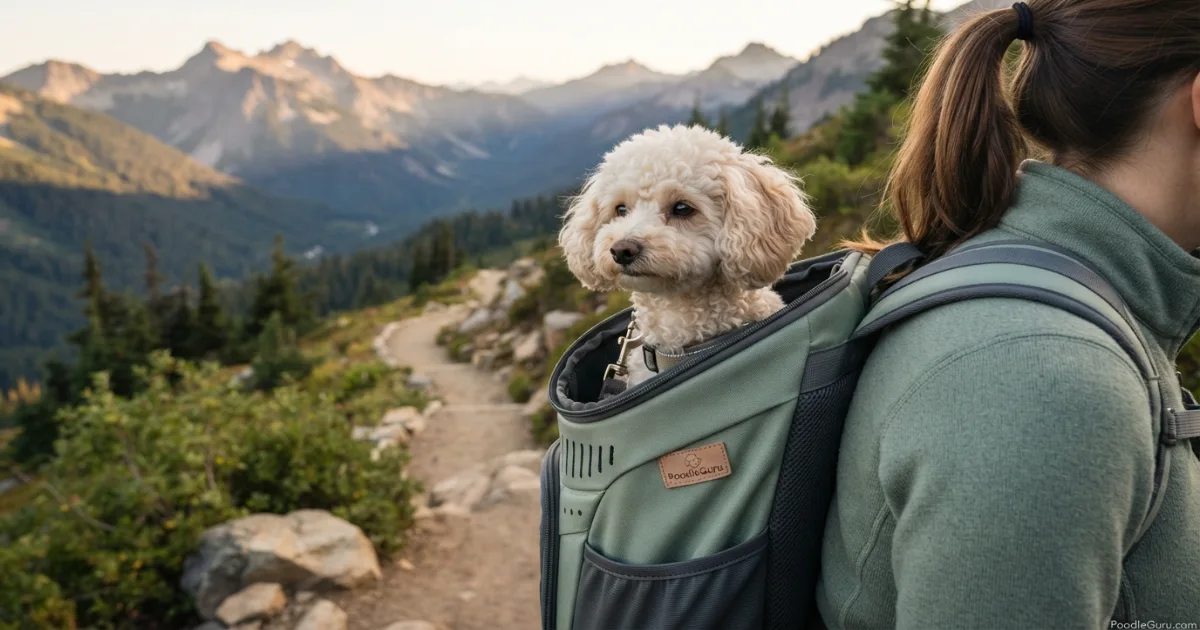
| Hiking Capability | Shorter trails. Bring a dog backpack or carrier for rough sections and fatigue. | Good for moderate trails when fit, hydrated, and given breaks. | Strong hiking partner when conditioned gradually. Avoid sudden long-mileage days without training. |
| Coat Debris Risk | High. Small dogs walk through vegetation that hits the face, belly, and legs. | Moderate. Check belly, ears, and paws after every hike. | Still check legs, paws, ears, harness points, and tail base after trails. |
Predator Reality Check
This is not fear-mongering. It is campsite awareness. A Toy Poodle outside at dusk can look like prey to a predator that does not understand family pets. Keep small poodles close, bring them inside the tent at night, and never rely on a tie-out as a substitute for supervision. In bear country, store dog food and treats according to the same rules as human food.
When Things Go Wrong: Camping Emergencies
Planning for emergencies does not make you anxious. It makes you the person who handles a problem calmly while everyone else panics. These are the camping issues poodle owners should prepare for before they leave home.
| Situation | Immediate Action | When to Leave for a Vet |
|---|---|---|
| Tick found embedded | Remove promptly with tick tool or fine-point tweezers. Pull steadily, clean the site, and wash hands. | If fever, lethargy, appetite loss, lameness, joint swelling, or unusual illness appears in the following days or weeks. |
| Skunk spray near face or eyes | Flush eyes with clean water or saline immediately. Keep the dog outside the tent. Avoid getting de-skunking mixtures in eyes, nose, or mouth. | If eyes stay red, swollen, painful, or your dog keeps pawing at the face after flushing. |
| Torn or bleeding nail | Apply styptic powder and gentle pressure. Wrap lightly with vet wrap if needed and keep the dog on soft ground. | If bleeding does not stop after steady pressure, the nail is dangling, or your dog is in significant pain. |
| Heat stress signs | Move to shade immediately. Offer small amounts of water. Cool paws, belly, and body with damp towels and improve airflow. | If the dog collapses, vomits, seems confused, has severe weakness, or does not improve quickly. Heat stroke is an emergency. |
| Dog bolts from campsite | Do not chase. Stay near the last-seen spot, call calmly, use high-value treats, and notify campground staff and nearby campers. | When found, check for cuts, limping, overheating, ticks, and stress. Contact a vet if anything seems abnormal. |
Vehicle Safety Reminder
Never leave your poodle alone in a parked vehicle. The AVMA warns that vehicle temperatures can rise quickly, and cracked windows do not make a parked car safe. This matters at trailheads, camp stores, fuel stops, and check-in areas.
Frequently Asked Questions About Camping With a Dog
Can poodles go camping in cold weather?
Yes, but poodles often need more insulation than owners expect. They have a curly single coat rather than a dense undercoat, so cold ground and damp air can make them uncomfortable. Use a closed-cell foam pad, dry bedding, and a dog jacket for cool nights, especially for Toy and Miniature Poodles.
What is the best way to keep a poodle from running off at a campsite?
A 20- to 30-foot biothane long-line attached to a sturdy harness gives your poodle room to explore without off-leash risk. Set it up before unloading the campsite. Never rely on unfenced recall in a new environment full of wildlife smells, other dogs, and sudden sounds.
How do I protect my poodle’s coat while camping?
Start with a short practical clip before the trip. Do a five-minute coat check every evening, using your fingers and a metal comb to find burrs, ticks, and developing mats. Use detangling spray gently. Do not cut tight mats with camp scissors close to the skin.
Are Toy Poodles safe to take camping?
Toy Poodles can camp successfully, but they require more supervision than larger poodles. They are more vulnerable to cold, rough terrain, and predator risk in some regions. Keep them leashed, bring them into the tent at night, and consider a dog backpack for longer trails.
What flea and tick prevention do poodles need for camping?
Use a veterinarian-recommended flea and tick preventive before the trip, and check your poodle’s coat every evening. Ticks can transmit diseases to dogs and people, so prevention and prompt removal matter. Ask your vet which product fits your region and your poodle’s size, age, and health history.
How do I dry my poodle after swimming at a campsite?
Use a microfiber towel and dry thoroughly, especially around the ears, belly, feet, and harness areas. A short sport clip dries faster than a long coat and is usually the smarter choice for water-access camping. Avoid leaving damp mats near the skin overnight.
Should I bring my poodle’s regular food or special camping food?
Bring your poodle’s regular food. Camping is not the right time to test a new protein, treat, or rich camp snack. Pack food in sealed, waterproof containers and bring a little extra in case the trip runs long or activity increases appetite.
Key Takeaways
Camping with a dog can be one of the best experiences you share with your poodle — when you prepare for this breed’s coat, warmth, safety, and alert personality.
- A poodle-specific camping plan should cover coat prep, long-line safety, sleeping insulation, tick checks, hydration, emergency care, and safe food storage.
- A short practical clip before the trip makes camping dramatically easier because it reduces burr pickup, mud matting, drying time, and tick-check difficulty.
- A closed-cell foam pad and fleece blanket are essential because poodles can lose body heat on cold tent floors, especially Toy and Miniature Poodles.
- A long-line attached to a harness gives campsite freedom without off-leash risk. Never attach a campsite line to a collar.
- Evening coat checks are non-negotiable. Check ears, armpits, belly, paws, harness points, and tail base for ticks, burrs, cuts, and mats.
- Toy and Miniature Poodles need closer predator awareness, extra warmth, and sometimes a dog backpack for rough or long trails.
- Never leave your poodle alone in a parked vehicle, and always know the nearest emergency vet before camping in a remote location.
Your poodle does not need to be a rugged mountain dog to love camping. With the right coat prep, a safe sleeping setup, and a calm emergency plan, you can both come home tired, happy, and ready for the next trip.