Keeping Senior Poodles Active: Safe Exercise & Enrichment Guide
Keeping senior poodles active does not mean asking an older dog to act like a puppy. It means protecting muscle, mobility, confidence, and mental spark with shorter walks, low-impact games, pain-aware routines, and a home setup that makes movement feel safe.
Quick Answer: How Do You Keep a Senior Poodle Active?
Keeping senior poodles active works best with short, low-impact exercise and daily mental enrichment. Most older poodles do well with two or three gentle movement sessions, easy scent games, food puzzles, comfortable footing, and regular vet checks for pain, dental disease, arthritis, vision changes, and cognitive changes. If your poodle suddenly slows down, limps, pants at rest, refuses stairs, seems confused, or becomes irritable, treat that as a health signal—not normal aging.
Why Senior Poodle Activity Is Different
Poodles are athletic, bright dogs, but senior care should be adjusted by size and health. The AKC describes Poodles as Standard, Miniature, or Toy varieties, and those size differences matter when you plan senior activity. A 10-year-old Toy Poodle may still be lively and quick, while a 10-year-old Standard Poodle usually needs more senior-focused joint, stamina, and recovery planning.
Age should not mean removing all activity. In many homes, the bigger risk is underuse: the dog sleeps more, the owner worries about overdoing it, walks become rare, and muscle loss quietly accelerates. The better approach is adjustment. Replace hard-charging fetch with sniff walks, jumping games with nose work, and slippery floors with secure footing.
Toy Poodles
Toys often stay active into later years, but dental disease, fragile joints, vision changes, and tracheal sensitivity can affect comfort. Gentle indoor games, harness walks, and soft surfaces are usually better than rough play.
Miniature Poodles
Miniatures often enjoy walks, trick training, and food puzzles well into senior life. Watch for patellar issues, stiffness after rest, dental pain, and weight gain that can make movement less comfortable.
Standard Poodles
Standards benefit from controlled low-impact activity, especially flat leash walks, gentle swimming when appropriate, and strength-preserving routines. Joint comfort, recovery time, and bloat-aware meal timing matter more with age.
What Changes as Your Poodle Ages
Senior poodles may move more carefully, sleep longer, need more warm-up time, and become more sensitive to heat, cold, noise, or slippery surfaces. Some changes are expected, but sudden changes are not something to ignore. The AAHA senior care guidance notes that a senior evaluation should include history about eating, drinking, exercise, movement, play behavior, elimination, attitude, grooming, vision, and hearing.
That list matters for poodle owners because this breed can hide discomfort. A poodle who “suddenly became lazy” may actually have dental pain, arthritis, vision loss, a heart issue, endocrine disease, or cognitive changes. The right routine starts by observing your dog’s baseline, then adapting activity to what the body can do comfortably.
Vet Check Before Changing a Senior Poodle’s Activity
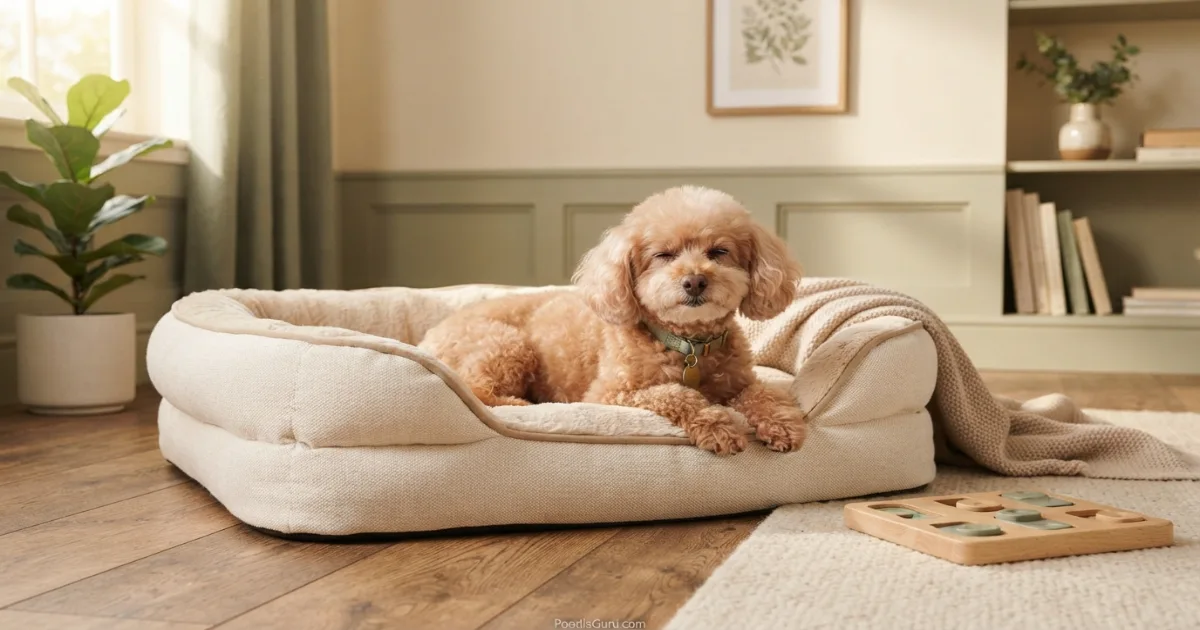
Before you start a new senior fitness routine, ask your veterinarian what level of activity is safe. This is especially important if your poodle has arthritis, heart disease, collapsing trachea, dental pain, obesity, vision loss, seizures, diabetes, kidney disease, or a history of injury. A wellness exam can help separate “normal aging” from pain or disease that can be managed.
The AAHA defines the senior period for dogs as the last portion of expected lifespan, not one exact birthday for every dog. That means Toy, Miniature, and Standard Poodles may need senior conversations at different ages. For many Standards, those talks begin earlier; for Toys and Miniatures, they may begin later, unless symptoms appear first.
Ask Your Vet About
Bring up mobility, weight trends, dental comfort, blood work, urinalysis, vision, hearing, blood pressure, pain scoring, supplements, medications, and whether rehabilitation, hydrotherapy, or controlled strengthening exercises make sense for your dog.
The PoodleGuru Senior Engagement Framework
At PoodleGuru, we use three pillars to keep senior poodles engaged: Movement, Mind, and Comfort. This framework keeps the routine balanced. Too much movement without rest causes soreness. Too much rest without mental stimulation creates boredom. Comfort problems make both exercise and enrichment harder.
Movement: Gentle Daily Activity
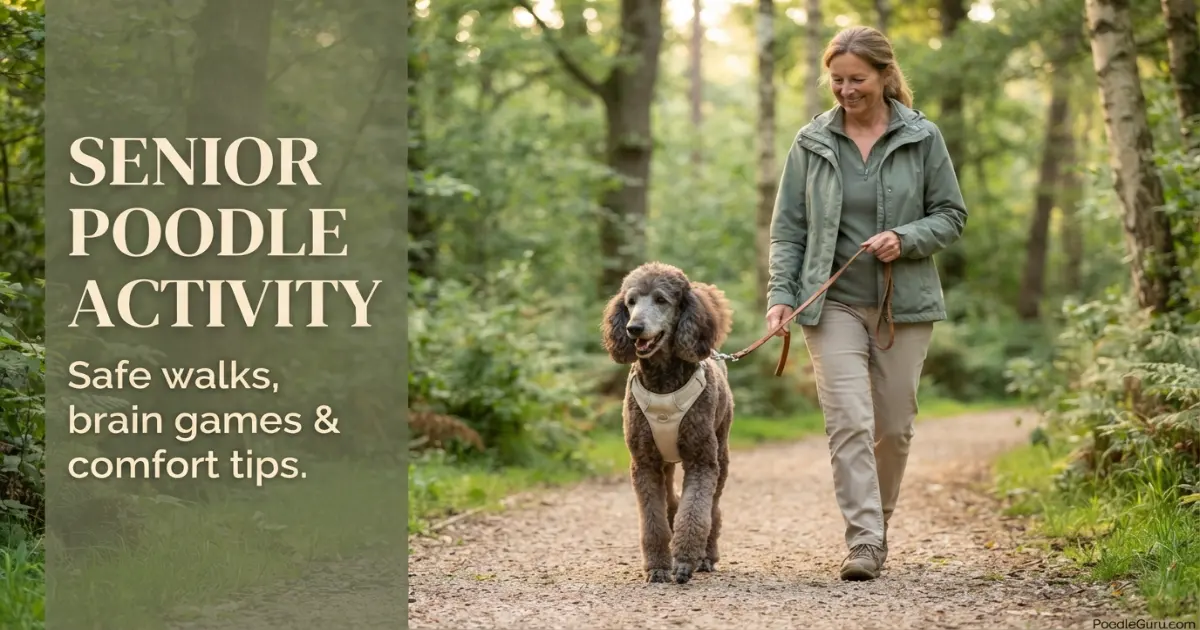
Choose activity your poodle can finish without limping, heavy panting, stumbling, or next-day stiffness. For one dog, that may be two 15-minute leash walks. For another, it may be three 8-minute strolls plus indoor scent work.
Mind: Daily Thinking Work
Poodles need problem-solving even when their joints slow down. Use easy puzzle feeders, treat searches, hand-targeting, name recognition games, gentle shaping, or calm “find it” sessions to keep the brain engaged.
Comfort: Make Activity Feel Safe
Add non-slip rugs, orthopedic bedding, ramps where helpful, raised bowls only if your vet recommends them, and predictable routines. AAHA pain-management guidance highlights home modifications such as rugs, yoga mats, toe grips, harnesses, and appropriate beds for senior mobility support.
Safe Physical Activity for Senior Poodles
Keeping senior poodles active should feel like steady maintenance, not a workout challenge. Low-impact exercise helps preserve muscle, circulation, confidence, and routine. The best choices are flat leash walks, sniff walks, gentle indoor games, controlled swimming for dogs who already enjoy water, and easy strengthening exercises your vet or rehab professional approves.
Avoid high-impact repetition: repeated ball chasing, jumping from furniture, rough dog-park play, long stair sessions, and slick-floor zoomies. These may be fine for some younger dogs, but they can strain senior joints and increase the chance of soreness or injury.
| Activity | Why It Helps | Senior-Safe Adjustment |
|---|---|---|
| Flat leash walk | Maintains routine, muscle tone, and confidence | Use shorter routes, soft footing, and a harness; stop before fatigue |
| Sniffari walk | Provides mental enrichment without speed or impact | Let your poodle sniff slowly instead of aiming for distance |
| Food puzzle | Works the brain and slows meals | Choose easy settings for dogs with vision, dental, or neck discomfort |
| Gentle swimming | Can support movement without full weight-bearing | Use a life vest, warm water, short sessions, and vet approval |
| Low-impact trick training | Builds focus, confidence, and communication | Choose “touch,” “chin rest,” “find it,” or slow paw target—not spins or jumps |
Sample Weekly Senior Poodle Activity Plan
This sample is for a moderately healthy older Miniature or Standard Poodle. Scale down for Toy Poodles, dogs with arthritis, or dogs returning from illness. Increase only with your veterinarian’s guidance.
| Day | Movement | Mind Work | Comfort Check |
|---|---|---|---|
| Monday | Two flat walks, 10–15 minutes each | Easy treat scatter on a rug | Watch for next-day stiffness |
| Tuesday | One slow sniffari walk | Food puzzle on easy mode | Check nails and paw pads |
| Wednesday | Short leash walk plus indoor hallway movement | Hand target or chin-rest practice | Use non-slip mats |
| Thursday | Rest-focused day with potty walks only | Find-the-treat game in one room | Massage only if your dog enjoys it |
| Friday | Flat walk or gentle swim if already safe | Name two toys and ask for one | Check breathing and recovery time |
| Saturday | Short park visit at quiet hours | Sniffing new smells | Avoid rowdy dogs and heat |
| Sunday | Easy stroll or rest day | Lick mat or calm puzzle | Review the week’s soreness signs |
Pain Management Is Not Optional
If your senior poodle has arthritis or chronic pain, talk to your veterinarian before increasing exercise. The AAHA pain-management guidance notes that chronic pain signs can be subtle and that rehabilitation may include exercise therapy, hydrotherapy, manual therapy, and home modifications when appropriate.
Mental Stimulation for an Aging Poodle Brain
Poodles are problem-solvers. That does not disappear with age. Senior poodles may need easier puzzles, shorter sessions, and softer surfaces, but they still benefit from learning and choice. Mental stimulation is especially valuable when joint pain, weather, surgery recovery, or low stamina limits physical exercise.
Rotate activities so your poodle does not become frustrated or bored. Use sniffing games one day, a food puzzle the next, a calm training cue the next, and a familiar social outing on another day. Keep sessions short enough that your dog finishes successful, not tired and confused.
Easy Scent Games
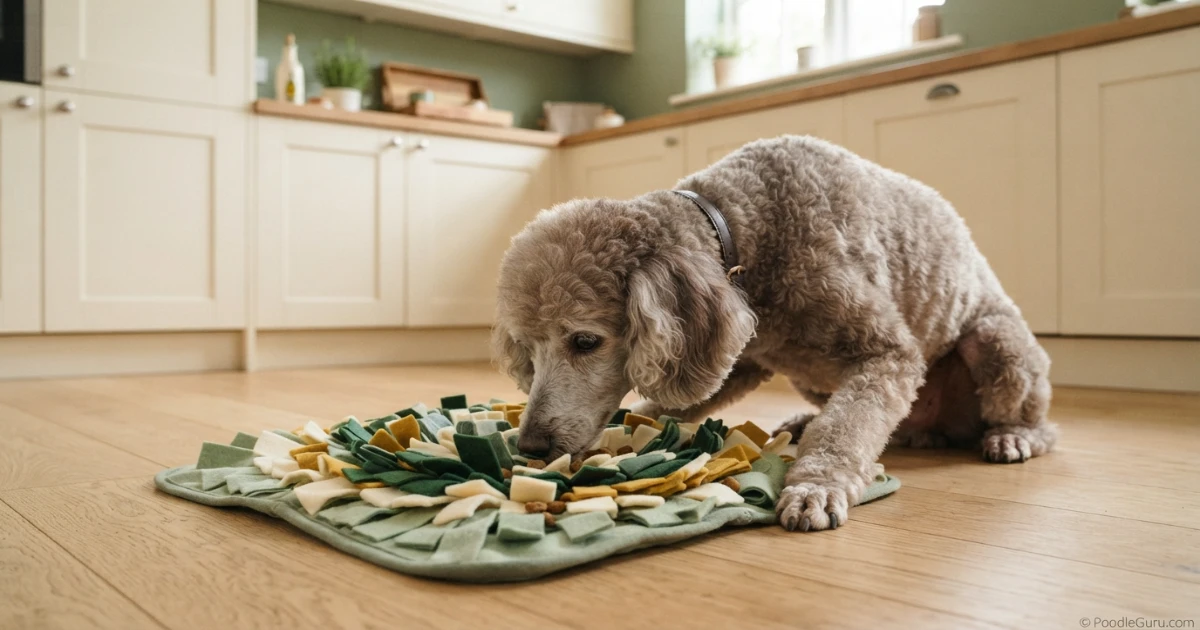
Hide a few treats in a towel, snuffle mat, cardboard box, or safe room. Let your poodle search slowly. This is perfect for dogs who need less running but still want a job.
Low-Impact Training
Practice “touch,” “look,” “find it,” “chin,” or “go to mat.” Avoid repeated sitting-to-standing if your dog has hip, knee, or back discomfort.
Calm Social Enrichment
A quiet car ride, greeting a trusted neighbor, or watching birds from a window can be enriching without overwhelming an older dog.
Home Comfort That Supports Activity
Senior poodles often become less active because the home environment becomes harder to navigate. Slippery floors, high beds, steep stairs, cold rooms, hard bedding, and long nails can make movement feel risky. Fixing the environment often improves activity faster than adding more exercise.
| Home Problem | Senior Poodle Fix |
|---|---|
| Slippery floors | Add washable runners, yoga mats, or non-slip pathways in high-traffic areas |
| Jumping on/off furniture | Use ramps or block access if jumping causes soreness |
| Cold or hard sleeping areas | Offer orthopedic bedding away from drafts |
| Long nails | Keep regular nail trims because long nails reduce traction and change gait |
| Vision changes | Keep furniture layout consistent and use night lights near stairs or doors |
Mistakes to Avoid with a Senior Poodle
Most mistakes come from good intentions. Owners either overprotect the dog into inactivity or push too hard because they miss the old version of their poodle. The healthiest plan lives in the middle.
| Mistake | Why It Hurts | Better Choice |
|---|---|---|
| Stopping all exercise | Muscle loss, stiffness, weight gain, and boredom can worsen | Switch to shorter, softer, lower-impact activity |
| Ignoring dental pain | A sore mouth can reduce appetite, play, and mood | Ask your vet about dental exams and safe home dental care |
| Using high-impact fetch | Hard braking and twisting can aggravate joints | Roll a toy slowly indoors or use “find it” games |
| Letting nails grow long | Long nails reduce traction and may alter posture | Use regular nail trims and traction-friendly flooring |
| Calling pain “stubbornness” | Refusal often means discomfort or fear | Check for pain, vision changes, hearing loss, or fatigue |
When to Ease Off or Call the Vet
Ease off immediately if your poodle lags behind, limps, slips repeatedly, coughs, pants heavily after light activity, refuses a familiar route, stumbles, or seems disoriented. Rest, offer water, and observe. If the change is sudden, severe, repeated, or paired with appetite loss, collapse, labored breathing, pale gums, yelping, or new aggression, call your vet promptly.
The VCA senior dog care guide emphasizes that many age-related changes can be supported with veterinary care and environmental adjustments. For poodles, earlier support often means more comfortable movement, less anxiety, and better quality of life.
Frequently Asked Questions
How much exercise does a senior poodle need?
Many senior poodles do best with 20–40 total minutes of gentle daily movement split into shorter sessions, but the right amount depends on size, pain level, heart health, weight, and recovery. Stop before limping, heavy panting, or next-day stiffness appears.
What is the best exercise for keeping senior poodles active?
Flat leash walks, sniffari walks, easy scent games, gentle indoor movement, and vet-approved swimming are usually safer than jumping, hard fetch, rough play, or long stairs. The best exercise is the one your poodle can enjoy and recover from comfortably.
What is the best mental game for an older poodle?
Scent work is one of the best senior-friendly games. Hide treats in a snuffle mat, towel, cardboard box, or safe room and let your poodle search at their own pace. It gives the brain a job without stressing the joints.
My senior poodle sleeps all day. Is that normal?
Older dogs often sleep more, but extreme lethargy, restlessness, confusion, appetite loss, panting, or reluctance to move should not be ignored. A vet exam can help separate normal aging from pain, dental disease, endocrine disease, or cognitive changes.
Can an older poodle still learn new things?
Yes. Older poodles can keep learning when sessions are short, positive, and physically easy. Try “touch,” “find it,” “chin rest,” “look,” or simple object-name games. Avoid tricks that require jumping, spinning, or repeated crouching if joints are sore.
How do I know if my senior poodle is in pain during exercise?
Watch for limping, lagging, stiffness after rest, licking joints, panting after light activity, refusing stairs, trembling, irritability, hiding, reduced appetite, or sudden behavior changes. Stop the activity and schedule a vet check if these signs appear.
Is swimming safe for all senior poodles?
No. Swimming can be excellent for some senior Poodles, especially confident swimmers with joint stiffness, but it is not safe for every dog. Ask your vet first, use a life vest, keep sessions short, avoid cold water, and never leave your poodle unattended near water.
Should I change my senior poodle’s diet to keep them active?
Do not change diet just because your poodle is older. Ask your vet whether your dog needs calorie adjustment, muscle-supporting protein, dental support, joint support, or disease-specific nutrition based on body condition and lab results.
Key Takeaways: Keeping Senior Poodles Active
Keeping senior poodles active is about adjusting exercise, enrichment, and comfort—not eliminating movement. A senior poodle can still live a rich, curious, joyful life when activity matches their body and mind.
- Senior poodles need adjusted activity, not forced rest. Short, low-impact sessions help preserve muscle and confidence.
- Toy, Miniature, and Standard Poodles age differently, so senior routines should reflect size, health, weight, and pain status.
- The PoodleGuru Senior Engagement Framework uses three pillars: Movement, Mind, and Comfort.
- Scent work, food puzzles, and low-impact training keep an older poodle mentally engaged without stressing the body.
- Non-slip flooring, orthopedic beds, nail trims, ramps, and predictable routines can make movement feel safer.
- Sudden slowing, limping, panting, confusion, appetite loss, or irritability deserves a veterinary check—not dismissal as old age.
Next step: Choose one gentle movement session and one easy brain game for today. Then review your home for slippery floors, long nails, painful jumping spots, and overdue senior wellness checks.