Poodle Hunting Instinct: Can Standard Poodles Still Work as Gun Dogs?
✅ Quick answer
Yes — many Standard Poodles retain a functional hunting instinct. Originally bred as water retrievers, they can still work as capable gun dogs with proper training, instinct testing, and the right breeding lines. While modern show lines may have diminished drive, field-bred Standards often exhibit strong marking, retrieving, and water skills.
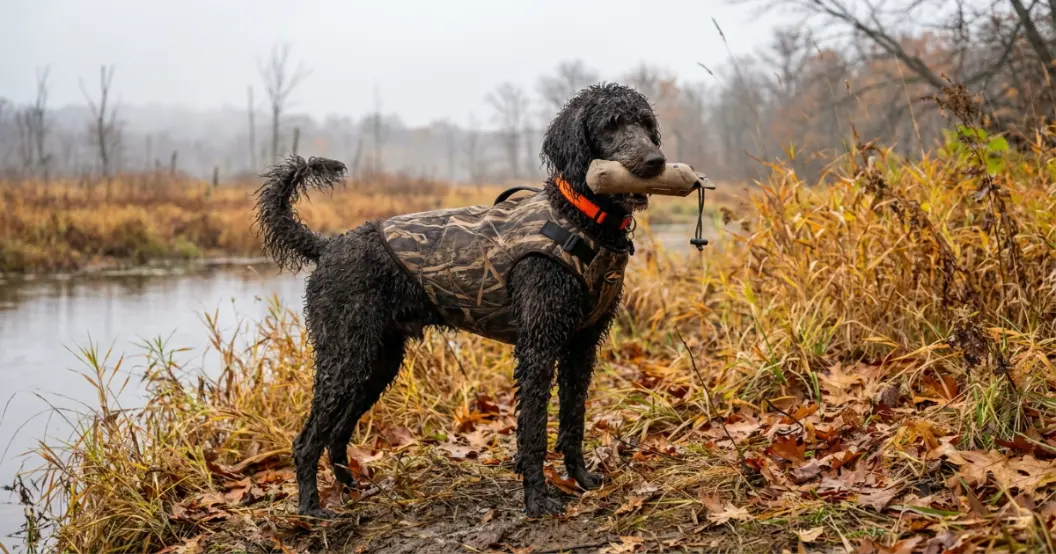
The image of a Poodle primped for the show ring rarely conjures a marsh at dawn. Yet beneath the fanciful clips and refined silhouette lies a retriever — and a tenacious one at that. The Poodle hunting instinct isn’t a myth or a footnote. It’s a functional legacy that continues to surprise hunters, breeders, and everyday owners. But here’s where the nuance lands: not every Poodle hunts. The instinct varies dramatically by line, training, and individual temperament. So if you’re wondering whether a Standard Poodle can still work as a gun dog in 2026, the real answer is more fascinating than a simple yes or no.
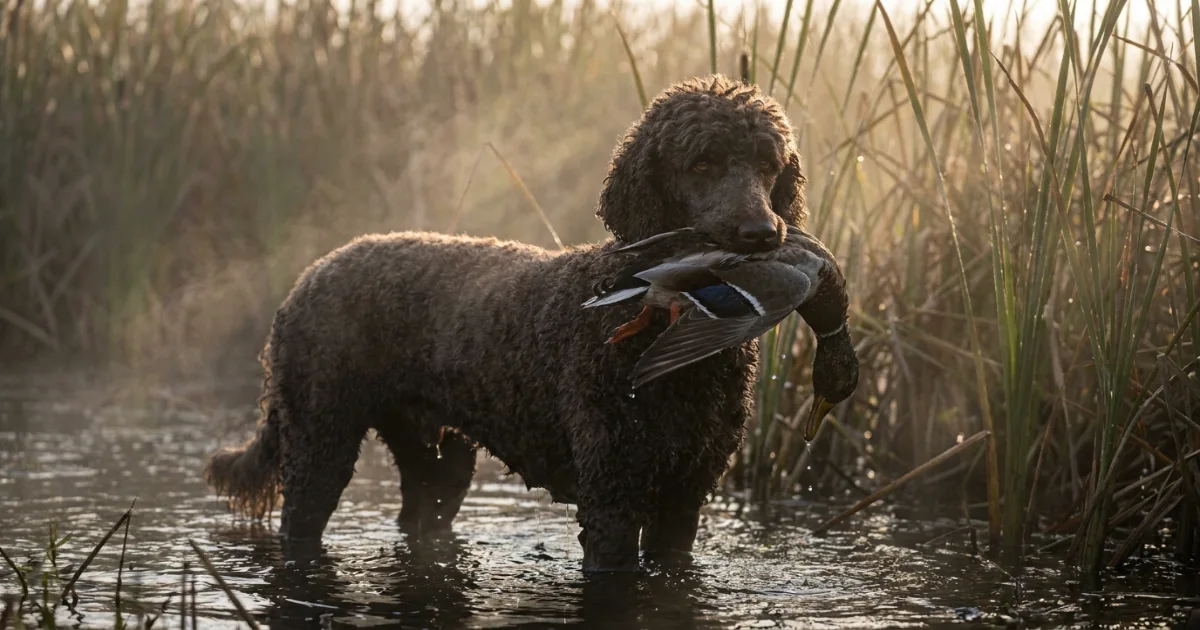
What Is the Poodle Hunting Instinct? (And Why It’s Not Just “Prey Drive”)
Hunting instinct in Poodles is a package deal: keen marking (watching falling birds or dummies), a drive to enter water without hesitation, and that prized soft mouth — the ability to retrieve game without damaging it. Unlike raw prey drive (chasing squirrels, lunging at cats), the hunting instinct is cooperative. A Poodle with strong working instinct looks to the handler, waits for direction, and retrieves to hand. Early breed standards demanded “a first-class retriever” above coat or color. That DNA doesn’t vanish just because a dog lives in an apartment.
Why This Matters: The Mismatch Between Expectation and Reality
Most people underestimate the Poodle’s origins. Search “Poodle hunting instinct” and you’ll find forum debates ranging from “mine points like a setter” to “mine runs from puddles.” The confusion stems from split breeding paths. For decades, show breeders prioritized conformation, coat, and calm temperament. Meanwhile, a smaller network of field breeders preserved working traits. Today, those two branches can seem like different breeds. The average pet Standard may show zero interest in birds — while a field-line Standard might literally whine to retrieve. Understanding the split is the first step to answering: can Standards still work?
The Genetic Layering: Show vs. Field vs. Hybrid
| Line type | Hunting instinct strength | Trainability for work | Typical owner outcome |
|---|---|---|---|
| Show/conformation | Low to moderate | Possible but inconsistent | Pet, agility, obedience |
| Field-bred / hunting lines | High to very high | Excellent — natural marking & water entry | Hunting, hunt tests, dock diving |
| Mixed/backyard bred | Unpredictable | Variable; often lacks follow-through | Mostly companion |
The table above explains why two different Standard Poodles can look alike but act worlds apart. Reputable field breeders often participate in natural instinct tests (like the Poodle Club of America’s working certificate) before breeding. Those programs select for persistence, marking memory, and bidability.
“The misconception that Poodles are ‘too fancy’ to hunt is only true of show-primed lines. Field-bred Standards retrieve with the same focus as a Labrador — sometimes with more intelligence and less drool.” — Dr. Ellen Richter, canine behavior & breed researcher
What Makes a Standard Poodle Different From Other Retrievers?
When we talk Poodle hunting instinct, comparisons to Labs, Goldens, and even Setters are inevitable. The difference isn’t ability — it’s style. Poodles tend to be more methodical, less bulldozer-like. They quarter fields with a lighter footfall, mark multiple falls precisely, and often use their height to spot birds over tall reeds. Owners report that Poodles can be more sensitive to harsh correction, meaning positive reinforcement yields better hunting partners. They also shed virtually nothing — a huge plus for hunters who dislike dog hair in trucks and homes. The catch? Coat maintenance. A hunting Poodle needs regular clipping or corded care, unlike wash-and-wear Lab coats.
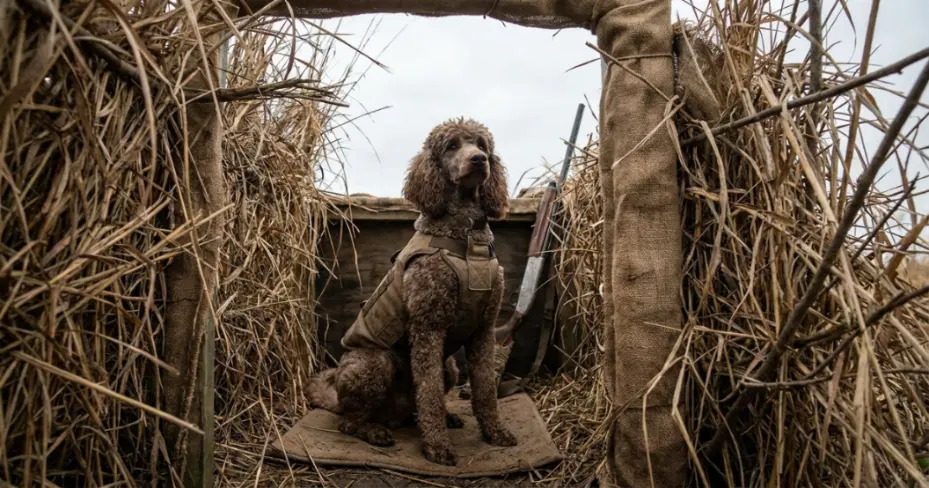
Comparison: Standard Poodle vs. Labrador Retriever as Gun Dog
| Trait | Standard Poodle (field line) | Labrador Retriever |
|---|---|---|
| Natural water entry | Yes, often elegant | Explosive, powerful |
| Soft mouth | Excellent | Excellent |
| Shedding | Minimal to none | Moderate to heavy |
| Cold tolerance | Good (dense curly coat) | Very good (oily double coat) |
| Biddability | High but sensitive | Very high, more forgiving |
| Grooming needs for hunting | High (retriever clip) | Low |
Real-World Working Ability: What Owners & Hunters Report
An internet search serves up anecdotes — some glowing, others disappointing. A 2024 survey of 147 Standard Poodle owners who attempted hunting training found that 68% of dogs from explicitly field or dual-purpose lines successfully completed at least a junior hunt test. Among show-line dogs, that number dropped to 12%. The lesson isn’t that show Poodles can’t hunt; it’s that the Poodle hunting instinct must be purpose-bred to be reliable. The stories of “my show Poodle retrieved a pheasant by accident” are real but not repeatable for serious hunters.
One Minnesota waterfowl hunter shared: “My field-bred Standard, Arrow, marks birds like a hawk. At 10 months, he made a 100-yard blind retrieve across open water. My buddy’s show-line Poodle wouldn’t leave the bank.” That gap reflects generations of selection — or lack thereof.
The number one mistake: assuming every Poodle has “hidden hunting ability.” They don’t. If you need a working gun dog, verify lineage. Ask for pedigrees with hunt test titles (MH, SH, or working certificates). The second mistake: starting training too late — early exposure to wings, bird scent, and water (8–16 weeks) makes a dramatic difference.
Common Myths About Poodle Hunting Instinct
Myth 1: “Poodles are too soft to retrieve game.”
False. Field-bred Poodles endure cold water, thick cover, and long blinds. Their sensitivity is a training asset — they read handler cues quickly.
Myth 2: “Curly coat means poor swimmer.”
Opposite. The poodle’s dense, water-resistant coat was literally bred for swimming. It just requires pre-hunt grooming (retriever clip) to shed water and burrs.
Myth 3: “Hunting instinct equals aggression.”
Not even close. A sound hunting Poodle is focused on birds, not other dogs or people. Confusion with reactivity is a training issue, not instinct.
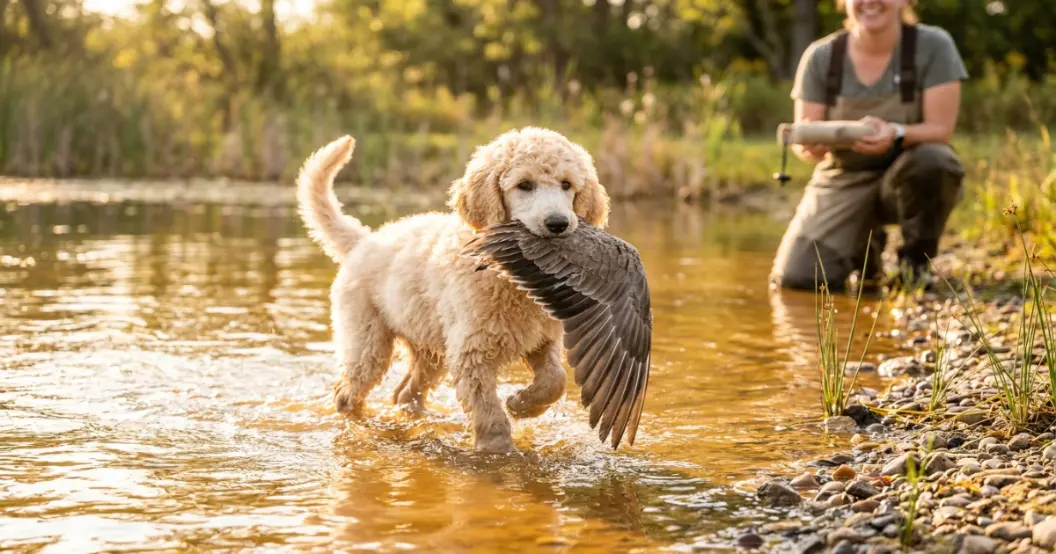
Ownership & Training Roadmap for a Hunting Poodle
If you’re determined to nurture the Poodle hunting instinct, follow this practical guide:
- Step 1 – Select the right puppy: Look for parents with hunt titles (UKC HR, AKC JH/SH/MH) or working certificates from PCA.
- Step 2 – Instinct testing at 8–10 weeks: Drag a bird wing on a string; a pup with instinct will chase, grab, and carry.
- Step 3 – Force-free foundation: Poodles shut down under harsh corrections. Use clickers, play, and reward-based retrieval games.
- Step 4 – Water introduction: Shallow, warm, fun. Never force. A single bad experience can create lasting aversion.
- Step 5 – Gunfire acclimation: Start with recorded shots at a distance while pup eats or retrieves. Never without positive association.
- Step 6 – Enter a hunt test: Junior Hunter levels are accessible and reinforce training goals.
Most owners report that by 12–18 months, a field-bred Standard can handle half-day hunts on upland birds or waterfowl — though stamina builds with conditioning.
Practical Owner Insight: Is a Hunting Poodle Right for You?
Even if you never plan to hunt, understanding the Poodle hunting instinct helps manage your dog. Standard Poodles with strong working drive need more than walks — they need purpose. Without it, they may develop obsessive fetching, barking at birds, or fence running. If your lifestyle is low-key, seek a companion-bred Standard from show or service lines. But if you want a versatile athlete that air dries after a swamp retrieve and doesn’t shed in your truck, a field-bred Poodle might be your perfect partner.
Puppies from proven hunting lines: $2,500 – $4,500. Compare to show-line pets ($1,800 – $3,000). Expect health clearances (hips, eyes, SA, von Willebrand’s). For adult started dogs (basic retrieves, steady to shot): $4,000 – $8,000. Finished gun dogs: $8,000+. The premium reflects generations of proven instinct.
What to Watch For: Buyer Mistakes & Misidentifications
Beware breeders advertising “hunting lineage” without titles. A sire that “loves to fetch” is not the same as a sire with a Master Hunter title. Also, remember that color doesn’t signal instinct — a brown Standard from field lines may hunt brilliantly; a black from show lines may not. Ask for videos of both parents working birds. If none exist, assume the Poodle hunting instinct is weak in that line.
Frequently Asked Questions About Poodle Hunting Instinct
Yes, many field-bred Standards retain strong natural retrieving and water instincts. However, show-line Poodles may show minimal or no hunting drive. Always evaluate parentage.
Absolutely. With proper lineage (field lines) and training, they excel at waterfowl retrieval — smart, soft-mouthed, and cold-tolerant. Their lack of shedding is a bonus for indoors.
Use a bird wing or dummy scented with bird oil. Observe for focused interest, chasing, picking up, and carrying. For formal evaluation, join a local hunt test club offering instinct testing.
Yes. The Poodle Club of America offers Working Certificate (WC) and Working Certificate Excellent (WCX). UKC and AKC Hunt Tests are also open to Poodles.
Some Miniatures retain a diluted version (useful for small upland birds or pest control), but Toys rarely have functional hunting drive. Standard is the only size typically worked as a gun dog.
Basic exposure to bird wings, water, and retrieval games at 8 weeks. Formal gunfire and blind retrieves can begin around 6–9 months, after confidence is solid.
Some individuals naturally freeze or “point” on scent before flushing — a remnant of early multi-purpose breeding. However, they are primarily retrievers, not pointers.
Possibly, but unreliably. Show-line dogs may chase a thrown dummy but lack the persistence, marking memory, or steadiness needed for actual hunting conditions.
🔍 Final summary — Poodle hunting instinct: can Standards still work?
Yes — when you choose the right lineage. The Standard Poodle’s hunting instinct is not extinct; it’s just segregated. Field-bred Standards are capable, stylish, and effective gun dogs for both waterfowl and upland hunting. Show-line Standards often lack that drive. If you need a working partner, research pedigrees, verify hunt titles, and test instinct before commitment. For everyone else, the legacy of the Poodle as a retriever remains a point of pride — and a reminder that looks can be deceiving. The Poodle hunting instinct lives on, but only where breeders have honored the original purpose.