How Much Do Poodles Sleep? Normal Patterns By Age
It’s easy to wonder if your poodle sleeps too much — or not enough. The truth is, poodle sleep needs shift dramatically from puppyhood to the senior years, and what’s normal for a 10-week-old isn’t normal for a 10-year-old. Here’s how to tell if your poodle’s sleep is right on track.

Quick Answer
Most adult poodles sleep 12 to 14 hours a day, with puppies and seniors needing 16 to 18 hours or more. This includes nighttime sleep and daytime naps. Poodles are active, intelligent dogs that need substantial rest to process training, repair muscle, and consolidate memory. If your poodle sleeps within these ranges and is alert and energetic when awake, the sleep pattern is likely normal. Significant deviations — especially with other symptoms — warrant a veterinary conversation.
Sleep Is Productive
During deep sleep, poodles consolidate memories, repair tissues, and regulate hormones. A well-rested poodle learns faster and is more emotionally balanced.
Age Dictates Needs
Puppies may sleep 18–20 hours daily. Adults average 12–14. Seniors often return to 16–18 hours. These are averages, not rigid rules.
Watch the Whole Picture
Sleep duration alone isn’t enough. A poodle who sleeps a normal number of hours but is lethargic when awake still warrants investigation.
Why Sleep Matters So Much for Poodles
Sleep is a biological necessity that supports brain function, memory consolidation, tissue repair, and immune health. For poodle owners, this means sleep duration and quality directly affect a poodle’s behavior, learning capacity, and long-term health. The most important thing to understand is that poodle sleep needs change predictably with age, and deviations from age-appropriate patterns often signal underlying issues.
Poodles are exceptionally intelligent. Their brains process a tremendous amount during waking hours — new commands, environmental stimuli, social interactions. Sleep is when that processing solidifies. A poodle who skimps on sleep may appear unfocused, irritable, or hyperactive, which owners sometimes mistake for excess energy. In reality, the dog may be overtired. The same way a cranky toddler needs a nap, a pacing, whining poodle may simply need uninterrupted rest.
How Much Do Poodles Sleep? A Breakdown by Age & Size
The numbers shift as your poodle moves through life. The table below provides the typical daily sleep ranges for Toy, Miniature, and Standard Poodles at four life stages. Keep in mind: individual variation exists. A poodle sleeping one hour more or less than these averages — while otherwise healthy and active — is usually fine.
| Life Stage | Approximate Age | Toy Poodle (4–6 lbs) | Miniature Poodle (10–15 lbs) | Standard Poodle (40–70 lbs) |
|---|---|---|---|---|
| Puppy | 8 weeks – 6 months | 18–20 hours | 18–20 hours | 18–20 hours |
| Adolescent | 6 months – 2 years | 14–16 hours | 14–16 hours | 14–16 hours |
| Adult | 2 years – 8 years | 12–14 hours | 12–14 hours | 12–14 hours |
| Senior | 8+ years (varies by size) | 16–18 hours | 15–17 hours | 14–16 hours |
Note: Smaller poodles tend to live longer and may enter their senior years later. Sleep increases gradually with aging, not overnight.
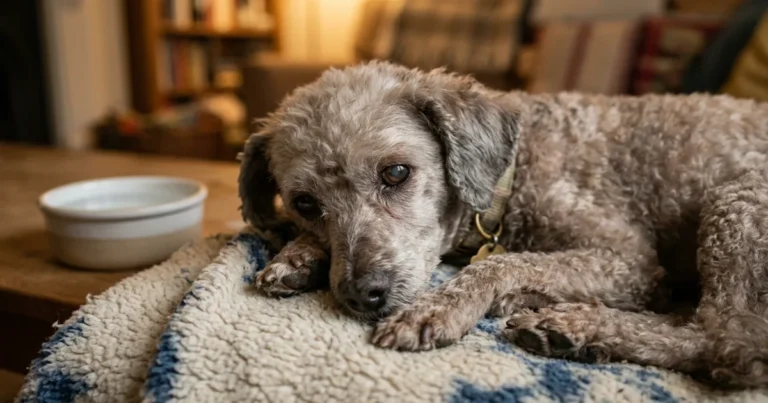
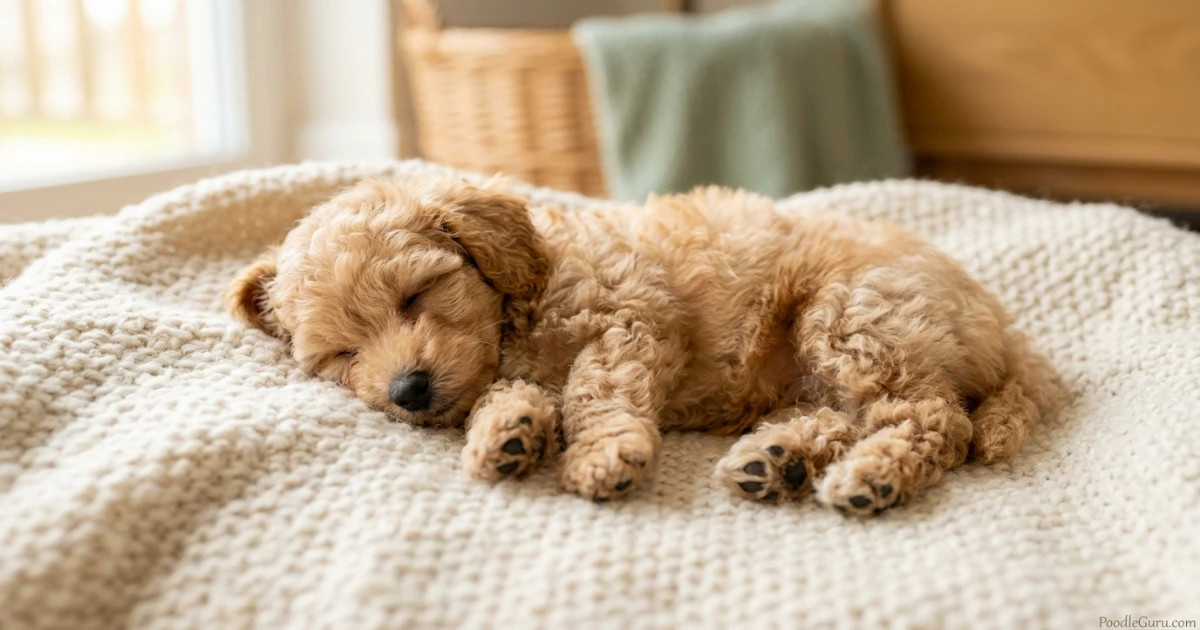
Puppy sleep is particularly fragmented. Expect short bursts of intense activity followed by deep, sudden naps. This is normal neurological development — not laziness. Senior poodles, on the other hand, may sleep more due to joint discomfort, reduced stamina, or simply a slower metabolic rate. A poodle lifespan and aging guide can help you anticipate changes as your dog matures.
What Influences a Poodle’s Sleep Duration
Age is the biggest factor, but it’s not the only one. A handful of variables can push your poodle’s sleep numbers up or down inside the healthy range.
Daily Activity Level
A poodle who hikes, trains, or plays hard will need more recovery sleep. Mental exercise is equally tiring. A 30-minute scent-work session can exhaust a poodle more thoroughly than an hour-long walk. If you’ve recently increased your poodle’s enrichment — our boredom-buster guide has ideas — expect a corresponding uptick in napping. That’s a good sign.
Health Status
Underlying health conditions — hypothyroidism, heart disease, arthritis, dental pain, or infections — can increase sleep or cause restlessness that interrupts sleep. A poodle who suddenly sleeps significantly more or less than their baseline deserves attention. Veterinary guidance generally recommends monitoring for accompanying signs like appetite changes, stiffness, or coughing.
Environment and Routine
Poodles thrive on predictability. A chaotic household, irregular feeding times, or a bed that’s too cold or noisy can fragment sleep. Conversely, a calm, dim, comfortable sleeping area encourages longer, deeper rest.
Breed-Specific Sensitivity
Poodles are alert dogs. They may sleep lightly, waking at unfamiliar sounds. This doesn’t necessarily reduce total sleep hours but can affect sleep quality. Observing whether your poodle settles back down quickly or stays restless matters.
The PoodleGuru S.L.E.E.P. Assessment Framework
At PoodleGuru, we evaluate a poodle’s sleep health using a simple five-point checklist. It helps owners move from vague worry to clear, actionable observations.
Schedule Consistency
Track when your poodle sleeps and wakes for three days. A consistent pattern — even if the hours are high or low — is more reassuring than an erratic one. Sudden changes in timing or duration are red flags.
Look at Wakefulness
When awake, is your poodle bright-eyed, responsive, and interested in food, walks, and play? A poodle who sleeps 16 hours but is fully “on” when up is usually healthy. A poodle sleeping 12 hours but groggy all day is not.
Evaluate Comfort
Watch your poodle’s sleeping positions and any shifting, groaning, or difficulty settling. Pain often manifests as restlessness before it shows as limping. Older poodles may need orthopedic beds or warmer sleeping spots.
Examine Physical Signs
Check for weight changes, coat condition, appetite shifts, or excessive panting during sleep. These subtle clues, paired with altered sleep, can point toward thyroid issues, pain, or respiratory concerns.
Pair with a Vet Visit
If you’ve noted significant changes in sleep duration, quality, or associated signs, schedule a check-up. Bring your three-day sleep log. Your veterinarian can run bloodwork and examine for conditions that alter sleep patterns. VCA Animal Hospitals’ guide to dog sleep patterns offers additional context on when sleep changes warrant investigation.
When Sleeping “Too Much” Is a Concern
More sleep isn’t automatically a problem. But there’s a difference between restorative rest and sickness-related lethargy. Use this checklist to know when to act.
Call Your Veterinarian If Your Poodle Shows:
- Sudden increase in sleep of 3+ hours beyond their normal without a clear explanation (like an extra-long hike).
- Difficulty waking up or extreme grogginess that lasts more than a few minutes.
- Sleeping more and eating less, drinking more or less water, or showing disinterest in favorite activities.
- Restlessness at night — pacing, panting, whining — that prevents sustained sleep.
- Changes in breathing during sleep: loud snoring (new onset), gasping, or pauses in breathing.
These signs don’t necessarily mean a crisis, but they do mean a professional evaluation is the responsible next step. A poodle health issues overview can familiarize you with breed-specific conditions that sometimes affect rest.
Common Sleep Misunderstandings About Poodles
Even experienced owners carry assumptions that don’t match poodle reality. Let’s correct a few.
Myth vs. Reality
Myth: “My poodle sleeps all day — they must be lazy or depressed.”
Reality: Poodles are high-energy when active, but they’re also champion nappers. Sleeping 14 hours is not laziness; it’s biological maintenance. Depression in dogs usually comes with withdrawal from interaction, not just extra napping.
Myth: “Puppies sleep through the night quickly if you tire them out.”
Reality: Puppies have tiny bladders and high metabolic rates. They need overnight potty breaks regardless of daytime fatigue. A young puppy may sleep 18 hours but still wake twice at night. That’s normal, not a training failure.
Myth: “Snoring is just a cute quirk.”
Reality: Occasional light snoring can be normal, especially if your poodle sleeps in an odd position. But loud, chronic snoring — particularly in a poodle that has never snored before — may signal nasal obstruction, weight gain, or respiratory issues. It’s worth mentioning to your vet.
Myth: “Senior poodles sleep all the time because they’re bored.”
Reality: While mental enrichment is important at every age, older poodles genuinely need more rest. Joint discomfort, slower metabolism, and sensory decline all increase sleep requirements. It’s not boredom — it’s biology.
How to Support Restful Sleep for Your Poodle
Good sleep hygiene isn’t just for humans. Small adjustments can dramatically improve your poodle’s sleep quality.
Create a Sleep Sanctuary
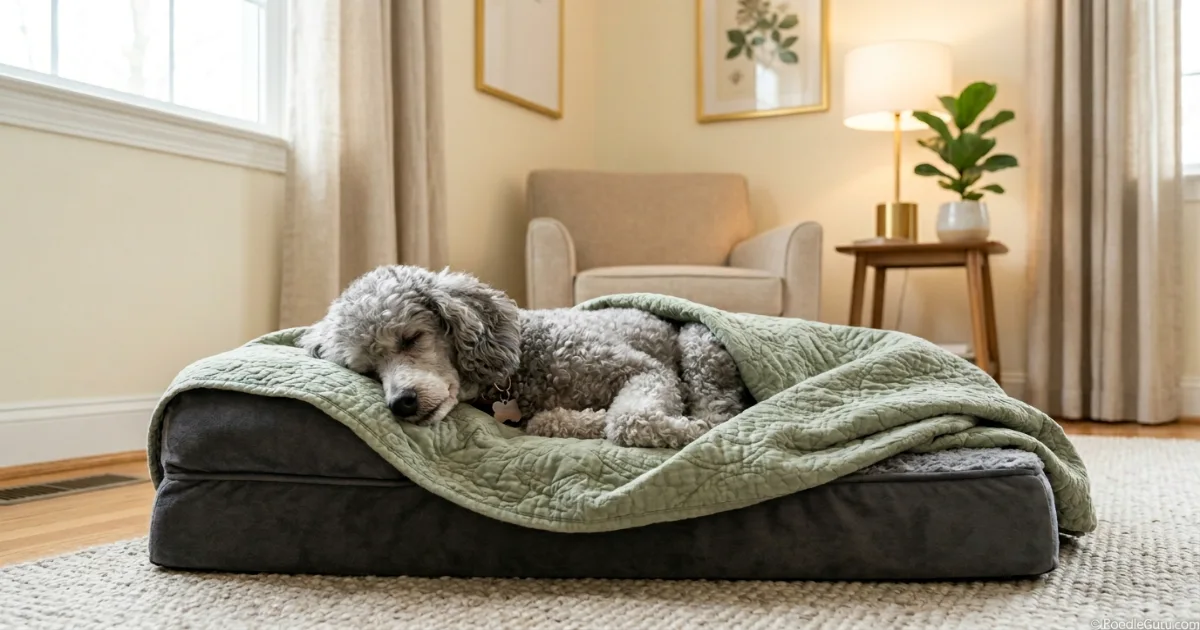
Choose a quiet corner away from heavy foot traffic, drafts, and direct heat sources. A crate with a cover or a cozy bed in a low-light area signals “rest time.” Consistency matters — if your poodle sleeps in different spots every night, establishing a designated sleep zone helps the brain associate the space with settling down.
Stick to Predictable Routines
Poodles are pattern-seeking dogs. Feeding, walking, and bedtime at consistent times regulate their internal clock. A brief potty trip and a calm, quiet wind-down period before bed — no roughhousing — prepares the nervous system for sleep.
Match Exercise to Life Stage
An adult poodle who doesn’t get enough physical and mental exercise may sleep restlessly or have trouble settling. A senior who is over-exercised may hurt and sleep poorly due to pain. Tailor activity to your poodle’s current capacity. A structured training guide helps balance mental and physical outlets.
Consider Bed Quality
Orthopedic foam beds support aging joints. Bolster beds offer security for poodles who like to curl up. Elevated cots work well in warm climates. There’s no single “best” bed, but the right one keeps your poodle comfortable enough to reach deep sleep cycles.
Owner Action Plan: Optimizing Your Poodle’s Sleep
Use this simple sequence to fine-tune your poodle’s rest over the next week.
Day 1–2: Sleep Log
Write down every time your poodle falls asleep and wakes up, plus notes on duration and depth. Don’t change anything yet — just observe. Include nighttime sleep and all naps.
Day 3: Compare to Averages
Use the age-size table earlier in this guide. Is your poodle within the expected range? Within one hour either side? A little outside? Note where you land.
Day 4: Apply the S.L.E.E.P. Framework
Run through the five steps. Highlight anything that feels off. You’re not diagnosing — you’re gathering data for yourself or your vet.
Day 5–6: Make One Adjustment
Pick the most impactful change: a better bed, a consistent bedtime, more daytime mental work, or a vet appointment if concerning signs are present. Don’t overhaul everything at once. Change one variable.
Day 7: Reassess
Has sleep quality improved? Is your poodle more rested when awake? If yes, keep going. If not, try the next adjustment or escalate to a vet consult.
Frequently Asked Questions About Poodle Sleep
How many hours a day should an adult Poodle sleep?
Most healthy adult poodles — Toy, Miniature, and Standard — sleep 12 to 14 hours per day, including naps. Some may sleep slightly more or less depending on activity level and individual metabolism. The key indicator is that they’re alert, energetic, and engaged during waking hours.
Is it normal for a Poodle puppy to sleep 20 hours a day?
Yes, it’s completely normal. Puppies up to about six months old can sleep 18 to 20 hours daily. Their brains and bodies are developing rapidly, and sleep is essential for processing new experiences, building neural connections, and physical growth.
Do Poodles sleep more than other dog breeds?
Poodles don’t necessarily sleep more than other breeds; they fall within the average range for dogs of similar size and activity level. However, because they’re so alert and intense when awake, their contrast between active and restful states can make the sleeping seem more pronounced.
Why does my Poodle sleep with their eyes partially open?
It’s common for dogs to sleep with their eyes slightly open, with the nictitating membrane (third eyelid) visible. This is usually harmless and doesn’t indicate a sleep problem. If it’s new or accompanied by redness, discharge, or changes in wakefulness, mention it to your vet.
Should I wake my Poodle up if they’re dreaming and twitching?
No. Twitching, soft barking, or paddling legs during sleep are signs of REM sleep — important for memory processing. Waking a dog from REM can startle them and disrupt the sleep cycle. Let them dream; it’s a sign of healthy sleep architecture.
My senior Poodle sleeps all day and is restless at night. What’s happening?
This pattern can indicate cognitive decline (canine cognitive dysfunction), pain that worsens at night, or disrupted circadian rhythms. A veterinary visit is recommended. Your vet may discuss joint support, anxiety management, or environmental adjustments to restore a healthier sleep-wake cycle.
Can my Poodle’s diet affect how much they sleep?
Yes. A nutritionally imbalanced diet or one that’s too low in quality protein can lead to lethargy. Conversely, a diet that doesn’t meet energy needs might cause restlessness. If sleep changes coincide with a food switch, consult your vet or a veterinary nutritionist about whether the diet is appropriate.
Key Takeaways: Understanding Your Poodle’s Sleep
Most poodles sleep more than their owners expect — and that’s exactly how it should be. Sleep is a cornerstone of health, learning, and emotional stability. Here’s what to remember:
- Adult poodles typically sleep 12–14 hours a day; puppies and seniors may need 16–20 hours, all within a healthy normal range.
- Sleep needs shift predictably with age, and the most important measure is not total hours but how alert and engaged your poodle is when awake.
- The PoodleGuru S.L.E.E.P. Framework (Schedule, Look, Evaluate, Examine, Pair with vet) gives owners a structured way to assess sleep health at home.
- Sudden changes in sleep — especially paired with appetite loss, restlessness, or disinterest in favorite activities — warrant a veterinary visit.
- Consistent routines, a comfortable sleeping space, and appropriate daily exercise are the most effective ways to support deep, restorative rest.
- A poodle who sleeps well is better equipped to learn, play, and bond — sleep isn’t downtime; it’s essential maintenance for a brilliant breed.
If you’re ever uncertain, trust your knowledge of your own dog. You see the patterns every day. Combined with veterinary guidance, that’s a powerful foundation for a lifetime of healthy sleep.