Frozen Treats for Poodles: Safe Recipes, Smart Swaps, and the Truth About Icy Snacks
Quick Answer: Yes, frozen treats for poodles are safe and incredibly beneficial when made with dog-safe ingredients. The best frozen treats use plain yogurt, puréed pumpkin, xylitol-free peanut butter, banana, blueberries, seedless watermelon, cucumber, or sodium-free bone broth. Avoid grapes, raisins, artificial sweeteners, and excessive sugar. For poodles of all sizes — Toy, Miniature, and Standard — frozen snacks soothe teething, provide mental stimulation, and help regulate body temperature in warm months. Always tailor portion size to your poodle’s weight, and introduce new ingredients gradually.
There’s a particular tilt of the head a poodle gives when the freezer drawer opens. Not the hopeful stare reserved for the treat jar, but a sharper, almost quizzical expression — ears perked, a single paw lifted — as if they know exactly what’s coming. Frozen treats for poodles have evolved from a backyard experiment into a genuine enrichment tool, and poodle owners are among the most dedicated treat-makers I’ve ever met. It makes sense: poodles are intense dogs, alive with curiosity and a touch of mischief. A well-constructed frozen snack gives their busy brain something to work on, and that reward is often better than the calories inside.
But the internet is full of conflicting advice. Some sources declare ice cubes dangerous; others call them harmless. A few recipes casually include unsafe ingredients because the creator never checked veterinary food-safety guidance. You need clarity that puts your poodle’s physiology first. In this guide, we’ll walk through the safest ingredients, step-by-step recipes that actual poodles have tested (and drooled over), the mistakes even smart owners make, and how to turn a simple frozen bite into a breed-appropriate enrichment experience.
✅ Safest Base Ingredients
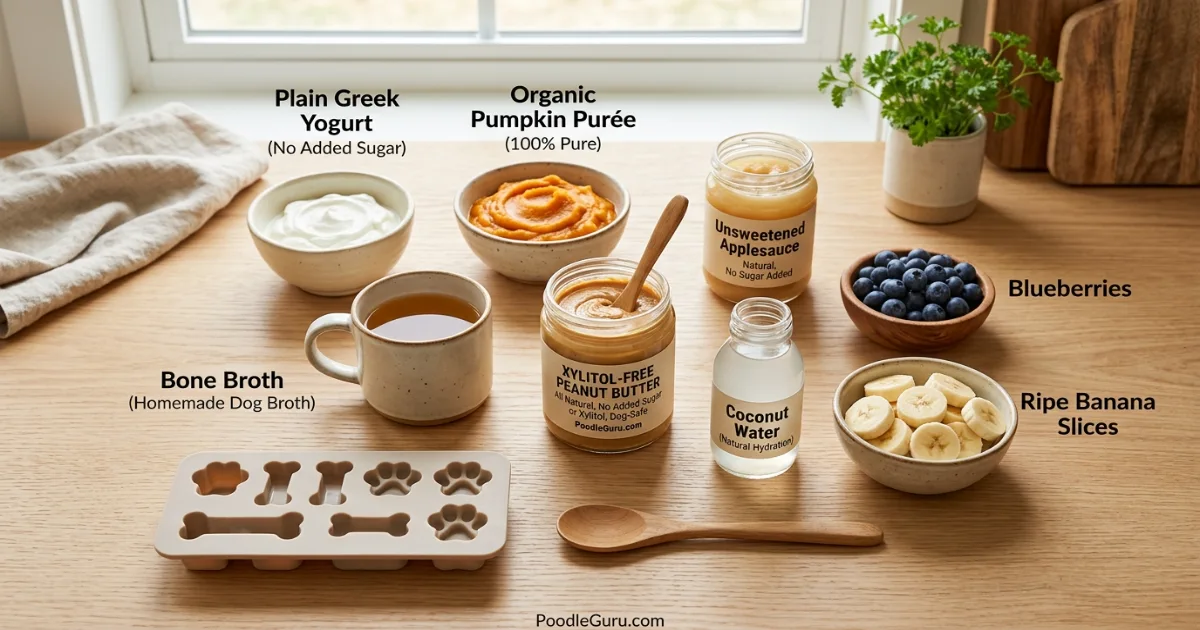
Plain Greek yogurt, pumpkin purée, banana, unsweetened applesauce, bone broth (no onion/garlic)
🚫 Never Include
Xylitol/birch sugar, grapes, raisins, currants, macadamia nuts, chocolate, onion, garlic, excess salt
🐩 Poodle Portion Rule
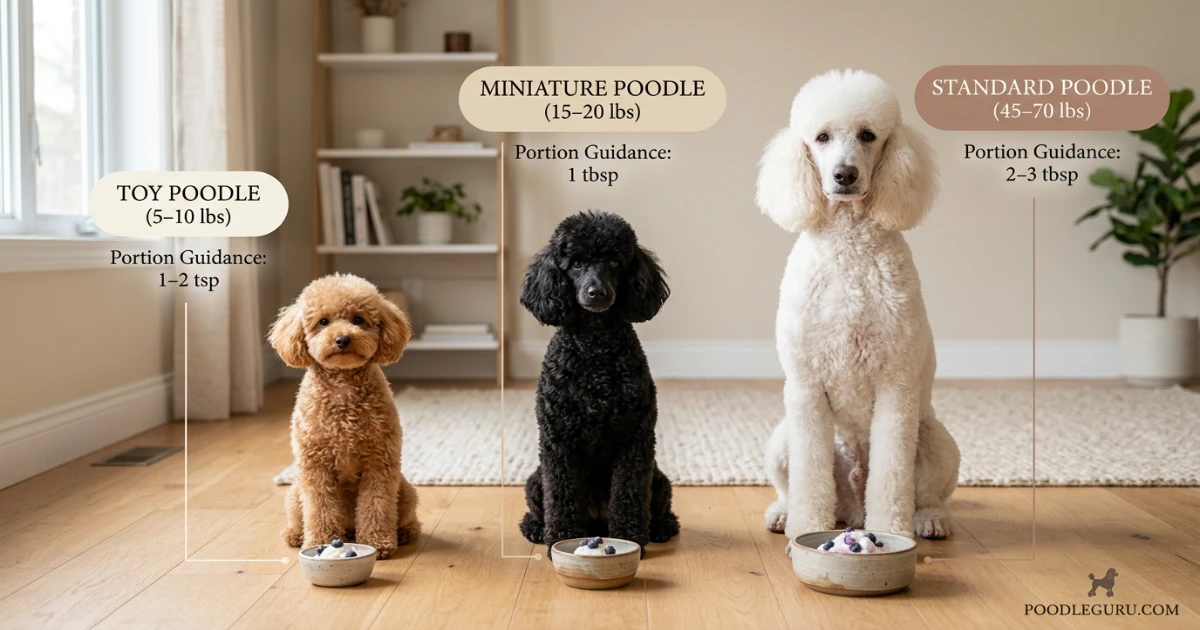
Toy: 1–2 tsp / Miniature: 1 tbsp / Standard: 2–3 tbsp per treat; treats ≤10% daily calories
🧊 Enrichment Bonus
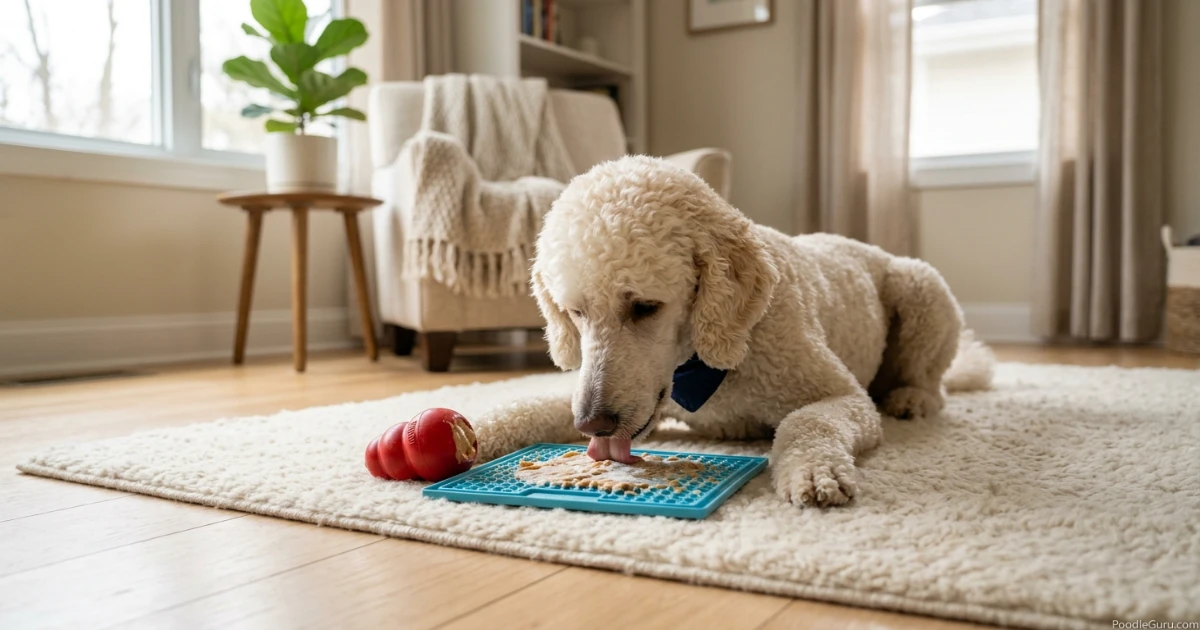
Freezing in Kongs or licking mats slows eating, reduces boredom, and soothes gums.
This guide is for general educational use. If your poodle has diabetes, pancreatitis, kidney disease, food allergies, repeated vomiting, diarrhea, or suspected heatstroke, use vet-approved recipes only and seek veterinary care when symptoms are urgent.
Why Frozen Treats for Poodles Are More Than a Summer Fad
First, discard the idea that frozen snacks are just a seasonal novelty. Poodles are prone to partiality — they adore routines — and a cool, lickable treat after a grooming session or a morning walk becomes a ritual that settles them. Chewing and licking release endorphins; for a breed that can trend toward anxious if understimulated, this matters. A frozen stuffed Kong keeps a Toy Poodle occupied for 20 minutes, a Standard for nearly 40, and in that time problem behaviors like shadow-chasing or barking at delivery trucks often evaporate.
Temperature regulation is another underrated benefit. Poodles, especially Standards with their dense curly coats, can overheat faster than you’d think. A frozen treat can help a warm poodle slow down, lick, hydrate a little, and settle — but it should never be treated as a cure for overheating. And for teething poodle puppies (those needle-sharp teeth arrive around 3–4 weeks and the full adult set settles by 7 months), a semi-frozen yogurt-and-banana ring is nature’s perfect numbing agent. Many breeders quietly recommend frozen washcloths or puppy-specific pupsicles long before the first vet visit.
The Science of Safe Ingredients: What Poodles Can (and Absolutely Cannot) Eat
This is where the difference between a thoughtful poodle parent and a well-intentioned but misinformed one becomes stark. Xylitol, also called birch sugar on some labels, can appear in sugar-free foods, nut butters, dental products, and other household items. In dogs, it can cause a dangerous blood sugar crash and liver injury. Small poodles are at extra risk simply because a small amount is larger relative to their body weight. Check every peanut butter, yogurt, and packaged treat label before it goes into a recipe; choose simple products with dog-safe ingredients only.
The Safe Sweetener Shortlist
Fruits like blueberries, raspberries, and sliced strawberries are rich in antioxidants that support poodle eyes and joints. Banana adds potassium and a creamy texture naturally. Pumpkin (plain, not pie filling) delivers fiber that firms up sensitive poodle stomachs. Unsweetened applesauce is fine in tiny amounts. Honey is safe for adult poodles in moderation — never for puppies under one year due to botulism risk. Steer clear of any product with “-itol” endings on the label.
Must-Make Frozen Treat Recipes for Poodles (Step-by-Step)
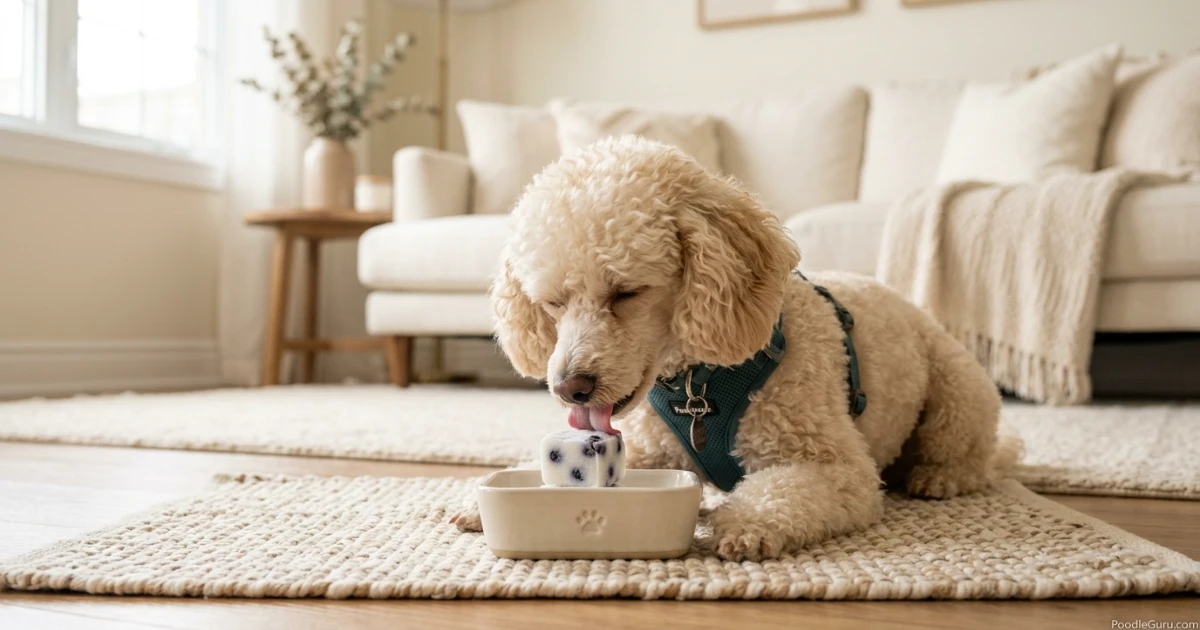
Every recipe below has been formulated with poodle palates, stomach sensitivity, and jaw size in mind. You’ll find no complicated equipment, no exotic ingredients, and absolutely no guesswork about safety. These are the three recipes I keep in rotation, and they’ve passed the taste test with a panel of one very opinionated apricot Standard named Remy.
1. Three-Ingredient Peanut Butter Banana Pupsicles
Ingredients: 1 ripe banana, 2 tablespoons xylitol-free peanut butter, ½ cup plain unsweetened Greek yogurt.
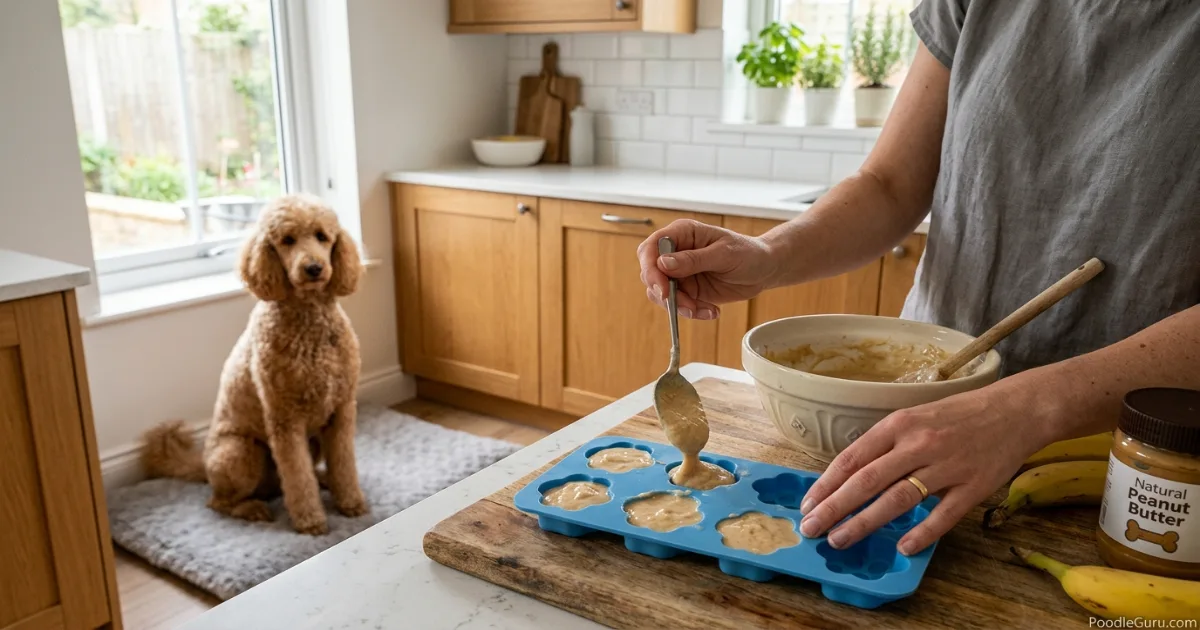
Method: Mash the banana thoroughly; blend in peanut butter and yogurt until smooth. Pour into silicone molds — paw-print shapes amuse the humans, but small cubes work better for Toy Poodles. Freeze 3–4 hours. Pop out and serve one. Store extras in a sealed container for up to 3 weeks.
2. Pumpkin & Coconut Water Soothing Rings
Ingredients: ½ cup canned pumpkin purée, ¼ cup coconut water (no added sugar), 1 tablespoon ground flaxseed (optional fiber boost).
Method: Stir together until the mixture resembles a thin smoothie. Pour into donut-shaped molds or an ice cube tray and freeze. These are slightly less calorie-dense and superb for poodles with sensitive digestion. Pumpkin’s soluble fiber keeps stools firm even when you’re transitioning diets.
3. Bone Broth “Pupsicle” Cubes
Ingredients: 1 cup sodium-free, onion- and garlic-free beef or chicken bone broth, 2–3 small sprigs of fresh parsley (washed and finely chopped).
Method: Warm the broth slightly to help the parsley infuse; cool completely. Pour into an ice cube tray. Freeze. These are extremely low calorie and double as hydration boosters on hot afternoons. One cube for a Toy Poodle, two for a Mini, three for a Standard. Never use cubes that are large enough to cause choking — always match the cube size to your poodle’s mouth.
| Recipe | Best For | Approx. Cal per Treat | Poodle Size Suitability |
|---|---|---|---|
| Peanut Butter Banana | High-value reward, crate training | 28–32 kcal | Mini & Standard; use mini cubes for Toy |
| Pumpkin Coconut Water | Digestive support, low-cal snack | 10–15 kcal | All sizes; excellent for Toy poodles |
| Bone Broth Cube | Hydration, post-walk cool-down | 5–8 kcal | All sizes; adjust cube dimensions |
Homemade vs. Store-Bought Frozen Treats for Poodles
Walk down the boutique pet aisle and you’ll see “artisanal” frozen dog gelato, freeze-dried yogurt drops, and marrow-filled ice molds. Some are excellent; others are glorified sugar water at $4 a pop. Here’s an honest side-by-side look so you can decide what deserves freezer space.
| Factor | Homemade | Premium Store-Bought |
|---|---|---|
| Ingredient control | Full transparency; no hidden sweeteners | Must scrutinize labels; some contain carrageenan or molasses |
| Cost per treat | $0.10–$0.35 | $1.50–$4.00 |
| Customization for poodle size | Easy — use different molds | Limited; most are medium-to-large size |
| Texture and enrichment | Kong stuffing, lick mat spreading built in | Often soft-serve style; less mental work |
| Safety confidence | High if you follow safe recipes | Varies; recall risk from small brands |
If you buy rather than make, look for transparent brands with clear ingredient lists, batch or lot information, and no vague sweeteners, flavor syrups, onion, garlic, chocolate, grapes, raisins, or xylitol/birch sugar. Short labels are easier to verify.
Buyer-Beware Insight
Some “dog ice cream” tubs rely heavily on fat, starches, or sweeteners to mimic human dessert. Poodles on these can develop loose stools rapidly. If the ingredient list sounds like human junk food, it probably is. Your poodle does not need 14 grams of sugar in a single frozen cup. Stick to simple labels.
What Most Owners Get Wrong About Frozen Treats for Poodles
Even diligent poodle people can misstep. I’ve compiled the most common errors so you bypass the trial-and-error stage entirely.
Misunderstanding xylitol risk: It appears in peanut butter, “low sugar” yogurt, and even some dental chews. A “sugar-free” claim without checking the actual sweetener is a gamble you must never take with a poodle.
Overlooking portion inflation: A Standard poodle can handle a 3-tablespoon treat easily; the same serving for a 5-pound Toy is a meal replacement. Adjust every recipe. Use mini ice cube trays for Toys and mini muffin molds for Miniatures.
Assuming all “fruit & veggie” blends are safe: Some homemade and commercial fruit mixes can include unsafe grape, raisin, or currant ingredients. Grapes and raisins are linked with kidney injury in dogs, and sensitivity varies by dog, so there is no safe “small amount” to include in frozen treats.
Using regular ice cubes as a primary treat: Crunching large, hard ice cubes can contribute to tooth fractures, especially in small dogs and dogs that chew forcefully. Small shaved ice or slushy consistencies are fine. For hard frozen treats, always aim for a texture that softens quickly with licking.
Breed-Specific Considerations: Toy, Miniature, and Standard Poodles
Frozen treats aren’t one-size-fits-all. A Toy Poodle’s metabolic rate is faster, so a small, calorie-dense treat twice a week might be ideal, while a highly active Standard can benefit from a larger post-run pupsicle to replenish glycogen without adding empty starch. Miniatures sit somewhere in between but often have surprisingly robust jaws — they can manage a frozen carrot stick better than you’d think. Choking risk is most pronounced in Toys, so always serve treats on a flat surface or lick mat rather than offering a small, slippery cube they might accidentally inhale.
Texture Tip for Senior Poodles
Aging poodles with dental issues or missing teeth may struggle with hard frozen treats. Blend the ingredients with a little extra liquid, freeze into a shallow bowl, and let it soften for 2–3 minutes before serving. This still provides enrichment without discomfort.
The Art of Making Frozen Treats That Actually Enrich Your Poodle
Turning a treat into a puzzle changes everything. Poodles are problem solvers; a frozen blob on a plate is okay, but a frozen-filled Toppl or layered Kong that requires strategic licking is brilliant. Create layers: a smear of peanut butter at the bottom, a layer of pumpkin-yogurt mix, a layer of mashed berries, and then a final yogurt seal. Freeze overnight. Your poodle will spend 25–40 minutes working through the strata, and afterwards they’ll nap. That’s enrichment that works on both the mental and physical level.
Lick mats with suction cups are another canvas. Spread a thin layer of the banana-peanut butter mixture, freeze flat, and stick it to the tub wall during bath time. This builds positive associations with grooming — and poodles need a lot of grooming positivity. Two birds, one frozen mat.
Pro Tips for Storage, Serving, and Cleanup
Store frozen treats in airtight, freezer-safe glass or BPA-free silicone bags. Label with the date — most stay fresh for 4–6 weeks. Serve on a dedicated “treat towel” or easy-clean mat; frozen mixtures can get slightly sticky as they warm. If your poodle takes the treat to the couch, you’ll want a washable cover. After the treat, wipe their beard and muzzle. Poodle coat, especially around the mouth, stains easily from dark berries and peanut butter residue. A quick damp cloth pass prevents rusty-colored muzzle staining that’s tricky to fix later.
When to Skip the Frozen Treat
Even the healthiest snack should be paused in certain situations. Poodles recovering from gastrointestinal upset (vomiting, diarrhea) should stick to a bland diet at room temperature — cold can shock an already irritated stomach. In freezing weather, an indoor frozen treat is fine, but after an outdoor winter walk, a warming treat makes more biological sense. Poodles with diagnosed pancreatitis or severe food allergies need vet-approved recipes only; the fat content in peanut butter and full-fat yogurt might be contraindicated. And always supervise puppies under 12 weeks the first few times you introduce a frozen item to ensure they don’t gulp. Early exposure teaches polite licking.
The Poodle Owner’s Checklist for Safe Frozen Treats
Use this practical snapshot every time you reach for ingredients:
- ☐ No xylitol/birch sugar, grape, raisin, currant, macadamia, onion, garlic, chocolate, or excess salt
- ☐ Dairy is plain, unsweetened, xylitol-free, and introduced only if your poodle tolerates lactose
- ☐ Treat size matches your poodle’s weight class
- ☐ New protein or fruit added one at a time with a 48-hour watch window
- ☐ No more than 10% of daily caloric intake from treats total
- ☐ Always have fresh water available after the treat
The ingredient cautions in this article align with common veterinary safety guidance: xylitol/birch sugar is toxic to dogs, grapes and raisins can injure kidneys, and hard ice or other very hard objects can contribute to dental fractures. When in doubt, skip the ingredient and ask your veterinarian.
Frequently Asked Questions About Frozen Treats for Poodles
- Can poodles eat plain ice cubes?
- Small chips or shaved ice are fine, but large rock-hard cubes can crack teeth, especially in Toy and Miniature poodles. If you offer ice, crush it first or let it soften slightly. Never replace real hydration with ice chewing.
- Is it safe to freeze yogurt for poodles?
- Yes, plain unsweetened Greek or regular yogurt freezes well and offers probiotics. Check the label for any artificial sweeteners, and only share if your poodle handles dairy without digestive upset. Start with a teaspoon-sized sample.
- What fruits are toxic to poodles in frozen treats?
- Grapes, raisins, currants, and any fruit product or sauce containing xylitol/birch sugar are absolutely off-limits. Citrus in large amounts can cause stomach distress, but a tiny bit of orange is sometimes tolerated. Stick to berries, banana, apple (no seeds), and watermelon (seedless).
- How often can I give my poodle a frozen treat?
- Daily is acceptable if the treat remains well within 10% of daily calories and is made from simple whole ingredients. Many owners offer one small frozen enrichment item every afternoon. Rotate recipes to avoid monotony and nutrient imbalances.
- Can poodle puppies have frozen treats?
- Absolutely — they’re a lifesaver during teething. For puppies under 12 weeks, use a soft, semi-frozen mixture on a lick mat rather than a hard chunk. Introduce one ingredient at a time and watch for stool changes.
- What about frozen treats for diabetic poodles?
- Consult your veterinarian, but generally, sugar-free options with low glycemic impact — bone broth cubes with a pinch of cinnamon, cucumber purée pops — can be safe. Avoid banana and sweet fruits. Portion control and blood glucose monitoring are essential.
- How do I make frozen treats without a mold?
- Use an ice cube tray, mini muffin tin, silicone chocolate mold, or simply spread the mixture onto a parchment-lined tray in small dollops. You can also stuff a Kong and freeze it upright. Creativity beats perfect equipment.
- Are frozen treats enough to cool down an overheated poodle?
- They help mildly but should never replace proper cooling protocols (shade, cool water, damp towels on groin/paws). A frozen treat can encourage a hot poodle to hydrate and rest, but if you suspect heatstroke, seek veterinary care immediately.
Bottom line: Homemade frozen treats for poodles are one of the simplest, highest-impact ways to add joy, enrichment, and nutritional control to your dog’s daily routine. When you skip the artificial nonsense and build with safe, whole ingredients, you’re not just offering a cold snack — you’re giving your poodle a sensory experience that matches their intelligence. Whether you whip up banana peanut butter pupsicles for a Standard or tiny pumpkin coconut drops for a Toy, you’ll see the gratitude in that curly tail wag. Keep it safe, keep it simple, and keep the freezer stocked.