How to Stop Poodle Resource Guarding Safely
Your poodle stiffens, lets out a low growl, and stares at you as you reach for a stolen sock. That’s resource guarding—and it’s more common in smart, sensitive dogs than you think. The good news: you can turn it around without punishment. This guide gives you a step-by-step, force-free plan to help your poodle feel safer around food, toys, chews, and everyday household objects.
Quick Answer: What Is Poodle Resource Guarding and Can You Stop It?
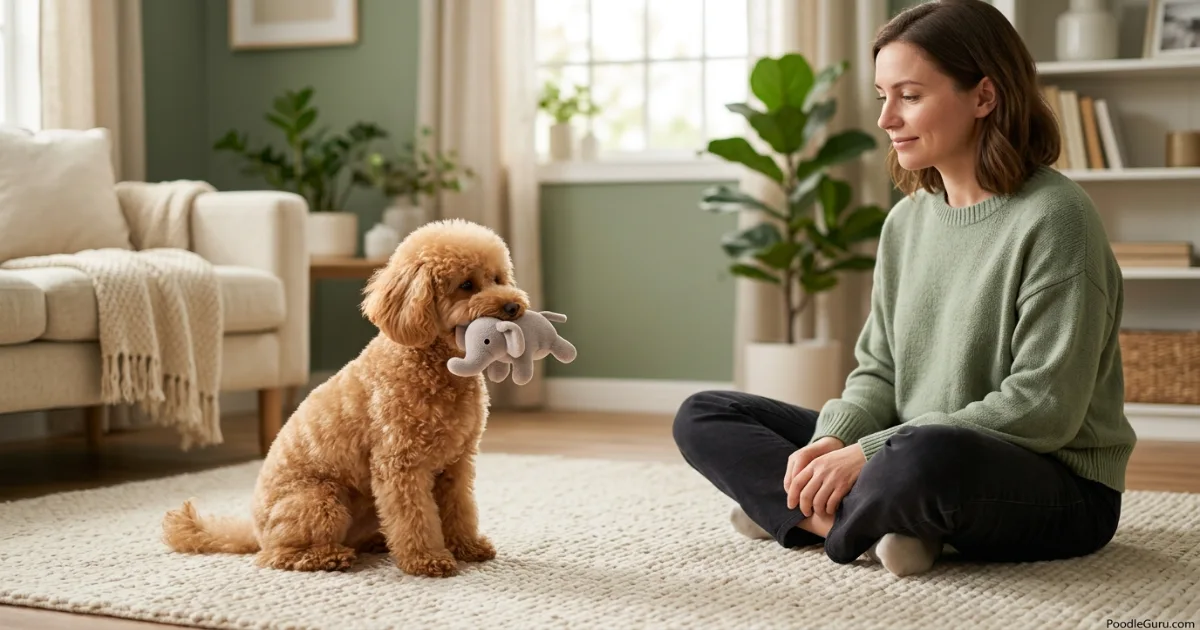
Poodle resource guarding is a natural behavior in which a dog uses body language, growling, snapping, or biting to keep a valued object—food, toys, chews, resting spots, or even a person—from being taken away. For poodle owners, this means recognizing early warning signs and responding with desensitization exercises, not punishment. The most important thing to understand is that poodles often guard because they feel insecure, not because they are trying to be “dominant.” You can absolutely stop it with a consistent, trust-building approach.
Quick Facts: How to Stop Poodle Resource Guarding
What It Looks Like
Freezing, hard stare, growling, lip lifting, snapping, or biting when someone approaches a valued item. Many poodles also “cower” or try to hide the object.
Common Triggers
Food bowls, high-value chews, stolen items (socks, tissues), favorite toys, resting spots, or even a particular family member.
Is It Normal?
Yes. Resource guarding is a survival instinct. However, in a home setting it can become dangerous and must be addressed with training—never by force.
Signs of Resource Guarding by Severity
| Severity Level | Body Language | Typical Context |
|---|---|---|
| Mild | Freezing, eating faster, side-eye, tail tuck | When a person walks past the food bowl but does not reach for it |
| Moderate | Growling, lip lifting, stiff body, prolonged hard stare | When a hand moves toward the guarded object |
| Severe | Snapping, lunging, biting, chasing the person away | When physical contact or removal of the item is attempted |
Why Poodles Resource Guard
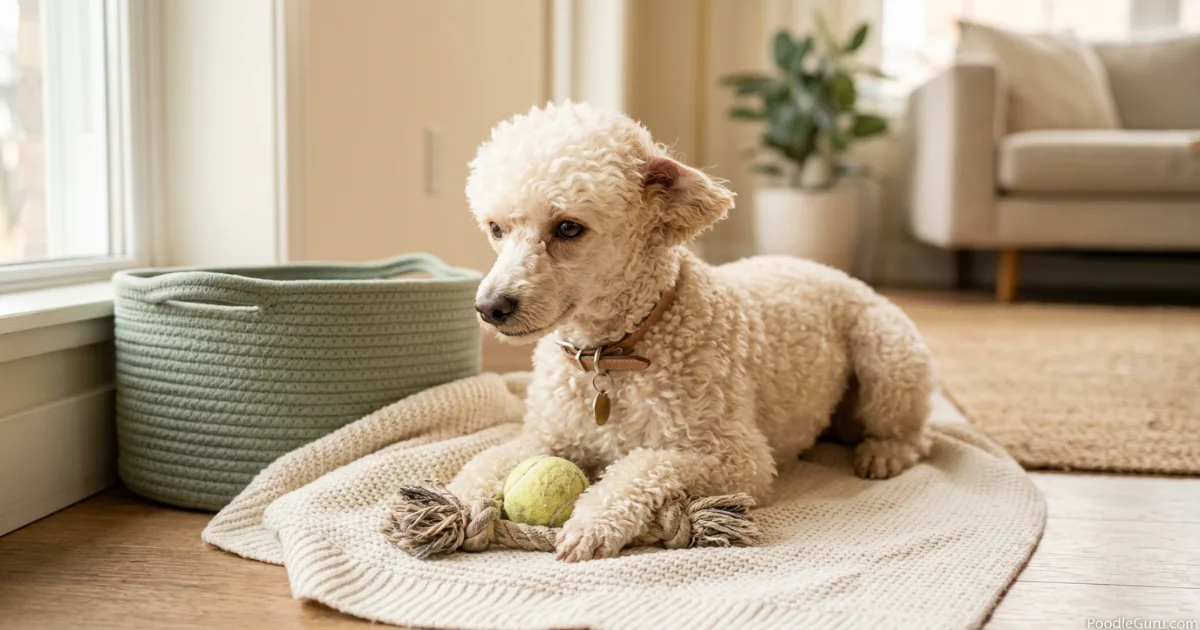
Poodles are extraordinarily intelligent and emotionally sensitive. They notice patterns—like a person always taking things away—and may become anxious about losing valuable items. In many cases, resource guarding develops because the dog has experienced repeated taking without exchange, or because early socialization included competition for food or toys. The breed’s high trainability does not make them immune; it means they can learn guarding patterns just as quickly as they learn sit.
For poodle owners, this means that guarding is rarely about “dominance.” It’s often a fear-based behavior. The dog worries that a cherished object will disappear forever and uses the only tools it has to protect it. Understanding this shifts the training goal from “show him who’s boss” to “show him that hands near his treasure mean good things.” The ASPCA’s resource guarding guidance emphasizes that punishment increases anxiety and can escalate aggression—precisely the opposite of what a sensitive poodle needs.
Recognizing the Early Signs Before They Escalate
Many poodle owners miss the quiet signals. A dog that stops chewing when you walk into the room, turns its head to block your view, or quickly gulps down food is communicating discomfort. These are the moments to intervene with training—not after a bite. Owners often notice that their poodle becomes “stiffer” around certain items or slinks away to a corner with a stolen tissue. These small changes are invitations to build trust before the guarding becomes ingrained.
If your poodle already growls or snaps, don’t panic. Growling is a warning, and punishing it removes the warning without fixing the underlying fear. A dog that is repeatedly punished for growling may skip straight to snapping or biting the next time. Instead, see it as valuable information: the distance or speed of your approach is too much, and you need to adjust your training setup.
The PoodleGuru Resource Guarding Reversal Method
At PoodleGuru, we approach resource guarding as a trust-building challenge, not a battle of wills. The method rests on three principles: never take without trading, always associate approach with reward, and respect your poodle’s emotional state. This framework is designed specifically for the poodle’s sensitive nature.
List Every Guarded Item
Write down exactly what triggers the behavior—food bowl, certain chews, specific toys, even spaces. This clarity lets you create a training hierarchy from lowest to highest value.
Start Below Threshold
Using a low-value item (a boring toy), practice approaching and dropping a high-value treat nearby while your poodle watches. Walk away. Repeat. The goal: your approach predicts a jackpot, not a loss.
Introduce the Trade-Up
Once your poodle eagerly looks up when you approach, start exchanging the item for a treat. Gently say “trade,” offer the treat, and then return the item. This builds a safe loop: giving something up always ends with getting it back plus extra.
Gradually Increase Value
Move up to a chewy bone or food bowl, always using the same process. If you see guarding signals, you moved too fast—go back a step. Never correct; just adjust the distance or treat value.
Generalize Across People and Contexts
Let other trusted family members run the exercises. Practice in different rooms. This prevents the poodle from learning “only one person is safe.” Keep sessions short and positive.
How to Stop Poodle Resource Guarding Step by Step
Ready to start? This plan is best for mild to moderate guarding. For severe cases involving bites, lunging, or children in the home, consult a certified positive-reinforcement trainer or veterinary behaviorist first.
Week 1–2: Approach–Reward Association
While your poodle has a low-value item, walk to within six feet, toss a few small, high-value treats, and leave. Do this 3–5 times a day. Watch for any stiffening; if it happens, increase the distance next time. Your poodle’s relaxed body language—soft eyes, wagging tail—tells you you’re on the right track.
Week 3–4: The “Drop” and Trade
Now introduce a verbal cue. Approach, show a treat, and say “drop.” Gently take the item as your poodle takes the treat. Praise and return the item immediately. Repeat multiple times a session so the item doesn’t disappear. Many poodles start to voluntarily drop items in anticipation of the treat—that’s the breakthrough.
Week 5 and Beyond: Food Bowl Desensitization
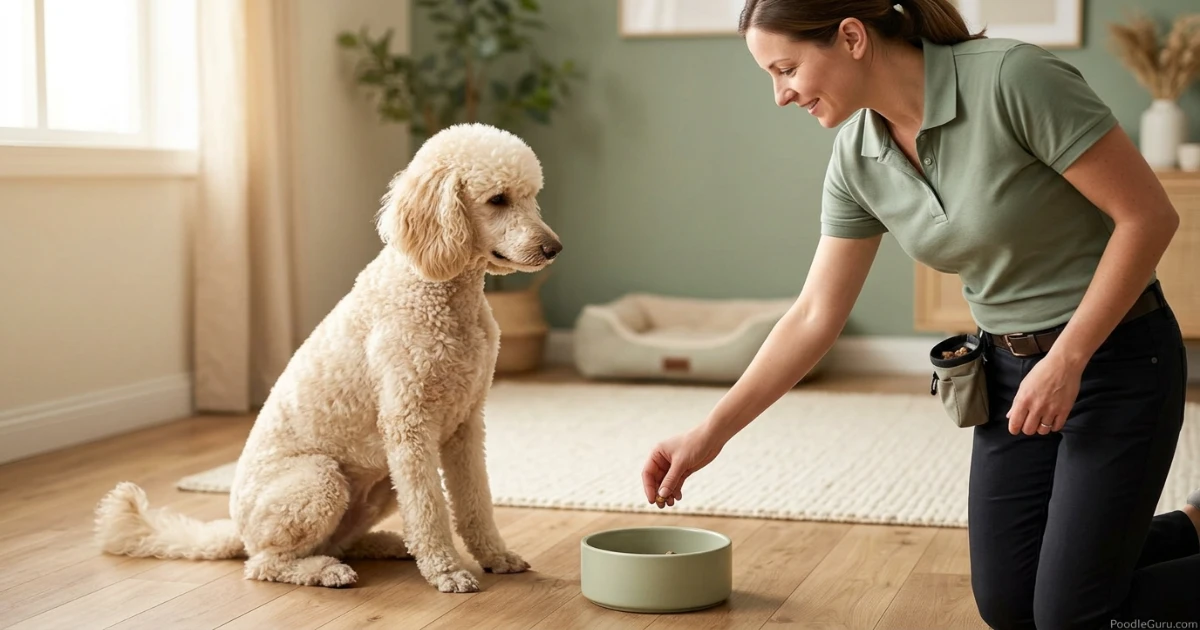
For food bowl guarding, hand-feed half the meal, then place the bowl down with a handful of kibble. Walk away. Return to add a high-value topper—like a small piece of chicken—to the bowl while your poodle eats. Gradually decrease the distance. The message: hands near the bowl make meals better. Never remove the bowl as punishment; always add, don’t subtract.
Owner Action Plan Checklist
- Identify all guarded items and rank them by value.
- Stock up on high-value treats (freeze-dried liver, tiny cheese cubes).
- Set up a quiet training zone with no competition from other pets.
- Use a calm, cheerful voice—never scold during exercises.
- Keep a journal of your dog’s reactions to track progress.
- Stop any session if you see stress signals; you can always try again later.
Mistakes That Make Resource Guarding Worse
Forcibly Removing Items
Grabbing a guarded object “to show who’s boss” escalates fear and can lead to a bite. It teaches the dog that human hands are a threat.
Punishing Growls
Yelling, hitting, or scruffing a growling poodle removes the warning system. The dog may learn to skip the growl and go straight to biting next time.
Pushing Too Fast
Moving from a dull toy to a meaty bone in one session is too big a leap. Always work at a pace where the dog stays relaxed; slow progress is lasting progress.
When to Call a Professional
Know the Red Flags
If your poodle has bitten and broken skin, lunges without warning, or guards multiple items with high intensity, don’t go it alone. Seek a certified professional dog trainer or a veterinary behaviorist who uses positive reinforcement methods. Severe guarding often requires a tailored behavior-modification plan, and in some cases a veterinarian may discuss anxiety support as part of the plan. Always work under qualified veterinary or behavior-professional guidance.
Management Strategies for Daily Life
While training is underway, prevent rehearsal of the behavior. If your poodle guards socks, keep laundry behind closed doors. If the food bowl is a trigger, feed in a separate room or use a snuffle mat that you can fill and leave. High-value chews should be given only when you can actively supervise or in a safe, enclosed area. For families with children, strict supervision is non-negotiable—young kids should never approach a dog that is eating or chewing. For more on building a calm household structure, explore our poodle training guide.
Frequently Asked Questions About Poodle Resource Guarding
Why is my poodle suddenly guarding food?
Sudden onset can be triggered by a change in the household, a negative experience (like food being snatched away), or an underlying health issue that causes pain. A vet visit can rule out medical causes like dental problems or digestive discomfort.
Can resource guarding in poodles be cured completely?
With consistent positive training, many poodles show major improvement, and some stop guarding entirely. However, management is always a part of the solution. You’ll need to maintain the “trade” habit and avoid situations that trigger intense guarding.
Should I take my poodle’s food away to teach him not to guard?
Absolutely not. Repeatedly taking food without exchange can create or worsen guarding. This approach can increase distrust and anxiety. Always trade up—offer something better in exchange for the item.
Is it safe for children to be around a resource-guarding poodle?
Until the guarding is resolved, children should never approach the dog while it eats or chews. Supervise all interactions and teach kids to respect the dog’s space. A certified trainer can help design a safety plan for families.
Does neutering or spaying stop resource guarding?
No. Guarding is a learned and emotional behavior, not primarily hormone-driven. Neutering may reduce general reactivity in some dogs, but it’s not a reliable fix. Training and behavior modification are the proven solutions.
How long does it take to stop resource guarding in poodles?
Mild guarding can improve in a few weeks of daily training. Moderate cases may take two to three months. Severe cases with a bite history require professional guidance and a longer, carefully managed plan.
Can adult rescue poodles unlearn resource guarding?
Yes. Rescued poodles often guard because of past scarcity. With patience, structure, and the trade-up method, adult dogs can learn that resources are now abundant and safe. Progress may be slower, but meaningful improvement is absolutely possible.
What do I do if my poodle guards me from other people?
This is a related form of guarding. Work with a trainer to teach the poodle that others approaching you predict good things—like treats or play. Never allow anyone to scold or chase the dog; instead, practice calm approaches with high-value rewards.
Key Takeaways: Stopping Poodle Resource Guarding
Resource guarding is a fixable behavior, not a permanent label. With empathy and a clear plan, your poodle can learn to trust hands and share space safely.
- Poodle resource guarding is a fear-based survival instinct, not dominance, and it’s common in intelligent, sensitive dogs.
- Early signs include freezing, hard staring, or gulping food; growling is a warning that should never be punished.
- The PoodleGuru Reversal Method uses trade-up games, approach–reward associations, and gradual desensitization to build trust.
- Never forcibly remove a guarded item; always offer a high-value treat in exchange and frequently return the original object.
- For severe guarding involving bites or lunging, consult a certified force-free professional—safety and expert guidance are essential.
- Consistency, patience, and management (limiting access to guarded items) create a safe environment while training takes effect.
Your next step? Start with the lowest-value item today and practice five positive approaches. If you need more foundational training structure, our complete poodle training guide will walk you through building a trusting relationship from the ground up.