This guide is educational and is not a substitute for emergency veterinary care. If your Poodle eats a known toxin, call your veterinarian, an emergency animal hospital, or a pet poison hotline immediately.
Can Dogs Eat List: Human Foods Safe & Toxic for Poodles
You are preparing dinner and your Poodle is watching every bite. This Poodle-specific can dogs eat list helps you quickly separate safe snacks, caution foods, and true emergency toxins before anything reaches the bowl.
Quick Answer
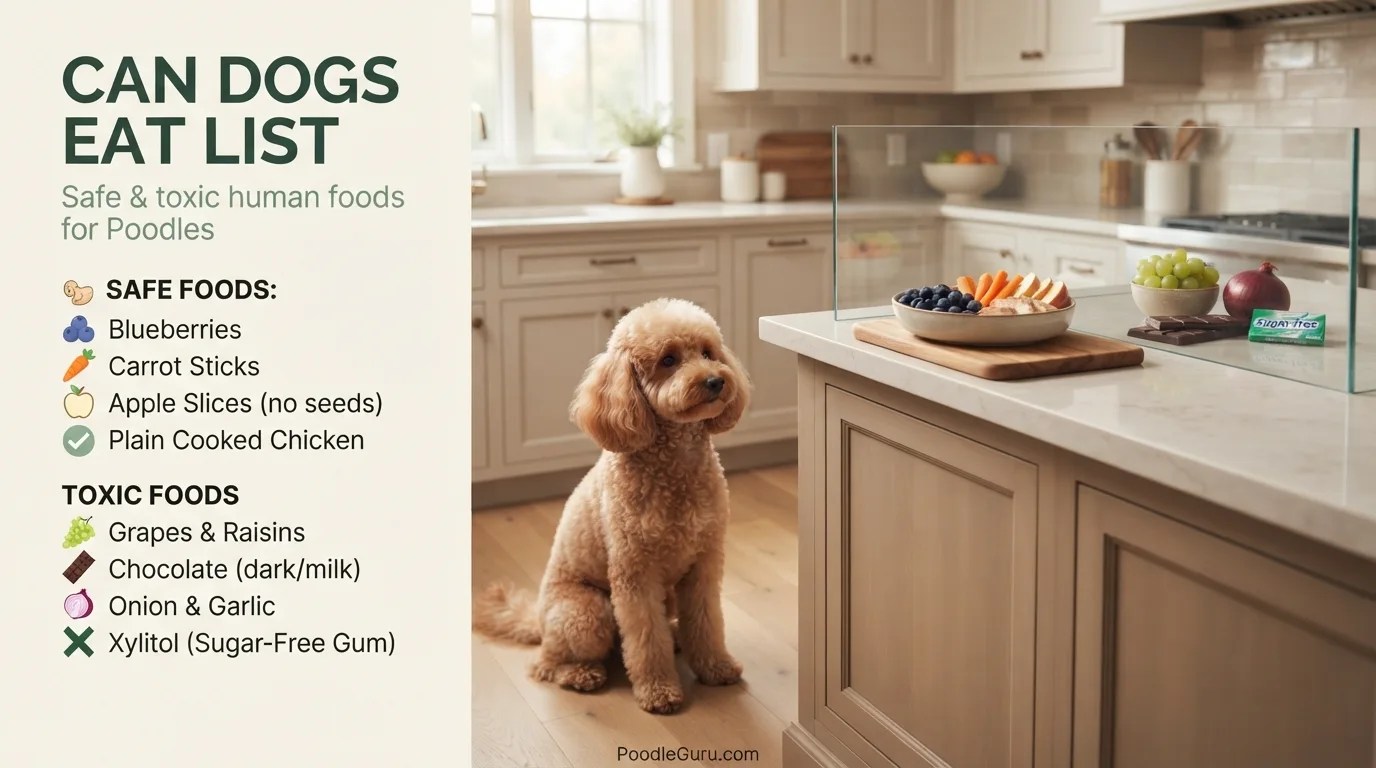
A can dogs eat list is a quick-reference guide that sorts human foods into safe, toxic, and caution categories for dogs. For Poodle owners, the safest rule is simple: plain whole foods may be occasional treats, but grapes, raisins, chocolate, xylitol, onions, garlic, chives, macadamia nuts, alcohol, caffeine, and raw yeast dough are no-feed items. Size matters too — Toy and Miniature Poodles can reach a dangerous dose much faster than Standard Poodles, so any suspected toxic ingestion should be treated as urgent.
Safe Human Foods for Poodles
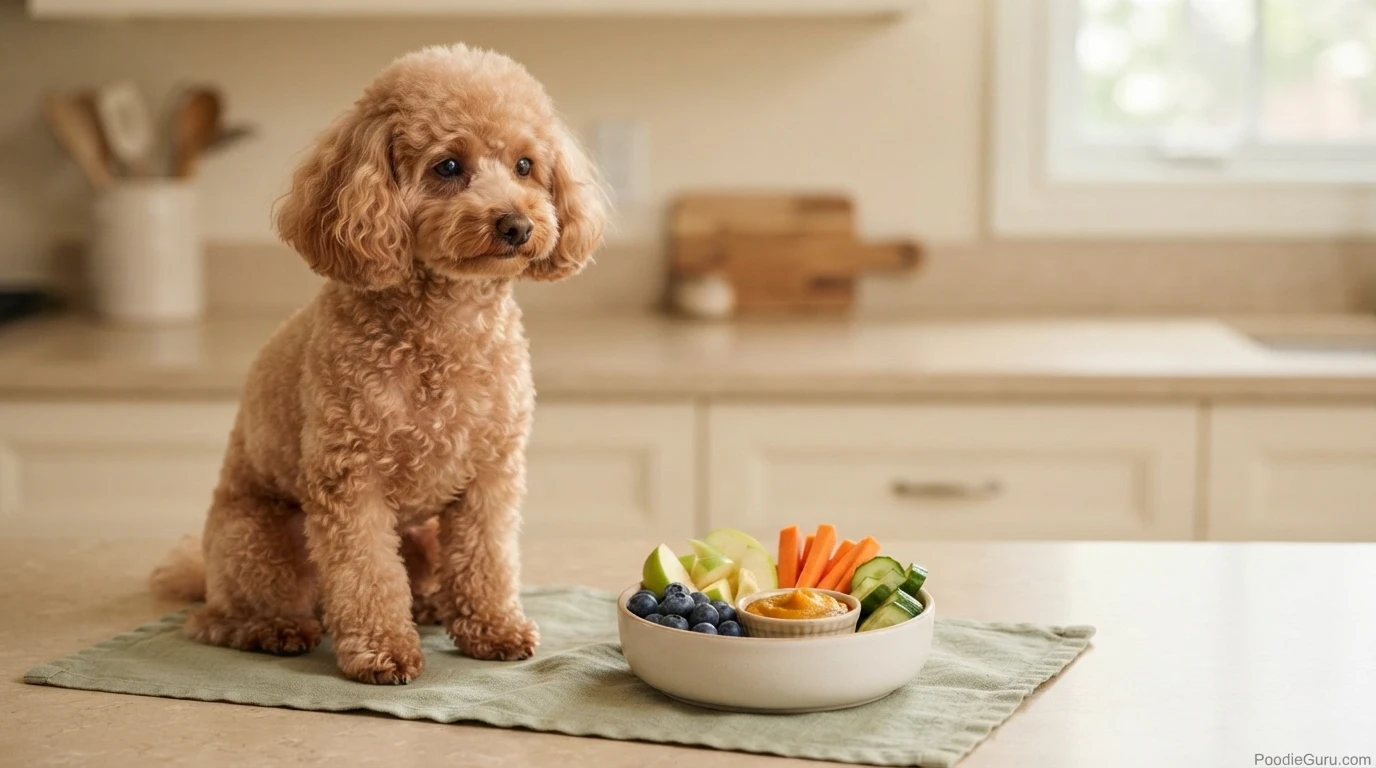
Many fresh, plain foods can be safe for Poodles in small amounts. They work best as training rewards, bowl toppers, or occasional snacks — not meal replacements. Introduce one new food at a time, use tiny portions, and stop if you notice vomiting, loose stool, gas, itching, or appetite changes.
Fruits
Blueberries, banana slices, seedless apple slices, seedless watermelon, strawberries, and pear pieces with the core removed.
Vegetables
Carrots, green beans, cucumber, zucchini, cooked plain sweet potato, and plain pumpkin puree with no sugar or spices.
Proteins
Plain cooked chicken, turkey, lean beef, fully cooked deboned salmon, and plain cooked egg with no butter, salt, onion, or garlic.
Portion control is where many owners go wrong. A banana slice is a treat; half a banana is a sugar-heavy snack for a Toy Poodle. As a practical rule, treats and extras should stay under 10% of the day’s calories, and for Toy Poodles, each training bite should be pea-sized or smaller.
Toxic Foods: The Absolute No List
Some human foods are dangerous enough that “just a little” is not worth the risk. The ASPCA lists common problem foods for pets, including chocolate, xylitol, alcohol, avocado, coffee/caffeine, grapes, raisins, onions, garlic, chives, macadamia nuts, and raw yeast dough. For Poodles, the small body weight of Toy and Miniature sizes makes quick action especially important.
| Food | Why It Is Dangerous | Poodle Owner Action |
|---|---|---|
| Grapes & Raisins | Can cause kidney injury or kidney failure in dogs, and there is no reliable “safe” amount. | Treat any ingestion as urgent, especially for Toy and Miniature Poodles. |
| Chocolate & Cocoa | Contains methylxanthines such as theobromine and caffeine. Dark chocolate, baking chocolate, and cocoa powder are more concentrated. | Call a vet with your dog’s weight, chocolate type, and estimated amount. |
| Xylitol | This sweetener can cause rapid low blood sugar, seizures, liver failure, or death in dogs. | Check peanut butter, gum, candy, toothpaste, and sugar-free baked goods. |
| Onions, Garlic & Chives | Allium foods can damage red blood cells and may lead to anemia. Powdered forms are concentrated. | Avoid raw, cooked, dried, powdered, broth-based, and seasoned forms. |
| Macadamia Nuts | Can cause weakness, vomiting, tremors, and high body temperature. | Keep nut mixes and baked goods away from counters and low tables. |
| Alcohol & Raw Yeast Dough | Alcohol can poison dogs; raw dough can expand in the stomach and produce alcohol as it ferments. | Never allow access to rising dough, cocktails, spilled drinks, or desserts with alcohol. |
| Caffeine | Coffee, tea, energy drinks, and caffeine pills can overstimulate the heart and nervous system. | Do not leave mugs, grounds, or supplements where a Poodle can reach them. |
Bookmark a trusted emergency reference such as the ASPCA Animal Poison Control food list, but do not spend precious time searching if your Poodle has already eaten something risky. Call for professional guidance first.
Foods That Require Caution
Some foods are not automatically toxic, but they can still cause problems because of fat, seasoning, choking risk, sugar, lactose, or hidden ingredients. These are the foods where Poodle owners need to slow down and check the full preparation.
Peanut Butter
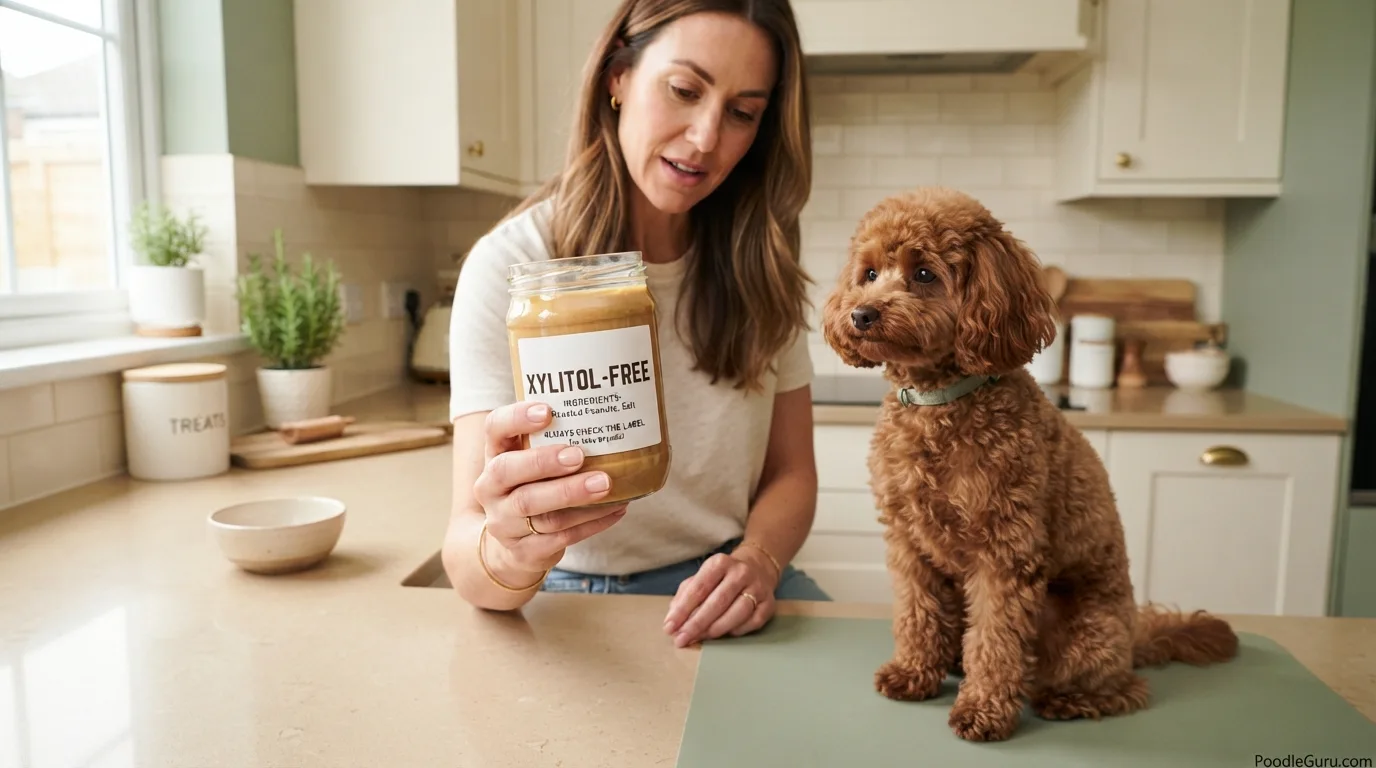
Use only xylitol-free peanut butter, and keep the serving tiny. It is calorie-dense and high in fat, which can upset sensitive stomachs.
Dairy Products
Many dogs do not tolerate lactose well. Small amounts of plain yogurt may be fine for some Poodles, but cheese and milk can trigger gas or diarrhea.
Cooked Bones
Cooked bones can splinter and injure the mouth, throat, stomach, or intestines. They are not a safe treat for any Poodle size.
Avocado
The pit is a choking and obstruction risk, and fatty avocado can upset digestion. Safer treats are easier to portion and manage.
Fatty Leftovers
Bacon, fried foods, gravy, and rich meat trimmings can trigger vomiting, diarrhea, or pancreatitis risk, especially in small dogs.
Seasoned Meat
Plain cooked meat may be safe, but marinades, broth, spice blends, and sauces often contain onion, garlic, salt, butter, or sugar.
The PoodleGuru 3-Question Food Safety Check
Use this fast framework any time a guest, child, or family member asks, “Can the dog have this?” It keeps the decision simple enough to remember in a busy kitchen.
Is It on the Toxic List?
If the food contains grapes, raisins, chocolate, xylitol, onions, garlic, chives, macadamia nuts, alcohol, caffeine, or raw yeast dough, do not feed it. Do not scrape off sauce or guess around seasonings.
What Form Is It In?
Fresh apple flesh can be okay; apple seeds and cores are not ideal. Plain chicken can be okay; garlic-marinated chicken is not. Always judge the full form, seasoning, pit, rind, bone, sauce, and ingredient label.
How Much for This Poodle’s Size?
A safe snack for a Standard Poodle may be too large for a Toy Poodle. Scale every treat to body size, keep it tiny, and remember that smaller Poodles reach dangerous doses faster after accidental toxin exposure.
Simple Kitchen Rule
When in doubt, choose a plain dog-safe treat instead of human food. A small piece of carrot or a single blueberry is easier to manage than a seasoned leftover with unknown ingredients.
Why Poodle Size Matters for Toxicity
Poodle size changes risk because dose is tied to body weight. A small amount of toxic food can be a much bigger exposure for a 5-pound Toy Poodle than for a 55-pound Standard Poodle. This is especially important with chocolate, xylitol, grapes, raisins, and highly concentrated seasonings.
| Poodle Size | Typical Food-Safety Concern | Owner Rule |
|---|---|---|
| Toy Poodle | Small body weight, tiny stomach, faster risk from concentrated toxins and fatty treats. | Use pea-sized portions only. Treat suspected toxin exposure as urgent. |
| Miniature Poodle | Moderate size but still vulnerable to high-fat foods, chocolate, xylitol, and allium seasonings. | Keep treats small, plain, and infrequent. Call early after accidental ingestion. |
| Standard Poodle | Larger body size, but still at risk from toxic foods, pancreatitis triggers, and raw dough expansion. | Do not use size as permission to wait. Toxic foods still need professional advice. |
For chocolate, the Merck Veterinary Manual notes that signs can occur at lower methylxanthine doses and become more serious as dose rises. That is why the safest public-facing advice is not to estimate from a blog table — call your vet with the chocolate type, amount, time eaten, and your Poodle’s weight.
What to Do If Your Poodle Eats Something Toxic
Do not wait for symptoms. Many dangerous ingestions are easier to treat early. Stay calm, remove the food, collect the details, and contact a professional right away.
Emergency Steps
- Remove the remaining food, wrapper, container, or spill from your Poodle’s reach.
- Write down what was eaten, how much, when it happened, and your Poodle’s weight.
- Take a photo of the packaging or ingredient list if available.
- Call your veterinarian, emergency animal hospital, ASPCA Animal Poison Control, or Pet Poison Helpline.
- Do not induce vomiting or give home remedies unless a veterinary professional specifically tells you to.
Vomiting, diarrhea, shaking, weakness, collapse, seizures, pale gums, unusual thirst, or acting “not right” should be treated as emergency signs.
For a fast reference, keep the Pet Poison Helpline and your local emergency vet saved in your phone. A printed fridge note is also useful if children, guests, or pet sitters help care for your Poodle.
Common Myths About Human Foods and Poodles
Myth: “A little garlic keeps fleas away.”
Garlic is not a safe flea-control method for dogs. It belongs in the no-feed category because allium foods can damage red blood cells.
Myth: “Dogs can eat any fruit.”
Grapes and raisins are fruits, but they can be dangerous for dogs. Always check the fruit, seeds, pit, rind, and portion.
Myth: “Organic means safe.”
Organic grapes, organic onions, and organic chocolate are still unsafe for dogs. Toxicity is about the ingredient, not the farming label.
Myth: “My Poodle ate it before and was fine.”
Past luck does not prove safety. Some reactions are dose-related, unpredictable, or delayed.
Myth: “Tiny sips of alcohol are harmless.”
Alcohol is never a safe treat for dogs, and raw dough can produce alcohol inside the stomach as it ferments.
Myth: “Smart Poodles know what is poisonous.”
Poodles are intelligent, but they still investigate food by smell and taste. Prevention and supervision are the real safety tools.
Frequently Asked Questions About Can Dogs Eat List for Poodles
Can Poodles eat bananas?
Yes. Poodles can eat banana in small, bite-sized pieces. Because banana is high in natural sugar, treat it as an occasional snack. A thin slice is plenty for a Toy Poodle, while a Standard Poodle can have a few small pieces.
Is cheese safe for Poodles?
Tiny amounts of plain, low-fat cheese may be safe for some Poodles, but dairy can cause gas or loose stool in dogs that do not tolerate lactose. Avoid blue cheese, seasoned cheese, and any cheese with herbs, garlic, or onion.
Can my Poodle eat peanut butter?
Only xylitol-free peanut butter should be considered, and it should be fed sparingly. Check the label every time because formulas can change. Peanut butter is high in fat, so large servings are not a good choice for Toy or Miniature Poodles.
What fruits are toxic to Poodles?
Grapes and raisins are the major fruits to avoid because they can cause kidney failure in dogs. Fruits with pits, such as cherries, peaches, and apricots, also need caution because pits can be choking hazards and may contain harmful compounds.
Can Poodles eat eggs?
Plain, fully cooked eggs can be safe for many Poodles when served without butter, oil, salt, garlic, or onion. Raw eggs are not recommended because of bacterial risk and digestive concerns.
Is rice safe for Poodles?
Plain cooked white or brown rice is generally safe in moderation. It is often used as part of a bland diet when recommended by a vet, but it should not replace a complete balanced dog food long term.
What should I do if my Poodle eats a grape?
Call your veterinarian, an emergency animal hospital, or a pet poison hotline immediately, even if your Poodle looks normal. Do not wait for vomiting, diarrhea, or appetite loss. Have your dog’s weight and the estimated amount ready.
Can Poodles eat bread?
Small amounts of plain, fully baked bread are usually not toxic, but bread offers little nutritional value. Raw yeast dough is dangerous because it can expand in the stomach and produce alcohol as it ferments.
Key Takeaways
This can dogs eat list gives Poodle owners a safer way to handle human foods at home, during holidays, and when guests want to share snacks.
- Safe foods should be plain, seed-free, pit-free, unseasoned, and portioned to your Poodle’s size.
- Grapes, raisins, chocolate, xylitol, onions, garlic, chives, macadamia nuts, alcohol, caffeine, and raw yeast dough belong on the no-feed list.
- Toy and Miniature Poodles reach risky doses faster because of their smaller body weight.
- The PoodleGuru 3-Question Food Safety Check asks: Is it toxic? What form is it in? How much for this Poodle’s size?
- Do not induce vomiting or use home remedies unless a veterinary professional tells you to.
- Save your vet, emergency clinic, ASPCA Animal Poison Control, and Pet Poison Helpline contacts before you need them.
Best next step: Screenshot this guide’s toxic food table and save it on your phone. Then read our Homemade Dog Food for Poodles guide before adding regular human-food toppers to your dog’s diet.