Poodles are elegant, intelligent, and famously low-shedding — but their beautiful curly coats don’t maintain themselves. Unlike most dogs, poodles have continuously growing hair, not fur, which means grooming is not optional. It’s a necessity for their comfort, health, and overall well-being.
If you’ve ever struggled with tangles behind the ears, mats under the legs, or curls that lose their bounce, the issue usually isn’t effort — it’s using the wrong grooming tools.
This complete 2025 guide breaks down exactly which dog grooming tools for poodles you need, how to use them correctly, how often to groom, and how to avoid the most common mistakes that lead to painful matting and unnecessary stress.
Whether you’re a first-time poodle owner, a home groomer, or someone trying to reduce professional grooming costs without sacrificing coat quality, this guide will help you build the right grooming toolkit and routine.

Why Poodles Need Specialized Grooming Tools
Poodles are not like other dog breeds when it comes to coat care. Their grooming needs are unique, and using generic dog brushes or human hair tools often causes more harm than good.
1. Curly, Dense Hair That Grows Constantly
Poodles have tight, dense curls that grow continuously rather than shedding seasonally. While this makes them a popular choice for allergy-sensitive households, it also means dead hair stays trapped inside the coat instead of falling out.
Without the right tools, this trapped hair twists into knots and mats close to the skin.
2. High Risk of Matting in Sensitive Areas
Poodle mats don’t appear overnight — they develop quietly in high-friction zones such as:
- Behind the ears
- Under the armpits
- Around the collar area
- At the base of the tail
- Between toes and paw pads
Once mats tighten, they can pull on the skin, restrict movement, trap moisture, and lead to irritation or infection.
3. Hypoallergenic but High-Maintenance
Poodles are often labeled “low maintenance” because they don’t shed — but in reality, they require more frequent grooming than most breeds to stay healthy.
This is why standard dog brushes are not enough. Poodles need grooming tools designed specifically for curly, dense, non-shedding coats.

Essential Grooming Tools for Poodles (Complete Toolkit)
Below is a practical, must-have grooming toolkit every poodle owner should have at home in 2025.
Core Brushes & Combs for Poodles
Slicker Brush (Non-Negotiable Tool)
Purpose:
- Removes loose hair
- Detangles curls
- Prevents mats before they form
A high-quality slicker brush with fine, angled pins is the foundation of poodle grooming. It reaches into the coat without damaging the curls when used correctly.
How to use it properly:
- Brush in small sections
- Lift the coat gently
- Work from ends toward the skin
Avoid aggressive brushing — gentle, consistent strokes are more effective and comfortable.
Metal Greyhound Comb (Wide + Fine Teeth)
Purpose:
- Detects hidden tangles
- Ensures brushing reached the skin
After slicker brushing, always follow with a metal comb. If the comb glides smoothly from skin to tip, your poodle is tangle-free. If it catches, you’ve found a knot the brush missed.
This step is critical — many mats start underneath brushed-over curls.
Pin or Bristle Brush (Finishing Tool)
Purpose:
- Smooths the coat
- Distributes natural oils
- Adds softness and shine
This brush is best used after detangling, not before. It helps the coat look polished and healthy, especially for longer trims or show-style cuts.

Trimming & Cutting Tools for Poodles
Grooming Scissors (Straight and Curved)
Purpose:
- Trim face, paws, and sanitary areas
- Shape coat safely without clippers
Curved scissors are excellent for shaping legs and rounded areas, while straight scissors are ideal for precision trimming.
Blunt-Tip Scissors (Safety Essential)
Purpose:
- Trimming around eyes and ears
- Puppy grooming
- Nervous or wiggly dogs
These reduce the risk of accidental nicks and are essential for home groomers.
Dog Clippers with Guard Combs
Purpose:
- Full body trims
- Summer cuts
- Maintaining short, manageable coats
Choose quiet, low-vibration clippers designed for curly coats. Guard combs allow consistent length and prevent cutting too close to the skin.
Bath & Coat Maintenance Tools
Hypoallergenic Dog Shampoo
Purpose:
- Cleans without stripping natural oils
- Reduces itching and dryness
Poodles do best with gentle, moisturizing shampoos formulated for curly or sensitive coats.

Conditioner or Leave-In Detangler
Purpose:
- Softens curls
- Reduces friction while brushing
- Prevents breakage
This is especially important for long or dense coats. Never brush a dry, static-prone poodle coat without a light detangler.
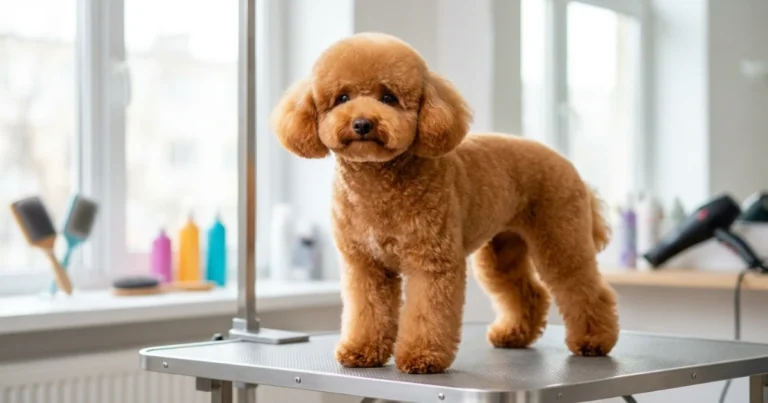
Dog Blow Dryer (Low Heat or High-Velocity)
Purpose:
- Fully dries coat after bathing
- Prevents moisture-based matting
Damp curls tighten as they dry naturally, increasing mat risk. Always dry thoroughly, using low heat or air-only settings.
How to Choose the Right Grooming Tools for Your Poodle
Not all tools are created equal. Here’s what to look for when shopping.
Gentle, Skin-Safe Materials
- Rounded or capped pins
- Smooth metal comb teeth
- No sharp edges or rough seams
Poodle skin can be sensitive — tools should glide, not scrape.
Ergonomic Design
Comfort matters, especially during longer grooming sessions. Look for:
- Non-slip handles
- Lightweight construction
- Balanced grip
This reduces hand fatigue and improves control.
Size Based on Poodle Type
- Toy & Miniature Poodles: Smaller, lighter tools
- Standard Poodles: Wider brushes and longer combs
Using the right size prevents unnecessary pulling and speeds up grooming.
How Often Should You Groom a Poodle? (Recommended Schedule)
| Grooming Task | Frequency |
|---|---|
| Brushing & Combing | 2–4 times per week |
| Full Groom / Trim | Every 4–8 weeks |
| Bath + Conditioner | Every 4–6 weeks |
| Ear Cleaning | Every 2–3 weeks |
| Nail Trimming | Every 3–4 weeks |
Consistency matters more than perfection.
Step-by-Step Home Grooming Routine for Poodles
Step 1: Prepare Your Space
Choose a quiet, well-lit area. Have all tools ready so you don’t interrupt the session.
Step 2: Inspect the Coat
Gently feel behind ears, under legs, and around the tail. Identify tangles before brushing.
Step 3: Lightly Mist with Detangler
Never brush a completely dry coat — it increases breakage and discomfort.
Step 4: Slicker Brush in Sections
Brush slowly, lifting curls and working down to the skin.
Step 5: Comb to Confirm
Use the metal comb to check every section. If it catches, return to brushing.
Step 6: Trim Sensitive Areas
Use blunt-tip scissors around face, paws, and sanitary zones.
Step 7: Bath (If Needed)
Shampoo gently, condition thoroughly, and rinse completely.
Step 8: Dry Fully
Use low heat or air-only settings. Brush again once dry.
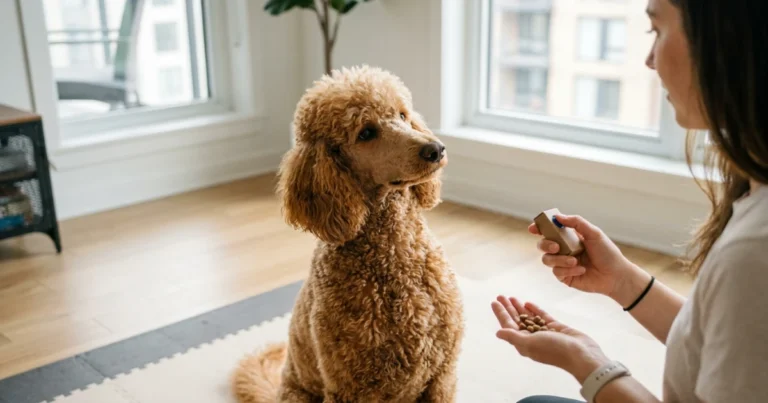
Step 9: Reward Your Poodle
Positive reinforcement builds trust and makes future grooming easier.
Common Grooming Mistakes Poodle Owners Make
Skipping Regular Brushing
This leads to mats that require shaving — often close to the skin.
Brushing Wet Hair
Wet curls tighten and mat faster. Always dry first.
Using Human Hair Tools
Human brushes create static and damage curly dog hair.
Ignoring High-Risk Zones
Most mats form where owners forget to check regularly.
Waiting Too Long Between Trims
Long coats require more frequent shaping to stay healthy.
Tips for Stress-Free Grooming (For You and Your Poodle)
- Start grooming routines early in puppyhood
- Keep sessions short and calm
- Groom when your poodle is relaxed, not hyper
- Use treats, praise, and gentle handling
- Maintain a predictable schedule
Grooming should feel like care, not conflict.
Should You Still Use Professional Groomers?
Yes — even with excellent home grooming, professional trims every 6–8 weeks help maintain coat shape, detect skin issues early, and keep your poodle comfortable.
Home grooming + professional grooming = best results.
Final Thoughts
Poodles don’t need more grooming — they need better grooming.
With the right tools, proper technique, and a consistent routine, grooming becomes easier, faster, and more enjoyable for both you and your dog. Investing in quality grooming tools in 2025 isn’t about luxury — it’s about comfort, health, and prevention.
A well-groomed poodle isn’t just beautiful — they’re happier, healthier, and more confident every single day.