Poodle Microchip Cost: $25–$70 Price Guide (2026)
Poodle microchip cost is typically $25 to $70 in the United States, although shelter events may charge less and some veterinary clinics may charge more when an examination or separate registry enrollment is added. The procedure is quick, but the real value comes from confirming the chip number, enrolling it in a searchable registry, and keeping your contact information current.
Quick Answer: How Much Does a Poodle Microchip Cost?
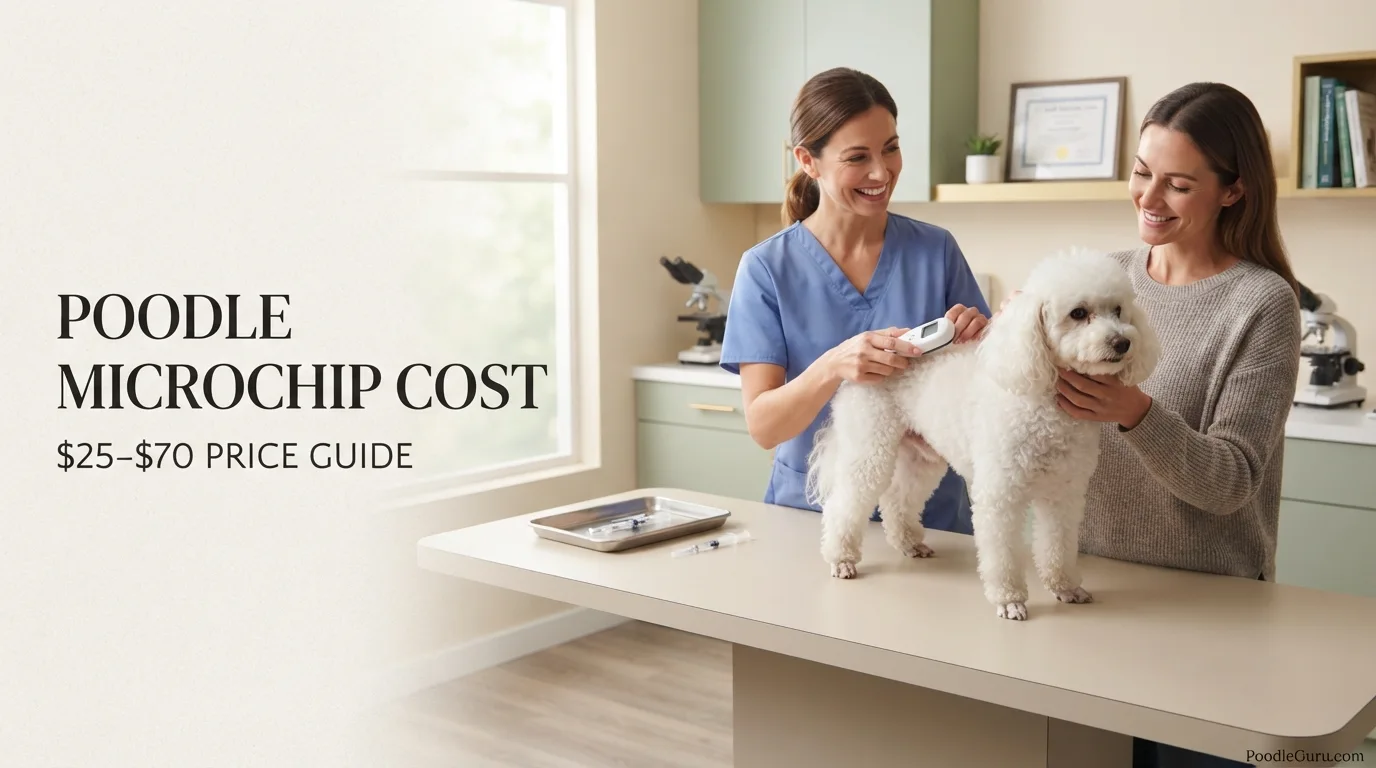
Expect a poodle microchip cost of about $25 to $70 for the chip and implantation. Low-cost shelter or community events may fall near $15 to $35, while a full-service veterinary clinic may charge $40 to $70 or more depending on local fees and whether an exam is required. Registration terms vary: some chips include prepaid enrollment, some registries charge a one-time enrollment fee, and some companies sell optional annual recovery memberships. The implanted chip itself does not require a battery or monthly cellular plan, and it is not a GPS tracker.
In This Guide
- What Is Poodle Microchipping?
- Quick Microchip Facts
- Why Microchipping Matters for Poodles
- Poodle Microchip Cost Breakdown
- PoodleGuru Registration Checklist
- What Changes the Final Price?
- Common Owner Misunderstandings
- Microchip vs. GPS Tracker
- Service Red Flags
- Aftercare and Annual Checks
- Frequently Asked Questions
- Key Takeaways
What Is Poodle Microchipping?
Microchipping places a tiny electronic identification device beneath a dog’s skin, usually in the area between the shoulder blades. The chip stores only a unique identification number. It does not continuously transmit a location, record conversations, store your address inside the chip, or need charging.
When a veterinary clinic, shelter, rescue, or animal-control facility scans a found dog, the scanner displays that identification number. Staff can then use a registry lookup service to identify the registry associated with the chip and contact that registry for reunification support. The process works best when the number has been enrolled correctly and the owner has kept phone numbers, email addresses, and emergency contacts current.
The American Animal Hospital Association describes implantation as a quick injection that normally takes only a few seconds and usually does not require sedation or anesthesia. A microchip complements a visible collar tag; it should not replace one.
Quick Microchip Facts for Poodle Owners
Procedure Time
The implantation itself usually takes only a few seconds. Most dogs experience brief, mild discomfort similar to an injection and can return to normal activity unless the veterinarian gives different instructions.
Chip Standards
The 15-digit chip is the international ISO standard. However, several chip frequencies and registry databases remain in use in the United States, so clinics and shelters should use scanners designed to detect common chip types.
Registration Fees
Fee structures are not identical. Enrollment may be prepaid, charged once, or paired with an optional annual service. Ask what is included before paying and keep proof of enrollment.
Why Microchipping Matters for Toy, Miniature, and Standard Poodles
Every dog can become separated from an owner, and poodles are no exception. A properly enrolled microchip gives a found poodle a permanent identification number even when a collar or tag is missing.
Real-World Poodle Situations
- Toy Poodles: Their small size can allow them to move through gaps beneath gates or between fence panels that owners may not notice.
- Miniature and Standard Poodles: Their athletic ability and sensitivity to sudden noise can create escape opportunities during fireworks, storms, travel stops, or open-door moments.
- Grooming appointments: Collars are routinely removed during bathing, drying, trimming, and coat care, which temporarily removes visible identification.
- Travel and emergencies: Vehicle accidents, evacuations, boarding transitions, and unfamiliar environments can separate even a well-trained poodle from its family.
A microchip does not guarantee recovery, and it does not replace secure fencing, leash control, recall training, current ID tags, or prompt lost-pet action. It adds a durable backup identification layer when those safeguards fail.
Poodle Microchip Cost Breakdown for 2026
These are practical U.S. price estimates rather than fixed national rates. Always request the complete price before booking because an examination fee, registration fee, tax, or optional membership may be listed separately.
| Provider Type | Typical Price | What May Be Included | What to Confirm |
|---|---|---|---|
| Full-Service Veterinary Clinic | $40–$70+ | Chip, professional implantation, scan verification, and sometimes initial enrollment. | Whether an office exam is required and whether registry enrollment is prepaid. |
| Animal Shelter or Rescue Clinic | $15–$35 | Low-cost implantation, community event pricing, or inclusion in an adoption package. | Which registry holds the record and whose contact information is currently listed. |
| Mobile Vaccine or Wellness Event | $25–$45 | Chip insertion and basic documentation at a lower-overhead location. | Who performs the procedure, whether a follow-up scan is available, and how enrollment is completed. |
| Breeder or Previous Owner | Often already implanted | A puppy may arrive with a chip number, certificate, and prepaid enrollment. | Whether the registry record has been transferred into your name rather than simply noted on veterinary paperwork. |
Registration and Membership Fees: Read the Terms
The chip’s electronic function does not switch off because a membership expires, but recovery services and registry benefits differ by company. For example, AKC Reunite advertises a one-time lifetime enrollment with no annual update fees, while other providers may offer annual membership plans for added recovery services. Ask whether your quoted poodle microchip cost includes implantation, initial enrollment, ownership transfer, contact updates, and optional benefits. Choose a registry with clear contact-update tools and reliable access for shelters and veterinary teams.
The PoodleGuru Microchip Registration Checklist
Implantation is only the first step. Complete this checklist before considering the job finished.
Scan and Match the Number
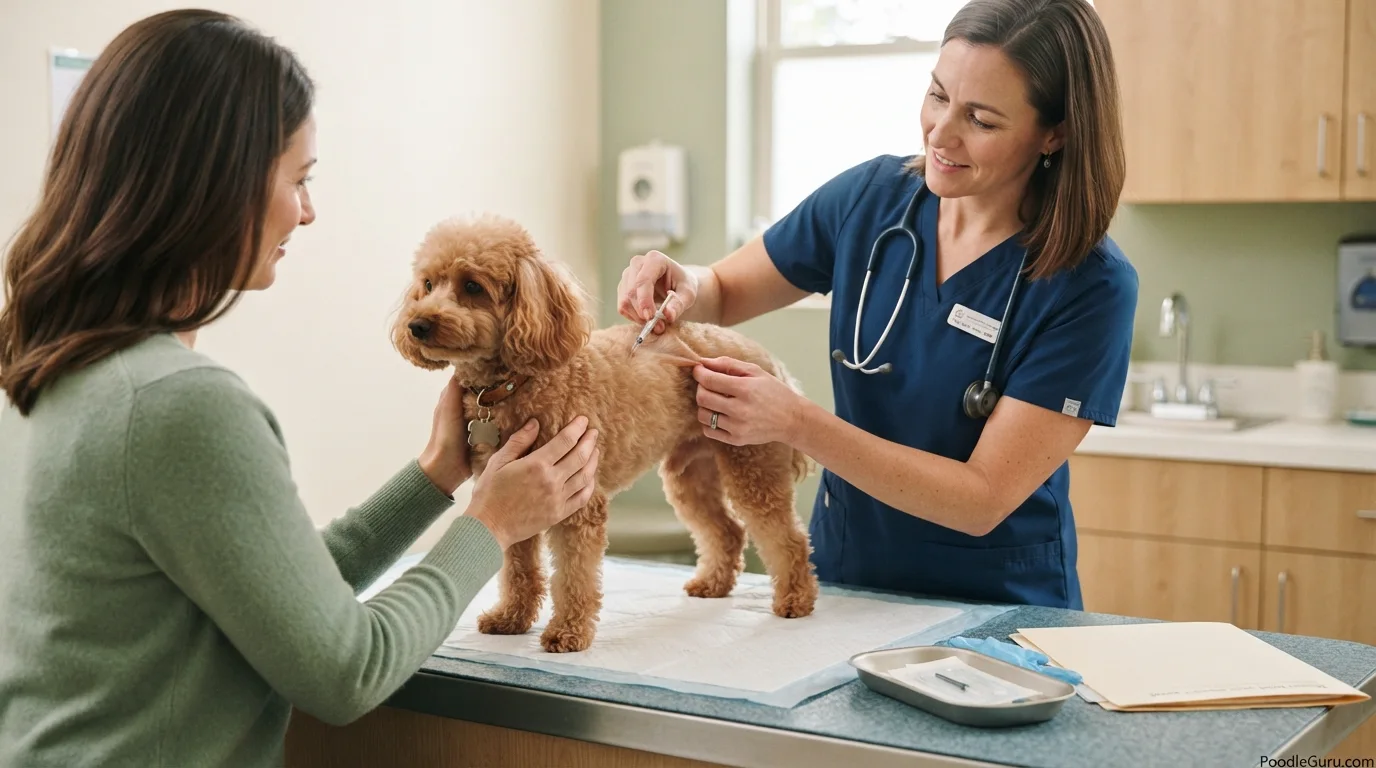
Ask the clinic to scan your poodle after implantation. Compare every digit displayed on the scanner with the certificate, receipt, and enrollment form. A number copied incorrectly can delay a future lookup.
Identify the Correct Registry
Use the chip provider’s instructions or the AAHA Microchip Registry Lookup Tool to determine which participating registry is associated with the number. The lookup tool points users toward registries; it does not display an owner’s private details.
Enroll or Transfer the Record
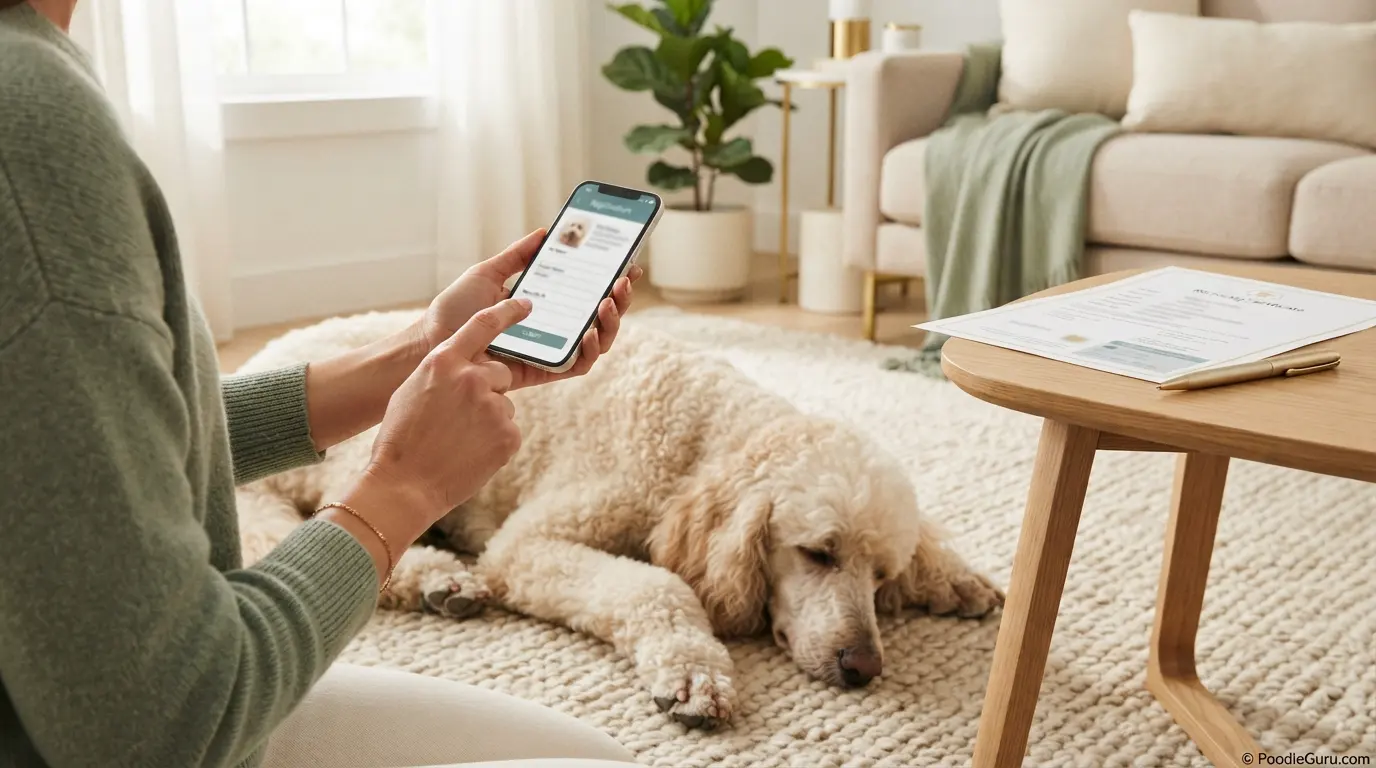
Add your current name, primary phone, backup phone, email, and address. When a breeder, shelter, rescue, or previous owner is listed, complete the registry’s ownership-transfer process rather than assuming veterinary records automatically update the registry.
Add a Reliable Emergency Contact
Choose someone who can answer calls when you are unavailable. Tell that person they are listed and make sure they understand how to contact you during travel or an emergency.
Check the Record Every Year
Review the registry after a move, phone change, email change, adoption, or change in emergency contact. Ask your veterinarian to scan the chip during routine wellness visits so the number remains documented and readable.
Factors That Affect Poodle Microchip Cost
The procedure is generally affordable, but the final amount on the invoice can change for several reasons.
- Clinic structure: A full-service hospital may include professional time, examination requirements, recordkeeping, and follow-up access. A community event usually has lower overhead and a narrower service menu.
- Separate examination fee: Some clinics will implant a chip only during a veterinary appointment. Ask whether the quoted amount includes the exam or only the microchip procedure.
- Prepaid enrollment: Some chips are sold with registry enrollment already included. Others require the owner to pay a separate enrollment or transfer fee after implantation.
- Bundled care: Shelters may include microchipping in an adoption fee, and veterinary clinics may offer it during vaccination, dental, spay, or neuter care. Bundling may reduce the additional appointment cost, but it should never replace confirming the registry record.
- Optional recovery services: Lost-pet alerts, live-agent support, travel assistance, medical document storage, and poison-support benefits may increase the price. Compare those benefits separately from the chip’s basic identification role.
- Location: Local veterinary operating costs and community subsidies vary, so prices differ between cities, suburbs, and rural areas.
What Poodle Owners Commonly Misunderstand
Myth: “My Poodle Has a Tag, So a Chip Is Unnecessary.”
A visible tag is the fastest way for a neighbor to call you, but collars can break, slip off, or be removed. Use both a current tag and a registered microchip.
Myth: “A Microchip Shows My Dog’s Live Location.”
A pet microchip is passive identification. It displays a number only when scanned at close range. Live location requires a separate powered GPS device.
Myth: “The Vet’s File Automatically Updates the Registry.”
Veterinary records and registry records are separate systems. Unless the clinic confirms enrollment on your behalf, the owner must complete or verify the registry entry.
Does a Microchip Prove Legal Ownership?
A microchip record can support identification and ownership documentation, but it should not be treated as the only legal proof of ownership. Keep adoption papers, purchase or transfer documents, veterinary invoices, license records, photographs, and the chip certificate together.
Microchip vs. GPS Tracker: Which Does Your Poodle Need?
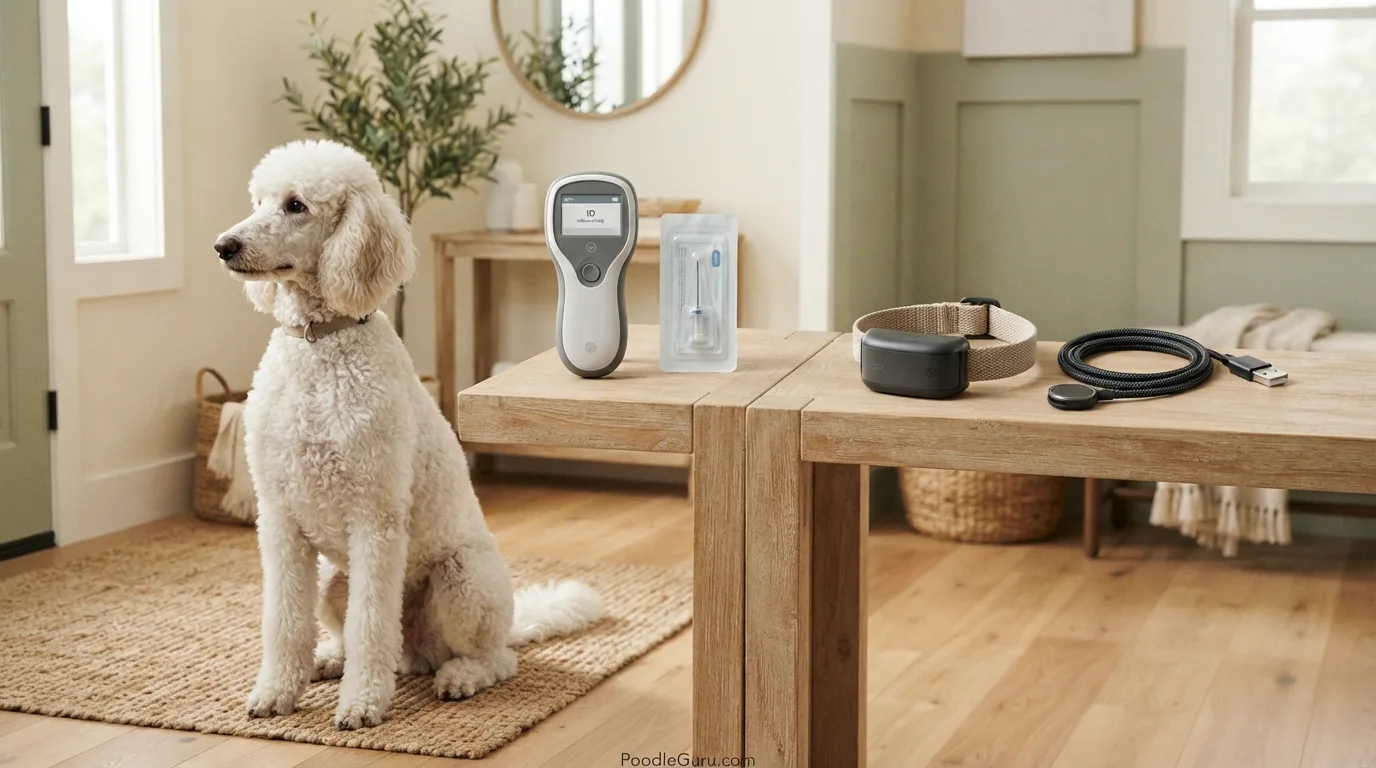
These tools solve different problems. A microchip helps identify a poodle after someone finds and scans the dog. A GPS tracker can help an owner search for a moving dog in real time, but it depends on a charged battery, a secure collar attachment, coverage, and an active service plan.
| Feature | Microchip | GPS Tracker |
|---|---|---|
| Main Purpose | Permanent identification after the dog is found | Active location tracking while the device is working |
| Power | No battery or charging | Rechargeable battery |
| Attachment | Implanted beneath the skin | Usually attached to a collar or harness |
| Ongoing Cost | Registry terms vary; no cellular plan is needed for the chip | Many devices require a monthly or annual subscription |
| Limitations | Cannot show live location and must be scanned | Can lose power, detach, lose signal, or be removed |
| Best Use | Long-term backup identification for every poodle | Extra search support for travel, hiking, or known escape risk |
Red Flags When Choosing a Microchip Service
- The provider cannot explain the total price. You should know whether implantation, examination, enrollment, transfer, and optional membership are included.
- No post-implant scan is offered. The provider should be able to confirm that the chip reads and that the number matches your paperwork.
- The chip number or registry is unclear. Leave with a readable certificate, the complete identification number, and instructions for finding or updating the associated registry.
- Worldwide compatibility claims are vague. A 15-digit ISO-compliant chip is the international standard, but the U.S. still has multiple frequencies and databases. Ask specifically what chip is being used, particularly when international travel is likely.
- The chip remains registered only to a breeder, shelter, or previous owner. Complete the transfer promptly and retain confirmation.
- Marketing treats optional benefits as the chip itself. Separate the permanent ID function from alert networks, memberships, medical storage, GPS products, and other add-ons.
Aftercare, Registration, and Annual Microchip Checks
Most poodles return to normal activity immediately after implantation. Follow the clinic’s instructions, and contact a veterinarian if you notice persistent pain, heat, discharge, marked swelling, lethargy, or any reaction that concerns you.
- Complete enrollment the same day. Do not rely on an unsubmitted form or assume another person completed it.
- Store the number in several places. Add it to your veterinary file, phone notes, cloud storage, travel documents, and emergency pet-care information.
- Keep a visible collar tag. A tag can produce a faster neighborhood reunion without requiring a scanner.
- Update every contact change. Review the registry immediately after moving or changing a phone number, email address, or emergency contact.
- Request routine scans. A veterinary team can confirm that the chip remains readable and document its location during regular wellness care.
- Use the correct registry. When you are unsure where the chip is enrolled, use the AAHA lookup tool with the chip number rather than creating duplicate records at random.
Frequently Asked Questions About Poodle Microchipping
How much does it cost to microchip a Toy Poodle?
A typical Toy Poodle microchip appointment costs about $25 to $70, although a low-cost shelter event may charge less and a veterinary examination may increase the total. The chip does not need to be larger or more expensive for a Toy Poodle.
Is microchipping painful for poodles?
The implantation uses a needle and can cause a brief pinch, but the procedure normally takes only a few seconds. Sedation or anesthesia is usually unnecessary, although a veterinarian may implant the chip while a dog is already anesthetized for another procedure.
Can a poodle’s microchip move after implantation?
Migration is uncommon but possible. Routine scanning helps confirm that the chip remains readable and lets the veterinary team document its current location.
Do all microchip registries charge an annual fee?
No. Registry models vary. Some include prepaid enrollment, some charge a one-time lifetime enrollment fee, and some offer optional annual memberships with additional recovery benefits. Ask which services are required, included, or optional.
What happens if I move without updating the registry?
The chip number can still be scanned, but the registry may have an outdated phone number, email, or address. That can delay or prevent contact, so update the record as soon as your details change.
Can a microchip tell me where my poodle is?
No. A microchip is not GPS and cannot transmit live location. It identifies your poodle only after a compatible scanner reads the chip at close range.
When should a Poodle puppy be microchipped?
Many puppies are microchipped before going to their new homes, but the best timing should be decided with the veterinarian, breeder, shelter, and any applicable local or travel requirements. Confirm that the chip number is transferred into the new owner’s registry record.
How do I check whether my poodle’s chip is registered?
Ask a veterinary clinic or shelter to scan your poodle and give you the complete chip number. Enter that number in the AAHA Microchip Registry Lookup Tool to identify participating registries associated with it, then contact the registry to verify your details.
Key Takeaways
- Poodle microchip cost usually falls between $25 and $70, but examination and registry fees can change the final bill.
- A microchip is permanent identification, not a GPS tracker, and it works only after a scanner reads its unique number.
- The 15-digit chip is the international ISO standard, while multiple chip frequencies and databases still exist in the United States.
- Registry pricing varies: enrollment may be prepaid, charged once, or connected to an optional annual recovery membership.
- Always scan the chip after implantation, match the number to the certificate, and verify the correct registry record.
- Keep visible ID tags, ownership documents, veterinary records, and the microchip certificate together.
- Review contact details after every move or phone change and request a routine scan during veterinary wellness care.
The most useful action today is simple: find your poodle’s chip number, confirm which registry holds it, and check that the listed phone numbers and email addresses still work.